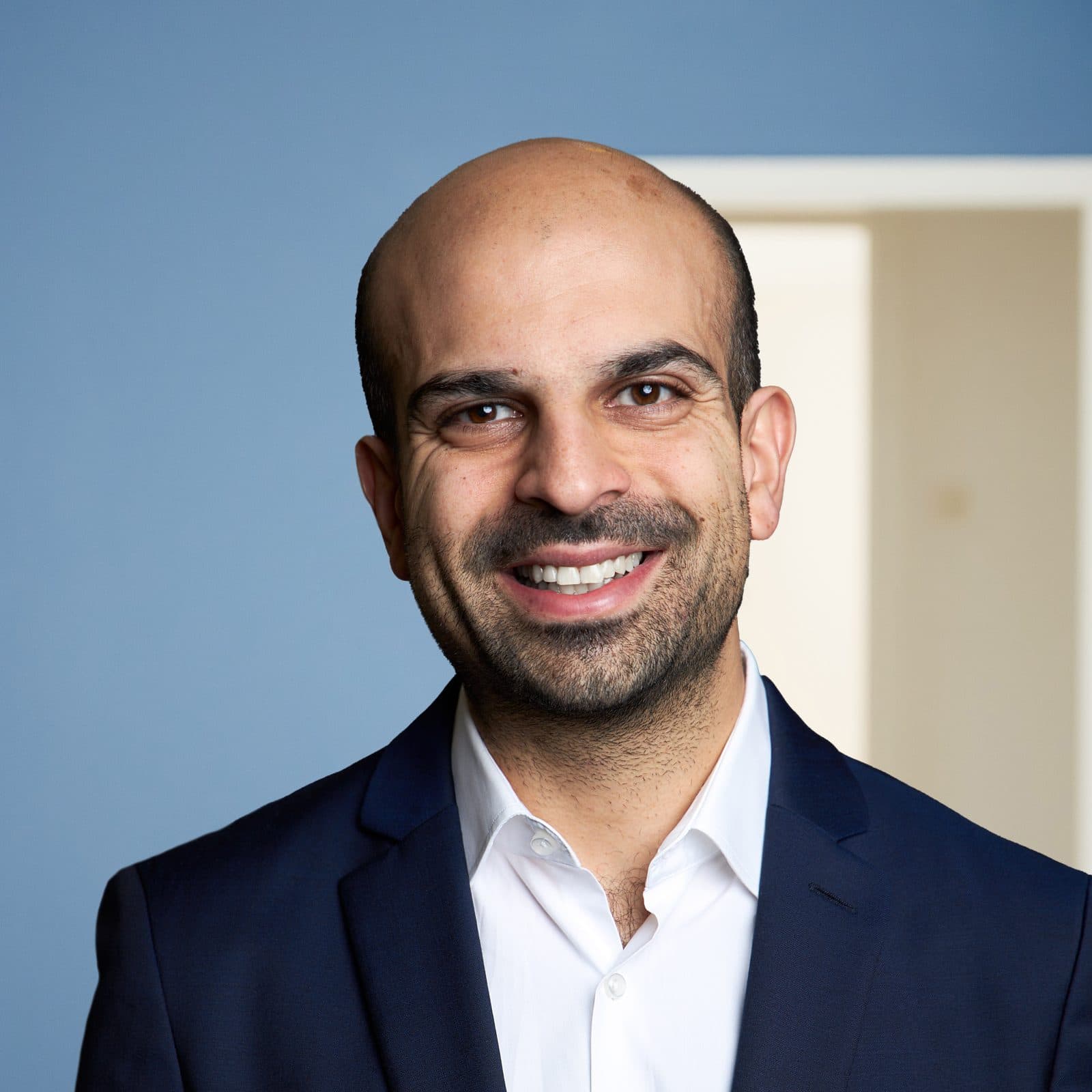
Dr. Lily Nguyen is a Senior Lecturer in Finance and Program Convenor for the Commerce Programs at UQ Business School, The University of Queensland. She holds editorial positions as Associate Editor at International Review of Financial Analysis and previously served as Guest Editor for Pacific-Basin Finance Journal . Her research expertise spans empirical corporate finance and climate finance, with specific focus on: Corporate governance mechanisms and innovation outcomes Market reactions to political and regulatory changes ESG disclosure impacts on financial markets Information asymmetry and price discovery processes Cross-border investment effects on firm innovation Dr. Nguyen has secured competitive research funding including an Australian Research Council (ARC) Discovery grant and multiple AFAANZ research grants. Her publication record features articles in premier finance journals including Journal of Financial and Quantitative Analysis, Journal of Corporate Finance, and Journal of Banking and Finance. She maintains an active research supervision program, with former PhD students securing academic positions at UK and Australian universities. Her honors students have consistently achieved first-class standing with several awarded University Medals.
Henk Zijm is a full Professor in the Department of Industrial Engineering & Business Information Systems at the Faculty of Engineering Technology, University of Twente, and is affiliated with the Digital Society Institute. His research spans operations management, logistics, supply chain systems, and stochastic modeling, with a strong focus on practical industrial applications. His research interests include Supply Chain Management , Logistics , Inventory and Spare Parts Control , Multi-Agent Systems , and Digital Transformation in Manufacturing . He has made significant contributions to modeling complex systems under uncertainty, particularly in manufacturing and distribution networks. The 15 most recent articles reflect a consistent focus on supply chain resilience, digital coordination, and sustainable logistics. Key trends include the integration of additive manufacturing in spare parts supply, interactive tools for circular supply chains, and advanced modeling of traffic and production systems. His work bridges theoretical operations research with real-world industrial challenges. Henk Zijm has supervised 24 academic works, indicating active mentorship and PhD guidance. While no specific grants are listed, his extensive publication record and leadership in research areas suggest successful grant acquisition and project leadership. His work has strong interdisciplinary reach, particularly in digital society and systems engineering. He is associated with the Digital Society Institute at the University of Twente, which fosters interdisciplinary research on the societal impact of digital technologies. This affiliation underscores his engagement with broader technological and societal transformations.
Professor Heinrich Kuhn serves as Professor of Business Administration, Supply Chain Management & Operations at the Ingolstadt School of Management, Catholic University of Eichstätt-Ingolstadt. His extensive research focuses on planning and control of production systems, flexible production planning, JIT and flow production systems analysis, maintenance, and queueing theory. With a prolific publication record spanning decades, he has established himself as a leading scholar in operations research and supply chain management. His research interests encompass Supply Chain Management, Operations Research, Production Planning, Retail Logistics, Queueing Theory, and Inventory Management. Professor Kuhn has developed innovative approaches for optimizing retail fulfillment processes, managing assortment planning, improving inventory accuracy, and addressing complex production planning challenges. His work bridges theoretical operations research with practical applications in retail and manufacturing industries, with particular emphasis on omnichannel retailing, grocery operations, and sustainable logistics solutions. His research demonstrates consistent evolution from foundational production planning systems to addressing contemporary challenges in digitalized retail environments. Professor Kuhn's recent publications (2021-2024) reveal a strong focus on retail logistics challenges, particularly in grocery retailing during the pandemic, drone delivery systems, vehicle routing optimization, and inventory management. His research shows a clear progression toward addressing digital transformation in retail, sustainable practices, and the integration of physical and online retail channels. The work demonstrates sophisticated methodological approaches including advanced optimization algorithms, simulation modeling, and empirical analysis of retail operations. Throughout his career, Professor Kuhn has maintained extensive collaborations with researchers including A. Holzapfel, A. Hübner, M. Sternbeck, and others. His research provides valuable decision support tools for retail operations, supply chain design, and production planning, with practical applications across multiple industries. His work continues to influence both academic discourse and industry practices in supply chain management and operations research.
Richard Martin Lusby is an Associate Professor in the Department of Technology, Management and Economics at DTU Management, Technical University of Denmark. His academic work focuses on Operations Research with specialization in mathematical optimization applied to transportation and energy systems. His research spans railway scheduling, container logistics, maritime transport, and energy storage optimization. Department: Department of Technology, Management and Economics Section: Section for Operations Research, Division for Management Science Location: Building 358, Room 145A, Academy Road, 2800 Kgs. Lyngby, Denmark Contact: rmlu@dtu.dk, Tel: 45253084 ORCID: 0000-0002-8652-6219 Professor Lusby's research interests center around mathematical optimization methods applied to complex transportation and energy systems. His work spans railway scheduling problems, container logistics optimization, maritime transport operations, and energy storage scheduling. He develops advanced algorithms including Lagrangian Relaxation, Benders decomposition, and stochastic programming approaches to solve challenging real-world problems in these domains. His research has practical applications in improving efficiency and sustainability in transportation networks and energy systems. His recent publications demonstrate a strong focus on optimization techniques for transportation systems, particularly in railway operations and container logistics, as well as energy storage scheduling. The research shows a consistent pattern of developing sophisticated mathematical methods to address complex operational challenges in transportation networks, with increasing attention to sustainability considerations in maritime shipping and energy systems. Professor Lusby has been involved in significant research projects including the SWITCH project (Sustainable Network Design - Electrifying Container Shipping), which received funding from Den Danske Maritime Fond. This project explores how battery-powered ships could replace fossil fuels in global shipping through mathematical modeling and AI-driven optimization. He also supervises PhD students, including Georgios Vassos who completed a thesis on "Procurement Policy Analysis in Intermodal Container Logistics". His work has practical implications for improving efficiency in transportation networks, reducing environmental impact in maritime shipping, and optimizing energy systems operations. Through his research, Professor Lusby contributes to both theoretical advances in optimization methods and their practical applications in critical infrastructure sectors.
Professor Yuichiro Kawaguchi is a distinguished faculty member at Waseda University's Faculty of Commerce and Graduate School of Business and Finance, where he serves as a Professor specializing in Real Estate Economics and Financial Engineering. With decades of academic and professional experience, he has established himself as a leading expert in Japanese and Asian real estate markets, contributing significantly to both theoretical frameworks and practical applications in real estate finance. Education: 1979: National Defense Academy of Japan, Faculty of Engineering Professor Kawaguchi's research primarily focuses on Real Estate Economics and Real Estate Financial Engineering, with particular emphasis on market dynamics, risk management, and valuation methodologies. His work bridges theoretical finance concepts with practical real estate applications, examining how spatial factors, market cycles, and institutional frameworks influence property markets. He has pioneered approaches to real options analysis in real estate development and has extensively studied the Japanese housing market's unique characteristics and challenges, including its prolonged stagnation period and recovery patterns. His research integrates econometric techniques with financial theory to develop more accurate forecasting and valuation models for commercial and residential properties, with recent work incorporating big data analytics and text mining to understand market sentiment and its impact on real estate investment trusts. Analysis of Professor Kawaguchi's extensive publication record reveals a consistent progression from traditional valuation methods toward more sophisticated approaches incorporating spatial analysis, real options theory, and market microstructure considerations. His interdisciplinary research connects economics, finance, urban planning, and data science to address complex questions in real estate investment and policy, with particular focus on the Japanese market context and its implications for other Asian economies. Scientific Awards: Japan Society of Civil Engineers Technology Development Award (Geographic Information System for Urban Railway Planning) - May 2003 Applied Surveying Society Paper Encouragement Award - 1992 First Applied Surveying Paper Best Award - November 1985 Professor Kawaguchi has supervised numerous graduate students through research guidance seminars at Waseda University and has secured significant research funding through multiple Japan Society for the Promotion of Science Grants-in-Aid for Scientific Research projects. His current research projects include 'Social Dynamics of Real Estate Markets' (2014-2017) which applies text mining to analyze the relationship between news sentiment and real estate stock prices, and 'Long-term perspectives on the housing price and financial system in Japan' (2012-2015) which examines the relationship between soaring property prices and investment inhibition in Japan's economic growth context. As Director of the Institute of Real Estate Studies at Waseda University (2022-2026), Professor Kawaguchi bridges academic research with practical applications in the real estate industry, contributing to scholarly knowledge and professional practice through publications, committee work with government agencies including the Cabinet Office and Ministry of Land, Infrastructure, Transport and Tourism, and industry collaborations with major financial institutions.
Farzad Saidi is a Professor of Financial Economics at the University of Bonn's Institute for Macroeconomics and Econometrics, where he has served as a Cluster Investigator since 2020. His research bridges theoretical and empirical finance with macroeconomic policy implications, focusing on banking systems, monetary transmission mechanisms, and corporate finance dynamics. Affiliated with one of Europe's leading economics departments, Saidi contributes to policy-relevant research through extensive collaborations with international scholars and institutions. His educational background includes an MSc in Econometrics and Mathematical Economics from the London School of Economics and a PhD in Economics from New York University (2013). Prior to his current position, he held faculty appointments at Boston University, Stockholm School of Economics, and the University of Cambridge. Saidi's research portfolio demonstrates exceptional breadth across financial economics. His work on banking examines how institutional structures affect credit allocation, with seminal contributions on negative interest rates, bank concentration, and regulatory forbearance. His pandemic-related research integrates epidemiological modeling with economic decision-making, revealing how social preferences shape health outcomes. In corporate finance, he investigates innovation disclosure's impact on financing costs and takeover dynamics. His labor-finance intersection research analyzes how monetary policy affects earnings inequality through credit channels. Analysis of his publication record reveals three dominant research trajectories: (1) The microfoundations of monetary policy transmission through heterogeneous bank balance sheets, (2) Financial stability implications of regulatory changes using quasi-experimental designs, and (3) Behavioral extensions to traditional finance models incorporating social preferences. His methodological approach consistently leverages granular administrative data and natural experiments to identify causal mechanisms. Jensen Prize for best paper in Journal of Financial Economics (2016) Saidi's advising activities encompass doctoral students and junior researchers across multiple institutions, though specific advisees aren't publicly listed. His work has attracted significant research funding, particularly for projects analyzing European Central Bank policies and pandemic economic responses using German administrative datasets. Current projects examine credit supply effects on labor markets and the interaction between financial and trade sanctions. As a core member of Bonn's financial stability research cluster, Saidi collaborates with economists across Germany and Europe. His work informs policy discussions through regular engagement with central banks and financial regulators, particularly regarding negative interest rate policies and banking regulation reforms.
Christian Riis Flor is a Professor and Head of the Research Unit in Finance at the Department of Business & Management, Faculty of Social Sciences, University of Southern Denmark (SDU). He holds a Ph.D. and an M.Sc. in Mathematics-Economics and is actively engaged in research, teaching, and academic service. Department: Department of Business & Management (DBM) Research Unit: Finance (FIN) Email: crf@sam.sdu.dk ORCID: https://orcid.org/0000-0002-5537-1576 Education: M.Sc. in Mathematics-Economics Ph.D. Research Interests: Christian Riis Flor specializes in corporate finance, with a primary focus on dynamic corporate finance, capital structure, valuation under asymmetric information, real options analysis, and private equity. His work explores how firms make investment, financing, and dividend decisions under uncertainty and information asymmetry. Secondary interests include asset allocation and compensation models (P/A-models). He integrates theoretical modeling with empirical implications, particularly in the context of sustainable finance and incentive design. Recent Research Trends: His most recent publications (2021–2025) center on private equity, capital structure choices (callable vs. convertible debt), real options under imprecise learning, and exit strategies under market fluctuations. These works reflect a consistent theme of decision-making under uncertainty, with applications in both public and private firms. Keywords across these articles include corporate finance, private equity, real options, asymmetric information, and valuation, indicating a cohesive and impactful research trajectory. Scientific Awards: Best paper award: Portuguese Finance Network 4th Finance Conference (2006) Identifying the role of private equity firms in creating value (2016) The Firm's Life Cycle -- Investment and Financing Decisions (2019) Outstanding Reviewer Award 2021, Managerial Finance (2021) Special Teaching Award for Research Based Learning (2021) Supervision and Grants: Flor has supervised academic work and taught courses such as Dynamic Corporate Finance, Derivatives and Risk Management, and Real Options. He has led two major research projects: 'Identifying the role of private equity firms in creating value' (2016–2021) and 'The Firm's Life Cycle -- Investment and Financing Decisions' (2019–2020), both as Principal Investigator. These projects explored value creation in private equity and life-cycle financing strategies, respectively, and were funded within the university research framework. Labs and Research Teams: He is a key member of the Finance (FIN) research unit within the Department of Business & Management at SDU, contributing to a collaborative network focused on corporate finance, private equity, and dynamic information problems. He actively participates in research networks, peer review, and academic conferences, enhancing the unit's visibility and impact.
Professor Cheng Yi Shiu is a faculty member at the Department of International Business, College of Commerce, National Chengchi University (NCCU), where he has served since August 2022. His academic focus spans financial markets, corporate finance, and investment analysis with regional expertise in Taiwan and East Asian economies. Education: Ph.D. in Financial Management, National Chengchi University (1997-2002) Research interests center on market microstructure, institutional investors, IPO mechanisms, and financial market efficiency. His work frequently examines price formation dynamics, investor behavior patterns, and corporate financing decisions within Asian capital markets. Current investigations explore sustainable investing frameworks and sovereign wealth fund impacts. Publication analysis reveals consistent focus on empirical finance methodologies applied to: equity market anomalies, index reconstitution effects, derivatives pricing, and cross-border M&A performance. Recent work shows increasing emphasis on ESG considerations in institutional investing. Awards: National Science Council Research Award (113) Research Funding includes over 20 projects as Principal Investigator through Taiwan's National Science and Technology Council, including: Institutional Investors and Sustainable Investment (2024-2026) IPO Pricing Mechanisms (2022-2024) Corporate Social Responsibility in Supply Chains (2020-2022) Institutional Monitoring in Asian Markets (2018-2020)
Professor Igor Filatotchev is a distinguished academic at the Vienna University of Economics and Business (WU Vienna), where he serves in the Institute for International Business within the School of Business Administration. He is affiliated with the World Trade Competence Center for Emerging Markets and CEE. With over 200 publications spanning more than three decades (from 1991 to 2025), Professor Filatotchev has established himself as a leading scholar in international business and corporate governance. His research focuses on corporate governance, international business, emerging markets, venture capital, and initial public offerings. Professor Filatotchev has published extensively in top-tier journals including Journal of Management, Journal of Corporate Finance, Academy of Management Perspectives, and Journal of International Business Studies. His work often examines the intersection of institutional contexts and business practices, particularly in transition economies and emerging markets. Analysis of his recent publications (2022-2025) reveals several key research streams: ESG implementation in organizational contexts, CEO characteristics and internationalization, venture capital syndication dynamics, cross-listing strategies, and the role of institutions in capital market development. His work demonstrates a consistent focus on how governance structures and institutional environments shape business outcomes across borders. Professor Filatotchev has served as editor for significant publications including 'The Oxford Handbook of Corporate Governance' (2013) and 'The Oxford Handbook of Sovereign Wealth Funds' (2017), demonstrating his leadership in these research domains. His collaborative work spans numerous international scholars, reflecting the global nature of his research interests. His academic contributions have been recognized through numerous awards (40 according to his CV), though specific awards are not detailed in the available information. Professor Filatotchev maintains an active research agenda with publications extending into 2025, indicating ongoing scholarly productivity and relevance in his fields of expertise.
Ahmet Karagozoglu is the C.V. Starr Distinguished Professor of Finance and Investment Banking at the Zarb School of Business, Hofstra University. He has been a key figure in academic leadership, serving as the founding Academic Director of the Martin B. Greenberg Trading Room (2005–2021) and Coordinator of the Hofstra-Erasmus Summer Program (2003–2005). His educational background includes a B.S. in Industrial Engineering from Bogazici University, an M.B.A. from the University of Wisconsin-Oshkosh, and an M.Phil. and Ph.D. in Finance from Baruch College, CUNY, where he received the Oscar Lasdon Best Dissertation Award. Dr. Karagozoglu's research spans algorithmic trading, financial modeling, credit risk, derivatives, and risk management. His work integrates quantitative methods with real-world financial applications, particularly in market microstructure and risk modeling. He has published extensively in journals such as the Review of Finance , Journal of Futures Markets , and International Review of Financial Analysis . His recent publications reflect a strong focus on machine learning in credit risk, high-frequency trading dynamics, volatility modeling, and robust hedging strategies. These works demonstrate a consistent trend toward integrating advanced computational techniques with traditional financial theory. C.V. Starr Distinguished Professor of Finance and Investment Banking (2016) Oscar Lasdon Best Dissertation Award Dean’s Research Award (2000, 2012) Service Award (2007) Distinguished Teacher of the Year (2009) Dr. Karagozoglu has been actively involved in academic service, including conference presentations at FMA, EFA, MFA, and invitations to the Chicago Board of Trade Research Seminar. He has also contributed to curriculum development and international academic programs. He does not currently list named advisees, but his leadership in academic programs suggests mentorship at institutional levels. He led the Martin B. Greenberg Trading Room, a state-of-the-art financial lab used for experiential learning, research, and student training in trading and analytics, enhancing practical finance education at Zarb School of Business.
Ingrid de Jong is a Researcher at Wageningen University & Research (WUR) within the Wageningen Institute for Animal Sciences (WIAS), holding the Dutch academic title dr.ir. (doctor ingenieur). Her work spans animal health and welfare research with primary focus on broiler chickens and pigs, actively bridging scientific findings with commercial farming applications through 408 research outputs and 49 projects including leadership roles in LVVN-funded initiatives. Her research interests include: Animal Welfare Assessment Protocols Broiler-Pig Welfare Resilience Systems Gut Microbiome-Health Interactions Behavioral Monitoring via Sensor Technologies Environmental Enrichment Optimization Light Spectrum/Intensity Effects Sustainable Feed Interventions Stocking Density Impacts Recent publications (2024-2025) demonstrate consistent focus on broiler welfare assessment refinement, particularly intestinal integrity detection and lighting systems, while expanding into pig resilience through sensor-driven early warning models. Her work emphasizes practical implementation in EU commercial farms with strong interdisciplinary connections between veterinary science, microbiome research, and precision livestock technology. No scientific awards were mentioned in the provided materials. She serves as co-promotor for PhD candidate Wu, Z. on early feeding interventions and leads multiple Dutch-funded projects including Veerkrachtige dierhouderijsystemen (resilient livestock systems) and FUNCTILIGHT. Her grant portfolio centers on welfare-economic-environmental tradeoffs in livestock production, with active collaboration across academia, industry, and policy bodies like the European Food Safety Authority. Dr. de Jong co-founded the BroilerNet innovation network connecting practice and science in broiler production and contributed to the Greenwell project assessing welfare, environmental impact, and economy of broiler systems. Her work integrates optical flow analysis, RFID monitoring, and microbiome sequencing through WIAS facilities, with ongoing projects targeting sensor fusion for welfare prediction and One Health synergies.
Neslihan Yılmaz is a Professor and Department Head at Boğaziçi University, holding a Ph.D. from Michigan State University. Her academic career centers on finance with teaching expertise in Financial Management, Corporate Finance, and International Finance, while her research primarily explores behavioral and corporate finance phenomena within emerging markets. Her educational background is anchored by a doctoral degree from Michigan State University, though specific details of earlier degrees remain unspecified in the source material. Ph.D.: Michigan State University Yılmaz's research concentrates on Behavioral Finance, Corporate Governance, Managerial Turnover, and Product Market Competition, with particular emphasis on psychological factors influencing financial decision-making in Turkish and international contexts. She investigates how cognitive biases affect investor behavior, executive decisions, and market efficiency, often employing spatial econometric techniques to analyze real estate and stock market dynamics. Her work bridges theoretical finance with empirical analysis of emerging market peculiarities. Recent publications (2020-2023) reveal a strong focus on spatial analysis in real estate markets and behavioral corporate finance. Key themes include pricing anomalies in housing markets, analyst coverage effects on stock returns, and the impact of CEO overconfidence on competitive performance. Her methodological approach frequently combines traditional econometrics with geospatial modeling, demonstrating consistent contributions to understanding market inefficiencies in developing economies. No scientific awards or honors are documented in the provided materials. Information regarding student advising, research grants, or funded projects is not present in the source texts, suggesting either omission or non-disclosure of such activities in the referenced profiles. There are no mentions of laboratory facilities, dedicated research teams, or institutional centers associated with Professor Yılmaz's work in the available documentation.
Konstantinos Stergiou is a distinguished Professor in the Department of Biology at the School of Sciences, Aristotle University of Thessaloniki, with a prolific career spanning over three decades in marine biology and fisheries science. His work has significantly contributed to understanding Mediterranean marine ecosystems, fish population dynamics, and sustainable fisheries management. Dr. Stergiou's research interests encompass marine biology, fisheries science, fish ecology, and marine conservation. He has pioneered research on trophic levels, fish biological parameters, and the impacts of climate change on Mediterranean fisheries. His work often integrates ecological, economic, and social dimensions to provide holistic approaches to marine resource management. He has developed innovative methodologies for fisheries assessment and has extensively documented the biological characteristics of Mediterranean fish species. His publication record demonstrates consistent scholarly output since the 1980s, with recent work focusing on biological invasions in the Mediterranean, discard management, and climate change impacts on marine ecosystems. His research shows a strong emphasis on practical applications for fisheries management and conservation policy. Dr. Stergiou has collaborated extensively with researchers across Greece and Europe, contributing to numerous projects addressing critical issues in Mediterranean marine science. His work on the mean temperature of the catch (MTC) has provided valuable insights into climate change effects on fisheries.
Ryan D. Israelsen is a Professor of Finance at Michigan State University's Eli Broad College of Business, holding the Alan Jay and Sue E. Kaufman Endowed Professorship in Insurance and Risk Management since 2024. Previously an Associate Professor (2021-2024) and Assistant Professor (2017-2021) at MSU, he also serves as a Visiting Faculty Fellow at the European University Institute starting in 2025. Before joining MSU, he was an Assistant Professor of Finance at Indiana University's Kelley School of Business from 2009 to 2017. His educational background includes a PhD in Finance from the University of Michigan's Ross School of Business (2009), an MS in Financial Engineering from the University of Michigan (2003), and a BA in Economics from Utah State University's Huntsman School of Business (2000). Professor Israelsen's research focuses on the intersection of information economics and asset pricing, with particular expertise in how information production, consumption, and dissemination affect financial markets. His work examines institutional investor attention, news processing, SEC disclosures, credit rating agencies, and the behavioral aspects of financial decision-making. He has made significant contributions to understanding how geographic proximity influences information production (home bias), how political polarization affects financial news, and how information asymmetry impacts municipal finance. His publication record demonstrates a consistent trajectory of high-impact research in top finance journals, with recent work appearing in the Journal of Finance, Journal of Financial Economics, and Review of Financial Studies. His research often combines theoretical insights with innovative empirical approaches to examine how information flows through financial markets and affects asset prices. A.J. Passant Faculty Fellowship (2022-present) Best Paper Award at Quarterly Journal of Finance (2022) MBA Teaching Award (2022, 2023) Executive MBA Teaching Award (2020) Best Discussant Award, Future of Financial Information Conference (2019) Best Paper Award, CICF Conference (2019) Professor Israelsen has successfully advised numerous PhD students who have secured positions at prestigious institutions including Tulane University, the Securities and Exchange Commission, Wharton Research Database Services, Cal State University Long Beach, Purdue University, and Claremont. He serves as the Finance PhD Program Director at MSU and co-founded the Virtual Finance Seminar which attracts over 1,000 registrants. His research has received significant media attention, including features in The Economist and Financial Times.
Berit Irene Helgheim is an Associate Professor in Logistics at Molde University College's Faculty of Logistics, where she holds multiple director positions including Director of the Master of Science in Logistics, Master of Science in Sustainable Energy Logistics, Experienced-based Master in Logistics, Experienced Master in Health Care Operations Management and Digital Systems, Bachelor in Supply Chain Management and Logistics, and Director of the Center for Health Care Operations Management. Her research focuses on Supply Chain Management and Operations Management in Health Care, with particular expertise in applying logistics principles to healthcare systems. Her work explores the intersection of digital transformation, AI applications, and operational efficiency in healthcare delivery, home care services, and sustainable logistics systems. She has made significant contributions to understanding how technology can improve patient flow, reduce healthcare workloads, and enhance documentation systems in both hospital and home care settings. Analysis of her recent publications reveals a strong trend toward applying advanced analytics and AI to healthcare operations, with increasing focus on sustainability and digital transformation across multiple sectors. Her work spans from theoretical frameworks like principal-agent theory in port digitalization to practical applications in emergency departments and home healthcare. The research demonstrates a consistent pattern of interdisciplinary collaboration, often involving computer science experts for AI implementations and healthcare professionals for domain expertise. Professor Helgheim leads the Center for Healthcare Operations Management research group and contributes to Digitalization for Sustainability and Supply Chain Management research groups at Molde University College. Her work demonstrates strong connections between academic research and practical applications in healthcare systems, with numerous case studies conducted in Norwegian municipalities and healthcare institutions. As director of multiple academic programs, she oversees curriculum development and student supervision across bachelor's, master's, and experienced-based master's programs in logistics and healthcare operations. Her leadership extends to major research projects including e-Hospital4Future, which focuses on digital transformation in healthcare settings.