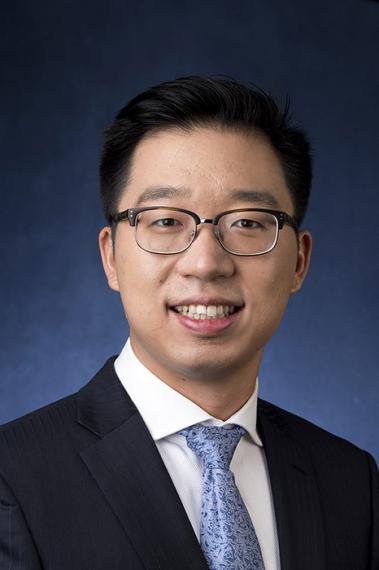
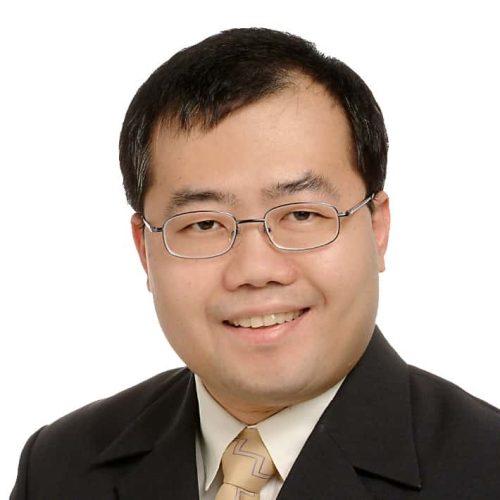
Wenbo Cai is an Associate Professor in the Department of Mechanical and Industrial Engineering at the New Jersey Institute of Technology (NJIT). He holds a Ph.D. and M.S. in Industrial Engineering and Operations Research from the University of California, Berkeley, and dual B.S. degrees in Electrical and Computer Engineering and Operations Research and Industrial Engineering from Cornell University. His research focuses on operations research, supply chain optimization, game theory, and sustainability. Key areas include energy security, inventory management, carbon capture systems, and healthcare operations. He develops data-driven models to address challenges in resource allocation, strategic decision-making under uncertainty, and incentive design for multi-agent systems. Cai's recent work emphasizes practical applications in developing economies, environmental policy, and emerging technologies like 3D printing. His articles highlight innovative solutions for supply chain resilience, biodiversity conservation, and scalable energy systems. While his publications span a decade, they consistently integrate theoretical rigor with real-world problem-solving. No scientific awards are explicitly mentioned. His advising and grant activities are not detailed in the provided text, but his academic profile suggests active engagement in research funding and student mentorship. His professional website at NJIT provides further details about his lab and ongoing projects.
Yu-Wang Chen is a Professor of Decision Sciences and Business Analytics at Alliance Manchester Business School (AMBS), University of Manchester. He holds an adjunct role as a former Turing Fellow (2021–2023) at The Alan Turing Institute. His research focuses on Decision Sciences, Data Analytics, AI, and their applications in healthcare, maritime logistics, risk analysis, and social networks. He leads over £2 million in research funding from Innovate UK, EPSRC, and ERDF. Education: PhD in System Engineering (Shanghai Jiao Tong University), Postdoctoral Research Fellowship (Hong Kong Baptist University). Research Interests: Data-Driven Decision Making, Multiple Criteria Decision Analysis, Evidential Reasoning. Teaching: Programme Director for MSc Business Analytics (2015–2018 & 2020–2023). Editorial Roles: Associate Editor of Decision Analytics Journal, Editorial Board Member of multiple journals. Recent work explores social network dynamics in organizational decision-making and AI-driven solutions for maritime transportation optimization. His 80+ journal articles and 20+ conference papers address challenges in belief rule bases, risk assessment, and computational modeling. Grants: Projects include AI tools for mental health services, digital trust frameworks, and port sustainability. Awards: EPSRC Peer Review College membership, International Society of Multiple Criteria Decision Making.
Shirley Liu is an Assistant Professor of Accounting at the Ness School of Management and Economics, South Dakota State University. Her research focuses on financial accounting, audit quality, and corporate finance with particular emphasis on earnings management, regulatory compliance, and valuation methodologies. She has published extensively on topics including audit partner disclosure impacts, financial statement analysis for risk prediction, and the economic consequences of accounting standards implementation. Her work employs advanced econometric techniques such as Difference-in-Differences analyses and archival research methods. Key projects include examining bank failure prediction using financial data, investigating audit quality improvements through engagement partner disclosure requirements, and evaluating the effectiveness of residual income valuation models. Liu's research spans both theoretical contributions to accounting literature and practical applications in healthcare operations and investment decision-making. Her studies consistently bridge accounting theory with real-world financial practices, addressing issues like equity-based compensation effects, dividend policy relevance, and portfolio performance measurement.
Samuel Hawksbee is a Senior Research Fellow in the Department of Engineering within the School of Computing and Engineering at the University of Huddersfield. He is also a member of the Institute of Railway Research (IRR), where he conducts advanced research on railway infrastructure and track systems. His work focuses on solving complex engineering challenges in railway systems through computational modeling and analysis. Dr. Hawksbee received his first class MEng in Civil and Structural Engineering from the University of Sheffield in 2007. After a brief period with consultant Mott MacDonald, he returned to the University of Sheffield for doctoral studies, completing his PhD in 2013 with a thesis entitled "3D ultimate limit state analysis using discontinuity layout optimization." Following his PhD, he worked on EPSRC and TSB funded projects studying masonry arch bridges before joining the Institute of Rail Research at the University of Huddersfield in 2014. His primary research interests include rail deformation phenomena, particularly plastic flow and squats on railway tracks. Dr. Hawksbee specializes in applying non-linear finite element analysis to model complex railway track behaviors, with particular focus on heavily loaded curves with significant freight traffic. His work examines how variations in vehicle operating speed, wheel-rail contact position, and rail material properties influence plastic deformations in rails. Dr. Hawksbee's publication record demonstrates consistent research productivity with multiple research outputs between 2013-2024. His recent work shows a strong focus on railway transition zones, track settlement mechanisms, and the behavior of innovative track systems like ballast-asphalt combinations. His research combines theoretical modeling with practical railway engineering challenges, addressing critical issues in high-speed rail infrastructure. Dr. Hawksbee has developed significant industry connections across the rail sector, including contacts at the Rail Safety and Standards Board (RSSB), Network Rail, and British Steel. His research contributes to several UN Sustainable Development Goals, particularly those related to sustainable infrastructure development. He is currently accepting PhD students and continues to advance knowledge in railway engineering through his work at the Institute of Railway Research.
Dr. Stephanie Yates is a tenured Professor of Accounting and Finance at the University of Alabama at Birmingham's Collat School of Business, holding concurrent Senior Scientist appointments in the School of Medicine and School of Public Health. As the founding Director of the Regions Institute for Financial Education since 2015 and holder of the Regions Institute Endowed Professorship, she leads initiatives advancing financial research and education across the Southeast. Her academic journey includes prior appointments as Clinical Assistant Professor at Rensselaer Polytechnic Institute and Director of the Hickey Financial Technology Center at Siena College. Dr. Yates' research centers on financial inclusion, with significant contributions to real estate finance, market efficiency, and personal finance. Her work bridges academic rigor and practical application through initiatives like the UAB Personal Finance Research Symposium and community financial literacy programs. Current scholarship examines investor behavior, minority representation in finance, and the psychological dimensions of money management, reflecting her commitment to making finance accessible across socioeconomic groups. Her recent publications demonstrate consistent output in high-impact journals spanning real estate economics, behavioral finance, and financial inclusion. Articles reveal evolving focus from mortgage market dynamics during the 2008 crisis toward contemporary issues like fintech adoption, diversity in corporate governance, and the intersection of financial wellness with life satisfaction. This trajectory highlights her ability to address both theoretical finance questions and pressing societal challenges. UAB President's Award for Diversity (2016) A.G. Gaston Community Service Award (2017) Fulbright Specialist Grant for South Africa financial literacy project Certified Financial Planner (CFP™), Accredited Financial Counselor (AFC®) Dr. Yates has secured significant funding including Alabama Securities Commission grants for campus investor education, Smith Barney funding for youth financial literacy programs, and NIH support for health-related financial behavior research. Her mentoring extends through UAB's Green & Gold Financial Analyst program and numerous finance internships, while her blog '365 Days on a Budget' translated academic finance principles into practical daily applications. She actively shapes policy through advisory roles with Alabama Asset Building Coalition, Junior Achievement, and TruFund Financial Services. The Regions Institute for Financial Education serves as her primary operational hub, hosting annual research symposia and developing financial education curriculum adopted statewide. Her cross-disciplinary teams include medical researchers studying financial determinants of health, urban planners examining neighborhood financial resilience, and international collaborators advancing financial capability metrics.
Prof. Dr. Till van Treeck is a Professor and Managing Director of the Institute for Socio-Economics at the University of Duisburg-Essen. He holds a PhD in Economics from the University of Oldenburg, an MA in Economics from Leeds University, and a dual degree in Political Science and Economics from the Institut d'Études Politiques de Lille and the University of Münster. Research Interests: His work focuses on macroeconomic implications of income distribution , including sectoral imbalances, external imbalances, and ecological issues. He bridges macroeconomic and political economy approaches to growth models. Additional areas include financialization, German/EU policy debates, and socio-economic education. Teaching: He teaches courses such as 'Introduction to Microeconomics' and 'Socio-Economic Analysis' at the undergraduate and graduate levels. Recent courses include Microeconomics for Pedagogy and Economics in Schools . Professional Activities: He is a member of the Research Network on Macroeconomics and Macroeconomic Policies (FMM) and serves on editorial boards for journals like Cambridge Journal of Economics . He has advised institutions such as the German Federal Ministry of Education and the Hans-Böckler Foundation. Grants & Projects: Active in funded projects exploring income distribution, economic policy, and educational materials. Notable outputs include co-authored books on socio-economic education and financialization.
Emanuele Campiglio is an Associate Professor at the University of Bologna in the Department of Economic Sciences . He also serves as a Scientist at the RFF-CMCC European Institute on Economics and the Environment (EIEE) and holds a Visiting Fellow position at the London School of Economics and Political Science (LSE) . Previously, he was an Assistant Professor at the Vienna University of Economics and Business (WU). Research Focus: His work centers on environmental macroeconomics, sustainable finance, transition modeling, and the political economy of sustainability transitions. Key projects include the ERC-funded SMOOTH Project (Sustainable finance for a smooth low-carbon transition), analyzing macro-financial systems' interactions with climate policy. Awards & Grants: ERC Starting Grant (2020) for SMOOTH Project ERC Consolidator Grant (2024) for the BELIEFS Project Education & Academic Roles: Campiglio's academic background includes roles at leading institutions. He advises on climate policy and financial risks, collaborating with international bodies like the IMF and NAS. His work bridges climate science, economics, and finance to inform policy design. Labs & Collaborations: Engaged in cross-disciplinary research at EIEE and LSE's Grantham Research Institute, focusing on climate-related financial risks and sustainable policy frameworks.
Simon Mair is a Lecturer in Sustainability at the University of York’s Department of Environment & Geography. His research focuses on post-growth economics, degrowth, and alternative economic systems, aiming to transition to sustainable and inclusive societies within planetary boundaries. He leads the MSc in Corporate Sustainability and Environmental Management and teaches modules on Corporate Sustainability and Business and Environment. Simon is a co-investigator on high-profile projects, including the ESRC-funded Centre for the Understanding of Sustainable Prosperity (CUSP) and the EU Horizon-funded WISE Horizons, exploring pathways to post-growth economies. He also leads a work package in the NERC-funded MSPACE project, analyzing marine resources and regional supply chains using input-output models. His research outputs critically examine capitalism’s role in climate crises, sustainable development goals, and degrowth pedagogy. Recent articles address marine spatial planning, energy-capital dynamics, and policy frameworks for wellbeing over growth. Simon actively contributes to public discourse via outlets like BBC Future and collaborates with the Management Educators Navigating Degrowth (MEND) collective to integrate degrowth ideas into management education. Simon’s work bridges academic research and real-world policy, emphasizing interdisciplinary approaches to sustainability challenges. His grants include funding from CUSP, MSPACE, and the Principles for Responsible Management Education initiative, supporting transformative research and education.
Delong Li serves as an Adjunct Professor of Finance in the Department of Economics and Finance at the Lang School of Business, University of Guelph, and teaches corporate finance to LLM students at Osgoode Hall Law School, York University. Professionally, he works as a financial economist at Cornerstone Research specializing in securities litigation and regulatory matters. His educational credentials include: Ph.D. in Economics from Johns Hopkins University (2018) M.S. in Finance from Guanghua School of Management, Peking University (2012) Dual B.S. in Mathematics and B.A. in Economics from Tsinghua University (2010) Research spans Corporate Finance , Corporate Bonds , International Finance , and Financial Markets , with emphasis on empirical methodology, sovereign-corporate yield linkages, and machine learning applications. Recent work addresses measurement error correction in investment models and international bond pricing dynamics. His 12 publications (2015-2024) reveal consistent focus on emerging market finance, yield transmission mechanisms, and innovative econometric approaches, frequently intersecting corporate finance with macroeconomic variables. Dr. Li has secured multiple SSHRC grants since 2018, including an Insight Grant as co-investigator (2019), and served on SSHRC's Economics Adjudication Committee (2021-22). He previously held visiting economist positions at the International Monetary Fund and Bank of Finland.
Luuk Veelenturf is an Associate Professor at the Department of Technology and Operations Management, Rotterdam School of Management, Erasmus University Rotterdam. His work bridges operations research and sustainable urban mobility, focusing on real-time decision systems in transport and logistics. His research interests include real-time transport operations , public transport planning , vehicle routing , and data-driven logistics . A significant portion of his work emphasizes sustainable transportation , aiming to reduce CO2 emissions and congestion through algorithmic improvements in scheduling and routing. The recent publications show a strong trend in solving complex logistics problems using advanced optimization techniques such as Mixed-Integer Programming and Adaptive Large Neighborhood Search . These works span domains including last-mile delivery , passenger-oriented timetabling , and robust train rescheduling , reflecting a consistent focus on resilience and efficiency in transportation systems. Scientific Awards: No scientific awards mentioned in the provided text. Advising and Grants: Luuk Veelenturf has co-supervised PhD research, including the thesis on vehicle routing with multiple service agreements. While specific grants are not listed, his collaboration with prominent researchers and publication in high-impact journals suggest active research funding. His work contributes to UN Sustainable Development Goals on sustainable cities and climate action. Labs and Teams: He is part of the research network within the Department of Technology and Operations Management at RSM, collaborating extensively on transport and logistics optimization. His work involves developing algorithms and models for real-world applications in public transport and city logistics, likely within a structured research group or lab focused on operations and analytics.
Siew Ann Cheong is an Associate Professor in the Division of Physics and Applied Physics at the School of Physical & Mathematical Sciences, Nanyang Technological University (NTU), Singapore. He is also an External Faculty member at the Complexity Science Hub (CSH) since 2019. Associate Professor, NTU (2016–present) Assistant Professor, NTU (2007–2016) Postdoctoral Associate, Cornell Theory Center (2006–2007) External Faculty, Complexity Science Hub (2019–present) Educational Background: B.Sc. (Hons) in Physics, National University of Singapore (1997) M.Sc., National University of Singapore (2000) M.Sc., Cornell University (2002) Ph.D. in Theoretical Condensed Matter Physics, Cornell University (2006) Siew Ann Cheong’s research centers on understanding the dynamics of complex systems with many degrees of freedom, such as financial markets, earthquakes, infectious diseases, biological sequences, and social systems. He employs both modeling and data-driven approaches to explore fundamental questions: What makes a system complex? How does complexity emerge? His goal is to develop a computational theory of complex systems by treating their dynamics as information processing. He applies methods from statistical physics, network science, time series analysis, and agent-based modeling to uncover universal principles across disciplines. His recent publications reveal a strong trend toward interdisciplinary research, particularly in econophysics, urban science, and computational history. He frequently uses topological data analysis (TDA), persistent homology, and network-based methods to study financial market crashes, urban gentrification, and knowledge evolution. His work bridges physics with social sciences, ecology, and digital humanities, demonstrating a consistent focus on identifying critical transitions and structural changes in complex systems. Scientific Awards: SPMS Excellence in Teaching Award (2008, 2010, 2011) Nanyang Award for Excellence in Teaching (2010) Science Mentorship Programme Outstanding Mentor Award (2010) Best Paper Award, International Conference on Culture and Computing (2013) Siew Ann Cheong has supervised numerous PhD, undergraduate, and high school research students, contributing significantly to academic mentoring. He has received multiple teaching awards, reflecting his commitment to education. His research is supported by interdisciplinary collaborations and grants, particularly in complex systems and data science. He has also contributed to computational history and heritage impact modeling through projects like SHIFT (Sustainable Heritage Impact Factor Theory). He leads a research group focused on complex systems, with former fellows and students now in academic and research positions worldwide. Labs and Research Groups: While no formal lab name is mentioned, his research is conducted within the Division of Physics and Applied Physics at NTU, involving a team of former and current students and fellows working on complex systems, econophysics, and network science. He collaborates with institutions such as the Complexity Science Hub, National University of Singapore, and international universities.
Li-Lian Gao is an Associate Professor in the Department of Management and Entrepreneurship at the Business School of Hofstra University. He holds a Ph.D. and MBA from Indiana University Bloomington and a B.S. from Shanghai Institute of Mechanical Engineering. His academic career includes prior teaching roles at Indiana University and Shanghai Institute of Mechanical Engineering. B.S., Shanghai Institute of Mechanical Engineering M.B.A., Indiana University Bloomington Ph.D., Indiana University Bloomington Dr. Gao's research centers on operations and supply chain management, with emphasis on distribution systems design , facility location , distributed data networks , multi-echelon inventory systems , and fixed charge network programming . His work applies quantitative and optimization techniques to solve complex logistical and operational problems in both industrial and service sectors. His publications appear in leading journals such as Management Science , Naval Research Logistics , Decision Sciences , and European Journal of Operational Research , reflecting a consistent focus on applied operations research and decision modeling. The articles demonstrate strong methodological rigor and practical relevance in logistics, network design, and inventory optimization. Dr. Gao is a member of several professional organizations including the Decision Sciences Institute , Institute for Operations Research and the Management Sciences (INFORMS) , and the Production and Operations Management Society (POMS) . He has advised various undergraduate courses including Introduction to Operations & Supply Chain Management (MGT 110) , Management Systems (MGT 114) , Business Process Management (MGT 143) , and Business Internship (MGT 174) . While no specific grants or student advisees are mentioned, his research output and professional affiliations indicate active engagement in scholarly activities. There is no mention of lab affiliations or research teams, but his publication record suggests independent and possibly collaborative research in operations management and logistics.
Mahmut Yasar is a Professor of Economics, Goolsby – Jacqualyn A. Fouse Endowed Chair, and Distinguished Teaching Professor at the University of Texas at Arlington College of Business. He also serves as a Research Associate at the Federal Reserve Bank of Dallas. Prior to joining UTA in 2007, he taught at Emory University in both the Department of Economics and Goizueta Business School, and has held visiting positions at Lappeenranta University of Technology in Finland, National Taipei University of Technology, National Tsing Hua University, and Tongji University in China. Dr. Yasar's research focuses on productivity, trade and investment, technology transfer, innovation, environmental economics, and applied microeconometrics. His work examines how international linkages affect firm performance, technology adoption, and environmental outcomes. He has made significant contributions to understanding the relationship between foreign direct investment, exports, and productivity growth at the firm level, as well as the environmental implications of trade and investment decisions. His recent publications reveal a strong trend toward interdisciplinary research connecting international economics with environmental sustainability, corporate finance, and technological innovation. Many studies employ sophisticated econometric techniques on firm-level or plant-level data from developing and developed economies. The research consistently demonstrates how international connections facilitate knowledge transfer and productivity growth while also examining the environmental consequences of global economic integration. Distinguished Paper Award (Academy of Management) Outstanding Research Award (Agricultural & Applied Economics Association) President's Award for Excellence in Teaching-Tenured Outstanding Graduate Teaching Award (College of Business, UTA) Professor of the Year Medallion (Beta Gamma Sigma) Academy of Distinguished Teachers Inductee (2020) Top 7th percentile in International Economics (ResearchGate IRS) Dr. Yasar has served on over 100 Ph.D. dissertation committees across multiple departments at UTA. His grant activities include significant projects such as 'Quantifying the Effects of Foreign Acquisitions in the U.S. Agrifood Industry' ($98,994 from NC State University) and 'Housing Reconstruction Demand Surge: Measurement, Modeling, and Vulnerability Assessment' ($251,076 from NSF). He has been an active reviewer for over 60 academic journals and served as associate/co-editor of Emerging Markets Finance and Trade and the International Economic Journal during 2007-2020.
Maléna Bastien Masse serves as a Lecturer at the Department of Architecture within EPFL's School of Architecture, Civil and Environmental Engineering (ENAC), and as a Scientist at the Structural Exploration Lab (SXL). Her research focuses on advancing circular economy practices in construction through systematic building reuse methodologies. Her primary research interests include: Developing standardized assessment frameworks for building component reuse potential Creating digital inventories of construction systems (e.g., DISCS database with 102 Swiss buildings) Exploring concrete rubble as structural material through digital fabrication techniques Documenting historical reuse practices in Swiss construction heritage Designing interdisciplinary pedagogy for sustainable building with reused materials Recent publications demonstrate strong emphasis on data-driven approaches to circular construction, with 9 of 10 articles published in 2025 addressing methodological innovations in reuse assessment, material flow analysis, and digital process integration. Her work consistently bridges historical analysis with contemporary engineering solutions. Research is supported by the Swiss National Science Foundation (FNS 105216_192693), EPFL ENAC, and collaborative industry partnerships. She actively contributes to critical practice through conference installations and physical prototypes that demonstrate viable reuse systems. Her laboratory work centers on the Structural Exploration Lab (SXL), where digital tools are developed to enhance precision in deconstruction and material recovery processes. Current projects focus on creating waste-negative concrete structures and optimizing supply chains for reused building components.
Brett Olsen held a continuous appointment as Assistant Professor in the Department of Finance at the University of Northern Iowa from the 2009-2010 through 2015-2016 academic years, as documented in the UNI Faculty Roster maintained by Special Collections & University Archives. This roster, last updated for the 2015-2016 year and explicitly noted as non-comprehensive and non-routine, establishes his primary institutional affiliation during this seven-year period without indicating any administrative leadership roles. His research agenda spans high-impact areas including corporate governance mechanisms, ESG disclosure frameworks, and real estate finance dynamics. Early work focused on multinational firm valuation and mortgage refinancing mathematics, evolving toward contemporary regulatory analysis such as materiality thresholds for mine safety disclosures and market reactions to mandatory reporting. Subfield expertise includes bankruptcy-related governance restructuring, CEO-stock performance linkages, ownership concentration effects on liquidity, and finance pedagogy innovations using Excel and online platforms. Publication trends reveal a strategic pivot from traditional finance topics (2005-2015) toward sustainability regulation and disclosure impacts (2017-2021), demonstrating sustained engagement with market efficiency and governance challenges. His work consistently bridges theoretical finance with practical regulatory implications, particularly in how disclosure mandates alter investor behavior and firm strategy across real estate, mining, and corporate sectors.