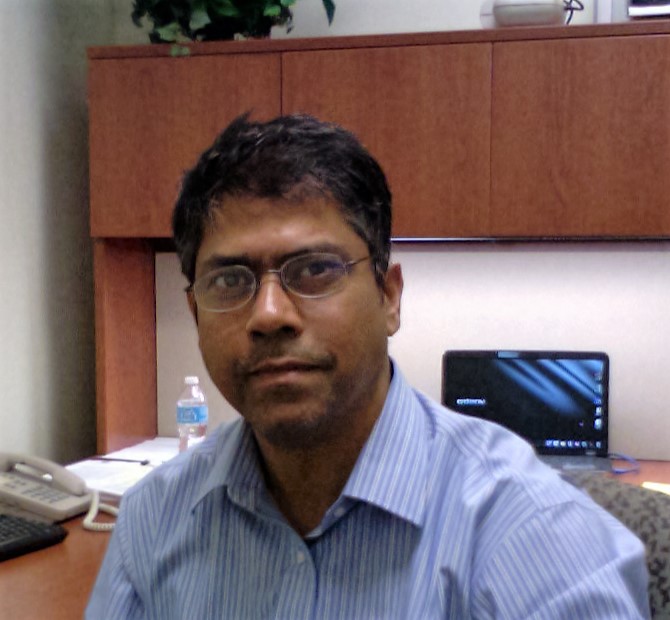
Gitta Astrid Hildegard Kutyniok is a Professor in the Department of Physics and Technology at UiT The Arctic University of Norway. Her research spans machine learning, applied mathematics, and signal processing, with a focus on theoretical foundations and practical applications.
Emilio Ruiz Moreno is a Postdoctoral Fellow at Simula Metropolitan's Department of Signal and Information Processing for Intelligent Systems. His work focuses on signal processing, machine learning, and real-time data analysis. Current Affiliation: Simula Metropolitan Center, Oslo, Norway Academic Role: Research Fellow (Signal Processing & Machine Learning) Research Interests: Emilio specializes in trajectory prediction, kernel regression, and zero-delay signal reconstruction. His work addresses challenges in motion-capture sensor data analysis, quantized signal tracking, and multivariate time-series processing for intelligent systems. Key applications include human-computer interaction and biomedical signal modeling. Publications (2021-2025): His research spans statistical signal processing (vector autoregressive models, kriging), adaptive kernel regression, and parallelizable learning frameworks. Technical reports and journal papers emphasize real-time performance and mathematical rigor. Laboratory Affiliation: Works within Simula Metropolitan's Signal and Information Processing for Intelligent Systems department, collaborating on interdisciplinary projects involving artificial intelligence and sensor technology.
Lantian Zhang is a postdoctoral researcher at KTH Royal Institute of Technology's Department of Mathematics, working under Assistant Professor Silun Zhang since September 2024. He is affiliated with the Division of Numerical Analysis, Optimization and Systems Theory within the School of Engineering Sciences. His research focuses on identification and adaptive control of nonlinear stochastic systems , adaptive estimation under quantized observations , and applications in machine learning . Dr. Zhang received his Ph.D. in systems theory from the Academy of Mathematics and Systems Science at the Chinese Academy of Sciences in 2024. Primary research area: Nonlinear stochastic systems and adaptive control Specialization: Quantized observations and binary-valued output systems Current projects: Advanced adaptive identification methods under saturated output constraints His publication record shows a strong focus on adaptive identification techniques under challenging observation conditions, with multiple papers published between 2022-2025 addressing saturated output observations, non-iid data, and binary-valued output systems. This research has applications in both theoretical control systems and practical implementations where measurement constraints exist. Dr. Zhang is part of the research group led by Assistant Professor Silun Zhang, which also includes other postdocs and PhD students working on related topics in networked systems and control theory. His work contributes to KTH's broader research initiatives in WASP (Wallenberg AI, Autonomous Systems and Software Program) and Digital Futures.
Mohammad Habibi serves as an Assistant Professor in the Department of Mechanical and Manufacturing Engineering at Tennessee State University's College of Engineering. His office is located in IND 103, with contact available via phone (615-963-5248) or email (mhabibi@tnstate.edu). Dr. Habibi's academic credentials include: Ph.D. in CISE (Robotics & Computer Integrated Manufacturing), Tennessee State University, 2014 M.S. in CISE (Systems Engineering), Tennessee State University, 2003 B.S. in Electrical Engineering, Z. H. College of Engineering and Technology, Aligarh Muslim University, India, 1989 His research program centers on three interconnected domains: Cyber-Physical Systems implementation in infrastructure, intelligent manufacturing processes integrating mechatronics, and advanced materials engineering to combat thermal degradation. This work manifests in practical applications spanning surveillance analytics, robotics, and sustainable manufacturing systems, with publications demonstrating consistent interdisciplinary contributions across engineering and computer science. Publication trends reveal an evolution from foundational visual analytics research (2011-2014) focused on surveillance data exploitation to recent theoretical advances in stochastic control (2019) and educational innovation (2018). His 11 documented publications span power systems engineering, robotics, and data science, reflecting a career-long commitment to solving complex engineering problems through computational methods. No scientific awards are documented in the provided materials. Dr. Habibi actively mentors students through capstone projects involving AI-driven manufacturing monitoring, digital twin development, and UAV applications. His teaching portfolio covers core mechanical engineering subjects including mechatronics, manufacturing processes, and materials engineering, with courses designed to bridge theoretical concepts and industrial applications using platforms like LEGO-EV3 and Proteus simulation. Though no formal lab structure is documented, his research manifests through student-led projects in cyber-physical systems and intelligent manufacturing, utilizing robotics platforms, microcontroller systems, and simulation environments to address real-world challenges in infrastructure monitoring and industrial automation.
Martin Hairer is Professor of Pure Mathematics at École Polytechnique Fédérale de Lausanne (EPFL) in the School of Basic Sciences, Department of Mathematics, and also holds a position at Imperial College London. His research focuses on stochastic analysis, particularly stochastic partial differential equations, where he developed the groundbreaking theory of regularity structures. His research interests span multiple areas within stochastic analysis: Stochastic Partial Differential Equations (SPDEs) Regularity Structures and Renormalization Malliavin Calculus Rough Paths Theory Markov Processes and Ergodic Theory Hypoelliptic Operators Applications to Mathematical Physics Professor Hairer's publication record shows consistent high-impact contributions, with recent work focusing on singular SPDEs, quantum field theory models, and extending regularity structures to new contexts. His research has created fundamental connections between probability theory, analysis, and theoretical physics. Notable awards include: Fields Medal (2014) Fermat Prize (2014) Euler Medal (2014) Loève Prize (2014) Professor Hairer actively supervises graduate students and postdoctoral researchers, with funding available for both PhD and postdoc positions starting in 2026. He contributes to the academic community through the Probability and Stochastic Analysis Seminar at EPFL and by making his lecture notes publicly available. His dual appointments at EPFL and Imperial College London provide unique opportunities for international collaboration and student exchange.
Daniel W. C. HO is a Chair Professor of Applied Mathematics and Associate Dean (Undergraduate Education) at the College of Science, City University of Hong Kong. He has been with City University of Hong Kong since 1989, having previously served as a Research Fellow at the University of Strathclyde, Glasgow, UK from 1985 to 1988. Prof. Ho received first class honours in BSc, MSc, and PhD degrees in mathematics from the University of Salford, Greater Manchester, UK in 1980, 1982, and 1986, respectively. His academic journey began with foundational work in control theory and has evolved into a distinguished career spanning over three decades. Prof. Ho's research interests span multiple domains in control theory and systems engineering. His primary focus areas include Control Theory , Estimation and filtering theory , Complex dynamical distributed networks , Multi-agent networks , Nonlinear singular systems , and Stochastic systems . His work bridges theoretical advances with practical applications, particularly in networked control systems, cybersecurity for cyber-physical systems, and distributed optimization. Prof. Ho has made significant contributions to the understanding of synchronization phenomena in complex networks, resilient control under cyber attacks, and quantized control systems with communication constraints. His research has evolved from classical control theory to address contemporary challenges in networked and distributed systems, reflecting the changing landscape of control engineering. Prof. Ho's publication record shows a strong emphasis on secure control systems under cyber attacks, distributed optimization with communication constraints, event-triggered control schemes, quantized control systems, and synchronization of complex networks. His work demonstrates a consistent progression from theoretical foundations to addressing practical implementation challenges in cyber-physical systems, with increasing focus on security aspects in recent years. Prof. Ho has received numerous prestigious awards and honors throughout his career. He was named a Fellow of the Institute of Electrical and Electronics Engineers (IEEE) in 2017 and elevated to IEEE Life Fellow status in 2024. He was awarded the Chang Jiang Chair Professorship by the Ministry of Education, China in 2012. Prof. Ho has been recognized as a Highly Cited Researcher for eleven consecutive years from 2014 to 2024, and is among the Top 2% of most highly cited scientists globally from 2020 to 2024. He received the Best Paper Award from The 8th Asian Control Conference in 2011 and the Teaching Excellence Award from City University of Hong Kong in 2020 for his innovative teaching approaches. Prof. Ho has held significant editorial responsibilities, serving as Subject Editor of the Journal of Franklin Institute, Co-Editor in Chief of Franklin Open, Associate Editor of IEEE Transactions on Neural Networks and Learning Systems, Asian Journal of Control, and Action Editor of Neural Networks. He has also served on the editorial boards of several other prestigious journals, contributing to the advancement of his field through scholarly communication. His leadership extends beyond research and teaching as Associate Dean (Undergraduate Education) of the College of Science at City University of Hong Kong, where he plays a key role in shaping the educational experience for science students.