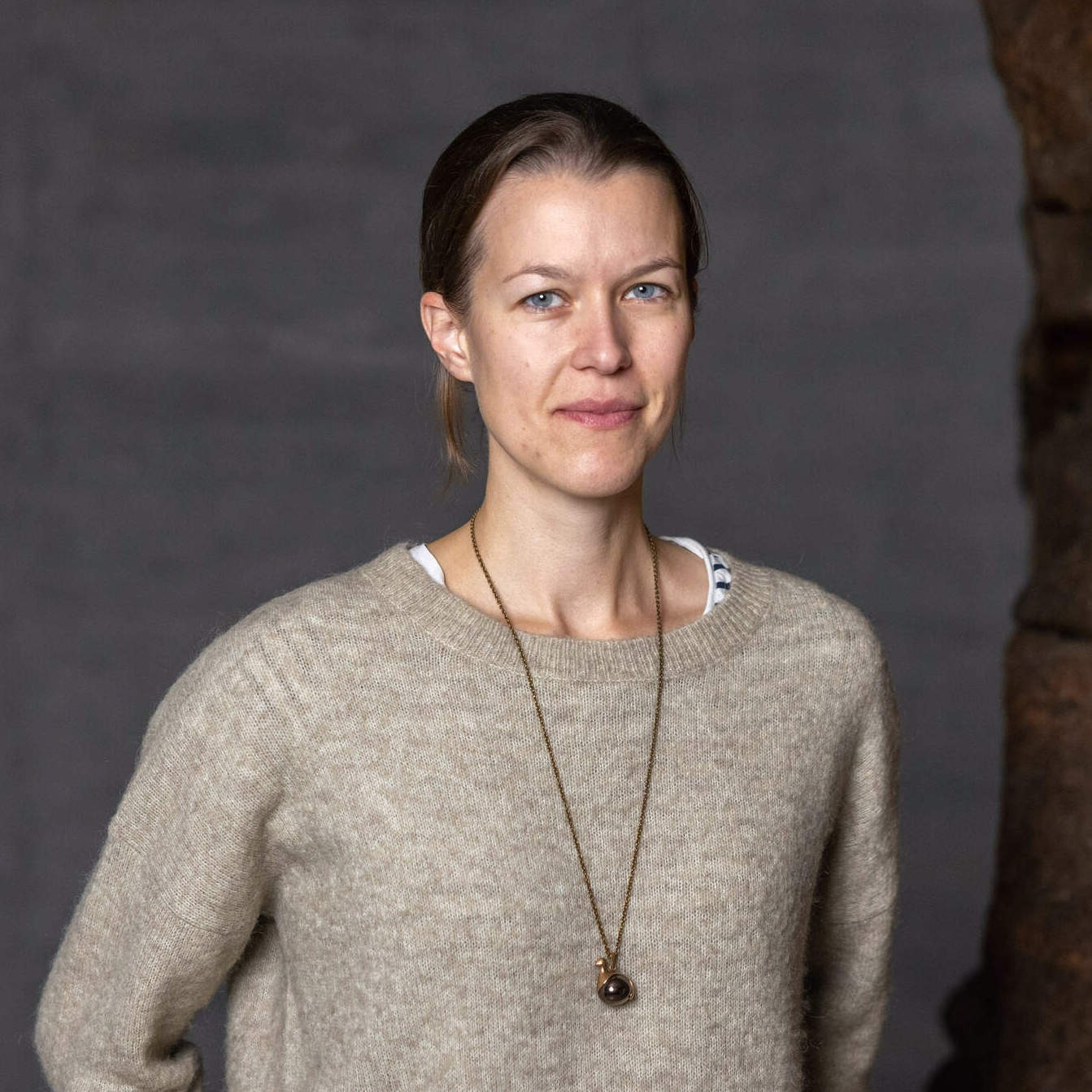
Nacira Agram is an Associate Professor at Kungliga Tekniska Högskolan (KTH), specializing in stochastic analysis, mean-field processes, and mathematical finance. She contributes to education through roles as Examiner and Teacher in advanced financial mathematics courses. Research Focus: Her work centers on stochastic differential equations with applications to financial markets, energy systems, and population modeling. Key areas include conditional McKean–Vlasov jump diffusions, singular control of stochastic Volterra equations, and deep learning applications in stochastic modeling. Publications: Recent research explores mean-field control, optimal stopping, and SPDEs with space interactions, emphasizing advanced mathematical techniques for financial and ecological systems. Teaching: Currently involved in courses like Financial Derivatives and Martingales and Stochastic Integrals , where she serves as course responsible and examiner.
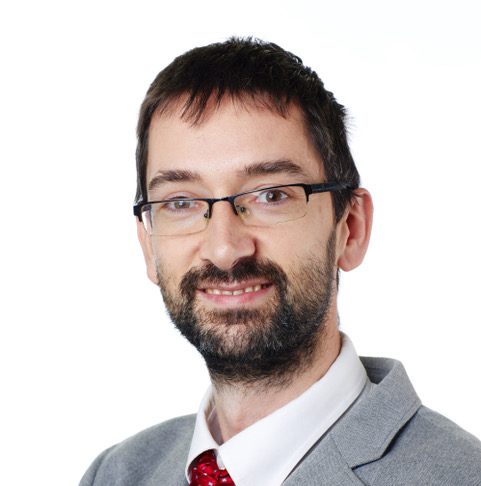
PD Dr. habil. Thomas Wöhling serves as a Senior Research Scientist and Team Leader for Stochastic Modelling of Hydrosystems at the Chair of Hydrology, Dresden University of Technology's Faculty of Environmental Sciences. His research spans integrated environmental systems modeling with particular expertise in surface water-groundwater interactions, braided river systems, and vadose zone processes. Previously, he held research positions at Water and Earth System Sciences Competence Cluster in Tübingen (2010-2015) and Lincoln Environmental Research in New Zealand (2006-2010). Dr. Wöhling completed his Dipl.-Hydrol. (1999) and PhD in Hydrology (2005) at Dresden University of Technology, followed by habilitation in Stochastic Hydrology (2021). His educational background includes extensive research at the Institute of Hydrology and Meteorology at TU Dresden (1999-2005) where he developed foundational expertise in hydrological modeling. Wöhling's research focuses on integrated modeling of coupled environmental systems , particularly flow and contaminant transport in surface water-groundwater systems, nutrient and energy fluxes in soil-plant-atmosphere systems, and distributed hydrological modeling. His work emphasizes stochastic modeling and uncertainty analysis , with significant contributions to inverse modeling, model calibration, multiobjective optimization, and Bayesian model averaging techniques. He has pioneered methods for evaluating monitoring network worth and data utility for environmental models. His publication record demonstrates consistent contributions to hydrological science, with recent work (2023-2025) focusing on machine learning applications in hydrology, advanced statistical inversion techniques, and complex karst system modeling. Key trends include integration of physics-based and data-driven approaches, improved uncertainty quantification methods, and applications to climate change impacts on water resources. His work bridges theoretical advances with practical applications in New Zealand's braided rivers and European hydrological systems. STAHY Best Paper Award (2018) ASCE Journal of Irrigation and Drainage Engineering Best Reviewer Awards (2008, 2010, 2011, 2015, 2018) ASCE Journal of Irrigation and Drainage Engineering Best Paper Awards (2008, 2009) Dr. Wöhling leads the Stochastic Modelling of Hydrosystems team and has secured funding for numerous projects including Klimakonform, ISOSIM, VAMOS II, and the International Research Training Group 'Integrated Hydrosystem Modelling.' His work combines novel monitoring techniques with modeling and optimal sensor placement to improve prediction reliability for river-groundwater exchange fluxes. He collaborates extensively with international partners, particularly in New Zealand through the Lincoln Agritech's Braided Rivers program. His laboratory work focuses on combining traditional hydrological measurements with advanced computational techniques, including deep learning applications for soil surface hydrology and time-windowed Bayesian analysis for predictive modeling. The team maintains strong connections with field sites in Germany's Saxon region and New Zealand's Canterbury Plains, facilitating integrated theoretical and empirical research approaches.
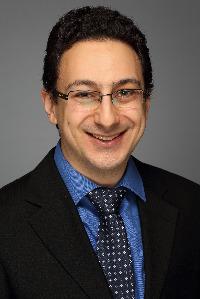
Dr. Yasmine Abdin serves as an Assistant Professor in the Department of Materials Engineering within the Faculty of Applied Science at the University of British Columbia (UBC). Her research focuses on advancing polymer matrix composite materials through innovative digital simulation and probabilistic design methodologies. Her academic credentials include: B.Sc. from KU Leuven M.Sc. from KU Leuven Ph.D. from KU Leuven Dr. Abdin's research program centers on overcoming limitations in composite material durability through probabilistic design frameworks and multi-scale modeling. She integrates finite element analysis, machine learning, and Industry 4.0 technologies to predict structural reliability under stochastic service conditions, with emphasis on damage tolerance, manufacturing-process-structure relationships, and optimization of carbon fiber production from sustainable precursors like lignin and asphaltenes. Her recent publications (2023-2025) demonstrate strong focus on sustainable composite manufacturing, including carbon fiber production from renewable resources, 4D printing of shape memory polymers, flax fiber-reinforced composites, cellulose nanofibril modification, and fatigue behavior analysis. Key thematic trends include the convergence of digital twin technologies with composite manufacturing, sustainable precursor development, and the application of machine learning to enhance modeling efficiency in structural reliability prediction. Information regarding doctoral students, research grants, laboratory facilities, or scientific awards was not provided in available sources.
Dr. Saibal Mukhopadhyay is a Professor in the Department of Electrical and Computer Engineering at the Georgia Institute of Technology, where he joined in 2007. He holds the Joseph M. Pettit Professorship and is recognized as an IEEE Fellow for his contributions to low-power and reliable VLSI systems. Education: BEng (Jadavpur University, India), Ph.D. (Purdue University) Labs: Gigascale Reliable Energy Efficient Nanosystem (GREEN) Lab His research focuses on VLSI Systems , Nanotechnology , and Low-Power Electronics , with emphasis on technology-circuit co-design for energy-efficient computing. Recent work explores Compute-in-Memory (CIM) architectures and Spiking Neural Networks for edge AI. Key article themes include Transformer Model Acceleration , Quantum Computing Calibration , 3D Object Detection , and Device Aging Analysis , reflecting his interdisciplinary approach bridging hardware design and machine learning. Scientific Awards IEEE Fellow (2018) ONR Young Investigator (2012) NSF CAREER Award (2011) IBM Faculty Awards (2009, 2010) Best Paper Awards (IEEE-Nano 2003, ICCD 2004)
Heiner Giefers is a Professor for Cloud Computing at the Department of Computer Science and Natural Sciences at Southwestphalia University of Applied Sciences since 2018. Prior to this position, he worked as a Research Staff Member at IBM Research - Zürich (2013-2018), focusing on hardware acceleration in cloud environments, implementation of big data algorithms on FPGAs, and development of hardware platforms for approximate and in-memory computing. Dr. Giefers received his doctorate (Dr. rer. nat.) from Universität Paderborn in 2012 with a dissertation titled "Design and Programming of Reconfigurable Mesh based Many-Cores." His academic journey at Universität Paderborn includes serving as an Academic Council Member (Akademischer Rat a.Z.) from 2008-2013 and as a Scientific Staff Member from 2006-2012, where he taught digital technology and computer architecture. Professor Giefers' research focuses on energy-efficient computing, particularly through hardware acceleration using FPGAs for cloud and AI workloads. His work spans cloud computing infrastructure, hardware-software co-design, approximate computing, in-memory computing, and energy-efficient implementations of machine learning algorithms. He has made significant contributions to the field of reconfigurable hardware for high-performance computing applications. His recent publications show a strong trend toward applying hardware acceleration techniques to artificial intelligence and machine learning workloads, with a particular focus on energy efficiency. His work bridges the gap between theoretical computer science and practical hardware implementation, often resulting in patented technologies that address real-world computing challenges in cloud environments. Best Paper Award for "Stochastic Matrix-Function Estimators: Scalable Big-Data Kernels with High Performance" (2016) Best Paper Award Nomination for "Energy-Efficient Stochastic Matrix Function Estimator for Graph Analytics on FPGA" (2016) Best Paper Award Nomination for "Analyzing the energy-efficiency of dense linear algebra kernels by power-profiling a hybrid CPU/FPGA system" (2014) Best Paper Award Nomination for "A Triple Hybrid Interconnect for Many-Cores: Reconfigurable Mesh, NoC and Barrier" (2010) Professor Giefers actively supervises numerous Bachelor's and Master's students, with over 50 completed theses covering topics from machine learning and cloud computing to IoT systems and hardware acceleration. He leads the "Energy-efficient AI" project (eki), which aims to increase the energy efficiency of AI systems through approximation techniques for FPGA implementation. Additionally, he collaborates with Prof. Dr. Christian Plessl on the "Digital teaching materials with Jupyter Notebooks" project, creating interactive learning materials that integrate teaching content, program code, and results into a single document. His work extends to practical applications through multiple patents related to FPGA implementations, neural networks, and memory systems, demonstrating his commitment to translating research into real-world solutions.
Antonio Felix De Amores Hernández serves as Associate Professor in the Department of Economics, Quantitative Methods and Economic History at Pablo de Olavide University, Spain. His research integrates advanced quantitative methodologies with policy analysis for European economic institutions, particularly the European Commission's Joint Research Centre and EUROMOD project. Education: Doctorate from Pablo de Olavide University (2011) with thesis "Essays in efficiency and stochastic input-output analysis" supervised by Dr. Thijs ten Raa and Dr. José Manuel Rueda-Cantuche Research Interests: De Amores Hernández specializes in Input-Output Analysis and Distributional Economics , with expertise in stochastic modeling, fiscal policy evaluation, and environmental-economic linkages. His work bridges theoretical econometrics with real-world policy applications, focusing on household welfare impacts across the European Union. Publication Trends: Recent work (2022-2025) reveals concentrated focus on inflation dynamics, energy price policies, and carbon taxation distributional effects. His input-output methodology innovations support EU policy frameworks like EUROMOD, while empirical studies on VAT cuts, price comparison tools, and Romania's cost-of-living response demonstrate applied microsimulation expertise. Scientific Awards: No scientific awards documented in source materials Advising & Grants: Actively involved in Pablo de Olavide's Doctoral Program in Economic Analysis and Business Management. Source materials indicate EU-funded research collaboration through the Joint Research Centre but omit specific grant details or student supervision records. Research Infrastructure: Core member of the "Quantitative Methods in Business and Economics" research group, contributing to EU-wide databases including input-output tables and environmental accounts for policy modeling.
Sophie N. Parragh is Professor and Head of the Institute of Production and Logistics Management at Johannes Kepler University Linz, where she also serves as program director of the master's degree program in Economic and Business Analytics. She received her PhD from the University of Vienna in 2009 and completed her habilitation in 2016, following postdoctoral research at the IBM Center for Advanced Studies in Porto and a visiting professorship at the Vienna University of Economics and Business. Her research focuses on developing exact and heuristic optimization algorithms for complex logistics and transportation problems. Key areas include vehicle routing, green logistics, disaster relief distribution planning, scheduling, and multi-objective optimization. She has particular expertise in branch-and-bound, branch-and-price, column generation, and metaheuristics approaches to solve challenging combinatorial optimization problems. Dr. Parragh's publication record shows a consistent trend toward increasingly complex multi-objective problems, with recent work focusing on electric vehicle routing, multi-echelon production planning under uncertainty, and bi-objective facility location problems with applications in disaster relief. Her research bridges theoretical optimization methods with practical applications in logistics and transportation. Scientific Awards: ÖGOR (Austrian Society for Operations Research) dissertation prize doc.award from the University of Vienna Hertha Firnberg Postdoc fellowship from the Austrian Science Fund (FWF) Dr. Parragh has served as department editor for OR Spectrum and as associate editor for Transportation Science, Transportation Research Part B: Methodological, INFORMS Journal on Computing, and Networks. She has led and participated in numerous third-party funded research projects in operations research, including work in healthcare logistics, field staff routing, production planning, and electric vehicle routing. In 2021-2022, she co-organized the monthly VeRoLog webinar series, demonstrating her active engagement with the international operations research community. She maintains strong research collaborations across Europe, evidenced by her co-authored publications with researchers from institutions in Austria, France, Portugal, Denmark, and beyond. Her work consistently addresses both theoretical challenges in optimization and practical applications in industry and public service contexts.
Ramavarapu S Sreenivas is a Professor in the Industrial and Enterprise Systems Engineering department at the University of Illinois at Urbana-Champaign , with research appointments at the Coordinated Science Laboratory (CSL) and the Information Trust Institute (ITI ). He holds a joint affiliation with the Electrical and Computer Engineering department and serves as the Arthur Davis Faculty Scholar since 2016. Ph.D. , Electrical and Computer Engineering, Carnegie Mellon University (1990) M.S.E.E. , Carnegie Mellon University (1987) B.Tech , Electrical Engineering, Indian Institute of Technology Madras (1985) His research focuses on Discrete-Event/Discrete-State (DEDS) systems , applying Coding Theory, Machine Learning, and Information Theory to develop near-optimal supervisory policies for applications in wireless networks, automated manufacturing, and healthcare systems . He leads the Center for Autonomous Construction and Manufacturing at Scale (CACMS) , established in 2023. Recent publications highlight advancements in liveness enforcement in Petri nets , fault-tolerant control , and IoT-based load scheduling . His work bridges theoretical rigor with practical implementations in Distributed Control, Network Coding , and Reinforcement Learning . UIUC Campus Award for Excellence in Graduate and Professional Teaching (2023) Arthur Davis Faculty Scholar (2016) Senior Member, IEEE (2002) James Franklin Sharp Outstanding Teaching Award in Industrial Engineering (2017, 2012) Sreenivas has taught graduate and undergraduate courses in Control Systems, Integer Programming, and Financial Computing since 1992. He co-instructed courses in Health Technology and contributed to the Master of Science in Financial Engineering (MSFE) program, which ranks 4th nationally.
Dr. Adel Aazami is an Assistant Professor at the Institute of Transport Economics and Logistics at Vienna University of Economics and Business (WU Vienna) since 2023. His academic journey began with a B.Sc. in Industrial Engineering from University of Tehran (2010-2014), followed by an M.Sc. (2014-2016) and Ph.D. (2016-2021) from Iran University of Science and Technology (IUST), Tehran. Prior to his current position, he worked as a Postdoctoral Researcher at Sharif University of Technology (2021-2022) and was a Visiting Researcher at the University of Toronto (2020). His educational background includes: Ph.D. in Industrial Engineering (2016-2021) - Iran University of Science and Technology (IUST), Tehran, Iran M.Sc. in Industrial Engineering (2014-2016) - Iran University of Science and Technology (IUST), Tehran, Iran B.Sc. in Industrial Engineering (2010-2014) - University of Tehran, Tehran, Iran Dr. Aazami's research spans multiple interconnected domains within operations research and supply chain management. His primary focus areas include Operations Research and Optimization, Supply Chain and Logistics, Production and Distribution/Transportation Planning, Competition and Game Theory, Stochastic Programming, and Decomposition Algorithms. His work demonstrates a strong emphasis on developing mathematical models and optimization algorithms for complex supply chain problems, particularly those involving perishable goods, competitive environments, and sustainability considerations. He has made significant contributions to integrating environmental factors into traditional logistics problems and developing robust optimization approaches for supply chain networks. Analysis of Dr. Aazami's publication record reveals a consistent trajectory of increasingly sophisticated research in supply chain optimization. His work shows a clear progression from foundational mathematical optimization techniques to increasingly complex integrated problems involving multiple stakeholders, uncertainty, and environmental considerations. A notable trend is his focus on perishable products within supply chains, developing models that account for limited product lifetimes while optimizing across multiple echelons of the supply chain. More recently, his research has expanded to incorporate green logistics considerations, developing algorithms that balance economic and environmental objectives in transportation and distribution problems. His notable scientific achievements include: Winner of the 'Best Student' award among nationwide students evaluated by the Iranian Ministry of Science (2020) Winner of the Iranian Nobel Prize (known as the Alborz National Foundation Prize) (2019) Winner of the Best Student Award at IUST (2018) Winner of the Top Researcher Award at IUST (2018) Annual Awards of the National Elites Foundation Iran (2015-2020) Dr. Aazami has extensive teaching experience across multiple Iranian universities including Tehran University, Amirkabir Technical University, Isfahan University, Yazd University, Zanjan University, Damghan University, Abrar University and Iran Technical University. His peer review activities include reviewing for prestigious journals such as Soft Computing, Expert Systems with Applications, and Annals of Operations Research. While specific grant information isn't detailed in the provided text, his research output suggests active engagement with complex optimization problems relevant to transportation and logistics industries. At WU Vienna, Dr. Aazami is part of the research team at the Institute of Transport Economics and Logistics, working alongside other faculty members including Prof. Kummer and Prof. Wakolbinger. His research integrates theoretical optimization methods with practical applications in transportation and logistics, contributing to the institute's focus on sustainable and efficient supply chain solutions.
David A. Goldberg is an Associate Professor and Director of Undergraduate Studies in the Operations Research and Information Engineering (ORIE) department at Cornell University's College of Engineering. His research bridges theoretical probability with practical applications in operations management, inventory systems, and queueing networks. Education: Ph.D. in Operations Research, MIT, 2011 B.S. in Computer Science, minors in Applied Math and Industrial Engineering / Operations Research, Columbia University SEAS, 2006 Professor Goldberg's research focuses on advancing theoretical understanding of stochastic systems while developing practical insights for operations management. His work spans applied probability, stochastic processes, queueing theory, inventory models, distributionally robust optimization, and combinatorial optimization. He has made significant contributions to understanding the behavior of complex systems under uncertainty, particularly in many-server queues and inventory management under demand variability. His publications reveal strong trends in asymptotic analysis of stochastic systems, particularly in the Halfin-Whitt regime for queueing systems and in inventory models with large lead times. His work consistently bridges theoretical probability with practical operations management applications, with a strong emphasis on developing models that account for real-world uncertainties while maintaining mathematical tractability. His recent work shows increasing focus on distributionally robust approaches that require minimal assumptions about underlying distributions. Scientific Awards: INFORMS Applied Probability Society Best Publication Award (2019) INFORMS Nicholson student paper competition first place (2019) INFORMS Nicholson student paper competition first place (2015) INFORMS Junior Faculty Interest Group paper competition second place (2015) Professor Goldberg has successfully advised multiple Ph.D. students who have gone on to prestigious academic and industry positions. His research is supported by significant NSF funding, including a CAREER award and a grant for stochastic comparison approaches to parallel server queues. He serves on editorial boards for leading journals including Operations Research and Stochastic Models, and has held leadership positions in the INFORMS Applied Probability Society including Vice-chair (2020-2022) and Council member (2015-2017).
Matilda Backholm is an Assistant Professor in the Department of Applied Physics at Aalto University, specializing in soft matter physics, fluid dynamics, and surface science. Her research focuses on fundamental interactions between liquids and structured surfaces, with applications in materials science and biophysics. Her primary research areas include soft matter mechanics, droplet dynamics on superhydrophobic surfaces, wetting phenomena across multiple scales, and the biophysics of cellular systems. She investigates how surface topography and chemical properties govern liquid behavior at micro/nanoscales, with particular emphasis on friction reduction, droplet mobility, and immune cell mechanics. Her work bridges experimental physics with practical applications in microfluidics, nanomedicine, and advanced materials. Analysis of her recent publications (2017-2025) reveals consistent focus on interfacial phenomena, with major themes including: superhydrophobic surface engineering, ferrofluid manipulation, viscosity effects in confined systems, and mechanical properties of biological aggregates. Her research demonstrates sophisticated experimental techniques combined with theoretical modeling to address fundamental questions in fluid-surface interactions. She has received significant recognition including: Academy of Finland Postdoctoral Grant (2017) Ruth and Nils-Erik Stenbäck Prize for career accomplishments (2017) Finnish Academy of Science and Letters Väisälä Starting Grant (2023) Jane and Aatos Erkko Foundation grant (2023) Research Council of Finland Research Fellowship (2023) ERC Starting Grant (2023) Dr. Backholm leads the “Living, Fluid, & Soft Matter” research group and has secured substantial funding including multiple personal grants from Finnish national bodies and European competitive programs. Her collaborative work spans physics, materials science, and biomedical engineering, with publications in high-impact journals such as Nature Materials, PNAS, and Science Advances. Her laboratory develops advanced experimental platforms for studying liquid-solid interactions at micro/nanoscales, including custom micropipette force sensors and high-precision droplet manipulation systems. Current research directions integrate magnetic field control with soft matter systems and explore biological implications of surface physics.
Prof. Dr. Francesca Biagini is a full Professor at the Department of Mathematics, University of Munich (LMU Munich) , leading the Stochastics and Financial Mathematics working group. She serves as Vice President for International Affairs and Diversity at LMU Munich since October 1, 2019, and as President of the Bachelier Finance Society (2022–2023). She is also a Correspondent of the Deutsche Aktuarvereinigung (DAV) and a member of the Executive Board of the Munich Risk and Insurance Center (MRIC) since 2017. Her research focuses on stochastic processes in financial markets , particularly asset price bubbles , default risk modeling , and robust hedging under model uncertainty. Recent work includes deep learning applications to bubble detection and non-linear affine processes for market dynamics. She actively contributes to academic leadership through teaching and publications, including 15+ recent articles on topics like liquidity-induced bubbles, machine learning calibration, and systemic risk transfer equilibrium. Her workgroup collaborates on quantLab initiatives and DAV certificate programs .
Anna-Lena Sachs is a Senior Lecturer in Predictive Analytics at Lancaster University's Management Science department. Her research bridges inventory management, behavioural operations, and forecasting, with applications in retail, healthcare, automotive, and logistics sectors. She develops quantitative models and leverages industry datasets to solve practical supply chain challenges. Research Interests : Inventory management for spare parts, data-driven decision support systems, multi-echelon optimization, markdown pricing strategies, and human decision behavior in operational contexts. She emphasizes translating academic insights into industry practice through field experiments and lab studies. Scientific Recognition : Dean’s Award for Academic Excellence Fellow of the Higher Education Academy (ATLAS) Research Impact Award for Centre for Marketing Analytics and Forecasting PhD Supervision : Actively mentors students in Operations Research, Management Science, and supply chain analytics. Current PhD candidates include Ritika Arora, Benjamin Lowery, Adam Page, Carlos Rodriguez Calderon, and Joe Rutherford. Collaborative Networks : Affiliated with Lancaster’s STOR-i Centre for Doctoral Training, Centre for Marketing Analytics & Forecasting, and Data Science Institute. She has led projects with Royal Mail, Jaguar Land Rover, and GlaxoSmithKline.
Angelos Georghiou is an Associate Professor of Operations Management at the Department of Business and Public Administration, University of Cyprus. He previously held academic positions as Assistant Professor at McGill University (2016–2019), Post-Doctoral Researcher at MIT (2012–2013), and Postdoctoral Researcher at ETH Zurich (2013–2016). His work bridges computational methods in stochastic and robust optimization with applications in healthcare, energy systems, and operations management. Ph.D. in Operations Research, Imperial College London (2012) M.Sci. in Mathematics, Imperial College London (2008) His research focuses on stochastic optimization , robust optimization , and decision rules , addressing challenges in healthcare analytics , energy-efficient control systems , and machine learning integration . Recent publications in Management Science and Operations Research highlight his contributions to decision-dependent information discovery and computational frameworks. Key trends in his 15 most recent articles include: Advancing robust optimization techniques for multistage problems Applications in healthcare (psychiatric risk prediction) and energy systems Integration of machine learning with stochastic programming Development of tractable algorithms for complex decision environments Scientific Awards : Esdras-Minville Best Student Paper Award (2023) He serves on editorial boards of Operations Research Letters (Area Editor) and Management Science , and collaborates with institutions like MIT, ETH Zurich, and McGill University. His work with undergraduate students includes a 2021 paper in SIAM Undergraduate Research Online .
Roberto Tron is an Assistant Professor in the Mechanical Engineering and Systems Engineering departments at the Boston University College of Engineering , with his office located at 110 Cummington Mall. His research integrates control theory, robotics, and computer vision to solve complex multi-agent coordination problems. His primary research interests focus on Riemannian geometry applications , distributed multi-agent systems , and safety-critical control . Key methodologies include Control Barrier Functions (CBFs), Riemannian optimization, and distributed consensus algorithms, with applications spanning autonomous aerial vehicles, robotic manipulation, and multi-robot security systems. Analysis of his recent publications reveals a strong emphasis on safety verification and real-time optimization for autonomous systems. His work consistently bridges theoretical foundations in nonlinear control with practical implementations in robotics, particularly addressing challenges in limited sensor fields of view, distributed task allocation, and noise-robust navigation. The research shows increasing integration of formal methods like Signal Temporal Logic with learning-based approaches. Tron received his Ph.D. from The John Hopkins University and previously conducted post-doctoral research at the GRASP Lab, University of Pennsylvania. His work demonstrates significant contributions to provably safe autonomous systems through frameworks like the Control Barrier Function Toolbox.