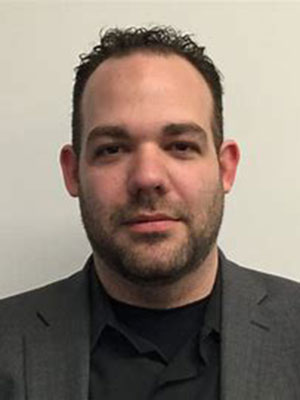
Sebastian Throm is an Assistant Professor at the Department of Mathematics and Mathematical Statistics, Umeå University. His research focuses on mathematical analysis of partial differential equations, dynamical systems, and modeling of complex networks. His work explores the relaxation properties of Sobolev spaces, spectral gap analysis for dissipative Boltzmann equations with Maxwell interactions, and stability of self-similar solutions in inelastic kinetic models. He also investigates space-fractional Swift–Hohenberg equations for pattern formation and nonlinear dynamics. Recent publications highlight his contributions to spectral gap theory for Boltzmann equations, stability analysis of self-similar profiles in 1D inelastic collisions, and amplitude equations for fractional pattern-forming systems. These studies span mathematical physics, nonlinear analysis, and applied mathematics.
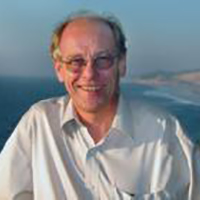
Sibel Alumur Alev is an Associate Professor and Associate Chair of Graduate Studies at the University of Waterloo. Her research focuses on logistics network design, hub location optimization, and sustainable transportation systems. She actively contributes to the fields of operations research and supply chain management, with a strong emphasis on addressing uncertainty in network design and strategic infrastructure planning. Her work spans applications in autonomous mobility systems, electric vehicle charging infrastructure, healthcare logistics, and pandemic response. She has published extensively on hub-and-spoke network models, reverse logistics for environmental sustainability, and multi-period resource allocation strategies. Notable areas of interest include the integration of stochastic and robust optimization methodologies into real-world logistics challenges. Dr. Alev’s research also bridges academic and industrial needs, addressing practical problems such as optimal testing center locations during pandemics and strategic freight hub expansions. Her contributions have been featured in peer-reviewed journals and conference proceedings, reflecting her commitment to advancing both theoretical and applied aspects of logistics and operations research.
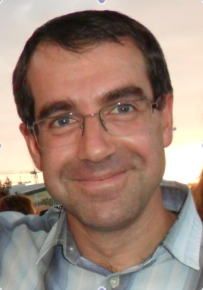
Tathagata Srimani is an Assistant Professor in the Department of Electrical and Computer Engineering at Carnegie Mellon University (CMU), affiliated with the College of Engineering. He previously served as a Postdoctoral Scholar in Electrical Engineering at Stanford University. His academic journey includes a Ph.D. and S.M. in EECS from MIT (2022 and 2018 respectively) and a B.Tech. in E&ECE from IIT Kharagpur (2016). Research Focus: Srimani’s work centers on nanoelectronics and transformative NanoSystems. Key areas include: Carbon nanotube field-effect transistors (CNFETs) and their monolithic 3D integration with silicon Ultra-dense 3D integration of logic and memory to address the 'memory wall' in AI/ML Technology-architecture co-design frameworks for energy-efficient computing Key Achievements: Developed first silicon fab-compatible CNFET processes (TNANO ’18, Nature ’19) Enabled CNFET RISC-V microprocessor and monolithic 3D integration with Analog Devices/SkyWater Recipient of MIT Presidential Fellowship (2016) and Morris Joseph Levin Award (2018) Teaching & Outreach: Teaches semiconductor devices and hardware design, including hands-on 'Hacker Fab' courses. Leads the NEXUS Research Group exploring heterogeneous nanomaterials (e.g., magnetic and oxide semiconductors) and thermal/power management in 3D systems. Future Directions: Expanding into probabilistic computing hardware, co-design frameworks for application-specific systems, and scaling 3D NanoSystem technologies for industrial adoption.
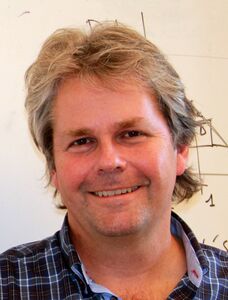
Salman Durrani is a Professor and Associate Director Education at the School of Engineering, Australian National University. He holds a PhD in Electrical Engineering from the University of Queensland and a BSc (First Class Honours) from the University of Engineering & Technology, Lahore, Pakistan. His research spans Internet of Things networks, satellite/UAV communications, machine learning applications in wireless systems, early wildfire detection, and backscatter communications. Current projects focus on terahertz communication security, UAV-assisted networks, and IoT-based environmental monitoring. His recent publications demonstrate strong emphasis on wireless security, terahertz technology optimization, UAV network design, and IoT applications for environmental protection. Technological innovations include novel beamforming techniques and lightweight authentication protocols. AI 2000 Internet of Things Most Influential Scholar (2020, 2022, 2023) IEEE ComSoc Asia Pacific Outstanding Paper Award (2016) Australian Council of Graduate Research Excellence Award (2019) ANU Vice-Chancellor's Awards for Supervision (2018) and Education (2012) He has supervised 15 PhD students to completion and secured $1.9M in research funding as chief investigator for six grants. Current projects include participation in the ANU Optus Bushfire Research Centre of Excellence.
Subhabrata Sen is an Assistant Professor of Statistics at Harvard University, located in Science Center 713, Cambridge. His research focuses on Applied Probability, Statistics of Networks, Signal Detection, and Machine Learning. He holds a PhD from Stanford University (2017), advised by Amir Dembo and Andrea Montanari, and prior degrees from the Indian Statistical Institute, Kolkata. His work bridges statistical theory, high-dimensional data analysis, and applications in networks and physics-inspired methods. Key contributions include foundational studies on spin glasses, community detection, and causal inference in complex systems. His research often employs mean-field techniques and explores universality principles in estimation problems. Selected awards and recognition are not explicitly mentioned in the provided text. His advising and grants include postdoctoral mentoring at Microsoft Research and MIT (2017-19). He collaborates on projects involving spectral methods, random matrix theory, and multi-layer network analysis. Labs/teams: Active in Harvard's Statistics Department research groups focused on statistical theory and network science. Maintains an academic website with preprints and resources.
Dr. Joseph Moore is an Assistant Professor in the Department of Mechanical Engineering at Johns Hopkins University (JHU), serving as Director of the Agile and Intelligent Robotics (AIRO) Laboratory. He is affiliated with the Laboratory for Computational Sensing and Robotics (LCSR), the Institute for Assured Autonomy (IAA), and holds a Bridging Faculty appointment in the Research and Exploratory Development Department (REDD) at JHU/APL. His research focuses on computational control, machine learning, and robotics to enable agile systems operating in complex environments. Dr. Moore previously served as Robotics Group Chief Scientist at JHU/APL, leading projects on hybrid unmanned aerial-aquatic vehicles and aerobatic fixed-wing systems. He has secured funding as Principal Investigator (PI) for ONR, DARPA, and ARL programs, particularly in post-stall maneuvering control and multi-robot coordination. His work emphasizes robust control strategies for autonomous systems in constrained environments. Research interests include aerial robotics, optimization, and learning-based control. Notable contributions involve NMPC-based systems, UAV navigation, and adaptive control for uncertain environments. His recent articles highlight advancements in swarm coordination, morphing-wing UAVs, and PAC-NMPC frameworks. Dr. Moore advises students such as Mark Gonzales and Adam Polevoy. Key grants include ONR/DARPA-funded projects on post-stall flight control and Army-funded multi-robot coordination efforts. His lab (AIRO) and collaborations (LCSR, IAA) drive applied and theoretical robotics research.
Prof. Iris F.A. Vis is a Professor of Industrial Engineering at the University of Groningen's Faculty of Economics and Business. She specializes in logistics and operations management, focusing on optimizing processes through quantitative and qualitative methods. Her work intersects logistics with sectors like healthcare, education, and energy. She leads major projects such as SMiLES (sustainable mobility-logistics integration) and designs logistics solutions for personalized learning systems in schools. She has advised over a dozen PhD students and collaborates with industry partners globally. Awards include Fellowship in the Netherlands Academy of Engineering. Education: M.Sc. Mathematics (Leiden University), PhD in Operations Management (Erasmus University Rotterdam) Roles: Captain of Science for Topsector Logistics, Member of multiple national advisory boards Research interests span sustainable transportation networks, port optimization, healthcare logistics, and educational logistics. Key projects include LNG supply chain design, offshore wind farm maintenance planning, and synchromodal transport networks. Over 45 peer-reviewed publications and 18 media engagements highlight her impactful contributions. Teaching includes courses on supply chain network design, technology-enabled innovation, and operations management at all academic levels. She advises on industrial partnerships and digital transformation initiatives in the Northern Netherlands region.
Gerda de Vries is a Professor in the Department of Mathematics & Statistical Sciences at the University of Alberta, Faculty of Science. Her research focuses on mathematical physiology, dynamical systems, and mathematical modeling, particularly in cellular biophysics, pattern formation, and systems biology. She has contributed extensively to understanding complex biological systems through interdisciplinary approaches combining mathematics and biology. Her work spans applications in radiation biology (e.g., cell cycle dynamics and low-dose radiation effects), biophysics (microtubule organization, motor proteins), ecology (predator-prey interactions, forest fire modeling), and education (adapting primary literature for STEM teaching). Recent research highlights include analyzing saddle-node bifurcations, bystander effects in radiation, and collective behavior in animal groups. De Vries has published over 50 peer-reviewed articles since 2000, with a focus on bridging abstract mathematical theory to concrete biological phenomena. Notable contributions include models of pancreatic β-cell dynamics, immune system versatility, and educational frameworks for mathematical biology. Her academic career includes leadership in curriculum development and interdisciplinary research, though no specific grants or awards are explicitly listed in the provided information.
Mesut Baran is a Professor in the Department of Electrical and Computer Engineering at North Carolina State University. He focuses on applying computer, control, and system analysis techniques to power system operation and planning, particularly in smart power distribution systems and distributed energy resource integration. His research emphasizes grid resilience, renewable energy integration, and advanced grid technologies. Education: Ph.D. in Electrical Engineering, University of California, Berkeley (1988) Master's in Electrical Engineering, Middle East Technical University, Turkey (1981) Bachelor's in Electrical Engineering, Middle East Technical University, Turkey (1979) Research interests include power electronics, smart grid technologies, distributed energy resource management, and grid resilience. His recent work addresses challenges in EV charging impacts, fault tolerance, and microgrid coordination. Baran has contributed to IEEE standards and received prestigious awards, including the IEEE Fellow designation (2010) and the William F. Lane Outstanding Teaching Award (2017). Publications highlight advancements in distribution system state estimation, fault mitigation, and microgrid management. Collaborations with industry (e.g., Strata Solar) and federal grants ($3.1M DOE award) underscore his applied research impact. He teaches foundational courses like ECE200 and advises on FREEDM Systems Center projects.
Dr. Navid Izady is a Reader in Operations & Supply Chain at Bayes Business School, part of City St George's, University of London. His academic career includes a PhD from Lancaster University Management School (2010), and prior roles at the University of Southampton. He specializes in stochastic modelling for healthcare and manufacturing operations, collaborating with hospitals and healthcare organizations on sponsored research and consultancy projects. Dr. Izady holds qualifications in Industrial Engineering from Sharif University of Technology (BSc and MSc) and a PhD in Management Science. He teaches operations management, stochastic modelling, healthcare modelling, and decision analysis across BSc, MSc, and MBA programs. His research focuses on optimizing healthcare logistics, patient flow management, and resource allocation in hospitals. He has developed frameworks for managing pandemic and non-pandemic demand, reconfiguring inpatient services, and optimizing staffing and patient admission/discharge processes. His work bridges theoretical stochastic models with practical healthcare challenges, emphasizing operational efficiency and resilience. Notable contributions include studies on inpatient bed pressure reduction, sample pooling techniques for pandemic testing, and queueing theory applications in emergency departments and specialty clinics. His publications highlight innovations in healthcare operations management and simulation methods. Dr. Izady's expertise includes operations research, simulation, statistics, and stochastic processes. He supports industry partnerships and has supervised numerous research students, contributing to both academic and applied knowledge in healthcare and manufacturing systems.
Kyle DeMars is an Associate Professor and Associate Department Head for Theoretical and Computational Research in the Department of Aerospace Engineering at Texas A&M University. He holds a Ph.D. from The University of Texas at Austin (2010) and has expertise in space situational awareness, navigation systems, Bayesian filtering, and information theory. His work focuses on advanced estimation techniques for spacecraft autonomy and space surveillance. Dr. DeMars' research emphasizes robust nonlinear filtering, multitarget tracking, and information-theoretic approaches to orbital dynamics. He has developed innovative methods for spacecraft navigation, including terrain-relative systems and anonymous feature processing. His contributions address challenges in uncertainty quantification, sensor fusion, and cislunar space domain awareness. Education: Ph.D./M.S.E./B.S. in Aerospace Engineering (UT Austin, 2004–2010) Awards: AIAA Young Professional Award (2017), NASA Innovation Award (2014), and multiple teaching/research recognitions Labs/Teams: Active in space situational awareness, guidance & control, and probabilistic navigation systems Key trends in his publications include: Advances in particle flow and Gaussian mixture methods for nonlinear estimation Cislunar trajectory analysis and resonance-based surveillance strategies Development of fault-resistant and anonymous navigation frameworks Integration of information theory into sensor tasking and uncertainty management His work bridges theoretical developments with practical applications in planetary landing navigation, space traffic management, and autonomous spacecraft systems.
Steven Constable is a Professor of Geophysics at the Institute of Geophysics and Planetary Physics (IGPP) within the Scripps Institution of Oceanography at UC San Diego. He specializes in electrical conductivity studies of Earth’s crust and mantle, seafloor instrumentation development, and geophysical data analysis. His research focuses on understanding tectonic processes, subduction zone dynamics, and marine geohazards through electromagnetic methods. Education: B.S., University of Western Australia Ph.D., Australian National University Research Interests: Electrical conductivity of crust and mantle Seafloor instrumentation development Magnetotelluric and controlled-source electromagnetic (CSEM) methods Subduction zone fluid dynamics CO 2 sequestration monitoring Mid-ocean ridge magmatism Grants & Collaborations: NSF-NERC Collaborative Research: Magnetotelluric imaging of plume-ridge interactions (Galapagos) Magnetotelluric Investigation of the Salton Trough (MIST) Experiment PI-LAB Experiment at the Equatorial Mid-Atlantic Ridge Labs & Teams: He leads the Marine Electromagnetics Lab , developing cutting-edge instrumentation for marine geophysical surveys. His team collaborates globally on projects ranging from Arctic permafrost assessment to subduction zone imaging.
Keisuke Ishihara is an Assistant Professor in the Department of Computational and Systems Biology at the University of Pittsburgh School of Medicine. His research focuses on engineering human brain and cardiac organoids using genetic, chemical, and computational approaches to uncover novel regulatory mechanisms and physical principles underlying tissue development. His lab is located at Biomedical Science Tower 3, with an office in room 10020A. Dr. Ishihara holds a PhD in Systems Biology from Harvard University. His work bridges synthetic biology, developmental biology, and biophysics to address fundamental questions in organogenesis and cellular morphogenesis. Recent research highlights include studies on BMP-mediated neural tube patterning in organoids and the biophysical dynamics of microtubule assemblies in large cells. Publications from his lab emphasize interdisciplinary approaches to understand cell size scaling, mitotic spindle dynamics, and self-organization in synthetic tissues. His team has contributed to advancements in organoid technology, uncovering dormant genetic programs and physical principles governing tissue architecture. Laboratory activities are centered at the University of Pittsburgh, collaborating with the School of Medicine's computational and systems biology initiatives. For more details, visit his lab website linked below.
Dr. Lorenzo Pellis is a Research Fellow at the University of Manchester, holding the Sir Henry Dale Fellowship, and a Visiting Fellow at the University of Warwick's Mathematics Institute and Zeeman Institute. He is also an Honorary Research Associate at the Medical Research Council (MRC) Centre for Outbreak Analysis and Modelling, within the Department of Infectious Disease Epidemiology at Imperial College London. His research bridges applied mathematics and epidemiology, focusing on developing models that inform public health decisions. He earned his Doctoral degree in Mathematical Biology from Imperial College London in 2009, with a dissertation titled Mathematical models for emerging infections in socially structured populations: the presence of households and other social structures II: Comparisons and implications for vaccination . Pellis's research interests include the development of novel deterministic and stochastic methods to model infection spread dynamics, particularly in human populations with complex social structures. He focuses on directly transmitted infections and the impact of co-infections on epidemiological and evolutionary outcomes. His work emphasizes multi-scale models integrating within-host and between-host processes, with applications to antimicrobial resistance, HIV-TB co-infections, and respiratory syncytial virus (RSV) transmission in Kenya. He also explores model comparison techniques to assess the utility of simple models in public health decision-making. His recent articles collectively explore mathematical modeling in infectious disease dynamics, with a focus on network-based approaches, multi-strain infections, and the integration of within-host and between-host processes. They highlight challenges in metapopulation and network models, as well as the evolutionary dynamics of HIV and TB co-infections. Sir Henry Dale Fellow , funded by the Wellcome Trust and Royal Society His grants include support for his Sir Henry Dale Fellowship, which funds research on co-infections and multi-scale models. He collaborates with Prof. Matt Keeling and Dr. Thomas House at Warwick and Prof. James Nokes on RSV studies in Kenya. His work also involves improving epidemic dynamics approximation methods on networks. He is affiliated with the applied Mathematics group at Manchester's School of Mathematics, the Zeeman Institute at Warwick, and the MRC Centre at Imperial College. His interdisciplinary collaborations span institutions and disciplines, including applied mathematics, epidemiology, and public health.
Karl-Erik Årzén is Professor and Head of the Department of Control Engineering at Lund University's Faculty of Engineering. He is also Co-director of the Wallenberg AI, Autonomous Systems and Software Program (WASP) and a key member of ELLIIT, the excellence center in information technology. His roles include leadership in AI and digitalization profile areas at both LTH and Lund University. His research lies at the intersection of control engineering and computer science, with a focus on cyber-physical systems, real-time systems, embedded control, and resource management in cloud and edge computing environments. He has pioneered methods for predictable performance in cloud applications and dynamic resource allocation using control-theoretic approaches. The recent publications highlight a strong trend in control over the cloud and edge, real-time scheduling co-design, distributed camera systems, and reinforcement learning for auto-scaling. Key topics include model predictive control, LQG-based scheduling, bandwidth allocation, and robustness in cyber-physical systems. The work spans theoretical control design and practical implementation in distributed systems. His scientific awards include multiple Best Paper Awards from IEEE and ACM conferences in 2018, 2016, and 2004, recognizing excellence in autonomic computing, edge computing, and real-time systems. Best Paper Award, IEEE International Conference on Autonomic Computing, 2018 Best Paper Award, IEEE International Conference on Edge Computing (EDGE), July 2018 Best Paper Award - RTNS 2016 Best Paper Award - RTCSA 2004 Årzén has supervised over 20 PhD students, including Mikael Johansson, Anton Cervin, Yang Xu, and Per Skarin, and currently supervises Ahmed Al Bayati and Max Nyberg Carlsson. His grant portfolio includes major projects such as WASP, AORTA (VINNOVA), and ELLIIT's 'Robust and Secure Control over the Cloud'. He has also contributed to innovation through tools like TrueTime and Jitterbug. He leads the RobotLab LTH initiative and is involved in the Nordic University Hub on Industrial Internet of Things (HI2OT). His work bridges academia and industry, with collaborations on adaptive control, cloud-native systems, and autonomous robotics.