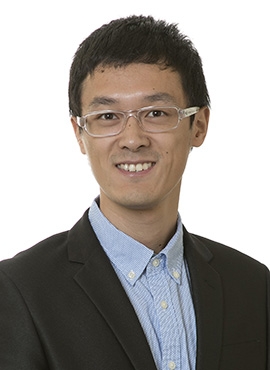
Dr. Mathieu Mercadier is an Assistant Professor of Business Analytics at Dublin City University Business School, Ireland. He serves as Programme Chair for the MSc and Graduate Diploma in Business Analytics. His research focuses on Business Analytics, Machine Learning, Financial Risk Management, and Sustainable Finance. Education: PhD in Economics from Université de Limoges, France, specializing in Machine Learning applied to Banking and Finance. He has ten years of industry experience as a Market Finance Consultant. Research interests include applying Machine Learning to banking risk, sustainable finance, and quantitative finance. His work spans statistical modeling for financial stability, algorithmic risk assessment, and ESG fund evaluation. Key trends in his articles involve quantum-enhanced machine learning for stock forecasting, systemic risk measurement, and pandemic impact analysis. No scientific awards listed. Advising and grants: No formal grants or student advisees mentioned. Active in curriculum development for business analytics programs. Engaged in international conferences and seminars. Labs/Teams: Not explicitly stated in provided data.
Yan Zhang is a scientific leader at Meshcapade and a guest lecturer at ETH Zurich's Computer Vision and Learning Group (VLG). He previously served as a postdoctoral researcher at ETH Zurich (2020-2023) and research intern at Max Planck Institute for Intelligent Systems (2018-2020). His research focuses on generative human foundation models, human motion and behavior synthesis, 3D human perception, and applications in AR/VR, embodied AI, and interactive avatars. He has pioneered methods for scene-conditioned motion generation, contact-aware reconstruction, and egocentric interaction modeling. His recent publications (2025-2020) span Real-time motor models for avatars (PRIMAL, ICCV'25) Diffusion architectures for motion (RoHM, CVPR'24) Scene-population algorithms (Odysseus, CVPR'22) Physics-aware reconstruction (EgoHMR, ICCV'23) Whole-body grasping models (SAGA, ECCV'22) Multi-modal datasets (EgoBody, ECCV'22) Scientific recognition includes the Qualcomm Innovative Fellowship Europe 2023 . He organized workshops at CVPR'25, ECCV'24, and ECCV'22, and served on senior program committees (AAAI'26) and area chairs (CVPR'25). As co-supervisor, he mentored student projects on diffusion-based hand motion capture, 3D pose estimation, body-scene interaction, and mixed reality navigation at ETH Zurich (2020-2023). His work bridges computer vision, machine learning, and computer graphics to advance human-centric AI systems.
Dr. Haibo He is the Robert Haas Endowed Professor in the Department of Electrical, Computer, and Biomedical Engineering at the University of Rhode Island (URI). As an IEEE Fellow and NSF CAREER awardee, his research focuses on computational intelligence, neural networks, and reinforcement learning with applications to smart grids and microgrid systems. Ph.D. in Electrical Engineering, Ohio University, 2006 M.S. in Electrical Engineering, Huazhong University of Science and Technology, 2002 B.S. in Electrical Engineering, Huazhong University of Science and Technology, 1999 His research interests include: Computational Intelligence Adaptive Dynamic Programming Reinforcement Learning Deep Learning for Power Systems Distributed Control in Microgrids Imbalanced Data Learning Recent research trends from publications (2018-2025) show a focus on: Multi-agent reinforcement learning for energy systems Digital twin frameworks for grid security Event-triggered control mechanisms Finite-time convergence algorithms Cyber-attack resilient control systems Evolutionary computation in power networks Awards: IEEE Fellow (2018) NSF CAREER Award (2017) Dr. He leads the Computational Intelligence and Self-Adaptive Systems (CISA) Laboratory at URI, which conducts fundamental research on computational intelligence methods with applications to power systems, data mining, and neural networks.
Shamik Sengupta is the Ralph E. and Rose A. Hoeper Professor at the University of Nevada, Reno (UNR) , where he serves as Professor in the Department of Computer Science & Engineering and Executive Director of the Cybersecurity Center . He holds a PhD in Computer Science from the University of Central Florida (2007) and a BE in Computer Science from Jadavpur University (2002). IEEE Senior Member Director, UNR Cybersecurity Center NSF CAREER Award Recipient
Kim Hammar is a postdoctoral researcher at KTH Royal Institute of Technology, with affiliations at the University of Melbourne (2025-2028) and Imperial College London. He works under Prof. Tansu Alpcan and Prof. Emil Lupu, focusing on the intersection of game theory, control theory, and large-scale systems for networking and security applications. Previously, he completed his Ph.D. at KTH under Prof. Rolf Stadler and Prof. Pontus Johnson. His research spans cybersecurity, networked systems, and adaptive control mechanisms. Key contributions include applying optimal stopping reinforcement learning conjectural online learning causal modeling to intrusion response and network security. His 2025-2024 publications highlight advancements in automated security through game-theoretic and control-theoretic approaches, with a focus on dynamic environments. Kim received the VR International Postdoctoral Fellowship in 2025. He has served as an assistant for Computer Networks (EP111U) Computer Systems (EP121U) at KTH.
Ida Scheel is an Associate Professor in Statistics and Data Science at the University of Oslo , Department of Mathematics. She specializes in Bayesian hierarchical modeling, recommendation systems, and stochastic processes on networks. Her research interests include: Bayesian statistics and model diagnostics Data science applications in environmental and health domains Network-based machine learning Uncertainty quantification in predictive modeling Recent publication trends show a focus on Bayesian model validation, machine learning for product adoption prediction, and real-estate analytics. She contributes to interdisciplinary projects like BigInsight and CELS . Scientific awards : Sverdrup Prize for Young Researchers (2011) Advising : Supervised 8 PhD students (main/co-supervisor) in areas spanning Bayesian causal effects, neural network survival analysis, and model conflict detection. Key grants include participation in the Data Science@UiO and Integreat projects. Labs/teams : Active member of the Center for Computational Inference in Evolutionary Life Science (CELS) and the BigInsight center.
Haipeng Luo is an Associate Professor at the Thomas Lord Department of Computer Science, University of Southern California, holding the IBM Early Career Chair. He previously worked as a Postdoctoral Researcher at Microsoft Research, NYC, and has held visiting roles at Google and Amazon. His research focuses on developing practical machine learning algorithms with strong theoretical guarantees, particularly in online learning, bandit problems, reinforcement learning, and game theory. PhD in Computer Science, Princeton University (2011–2016) BSc in Computer Science, Peking University (2007–2011) His work spans adversarial and stochastic environments, addressing challenges in reinforcement learning, game dynamics, calibration, and omniprediction. Recent publications highlight advancements in regret minimization, game equilibrium computation, and robust optimization frameworks. Key contributions include algorithms for zero-sum games, bandit problems with feedback graphs, and theoretical analyses of convergence properties in multi-agent systems. Scientific accolades include Best Paper Awards at COLT 2021, COLT 2018, NeurIPS 2015, and ICML 2015. He has received prestigious grants such as the NSF CAREER Award (2020), Google Faculty Research Award (2020), and NSF CRII Award (2018). His students have secured academic and industry positions, and he actively teaches graduate courses in machine learning and online optimization.
Lori Graham-Brady is a Professor in the Department of Civil and Systems Engineering at Johns Hopkins University's Whiting School of Engineering. She serves as Vice Dean for Faculty and directs the Center on AI for Materials in Extreme Environments (CAIMEE), while also holding secondary appointments in Mechanical Engineering and Materials Science and Engineering. Her research focuses on stochastic mechanics, multiscale modeling, and machine learning applications for understanding material variability under extreme conditions. Research areas include probabilistic mechanics, AI-driven materials design, and fragmentation modeling. Leadership roles: Director of CAIMEE, former Director of Center for Materials in Extreme Dynamic Environments, founding Director of HT-MAX, and founding Associate Director of HEMI (2012-2024). Education: PhD in Civil Engineering and Operations Research from Princeton University. Her recent work emphasizes AI for multiscale mechanics, error propagation in material characterization, and digital microstructure generation. Publications highlight stochastic modeling of ceramics, composites, and metals under impact and high-strain-rate loading. Scientific awards include the Presidential Early Career Award, Huber Civil Engineering Research Prize, and Fellowships in ASCE EMI and USACM. She led NSF IGERT programs and serves as Associate Editor for the ASCE Journal of Engineering Mechanics.
Elizaveta Rebrova is an Assistant Professor in the Department of Operations Research and Financial Engineering (ORFE) at Princeton University. She is also associated with the Program in Applied and Computational Mathematics (PACM) and the Center for Statistics and Machine Learning (CSML). Education: Specialist degree from Moscow State University (2012), PhD in Mathematics from University of Michigan (2018 under Roman Vershynin) Prior Appointments: Postdoctoral Scholar at Lawrence Berkeley National Lab (2021), Assistant Adjunct Professor at UCLA Mathematics Department (2018-2021) Her research focuses on randomized numerical linear algebra , mathematics of data science , and high-dimensional probability . Key interests include developing algorithms for large-scale data with non-trivial structure, robust and interpretable learning, and stochastic optimization. Her recent work analyzes algorithmic convergence in structured settings, tensor-based data compression, and nonnegative matrix/tensor factorization under constraints. Recent publications span topics in randomized NLA , robust solvers , tensor methods , and nonnegative matrix factorization . Notable trends include improving convergence rates for iterative methods, handling adversarial noise in linear systems, and leveraging tensor structures for efficient data recovery. She supervises Ph.D. students including Jackie Lok, Shambhavi Suryanarayanan, and Sofiia Shvaiko. Her teaching at Princeton covers graduate probability theory (ORF526), convex optimization (ORF523), and network science (ORF387), with prior teaching roles at UCLA and University of Michigan.
Christophe Andrieu is a Professor in Statistics within the School of Mathematics at the University of Bristol. His research bridges theoretical probability, computational statistics, and applied mathematics, with significant contributions to Markov Chain Monte Carlo methodologies and Bayesian inference frameworks. He maintains active collaborations across engineering and data science domains. His educational background includes: M.A. from List.Natnl.Scis.App.Lyon Additional M.A. (institution unspecified) Ph.D. from Paris Andrieu's research focuses on Markov Chain Monte Carlo theory , where he develops convergence guarantees and efficiency bounds for complex samplers. His work extends to non-reversible MCMC algorithms , piecewise deterministic processes , and gradient-free optimization techniques. Recent publications demonstrate innovative approaches to state-space models and numerical integration, often addressing high-dimensional statistical challenges through stochastic approximation methods. His fingerprint reveals deep specialization in Markov chain convergence analysis and computational Bayesian statistics. His 15 most recent publications (2021-2025) exhibit consistent focus on theoretical foundations of Monte Carlo methods, particularly convergence analysis of Markov chains and novel sampler designs. Key trends include the application of weak Poincaré inequalities to pseudo-marginal MCMC, development of self-organizing state-space models, and exploration of hypocoercivity in piecewise deterministic processes. The work spans both theoretical advancements and practical implementations for engineering and statistical applications. Andrieu has secured significant research funding including: COmputational Statistical INference for Engineering and Security (COSINES) (2018-2023) New Approaches to Data Science (2018-2023) He has supervised 5 research students and maintains active collaborations in computational statistics and machine learning. His network shows strong connections with probability theory and engineering research groups.
Matt Koslovsky is an Assistant Professor of Statistics at Colorado State University. He completed his PhD in Biostatistics at The University of Texas Health Science Center School of Public Health (UTHealth) in 2016 and served as a Post-Doctoral Research Associate at Rice University's Marina Vannucci lab from 2018-2020. Prior to joining CSU in 2020, he worked as a statistical consultant at Johnson Space Center's Biostatistics Lab. PhD, Biostatistics (2016), UTHealth School of Public Health Post-Doctoral Research Associate (2018-2020), Rice University Assistant Professor (2020-Present), Colorado State University His research spans Bayesian methodology and its applications across diverse domains: Theory: Bayesian modeling, variable selection, graphical models, nonparametric Bayes Applications: Cancer prevention, mental health, microbiome analysis, space health, ecological momentary assessment Recent publications demonstrate methodological advancements in: Bayesian variable selection for rare variants Integrated population modeling Compositional data analysis Continuous-time hidden Markov models mHealth data processing Microbiome mediation effects Current advisees include: Hyungjoon Kim (PhD candidate) Brody Erlandson (PhD candidate) Suppapat Korsurat (PhD candidate)
Professor Dingxuan Zhou is a distinguished academic serving as Professor and Head of School of Mathematics and Statistics at The University of Sydney, joining the institution on August 29, 2022. He is also a member of The Net Zero Institute and has held significant editorial positions, including editor-in-chief of the journal "Analysis and Application" of "Mathematical Foundations of Computing" and serving on the editorial boards of over ten international journals. Educational Background: BSc in Mathematics from Zhejiang University, China (1988) PhD in Mathematics from Zhejiang University, China (1991) Professor Zhou's research spans learning theory, neural networks, wavelet analysis, and approximation theory, with his current focus on the theory of deep learning. His work aligns with the Faculty of Science Research Strengths in Complex Systems, Precision and Digital Health, Data and Decisions, and National Security. His research demonstrates a consistent progression from foundational mathematical theory to cutting-edge applications in machine learning and artificial intelligence, with particular emphasis on understanding the theoretical underpinnings of neural networks and deep learning systems. His extensive publication record reveals a strong trend toward distributed learning frameworks, approximation theory for neural networks, and the mathematical foundations of deep learning. Recent work focuses on federated learning, transformers, physics-informed neural networks, and the theoretical analysis of over-parameterized networks, reflecting the evolving landscape of machine learning research with increasing emphasis on theoretical guarantees and practical applications. Scientific Awards: Humboldt Research Fellowship (1993) Fund for Distinguished Young Scholars from the National Science Foundation of China (2005) Highly-cited Researcher by Thomson Reuters/Clarivate Analytics (2014-17) World's Top 2% Scientist by Stanford University (2021, 2022, 2023) Professor Zhou has demonstrated exceptional leadership in research and mentorship, having conducted over 40 research grants as Principal Investigator, supervised more than 20 PhD students, and co-organized over 20 international conferences. His collaborative approach is evident in his extensive co-authorship network across multiple institutions globally. He has also served in significant administrative roles including Head of Department of Mathematics (2006-12), Associate Dean of School of Data Science (2018-22), and Director of the Liu Bie Ju Centre for Mathematical Sciences (2019-22) at City University of Hong Kong.
Tony Stillfjord is an Associate Professor at the Centre for Mathematical Sciences, Lund University, Sweden. He previously held postdoctoral positions at the Max Planck Institute for Dynamics of Complex Technical Systems and Chalmers/University of Gothenburg. Ph.D. and MSc in Numerical Analysis from Lund University Funded by WASP (Wallenberg AI, Autonomous Systems and Software Program) Research Interests : Numerical methods for partial differential equations, splitting schemes, stochastic optimization, and large-scale differential Riccati equations. His work focuses on developing low-rank approximations and robust optimization algorithms. Recent Publications highlight advancements in Lie/Strang splitting for operator-valued Riccati equations, stochastic descent methods, and GPU-accelerated splitting schemes. Software Contributions : Developed DREsplit (MATLAB package for differential Riccati equations) and BST20_CODE for stochastic optimization experiments. Contact : Office at MH:562E, Lund University. Email: tony.stillfjord@math.lth.se . URL: tonystillfjord.net
Ilias Mitrai is an Assistant Professor in the McKetta Department of Chemical Engineering at the University of Texas at Austin. His research focuses on developing optimization and control algorithms for decarbonization of energy systems, resilient supply chain networks, and intelligent autonomous systems. He combines tools from mathematical optimization, AI, control theory, and chemical engineering. Education: Ph.D., Chemical Engineering, University of Minnesota (2023) Postdoctoral Scholar, Georgia Institute of Technology (2023-2024) Diploma, Chemical Engineering, Aristotle University of Thessaloniki, Greece (2018) Research Interests: Mitrai’s work addresses challenges in AI-assisted optimization of complex systems, including: Accelerating optimization algorithms via machine learning Supply chain management for renewable energy systems Hybrid surrogate models for process systems Awards: CAST Directors' Student Presentation Award (2023) Doctoral Dissertation Fellowship (2022) Frank and Janis Bates Research Fellowship (2018) Labs & Teams: Mitrai leads the Systems and AI Lab (SAIL) , which focuses on process systems engineering and AI-driven decision-making. The lab collaborates on projects related to energy decarbonization and smart supply chains.
Minshuo Chen is an Assistant Professor in the Department of Industrial Engineering and Management Sciences at Northwestern University. He previously served as an Associated Research Scholar in the ECE department at Princeton University, collaborating with Prof. Mengdi Wang. His research focuses on developing methodologies and theoretical foundations in generative AI, reinforcement learning, and optimization. He holds a Ph.D. from Georgia Tech (supervised by Prof. Tuo Zhao and Wenjing Liao), a Master's from UCLA, and a Bachelor's from Zhejiang University. Key research areas include diffusion models for distribution estimation, foundations of learning (approximation and optimization), and reinforcement learning applications in complex systems. He has presented at major conferences like INFORMS 2024 and NeurIPS 2023, and serves as an area chair for NeurIPS 2023. His recent work emphasizes theoretical guarantees for diffusion models, including statistical rates and optimization perspectives. He has received awards such as the ARC-TRIAD Student Fellowship and William S. Green Fellowship. Collaborations include studies on POMDPs, policy evaluation, and manifold learning.