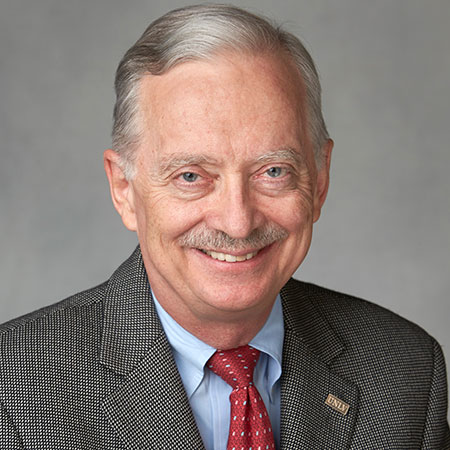
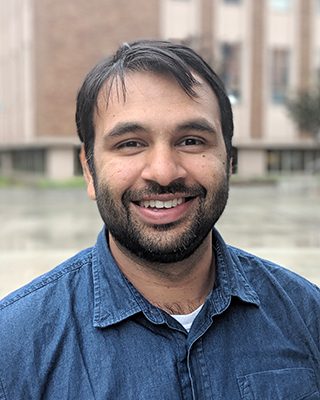
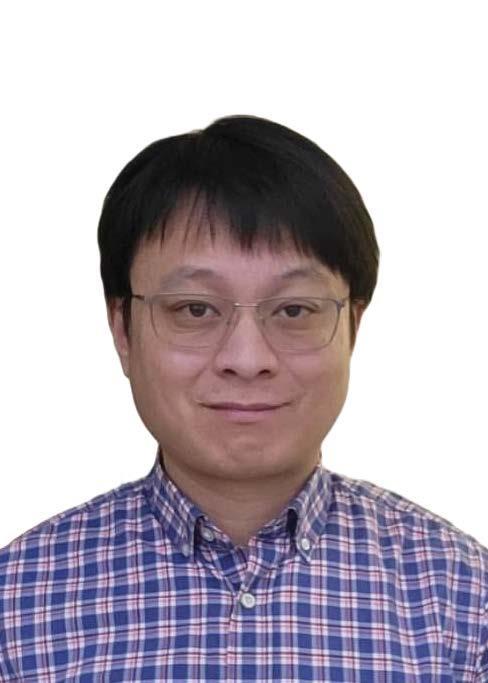
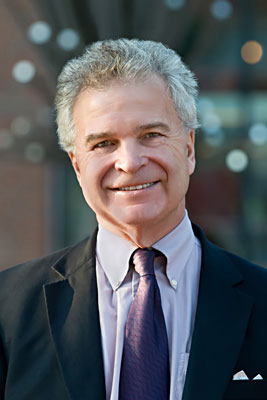
Mircea R. Stan is a Professor of Electrical and Computer Engineering at the University of Virginia, serving as Director of Computer Engineering and Virginia Microelectronics Consortium (VMEC) Professor. He leads the High-Performance Low-Power (HPLP) lab and is an associate director of the Center for Automata Processing (CAP). His research focuses on AI hardware, Processing in Memory, Low Power Design, Cyber-Physical Systems, and Spintronics. Education: Ph.D. (1996) and M.S. (1994) from UMass Amherst; Diploma (1984) from Politehnica University, Bucharest. Research interests include energy-efficient computing architectures, IoT systems, and emerging technologies like magnetic skyrmions and memristors. He has pioneered work on asynchronous stochastic computing, thermal-aware microarchitecture, and microfluidic cooling for 3D-ICs. Key awards include the 2024 A. Richard Newton Technical Impact Award, 2018 ISCA Influential Paper Award, and IEEE Fellow (2014). He has held editorial roles at IEEE TVLSI, IEEE TNano, and IEEE Design & Test. Notable contributions include the HPLP lab’s advancements in low-power logic computing, the VCRFID framework for Industry 4.0, and thermal-aware design tools like Hot-LEGO and Cool-3D.
Avi Giloni is an Adjunct Associate Professor in the Leonard N. Stern School of Business at New York University, where he has been teaching since 2004. He is also an Associate Professor of Operations Management and Statistics at the Sy Syms School of Business, Yeshiva University. His academic work bridges robust statistical methods and operational applications. Ph.D. in Statistics and Operations Research, New York University, 2000 B.A., New York University, 1994 Professor Giloni's research centers on robust regression , optimization , and stochastic system design , with applications in revenue management and supply chain operations . His expertise spans statistical modeling , decision-making under uncertainty , and operations analytics , contributing to both theoretical and applied domains in business and industry. The 15 most recent publications reflect a consistent focus on robust statistical techniques and stochastic modeling in business contexts. Key thematic areas include robust regression under outliers and heteroscedasticity , optimization in supply chains under uncertainty , and design of service systems . The keywords span operations research, statistics, and applied mathematics, while subfields reveal deep technical engagement with estimation, simulation, risk, and efficiency. While no formal scientific awards are listed in the provided text, Professor Giloni's sustained publication record in top-tier journals such as Management Science and SIAM Journal on Optimization indicates scholarly recognition. He has advised students in statistics, operations, and business analytics, though specific names are not listed. His founding of Del V.I., LLC, a consulting firm in statistics and operations research, demonstrates real-world application of his research and suggests involvement in industry grants or contracts. His teaching includes foundational courses such as Statistics for Business Control and Regression and Forecasting Models. Professor Giloni is affiliated with research activities through his consulting firm Del V.I., LLC, which functions as an applied research team focusing on statistical solutions and operational improvements for clients. His collaborative work across NYU and Yeshiva University suggests active participation in interdisciplinary teams addressing business analytics challenges.
Catherine Robinson is a Professor and current Dean of the School of Business and Law at the University of Brighton, a position she assumed in 2024. She has held academic positions at Swansea University, the University of Kent, and the National Institute of Economic and Social Research (NIESR), and previously worked as a fisheries economist at Portsmouth. Her career spans over 30 years of research in applied economics, particularly focused on productivity, firm dynamics, labour markets, and technology. Her educational background includes: Bachelor of Arts (Hons) in Economics, University of Reading (awarded 1993) Master's in Fisheries Economics, University of Portsmouth (awarded 1995) PhD in Economics, Durham University (awarded 2004) Postgraduate Certificate in Teaching in Higher Education (PGCtHE), Swansea University (awarded 2014) Senior Fellow of Advance HE (awarded 2019) Robinson’s research centers on industrial economics, productivity analysis using microdata, skill mismatch, and the impact of technological change on labour markets. She has been a pioneer in using ONS microdata for productivity studies and was a key contributor to the EUKLEMS project, focusing on UK labour accounts. Her work bridges econometric analysis with real-world policy implications, particularly in SME development, barriers to growth, and regional economic performance. The 15 most recent publications reflect a consistent focus on productivity, firm performance, skills, and institutional factors. They span disciplines including economics, management, and public policy, with methodologies rooted in panel data analysis, production functions, and econometric modeling. Key trends include the impact of trade regulation, Brexit, occupational wellbeing, innovation, and inter-firm cooperation in emerging markets. Her scientific recognition includes: Senior Fellow of Advance HE She has supervised four PhD students to completion and has served as both internal and external examiner. Her research has been supported through externally funded projects at NIESR and various universities. Notable collaborations include work with Professor Richard Harris, Professor Bart van Ark, and Professor Mary O'Mahony. She remains active in research and policy engagement, with upcoming invited talks at the 8th World KLEMS Conference in Tokyo and other high-profile forums. She also holds external leadership roles as Chair of Governors and Council Member. Robinson is actively involved in academic networks and research consortia, particularly in productivity measurement and industrial economics. She contributes to the broader scholarly community through peer review, external examination, and leadership in professional economic research initiatives.
Xubo Yue is an Assistant Professor in the Department of Mechanical and Industrial Engineering at Northeastern University. His research focuses on federated data analytics, Bayesian optimization, continuous optimization, Gaussian processes, and deep learning. He holds a PhD in Industrial & Operations Engineering from the University of Michigan, Ann Arbor (2023). His work bridges theoretical advancements with practical applications in advanced manufacturing, predictive maintenance, and sustainable materials discovery. Key affiliations include the Institute of Industrial and Systems Engineers (IISE), INFORMS, and the American Statistical Association (ASA). Recent research emphasizes scalable federated learning frameworks for distributed systems, causal inference in sensor networks, and sharpness-aware optimization techniques to enhance generalization. His methodologies are applied to interdisciplinary domains such as materials science, IoT systems, and renewable energy simulations. Research trends reveal a focus on: Federated learning architectures for privacy-preserving analytics Bayesian optimization for high-dimensional design spaces Integration of causal reasoning with machine learning systems Autonomous experimentation for accelerated materials discovery No scientific awards are explicitly listed in the provided information. His academic advising and grant activities are not detailed in the current data.
Enrique Lobato Miguélez is a Full Professor at the Higher Technical School of Engineering (ICAI) of Comillas Pontifical University in Madrid, Spain, where he has been a faculty member since June 1, 1998. His research is conducted at the Technological Research Institute (IIT), focusing on electrical power systems, with a strong emphasis on renewable integration, energy storage, and island grid stability. His research interests include the analysis, planning, operation, and economics of electrical systems, with specific expertise in frequency-power control, voltage control, electricity markets, and the sustainability of insular systems. He has made significant contributions to the integration of renewable energy sources and the application of storage elements in power systems. The recent publications highlight a consistent focus on optimization, control, and integration challenges in modern power systems, particularly in islanded and renewable-rich environments. Key themes include unit commitment with frequency constraints, robust design of under-frequency load shedding, battery energy storage in wind farms, and data-driven modeling for stability enhancement. His work often combines theoretical modeling with practical applications for industry partners like Red Eléctrica de España, Naturgy, and Endesa. Scientific Awards: Eolo annual Innovation Award in May 2016 awarded by the Wind Energy Business Association AEE Distinción Honorífica a la mejor Tesis Doctoral en Ingeniería «Voltage control design of wind energy harvesting networks» por Elena Sáiz Professor Lobato has supervised several PhD students, including M. Rajabdorri, I. Saboya, and E. Saiz. He has led numerous research and consulting projects funded by the European Commission, Spanish government agencies, and private companies such as Iberdrola, Endesa, and Viesgo, covering topics like grid integration of renewables, energy storage, and market design. He has also organized major scientific events such as the ICREPQ conferences and conducted training courses for industry professionals. He has conducted research stays at Sophia University in Tokyo and University College Dublin, and his work has resulted in a book on island power systems and over 60 journal publications.
Martin Theobald is a Professor in the Department of Computer Science at the University of Luxembourg's Faculty of Science, Technology and Communications. Previously affiliated with University of Ulm, Germany, his research spans database systems, information retrieval, and knowledge extraction with over 120 publications since 2002. His work bridges theoretical database foundations with practical applications in large-scale data processing. His research focuses on: Probabilistic and uncertain database systems Stream processing frameworks (notably the AIR architecture) Knowledge extraction from heterogeneous data sources Integration of machine learning with database systems Efficient query processing for structured and semi-structured data Recent publications demonstrate an evolving research trajectory toward real-time data stream processing with machine learning integration. His work on the AIR (Asynchronous Iterative Routing) framework and its extensions (TensAIR, OPTWIN) addresses critical challenges in concept drift detection, neural network training on streaming data, and efficient resource utilization. These contributions sit at the intersection of database systems, distributed computing, and machine learning, with applications in knowledge graph construction and question answering systems. Martin Theobald has mentored numerous researchers including Mauro Dalle Lucca Tosi, Alessandro Temperoni, and Vinu E. Venugopal, who have become active contributors to the database community. His collaborative network spans institutions across Europe, with frequent partnerships with researchers from University of Ulm, Max Planck Institute, and other European universities. His laboratory work focuses on developing scalable systems for processing evolving data streams, with particular emphasis on creating lightweight architectures that maintain high performance while minimizing resource consumption. Current projects involve integrating knowledge graphs with real-time analytics and developing adaptive systems that can handle concept drift in streaming environments.
Panagiotis Hadjidoukas is an Associate Professor and Head of the Laboratory for Computing at the Computer Engineering and Informatics Department, University of Patras, within the School of Engineering. His work focuses on high-performance computing systems and parallel programming models. His research spans parallel and distributed computing , runtime support for parallel programming models , and automation of AI/ML workloads . Key contributions include developing the torc runtime system for task parallelism and pioneering work in extreme-scale scientific simulations. His interests bridge theoretical computer science with practical applications in scientific computing and AI acceleration. Notable achievements include the ACM Gordon Bell Prize Winner (2013) for 11 PFLOP/s cloud cavitation simulations and Finalist (2015) for in-silico lab-on-a-chip microfluidics. His software tools ( torc_lite , torcpy ) enable efficient parallelism across diverse architectures. Doctor of Philosophy (2003), University of Patras Master of Science (2001), University of Patras Diploma in Computer Engineering (1998), University of Patras As Head of the Laboratory for Computing, he leads infrastructure development while maintaining active research collaborations with IBM Research and ETH Zurich. His teaching portfolio includes graduate courses on high-performance computing for data sciences and parallel processing principles.
Stephen M. Miller is a Professor of Economics at the University of Nevada, Las Vegas, where he serves as Research Director for the Center for Business and Economic Research. He previously held positions at the University of Connecticut from 1970 to 2001, including serving as Department Head from 1989 to 2001, before joining UNLV as Department Chair from 2001 to 2012. Dr. Miller's research spans monetary, macroeconomic, and international finance theory and policy; economic growth empirics; financial institutions; and real estate lending. His work demonstrates particular expertise in time series analysis, long-memory processes, and econometric modeling of economic phenomena. He has developed significant economic indicators including the CBER-DETR Nevada Coincident and Leading Employment Indexes, which track contemporaneous and future movements in Nevada's employment situation. His extensive publication record includes over 190 journal articles in prestigious outlets such as the Journal of Macroeconomics , Journal of International Money and Finance , Journal of Real Estate Finance and Economics , and Empirical Economics . Recent work shows continued focus on income inequality dynamics, housing markets, monetary policy effects, and financial market interconnections using advanced econometric techniques including wavelet analysis and long-memory modeling. Dr. Miller has also been active in public discourse through numerous op-ed pieces in the Las Vegas Review Journal and other publications addressing economic issues relevant to Nevada and the broader U.S. economy. He has guided numerous graduate students to degree completion, with 16 MA students at UNLV and 18 PhD plus 2 MA students during his tenure at the University of Connecticut. His teaching portfolio includes courses in macroeconomics, money and banking, and mathematical economics at undergraduate, MA, and PhD levels.
Dr. Ebru Harmandar is an Associate Professor at the Department of Civil Engineering, Faculty of Engineering, Muğla Sıtkı Koçman University. She holds a Doctorate in Earthquake Engineering from Boğaziçi University (2009) and has contributed extensively to earthquake hazard assessment, structural response analysis, and ground motion modeling. Her research focuses on seismic resilience, spatial coherency of ground motions, and infrastructure risk mitigation. Key research areas: Earthquake Engineering, Seismic Hazard Analysis, Structural Engineering Major projects: EMME ground-motion logic tree, Istanbul Rapid Response Network Notable students: Soukaina Mellouk (2021), Hüssam-Almukdad (2022) Her recent work includes improving seismic resilience indices for school buildings (2024) and analyzing multi-point earthquake effects on bridges. She has served as an academic editor for journals like Soil Dynamics and Earthquake Engineering and received the 2016 Yollar Türk Milli Komitesi award.
Lalit Jain is an Assistant Professor at the Foster School of Business , University of Washington. His research bridges theoretical mathematics with practical machine learning systems, focusing on adaptive data collection under budget constraints, applied to marketing, cognitive psychology, and humor detection. Research Interests : Adaptive machine learning algorithms Bandit optimization and experimental design False discovery rate control Human-AI interaction Applications in marketing and cognitive science Advising : Justin Weltz (Neurips 2023) Zhaoqi (AISTATS) Romain (AISTATS) Zhihan (Amazon collaboration) Jennifer Brennan (ICML 2022 workshop) Projects : Co-developer of the New Yorker Caption Contest voting system Collaboration with Amazon on adaptive pricing systems
Yun Zhou is an Associate Professor in the Department of Operations Management at DeGroote School of Business, McMaster University. His research bridges theoretical operations research with practical applications in supply chain optimization, revenue management, and healthcare logistics. PhD: Rotman School of Management, University of Toronto Doctorate & B.Sc.: Tsinghua University Dr. Zhou specializes in revenue management , supply chain coordination , and dynamic pricing , particularly in on-demand delivery systems and sharing economy platforms . His work addresses uncertainty in demand , perishable product inventory , and healthcare operations challenges like vaccine allocation and surgical scheduling . Recent publications focus on robotic warehouse systems (e.g., rack-moving robots for order picking), price and matching dynamics in sharing economies , and blood supply chain coordination . These span optimization algorithms , stochastic modeling , and empirical retail analytics . SSHRC Grant: Addressing societal challenges through operations research
Dr. Michael Williams is a Research Fellow at the Institute of Cosmology & Gravitation under the Faculty of Technology , University of Portsmouth. His work focuses on gravitational wave physics, neutron star dynamics, and black hole binaries through collaborations with LIGO, Virgo, and KAGRA detector networks. Active in gravitational wave detection and multi-messenger astronomy Developing AI algorithms for telescope targeting and signal processing Recipient of the IOP Trusted Reviewer status (2025) His recent research includes premerger characterization of black hole binaries , continuous wave searches from pulsars , and gravitational wave-FRB counterpart detection . He contributes to open-source tools like nessai and bayesbeat , with 25 datasets released. Williams participates in conferences like the European AI for Fundamental Physics Conference and workshops on milli-hertz gravitational wave astrophysics. Key collaborations: LIGO, Virgo, KAGRA, GEO600 Technical expertise: matched filtering , Bayesian inference , normalizing flows
Pierre L'Écuyer is a Full Professor in the Department of Computer Science and Operational Research at the Faculty of Arts and Sciences, University of Montreal. He holds a Canada Research Chair in Stochastic Simulation and Optimization and is a member of GERAD and CIRRELT research centers. His office is located at André-Aisenstadt building, room 3361, and he can be reached at 514 343-2143. Dr. L'Écuyer received his Baccalauréat in mathematics, Master's in operational research, and PhD in computer science with focus on operational research, all from the University of Montreal. His academic journey has led him to become one of the world's most influential researchers in stochastic simulation. His research focuses on stochastic systems modeling and simulation, with particular expertise in random number generation, quasi-Monte Carlo methods, simulation efficiency improvement, sensitivity analysis, and optimization. His work has practical applications in call centers, finance, communication systems, and revenue management. Analysis of his recent publications shows strong emphasis on randomized quasi-Monte Carlo methods, variance reduction techniques, and applications to complex optimization problems in service systems. Lifetime Professional Achievement Award from INFORMS (2020) Ranked among the most influential researchers worldwide by Mendeley/Elsevier (2019, 2020) ACM SIGSIM Distinguished Contribution Award (2016) Mercit Award from Canadian Operational Research Society (2014) Distinguished Service Award from INFORMS Simulation Society (2011) Urgel-Archambault Prize from ACFAS (2002) Dr. L'Écuyer has supervised numerous PhD and Master's students working on topics ranging from random number generation to call center optimization. His current research projects, funded by NSERC and other organizations, focus on fundamental tools for stochastic simulation, with applications extending through 2030. He leads the SIMUL research laboratory which has developed several important software tools including SSJ (Stochastic Simulation in Java), TestU01, and RNGStreams.
Professor Tee Lim is a faculty member in the Finance Department at the School of Economics and Business Administration, Saint Mary's College of California. He holds a PhD and MBA in Finance from the University of California Berkeley, along with an MS and BS in Electrical Engineering from Stanford University. His academic and professional career combines rigorous theoretical training with practical experience in global financial markets. PhD in Finance (1987), University of California Berkeley MBA in Finance (1982), University of California Berkeley MS in Electrical Engineering (1980), Stanford University BS in Electrical Engineering (1979), Stanford University Professor Lim’s research focuses on advanced portfolio optimization techniques, particularly leveraging options and power-log utility functions to enhance risk-adjusted returns and mitigate drawdowns. His work integrates behavioral finance principles with quantitative financial engineering, addressing investor preferences and market risk dynamics. Recent publications highlight innovations in reversing negative skewness in value portfolios and developing behavioral models for investment strategies. His expertise spans financial markets, investment management, and quantitative finance, with a clear trend toward improving portfolio resilience through mathematical optimization and behavioral analysis. Courses taught by Professor Lim include Equity Evaluation, Financial Management, International Financial Management, Investments, and New Venture Financing, reflecting his broad engagement with finance education.
H. Eugene Stanley is a Professor in the Department of Physics at Boston University, focusing on interdisciplinary research in complex systems. His work spans anomalous behavior of liquid water, brain circuits, and financial/social networks. Research Interests : Dr. Stanley investigates the peculiar properties of liquid water under various conditions, correlations in Alzheimer's brain networks, DNA sequence fluctuations, and heart interbeat dynamics. His recent publications highlight applications of network science to financial markets, urban mobility, and pandemic spread. Academic Contributions : His articles demonstrate expertise in network modeling, phase transitions, and interdisciplinary approaches to biological, financial, and urban systems. Topics include causal analytics, opinion dynamics, dockless bike-sharing scaling, and financial network resilience.