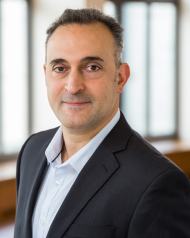
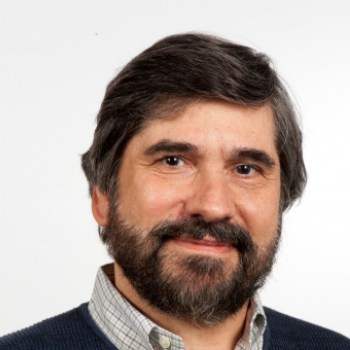
Sebastian U. Stich is a tenured Professor at CISPA Helmholtz Center for Information Security and a member of the European Lab for Learning and Intelligent Systems (ELLIS). His research focuses on optimization for machine learning, collaborative learning (distributed, federated, and decentralized methods), efficient optimization techniques, adaptive stochastic methods, and privacy/security in machine learning. Recent appointments include ERC Consolidator Grant 2024 for the CollectiveMinds project. Key contributions in federated/decentralized learning, uncertainty estimation, and communication-efficient optimization. Active in workshop organization, including the Optimization for Machine Learning workshop at NeurIPS 2024. Teaching modern optimization methods at Saarland University (2023-2025). His work has been recognized with awards such as the Google Research Scholar Award (2023) and Meta Privacy-Enhancing Technologies Award (2022) . His research group includes postdocs Dr. Anton Rodomanov and Dr. Rotem Mulayoff, and PhD students Xiaowen Jiang and Yuan Gao.
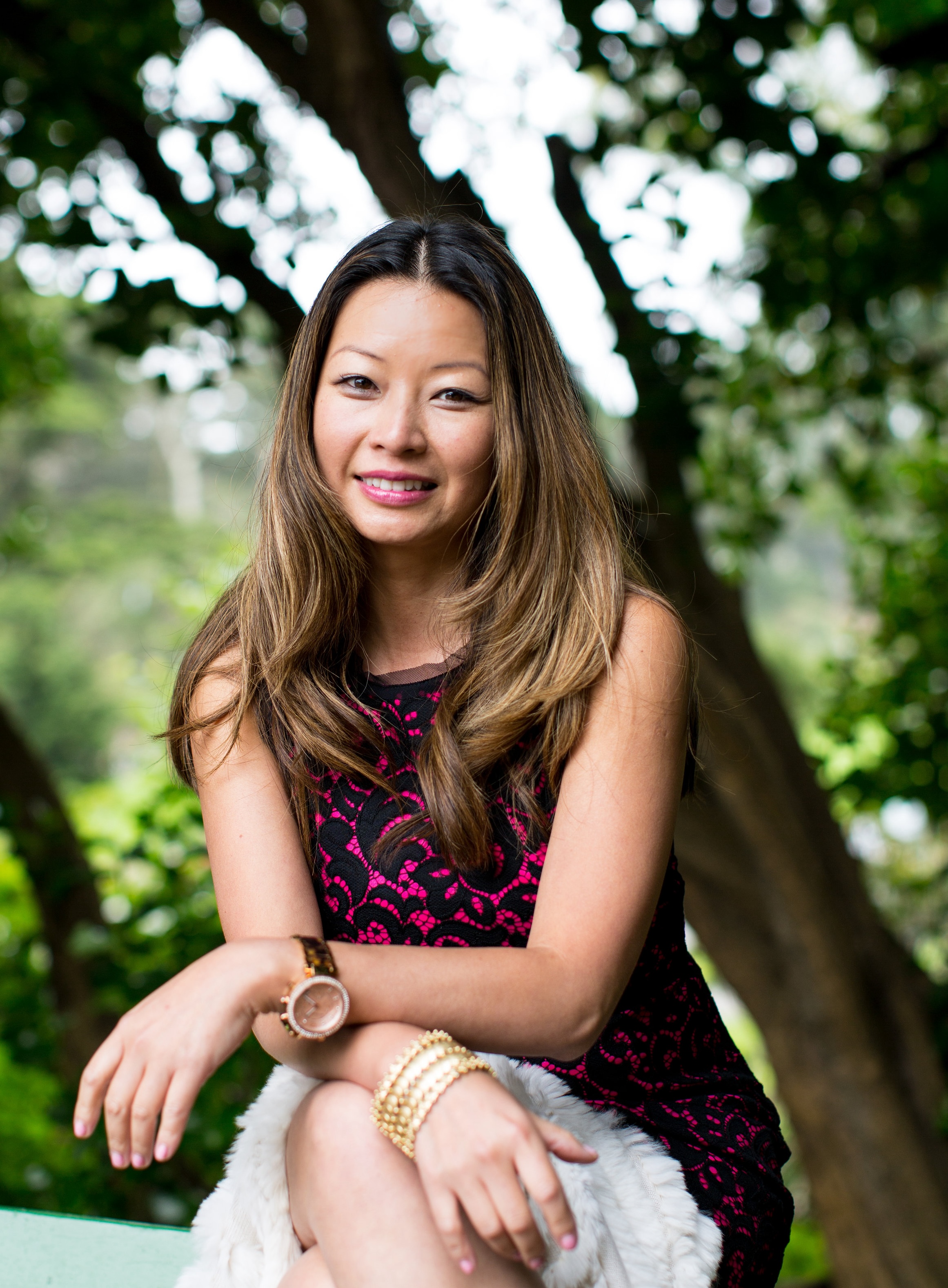
Hua Ge is a Professor in the Department of Building, Civil and Environmental Engineering at Concordia University's Faculty of Engineering and Computer Science. She holds a Tier II Concordia University Research Chair in High Performance Building Envelope for Climate Resilient Buildings and leads extensive research in building science and climate adaptation. Her research focuses on wind-driven rain analysis , hygrothermal performance of building envelopes , advanced building facades , innovative wood-frame construction , and low-energy buildings . Current work examines climate change impacts on wind-driven rain loads, urban micro-climate effects, climate-resilient building envelopes, dynamic facades, and low-carbon healthy buildings. Her methodology combines large-scale laboratory testing, field monitoring, and computational modeling. Her 15 most recent publications demonstrate strong trends in nature-based climate resilience solutions , overheating risk mitigation in educational buildings , advanced hygrothermal modeling of wood-frame systems , and carbon sequestration strategies for buildings. The work spans multiple sub-disciplines including computational fluid dynamics, life cycle assessment, stochastic modeling, and field validation studies across Canadian climates. Tier II Concordia University Research Chair (CURC) in High Performance Building Envelope for Climate Resilient Buildings Professional Engineers of Ontario American Society of Heating, Refrigerating and Air-conditioning Engineers ASHRAE TC4.4 Building materials and building envelope performance (Subcommittee Chair) Professor Ge has supervised 42 graduate students (26 PhD, 16 MASc), including current advisees working on nature-based solutions, climate-resilient envelopes, and building integrated photovoltaics. Her research is supported by Concordia University Research Chair funding and collaborative projects with institutions like BCIT. She directs activities at Concordia's Building Envelope Test Facility and contributes to national standards through ASHRAE.
Elad Hazan is a Professor of Computer Science at Princeton University and co-founder/director of Google AI Princeton. His research focuses on algorithmic foundations of machine learning and optimization, with significant contributions to online learning, nonstochastic control, and adaptive gradient methods. Princeton University (Faculty) Google AI Princeton (Co-founder & Director) His work bridges mathematical optimization, control theory, and computational complexity. Key contributions include the AdaGrad algorithm, sublinear-time optimization methods, and spectral filtering techniques for sequence modeling. Recent research emphasizes efficient neural architectures and provable guarantees in online control. Scientific awards include the Bell Labs Prize, IBM Goldberg Best Paper Award (twice), Google Research Award (twice), European Research Council grant, Marie Curie fellowship, and ACM Fellowship. He has served as program chair for COLT 2015 and on the Association for Computational Learning steering committee. His publications highlight trends in online convex optimization, spectral methods for dynamical systems, and adaptive gradient algorithms. Collaborations span Princeton, Google Brain Research, and interdisciplinary projects in robotics and AI safety.
Professor Darren Robinson holds the Chair in Architectural and Urban Sciences at the University of Sheffield 's School of Architecture and Landscape, where he serves as Director of Research. His work bridges social, building, and urban physics through multiscale modeling approaches. RCUK Innovation Fellowship (2018-2021, £268k) Leverhulme Research Programme Grant (2015-2020, £3.4M) EPSRC grant for Model-Predictive Control in buildings (2016-2019, £541k) His research focuses on statistical modeling of human behavior in buildings, urban energy simulation , and integrated assessment modeling for climate policy. Key contributions include stochastic occupant behavior models and urban metabolism frameworks. Notable awards include the Sustainability Science Best Paper Award (2020) , CIBSE Napier-Shaw Medal (2007), and Fellowships from FIBPSA and the Research Council of Norway. He leads the People, Environments and Performance and Multiscale Simulation research groups.
Lisa Wu Wills is an Assistant Professor in the Department of Computer Science and Electrical and Computer Engineering at Duke University, leading the APEX Lab (Application-driven Programmable Efficient Accelerated Systems Lab). Her research focuses on hardware acceleration for big data analytics in genomics, graphs, and databases to advance healthcare and natural sciences. Education: Ph.D. in Computer Science, Columbia University, 2014 Research Interests: Dr. Wills pioneers computer architecture and hardware-software co-design to create efficient accelerators for emerging applications. Her work targets genomics , graph analytics , and database systems , emphasizing simplified hardware deployment and energy efficiency for scientific breakthroughs in healthcare and AI. Publication Trends: Her 2022-2025 publications reveal a strong focus on open-source frameworks (Beethoven, PyTFHE) for accelerator development, hardware acceleration in privacy-preserving computing, and optimization for large language models. Key themes include transfer learning for EDA, domain-specific architectures for genomics, and energy-efficient image processing. Scientific Awards: Google ML and Systems Junior Faculty Award (2025) Advising and Grants: Dr. Wills mentors three PhD students: Chris Kjellqvist (Beethoven framework architect), Mason Ma (PyTFHE lead for FHE applications), and Mansi Choudhary (COCOSSim simulator creator). Her 2025 Google award funds research on accelerating vector databases and retrieval-augmented generation for LLMs. Labs and Teams: She directs the APEX Lab at Duke, developing tools like Beethoven (open-source accelerator composer) and PyTFHE for hardware-software integration, enabling domain scientists to leverage custom acceleration with minimal hardware expertise.
Dr. Charles Rougé is a Senior Lecturer in Water Resilience at the Department of Civil and Structural Engineering, School of Mechanical, Aerospace and Civil Engineering, University of Sheffield. He holds an MSc and PhD, and his career spans top institutions in France, the US, Canada, and the UK. 2018–present: University of Sheffield (Lecturer → Senior Lecturer) 2023–2026: Principal Investigator, EPSRC-funded project on water-energy systems under climate change and energy transition Research Focus: Modelling complex water resource systems to enhance resilience against climate change, with a growing emphasis on water-energy nexus challenges. His work integrates hydrology, power systems engineering, economics, and decision theory. Key Trends: 15 most recent articles span climate-perturbed hydrological models, water-energy system coupling, socio-hydrology applications, and transboundary water governance. Many showcase interdisciplinary approaches to water infrastructure flexibility and uncertainty quantification. Scientific Awards: 2019 Quentin Martin Best Practice Award (JWRPM) 2015 Editor's Citation for Excellence (WRR) Grants: EPSRC grant (UKRI) for 'Flexible design and operation of water resource systems' (2023–2026) Team Leadership: Leads the 'Water resilience' research group at Sheffield, mentoring early-career researchers in water system sustainability and low-carbon energy transition.
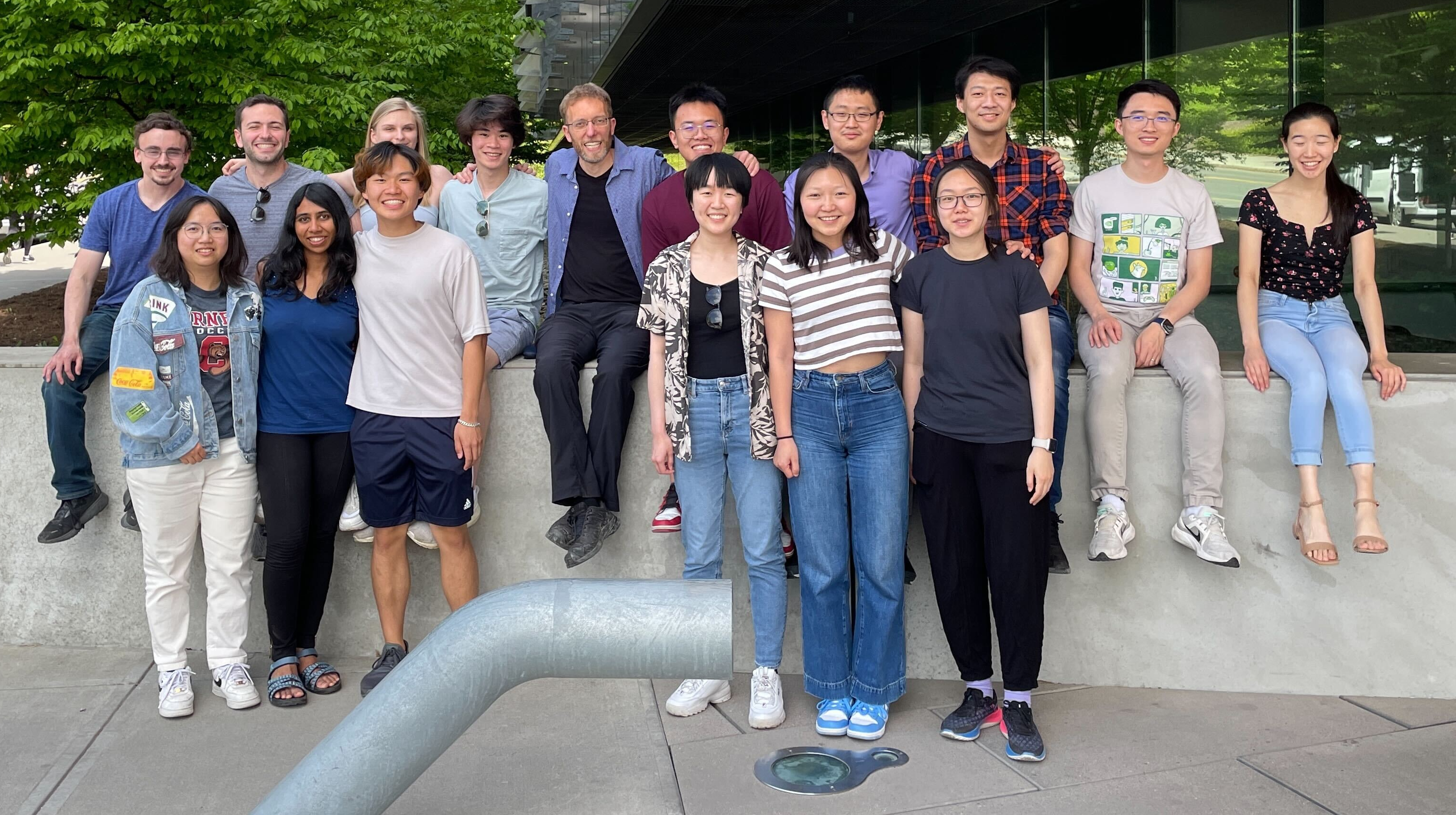
Kilian Q. Weinberger is a Professor of Computer Science at Cornell University's College of Engineering, focusing on Machine Learning, Deep Learning, and AI applications. He has held previous roles as Associate Professor at Washington University in St. Louis and Research Scientist at Yahoo! Research. His research spans metric learning, resource-constrained learning, Gaussian Processes, and advancements in 3D perception for autonomous systems. Education : Ph.D. in Machine Learning (University of Pennsylvania), BA in Mathematics and Computing (University of Oxford) Key Research Areas : AI in Science, Computer Vision, Autonomous Vehicles, and Neural Network Efficiency His recent work emphasizes interpretable machine learning, large language models, and multimodal applications. Awards include NSF CAREER (2012) Daniel M Lazar '29 Teaching Award (2016) Ann S. Bowers Excellence Award (2024) ACM and AAAI Fellow (2024) He teaches advanced courses like CS6784 (Cornell) and has mentored numerous PhD students across institutions. Current affiliations include the Sloan Research Fellowships Selection Committee since 2024.
Ankush Agarwal is an Associate Professor in the Department of Statistical and Actuarial Sciences at the University of Western Ontario. His research focuses on mathematical finance, financial statistics, and Monte Carlo methods, with applications to risk management and derivatives pricing. He supervises PhD students in quantitative finance and has taught courses on Monte Carlo methods and advanced financial modeling at Western University. Education: PhD in Mathematics from Tata Institute of Fundamental Research (2015) Research interests span regime-switching models, longevity risk hedging, stochastic differential equations, and rare event simulation. His work combines theoretical probability with computational techniques for financial applications. Recent publications include studies on McKean-Vlasov SDEs, implied Sharpe ratio estimation, and optimal portfolio strategies under stochastic volatility. These works demonstrate his expertise in stochastic processes and financial engineering. Supervision: Current PhD advisees include Ying Liao, Buchun Wang, and Shuya Zhang at the University of Glasgow. Former advisees include Yongjie Wang and Yihan Zou.
Jaouad Mourtada is an Assistant Professor in the Department of Statistics at ENSAE/CREST, École Nationale de la Statistique et de l'Administration Économique since September 2020. Previously, he was a postdoctoral researcher at the Laboratory for Computational and Statistical Learning at the University of Genoa (2019-2020). He completed his PhD in Statistics at École Polytechnique under the supervision of Stéphane Gaïffas and Erwan Scornet. His educational background includes a Master's degree in Mathematics with specialization in Probability and Random Models (2016), a Master's degree in Fundamental Mathematics (2015), and a Bachelor's degree in Mathematics from Pierre and Marie Curie University and École Normale Supérieure (2013). Dr. Mourtada's research focuses on the intersection of statistics and learning theory, with particular interest in high-dimensional statistics, online learning, and density estimation. His work explores the complexity of prediction and estimation problems through rigorous theoretical analysis. His research spans statistical learning theory, robust statistics, and the theoretical foundations of machine learning algorithms. His publication record since 2017 demonstrates consistent contributions to top-tier venues in statistics and machine learning, with recent work focusing on universal coding, aggregation methods, robust regression, and the theoretical analysis of kernel methods and random forests. His research shows a progression from online learning and expert aggregation to more complex statistical learning problems involving high-dimensional data and model misspecification. He teaches courses including Statistical Learning Theory for Master 2 Data Science students and Probability Theory at ENSAE. His teaching spans theoretical foundations of machine learning and core probability concepts for advanced statistics students.
Christos G. Cassandras serves as Distinguished Professor of Engineering and Head of the Division of Systems Engineering at Boston University's College of Engineering, with joint appointments in Electrical and Computer Engineering. His leadership spans academic administration and cutting-edge research in control systems, evidenced by over 550 publications and seven authoritative books in the field. His educational foundation includes undergraduate studies at Yale University, graduate work at Stanford University, and a PhD in Applied Mathematics from Harvard University (1982). This multidisciplinary background underpins his research approach. Dr. Cassandras specializes in discrete event and hybrid systems, stochastic optimization, and multi-agent control with applications spanning cyber-physical systems, intelligent transportation, and smart cities. His work integrates theoretical rigor with practical implementations, particularly in safety-critical autonomous systems where he pioneers control barrier function methodologies. Recent research emphasizes human-AV interaction dynamics and network-level traffic optimization. Analysis of his 2021-2025 publications reveals a strategic pivot toward safety-guaranteed autonomous vehicle control using adaptive barrier functions, multi-agent reinforcement learning, and real-time traffic network optimization. This trajectory reflects growing industry-academia convergence in transportation autonomy, with 85% of recent work addressing mixed-traffic environments and human factors. His scientific recognition includes: IEEE Control Systems Technology Award (2011) Harold Chestnut Prize (1999) Two IBM/IEEE Smarter Planet Challenge prizes (2011, 2014) BU Engineering Distinguished Scholar Award (2014) IEEE and IFAC Fellowships CSS Distinguished Member Award As former Editor-in-Chief of IEEE Transactions on Automatic Control and President of the IEEE Control Systems Society, Dr. Cassandras has shaped global research directions. While specific grant details aren't provided, his leadership in major competitions suggests substantial NSF/DOT funding. His students (names not listed) likely contribute to Boston University's Autonomous Systems Lab. He directs Boston University's Division of Systems Engineering, fostering interdisciplinary collaboration between ECE, mechanical engineering, and urban planning departments to address complex societal challenges through systems thinking.
Daniele Venturi is a Professor of Applied Mathematics at the University of California, Santa Cruz, where he has been faculty since 2015, rising from Assistant Professor to full Professor by 2021. Previously, he was a Research Assistant Professor at Brown University from 2010-2015. His academic journey began at the University of Bologna, where he earned both his combined B.S./Sc.M. in Mechanical Engineering (2002) and Ph.D. in Applied Physics with a focus on thermo-fluid dynamics (2006). University of Bologna: B.S./Sc.M. Mechanical Engineering (2002), Ph.D. Applied Physics (2006) Brown University: Research Assistant Professor (2010-2015) UC Santa Cruz: Assistant to Associate to Full Professor (2015-present) Professor Venturi's research spans multiple cutting-edge areas in computational mathematics. His primary interests include stochastic modeling and uncertainty quantification, numerical tensor methods for high-dimensional PDEs, data-driven modeling approaches, approximation of functional-differential equations, and theoretical/computational fluid dynamics. His work bridges theoretical mathematical frameworks with practical computational implementations, particularly focusing on overcoming the curse of dimensionality in complex systems. His recent research has been heavily focused on hierarchical tensor methods for solving high-dimensional partial differential equations. The analysis of his publication record reveals a strong emphasis on developing computational frameworks that address high-dimensional challenges in uncertainty quantification and model reduction. His work frequently intersects machine learning techniques with traditional numerical methods, particularly in developing physics-informed neural networks and multifidelity modeling approaches. A consistent theme across his publications is the development of mathematical frameworks that maintain computational tractability while preserving physical fidelity in complex systems. Professor Venturi has secured substantial research funding from major agencies including the Air Force Office of Scientific Research (AFOSR), Department of Energy (DoE), National Science Foundation (NSF), Army Research Office (ARO), and Defense Advanced Research Projects Agency (DARPA). His most significant current grant is a 2024-2029 AFOSR MURI award totaling $7.5M as co-PI for 'Tensor Network for simulating kinetic systems.' 2024-2029: AFOSR MURI, $7.5M (co-PI) 2023-2027: DoE, $3.8M (co-PI) 2023-2026: AFOSR, $2.5M (co-PI) 2020-2025: NSF TRIPODS, $2.3M (co-PI) At UC Santa Cruz, Venturi teaches a range of courses including Fundamentals of Uncertainty Quantification, Applied Dynamical Systems, Nonlinear Dynamical Systems, and Numerical Methods for Differential Equations. His teaching spans both undergraduate and graduate levels, reflecting his expertise across theoretical and computational mathematics. His lecture notes for these courses are publicly available and demonstrate his commitment to pedagogical excellence in complex mathematical subjects.
David Hong is an Assistant Professor in the Department of Electrical and Computer Engineering at the University of Delaware. He holds a PhD from the University of Michigan, where he was an NSF Graduate Research Fellow, and previously served as an NSF Postdoctoral Research Fellow at the University of Pennsylvania. His research focuses on developing robust methods for analyzing heterogeneous and high-dimensional data, particularly through low-rank matrix and tensor techniques. Applications span medical imaging, radar systems, genomics, and astronomy. He emphasizes theoretical guarantees and practical algorithms for signal extraction and inverse problems. Education: PhD in Electrical Engineering and Computer Science (University of Michigan), NSF Postdoctoral Research Fellowship (University of Pennsylvania). Research Interests: Low-rank matrix/tensor methods, heterogeneous data analysis, unsupervised learning, and applications in healthcare, imaging, and sensor systems. His work addresses noise robustness, scalable algorithms, and real-world deployment challenges. Scientific Awards: Recipient of the NSF Postdoctoral Research Fellowship (2020) and NSF Graduate Research Fellowship (2015). Advising & Grants: Advisor to graduate students in machine learning and signal processing (no named advisees listed). Active NSF grant recipient for foundational and applied research in data science. Labs/Teams: Engaged in interdisciplinary collaborations through the University of Delaware's Center for Computational Research and Data Science initiatives.
Bärbel Finkenstädt Rand is a Senior Tutor at the Warwick Medical School , University of Warwick, with extensive research contributions at the intersection of statistics, machine learning, and biomedical sciences. Her work focuses on developing advanced methodologies for analyzing temporal and spatio-temporal data, particularly in circadian rhythms and disease dynamics. Research Themes : Bayesian inference, Hidden Markov Models, circadian rhythm stability, transcriptional bursting, and wearable sensor data analysis. Collaborations : Chronotherapy Group at Warwick, Université Paris-Saclay, and interdisciplinary teams across medicine, genetics, and computational biology. Publications reveal a strong emphasis on circadian health monitoring, gene expression dynamics, and epidemic modeling using stochastic frameworks. Her recent work prioritizes personalized medicine applications through telemonitored biomarkers and IoT platforms . Methodological Innovations include spline-based HMMs, distributed delay systems, and harmonic modeling for nonstationary time series. Applications span oncology, sleep medicine, and population ecology.
Harald Van Heerde is a Research Professor of Marketing at the University of New South Wales, Sydney, within the UNSW Business School's Department of Marketing. He holds roles as Editor of the Journal of Marketing and Executive Vice-Chairman/Program Director of the Marketing Science Hub at AiMark. His academic career includes positions at Maastricht University, the University of Waikato, Tilburg University, and Massey University. Education: Ph.D. in Economics (Cum Laude), University of Groningen, the Netherlands (1999) M.Sc. in Econometrics (Cum Laude), University of Groningen, the Netherlands (1995) Research Interests: Harald focuses on applying econometric models and large datasets to address critical marketing challenges. His work explores marketing mix effectiveness , brand equity , digital marketing strategies , consumer behavior in crises , and cross-industry applications such as retailing, healthcare, and entertainment. Methodologically, he emphasizes dynamic models, endogeneity correction, optimization techniques, and text mining. Articles Trends: Recent publications highlight analysis of inflation's impact on consumer spending , mobile app engagement , brand recovery post-crisis , and econometric frameworks in marketing decision-making. His work bridges theoretical advancements with practical business implications, particularly in stochastic cost industries and global market dynamics. Awards & Fellowships: 2024: AMA Fellow & Shelby/Hunt Best Paper Award 2021: Churchill Award (Lifetime Contributions) 2004–2023: 10+ paper awards including MSI/Root, Paul Green, and multiple long-term impact recognitions Advising & Grants: Currently supervising doctoral candidates Ayesha Hossain (Human Branding) and Ada Choi (consumer financial decision-making). Supervised 12 completed theses across branding, retailing, and digital marketing. Secured over AU$2 million in grants including ARC Discovery, MSI, and the Marsden Fund. His grants examine topics like brand crisis management, price war dynamics, and mobile marketing ROI. Labs & Teams: Leads the Marketing Science Hub at AiMark, a nonprofit connecting academics with household panel data. Consults for global firms including Unilever, Edeka, and AZTEC. His work emphasizes collaborative data-driven research with industry partners.
Yuning Jiang is a Visiting Professor at the École Polytechnique Fédérale de Lausanne (EPFL), affiliated with the Automatic Control Laboratory (LA3) within the School of Engineering (STI). He teaches the doctoral course Optimal Control for Dynamic Systems and contributes to research in distributed optimization, model predictive control (MPC), and smart grid technologies. His work bridges theoretical advancements in control systems with practical applications in power networks and autonomous systems. Current research emphasizes scalable solutions for AC optimal power flow, real-time MPC for embedded systems, and robust optimization under uncertainty. His research interests span Optimal Control , Power Systems , Smart Grids , and Federated Learning . Notable contributions include distributed algorithms for large-scale power systems and privacy-preserving co-simulation frameworks. Recent publications focus on microservice deployment in satellite-terrestrial networks and real-time pricing mechanisms for vehicle-to-grid (V2G) integration. Yuning holds a position in the EDEE-ENS unit under EPFL’s Academic Affairs division (VPA-AVP-DLE), reflecting his role in academic administration and teaching infrastructure. His lab, the Automatic Control Laboratory, focuses on cutting-edge research in control theory and its interdisciplinary applications.