Stefan Vandewalle is a full professor at the Department of Computer Science, Faculty of Engineering Sciences, KU Leuven. His research focuses on numerical analysis, applied mathematics, and computational methods for stochastic differential equations, wind energy modeling, and uncertainty quantification. Department Chair, KU Leuven Member, Subdivision Numerical Analysis and Applied Mathematics Member, iSi Health Institute Observer, Faculty Council of Sciences Chair, Department Council for Computer Science His recent work explores multiscale modeling, Monte Carlo methods, and data assimilation techniques. Projects include micro-macro Parareal algorithms, wind turbine aeroelasticity, and turbulent flow reconstruction for wind farms. He supervises PhD candidates and collaborates on interdisciplinary studies involving structural mechanics and renewable energy systems. Publications highlight advancements in parallel-in-time methods, stochastic optimization for tokamak reactors, and DNS-based control of turbulent flows. Key keywords: Multiscale numerical methods Uncertainty quantification Wind energy simulation Monte Carlo algorithms PDE-constrained optimization Stochastic differential equations He contributes to academic governance as a member of extended faculty boards and evaluation committees.
Francesco Cellarosi is an Associate Professor in the Department of Mathematics and Statistics at Queen's University, within the Faculty of Arts and Science. His research focuses on the intersection of dynamics, probability theory, ergodic theory, number theory, and mathematical physics. He investigates how classical number-theoretic objects exhibit random features, employing dynamical methods such as spectral theory of group actions and analysis of flows on homogeneous spaces. Educational Background: PhD in Mathematics (2011), Princeton University MSc in Mathematics (2007), Princeton University Laurea Magistrale (Master's) in Mathematics (2006), Università degli Studi di Bologna Research Interests: Dr. Cellarosi explores probabilistic phenomena in number theory, including theta sums, quadratic Weyl sums, and k-free integers. His work bridges ergodic theory and quantum mechanics, analyzing autocorrelation functions and spectral properties of physical systems. Key themes include limit theorems, random processes of number-theoretic origin, and applications to statistical mechanics. Professional Profile: He teaches advanced courses such as MATH 892 and MATH/MTH 328. His office is Jeffery Hall 506, and he maintains a Google Scholar profile and personal website. No awards are explicitly listed, but his extensive publication record reflects scholarly contributions. Labs/Teams: While no specific labs are mentioned, his collaborations span pure mathematics and mathematical physics, often involving interdisciplinary dynamics and probability.
Francesca Da Lio is a Professor at the Department of Mathematics, ETH Zurich, where she has held a titular professorship since 2014. Her research focuses on nonlinear elliptic and parabolic partial differential equations (PDEs), with applications in stochastic and deterministic optimal control, homogenization, front propagation, and geometric analysis. She has pioneered work on conformally invariant variational problems and nonlocal PDEs, including fractional harmonic maps and stability analysis for critical points. PhD in Mathematics (1998) and Summa Cum Laude Degree in Mathematics (1994) from University of Padova. Her research explores the interplay between nonlinearity and non-locality, particularly in problems arising from geometry, mathematical finance, and physics. She has led major Swiss National Fund (SNF) projects, including grants for geometric analysis and conformally invariant variational theory. Her work on 3-commutators, integrability by compensation, and Morse index stability has advanced the understanding of harmonic maps and elliptic systems. Francesca Da Lio has mentored numerous PhD, postdoctoral, and Master/Bachelor students, including Dominik Schlagenhauf, Jerome Wettstein, and Ali Hyder. She has served on hiring committees for full professorships at ETH Zurich and co-organized international conferences such as 'Recent Advances in Nonlocal and Nonlinear Analysis' and 'Topics in Sub-Elliptic PDEs.' Scientific Awards: Italian Scientific Qualification as Full Professor in Mathematical Analysis (2013). She contributes to editorial boards, including Advances in Calculus of Variations , and participates in academic services like refereeing for SNF projects and international journals.
Prof. Vladimir Spokoiny is a leading figure in stochastic algorithms and nonparametric statistics at the Weierstrass Institute for Applied Analysis and Stochastics (WIAS) and Humboldt University of Berlin . His work bridges mathematical statistics with practical applications in finance, medicine, and machine learning. Born in 1959 in Moscow, USSR PhD from Lomonosov Moscow State University (1988) Habilitation from Humboldt University (1996) Head of WIAS research group since 2000 Professor at Humboldt University since 2002 Spokoiny's research focuses on adaptive nonparametric methods, high-dimensional data analysis, and statistical finance. His innovations in local homogeneity testing and propagation-separation methods have advanced volatility modeling, image analysis, and manifold learning. He employs Bayesian optimization frameworks and stochastic control techniques for financial instrument pricing. Recent scientific contributions include generalized bootstrap procedures for Bures-Wasserstein barycenters (2024), dimension-free Laplace approximation bounds (2023), and structure-adaptive manifold estimation (2022). His 19+ PhD students and editorial roles in top journals like The Annals of Statistics demonstrate sustained academic impact. International Statistical Institute member American Statistical Association fellow Institute of Mathematical Statistics member Bernoulli Society member
Prof. Radek Erban is a Professor of Applied Mathematics at the Mathematical Institute , University of Oxford. He is affiliated with the Oxford Centre for Industrial and Applied Mathematics and works across interdisciplinary fields including Mathematical Biology, Stochastic Processes, and Reaction-Diffusion Systems. His research focuses on: Multiscale modeling of biological and chemical processes Stochastic simulation algorithms for reaction-diffusion systems Mathematical analysis of collective behavior in biological systems Computational methods for chemotaxis and gene regulatory networks Partial differential equation models for biological phenomena Recent work explores multi-resolution simulations of ions, morphogen gradient modeling, and hybrid numerical methods for stochastic processes. His publications span journals in applied mathematics, computational biology, and physical sciences. Current projects involve bridging atomistic and continuum models for chemical systems.
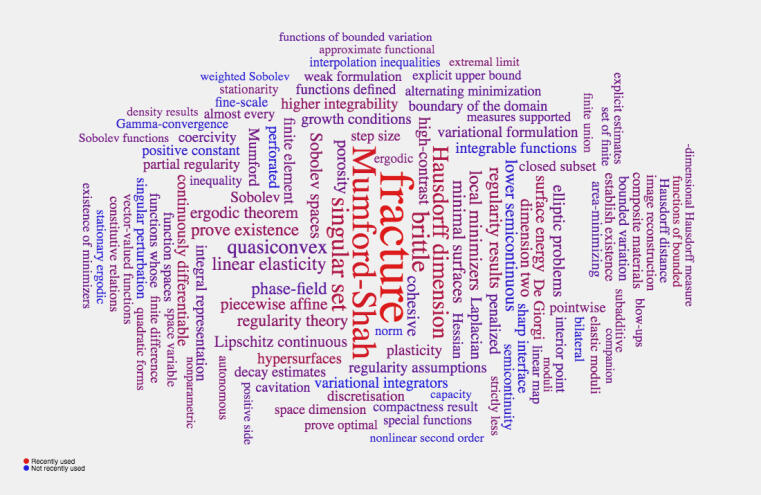
Endre Süli is Professor of Numerical Analysis at the University of Oxford, where he has maintained a distinguished academic career since 1985. He currently serves as Fellow and Tutor in Mathematics at Worcester College and Supernumerary Fellow at Linacre College. His progression at Oxford includes University Lecturer in Numerical Analysis (1985-1996), Reader in Numerical Analysis (1996-1999), and Professor of Numerical Analysis (1999-present). Süli completed his B.Sc. in Mathematics at the University of Belgrade (1974-1978), followed by an M.Sc. in Mathematics (1978-1980). As a British Council Visiting Student, he studied at Reading University and Oxford University in 1983/84, earned his Ph.D. from the University of Belgrade in 1985, and received his M.A. from Oxford University in the same year. Professor Süli's research centers on numerical analysis of nonlinear partial differential equations with applications across multiple scientific domains. His work spans free-discontinuity problems and computational modeling of fracture; finite element methods; Navier-Stokes-Fokker-Planck systems; adaptive algorithms with a-posteriori error control; implicitly constituted material models; and discontinuous finite element methods. His research bridges theoretical mathematics with practical computational approaches for complex physical phenomena. Recent publications (2024-2025) demonstrate Süli's continued leadership in numerical analysis, with focus areas including fractional calculus, stochastic PDEs, and advanced finite element techniques. His work shows strong interdisciplinary connections between mathematical analysis, fluid dynamics, and materials science, addressing challenging problems in polymeric fluids, porous media, and capillary flow modeling. Professor Süli's distinguished career has been recognized with numerous prestigious honors: Invited Speaker at the International Congress of Mathematicians, Madrid (2006) Fellow of the Institute of Mathematics and its Applications (2007) Foreign Member of the Serbian National Academy of Sciences and Arts (2009) Fellow of the European Academy of Sciences (2010) IMA Service Award (2011) SIAM Fellow (2016) Member of the Academia Europaea (2020) London Mathematical Society Naylor Prize and Lectureship (2021) Fellow of the Royal Society (2021) As an educator, Süli has received the Oxford University Teaching Excellence Award (2009) and the Mathematical Institute Teaching Award (2013). He has supervised numerous PhD students and postdoctoral researchers throughout his career, though specific names aren't documented in the available materials. His research has been supported by various grants enabling work on computational methods for partial differential equations. Süli maintains active service to the mathematical community through editorial boards and professional organizations. Professor Süli is affiliated with the Numerical Analysis research group and the Oxford Centre for Nonlinear PDE at the Mathematical Institute. These research centers provide a collaborative environment for theoretical and applied work on partial differential equations. His research often involves interdisciplinary collaborations with physicists, engineers, and computational scientists to develop and analyze numerical methods for complex physical phenomena.
Dr. Galatia Cleanthous is a Lecturer in the Department of Mathematics and Statistics at Maynooth University, Ireland, affiliated with the Faculty of Science & Engineering and the Hamilton Institute. She joined Maynooth in 2020 after postdoctoral positions at Trinity College Dublin, Newcastle University, and University of Cyprus, and holds a PhD in Pure Mathematics from Aristotle University of Thessaloniki (2014). Education PhD in Mathematics, Aristotle University of Thessaloniki, Greece (2014) MSc in Mathematics, Aristotle University of Thessaloniki, Greece Diploma in Mathematics, Aristotle University of Thessaloniki, Greece Research Interests Her research bridges pure and applied mathematics, focusing on Mathematical Analysis , Probability , and Statistics . Specifically, she explores Geometric Analysis , Geometric Function Theory , and Harmonic Analysis on manifolds and metric spaces. In statistics, she works on Nonparametric , Spatial , and Environmental Statistics , developing adaptive estimation techniques and studying Gaussian random fields on spheres and other domains. Publication Trends From 2025 back to 2013, her work has consistently appeared in top journals such as Annals of Statistics , Bernoulli , Journal of Nonparametric Statistics , and Transactions of the American Mathematical Society . A clear trend emerges: early publications concentrate on pure analytic topics like Fourier multipliers and function spaces, while recent outputs integrate these theoretical tools into modern nonparametric statistics, density estimation on manifolds, and stochastic modeling of environmental and seismological data. Scientific Awards Master’s degree ranked first with grade 9.8/10, Aristotle University of Thessaloniki (2011) Diploma ranked first among ~200 students, grade 9.7/10, Aristotle University of Thessaloniki (2009) Undergraduate merit awards for three consecutive academic years (2005-2008), State Scholarship Foundation of Greece National first place in Cypriot high-school mathematics entrance exams (2005), Ministry of Education, Cyprus Advising & Outreach Dr. Cleanthous has supervised BSc and MSc students, including Ultán Doherty (BSc, 1st Class Honors, 2021) and Anush Harish (MSc, 2022). She serves as Chair of the Department PR Committee, Member of the University STEM Promotions Committee, and Member of the departmental Equality, Diversity & Inclusion committee. Beyond campus, she trains young mathematicians at the North Kildare Maths Problem Solving Club and organizes public engagement events for Science Week. Labs & Teams She is associated with the Hamilton Institute at Maynooth University, a multidisciplinary research institute fostering collaboration between mathematics, computer science, and engineering.
Michele Salvi is an Associate Professor in Mathematics at Università degli Studi di Tor Vergata in Rome. He previously held a Marie Skłodowska-Curie fellowship, conducting research in Berlin, Munich, and Paris. His work focuses on Probability Theory, with emphasis on random processes in random media, random graphs, and statistical mechanics, bridging applications in Physics, Computer Science, and Biology. Random processes in random media Random graphs Mathematics of Neural Networks Stochastic homogenization Mixing times for Markov chains Statistical mechanics Salvi’s recent publications highlight interdisciplinary trends, particularly in the spectral analysis of deep neural networks, scale-free percolation dynamics, and spanning tree geometry in random environments. His collaborations span Europe, with projects involving probabilistic models in epidemiology, reinforcement learning, and stochastic homogenization. He has received the Marie Skłodowska-Curie fellowship, reflecting his international research experience. His work is aligned with the Department of Mathematics at Tor Vergata, which holds the "Department of Excellence" MatMod@TOV 2023-2027 grant.
Jean-Luc Thiffeault is a Professor of Applied Mathematics at the University of Wisconsin-Madison, serving as Chair of the Department of Mathematics. His research spans applied mathematics, fluid dynamics, and topological chaos, with a focus on mixing mechanisms in viscous flows, biogenic mixing by microorganisms, and computational modeling. Key research themes include: Topology-driven fluid mixing via braid theory; Chaotic advection in low-Reynolds environments; Microswimmer interactions with boundaries and waves; Development of numerical tools for dynamical systems analysis. He has authored significant software packages like braidlab (braid analysis), rodent (ODE integration), and jlt lib (utility functions for scientific computing). Collaborative projects include studies on hagfish slime unraveling, burger flipping dynamics, and Brownian particle winding around vortices. His work is supported by NSF grants DMS-0806821 and CMMI-1233935, emphasizing interdisciplinary approaches combining mathematics, physics, and computational methods.
Guillaume Bal is a Professor at the University of Chicago, holding joint appointments in the Departments of Statistics and Mathematics, and affiliated with the Committee on Computational and Applied Mathematics (CCAM). His research focuses on inverse problems in medical and geophysical imaging, partial differential equations with random coefficients, and the mathematical analysis of topological insulators. He explores applications in wave propagation, uncertainty quantification, and hybrid imaging modalities. His recent work delves into theoretical and computational aspects of stochastic partial differential equations and topological edge states. Research Interests: Inverse Problems (Geophysical/Medical Imaging) Topological Insulators and Edge States Wave Propagation in Heterogeneous Media Uncertainty Quantification Publications Trends: Recent articles emphasize topological insulator dynamics, hybrid imaging techniques, and stochastic PDE models. Key themes include bulk-edge correspondence, dual-energy CT optimization, and semiclassical propagation in curved interfaces.
Jacob Fish is the Robert A.W. and Christine S. Carleton Professor and Chair of the Department of Civil Engineering and Engineering Mechanics at Columbia University. He directs the Multiscale Science and Engineering Center and leads Columbia's Computational Science and Engineering initiative (iCSE), coordinating 65+ faculty. With 35 years of pioneering research, he specializes in multiscale computational methods bridging aerospace, automotive, and healthcare industries. His research integrates multiscale computational science with applications in: Homogenization and reduced-order methods for complex materials Stochastic modeling of heterogeneous systems Coupled thermo-chemo-electro-mechanical processes Data-physics driven frameworks for industrial processes Recent work emphasizes AI-enhanced modeling for composites, porous media, and environmental systems. His 15 most recent publications (2023-2025) demonstrate strong trends toward: Data-physics integration in manufacturing (e.g., resin transfer molding) Multiscale environmental applications (canopy flows, CO2 mineralization) Advanced numerical methods (discontinuous Galerkin, solver-free homogenization) Digital twin development for composite lifecycle management Scientific Awards & Honors: 2018 JSCES Grand Prize 2010 IACM Computational Mechanics Award 2005 USACM Computational Structural Mechanics Award 2003 Rensselaer Research Award Fellowships: AAM, USACM, IACM Two Best Paper awards He founded the commercial Multiscale Designer software suite (250+ global clients) and secured major grants including an NSF-DFG collaboration on thermoplastic interfaces. His textbooks are used in 200+ universities worldwide. Leads the Multiscale Science and Engineering Center focusing on industrial-scale computational challenges and mentors researchers through Columbia's iCSE initiative. Former President of USACM and current IACM Vice-President for the Americas.
Ezra Miller is a Professor of Mathematics at Duke University, specializing in algebraic geometry, combinatorics, and their applications to biology and statistics. His work bridges pure mathematics with interdisciplinary research, including studies in phylogenetic trees, geometric probability, and algebraic statistics. He holds positions in the Mathematics Department at Duke and has contributed to the Statistical and Applied Mathematical Sciences Institute (SAMSI) programs. Education: Details not explicitly provided in the text, but his academic journey includes a Ph.D. from UC Berkeley and postdoctoral research. His research interests span geometry, algebra, probability, statistics, topology, combinatorics, algorithms, and computational biology. He has advised students in algebraic combinatorics and related fields. Research emphasizes geometric and combinatorial structures, with notable projects on phylogenetic data analysis, hypergeometric systems, and Gröbner basis theory. His work often integrates computational methods with theoretical frameworks. Notable collaborations include studies on metric phylogenetic trees, topological data analysis, and combinatorial game theory. He has taught advanced courses in algebra, combinatorics, and applied mathematics at Duke. Labs/Teams: Active in SAMSI's Analysis of Object Data program and collaborates with statisticians and biologists on interdisciplinary projects.
Marie-Colette van Lieshout is a Professor of Spatial Stochastics at the Faculty of Electrical Engineering, Mathematics and Computer Science, University of Twente, and a Scientific Staff Member in the Stochastics group at Centrum Wiskunde & Informatica (CWI), Amsterdam. She has been active in research since 1997 and is a leading expert in stochastic geometry, spatial statistics, and image analysis. Her educational and professional background includes positions at the University of Warwick and the Free University Amsterdam. She is currently engaged in advanced research on point processes, random fields, and tessellation models, with applications in seismic hazard, fire risk, and machine learning. Her research interests include: Stochastic Geometry Spatial Statistics Image Analysis Point Process Modeling Seismic Risk Assessment Machine Learning for Spatial Data Her recent publications (2023–2025) focus on spatial intensity estimation, marked point processes, and data-driven risk modeling, showing a strong integration of classical spatial statistics with modern computational and machine learning techniques. Key themes include adaptive kernel smoothing, infill asymptotics, and applications in environmental and public safety domains. She has received significant recognition, including: Elected Fellow, International Statistical Institute (ISI) She has been awarded multiple research grants from NWO and other agencies, including the KLEIN grant for fire risk management and the DeepNL grant for seismicity prediction in Groningen. She has supervised or collaborated with researchers such as C. Lu, Z. Baki, and R. Markwitz. She is also active in academic service, serving on editorial boards (e.g., Methodology and Computing in Applied Probability), advisory boards (InHolland University), and councils of learned societies (Bernoulli Society, KWG). She leads and participates in research clusters such as STAR and contributes to outreach and education through courses and public lectures on earthquake modeling and spatial statistics.
Balint Toth is a distinguished academic with dual affiliations: a Research Professor at the Alfréd Rényi Institute of Mathematics in Budapest and a Professor of Probability (Heilbronn Chair) at the University of Bristol 's School of Mathematics. His work bridges Probability Theory , Mathematical Physics , and Statistical Mechanics , focusing on stochastic dynamics, random walks in complex environments, and scaling limits. Key Roles: Co-Editor-in-Chief of Probability Theory and Related Fields , organizer of probability seminars in Budapest-Vienna and Bristol, and former leader of the BME Stochastics Seminar (1999–2020). Teaching: Delivers advanced courses like Probability 2 , Stochastic Differential Equations , and Percolation , emphasizing rigorous mathematical foundations. Research Themes include hydrodynamic limits, self-interacting random walks, diffusion in random media, and symmetry breaking in spin systems. His recent publications explore non-equilibrium stochastic models, anomalous diffusion, and connections between probability and physics. Teaching Materials span bilingual resources (Hungarian/English) for undergraduate and graduate courses in probability and stochastic analysis.
Professor Caterina Ida Zeppieri is a distinguished mathematician at the Westfälische Wilhelms-University Münster (University of Münster) in Germany, where she leads the Research Group 'Analysis and Modelling' within the Institute for Analysis and Numerics. She has maintained a continuous academic presence since at least the Winter semester 2012/13 through to upcoming semesters in 2025/26, consistently teaching advanced mathematics courses and supervising research activities. Her research focuses on fundamental aspects of mathematical analysis with significant applications to materials science. She specializes in Calculus of Variations, Elliptic PDEs, Gamma-convergence, Homogenization theory, Free-discontinuity problems, Nonlinear elasticity, and Plasticity. Her work bridges theoretical mathematics with practical applications in understanding material behavior, particularly fracture mechanics and composite materials. Professor Zeppieri's publication record demonstrates a consistent and impactful research trajectory from 2007 through forthcoming publications in 2025. Her recent work shows a strong emphasis on stochastic homogenization techniques applied to free-discontinuity problems and singularly-perturbed functionals, revealing sophisticated mathematical approaches to modeling complex material behaviors across multiple scales. She regularly collaborates with leading researchers including Filippo Cagnetti, Gianni Dal Maso, and Lucia Scardia, contributing to significant advances in the mathematical understanding of material science phenomena. Her research has been published in top-tier mathematics journals including Calculus of Variations and Partial Differential Equations, Archive for Rational Mechanics and Analysis, and SIAM Journal on Mathematical Analysis. Within the department, Professor Zeppieri plays an active role in teaching advanced courses such as Partial Differential Equations, Calculus of Variations, and Advanced Topics in the Calculus of Variation, while participating in the department's Advanced Seminar in Applied Mathematics and Colloquium on Applied Mathematics.