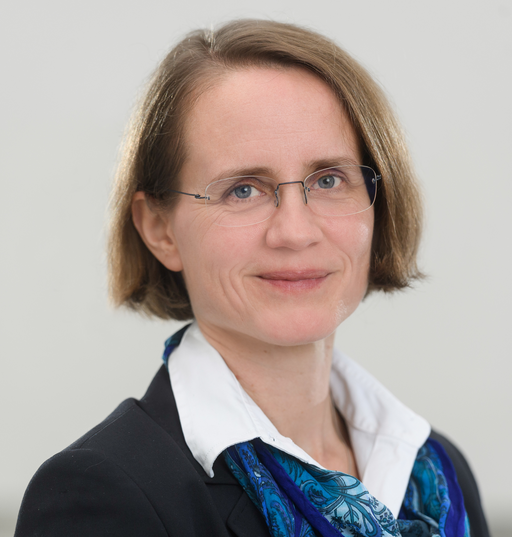
Prof. Nicolas Perkowski is a Professor in the Department of Mathematics at Freie Universität Berlin, specializing in Stochastic Analysis and Probability Theory. He holds roles such as Vice Spokesperson of DFG CRC/TRR 388 (since 2024) and Chair of the Master of Mathematics Examination Board. His research focuses on stochastic partial differential equations (SPDEs), rough paths, and applications in mathematical physics. Notable contributions include work on singular SPDEs, fractional processes, and the KPZ equation. Perkowski has authored/co-authored numerous publications in top journals like the Annals of Probability and Communications in Mathematical Physics, and he serves as an associate editor for several journals. His institutional responsibilities include leadership in research collaborations and academic governance. Education: PhD and diploma in stochastic population models (details not explicitly provided in text). Research Interests: Stochastic Analysis, Probability Theory, SPDEs, Mathematical Physics, Nonlinear Filtering. Recent Articles: Focus on fractional processes, SPDEs with singular terminal conditions, and stochastic sewing lemmas. His work bridges theoretical probability with applications in physics and engineering, with a strong emphasis on rigorous mathematical frameworks for complex stochastic systems.
Weierstrass Institute for Applied Analysis and StochasticsGermany
Gianni Dal Maso is a Professor of Mathematical Analysis at the International School for Advanced Studies (SISSA) in Trieste, Italy. He has been a faculty member at SISSA since 1985, first as Associate Professor and then as Full Professor since 1987. He has held several leadership positions at SISSA including Head of the Sector of Functional Analysis and Applications (1993-1998, 2001-2010), Deputy Director (2010-2015), and Coordinator of the Mathematics Area (2016-2020). His educational background includes: 1973-1977: Undergraduate student in Mathematics at the University of Pisa and Scuola Normale Superiore 1977: Degree in Mathematics with honors at the University of Pisa (thesis: "Gamma-limits of set functions," advised by Ennio De Giorgi) 1977: "Diploma" in Mathematics from the Scuola Normale Superiore 1977-1981: Post-graduate Research Fellowship in Mathematics ("Perfezionamento") at the Scuola Normale Superiore Dal Maso's research focuses on the Calculus of Variations, with particular emphasis on semicontinuity and relaxation problems, Gamma-convergence, and more recently, free discontinuity problems and their applications to mechanics. His work bridges pure mathematical analysis with practical applications in material science, particularly in plasticity and fracture mechanics. He has developed mathematical frameworks for understanding crack propagation, material failure, and the behavior of solids under stress, contributing significantly to both theoretical foundations and practical modeling approaches in these areas. His extensive publication record shows a clear evolution from foundational work in Gamma-convergence (culminating in his influential book "An Introduction to Gamma-Convergence" in 1993) toward increasingly sophisticated models of material behavior, particularly in fracture mechanics and plasticity. Recent work demonstrates continued innovation in handling complex discontinuities, non-local effects, and multi-scale phenomena in material science applications. Among his notable scientific recognitions: 1982: Stampacchia Prize, awarded by the Scuola Normale Superiore 1990: Caccioppoli Prize, awarded by the Italian Mathematical Union 1996: Medaglia dei XL per la Matematica, awarded by the Accademia Nazionale delle Scienze detta dei XL 2003: Prize of the Minister for the Cultural Heritage for Mathematics and Mechanics, awarded by the Accademia Nazionale dei Lincei 2005: Prize Luigi and Wanda Amerio, awarded by the Istituto Lombardo Accademia di Scienze e Lettere Dal Maso has supervised 42 PhD students at SISSA, demonstrating a strong commitment to academic mentorship. His research has been significantly supported by multiple National Research Projects (PRIN) in Italy, and notably by an ERC Advanced Grant "Quasistatic and Dynamic Evolution Problems in Plasticity and Fracture" (QuaDynEvoPro) from 2012-2017, where he served as Principal Investigator. This major project focused on nonlinear evolution problems in plasticity and fracture, with three main research directions: plasticity with hardening and softening, quasistatic crack growth, and dynamic fracture mechanics. His scholarly activities extend to editorial service, with membership on the boards of numerous prestigious journals including Archive for Rational Mechanics and Analysis, SIAM Journal on Mathematical Analysis, and Journal of Convex Analysis. He has also been active in the mathematical community through membership in scientific committees and academies, including the Accademia Nazionale dei Lincei since 2014.
Prof. Vladimir Spokoiny is a leading figure in stochastic algorithms and nonparametric statistics at the Weierstrass Institute for Applied Analysis and Stochastics (WIAS) and Humboldt University of Berlin . His work bridges mathematical statistics with practical applications in finance, medicine, and machine learning. Born in 1959 in Moscow, USSR PhD from Lomonosov Moscow State University (1988) Habilitation from Humboldt University (1996) Head of WIAS research group since 2000 Professor at Humboldt University since 2002 Spokoiny's research focuses on adaptive nonparametric methods, high-dimensional data analysis, and statistical finance. His innovations in local homogeneity testing and propagation-separation methods have advanced volatility modeling, image analysis, and manifold learning. He employs Bayesian optimization frameworks and stochastic control techniques for financial instrument pricing. Recent scientific contributions include generalized bootstrap procedures for Bures-Wasserstein barycenters (2024), dimension-free Laplace approximation bounds (2023), and structure-adaptive manifold estimation (2022). His 19+ PhD students and editorial roles in top journals like The Annals of Statistics demonstrate sustained academic impact. International Statistical Institute member American Statistical Association fellow Institute of Mathematical Statistics member Bernoulli Society member
Professor Caterina Ida Zeppieri is a distinguished mathematician at the Westfälische Wilhelms-University Münster (University of Münster) in Germany, where she leads the Research Group 'Analysis and Modelling' within the Institute for Analysis and Numerics. She has maintained a continuous academic presence since at least the Winter semester 2012/13 through to upcoming semesters in 2025/26, consistently teaching advanced mathematics courses and supervising research activities. Her research focuses on fundamental aspects of mathematical analysis with significant applications to materials science. She specializes in Calculus of Variations, Elliptic PDEs, Gamma-convergence, Homogenization theory, Free-discontinuity problems, Nonlinear elasticity, and Plasticity. Her work bridges theoretical mathematics with practical applications in understanding material behavior, particularly fracture mechanics and composite materials. Professor Zeppieri's publication record demonstrates a consistent and impactful research trajectory from 2007 through forthcoming publications in 2025. Her recent work shows a strong emphasis on stochastic homogenization techniques applied to free-discontinuity problems and singularly-perturbed functionals, revealing sophisticated mathematical approaches to modeling complex material behaviors across multiple scales. She regularly collaborates with leading researchers including Filippo Cagnetti, Gianni Dal Maso, and Lucia Scardia, contributing to significant advances in the mathematical understanding of material science phenomena. Her research has been published in top-tier mathematics journals including Calculus of Variations and Partial Differential Equations, Archive for Rational Mechanics and Analysis, and SIAM Journal on Mathematical Analysis. Within the department, Professor Zeppieri plays an active role in teaching advanced courses such as Partial Differential Equations, Calculus of Variations, and Advanced Topics in the Calculus of Variation, while participating in the department's Advanced Seminar in Applied Mathematics and Colloquium on Applied Mathematics.
Holger Dette is a Professor and Chair Holder of Stochastics (specializing in Statistics) at the Faculty of Mathematics, Ruhr University Bochum. He leads the prominent Group Dette within the Institute of Statistics, overseeing a team of researchers, doctoral students, and administrative staff including Birgit Tormöhlen as team assistant. His research group is deeply integrated within the university's mathematical ecosystem, collaborating with other research groups across algebra, analysis, numerics, and topology. Dette's research spans mathematical statistics with strong applications in real-world problems. His primary interests include optimal experimental design, time series analysis, functional data, change point problems, nonparametric regression, biostatistics, special functions, goodness-of-fit tests, and random matrices . His work bridges theoretical statistics with practical applications, particularly evident in his collaborations with pharmaceutical giants Novartis and Bayer AG in biostatistics, as well as Quasol, a spin-off company from his statistics institute. His recent publications (2024-2025) reveal a research program increasingly focused on high-dimensional and functional data analysis, privacy-preserving statistics, and novel methodological approaches to longstanding statistical problems. Dette's work shows strong interdisciplinary connections, particularly with biomechanics (analyzing joint angles during fatigue phases) and data science (addressing challenges in the era of big data). His research group is actively involved in multiple DFG-funded projects including the newly established 'Small Data' collaborative research center (Sonderforschungsbereich 1597) and the Spatio-temporal Statistics for the Transition of Energy and Transport (Transregio 391). Dette has received significant recognition including the prestigious Humboldt Research Award . His paper 'With Great Power Come Great Side Channels: Statistical Timing Side-Channel Analyses with Bounded Type-1 Errors' achieved second place at the CSAW'24 Applied Research Competition MENA. His research group has also secured multiple significant funding awards from the German Research Foundation (DFG). As an advisor, Dette supervises numerous doctoral and master's students including Pascal Quanz, Marius Kroll, and Carina Graw. His group offers statistical consulting services for scientists and students across bachelor's, master's, and doctoral phases. The group maintains strong industrial partnerships, particularly in biostatistics applications, demonstrating Dette's commitment to translating theoretical statistics into practical solutions for real-world challenges.
Professor Caterina Zeppieri is a faculty member at the Institute for Analysis and Numerics within the Faculty of Mathematics and Computer Science at the University of Münster, Germany. She serves as an investigator in Mathematics Münster and specializes in optimization and calculus of variations. Her research spans multiple collaborative projects within the Excellence Cluster EXC 2044. Her primary research interests focus on Calculus of Variations , Homogenization Theory , and Free-Discontinuity Problems , with significant contributions to the mathematical understanding of material science phenomena. Her work bridges theoretical mathematics with practical applications in material modeling, fracture mechanics, and multi-scale analysis. She has developed sophisticated mathematical frameworks for understanding stochastic homogenization, phase-field approximations, and gradient damage models in heterogeneous materials. Analysis of her recent publications reveals a consistent trajectory toward increasingly complex multi-scale problems involving randomness and discontinuities. Her work demonstrates deep connections between Γ-convergence theory, stochastic processes, and applications to material science, particularly in modeling fracture phenomena and composite materials. A notable trend is her development of global methods that unify deterministic and stochastic approaches to homogenization problems. Zeppieri actively contributes to teaching at the University of Münster, regularly offering courses on Partial Differential Equations, Calculus of Variations, and Advanced Topics in Mathematical Modeling. Her teaching spans both undergraduate and graduate levels, including specialized seminars on cutting-edge research topics in her field. She is deeply involved in the EXC 2044 collaborative research center, particularly in project units C1 (Evolution and asymptotics), C2 (Multi-scale phenomena and macroscopic structures), and C3 (Interacting particle systems and phase transitions), where she contributes her expertise in variational methods and homogenization to multi-disciplinary research efforts.
Yannis Kevrekidis is a Professor at Princeton University with a distinguished career in computational mathematics and chemical engineering. He is currently a Hans Fischer Senior Fellow at the Technical University of Munich (TUM-IAS) and has held visiting positions at institutions like the Zuse Institute Berlin and Caltech. Education : National Technical University of Athens (Chemical Engineering) University of Minnesota (PhD in dynamical systems) Research Interests : Equation-Free and Variable-Free Modeling Complex Systems Dynamics Multiscale Computation Integration of Machine Learning with Scientific Computing Pattern Formation & Instability Analysis Key Article Trends : Advanced data-driven modeling of dynamical systems Manifold learning for reaction coordinates Projective integration methods Coarse-grained modeling across disciplines Applications in epidemiology, neuroscience, and fluid dynamics Scientific Awards : Guggenheim Fellowship Humboldt Research Award Computing in Chemical Engineering Award (AIChE) Bodossaki Academic Award Allan P. Colburn Award Collaborations : Extensive international collaborations with institutions in Germany, Austria, and the UK Key role in the Complex Systems Modeling and Computation focus group at TUM-IAS
Prof. Dr. Lubomir Banas is a full-time Professor at the Faculty of Mathematics , University of Bielefeld. His research focuses on numerical analysis of stochastic partial differential equations (SPDEs) , particularly in micromagnetism, phase field models, and stochastic games. He leads Subproject B03 in the SFB 1283 project 'Taming Uncertainty and Profiting from Randomness and Low Regularity in Analysis, Stochastics and Their Applications.' Research Interests: Numerical methods for SPDEs and singular-degenerate PDEs Adaptive finite element techniques and a posteriori estimates Phase field models (Cahn-Hilliard, obstacle potentials) Stochastic games with asymmetric information Computational micromagnetism and magnetostriction Self-organized criticality and nonlinear stochastic flows Recent work includes: 2025: Numerical approximation of biharmonic wave maps and stochastic games 2024: Sharp interface limits for stochastic Cahn-Hilliard equations 2023: Singular-degenerate SPDEs and a posteriori estimates 2022: Stochastic total variation flow and Hamilton-Jacobi-Bellman equations 2021: Nematic electrolytes and homogenization of two-phase flows He serves on examination boards for Bachelor's and Master's programs in Mathematics and Mathematical Physics, and supervises graduate students within the Bielefeld Graduate School in Theoretical Sciences . His publications (over 30) address convergence analysis, error estimation, and computational modeling in applied mathematics.
Prof. Dr. Marco Cicalese is a Professor of Mathematical Continuum Mechanics at the Technical University of Munich (TUM), holding a position in the Department of Mathematics within the TUM School of Computation, Information and Technology. He has been at TUM since 2012, following roles as an Assistant Professor at the University of Naples (2005–2012) and a researcher at SISSA (2004–2005). His research focuses on variational analysis of atomistic and continuous systems, multiscale problems, and geometric inequalities. Education: PhD in Applied Mathematics from the University of Naples (2004), MSc in Physics (details not specified). His editorial roles include Associate Editorships at Acta Applicandae Mathematicae and Mathematics in Engineering . Research interests encompass calculus of variations, nonlinear elasticity, and phase transitions, with contributions to discrete-to-continuum limits and stability of geometric inequalities. Teaching includes courses on partial differential equations, calculus of variations, and mathematical modeling. His work often bridges discrete and continuous models, with applications to materials science and continuum mechanics. Recent publications explore topics like Wulff crystal emergence, fractional vortices, and surfactant effects in phase transitions.
Max Planck Institute for Mathematics in the SciencesGermany
Felix Otto is a Director at the Max Planck Institute for Mathematics in the Sciences and an Honorary Professor for Analysis and Mathematical Modeling at the University of Leipzig. His research focuses on pattern formation, energy landscapes, and scaling laws, with contributions to stochastic homogenization, PDEs, and optimal transport. He has held academic positions at the University of California and the Hausdorff Center for Mathematics. Notable grants include projects on microstructure formation in thin coatings and stochastic homogenization. He has organized conferences such as the ICM satellite conference on Probability and Mathematical Physics. His work bridges pure and applied mathematics, with implications for materials science and fluid dynamics. Education: Diplom (1990), PhD (1993) from Bonn University. Postdoctoral roles at Bonn, Courant Institute, and CMU. Tenured faculty roles at UCSB (1998–2010) and Bonn (1999–2010). Research interests span stochastic PDEs, calculus of variations, and the mathematical theory of materials. Grants include BMBF and DFG projects on microstructure modeling and homogenization.
Prof. Arie Levant is a Professor in the Department of Applied Mathematics at Tel Aviv University's School of Mathematical Sciences, actively teaching Spring 2025 courses with Monday reception hours via Zoom (17:10-18:00). His foundational work established High-Order and Homogeneous Sliding Mode Control theories alongside Robust Exact Differentiation. His educational background includes: Ph.D. (1987) from USSR Academy of Sciences, Moscow: Thesis "Higher-order sliding modes and their application in control of uncertain processes" supervised by Prof. S.V. Emelyanov Postgraduate studies (1983-1987) in mathematical control theory at same institute B.Sc./M.Sc. (1980) from Moscow State University under Prof. V.I. Arnold in Theory of Differential Equations Levant's research centers on Nonlinear Control Theory with specialization in Sliding Mode Control , Homogeneous Discontinuous Control , and Robust Exact High-Order Differentiation . His methodologies enable finite-time-exact tracking in uncertain systems and real-time noise-robust signal differentiation, addressing fundamental challenges in control system resilience. Analysis of his 15 most recent publications (2016-2023) reveals concentrated advancements in chattering reduction, discretization for digital implementation, and noise filtering within sliding mode frameworks. These works demonstrate consistent focus on bridging theoretical control principles with practical engineering applications, particularly in real-time signal processing and robust controller design.
Prof. Dr. Günther Grün is a faculty member at the University of Erlangen-Nuremberg , specializing in Applied Mathematics . His work bridges rigorous mathematical analysis, numerical methods, and applications in continuum mechanics , fluid dynamics , and free boundary problems . He serves as Spokesperson for the DFG Research Training Group IntComSin (2022–2027), focusing on interfaces, complex structures, and singular limits in mathematical modeling and simulation. Education Diploma in Mathematics (1991), University of Bonn PhD in Mathematics (1994), University of Bonn Habilitation in Mathematics (2001), University of Bonn Research Interests center on degenerate parabolic equations (e.g., porous-medium and thin-film equations), stochastic SPDEs with multiplicative noise, diffuse interface models for two-phase flow with surfactants, and dimension-reduced models via singular limits. His work combines calculus of variations , homogenization , and Gamma-convergence for multi-scale analysis, alongside finite-element/finite-volume schemes for efficient simulations. Scientific Awards Marie Curie Research Fellowship (1996), Universita di Tor Vergata, Rome Advising Legacy includes mentoring doctoral candidates such as Dr. Fabian Klingbeil (Accenture), Dr. Jürgen Becker (Fraunhofer Institute), and Prof. Dr. Julian Fischer (IST Austria), who have pursued careers in academia, industry, and research institutions.
Prof. Anja Schlömerkemper holds the Chair of Mathematics in the Sciences at the University of Würzburg since 2011 and serves as Vice President responsible for Equal Opportunities, Career Planning, and Sustainability. She earned her PhD in Mathematics from the University of Leipzig (2002) and held postdoctoral positions at institutions including the University of Oxford and the Max Planck Institute for Mathematics in the Sciences. Her research focuses on mathematical analysis, particularly partial differential equations and calculus of variations, with applications to materials science and physics. She investigates mathematical methods to model material behavior at micro and macro scales, including elastic and magnetic materials. Her work bridges theoretical analysis and practical applications in continuum mechanics. She has contributed to fluid-rigid body interactions, magnetoelastic materials, and phase transitions. As Vice President, she promotes gender equality, supports early-career researchers, and advances sustainability across the university's research, teaching, and administration. Education: PhD in Mathematics (Leipzig, 2002) and Diploma in Physics (Göttingen, 1998). Professional Experience includes roles at the Universities of Bonn, Erlangen-Nuremberg, and Stuttgart, as well as the Max Planck Institute. Research interests also encompass homogenization theory, dislocation dynamics, and stochastic discrete systems. She leads interdisciplinary projects, collaborates internationally, and advises on academic policies.
Michael Baake is a Professor of Mathematics at Bielefeld University, affiliated with the Faculty of Mathematics. His research focuses on Aperiodic Order, Dynamical Systems, Combinatorics, and Mathematical Physics. He leads multiple research projects, including the SFB/TR 358 'Integral Structures in Geometry and Representation Theory' and SFB 1283 'Taming Uncertainty'. His work bridges pure mathematics with applications in crystallography and stochastic systems. Affiliations: Representative for the Faculty Library, Co-Director of the Research Focus on Mathematical Modeling. Cooperations: Collaborates with international experts like Uwe Grimm, Daniel Lenz, and Nicolae Strungaru on topics such as aperiodic tilings and spectral theory. Research Groups: Leads a vibrant research group with members including Anna Klick, Daniel Luz, and Timo Spindeler, focusing on quasicrystals, combinatorial structures, and number theory applications. His contributions include co-editing the book 'Aperiodic Order: Crystallography and Almost Periodicity' and organizing workshops on spectral theory and dynamical systems. He actively engages in academic service, including editorial roles and conference organization.
Sebastian Andres is Professor of Stochastics at TU Braunschweig's Institute of Mathematical Stochastics. His research focuses on random processes in disordered media, including homogenization of random walks, percolation theory, and heat kernel analysis. He holds a habilitation from University of Bonn and previously held positions at University of Cambridge and University of Manchester. Research Themes: Quantitative homogenization, invariance principles for degenerate random walks, and applications to mathematical physics. Teaching: Current courses include Probability Theory and Discrete Financial Mathematics; authored lecture notes on Martingale Theory for Finance.