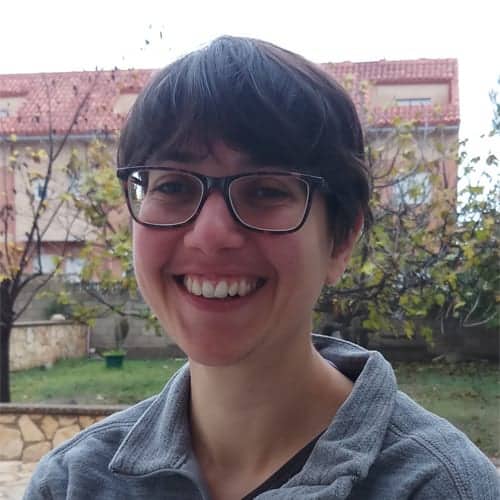
Susanne Ditlevsen is a Professor at the Department of Mathematical Sciences , University of Copenhagen. Her research focuses on statistical inference for stochastic processes , mathematical modeling of physiological systems , nonlinear dynamics , neuroscience , and biomathematics . Research : She develops statistical methods for diffusion processes, hidden Markov models, and stochastic differential equations, with applications in biomedical data and marine mammal behavior. Teaching : Covers basic statistics, probability, stochastic processes, regression, and generalized linear models. Publications highlight her work on climate tipping points (2023, Nature Communications ), nonlinear neuronal systems (2017), and statistical ecology (2020). Her collaborations span Denmark, France, and international institutions.
Renaud Lambiotte is Professor of Networks and Nonlinear Systems at the Mathematical Institute, University of Oxford. He holds a PhD in Physics from Université libre de Bruxelles and has held research and faculty positions at ENS Lyon, Université de Liège, UCLouvain, Imperial College London, and the University of Namur. He is currently an active academic in applied mathematics and network science. His research focuses on complex systems, particularly dynamics on networks, temporal networks, and stochastic processes. He applies these to social and brain networks, data mining, and urban systems. His work bridges theoretical modeling and real-world data, emphasizing the structure and evolution of complex systems. His recent publications demonstrate strong trends in network theory, including hypergraphs, community detection, multidimensional dynamics, and data quality in network interventions. He also explores applications in urban air quality and gentrification, showing a commitment to socially relevant complex systems research. Scientific Awards: Prix Wernaers 2013 Prix Wernaers 2016 Prix Wernaers 2020 Verdickt-Rijdams 2016 de l'Académie royale de langue et de littérature françaises He is the co-founder of L’Arbre de Diane, a publishing initiative at the science-literature interface, which received multiple awards. He teaches advanced courses such as Differential Equations II and Networks. He is affiliated with the Machine Learning and Data Science and the Oxford Centre for Industrial and Applied Mathematics research groups. He has authored or co-edited key texts in the field, including A Guide to Temporal Networks and Modularity and Dynamics on Complex Networks , and has published around 130 peer-reviewed articles. His research is supported by ongoing collaborations and active publication output, indicating sustained academic leadership.
Christian Kühn is a Professor of Multiscale and Stochastic Dynamics at the Technical University of Munich (TUM), affiliated with the TUM School of Computation, Information and Technology. He has been an External Faculty member at the Complexity Science Hub Vienna since 2017, reflecting his interdisciplinary engagement in complex systems research. His academic background includes a BSc in Mathematics from Jacobs University Bremen (2005), an M.A.St. from the University of Cambridge (2006), and a PhD in Applied Mathematics from Cornell University (2010). He held postdoctoral positions at the Max Planck Institute for the Physics of Complex Systems in Dresden and the Vienna University of Technology, where he also served as an APART-Fellow and Leibniz Fellow. Christian Kühn's research lies at the intersection of differential equations, dynamical systems, and mathematical modeling. He focuses on multiscale problems, the impact of noise and uncertainty in deterministic and stochastic systems, and adaptive networks. Central phenomena of interest include bifurcations, pattern formation, and scaling laws. His work bridges theoretical developments with applications in epidemiology, neuroscience, and complex network dynamics. His recent publications (2021–2024) reflect a strong trend in analyzing nonlinear and stochastic dynamics on networks, with applications ranging from epidemic modeling to synchronization and critical transitions. Key themes include explosive phenomena, adaptive network behavior, moment closure methods, and non-Markovian systems, demonstrating a consistent focus on foundational aspects of dynamical systems with practical relevance. Notable scientific awards include: Richard-von-Mises Prize, GAMM (2017) Lichtenberg Professorship, VolkswagenStiftung (2016) Best Paper Award, TU Vienna (2014) Leibniz Fellow, Oberwolfach (2013) APART-Fellow, Austrian Academy of Sciences (2012) While specific details about advised students are not provided, his role as a full professor and active researcher suggests involvement in mentoring graduate students and postdoctoral researchers. His work has been supported by prestigious grants such as the Lichtenberg Professorship. He leads research in multiscale and stochastic dynamics, contributing to both theoretical advances and interdisciplinary applications. Kühn is part of vibrant research environments at TUM and the Complexity Science Hub Vienna, collaborating with leading scientists in network science, applied mathematics, and complex systems. His work continues to advance the understanding of critical transitions and nonlinear behavior in high-dimensional and stochastic systems.
Michael Sørensen is a Professor at the Department of Mathematical Sciences, University of Copenhagen. His primary research focuses on statistical inference for stochastic processes, particularly stochastic differential equations and jump processes, with applications in finance, physics (e.g., wind-blown sand dynamics), and biology. He has authored/co-authored influential books such as Exponential Families of Stochastic Processes and edited volumes on empirical process techniques and statistical methods for stochastic differential equations. His work bridges theoretical statistics with applied problems in natural sciences and finance. Research interests include modeling turbulence, sand transport dynamics, and protein structure evolution. Collaborations with earth scientists like Keld Rømer Rasmussen have advanced understanding of aeolian processes. His methodologies emphasize likelihood-based inference and estimating functions, with contributions to high-frequency data analysis and diffusion bridge simulations. A comprehensive CV and full publication list are available on his profile. Key contributions span stochastic modeling in physics (e.g., sand dune dynamics), financial econometrics, and computational statistics. He has pioneered techniques for analyzing multi-modal diffusions and developed frameworks for mixed-effects stochastic differential equations. His work is widely cited in both theoretical and applied statistical literature.
Kiyoshi Kanazawa is an Associate Professor in the Department of Physics at Kyoto University, where he leads the Interdisciplinary Statphys Lab for Stochastic Process and Econophysics. His research bridges statistical physics with interdisciplinary applications in financial markets, biophysics, and complex systems. He focuses on theoretical and data-driven studies of stochastic processes, particularly non-Markovian dynamics and anomalous diffusion. Research Interests: Kanazawa's work centers on the mathematical modeling of complex systems using stochastic processes. Key areas include non-Markovian processes such as Hawkes processes, econophysics involving financial market microstructure (e.g., Tokyo Stock Exchange), and non-equilibrium statistical mechanics in granular and active matter systems. He develops analytical methods like Markov embedding to transform non-Markovian systems into field-theoretic frameworks for solvability. The recent publications reflect a strong trend in applying statistical physics to real-world data, especially in finance and biological systems. His work combines microscopic modeling with macroscopic prediction , using tools from kinetic theory and agent-based modeling. Articles span topics from Lévy flights in microbial motion to trend-following behavior in traders, showcasing a unifying theme of stochastic dynamics across scales . Scientific Contributions: Pioneered analytical methods for non-Markovian processes using field theory. Provided first-principles derivation of Lévy flights in active matter (published in Nature ). Developed kinetic theory approaches for financial agent-based models (published in PRL ). Established systematic statistical physics framework for non-Gaussian Langevin equations. Academic Guidance: Kanazawa actively mentors graduate students, especially those pursuing PhDs. He emphasizes mastery of stochastic calculus and numerical computation (Python, Julia, C++). Students are encouraged to combine theoretical work with empirical data analysis to strengthen publication potential. His lab promotes open computational practices and journal clubs for collaborative learning. Laboratory: The Interdisciplinary Statphys Lab fosters research in stochastic processes with applications in physics, finance, and biology. It maintains a focus on high-precision financial microdata analysis and theoretical innovation in non-equilibrium systems.
Sara Merino-Aceituno is an Associate Professor at the Faculty of Mathematics, University of Vienna, with prior academic roles at the University of Sussex and Imperial College London. Her research focuses on kinetic theory and mathematical modeling of emergent phenomena in biological, medical, and social systems. PhD in Mathematics, University of Cambridge (2015) MSc in Computer Science and Applied Mathematics, INP Grenoble (2010) BSc in Mathematics, Universitat Politècnica de Catalunya (2009) Her research interests center on understanding how macroscopic patterns arise from microscopic interactions, using tools from partial differential equations, probability, and numerical analysis. She specializes in interacting particle systems, collective dynamics, opinion formation, and cell tissue development. She collaborates closely with experimental biologists to validate and refine her models. The recent publications reflect a consistent focus on kinetic modeling of collective behavior, phase transitions, and multiscale analysis. Her work bridges abstract mathematical theory with concrete applications in biology and social sciences, often involving collaboration with interdisciplinary teams. She develops continuum limits of particle systems and investigates stability, alignment, and pattern formation in complex systems. Sara is actively involved in mentoring and science communication. She has co-authored study guides for students, leads outreach initiatives such as exhibitions at the 'Long Night of Research,' and produces educational videos. She also maintains a blog and YouTube channel to share insights on research, learning, and academic life. Co-authored guide: 'GOOD_STUDY_HABITS.pdf' with Amalio Fernández-Pacheco Created educational video 'Describing Patterns' with filmmaker Sameer Patel Regular contributor to public science events Active blogger on topics including coaching, creativity, and academic mindset She leads a research group called 'The HERD,' which investigates emergence in natural domains, focusing on mathematical models of biological and social systems. Her team includes postdoctoral researchers and students working on kinetic theory, numerical simulations, and interdisciplinary modeling projects.
Andrea Vandin serves as an Associate Professor in the Formal Methods for Safe and Secure Systems section at DTU Compute, Department of Applied Mathematics and Computer Science, Technical University of Denmark. Her research integrates theoretical computer science with practical system analysis, focusing on formal verification methodologies for complex systems. Her primary research interests include: Formal methods for system verification Qualitative and quantitative modeling techniques Domain-specific language development Large-scale performance analysis Model reduction algorithms Chemical reaction network analysis Statistical model checking Recent publications demonstrate expertise in constrained lumping of chemical systems, network embedding through equitable partitions, and stochastic conformance checking. Her work bridges computer science, mathematics, and systems biology with applications in sustainable system design. She actively contributes to UN Sustainable Development Goals through formal verification approaches for safe and secure systems. Her research shows strong trends toward applying model reduction techniques to chemical reaction networks and agent-based systems, with increasing focus on statistical verification methods and probabilistic modeling. The integration of MultiVeStA with Mesa for Python agent-based models represents a significant contribution to verification capabilities in simulation environments.
Orimar Sauri Arregui is an Associate Professor in the Department of Mathematical Sciences at Aalborg University's Faculty of Engineering and Science, Denmark. His research lies at the intersection of mathematical statistics, stochastic processes, and financial modeling. Research Interests: His work focuses on ambit fields , trawl processes , Lévy and infinite divisible random fields , and nonparametric estimation in continuous time. He investigates asymptotic behavior, limit theorems, and statistical inference for complex stochastic models, with applications in financial market microstructure and energy flux modeling. The analysis of his recent publications reveals a strong trend in theoretical statistics and probability, particularly in developing and analyzing models driven by non-Gaussian noise and long-range dependence. His work often involves high-frequency data and contributes to the foundations of spatiotemporal modeling. Scientific Contributions: Developed mathematical frameworks for financial market microstructure. Advanced theory for nonparametric estimation of trawl processes. Derived asymptotic error distributions for numerical schemes in stochastic delay equations. Proved local limit theorems for energy fluxes in random fields. Advising and Research Activity: He has been involved in PhD supervision and maintains an active research output, primarily through preprints on arXiv and SSRN. His collaborations span topics in financial econometrics and statistical physics. Though specific grants are not listed, his consistent publication record suggests ongoing research funding. Laboratory and Teams: While no formal lab is mentioned, his work is part of the broader research network in mathematical statistics and financial mathematics at Aalborg University, with notable collaborations in stochastic modeling and econometrics.
Torben Knudsen is an Associate Professor at the Department of Electronic Systems, Aalborg University, Denmark. He is affiliated with the Automation & Control Learning and Decisions Lab and holds positions in The Technical Faculty of IT and Design. His research focuses on control systems, wind turbine engineering, stochastic processes, and biomedical applications such as diabetes modeling. Education: Advanced degrees in engineering, though specific details are not explicitly listed. Research Interests: Wind turbine dynamics, offshore wind farm control, stochastic modeling of biomedical systems, fault detection, and optimization techniques. His work integrates control theory with renewable energy systems, particularly addressing challenges in wind turbine aeroelasticity and floating offshore wind farms. Recent projects include the development of health-aware simulation platforms (FOWLTY) and insulin dose optimization algorithms for type 2 diabetes. Key Projects: ICONIC (2023-2027) : Focuses on intelligent control of industrial processes. PRESTIGE (2020-2023) : Explored predictive manufacturing and quality control. Modelling and Control of Type 2 Diabetes (2019-2024) : Developed stochastic models for glucose-insulin dynamics. Knudsen has received the Best Paper Award (2015) for contributions to predictive manufacturing. His research also extends to pandemic modeling, including work on SARS-CoV-2 variant outbreaks and hospital preparedness during epidemics. Advising & Grants: Active in interdisciplinary collaborations, including funding from EU projects like Aeolus and OFFWIND. He contributes to grants focusing on wind farm control, diabetes modeling, and stochastic systems. Labs & Teams: Leads the Automation & Control Learning and Decisions Lab, collaborating with international teams on energy systems and biomedical engineering challenges.
Jesper Lützen is an academic historian of mathematics at the Department of Mathematical Sciences , University of Copenhagen . He is renowned for his expertise in the history of mathematics, particularly focusing on the period 1800–1950, analysis, and mechanics. His current status as a Part-time Lecturer reflects continued engagement despite his emeritus title. Born : October 8, 1951, in Svendborg Education : Student exam (mathematical-physical line), Svendborg State School (1970) B.Sc. in Natural Sciences (mathematics major, physics minor), Aarhus University (1976) Licentiate (Ph.D.) in History of Science, Aarhus University (1980) Doctor of Science, University of Copenhagen (1990) Research Interests : Lützen specializes in the history of mathematical impossibility theorems, ranging from ancient Greek antiquity to modern times. His work spans analysis, mechanics, and the philosophical underpinnings of mathematical concepts. He has extensively explored duality, distributions, and the legacy of figures like Hjelmslev and Juel. Academic Engagement : His 15 most recent publications (2000–2024) reveal a consistent focus on mathematical history, methodology, and foundational debates. Key themes include distribution theory, geometric philosophies, and historical critiques of mathematical rigor. Scientific Awards : Fyns Stiftstidende’s Forskerpris (1982) Børge Jessens Diplom for godt foredrag (1988) Det Naturvidenskabelige Fakultets Formidlingspris (2000) Det Naturvidenskabelige Fakultets Undervisningspris (2003) Editorial and Institutional Roles : Lützen has served on editorial boards for Archive for the History of Exact Sciences and Historia Mathematica , and as a committee member in various academic and outreach initiatives. His outreach efforts include lectures for high school teachers, students, and contributions to the Great Danish Encyclopedia .
Andreas Basse-O'Connor is a Professor at the Department of Mathematics, Aarhus University. His research focuses on stochastic processes, fractional calculus, and probability theory, particularly in areas like harmonizable fractional stable processes, infinite divisibility, and Ornstein–Uhlenbeck dynamics. His recent work explores power variations for random fields, asymptotic behavior of fractional Lévy motions, and statistical properties of heavy-tailed distributions. He collaborates on topics including stochastic delay differential equations and synchronization of chaotic fractional-order systems.
Julie Thøgersen is an Assistant Professor at the Department of Economics and Business Economics, Aarhus University. She specializes in actuarial science, particularly insurance mathematics, with a focus on optimal premium selection, market competition, and risk modeling. Primary Affiliation: Department of Economics and Business Economics, Aarhus University Education: PhD in Mathematics, Aarhus University Her research integrates stochastic control , game theory , and Bayesian statistics to analyze insurance market dynamics, product design, and experience rating. Recent work addresses credibility premium rules, capital requirements, and welfare implications of insurance deductibles. Julie has published extensively in journals like Insurance: Mathematics and Economics and ASTIN Bulletin . Key trends in her work include non-life insurance strategies , stochastic modeling , and market equilibrium analysis .
Søren Wengel Mogensen is an Associate Professor at the Department of Finance, Copenhagen Business School, Denmark. His research focuses on developing advanced statistical and machine learning methodologies for complex systems analysis. Research Interests: Dr. Mogensen's work spans causal inference, stochastic processes, survival analysis, and time-series modeling. Key themes include: Causal discovery algorithms for industrial and biological systems Graphical representations of dependencies in high-dimensional data Time-varying mediation in survival contexts Bayesian networks for cascade modeling Publication Trends: His recent articles (2021-2025) demonstrate a strong emphasis on theoretical-statistical innovation with applications in healthcare, industrial monitoring, and computational finance. Dominant methodologies include kernel-based independence tests, continuous-time Bayesian networks, and constrained stochastic process modeling.
Michael Pedersen is a full-time Professor at the Department of Applied Mathematics and Computer Science (DTU Compute), Technical University of Denmark. His research focuses on interdisciplinary applications of mathematics in climate modeling, disease dynamics, and population systems. Expertise: Partial differential equations, control theory, stochastic processes, and numerical simulation Key Collaborations: Active projects since 1996 with PhD supervision in PDE-constrained optimization and stochastic control Research Trends : Recent work examines climate change impacts on dengue transmission (65% focus), noise pollution effects on population dynamics (50%), and activator-inhibitor pattern formation (100%). Supervision : Mentored PhD candidates including Lars H. Christiansen and Martin Hagdrup, with expertise in predictive control models and artificial pancreas systems.
Jan Kloppenborg Møller is an Associate Professor in the Department of Applied Mathematics and Computer Science at the Technical University of Denmark (DTU). His research focuses on stochastic modeling, time series analysis, and energy systems, contributing to UN Sustainable Development Goals related to sustainable energy and education. He holds a PhD in Mathematical Modeling from DTU (1997-2006) and has held research assistant roles at DTU and the National Environmental Research Institute. His work spans applications in railway defect prediction, probabilistic forecasting, and sustainable building systems. Current projects include data-driven predictive maintenance for railways, digital twin platforms for CO2 reduction, and stochastic methods in optimal control. He advises PhD students on topics like metabolomics, energy systems, and industrial digitalization. Key research areas include stochastic differential equations, wind energy systems, and thermal load analysis. He has published extensively on probabilistic forecasting tools, error correction methods, and experimental design in metabolomics.