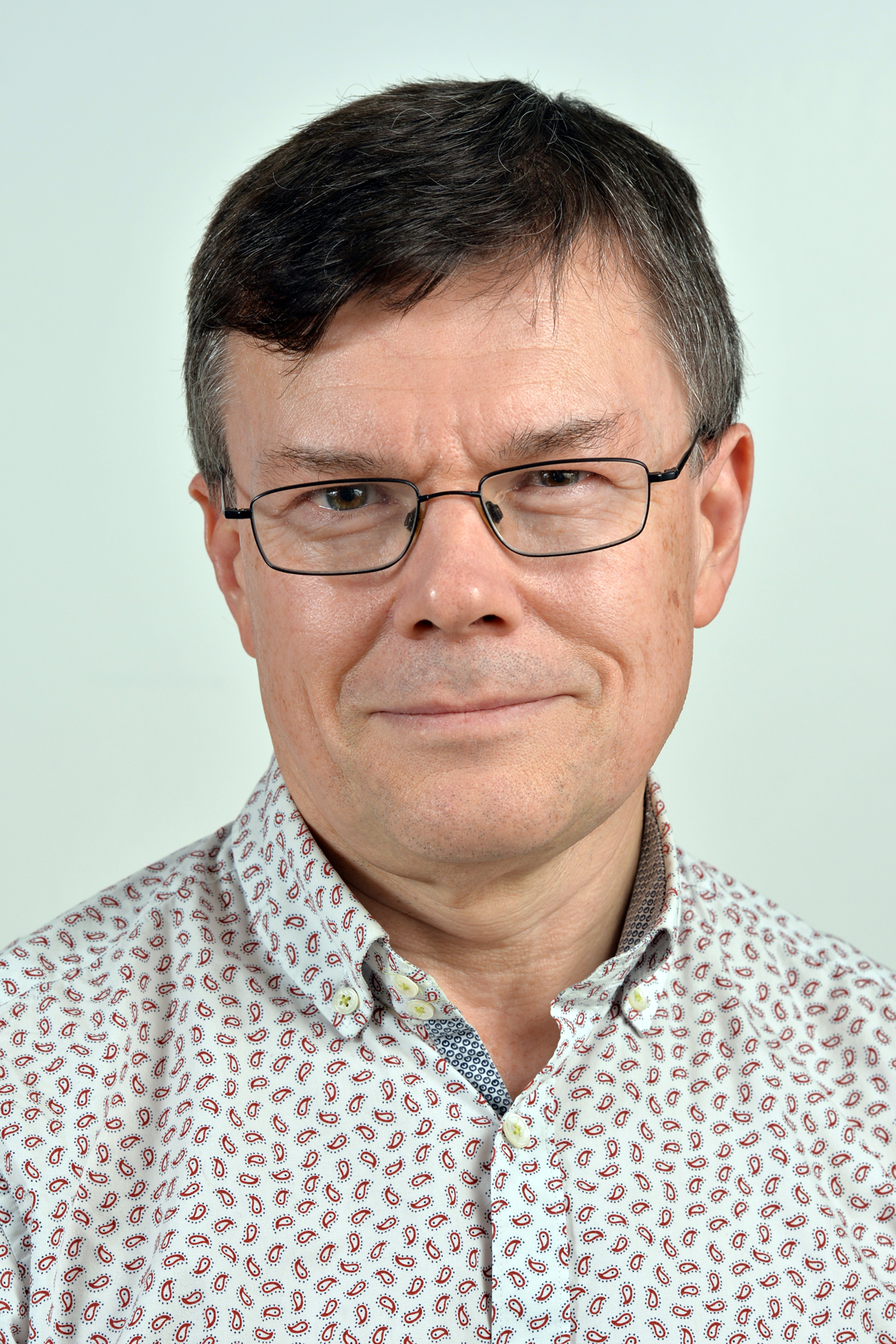
Tien Khai Nguyen is an Associate Professor in the Department of Mathematics at North Carolina State University (NC State), holding the title of NCSU Faculty Scholar since 2023. He obtained his PhD in Mathematics from the University of Padova, Italy, followed by postdoctoral research at SISSA-ISAS (Trieste) and a position as S. Chowla Assistant Professor at Pennsylvania State University. His research focuses on Nonlinear Partial Differential Equations , Optimal Control , Differential Games , and Mean Field Games , with contributions to nonsmooth analysis and geometric measure theory. Current funding includes NSF grant DMS 2154201 supporting work on control and optimization. Key awards include the John Franke Faculty Award for Teaching (2021) and Editor’s Choice Article in Mathematical Control and Related Fields (2024). He serves as editor for the Journal of Dynamical and Control Systems and organizes the Differential Equations/Nonlinear Analysis Seminar at NC State. His work bridges theoretical analysis (e.g., transversality theorems, viscosity solutions) with applications in optimal control and multi-agent systems. Active research themes include generic properties of solutions to Hamilton-Jacobi equations and singular phenomena in hyperbolic conservation laws.
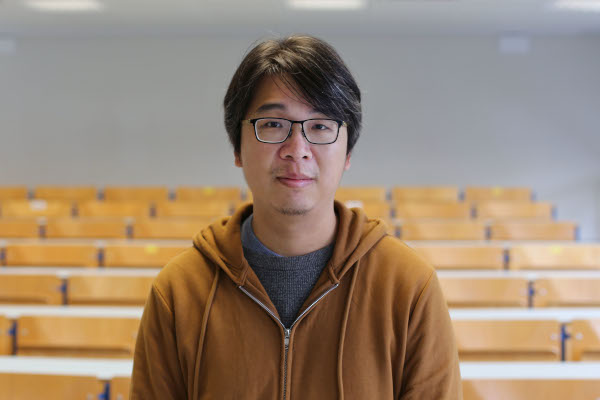
Mingtao Xia is a Courant Instructor at the Courant Institute of Mathematical Sciences, New York University (2023–present). He holds a PhD in Applied Mathematics from UCLA (2019–2023) and a B.S. in Information and Computing Science from Peking University’s School of Mathematical Sciences (2015–2019). His research focuses on mathematical modeling, numerical methods, and machine learning applications in kinetic theories, stochastic systems, and unbounded-domain differential equations. He has contributed to interdisciplinary areas including biological systems, environmental science, and epidemic control through computational methods. Education: PhD in Applied Mathematics, UCLA, 2019–2023 B.S. in Information and Computing Science, Peking University, 2015–2019 His work integrates advanced numerical techniques like spectral methods and Wasserstein-distance frameworks with real-world problems such as gene regulation dynamics, solar wind analysis, and ozone pollution impacts. Recent publications emphasize efficient algorithms for high-dimensional systems and uncertainty quantification in stochastic models. While no awards are listed, his research demonstrates strong contributions to mathematical modeling across diverse domains. Advising and grant details are currently unavailable. His affiliation with the Courant Institute positions him at the forefront of computational mathematics and its applications in interdisciplinary research.
Pierre Tarrès is a Professor of Mathematics at NYU Shanghai and serves as the Associate Provost for Strategic Initiatives and Co-Director of the NYU-ECNU Institute of Mathematical Sciences . He is also a Global Network Professor at the Courant Institute of Mathematical Sciences, New York University. Education PhD in Mathematics, École Normale Supérieure Paris-Saclay Master’s in Mathematics, École Normale Supérieure de Paris Master’s in Mathematics of Artificial Intelligence, École Normale Supérieure Paris-Saclay Research Interests Prof. Tarrès specializes in self-interacting random processes, particularly reinforced random walks, and their applications to stochastic algorithms and learning processes in game theory. His work bridges probability theory, mathematical physics, and computational methods, with a focus on understanding the dynamics of reinforcement and their implications for optimization and statistical mechanics. Articles Trends His publications span topics such as reinforced random walks, stochastic algorithms, Brownian motion, and bandit problems. Recent works emphasize the interplay between probability theory and mathematical physics, particularly through supersymmetric models and Schr"odinger operators. Scientific Awards Leverhulme Prize (2006) Prix des Annales de l'Institut Henri Poincaré (2008) Advising and Grants While student advising details are not provided, his research has been supported by grants linked to his work on stochastic processes and learning algorithms. His editorial role at the Annals of Applied Probability since 2019 highlights his contributions to academic leadership. Labs and Teams As Co-Director of the NYU-ECNU Institute of Mathematical Sciences, he leads collaborative research initiatives, fostering interdisciplinary work between mathematics, computer science, and theoretical physics.
Pavlo Krokhmal is a Professor in the Department of Systems and Industrial Engineering at the College of Engineering, University of Arizona. He serves as the Director of Industrial Engineering and is a member of the Graduate Faculty. He has previously held academic positions at the University of Iowa and the University of Florida. Education: PhD in Operations Research, University of Florida, Gainesville, Florida, United States PhD in Mechanics of Solids and Applied Mathematics, Kyiv National Taras Shevchenko University, Kyiv, Ukraine MS in Applied Mathematics and Mechanics, Kyiv National Taras Shevchenko University, Kyiv, Ukraine His research focuses on stochastic optimization, risk analysis, and decision-making under uncertainty, with applications in financial engineering, network resilience, and renewable energy systems. He also contributes to multidisciplinary optimization and cooperative control. His work bridges applied mathematics, engineering, and operations research. The most recent publications reflect a strong trend in risk-averse optimization under uncertainty, especially in network structures, energy systems, and combinatorial problems. His work integrates advanced mathematical modeling, stochastic programming, and computational algorithms. Topics frequently include risk measures like CVaR, p-cone programming, and PDE-constrained optimization with stochastic inputs. Scientific Awards and Honors: Diploma in the Competition of Young Scientists and Students for the Best Research Project, National Academy of Sciences of Ukraine, Spring 1997 Soros Student Award, International Soros Science and Education Program, Fall 1994 Scholarship for scientific and academic achievements, National Academy of Sciences of Ukraine, Spring 1994 Air Force Summer Faculty Fellowship Award (multiple years: 2011, 2012, 2014, 2018, 2019) NRC Senior Research Associateship Award, National Research Council, Spring 2015 Donald E. Bently Faculty Fellowship of Engineering, University of Iowa, Fall 2013 Recognition for Excellence in Teaching, College of Engineering, University of Iowa (2010, 2013) Dr. Krokhmal has been actively involved in advising graduate students and leading research projects funded by agencies such as the Air Force Office of Scientific Research. His collaborations span across institutions and disciplines, including work with researchers at the University of Florida, University of Iowa, and military research labs. He has served on editorial boards and contributed to academic leadership through journal editorials and peer review. His research is conducted within interdisciplinary teams focusing on optimization, risk modeling, and complex systems. These teams often involve mathematical modeling, algorithm development, and simulation for real-world applications in defense, energy, and infrastructure resilience.
Bo Bernhardsson is a Professor in Automatic Control at the Department of Automatic Control, Faculty of Engineering (LTH), Lund University. He has been a full-time professor at Lund since 2010, following a decade (2001–2010) as an Expert in Mobile System Design and Optimization at Ericsson. He is affiliated with major research initiatives including ELLIIT (Excellence Center in Information Technology), LCCC (Lund Center for Control of Complex Engineering Systems), and WASP-AS (Wallenberg AI, Autonomous Systems and Software research school), where he has played a leadership role since 2016. His research focuses on modeling and control of uncertain and large-scale systems, with applications spanning industrial automation, mobile communications, particle accelerators, biomedical systems, and navigation technologies. He integrates theoretical control methods with practical implementations, particularly under constraints such as communication limitations, noise, and delays. His recent publications reveal a strong trend in networked control, communication-constrained estimation, and optimization-based control design. The works span theoretical advances in signal estimation under SNR constraints, event-based and stochastic control, and practical applications like IMU-radio fusion for navigation and RF field control in particle accelerators. Keywords include Control Theory, Communication Systems, Optimization, Signal Processing, and Networked Control , with subfields such as encoder-decoder co-design, virtual antenna arrays, and dynamic programming for time-delay systems. PhD in Control, Lund University, 1992 Professor in Automatic Control, Lund University, since 1999 Expert, Mobile Systems, Ericsson, 2001–2010 Bo Bernhardsson has supervised over 20 PhD and licentiate students, including Jacob Bergstedt (immune system modeling), Anders Mannesson (navigation and radio), and Erik Johannesson (control under communication constraints). His research has been funded by major entities such as the European Spallation Source and the Wallenberg Foundation. He teaches advanced courses in Linear Systems, Convex Optimization, and Robust Control, and has contributed significantly to both academic and industrial advancements in control engineering. He leads and collaborates on interdisciplinary projects involving real-time control, autonomous systems, and machine learning, often in partnership with industry and international research centers. His work in the RobotLab at LTH and on cloud-based control systems highlights his engagement with emerging technologies.
Associate Professor Sanjeeva Balasuriya is affiliated with the School of Computer and Mathematical Sciences at the University of Adelaide, within the Faculty of Sciences, Engineering and Technology. His research focuses on fluid dynamics, dynamical systems, uncertainty quantification, and mathematical biology. He has contributed to studies on Lagrangian coherent structures, stochastic sensitivity in flows, and biofilm expansion modeling. His work bridges applied mathematics with real-world phenomena, including environmental modeling and turbulence analysis. Recent publications explore topics like stochastic differential equations, optimal vector field reconstruction, and flow control strategies. He is eligible to supervise PhD and Master’s students in these areas. His research emphasizes interdisciplinary applications of mathematical techniques to complex fluid systems and nonlinear dynamics.
Mark Jerrum is a Professor of Mathematics at Queen Mary University of London, part of the School of Mathematical Sciences. His research focuses on combinatorics, computational complexity, and stochastic processes, particularly in the design and analysis of randomized algorithms. He explores the mixing times of Markov chains and computational complexity of counting problems, including partition functions and generating functions, often motivated by statistical physics, constraint satisfaction, and graph polynomials. Notable grants include an EPSRC-funded project on Sampling in Hereditary Classes (EP/S016694/1, 2019–2023). He has contributed to teaching, serving as module organiser for MTH4213 (Numbers, Sets and Functions) in 2023–24. His work bridges theoretical computer science and discrete mathematics, with applications in algorithmic design and probabilistic analysis. Research highlights include advancements in perfect sampling algorithms, approximation algorithms for counting problems, and foundational work on the interplay between statistical physics models and computational complexity. He is affiliated with the Centre for Combinatorics, Algebra and Number Theory, reflecting his interdisciplinary approach to combinatorial and algorithmic challenges.
Max Klimm is an Assistant Professor for Discrete Optimization at Technische Universität Berlin, affiliated with the Department of Mathematics within Faculty II – Mathematics and Natural Sciences. He holds a PhD in Mathematics from TU Berlin (2012) and previously served as an Assistant Professor for Operations Research at Humboldt-Universität zu Berlin (2014–2016) and led the Junior Research Group for Optimization under Uncertainty at the Einstein-Center for Mathematics (2014–2016). His research focuses on algorithmic game theory, mathematical optimization of multi-agent systems in traffic, telecommunications, and economics. Key areas include network flows, congestion games, mechanism design, and infrastructure networks. He actively contributes to academic activities as an associate editor for journals like International Journal of Game Theory and Operations Research Forum , and has served on program committees for conferences such as AAAI, EC, and WINE. Recent work includes studies on evolutionary road network reconstruction, robustness of potential-based flows, and algorithmic solutions for knapsack and assignment problems. His research bridges theoretical foundations with practical applications in transportation and resource allocation.
Nuutti Hyvönen is a Professor and Head of Department at the Department of Mathematics and Systems Analysis, Aalto University, School of Science. His research focuses on inverse problems, electrical impedance tomography, and numerical analysis with applications in biomedical imaging and engineering. He holds a Doctor of Science (Technology) degree and has extensive experience in developing mathematical methods for imaging and reconstruction algorithms. His work emphasizes improving the accuracy and robustness of tomographic techniques, particularly in handling modeling errors and electrode configurations. Key research areas include: Inverse problems for partial differential equations Electrical impedance tomography (EIT) and its biomedical applications Bayesian experimental design and uncertainty quantification Numerical methods for nonlinear imaging problems Recent publications highlight advancements in: Optimal electrode positioning Series reversion methods in Calderón problems Feasibility of EIT for monitoring intracerebral hemorrhages Edge-enhancing reconstruction algorithms He has contributed to over 79 peer-reviewed articles, with notable work on monotonicity-based reconstruction methods and stochastic Galerkin finite element approaches. His research bridges mathematical theory and practical applications in medical imaging, engineering, and computational science.
Prof. José Neto is a Professor at Télécom SudParis, part of the Institut Polytechnique de Paris, affiliated with the SAMOVAR research department. His work focuses on combinatorial optimization, mathematical programming, and graph theory. He has contributed to polyhedral studies of cut and assignment polytopes, spectral bounds for graph partitioning, and optimization algorithms for mixed-variable and blackbox problems. His research spans topics like network pricing complexity, domination in graphs, and robustness verification in neural networks. He has published extensively in top journals such as Mathematical Programming, Discrete Applied Mathematics, and Networks. Key contributions include developing efficient algorithms for combinatorial pricing, analyzing optimization relaxations, and exploring structural properties of discrete mathematical objects. His work bridges theoretical foundations and practical applications in operations research, with recent interests in binarized neural network verification and mixed-variable optimization. He has collaborated on projects related to cloud virtual machine mapping and combinatorial pricing models. Labs/Teams: Active member of the SAMOVAR laboratory, specializing in applied mathematics and optimization research.
Marcus Weber serves as Head of the Computational Molecular Design research group within the Modeling and Simulation of Complex Processes department at the Zuse Institute Berlin (ZIB), which operates in close affiliation with Freie Universität Berlin. His interdisciplinary work spans computational mathematics, molecular modeling, drug discovery, and unexpected connections to Egyptology, demonstrating the broad applicability of mathematical approaches across diverse scientific domains. Dr. Weber's research interests focus on the mathematical foundations of molecular simulation and drug design: Developing advanced Markov state models for complex molecular systems Creating computational methods for efficient drug discovery Applying machine learning techniques to molecular dynamics Modeling pH-dependent receptor-ligand interactions Exploring metastable dynamics in biological systems Bridging mathematical approaches with Egyptological research His recent publications reveal a sophisticated integration of computational mathematics with practical pharmaceutical applications, particularly in opioid receptor research. The work demonstrates how mathematical modeling can identify pH-dependent drug candidates that maintain efficacy while reducing side effects. His research group has developed innovative algorithms like ISOKANN for learning Koopman eigenfunctions and has made significant contributions to understanding molecular transition rates and metastable dynamics. Dr. Weber leads multiple significant research projects including 'Drug Candidates as Pareto Optima in Chemical Space,' 'HPC and ML for Drug Discovery,' and interdisciplinary collaborations connecting mathematical approaches with Egyptology. His work on 'Mathematics and Egyptology' and 'Ancient Egyptian' demonstrates the unexpected breadth of mathematical applications. His research has direct implications for developing safer opioid medications and understanding molecular behavior in complex environments.
Professor Shelton Peiris is an Associate Professor at the School of Mathematics and Statistics , University of Sydney , where he has been since 1990. He holds visiting appointments at institutions worldwide, including University of Waterloo , University of Manitoba , and University of Malaya . Currently, he serves as Sub Dean (Student Affairs) in the Faculty of Science and coordinates interdisciplinary teaching with the School of IT for MIT/MDS degrees. His research focuses on time series analysis, financial econometrics, and technology integration in statistics education. Education: PhD in Statistics, Monash University , 1987 Shelton's research interests include statistical analysis of stationary and non-stationary time series, theory and applications of estimating functions, financial time series modeling, saddlepoint and Edgeworth approximations, and exploring technology's role in statistics education. He is a member of the Statistics Research Group at the University of Sydney and leads projects in financial econometrics, generalized autoregressive models, and nonlinear time series analysis. Recent publication trends highlight his work in financial econometrics, particularly volatility and duration modeling, stochastic processes, and hybrid forecasting methods combining traditional statistical techniques with machine learning advancements like GANs and neural networks. His collaborations span Australia, Canada, Malaysia, and Indonesia, with notable grants including ARC Linkage and University of Malaya Research Grants . Scientific Awards: 2012: Faculty of Science Teaching Citation 2011: Bronze Medal, University Putra Malaysia 2007: Bronze Medal, University Putra Malaysia 1983: Monash University Graduate Scholarship Elected Member, International Statistical Institute (ISI) Fellow, Royal Statistical Society (FRSS) Honorary Fellow, Institute of Applied Statistics, Sri Lanka (FIASSL) Current Research Students: Leonard Mushunje - High-Dimensional Financial Functional Time Series Data Grants: ARC Linkage Grant (2005-2007): Modelling Stock Market Liquidity ARC Bridging Grant (2012-2014): Financial Duration Modeling University of Malaya Research Grants (2011-2015): Volatility Models, GARCH MOHE Malaysia Grant (2013-2015): Robust Control Charts Professor Peiris contributes to editorial boards such as the Journal of Statistical Computation & Simulation and Sri Lankan Journal of Applied Statistics . His teaching roles include MATH1015 (Statistics for Life Science) , MATH1905 (Statistics Advanced) , and advanced honors courses in time series analysis.
Alfredo Pulvirenti is a Full Professor of Computer Science at the University of Catania, Italy. He holds a joint appointment with the Department of Clinical and Experimental Medicine and the Department of Mathematics and Computer Science. Born in 1974, he earned his Laurea (1999, summa cum laude), PhD (2003), and post-doc (2004) in Computer Science from the University of Catania. His academic career includes roles as Assistant Professor (2005-2014), Associate Professor (2014-2023), and Full Professor since 2023. His research bridges Bioinformatics and Biomedicine , focusing on RNA interference (microRNAs, long non-coding RNAs) via stochastic and network-based inference methods. Key contributions include subgraph matching , motif finding , and multiple network alignment using Monte Carlo techniques for analyzing biological networks . He also applies time series analysis to seismic and infrasonic signals through collaborations with Italy's National Institute of Geophysics and Volcanology (INGV). Recent publications highlight advancements in graph algorithms (e.g., MultiGraphMatch, ArcMatch) and systems biology tools like MITHrIL and SPECifIC. He co-directs the Jacob T. Schawartz International School for Scientific Research and leads national/regional projects on Bioinformatics and Big Data in Cancer . His group includes 3 researchers, 1 post-doc, and 3 PhD students in Complex Systems. Awards and Leadership : Best Paper Award at CBS 2009 Guest Editor for BMC Bioinformatics, Briefings in Bioinformatics, Elsevier Program Committee Member for major international conferences International Collaborations span institutions like NYU, Ohio State University Wexner Medical Center, Brown University, Tel Aviv University, Toronto University, and Università di Ancona.
Dr. Hannes Matuschek is a Researcher in the Department of Applied Mathematics at the University of Potsdam, Germany, with office space 2.09.1.24 and contact email hannes.matuschek@uni-potsdam.de. He actively participates in the institute's academic events including working group seminars and colloquia. Research Interests: His work spans Statistics, Applied Mathematics, Systems Biology, and Biomechanics. Key contributions include statistical methodology for linear mixed models (addressing Type I error/power tradeoffs and interaction effects), smoothing spline ANOVA for eye movement analysis in reading, stochastic modeling of gene regulatory networks, and vector field manipulations on spherical domains. His research bridges theoretical frameworks with applications in cognitive science, systems biology, and fraud detection. Publication Trends: His 12 publications (2012-2019) reveal a trajectory from computational systems biology (stochastic biochemical kinetics tools like iNA) toward statistical methodology development. Early work focused on noise approximation in gene networks, evolving into eye-tracking analysis and vector field mathematics, demonstrating consistent integration of advanced statistics with domain-specific challenges across biological and cognitive sciences. Scientific Awards: No awards were mentioned in the provided materials. Advising and Grants: No information was provided regarding student supervision, grant funding, or research collaborations. Labs and Teams: He operates within the Applied Mathematics research group at the University of Potsdam, contributing to seminars and events in analysis and interdisciplinary applications as evidenced by his institutional presence.
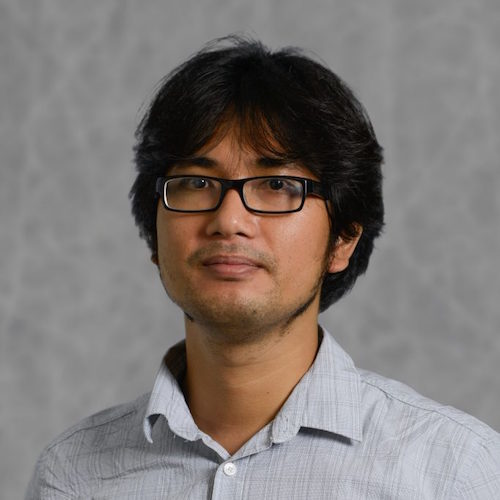
Dr. Mingzhou Yin is a postdoctoral researcher at the Institute of Automatic Control within the Faculty of Electrical Engineering and Computer Science at Leibniz University Hannover, where he has been working since August 2024. He received his Doctor of Sciences degree from ETH Zurich in 2024 under the supervision of Prof. Roy S. Smith, with a dissertation titled 'Regularized and Nonparametric Approaches in System Identification and Data-Driven Control.' His research interests span data-based modeling and control, sparse learning theory, system identification using subspace and regularized methods, model predictive control, and periodic system theory. Dr. Yin has developed innovative approaches in low-rank matrix regression, Gaussian process-based control of nonlinear systems, and closed-loop identification frameworks. His work bridges theoretical advances with practical applications in energy-flexible buildings and aerospace systems. Dr. Yin has received significant recognition including the IEEE Control Systems Society Swiss Chapter Young Author Best Journal Paper Award and the Systems Identification and Adaptive Control Technical Committee Outstanding Student Paper Prize in 2023. His publications in IEEE Control Systems Letters, Automatica, and other top journals demonstrate his contributions to data-driven control theory. IEEE Control Systems Society Swiss Chapter Young Author Best Journal Paper Award (2023) Systems Identification and Adaptive Control Technical Committee Outstanding Student Paper Prize (2023) As an educator, Dr. Yin has supervised numerous student projects on data-driven predictive control, sparse learning algorithms, and closed-loop identification of networked systems. His teaching includes 'Data- and Learning-Based Control' exercises and previous TA roles for 'Robust Control and Convex Optimisation' and 'System Identification' courses.


0319.jpg)