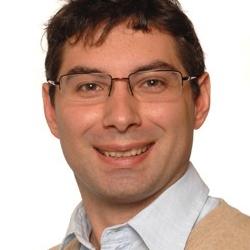
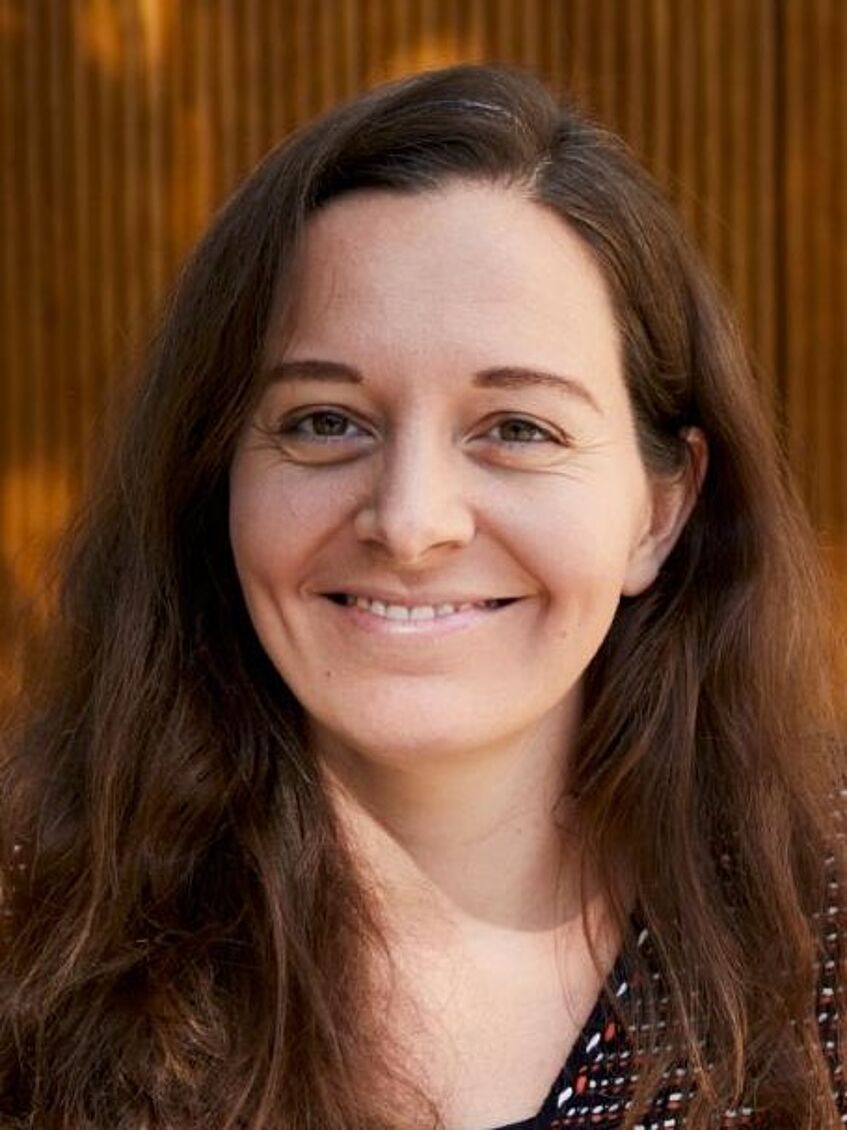
Prof Andrea Manica is a Professor of Evolutionary Ecology and Deputy Head of Department (Research) at the University of Cambridge, Department of Zoology. Her research spans ecological and evolutionary time scales, integrating climate reconstructions, paleontological data, ecological datasets, and genetic information to understand species' responses to environmental change. Research Areas: Population Genetics, Species Distribution Models, Paleoclimate Reconstructions, Human Evolutionary Ecology Key Tools: Development of open-source R packages like tidypopgen and tidygenclust for population genetics and data analysis Focus Taxa: Seabirds (albatrosses, petrels), sharks, turtles, bears, and Homo sapiens Her work addresses questions such as: How do animals adapt movement strategies to changing environments using tracking data? What drives range changes and genetic differentiation in species like leopards and giraffes? How did climatic shifts influence human evolution, migration, and cultural innovations? What computational tools can interrogate large datasets across space and time? Her interdisciplinary approach combines computational models, fieldwork, and collaborations with institutions like the British Antarctic Survey.
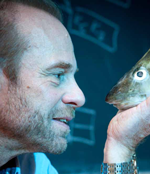
Greg Goss is a Professor in the Department of Biological Sciences at the University of Alberta, Faculty of Science. His research focuses on three interconnected areas: environmental physiology of fishes, environmental toxicology, and watershed science. He investigates physiological adaptations of aquatic organisms to environmental stresses, evaluates the toxicity of industrial and agricultural pollutants, and models Alberta's water resources under climate change scenarios. Collaborations include work with EnCana, Vive Crop Protection, and Dr. Monireh Faramarzi on water management. His lab, Goss Lab, hosts research on nanotoxicology, hydraulic fracturing fluid impacts, and stormwater system improvements. Contact: ggoss@ualberta.ca. Research interests include ion and solute transport mechanisms in fish, toxicity of nanoparticles and pesticides, and watershed modeling for sustainable water use. He employs molecular biology, cell physiology, and field studies across freshwater and marine ecosystems. Industrial partnerships aim to balance environmental protection with economic needs. Notable projects include assessing hydraulic fracturing fluid toxicity on aquatic species, developing predictive water supply models, and improving stormwater management through polymer and wetland technologies. His work contributes to OECD nanomaterial testing standards and regulatory policy.
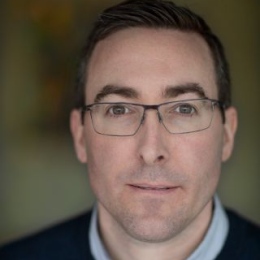
Britas Klemens Eriksson is an Associate Professor of Marine Ecology at the University of Groningen's Faculty of Science and Engineering, affiliated with the Groningen Institute for Evolutionary Life Sciences. His research focuses on biodiversity conservation, coastal ecosystems, and ecosystem engineering, particularly in the Wadden Sea and Baltic Sea regions. He holds a PhD in Ecological Botany from Uppsala University (2002). Key research interests include understanding how biodiversity loss impacts ecosystem function, the role of ecosystem engineers in shaping coastal landscapes, and the effects of climate change on marine communities. Notable projects include the 'Swimway Waddenzee' initiative and contributions to the ZEN seagrass research network. Award-winning educator and researcher, Eriksson has been recognized with the Best Teacher in Biology award (2014) and the Ecological Research Award (2013). He leads over 90 publications and supervises numerous PhD and master's students, focusing on topics like artificial reefs, soundscape ecology, and stickleback wave dynamics. Active in international collaborations, he serves on editorial boards and advisory committees, including the EUROMARINE network and Mistra EviEM's systematic reviews. His work bridges ecological theory with applied conservation, emphasizing the need for adaptive management of coastal ecosystems under climate change.
John Fitzpatrick is a Professor at the Department of Zoology, Stockholm University, leading the Fitzpatrick Lab. His research integrates experimental and phylogenetic comparative approaches to study sexual selection's role in animal evolution, focusing on pre-mating competition, mate choice, sperm competition, and co-evolutionary dynamics between sexes. Department of Zoology: Ethology Wallenberg Academy Fellow President-elect, International Society for Behavioral Ecology Co-organizer, Biology of Spermatozoa biennial meeting Key Research Areas: Trade-offs among sexual traits in halfbeak fishes Macroevolution of reproductive behaviors in sharks, rays, and mammals Sperm behavior evolution across animal phyla Coloration evolution under natural and sexual selection Scientific Leadership: Editor, Behavioral Ecology (2014-2018) Board of Reviewing Editors, Journal of Evolutionary Biology (2011-2015) Collaborative Networks: Collaborations with National University of Singapore, University of Manchester, University of Western Australia, and Stockholm University's Ecology, Environment and Plant Sciences department for pollen evolution studies. Awards: Wallenberg Academy Fellowship
Kjetill Sigurd Jakobsen is a Professor at the Centre for Ecological and Evolutionary Synthesis (CEES) at the University of Oslo. He founded the Norwegian Sequencing Centre (NSC) in 2009 and has led CEES since 2018. His research focuses on evolutionary genetics and genomics, particularly exploring genetic forces shaping populations and bridging organismal and molecular biology. Key achievements include sequencing the Atlantic cod genome, revealing insights into immune system evolution, and studying genomic adaptations in species like Atlantic puffins and Svalbard reindeer. His work addresses ecological, evolutionary, and genomic questions across diverse systems, from bacteria to mammals. Research interests include endosymbiosis, horizontal gene transfer, and genome structure—particularly tandem repeats. He has contributed to projects funded by the Research Council of Norway (RCN), including studies on Atlantic cod population genomics and Arctic species adaptation. His lab, NSC, supports national genomic infrastructure.
Ulrika Candolin is a Senior Lecturer at the University of Helsinki, affiliated with the Organismal and Evolutionary Biology Research Program within the Institute of Sustainability Science (HELSUS). She leads the Candoli research group and serves as a supervisor in the Doctoral Programme in Wildlife Biology. Her research focuses on understanding how organisms respond to human-induced environmental changes and the consequences for populations, communities, and ecosystems. Education: PhD in Ecology/Evolutionary Biology, University of Turku (1998) Postdoctoral research, University of East Anglia Postdoctoral research, University of Bern Research Interests: Candolin's work spans several key areas in ecology and evolutionary biology, including: Effects of eutrophication and climate change on fish populations Impact of light pollution on insect behavior and ecosystems Behavioral ecology under environmental change Synthesis of ecological evidence through systematic reviews Development of conceptual frameworks for predicting ecological responses Her research integrates field studies, experimental manipulations, and theoretical approaches to understand how anthropogenic stressors alter species interactions, communication systems, and evolutionary processes. Research Trends: Recent publications (2024–2025) reflect a strong focus on light pollution impacts across diverse taxa (glow-worms, amphipods, reptiles), nanoplastic toxicity in freshwater systems, and the ecological consequences of species invasions. Her work increasingly incorporates global perspectives on conservation challenges and policy-relevant syntheses. Scientific Awards: While specific awards are not listed, Candolin has extensive recognition through her roles as a journal editor, peer reviewer for over 115 manuscripts, and member of national and international scientific committees. Grants & Projects: She currently leads or co-leads multiple funded projects totaling over €1.5 million, including: Academy of Finland project on adaptation to light pollution in zooplankton (2025–2028) Svenska Kulturfonden projects on ecological consequences of environmental change (2023–2026) Cross-disciplinary collaborations on behavioral responses to light pollution Research Group & Supervision: The Candoli research group investigates behavioral and evolutionary responses to environmental change. She supervises doctoral students in the University of Helsinki's Wildlife Biology program and has served as a thesis advisor/co-advisor for 9 PhD dissertations.
Dr Alexander Stewart is a Research Fellow in Immunology at the University of Surrey's School of Biosciences, part of the Faculty of Health and Medical Sciences. His work focuses on immune system dynamics, antibody repertoire analysis, and eco-immunological mechanisms. He specializes in integrating multi-omics approaches to study B cell biology, viral immunity, and host-parasite interactions. Key research areas include immunoglobulin gene diversification, metabolic regulation of immune cells, and the impact of environmental factors on immunocompetence. Stewart has contributed to tools like BRepertoire, a web server for antibody repertoire analysis, and sciCSR for inferring B cell state transitions. His research spans experimental models (e.g., three-spined stickleback, chickens) and human studies, including investigations into SARS-CoV-2 pathogenesis and glucocorticoid treatment effects. He explores cross-species immune mechanisms, from parasitic infections in rodents to lunar-driven immune rhythms in fish. His recent work highlights the role of CSF1R in macrophage biology and the metabolic control of regulatory B cells. He also examines antibody class-switching dynamics and the evolutionary basis of immunoglobulin diversity. Stewart's findings bridge basic immunology with translational applications in infectious disease and cancer research.
Barbara Fischer is an Elise Richter Fellow and Lecturer at the University of Vienna, Department of Evolutionary Biology. Her research investigates the evolutionary biomechanics of human childbirth, combining geometric morphometrics, comparative anatomy, and evolutionary modeling to resolve the 'obstetric dilemma'. Key contributions include the cliff-edge model of obstetric selection explaining rising Caesarean rates, analyses of sexual dimorphism in hominin pelves, and methods for skeletal age estimation using pubic symphysis morphology. Comparative work extends to Darwin's finches' self-medication behaviors and stickleback adaptation plasticity. She develops statistical approaches for morphological integration studies and teaches biostatistics, mathematical biology, and evolutionary medicine. Recognized with an Elise Richter Fellowship and science communication awards.
Dr. Natalie Pilakouta is a Lecturer in Behaviour, Ecology and Evolution at the University of St Andrews' School of Biology. Her research focuses on understanding how climate change impacts animal reproduction, parental care strategies, and thermal adaptation. She leads projects investigating the effects of environmental stressors like heatwaves and chronic temperature changes on ecological and evolutionary processes. Her work integrates experimental approaches with meta-analytic frameworks to address questions about inbreeding depression mitigation via parental care, non-additive stress responses, and evolutionary predictability under thermal gradients. Key collaborations include studies on geothermal sticklebacks and ectotherm social behavior under warming conditions. Current Projects: Royal Society-funded research on parental care under climate change PhD Supervision: Amber Chatten & Jakob Wiil Key Themes: Climate Change Biology, Thermal Adaptation, Evolutionary Ecology Publications span high-impact journals like Ecology Letters and Proceedings of the Royal Society B, with datasets archived in Dryad and Zenodo. Her research contributes to UN Sustainable Development Goals related to climate action and life on land/underwater.
Catherine Hernandez is a microbial ecologist and evolutionary biologist, currently serving as an NSF Postdoctoral Fellow and YIBS Donnelley Fellow in the Turner lab at Yale University. Her research focuses on understanding how environmental factors like temperature influence bacteria-phage interactions, with a particular emphasis on marine microbes and climate change impacts. She completed her PhD in the Koskella lab at the University of California, Berkeley, studying plant-associated bacteria-phage dynamics. Her current projects include developing a strain library of marine isolates from Long Island Sound to explore thermal responses in microbes, investigating adaptation mechanisms to abiotic stressors like desiccation, and analyzing viral genes associated with temperature tolerance using metagenomic data. Collaborations with undergraduates, such as Jaime J. Cha and Kieren Leif Dykstra, highlight her commitment to mentoring. Key research themes include microbial trait variation, stress adaptation, and the ecological relevance of phage interactions. Her work bridges field studies, lab experiments, and computational methods, addressing global challenges in climate change biology and microbial ecology. Awards include prestigious fellowships from NSF and YIBS, underscoring her contributions to the field.
Stephanie Crofts is an Assistant Professor of Biology at the College of the Holy Cross. Her research focuses on biomechanics and functional morphology, applying principles from physics and engineering to study how organisms adapt their morphology to ecological roles. She earned her Ph.D. from the University of Washington, Seattle, and teaches courses such as Introduction to Mechanisms of Multicellular Life and Comparative Vertebrate Anatomy . Her work investigates functional trade-offs and evolutionary constraints in specialized morphologies, particularly in dentition and defensive structures like spines and fangs. She employs CT scanning, physical specimens, and computational models to explore how morphological changes enable diversification and ecological adaptation. Key research themes include puncture mechanics in snake fangs, sea urchin spine functionality, and the biomechanics of predator-prey interactions in marine species. Crofts’ recent articles span studies on frugivorous fish dentition, sea urchin anatomy under environmental stress, and the biomechanics of defensive spines across taxa. Her interdisciplinary approach bridges comparative anatomy, evolutionary biology, and material science. No scientific awards are explicitly listed, though her active research program includes grants and collaborations in biomechanical modeling and ecological adaptation studies.
Dr. Arne Jacobs is a Research Fellow in the Department of Evolution & Diversity at the University of Glasgow. His research focuses on evolutionary genomics, with a particular emphasis on understanding adaptive processes in natural populations. Key areas of study include genomic mechanisms underlying phenotypic adaptation, gene regulation in response to environmental changes, and the interplay between genetic variation and ecological pressures. Research interests: Evolutionary Biology, Genomics, Ecological Genetics, Population Genomics, and Urban Adaptation. Grants include projects on climate change impacts on aquatic species, genomic variation in life-history traits, and stickleback diversity in Lake Constance. Supervises students exploring topics like molecular mechanisms of adaptive divergence and urban landscape effects on animal dispersal. His work bridges experimental and computational approaches, leveraging genomic data to uncover evolutionary dynamics in species such as zebra finches, Atlantic silversides, and Arctic charr. Recent studies highlight the role of alternative splicing and transcriptomic changes in adaptation, alongside structural genomic variation driving ecological resilience.
Laura Nagel is an Assistant Professor in the Department of Biology at Queen's University, Faculty of Arts and Science. Her research focuses on evolutionary biology and ecology, particularly the interactions between hosts and parasites, with an emphasis on insects and marine organisms. She investigates how parasites influence host behavior, life history traits, and evolutionary trajectories, while exploring mechanisms of resistance and adaptation in host species. Her work spans diverse systems including damselflies, sticklebacks, and coral reef fish parasites. Notably, she examines how environmental variation and parasite pressure drive evolutionary changes in host traits such as immune responses, flight performance, and reproductive strategies. Recent studies highlight the role of parasitism in speciation processes and the ecological consequences of host-parasite dynamics. In marine systems, she explores the phylogeography and behavior of ectoparasites like Gnathia spp., linking genetic divergence to ecological specialization. Her research also addresses the impact of climate change on coral resilience through studies of bleaching resistance mechanisms. Dr. Nagel’s publications reveal a consistent focus on quantifying selection pressures mediated by parasites, temporal variation in parasitism, and the interplay between host traits and parasite strategies. Her work bridges laboratory experiments, field observations, and genomic approaches to unravel complex ecological and evolutionary questions.
Dr Joachim Frommen serves as Senior Lecturer in Animal Behaviour at Manchester Metropolitan University (MMU), UK, where he leads research on the evolution and ecology of social behaviour with emphasis on complex social systems. His work bridges fundamental behavioural ecology with applied conservation and welfare science, primarily using aquatic models including Lake Tanganyika cichlids, three-spined sticklebacks, Mantella frogs, and crustaceans. Combining controlled laboratory experiments at MMU with international field studies, he investigates how social dynamics influence individual fitness and ecological outcomes. His educational background includes: PhD in Behavioural Ecology (2002-2007) from University of Bonn Diploma in Biology (1995-2002) from University of Bonn Dr Frommen's research examines cooperative breeding systems, communication networks, and predation risk responses across aquatic taxa. His work reveals how environmental stressors like temperature fluctuations nonlinearly affect aggression, while kin recognition mechanisms maintain social structure in cichlids. Recent publications highlight methodological innovations in recognizing null results and developing welfare standards for captive fish through physical enrichment. His Tanzania field course integrates conservation principles with behavioural observation in natural habitats. Analysis of his 15 most recent publications (2021-2025) shows consistent focus on cooperative breeding dynamics in cichlids, context-dependent communication, and welfare applications. Key trends include sex-specific dispersal strategies, nonlinear environmental effects on behaviour, and validation of experimental methods in natural contexts. His work increasingly addresses climate change impacts and methodological rigor in behavioural ecology. Dr Frommen actively supervises undergraduate and postgraduate dissertations, guiding students through complete research cycles from hypothesis generation to publication. His teaching spans Principles of Animal Behaviour (Year 1), Animal Health and Welfare (Year 2), and The Social Life of Animals (Year 3), emphasizing research-based learning and student-researcher collaboration. He leads the Animal Behaviour and Conservation Tanzania field course and postgraduate Zoo placements. Professional service includes Secretary of the Ethologische Gesellschaft e.V., editorial roles for Behavioral Ecology and Sociobiology (Associate Editor since 2012) and Journal of Fish Biology (Guest Editor 2022-present), plus reviewing for major funding bodies including BBSRC and Swiss National Science Foundation. His research team conducts MMU-based lab work while maintaining international field collaborations.
Alison M Bell is a Professor in the Department of Evolution, Ecology, and Behavior and affiliated with the Neuroscience Program at the University of Illinois at Urbana-Champaign. She is also a Lowell Getz Scholar and holds affiliations with the Beckman Institute for Advanced Science and Technology and the Carl R. Woese Institute for Genomic Biology. Education: BA (University of Chicago), PhD (University of California, Davis), Postdoc (University of Glasgow), Postdoc (University of California, Davis) Her research focuses on understanding the proximate causes and ultimate consequences of individual differences in behavior, particularly through the lens of behavioral ecology and evolutionary biology. Her work often examines Threespine stickleback as a model organism, exploring topics like parental care , gene regulation , and oxytocin's role in social behaviors . Recent studies investigate how ecological pressures shape behavioral syndromes and transgenerational plasticity. Her publications highlight trends in stickleback ecotype divergence , eco-evolutionary restoration experiments , and hormonal mechanisms in parental care . Collaborations span interdisciplinary teams at institutes like the Carl R. Woese Institute for Genomic Biology and the Beckman Institute. Scientific Awards: AAAS Fellow (2020) Animal Behavior Society Fellow (2021) American Academy of Arts and Sciences Member (2024) Guggenheim Fellowship (2024) New Investigator Award, Animal Behavior Society