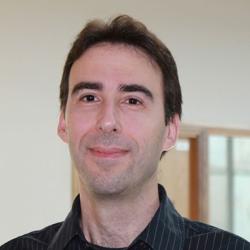
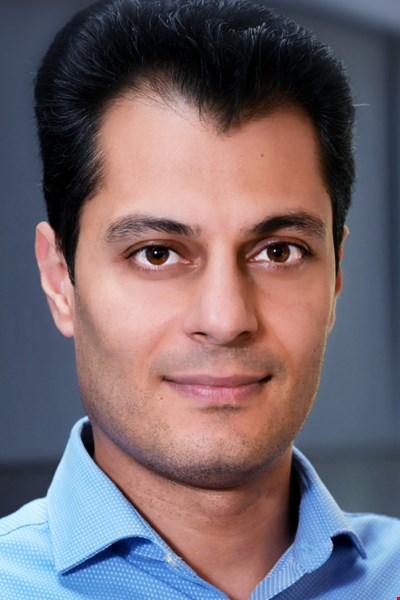
Dr. Jurgen Becque is an Associate Professor in Structural Engineering at the University of Cambridge's Department of Engineering. He specializes in cold-formed steel structures, stainless steel structural behavior, and stability analysis, with a focus on local-overall buckling interaction and innovative design methodologies. His work bridges experimental investigations with computational modeling and machine learning applications. Research Interests: Cold-formed steel structural systems Stainless steel column stability Local and overall buckling interaction Mechanics-based design optimization Machine learning for structural behavior prediction Recent publications demonstrate expertise in cross-sectional stability, connection mechanics, and composite systems like UHPC-confined stainless steel columns. His work addresses both monotonic and cyclic loading scenarios, contributing to Eurocode 3 design standards.
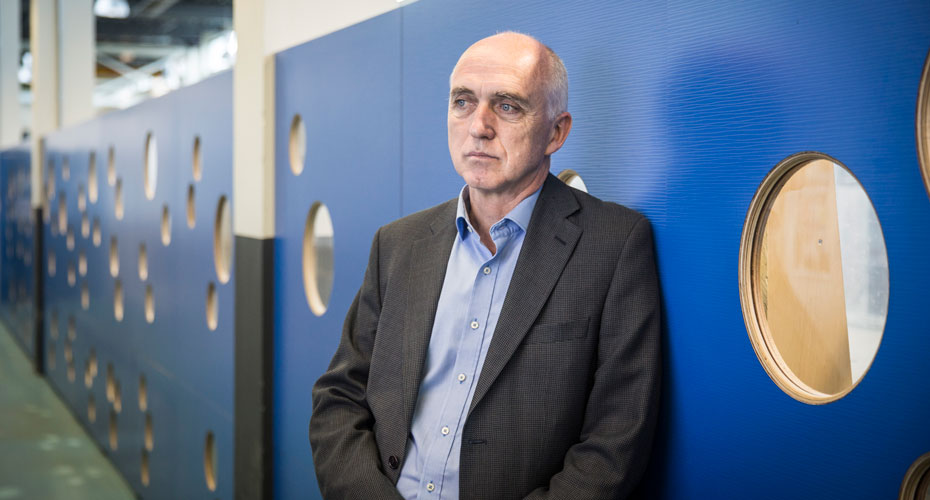
Professor Eugene O'Brien serves as Professor of Civil Engineering within the School of Civil Engineering at University College Dublin's College of Engineering and Architecture. His research focuses on critical structural assessment methodologies for long-span bridges, with particular expertise in traffic load modeling and bridge safety evaluation. His research interests center on structural engineering challenges related to bridge infrastructure, specifically traffic load assessment for long-span bridges , structural health monitoring systems , and sustainable infrastructure management . Professor O'Brien pioneered camera-based monitoring techniques to overcome limitations of traditional Weigh-in-Motion sensors during congested traffic conditions, enabling more accurate safety assessments of aging bridge infrastructure. His work addresses the critical gap in quantifying traffic loading on bridges with spans up to 2 kilometers, where conventional methods fail during stop-and-go traffic scenarios. Analysis of his 15 most recent publications reveals a consistent research trajectory focused on probabilistic modeling of traffic loads, with increasing sophistication in handling extreme events and long-term infrastructure performance. His work spans fundamental statistical methods for load effect prediction, practical applications in real-world bridge assessments, and environmental considerations regarding infrastructure carbon footprints. The research demonstrates strong methodological evolution from basic traffic modeling to comprehensive lifetime assessment frameworks incorporating sustainability metrics. As co-founder and director of Roughan O'Donovan's subsidiary Innovative Solutions (ROD-IS), Professor O'Brien has translated research into practice through significant projects including the Malahide Railway Viaduct assessment (2009), EU-funded bridge lifespan simulation tools (2011), vibration reduction systems for bridge cables, and structural assessments for major international projects including the Ting Kau Bridge in Hong Kong, the Forth Road Bridge in Scotland, and the Chacao Channel Bridge in Chile. His consultancy work demonstrates direct application of academic research to critical infrastructure challenges worldwide. Professor O'Brien's research group operates at the intersection of structural engineering and sustainable infrastructure management, with particular emphasis on extending bridge service life through accurate safety assessment. Their work on the Chacao Channel Bridge demonstrates practical implementation of traffic monitoring systems using toll data to manage truck loads, while their environmental impact analysis shows how accurate safety assessments reduce unnecessary bridge replacements, thereby lowering the carbon footprint of transportation infrastructure through extended service life of carbon-intensive materials like concrete and steel.
Giuseppe Carlo Marano is a Full Professor at the Department of Structural, Building and Geotechnical Engineering at Politecnico di Torino. He is also a component of the SISCON Interdepartmental Center for Infrastructure Safety. With expertise in civil and structural engineering, his work focuses on machine learning applications, seismic risk reduction, and sustainable structural optimization. Education Graduated cum laude in Structural Engineering from Polytechnic University of Bari PhD in Structural Engineering from University of Florence (2000) Research Interests Marano's research spans structural optimization, seismic engineering, and machine learning applications in civil infrastructure. He develops advanced computational models for: Seismic retrofitting of existing structures Optimization of steel and masonry structures Recycled materials in concrete production AI-driven structural health monitoring Multiobjective design methodologies Publication Trends His recent work emphasizes: Machine learning for concrete mix design and damage assessment Optimization of gridshells and arch structures Seismic isolation systems and vibration control Sustainable construction practices with recycled materials Multiobjective genetic algorithms for structural design Scientific Recognitions National Scientific Qualification - First Band (2013, MIUR Italy) Certificate of Appreciation for Outstanding Lecture (2012, China) Academic Contributions As an educator, he teaches: Consolidamento Strutturale (Structural Consolidation) Dinamica delle Vibrazioni Random (Random Vibration Dynamics) Progettazione Generativa (Generative Design) He also leads Challenge@PoliTo initiatives and contributes to national infrastructure safety regulations. Research Projects ADAPT4CE - Adaptive Digital Systems for Circular Economy (2025-2028) AI-ENVISERS - AI for Seismic Retrofit Environmental Impact (2023-2025) ADDOPTML - Additive Manufacturing Optimization (2021-2025)
Micah Hale is a Professor and Department Head of Civil Engineering at the University of Arkansas, Fayetteville, and holds the Twenty First Century Endowed Leadership Chair in Civil Engineering. His work focuses on concrete materials, structural performance, and sustainable construction practices. Education: Ph.D., M.S., and B.S. in Civil Engineering from the University of Oklahoma. Dr. Hale’s research explores High-Performance Concrete , Bond Behavior of Prestressing Strands , and Mitigation of Alkali-Silica Reaction (ASR) . He also investigates Thermal Energy Storage applications for solar power systems and sustainable ultra-high-performance concrete (UHPC) development. His publications highlight advancements in concrete durability, prestressed girder analysis, and environmentally conscious material design. Recent studies emphasize calcium oxychloride formation , prestress transfer modeling , and self-consolidating concrete optimization. His scholarly output spans structural mechanics, chemical durability, and material sustainability. Awards: Twenty First Century Endowed Leadership Chair in Civil Engineering As an educator, Dr. Hale teaches Reinforced Concrete Design , Prestressed Concrete Design , and Concrete Materials and Mixture Proportioning . His contributions to engineering ethics education and student engagement further underscore his academic leadership.
Jari Puttonen is a Professor of Structural Engineering at Aalto University's Department of Civil Engineering, School of Engineering. His research focuses on structural analysis, fire safety, materials science, and nuclear infrastructure safety. He has held roles as Principal Investigator in projects related to nuclear waste repository concrete modeling and aging management of NPP infrastructure. He has advised over 20 academic visitors and served in doctoral thesis committees. Education: Doctoral degree (1987), Licentiate (1984), and Master's degree (1979) in Engineering and Technology from Helsinki University of Technology (now part of Aalto University). Research Interests: Steel and composite materials behavior under extreme conditions Fire resistance of structural systems Long-term performance of concrete in nuclear facilities Non-destructive testing of construction materials Seismic resilience of critical infrastructure Awards: Recipient of the Knight, First Class of the Order of the White Rose of Finland (2020), PUUPalkinto 2010, and Schweighofer Prize 2011 for innovative energy facade research. Grants & Projects: Led 13 research projects including PERCO2_2023 (nuclear waste repository modeling) and CONAGE2022 (NPP concrete aging). Active in EU-funded initiatives and industry collaborations. Labs & Teams: Core member of Aalto's Structural Engineering Research Group, collaborating with Chalmers University and Technical University of Munich on advanced materials testing.
Dr. Farhad Aslani is an Associate Professor in the Department of Civil, Environmental and Mining Engineering at the University of Western Australia (UWA), serving as Director of the Materials and Structures Innovation Group. He leads the $250M Australian Composites Manufacturing CRC and co-leads UWA's Engineering Materials Research Cluster. His research focuses on innovative construction materials, including self-sensing concrete, 3D-printed composites, and fire-resistant materials. He has secured over $20M in CRC funding and holds leadership roles in national/international conferences. Key awards include the 2024 Concrete Institute WA Rising Star Award and multiple citation milestones. His work aligns with sustainable development goals, emphasizing eco-friendly materials and infrastructure resilience. Education: PhD in Structural Engineering, University of Technology Sydney (2014) Certificates in Leadership, Research Commercialization, Public Policy, and Project Management from Curtin University, Queensland University of Technology, RMIT, and UTS. Research Interests: Smart materials, sustainable concrete technologies, additive manufacturing, blast/fire resistance, and composites for infrastructure. His lab develops self-sensing concretes, lightweight engineered composites, and electromagnetic shielding materials. Grants & Projects: $4.3M ACM CRC project on composite repairs ARC grants for nanocomposite coatings and fire facilities Main Roads WA funding for timber bridge strengthening Expertise: Structural design, composite materials, and industrial collaborations (e.g., Woodside, Holcim). He advises on major projects like the Morley Ellenbrook Rail Line and Forrestfield Airport Link. Awards: 2024 Concrete Institute WA Rising Star Highly Cited Scholar (ScholarGPS, 2024) Most Cited Paper Awards (2018–2020)
Prof. Dr. Ercan Yüksel is a full Professor in the Department of Civil Engineering at Istanbul Technical University (ITU), College of Engineering. He has been a faculty member at ITU since 1990, progressing from Assistant Professor to Professor in 2017. His research focuses on earthquake engineering, structural dynamics, and numerical modeling, with applications in seismic design, energy dissipation, and structural health monitoring. PhD, Civil Engineering, Istanbul Technical University MS, Structural Engineering (with thesis), Istanbul Technical University BS, Civil Engineering, Istanbul Technical University His research interests are centered on earthquake engineering , particularly seismic input energy analysis , energy dissipation systems , reinforced and precast concrete structures , and seismic isolation . He actively investigates the dynamic behavior of structures under earthquake loads and develops innovative solutions for improving structural resilience. His work integrates advanced numerical modeling with experimental validation. Recent publications (2023–2025) highlight a strong focus on energy-based seismic design, performance of mechanical couplers, damping systems for high-voltage insulators, and fatigue behavior of railway tracks. These works are closely tied to real-world seismic events like the 2023 Kahramanmaraş earthquake, demonstrating applied and impactful research. His scientific recognition includes: Notable Work Award, Turkish Academy of Sciences (TÜBA), 2012 Golden Beam Award, Turkish Prefabricated Association, 2011 Prof. Yüksel is an active Principal Investigator on multiple research projects funded by ITU’s BAP program, covering topics such as smart sleepers for railway monitoring, novel seismic input energy spectra, and earthquake isolation for racking systems. He has supervised numerous theses and is involved in professional organizations including UNESCO-IPRED and the Turkish Earthquake Foundation. He leads research on structural health monitoring of ballasted railway lines using smart sleeper technology and is developing earthquake isolation systems for industrial storage racks. His lab integrates experimental testing with numerical simulation to validate new structural components under cyclic and biaxial loading.
Andreas Näsbom is a researcher at the Institute of Structural Engineering (IBK) , ETH Zürich, Switzerland. His work focuses on structural concrete, hybrid steel/CFRP reinforcement systems, and bond behavior in concrete elements. He specializes in experimental campaigns, distributed fiber optical sensing, and load redistribution analysis in hyperstatic systems. Research Interests: Structural Engineering, Reinforced Concrete durability, Composite Material interactions, and Plasticity Theory limitations in brittle reinforcement systems. His recent study investigates two-span concrete slab strips with hybrid steel/CFRP reinforcement, emphasizing bond stress quantification and cyclic loading effects. Scientific Contributions: This paper represents his current experimental work on hybrid reinforcement behavior, utilizing advanced measurement techniques like Distributed Fiber Optical Sensing (DFOS) to analyze bond-slip relationships and stress redistribution patterns.
Kuanshi Zhong is an Assistant Professor in the Department of Civil and Architectural Engineering and Construction Management at the University of Cincinnati. He holds a PhD from Stanford University (2021) in Civil and Environmental Engineering, with prior degrees from Stanford (Master, 2017) and Tongji University (Bachelor, 2015). His research focuses on earthquake engineering, structural resilience, and advanced computational methods for infrastructure safety. Key research interests include seismic design of tall buildings, probabilistic modeling of structural response (e.g., using Probabilistic Learning on Manifolds), and material failure mechanisms in reinforced concrete. He also explores multi-hazard resilience, regional risk assessment, and software tools for disaster simulation (e.g., R2DTool and EE-UQ). Dr. Zhong has secured grant funding as PI/Co-PI, including a National Science Foundation grant (2023-2026) for equitable building decarbonization strategies and a Concrete Reinforcing Steel Institute grant (2024-2025) for bar performance improvements. He teaches graduate/undergraduate courses on concrete design and structural mechanics. His work spans collaborations with institutions like Stanford University and the SimCenter, contributing to open-source tools for regional loss assessments and hurricane impact modeling. Current projects address cascading hazards, steel reinforcement durability, and high-resolution seismic risk evaluation.
Khalid M. Mosalam is the Taisei Professor of Civil Engineering and Director of the Pacific Earthquake Engineering Research (PEER) Center at the University of California, Berkeley, where he has served in the Department of Civil and Environmental Engineering since 1997. He also chairs the Al Falah Program in Science and Engineering, facilitating academic exchange between UC Berkeley and Middle Eastern/OIC institutions. His educational background includes: Ph.D. in Civil Engineering from Cornell University (1996) M.S. in Structural Engineering from Cairo University (1991) B.S. (Honors) in Civil Engineering from Cairo University (1988) Mosalam's research centers on structural health monitoring using vibration-based and vision-based techniques, with expertise in experimental methods including hybrid simulations. His work spans earthquake engineering, bridge engineering, and the assessment/rehabilitation of critical infrastructure like bridges and electrical substations. He investigates structural behavior of concrete, masonry, steel, and wood systems under extreme events (earthquakes, blasts, wind), integrating machine learning tools for predictive modeling and developing solutions for energy efficiency and sustainable infrastructure resilience. Current projects include Building Efficiency and Sustainability in the Tropics (BEST) and AI applications in vision-based structural health monitoring. His scientific achievements include: ASCE Huber civil engineering research prize (2006) UC-Berkeley chancellor award for public services (2013) EERI outstanding paper award (2015) Mosalam has secured continuous research funding for 26+ years from NSF, Caltrans, FEMA, Intel, US-DOE, NRF-Singapore, and private industries, leading major initiatives like the $5.075M BRACE2 bridge research program (2025). He advises graduate students and directs multiple research entities including the STAIRlab, PEER Center, StEER Network, and SinBerBEST program. His leadership encompasses the PEER Center's large-scale structural testing facilities, the StEER Network for post-disaster response, and international collaborations through SinBerBEST, focusing on experimental validation, computational modeling, and practical implementation of resilient infrastructure systems.
Dr. Ali Amin is a Senior Lecturer and ARC Industry Fellow at the School of Civil Engineering, The University of Sydney. He holds academic roles at ETH Zurich and The University of Toronto, and has consulting experience at Pells Sullivan Meynink. He earned a Bachelor of Engineering (Honours Class I) and PhD in Civil Engineering from UNSW Sydney, with awards including the 2017 Concrete Institute of Australia National Bursary Award and the 2016 UNSW Vice-Chancellor’s Teaching Excellence Award. His research focuses on structural analysis and design of high-performance and fiber-reinforced concrete structures, including contributions to Australian standards like AS5100.5-2017 and AS3600-2018. He teaches courses such as CIVL5269 (Advanced Concrete Structures) and CIVL3235 (Structural Analysis). Key research areas include fiber-reinforced concrete (FRC/SFRC) behavior, shear strength analysis, time-dependent deformation, and fluid-structure interaction in tall buildings. Collaborations include Professor Walter Kaufmann (ETH Zurich) and Professor Fausto Minelli (University of Brescia). Grants: ARC Industry Fellowship (2024), UNSW Goldstar Award (2018). Awards: 2017 Concrete Institute of Australia National Bursary Award, 2016 Teaching Excellence Award. His publications span over 50 peer-reviewed articles in journals like Journal of Structural Engineering , ACI Structural Journal , and conferences such as BEFIB and FraMCoS. Current research includes AI-based quality control in steel fabrication and performance evaluation of specialty cement in waste systems.
Weiwei Lin is an Associate Professor in the Department of Civil Engineering at Aalto University, specializing in structural engineering with a focus on bridge systems, composite materials, and structural health monitoring. His research explores fatigue behavior of steel structures, seismic performance of composite systems, and innovative repair techniques. He holds a PhD from Waseda University (2012), MSc from Southeast University (2009), and BEng from Southwest Jiaotong University (2006). Key research areas include: steel-concrete composites, bridge redundancy evaluation, replaceable energy dissipaters, and AI-driven infrastructure diagnostics. Lin leads projects like CCU Structure (EU Horizon Europe) and RCF Mobility initiatives, focusing on sustainable construction and material recyclability. He has published 120+ peer-reviewed articles and secured 6 major grants. Lin has received prestigious awards including the IABMAS Young Award (2014) and Outstanding Reviewing Award (2017). His lab collaborates globally, hosting researchers from institutions like Israel Institute of Technology and Tsinghua University. Current work emphasizes crowdsourcing-based bridge monitoring and physics-guided AI frameworks for infrastructure diagnostics.
Prof Tan Ming Jen is a Professor and Associate Chair (Faculty) at the School of Mechanical & Aerospace Engineering, Nanyang Technological University (NTU). He holds the President's Chair in Mechanical Engineering and leads the HP-NTU Digital Manufacturing Joint Lab. His research focuses on additive manufacturing, metallurgy, and sustainable construction materials, particularly in 3D concrete printing and lunar construction materials. Education: B.Sc.(Eng.) and Ph.D. from Imperial College London. Notable fellowships include JSPS Fellow (Kyoto University), STA Fellow (Japan), Visiting Scientist (Columbia University), and Fulbright Scholar (UCLA/Northwestern). Research Interests: Advanced manufacturing techniques, materials science, and sustainable construction. Pioneered work on concrete 3D printing, recognized as a Global Shaker. Over 300 journal publications and S$95M+ in research funding. Leadership Roles: Former Program Director (Building & Construction) at Singapore Centre of 3D Printing, and member of World Economic Forum's Global Future Council on Advanced Manufacturing. Editorial Board roles at Journal of Magnesium & Alloys and Metals .
Dr. Esmaeel Esmaeeli is a Senior Lecturer in Civil and Environmental Engineering at Brunel University London, serving as Course Director for the MSc in Structural Engineering. His work focuses on sustainable structural retrofitting solutions, safety, and resilience of concrete and masonry structures. Brunel University London (Current: Senior Lecturer) Queen’s University Belfast (Postdoctoral Fellow, Horizon 2020 MSC Fellowship) University of Minho (PhD research on Hybrid Composite Plate) K. N. Toosi University (MSc research on seismic strengthening) His research spans advanced materials like Strain-Hardening Cementitious Composite (SHCC) and Carbon Fibre Reinforced Polymer (CFRP) for seismic retrofitting, computational modeling of FRP-concrete interfaces, and dynamic response under extreme loads. Recent work includes the SMArtPlate and Hybrid Composite Plate (HCP) systems. Scientific recognition includes the Horizon 2020 Marie Skłodowska-Curie Individual Fellowship and a Portuguese Foundation for Science and Technology (FCT) scholarship. He has advised on structural vulnerability assessments and leads teams in consultancy projects.
Dr. Joseph Ndogmo is a Senior Academic Councillor in civil service for life at the Chair of Metal Construction at the Technical University of Munich (TUM), working under Prof. Martin Mensinger. He has been with the Chair since December 2005, initially as a Research Assistant, then as an Academic Councillor on probationary civil service status from November 2007 to June 2009, and as an Academic Councillor in civil service for life from July 2009 to June 2014, before being promoted to his current position as Senior Academic Councillor in July 2014. Dr. Ndogmo's educational background includes: Primary school in Yaoundé, Cameroon (1972-1978) High school in Batouri and Mbouda, Cameroon (1978-1985) Studies in Mathematics/Computer Science at the University of Yaoundé, Cameroon (1985-1986) Language course at the Herder Institute in Leipzig (1986-1987) Diploma in Engineering (Dipl.-Ing.) from the Friedrich List University of Transport in Dresden, majoring in road construction with specialization in bridge construction (1987-1992) Doctorate (Dr.-Ing.) from Technical University of Munich with thesis on "On the safety and economic reinforcement of bulging web plates of solid-wall girder bridges taking fatigue into account" (awarded November 27, 1997) Training as an international welding engineer at SLV Munich (January-April 2008) Dr. Ndogmo's research focuses on structural engineering with particular expertise in steel and composite bridge construction. His primary research interests include: Overall stability of steel composite bridges Plate and shell buckling phenomena External reinforcement elements for composite bridges Buckling verification according to Eurocode 3 standards Welding technology applications in structural engineering His work bridges theoretical structural mechanics with practical engineering applications, particularly in the context of bridge construction and maintenance. Dr. Ndogmo has made significant contributions to the understanding of buckling behavior in stiffened plates under various loading conditions, with numerous publications addressing both theoretical aspects and practical implementation of Eurocode standards. Dr. Ndogmo's recent publications (2016-2024) demonstrate a consistent focus on buckling analysis of steel structures, particularly in bridge applications. His work shows increasing sophistication in analyzing complex loading scenarios including biaxial stresses and eccentric load introduction. He has made notable contributions to the implementation of Eurocode 3 standards, particularly Part 1-5 on plate buckling. His research combines experimental testing with numerical analysis, providing practical insights for structural engineers. Professional memberships include: VSVI (Association of Road Construction and Traffic Engineers in Bavaria) DVS (The Connection Specialists) Technical Working Group 8.3 (Plate buckling) Working Group EN 1993-1-5 Working Group EN 1993-1-14 CEN / TC 250 / SC 3 / WG22 Dr. Ndogmo is actively involved in teaching at TUM, with courses including Assessment and preservation of historic steel structures, Welding Technology, Composite building and bridge construction, and Plate buckling and steel bridge construction. He also serves as a municipal councilor in Erdweg since 2014 and previously ran as a mayoral candidate in 2017 (finishing second with 32.4% of the vote).