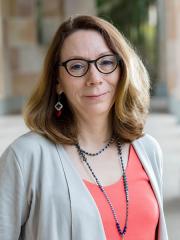
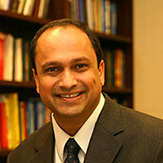
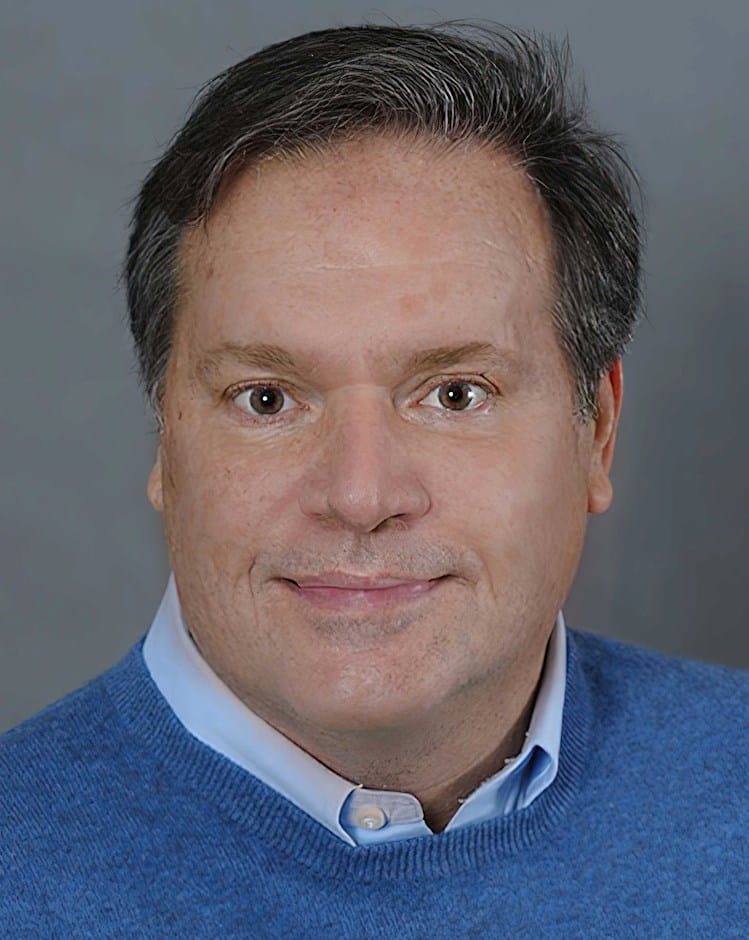
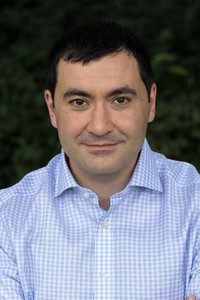
Sara Wade is a Lecturer in Statistics and Machine Learning at the University of Edinburgh , within the School of Mathematics . Her research focuses on Bayesian statistics, machine learning, and their applications in health sciences, particularly in dementia diagnosis and predictive modeling. She holds a PhD from the University of Milan and has held academic positions at the University of Cambridge and University of Warwick before joining Edinburgh. She teaches a popular Machine Learning and Python course for Master’s and final-year undergraduate students, attracting nearly 200 enrollments annually. Her work integrates Bayesian methods with modern machine learning, emphasizing interdisciplinary applications such as scalar-on-image regression and biomarker analysis. Notable contributions include developing hierarchical Dirichlet processes for clustering and uncertainty quantification in RNA velocity studies. She secured a Royal Society of Edinburgh grant for her dementia research project, which aims to improve early diagnosis through statistical modeling. Education: PhD in Statistics, University of Milan Bachelor’s in Mathematics, University of Maryland Wade advocates for diversity in STEM, actively participating in the Women in Machine Learning community. Her research bridges statistical rigor and computational tools, fostering collaborations across academia and healthcare sectors.
Professor Michael Davies is Professor of Building Physics and the Environment at the UCL Institute for Environmental Design and Engineering (IEDE) within The Bartlett School of Environment, Energy & Resources at University College London. He is also a member of the UK Climate Change Committee. With over two decades of academic experience, Professor Davies leads research at the critical intersection of building physics, environmental design, and public health, focusing on how the built environment impacts human well-being. His educational background includes: Doctor of Philosophy from the University of Westminster (1994) Postgraduate Certificate in Education from the University of York (1990) Bachelor of Science from the University of Manchester (1986) Professor Davies has pioneered transdisciplinary research methods, particularly in modeling health impacts and applying system dynamics approaches to address urban health challenges. His work demonstrates how healthy sustainable development can be achieved through innovative stakeholder participation and methodological advancements. His research spans building physics, climate change adaptation, indoor environmental quality, and the health implications of urban design, with particular attention to vulnerable populations and environmental justice considerations. His extensive publication record (over 300 outputs) reveals a consistent evolution toward more integrated approaches that connect building science with public health and climate policy. Recent work shows growing emphasis on health equity in climate adaptation, advanced modeling of complex urban systems, and the application of system dynamics to understand interconnected challenges in housing and urban environments. His research bridges technical building performance analysis with broader policy implications, reflecting his commitment to solutions that address both environmental sustainability and social equity. Professor Davies has secured significant research funding, including the prestigious EPSRC Platform Grant funding the Complex Built Environment Systems group at UCL (awarded only to "world leading" centers) and the Wellcome Trust-funded 'CUSSH' project. In total, he has served as PI or Co-I on approximately 50 research projects, demonstrating exceptional ability to lead large-scale, transdisciplinary research initiatives addressing critical urban challenges. As an educator, Professor Davies leads the 'Energy Context' module in the Environmental Design and Engineering MSc course and supervises EngD and PhD students. His teaching emphasizes the integration of energy systems within broader environmental, social, and policy contexts, preparing students to address complex sustainability challenges in the built environment sector.
Martin Wainwright is a Professor at the University of California at Berkeley with joint appointments in the Department of Statistics and the Department of Electrical Engineering and Computer Sciences (EECS). His research spans high-dimensional statistics , information theory , statistical machine learning , and optimization theory . He has made significant contributions to understanding computational and statistical trade-offs in high-dimensional settings, as well as developing advanced message-passing algorithms for graphical models. His educational background includes a Bachelor's degree in Mathematics from the University of Waterloo and a Ph.D. in EECS from MIT . His work has been recognized with prestigious awards such as the COPSS Presidents' Award (2014) , IEEE Joint Paper Award (2012) , and Sloan Research Fellowship (2005) . He has advised numerous prominent researchers, including Nihar Shah , John Duchi , and Yuchen Zhang . Publications by Wainwright reflect trends in machine learning , high-dimensional data analysis , and graphical model inference . Notable works include advancements in Markov Chain Monte Carlo algorithms , pairwise comparison models , and distributed computation methods . He has also contributed extensively to signal processing and LDPC codes . COPSS Presidents' Award (2014) IEEE Joint Paper Award (2012) Institute of Mathematical Statistics Fellow (2011) NSF CAREER Award (2006) Okawa Research Grant (2005) Sloan Research Fellow (2005)
Assoc. Prof. Dr. Yusuf Yaşa is an Associate Professor at Istanbul Technical University, Department of Electrical Engineering, specializing in Electrical Machines, Power Electronics, and Hybrid/Electric Vehicles. He holds a PhD from Yıldız Technical University and has served in academic and administrative roles at Bursa Technical University and Istanbul Technical University. PhD in Electrical Machines and Power Electronics, Yıldız Technical University (2006–2013) Current Vice Dean at Istanbul Technical University (2023–) Founding Partner of Yasa Motor Technologies (2018) and Nardan Power Conversion Systems Ltd. Co. (2023) His research focuses on noise mitigation in switched reluctance machines, battery cooling with graphene-enhanced phase change materials, and efficiency optimization in electric vehicle systems. He has led projects on DC fast-chargers and sensorless control of synchronous reluctance motors. His publications address energy conversion, battery management, and acoustic noise reduction. Recent research trends include advancements in electric vehicle modeling, state-of-charge estimation for Li-ion batteries, and thermal management solutions for battery systems. His work integrates simulation tools like ANSYS and machine learning for efficiency improvements. He has advised PhD and Master’s theses on topics such as battery charge rate estimation, graphene-doped PCM materials, and Kalman filter-based motor control. Collaborations span institutions like The University of Akron and companies in electric propulsion and robotics.
Richard Futrell is an Associate Professor at the University of California, Irvine (UCI), affiliated with the Department of Language Science. He leads the Language Processing Group, focusing on computational models of human and machine language processing. His work bridges information theory, Bayesian cognitive modeling, and natural language processing (NLP) interpretability. University of California, Irvine Department of Language Science Language Processing Group leader His research examines how linguistic structures emerge from cognitive and communicative pressures. Key areas include dependency locality, surprisal theory in sentence processing, and efficiency-driven language evolution. He investigates how memory constraints, predictability, and information density shape syntactic and morphological patterns across languages. Recent publications analyze code-switching efficiency, syntactic priming, ERP component modeling, and agent-based language contact simulations. His work frequently employs Bayesian modeling, neural network analysis, and cross-linguistic corpora to uncover universal principles in language processing. ACL Best Paper Award (2024) Best Paper Award for Computational Modeling of Language (2023) Marr Prize for Best Student Paper (2017) He has developed datasets like SPACER for error repair analysis and contributed to phonotactic learning frameworks. His collaborations span cognitive scientists, computational linguists, and neuroscientists, advancing understanding of language production, comprehension, and structural optimization.
Professor Alicia Rambaldi is Director of Research at the School of Economics, Faculty of Business, Economics and Law at the University of Queensland. She is also an Affiliate of the Centre for Efficiency and Productivity Analysis. Her academic career spans decades of research in econometric methodologies with applications to real-world economic problems. Professor Rambaldi's research interests focus on applied econometrics, time series econometrics, state-space models, and spatial time series models. She has made significant contributions to economic measurement, particularly in developing methodologies for computation of price indices for land and property, estimation with linked administrative data, and smoothing methodologies combining spatial and temporal information. Her work bridges theoretical econometrics with practical applications in housing markets, climate adaptation, and international economic comparisons. Her recent publications demonstrate a consistent focus on housing economics, with numerous papers on hedonic pricing models, property valuation, and the impact of environmental factors on real estate markets. She has also maintained a strong research program in international comparisons, purchasing power parity, and productivity analysis, often collaborating with leading researchers in these fields. Professor Rambaldi is actively involved in research supervision, currently advising on topics including language barriers faced by immigrants, distributive politics, and copula models. Her completed supervision includes significant work on purchasing power parities, development indexes, trade studies, and spatial analysis of tourism employment. Her current research projects include spatial time series models with applications to housing and land prices, transport demand modeling, and international comparisons. She has secured substantial funding from diverse sources including the Australian Research Council, Natural Hazards Research Australia, and government departments, demonstrating the applied relevance of her work. Professor Rambaldi leads an active research group within the Centre for Efficiency and Productivity Analysis, focusing on developing and applying advanced econometric techniques to address pressing economic measurement challenges. Her work often involves interdisciplinary collaboration with researchers in environmental science, urban planning, and transportation studies.
Sanjeev Kulkarni is the William R. Kenan, Jr. Professor of Electrical and Computer Engineering and Operations Research & Financial Engineering at Princeton University. He is associated with the Department of Philosophy and has held significant administrative roles including Dean of the Graduate School (2014-2017), Director of the Keller Center (2011-2014), and Master of Butler College (2004-2012). His research spans Statistics , Machine Learning , Applied Probability , Information Theory , and Signal Processing , with applications to Wireless Networks , Econometrics , and Control Systems . He has co-authored over 100 publications and supervised numerous PhD and Master’s students.
Ziming Zhang is an Assistant Professor in the Department of Electrical and Computer Engineering at Worcester Polytechnic Institute (WPI) , with additional affiliations in Data Science and Robotics Engineering. He previously held research roles at Mitsubishi Electric Research Laboratories (MERL) and Boston University. PhD in Computing (2013) from Oxford Brookes University , UK MS in Computing Science (2010) from Simon Fraser University , CA BS in Computer Science and Technology (2005) from Northeastern University , China Research interests span computer vision , machine learning , and their applications in point cloud processing , medical imaging , autonomous driving , and IoT . He leads the Vision, Intelligence, and System Laboratory (VISLab) at WPI. Recent publications focus on 3D reconstruction , hyperbolic learning , and robust classifiers . Awards include the R&D100 Award 2018 and NSF funding for data-efficient deep learning. PhD Students: Yecheng Lyu (co-supervised), Guojun Wu (co-supervised), Hangrui Zhang, Xuechu Yu Master's Students: Yun Yue, Yuping Shao Visiting Scholars: Fangzhou Lin His lab partners with industry and academic institutions, focusing on autonomous systems , robotics , and scientific imaging projects.
Bruce Jacob is a Keystone Professor and Full Professor in the Department of Electrical & Computer Engineering at the University of Maryland College Park's College of Engineering. His research primarily focuses on memory systems design and exascale computing architectures, with significant contributions to DRAM simulation and high-performance computing systems. Dr. Jacob received his A.B. in Mathematics from Harvard University (1988), followed by his M.S. and Ph.D. in Computer Science & Engineering from the University of Michigan (1995 and 1997 respectively). His research interests include memory systems design, exascale computing architectures, embedded systems, circuit integrity, and algorithmic composition. His recent publications demonstrate a strong focus on next-generation memory technologies, particularly ReRAM and advanced DRAM architectures. His work bridges the gap between theoretical modeling and practical implementation, with significant contributions to memory system simulation through projects like DRAMsim. His research shows a consistent trajectory toward solving the memory bottleneck problem in high-performance computing systems. Named Fellow, IEEE (2021) Multiple University of Maryland Research Leader awards (2006, 2010, 2012, 2016, 2017) Clark School of Engineering Keystone Professor (2006) National Science Foundation CAREER Award (2000) University of Maryland Award for Teaching Excellence (2004) Dr. Jacob has led significant research initiatives including the University of Maryland Exascale Systems Research and Memory-Systems Research groups. He has developed important computational artifacts such as DRAMsim (a public-domain DRAM-system simulator) and BioBench (a set of bioinformatics workloads). His work has influenced both academic research and industry practices in memory system design.
Joseph L. Pagliari is a Clinical Professor of Real Estate at the University of Chicago Booth School of Business. With over 40 years of industry experience, he focuses his research and teaching on issues broadly surrounding institutional real estate investment, analyzing important questions from rigorous theoretical and empirical perspectives. His educational background includes: Bachelor's degree in Finance from University of Illinois-Urbana (1979) MBA from DePaul University-Chicago (1982) PhD in Finance from University of Illinois-Urbana (2002) Professor Pagliari's research centers on asset pricing, strategic use of leverage, portfolio allocation, joint ventures, hedonic pricing, and option-pricing theory. His work specifically addresses the risk-adjusted performance of core and non-core funds, principal/agent issues in incentive fees, comparisons between REITs and private real estate, real estate's pricing and return-generating process, real estate's role in mixed-asset portfolios, and analysis of high-yield financing. His research demonstrates how real estate characteristics impact investment decisions, pricing mechanisms, and portfolio construction across different market conditions and time horizons. His recent publications show a strong focus on understanding leverage dynamics in real estate debt markets, analyzing real estate returns by investment strategy, and examining the role of real estate in mixed-asset portfolios. Pagliari's work on high-yield lending reveals how asset-level volatility significantly impacts mezzanine debt returns, while his research on investment horizons demonstrates how time horizon affects optimal real estate allocations in portfolios. His analysis of credit spreads across different leverage ratios provides critical insights into real estate debt pricing over nearly three decades. Professor Pagliari has received significant recognition for his contributions to real estate research: 2015 winner of PREA's James A Graaskamp Award (recognizing significant research contributions to the common body of knowledge) He actively contributes to the academic and professional real estate community through board memberships and presentations. Pagliari serves on the board of the Real Estate Research Institute (RERI) and previously served on the Real Estate Information Standards (REIS) board. He has presented his research at numerous industry events including ARES, AREUEA, NCREIF, NAREIM, PREA, and ULI, as well as at the Federal Reserve Bank of Atlanta and before a subcommittee of the House of Representatives. His views have also been published in popular press outlets including Barron's and The Wall Street Journal. Professor Pagliari is deeply involved in the real estate academic community, serving as editor of the Handbook of Real Estate Portfolio Management and contributing to numerous academic and professional associations including the American Real Estate Society (ARES), American Real Estate and Urban Economics Association (AREUEA), Homer Hoyt Institute (where he is a Hoyt Fellow), National Association of Real Estate Trusts (NAREIT), National Council of Real Estate Investment Fiduciaries (NCREIF), Pension Real Estate Association (PREA), and Urban Land Institute (ULI).
Marco Pirola is a Full Professor at the Department of Electronics and Telecommunications (DET) of the Polytechnic University of Turin, Italy. He is a member of the Interdepartmental Center 'CleanWaterCenter@PoliTo' and actively contributes to research in high-frequency electronics and microwave engineering. His work focuses on power amplifiers, device characterization, and advanced microwave circuit design. Research Interests: Microwave power devices, GaN technology, 5G/mm-Wave applications, space communications, and smart pipeline monitoring systems. Awards: IEEE Fellow (since 2019), IEEE Senior Member. Recent Publications address topics like Ka-band MMIC amplifiers for SAR systems, broadband Doherty amplifiers using GaN, and harmonic analysis of current-mode power stages. His projects include STARGATE (European GaAs power architectures) and Millimetre-Wave GaN Radar for UAV detection. Teaching: He leads courses on 'Radio Frequency Integrated Circuits' and 'Advanced Devices for High Frequency Applications' at the Polytechnic University of Turin. Supervised PhD students include Wenjun Zhang and Abbas Nasri, who worked on III-V HEMT circuits and GaN power amplifiers.
Mikail Rubinov serves as Assistant Professor of Biomedical Engineering (primary appointment), Computer Science, Psychiatry, and Psychology at Vanderbilt University's School of Engineering. His interdisciplinary work bridges computational neuroscience, network science, and clinical applications. His research focuses on integrative statistical models of large-scale neural data , exploring brain network organization across species and scales. Key interests include evolutionary principles of brain networks, transcriptomic basis of neural individuality, information transfer in neural systems, and neuropsychiatric connectivity phenotypes. The Rubinov Lab develops computational frameworks for analyzing complex neural systems and integrates neuroscientific knowledge with multi-omics data. Recent publications reveal strong trends in network neuroscience methodology development (circular analysis frameworks, unbiased sampling techniques) and translational applications (epilepsy networks, autism spectrum connectomics, gut-brain axis interrogation). His work increasingly incorporates transcriptomic data with neuroimaging at biobank scale. NIH Grant Writing Workshop (June 2022) NIH Workshop Short Talks (April 2023) Rubinov actively mentors graduate and undergraduate students across Biomedical Engineering and Computer Science. His lab maintains collaborations with UCSF, HHMI Janelia Research Campus, Weizmann Institute, and international neuroscience consortia. Current projects include integrative models of large-scale neural data and transcriptomic basis of neural individuality. The Rubinov Lab operates within Vanderbilt's Department of Biomedical Engineering with extensive cross-school collaborations. Technical resources include GitHub repositories for constraint network models (cnm-code), volumetric segmentation (voluseg), and brain connectivity toolboxes.
Maria Leonilde Rocha Varela is an Associate Professor with Habilitation at the School of Engineering, University of Minho, Portugal, where she also serves as a Senior Researcher at the Algoritmi Research Centre. She has been an integrated member of the Algoritmi Research Centre since 2012 and works in the Department of Production and Systems. Dr. Varela earned her degree in Production Engineering from the University of Minho in 1994, completed a Master's in Computer Integrated Production at DPS-UMinho in 1999, and received her Ph.D. in Production and Systems from the University of Minho in 2007. Her primary research focuses on Manufacturing Management, particularly Production Planning, Control and Optimization, and Collaborative Paradigms, Networks and Decision Making Models. She maintains extensive international collaborations with institutions worldwide including the National Institute of Industrial Engineering, VSB-Technick Univerzita Ostrava, University of Belgrade, and others. Her research spans Web Applications and Services for supporting Engineering and Production Management, with increasing emphasis on Artificial Intelligence, Robotic Process Automation, and Industry 4.0/5.0 applications. She has made significant contributions to scheduling algorithms, optimization techniques, and decision support systems for manufacturing environments. Analysis of her recent publications reveals a strong trend toward integrating Artificial Intelligence with traditional manufacturing processes, particularly in Robotic Process Automation applications. Her research increasingly focuses on sustainable manufacturing practices, with numerous publications addressing energy efficiency, environmental sustainability, and resource optimization. There is a clear emphasis on multi-objective optimization approaches to solve complex manufacturing problems, particularly in distributed job shop scheduling. Her work demonstrates an evolution from traditional production planning methods to more advanced AI-driven approaches for Industry 4.0 and 5.0 environments. Dr. Varela has held significant academic leadership roles, currently serving as the director of the master's course in Engineering and Quality Management at DPS-UMinho. She previously coordinated the industrial management and systems subgroup from 2012 to 2021 and was part of the steering committee for the master's course in systems engineering between 2016 and 2019. She has successfully supervised more than 70 MSc projects, with over 15 currently ongoing, focusing on Production and Systems Engineering. Her supervision encompasses collaborative management models, traditional decision approaches, and web-based platforms incorporating AI techniques. She coordinates research projects including 2 concluded Ph.D. projects and 6 ongoing ones. She collaborates as a research member in several R&D projects with national and international industrial enterprises and institutions, and in international Erasmus projects. Dr. Varela is an active participant in the academic community, serving on editorial boards of several international journals and as a member of organizing and scientific committees for numerous international conferences. She is a member of several prestigious research networks including the Euro Working Group of Decision Support Systems (EWG-DSS), Institute of Electrical and Electronics Engineers (IEEE), Industrial Engineering Network, and the Institute of Industrial and Systems Engineers (IISE).
Rasmus Pagh is a Professor at the Department of Computer Science, University of Copenhagen, specializing in algorithms and complexity. His career includes a 2002 PhD from Aarhus University under Peter Bro Miltersen and a tenure at IT University of Copenhagen until 2020. He leads theoretical research with practical applications in big data, databases, and modern computer architecture parallelism. His research interests span algorithms, data structures, and privacy-preserving computing. Recent work includes the ERC-funded project on Scalable Similarity Search and contributions to the BARC center for basic algorithms research. He has collaborated with Google Research (2019-2020) and focuses on theoretical foundations with real-world impact. Key research trends in his 2023-2024 publications include privacy-preserving data analysis probabilistic data structures distributed secure computation noise-robust coding hashing efficiency continual privacy mechanisms Scientific recognition includes 2024 ACM Fellowship ERC grant leadership multiple top-tier conference publications
Sonika Singh is a Senior Lecturer at the University of Technology Sydney (UTS) Business School and serves as the Marketing Postgraduate Program Director. She holds a PhD in Management Science from the University of Texas at Dallas. Her research focuses on Digital Marketing, Marketing Analytics, and Retail Strategy, with emphasis on AI applications, consumer information search, and sustainability. She has been recognized with awards including the 2020 UTS Learning and Teaching Team Citation Award and Top Teaching List 2023. Education: PhD in Management Science (UT Dallas, 2012) Industry Experience: Market research roles at Sandvik Asia, Kirloskar Oil Engines, and Premier Automobiles Her research explores topics such as Google search advertising, social media marketing, and AI-driven recommendation systems. She has presented at international marketing conferences and published in journals like Journal of Retailing and Customer Needs and Solutions . Recent funded projects include examining geographic disparities in aged care access and evaluating domestic violence support programs. She actively engages in social impact initiatives, including volunteering for Survivor Vision Australia. Awards: UTS Teaching Citation (2020), Social Impact Grant (2023) In teaching, she combines industry insights with research expertise, delivering courses in Digital Marketing, Marketing Analytics, and Business Statistics. She supervises PhD students in areas like predictive analytics in fast fashion and social media brand analysis.