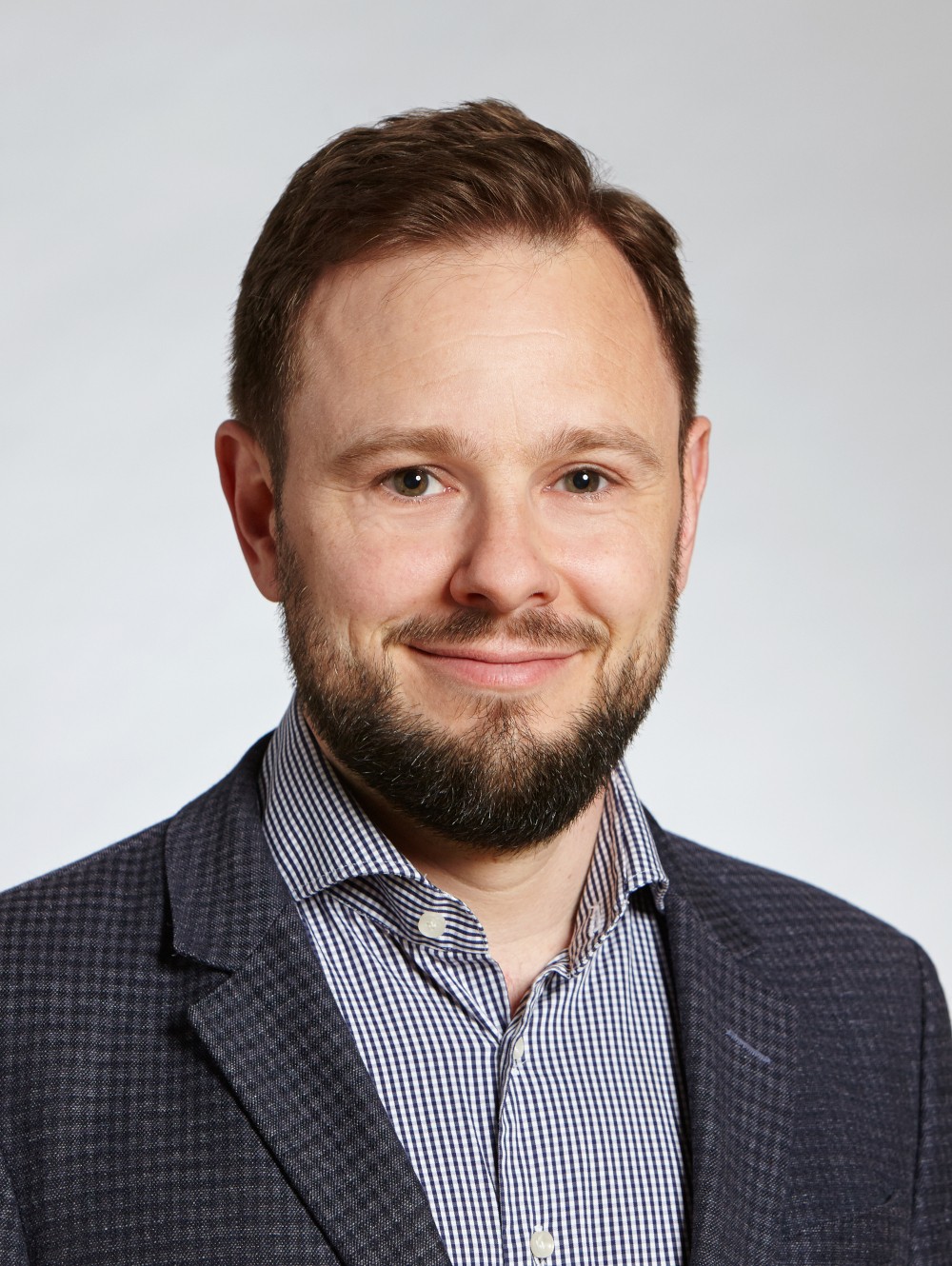
Christoph Stadtfeld is Associate Professor of Social Networks at ETH Zurich's Department of Humanities, Social and Political Sciences and co-director of the ETH Social Networks Lab. His research examines social network dynamics, focusing on tie formation processes, network effects on individuals, and advanced statistical methodologies for longitudinal network analysis. Education: PhD from Karlsruhe Institute of Technology (2011) Postdoctoral researcher and Marie-Curie fellow at University of Groningen, University of Lugano, and MIT Media Lab (2011-2014) His work bridges sociology, statistics, and computer science to address fundamental questions about how social structures evolve and influence behavior. Key interests include relational event modeling, co-evolution of networks and attributes, and applications in mental health, political polarization, and scientific collaboration. He develops innovative methods for analyzing dynamic networks using cutting-edge computational approaches. Recent publications reveal strong emphasis on methodological rigor in temporal network analysis, with significant contributions to relational event modeling and dynamic network actor frameworks. His work increasingly addresses societal challenges including political polarization, mental health impacts of social isolation, and innovation dynamics in healthcare. Scientific awards: Raymond Boudon Award of the European Academy of Sociology (2017) Freeman Award of the International Network for Social Network Analysis (2021) As co-director of the ETH Social Networks Lab, Stadtfeld leads interdisciplinary research teams developing novel network methodologies. His work has been supported by prestigious fellowships including Marie-Curie funding, and he actively mentors graduate students in network science methodology and applications across diverse domains. The ETH Social Networks Lab serves as a hub for advancing network theory and methodology, with ongoing projects examining student networks during crises, scientific collaboration dynamics, and innovation ecosystems through the lens of network science.
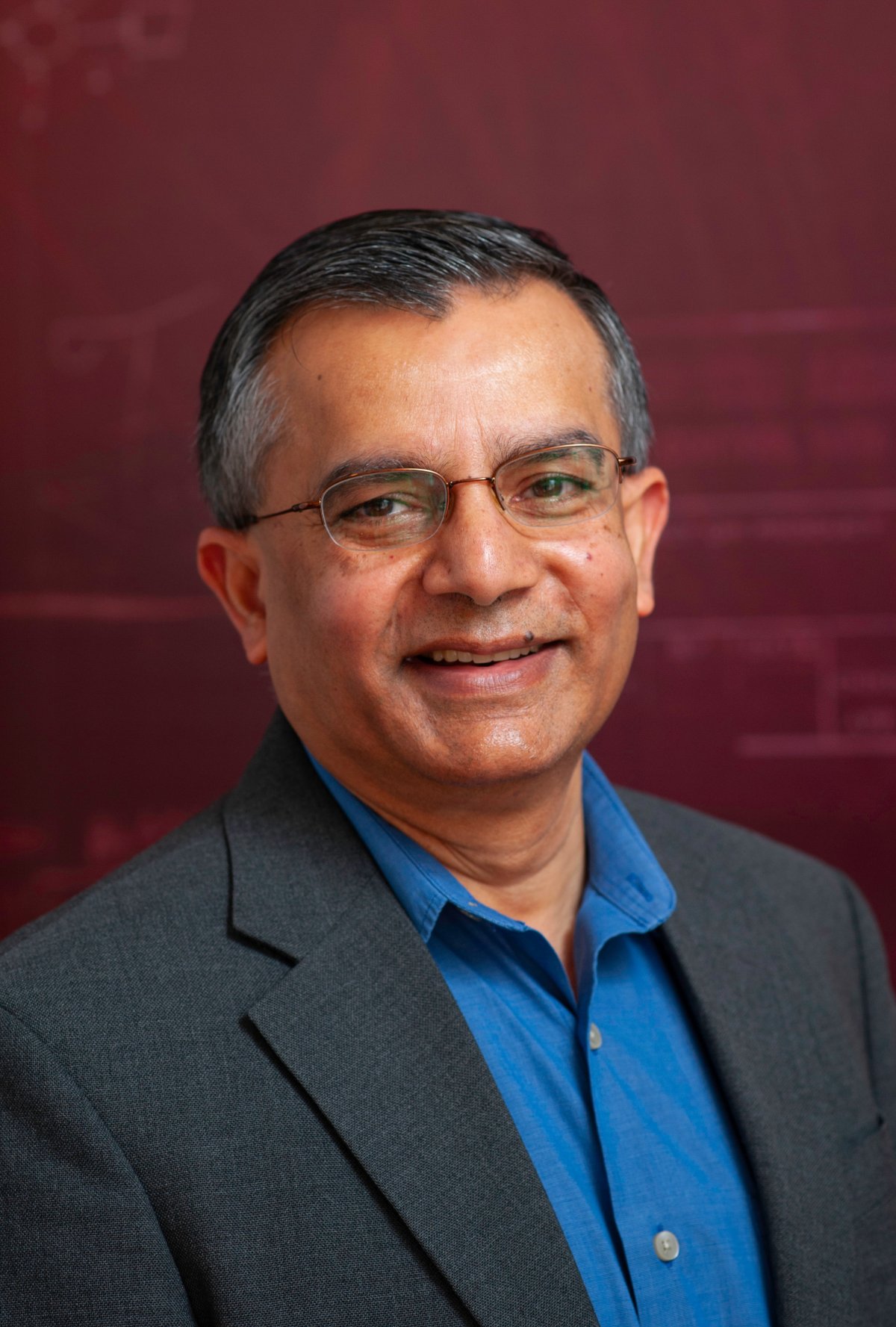
Ravi Dhar is the George Rogers Clark Professor at the Yale School of Management and holds an affiliated appointment as a Professor of Psychology at Yale University. He serves as Director of the Center for Customer Insights , focusing on consumer behavior, branding, and marketing strategy through psychological and economic frameworks. Ph.D. in Marketing, University of California at Berkeley (1992) MS, University of California at Berkeley (1990) MBA, Indian Institute of Management (1987) BTech, Indian Institute of Technology (1986) His research examines preference formation, self-regulation, and the interplay of conflicting goals in consumer decisions. Recent work explores sustainability, mobile commerce, and how guilt paradoxically enhances consumer pleasure. He has published over 50 articles and advised Fortune 100 companies across industries. Key trends in his publications include behavioral economics , eco-conscious consumption , and technology-mediated decisions . His studies address choice overload, goal systems, and the psychological drivers of indulgence versus self-control. Distinguished Scientific Contribution Award (Society for Consumer Psychology, 2012) Yale SOM Alumni Teaching Award (2012) William O'Dell Award Finalist (2004, 2008, 2012) AMA Doctoral Consortium Fellow (1991) Dhar consults firms on customer insights and has held visiting roles at HEC Paris , Erasmus University , and Stanford/NYU . He edits top journals like Journal of Consumer Research and Marketing Science , shaping academic and industry discourse.
Anthony Man-Cho So is a Professor in the Department of Systems Engineering and Engineering Management at The Chinese University of Hong Kong (CUHK). He currently serves as Dean of the Graduate School and Deputy Master of Morningside College . With a BSE from Princeton University and a PhD in Computer Science from Stanford University, his career at CUHK began in 2007. Academic Leadership: Dean, Graduate School (2023–present); Deputy Master, Morningside College (2019–present) Education: BSE (Princeton), MSc/PhD (Stanford) His research focuses on optimization theory and its interdisciplinary applications in computational geometry, machine learning, signal processing, and statistics. Key projects include non-convex optimization for wireless networks, robust graph learning, and decentralized learning algorithms. His publications span high-impact journals like Mathematical Programming , SIAM Journal on Optimization , and conferences such as NeurIPS and ICML . Recent work emphasizes dynamic regret analysis , low-rank matrix recovery , and stochastic beamforming . He has authored over 50 refereed papers and a monograph on semidefinite programming. Awards include IEEE Fellow (2023), CUHK Research Excellence Award (2016–17), and multiple IEEE/INFORMS best paper and teaching accolades. He has served on editorial boards of journals like Mathematical Programming and SIAM Journal on Optimization , and as Lead Guest Editor for IEEE Signal Processing Magazine . Teaching roles include courses on optimization, discrete mathematics, and machine learning. Scientific Awards IEEE Fellow (2023) CUHK Outstanding Fellow (2019) Multiple IEEE/INFORMS Best Paper Awards (2010–2022) IEEE/UGC Teaching Awards (2008–2022) His methodology integrates theoretical rigor with practical applications, particularly in wireless communication systems, sensor networks, and financial engineering. Collaborations span institutions in Hong Kong, mainland China, and the U.S., reflecting a global academic influence.
Dr. Friedrich Götz is an Associate Professor of Psychology in the Department of Psychology at the University of British Columbia (Faculty of Arts). His research focuses on geographical psychology, exploring the causes and consequences of regional personality differences through an interdisciplinary Big Data approach. PhD, University of Cambridge (UK), 2021 MPhil, University of Cambridge (UK), 2017 BSc, University of Konstanz (Germany), 2016 Dr. Götz’s work bridges social and personality psychology with behavioral science, examining topics like mobility, migration, wanderlust, courage, and entrepreneurship. He co-developed large-scale survey studies with TIME Magazine, attracting over 3 million participants. His research often involves experience sampling methods and open science. His recent publications emphasize geographical psychology, personality-environment interactions, and methodological advancements. Articles span 2020–2025, with key themes including regional personality differences, misinformation susceptibility, and the psychological impact of environmental features. Rising Star Award (Association for Psychological Science), 2025 SAGE Emerging Scholar Award (Society for Personality and Social Psychology), 2025 Top 40 under 40 – Germany (CAPITAL Magazine), 2024 President’s New Researcher Award (Canadian Psychological Association), 2024 Best Dissertation Prize (German Psychological Society), 2021 Leading Scholar (Green College), 2021 Dr. Götz teaches undergraduate and graduate courses, including Personality Psychology and Contemporary Conceptual Issues in Personality, with a focus on geographical dimensions. He is based in the Personality and Geographical Ambiance (PANGEA) Lab, which prioritizes inclusivity and collaboration in studying person-environment interactions.
Yang Luo is a Kennedy Trust Senior Research Fellow in Data Science at the University of Oxford's Kennedy Institute of Rheumatology. His research bridges statistical genomics and computational immunology to unravel genetic contributions to immune-mediated traits, with a focus on the major histocompatibility complex (MHC) region. His work leverages large biobank datasets (UK Biobank, Biobank Japan), gene expression resources (GTEx), and proteomic data to decode molecular mechanisms linking genetic variation to disease risk. Specific interests include tuberculosis genetics, multi-ancestry polygenic risk scores, and single-cell eQTL modeling. Recent publications highlight expertise in HLA association studies, evolutionary immunogenetics, and disease-specific cell state dynamics. Key contributions include constructing a global HLA haplotype panel and developing novel statistical methods for admixed population genetics. Scientific Awards: Kennedy Trust Senior Research Fellow in Data Science His lab integrates computational and experimental approaches to translate genetic findings into clinical applications for immune disorders.
Professor Josef Dick serves as a Professor and Deputy Head in the School of Mathematics & Statistics at the University of New South Wales (UNSW). With a distinguished career in computational mathematics, he has established himself as a leading researcher in numerical integration methods and quasi-Monte Carlo theory. His work bridges theoretical mathematics with practical computational applications across various scientific domains. Dr. Dick earned his PhD in Mathematics from UNSW in 2004 and his MSc in Mathematics from the University of Salzburg in 2001. His academic journey reflects a strong foundation in both theoretical and applied mathematics, which has informed his subsequent research contributions. Professor Dick's research primarily focuses on numerical integration and quasi-Monte Carlo rules , employing techniques from number theory , abstract algebra (particularly finite fields), discrepancy theory , wavelet theory , and statistics . His work provides rigorous analysis of practical algorithms for computational problems, with implementations often provided in Matlab to bridge theory and application. His research has successfully addressed point distributions on the unit cube for numerical integration, completely uniformly distributed sequences for Markov chain quasi-Monte Carlo algorithms, and explicit constructions of uniformly distributed points on the sphere. Analysis of his recent publications (2022-2025) reveals a consistent focus on advancing quasi-Monte Carlo methods, with increasing integration of machine learning techniques and applications to complex computational problems. His work demonstrates strong interdisciplinary connections between pure mathematics, computational science, and practical engineering applications, particularly in uncertainty quantification and high-dimensional numerical integration. Discovery project from Australian Research Council (2012-2014): "Mathematics in the round - the challenge of computational analysis on spheres" Queen Elizabeth II Fellowship from Australian Research Council (2010-2014): "Algebraic methods for Markov Chain Monte Carlo and quasi-Monte Carlo" UNSW Vice Chancellor Fellowship (2006-2009) Professor Dick has supervised numerous PhD and Honours students working on topics including Quasi-Monte Carlo methods, Discrepancy Theory, Markov chain Monte Carlo, and Uncertainty Quantification. His research has been supported by significant grants from the Australian Research Council, including serving as Chief Investigator on multiple projects. Beyond his research, he serves as an Editor for the Journal of Complexity and Journal of Approximation Theory, demonstrating his leadership in the mathematical community. He teaches courses in Algebra and Mathematical Computing for Finance at UNSW.
Roy Dong is an Assistant Professor at the University of Illinois at Urbana-Champaign, affiliated with the Coordinated Science Laboratory. His research bridges Control Theory Economics Statistics Optimization to address challenges in cyber-physical systems and the Internet of Things, focusing on data manipulation, privacy, and strategic behavior in interconnected systems. His academic journey includes a Ph.D. in Electrical Engineering and Computer Sciences from UC Berkeley (2017) and dual B.S. degrees in Economics and Computer Engineering from Michigan State University (2010). At Illinois, he teaches courses ranging from Control Systems to Convex Optimization , with multiple teaching excellence awards. Roy's research explores Closed-loop effects of machine learning Causality in decision systems Incentive design for strategic agents Privacy-utility tradeoff optimization Human behavior modeling with applications in smart grids, transportation networks, and semi-autonomous vehicles. His work formulates privacy-preserving mechanisms as optimization problems, balancing data utility against user privacy in dynamic systems. Article trends show expertise in Game theory for strategic data sources Energy disaggregation techniques Nonlinear basis pursuit algorithms Privacy-aware control systems with a focus on cyber-physical systems and human-in-the-loop applications. Scientific recognition includes 'Teacher Ranked as Excellent' awards (ECE 120, ECE 486, ECE 515) Contributions to smartSDH building control and CPRL compressive sensing Roy leads the Privacy-aware Control Systems research group, collaborating with institutions like UC Berkeley and Michigan State University , and directs projects funded by grants including the New USDA NIFA grant for agricultural robot autonomy .
Shashi Shekhar is a Professor at the University of Minnesota, holding the distinguished titles of McKnight Distinguished University Professor and Distinguished University Teaching Professor. He serves as the ADC/CSE Chair and Director of the AI-LEAF Institute within the Department of Computer Science at the College of Science and Engineering. His research interests span multiple areas of spatial computing including spatial data science, spatial data mining, spatial databases, Geo-AI, and Geographic Information Systems (GIS). His work has focused on developing scalable algorithms for eco-routing, evacuation route planning, and spatial pattern mining. He has made significant contributions to the field through his Spatial Databases textbook, the Encyclopedia of GIS which has seen over 192,918 downloads in 2017, and a spatial computing book for professionals. His research group has produced numerous PhD graduates dating back to 1993 through 2023. Analysis of his recent publications reveals a strong focus on applying spatial computing to critical societal challenges including climate change mitigation through the AI-LEAF Institute, pandemic response through mobility data analysis, and sustainable transportation through eco-routing algorithms. His work bridges theoretical advances in spatial data science with practical applications in urban planning, emergency management, and environmental sustainability. Distinguished McKnight University Professor Distinguished University Teaching Professor UCGIS Education Award (2015) Graduate Education Award (2015) President of University Consortium for GIS (2017-2018) Computing Research Association Board Member (2016-2019) Professor Shekhar has advised over 30 PhD students since 1993, with his most recent graduate in 2023. He has secured significant research funding including a $20 million AI Institute grant focused on climate-smart agriculture and forestry. His Spatial Computing Research Group maintains active collaborations with government agencies and industry partners. The group has developed practical applications featured in media outlets including FoxTV coverage of evacuation route planning algorithms. Current research directions include applying AI techniques to address climate challenges through the AI-LEAF Institute and advancing spatial data science for polar regions through NSF-funded initiatives.
Iona Cheng is a Professor in the Department of Epidemiology and Biostatistics at the University of California, San Francisco (UCSF), where she conducts groundbreaking research in cancer epidemiology. She serves as co-Investigator of the SEER Greater Bay Area Cancer Registry and is Principal Investigator of multiple NIH- and foundation-funded projects examining genetics, lifestyle factors, and neighborhood characteristics in relation to cancer risk. Dr. Cheng has developed an extensive research program focused on racial/ethnic differences in cancer risk and leads population-based cancer surveillance studies that document variations in cancer incidence and mortality patterns across diverse racial and ethnic groups. University of California, Davis, BS, 1990–1994, Physiology Yale University, MPH, 1999–2001, Chronic Disease Epidemiology University of Southern California, PhD, 2001–2005, Epidemiology University of California, San Francisco, Postdoc, 2006–2008, Genetic and Molecular Epidemiology Dr. Cheng's research spans multiple disciplines within cancer epidemiology, with particular emphasis on understanding how environmental exposures, genetic factors, and social determinants interact to influence cancer risk and outcomes across different racial and ethnic populations. Her work frequently examines the impact of air pollution, endocrine-disrupting chemicals, and neighborhood characteristics on cancer development and survival. She has made significant contributions to understanding cancer disparities among Asian American, Native Hawaiian, and Pacific Islander populations, bringing attention to the unique cancer risks and outcomes within these understudied groups. Her research often leverages the Multiethnic Cohort Study, one of the largest prospective studies of cancer incidence and mortality across diverse racial/ethnic populations. Analysis of Dr. Cheng's recent publications reveals a consistent focus on environmental and social determinants of cancer risk across multiple organ sites. Her work demonstrates a sophisticated integration of epidemiological methods with environmental exposure assessment, genetic analysis, and health disparities research. Many of her studies examine the intersection of environmental exposures and racial/ethnic disparities in cancer outcomes, particularly regarding breast cancer, lung cancer, and other malignancies. She has published extensively on the impact of air pollution on cancer risk and survival, as well as the effects of endocrine-disrupting chemicals like bisphenol A, parabens, and phthalates. American Association for Cancer Research Scholar-in-Training Award (2007) National Institutes of Health Loan Repayment Award (2007) National Institutes of Health Loan Repayment Renewal Award (2009) American Association for Cancer Research Faculty Scholar Award (2011) National Institutes of Health Loan Repayment Renewal Award (2011) National Institutes of Health Loan Repayment Renewal Award (2013) American Journal of Epidemiology/Society of Epidemiology Research Top 10 manuscripts (2014) Cancer Prevention Institute of California Mentoring Award (2015) American Society of Human Genetics Top poster As Principal Investigator of multiple NIH-funded projects, Dr. Cheng oversees substantial research grants focused on cancer epidemiology and health disparities. Her work often involves large interdisciplinary collaborations with researchers across multiple institutions, including the Multiethnic Cohort Study which follows over 200,000 participants from diverse racial/ethnic backgrounds. She has demonstrated leadership in mentoring junior researchers, particularly those from underrepresented backgrounds in science, as evidenced by her Cancer Prevention Institute of California Mentoring Award. Her research program integrates data from cancer registries, electronic health records, and geospatial information to provide comprehensive insights into cancer patterns and risk factors. Dr. Cheng's research is closely connected to the UCSF Helen Diller Family Comprehensive Cancer Center and leverages collaborations with Lawrence Berkeley National Laboratory, which provides advanced technological resources for cancer research. Her work benefits from access to extensive cohort data, sophisticated exposure assessment methods, and interdisciplinary expertise in genetics, environmental science, and computational biology available through these institutional partnerships. She frequently collaborates with researchers studying the genetic and environmental determinants of cancer across multiple organ systems, contributing to a more comprehensive understanding of cancer etiology and prevention strategies.
Hal S. Stern is Provost and Executive Vice Chancellor at the University of California, Irvine (UCI), and a Distinguished Professor in the Department of Statistics. He previously served as founding Chair of the Department of Statistics, Dean of the Donald Bren School of Information and Computer Sciences, and Vice Provost for Academic Planning at UCI. Earlier, he held faculty positions at Iowa State University and Harvard University. B.S. in Mathematics, Massachusetts Institute of Technology M.S. and Ph.D. in Statistics, Stanford University Stern is a leading expert in Bayesian statistical methods, with significant collaborative work in life sciences and social sciences. His current research focuses on forensic statistics (e.g., footwear impression and bloodstain pattern analysis), psychiatric studies of early-life adversity's impact on brain development, and statistical applications in sports analytics. He co-directs the NIST-funded Center for Statistics and Applications in Forensic Evidence and leads the Conte Center's NIMH-funded research on mental health vulnerabilities. His notable contributions include the third edition of Bayesian Data Analysis , which expanded computational methods and Bayesian nonparametric modeling, featuring STAN software. Stern has secured major grants from NIST and NIMH for interdisciplinary projects. Fellow, American Association for the Advancement of Science Fellow, American Statistical Association Fellow, Institute for Mathematical Statistics He has mentored graduate programs as Vice Provost for Graduate Education and contributed to UCI's academic strategy as Vice Provost for Academic Planning. Stern's leadership extends to directing centers that bridge statistics with forensic science and mental health research.
Rohit Kannan is an Assistant Professor in the Grado Department of Industrial and Systems Engineering at Virginia Tech. He holds a Ph.D. and M.S. in Chemical Engineering from MIT and a B.Tech. from IIT Madras. His research focuses on integrating machine learning with global optimization and optimization under uncertainty, emphasizing energy systems applications. Previous roles include postdoc positions at Los Alamos National Laboratory and the Wisconsin Institute for Discovery. Education: Ph.D., Chemical Engineering, Massachusetts Institute of Technology, 2018 M.S., Chemical Engineering Practice, MIT, 2014 B.Tech., Chemical Engineering, IIT Madras, 2012 Research Interests: Global optimization, optimization under uncertainty, computational optimization, energy systems, and machine learning integration. Recent Highlights: Recipient of the Excellence in Teaching Spotlight Award (2024) Lead researcher in stochastic optimization and energy systems (e.g., hybrid polygeneration systems) Developed algorithms for chance-constrained nonlinear programs and distributionally robust optimization Service & Leadership: Elected Vice-Chair of Global Optimization, INFORMS Optimization Society (2025–2026) Reviewer for top journals like Operations Research and Mathematical Programming Advisor to ISE InclusiveVT and Graduate Admissions Committee Labs & Collaborations: Directs a research group advancing optimization and machine learning for energy and engineering systems. Active in interdisciplinary projects with LANL and UW-Madison.
Professor Luke Harding is a faculty member at the Department of Linguistics and English Language , Lancaster University , within the School of Social Sciences . His work bridges applied linguistics, language assessment, and critical discourse studies, with a focus on the ethical and societal implications of testing. Research Interests : Language testing and assessment, World Englishes and English as a Lingua Franca (ELF), second language listening and pronunciation assessment, diagnostic approaches to language evaluation, and language assessment literacy. Recent projects integrate digital technology and corpus linguistics into testing frameworks. Publications : Published extensively in Language Testing , Applied Linguistics , and Language Assessment Quarterly . Co-edited the Routledge Handbook of Language Testing (Second Edition) (2022), a key reference work in the field. Teaching : Leads modules in Language Test Construction and Evaluation , Issues in Language Testing , and Statistical Analysis for Language Testing within the university's distance MA program. Leadership : Convened the Language Testing Research Group with colleagues Tineke Brunfaut and John Pill, advancing interdisciplinary approaches to assessment.
Dr. Sander Los is an Associate Professor at the Faculty of Behavioural and Movement Sciences (Department of Cognitive Psychology), Vrije Universiteit Amsterdam. He earned his PhD in 1994 with a thesis on 'On the origin of mixing costs: Exploring information processing in pure and mixed blocks of trials' under Prof. Andries Sanders. His research focuses on temporal dynamics of preparatory processes, co-developing the formalized Multiple Trace Theory (fMTP) to explain temporal preparation across time scales (seconds to days). His work integrates cognitive psychology, neuroscience, and computational modeling to explore attentional mechanisms, statistical learning, and spatiotemporal dynamics. Education: PhD in Cognitive Psychology (VU Amsterdam, 1994), postdoctoral research at VU Amsterdam, progressing to Assistant Professor before his current role. Key research areas include visual attention, response inhibition, and long-term memory. He has published over 40 peer-reviewed articles and serves on editorial boards for journals like Attention, Perception, and Psychophysics and Acta Psychologica . Research Interests: His studies investigate how humans prepare for upcoming events temporally and spatially, with recent work on statistical learning guiding visual attention and computational frameworks for temporal preparation. Collaborations emphasize interdisciplinary approaches to understanding attention allocation and neural underpinnings of timing. Grants & Advising: No explicit grants listed, but active in training students (1 supervised PhD thesis). His courses include Methodology, Research Methods, and Practical Skills for Researchers at VU Amsterdam. Labs/Teams: Works closely with colleagues on the fMTP model and statistical learning projects, emphasizing team-based computational and experimental psychology.
Xiaocheng Shang is an Associate Professor in Mathematical Optimisation and Data Science at the University of Birmingham's School of Mathematics. His research focuses on numerical methods for stochastic differential equations, with applications in computational mathematics, statistics, physics, and data science. He is affiliated with the Optimisation and Numerical Analysis Group, Statistics and Data Science Group, and the Institute for Data and AI. Shang holds a PhD in Applied and Computational Mathematics from the University of Edinburgh (2016) and completed postdocs at the University of Edinburgh, Brown University, and ETH Zurich before joining Birmingham in 2019. His academic achievements include fellowships from The Alan Turing Institute, the LMS Emmy Noether Fellowship, and the EUniWell Leadership Fellowship. He has secured funding from EPSRC, the Royal Society, and the Isaac Newton Institute. Shang is actively involved in supervising PhD students and co-organizing research initiatives such as the Data Science and Computational Statistics Seminar. Research interests include structure-preserving integrators, Bayesian sampling techniques, and machine learning applications in dynamical systems. His work bridges numerical analysis, probability theory, and multiscale modeling in materials science. Recent projects involve neural networks for complex dynamical systems and numerical algorithms for deterministic/stochastic systems.
James Anderson is an Assistant Professor in the Department of Electrical Engineering at Columbia University, with affiliations to the Data Science Institute (DSI) and multiple research centers including the Computing Systems for Data-Driven Science and Foundations of Data Science. Prior to Columbia, he was a Senior Research Scientist at Caltech’s Computing + Mathematical Sciences division (2016–2019) and held a Junior Research Fellowship at the University of Oxford’s Department of Engineering Science (pre-2012). He earned his DPhil (PhD) in Engineering Science from Oxford in 2012. His research focuses on optimal/robust control theory, mathematical programming, data privacy, and cyber-physical systems, with applications in smart grids, systems biology, and power systems. Recent work emphasizes energy storage strategies, distributed control algorithms, and cybersecurity in critical infrastructure. His publications span advanced control methodologies (e.g., reinforcement learning for LQR problems), energy market dynamics, and resilient system designs. Notable contributions include frameworks for decision-focused energy storage arbitrage and defenses against false data attacks in power grids. He actively collaborates on federated learning approaches for distributed systems and has pioneered techniques for system-level synthesis in cyber-physical architectures. Anderson’s affiliations include the Data Science Institute (DSI) and specialized centers focused on data-driven science and energy systems. His work bridges theoretical control advancements with real-world applications in energy and healthcare.