James Anderson is an Associate Lecturer at the University of Sydney, specializing in Operations Research and Energy Economics. His research focuses on stochastic optimization, energy transition modeling, supply chain coordination, and game-theoretic market design. He has contributed to understanding strategic behavior in electricity markets, supply function equilibria, and risk management in uncertain environments. Anderson’s work spans theoretical and applied domains, addressing challenges in energy policy, auction mechanisms, and supply chain dynamics. His recent studies explore long-term decarbonization pathways, robust decision-making under uncertainty, and the integration of stochastic models into real-world systems. He is affiliated with the University of Sydney’s academic staff, though specific departmental or school affiliations are not explicitly stated in available records. His publications frequently address topics such as capacity procurement efficiency, minimax decision rules, and the performance of stochastic algorithms in complex systems. Anderson’s research also extends to auction theory, including multi-unit auctions with uncertain supply, and the design of contracts that mitigate risks in agriculture and retail supply chains. His work emphasizes practical applications of mathematical modeling to enhance decision-making in competitive markets and resource allocation contexts.
Wilson Chen is a Senior Lecturer at the University of Sydney. He holds a PhD in Financial Econometrics from the same institution. Prior roles include a post-doctoral fellowship at the University of Technology Sydney and an Assistant Professorship at the Institute of Statistical Mathematics in Japan. His research focuses on advancing computational Bayesian methods and statistical tools for financial time series analysis. Education: PhD in Financial Econometrics, University of Sydney Research Interests: Wilson develops efficient computational techniques for Bayesian inference, with applications to financial data analysis. His work emphasizes MCMC optimization, quantile function models, and the integration of machine learning with statistical methodologies. Recent efforts include improving sampling efficiency in Bayesian frameworks and exploring variational approaches for complex posterior distributions. Publications: His work spans themes in Bayesian computation, financial econometrics, and machine learning. Notable contributions include optimizing MCMC thinning, semiparametric GARCH models, and Stein-based sampling techniques for probabilistic inference. Awards: No scientific awards explicitly mentioned. Advising & Grants: Currently supervising three PhD students: Peiwen JIANG (Modelling Complex Posteriors in Bayesian Inference), Wen PENG (Bayesian Neural Networks for Volatility Dynamics), and Yuning ZHANG (Stochastic Loss Reserving). Grant details are not specified in the provided texts. Labs/Teams: No specific lab or collaborative team affiliations mentioned.
Professor Peter Radchenko is a leading academic in Statistics at the University of Sydney Business School. Prior to joining Sydney in 2017, he held positions at the University of Chicago and the Marshall School of Business, University of Southern California. He earned a PhD in Statistics from Yale University and an undergraduate degree in Mathematics from Lomonosov Moscow State University. Education: PhD in Statistics, Yale University Bachelor's in Mathematics/Applied Mathematics, Lomonosov Moscow State University Research Interests: Professor Radchenko specializes in high-dimensional statistics and statistical machine learning, focusing on methods for analyzing complex modern datasets. His work addresses challenges in high-dimensional regression, large-scale clustering, functional data analysis, and optimization-driven statistical techniques. Notable contributions include mixed-integer optimization approaches for sparse models and advancements in variable selection under low-signal conditions. Research Trends: His recent work emphasizes optimization-based solutions for discrete statistical problems, particularly in sparse modeling and subset selection. This aligns with broader themes of leveraging computational efficiency for high-dimensional data challenges. Awards & Honors: Elected Member, International Statistical Institute (ISI) 2023 INFORMS Computing Society Prize Honorable Mention Australian Research Council Grants (2025, 2019) US National Science Foundation Grant (2012) Teaching Excellence Awards (University of Sydney, 2018–2024) Grants & Advising: Current research student: Sanghyun KIM (Forecast Reconciliation). Grants include collaborations with Cornell University and multidisciplinary initiatives at the University of Sydney. His research has been supported by major funding bodies globally. Labs & Teams: His work is embedded within the University of Sydney Business School’s analytics research groups, focusing on statistical methodology and its applications in business and health.
Rosa Taghikhah is a Lecturer in Business Analytics at the University of Sydney Business School, specializing in decision support systems for sustainability. With a PhD from UTS, she develops analytics-driven frameworks for socio-environmental challenges, including agri-food supply chains, disaster risk management, and renewable energy transitions. Her interdisciplinary work integrates AI, behavioral economics, and systems modeling. Research Focus: Decision technologies for climate resilience and decarbonization Causal inference in consumer behavior (e.g., organic products adoption) Digital twins for natural resource management Explainable AI in environmental contexts She supervises PhD students on projects like bushfire risk modeling and organizational knowledge transfer, and has led ARC-funded projects on farm resilience modeling. Taghikhah promotes Women in STEM and previously worked with Ernst & Young.
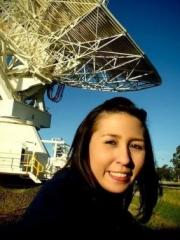
Dr. Vanessa Moss is an Adjunct Professor at the School of Electrical Engineering & Computer Science, University of Queensland. Her research focuses on radio astronomy, astrophysics, and collaborative science practices. She is actively involved in large observational projects like ASKAP and Apertif, contributing to surveys of galactic structures, transient phenomena, and HI absorption studies. Key research interests include radio surveys (e.g., RACS), fast radio bursts (FRBs), and advancing accessible conference formats. Her work bridges observational astronomy with data analysis, emphasizing sustainability and inclusivity in global scientific collaboration. Publications highlight her contributions to radio galaxy studies, interstellar medium dynamics, and technological advancements in radio telescopes. She has co-authored over 80 peer-reviewed articles, focusing on cosmological surveys, HI absorption in AGN, and multi-wavelength astronomy. Dr. Moss has pioneered efforts to digitize conferences, such as the virtual ICWIP 2021, and contributed to initiatives like Astronomers for Planet Earth to reduce the carbon footprint of astronomy. She collaborates internationally with institutions like the Westerbork Synthesis Radio Telescope (WSRT) and the Australian Square Kilometre Array Pathfinder (ASKAP).
Honorary Professor Maria Orlowska is affiliated with the School of Electrical Engineering & Computer Science at the University of Queensland. Her research focuses on workflow systems, database integration, data mining, and wireless sensor networks. She has contributed extensively to collaborative business process technologies, flexible workflow modeling, and RFID data management. Her work spans theoretical foundations in process constraints, distributed systems, and practical applications in enterprise integration and real-time data analytics. Key research areas include workflow exception handling, multidatabase integration methodologies, and optimization of dynamic processes. Her studies on sensor networks address routing algorithms and telemetry systems. She has collaborated on projects involving smart shop floors, e-learning platforms, and spatial data management. Notable contributions include methodologies for business contract compliance and service-oriented architecture advancements. Publications emphasize interdisciplinary applications of computer science principles, with a focus on real-world system implementations. Her work bridges theoretical computer science with practical engineering challenges in distributed environments.
Dr. Bo Yuan is an Honorary Associate Professor at the School of Electrical Engineering and Computer Science, University of Queensland. His research focuses on Evolutionary Computation, Optimization Algorithms, and their applications in Wireless Sensor Networks and Computer Vision. He has contributed to advancements in parameter tuning of evolutionary algorithms, path planning in robotics, and self-supervised learning techniques for depth estimation. Recent work includes innovations in monocular depth estimation and 3D-aware image generation using frameworks like StyleGAN, while earlier contributions centered on theoretical analysis of evolutionary algorithms (e.g., UMDAc convergence) and optimization in sensor networks. His interdisciplinary research bridges theoretical foundations with practical applications in robotics and AI. Awards: No awards explicitly listed in provided texts. Collaborations include co-authors like Zhao Haimei, Chen Zhuo, and Gallagher Marcus. His publications span journals like Machine Intelligence Research and conferences such as AAAI and IEEE CEC, reflecting a sustained impact in computational intelligence and machine learning.
Dr. Xuetao Shi is a Senior Lecturer in Economics at the University of Sydney's Faculty of Arts and Social Sciences. He holds a PhD in Economics from the University of Washington, complemented by engineering degrees from Xi'an Jiaotong University and Ecole Centrale de Lyon. Shi's research spans econometric theory, machine learning, and industrial organization. His current projects focus on improving moment selection procedures for GMM, developing computational tools for logistic regression with large choice sets, and conducting inference with incomplete data. Recent publications address partial identification methods, distributed computing for multinomial regression, and inference in games with unobserved heterogeneity. His methodological work provides tools for analyzing complex economic systems with incomplete information and large state spaces.
Dr. Michael Nielsen is a Senior Lecturer in Mathematical Philosophy at the University of Sydney's Department of Philosophy. His work bridges formal epistemology, philosophy of probability, decision theory, and philosophy of science. He explores foundational issues in probabilistic reasoning, rational decision-making, and the ethical implications of algorithms. Key research themes include accuracy arguments for probabilism, Bayesian coherence principles, and the mathematical structures underpinning rational belief revision. His teaching encompasses philosophy of science, formal epistemology, decision theory, and logic. Notable contributions include analyzing algorithmic fairness in AI systems, resolving paradoxes in conditional probability, and advancing theories of epistemic convergence. Recent work examines how non-philosophers intuitively handle probabilistic reasoning and the philosophical foundations of disagreement dynamics in Bayesian models. Publications span Philosophy and Technology , Mind , Analysis , and Philosophical Studies , with a focus on rigorous formal methods applied to longstanding philosophical problems. His research often intersects with statistical theory, computer science, and social epistemology, reflecting a commitment to interdisciplinary rigor.
Adam Piggott is an Associate Professor and First-year Coordinator at the Mathematical Sciences Institute (MSI) of The Australian National University (ANU). He holds a D.Phil. in Mathematics from the University of Oxford and has extensive experience in teaching undergraduate mathematics within liberal arts frameworks, having worked in the USA for 13 years before returning to Australia in 2018. His research focuses on geometric group theory, rewriting systems, and automorphism groups of groups, with notable contributions to geodetic groups and algorithmic group theory. Affiliations: First-year Coordinator (ANU), Former positions at University of Queensland and Bucknell University Education: B.Math (Honours First Class), B.CompSci – University of Wollongong D.Phil. Mathematics – University of Oxford (2005) Research Interests: Adam specializes in geometric group theory, particularly exploring groups defined by rewriting systems and automorphism groups. His work bridges algebraic structures with geometric and computational methods, with recent focus on geodetic properties of groups and graphs. He also investigates interdisciplinary education initiatives, such as assessment frameworks and programming education in STEM contexts. Recent Research Trends: His publications span foundational group theory (geodetic graphs, rewriting systems) and educational innovations (authentic assessment, programming pedagogy). Collaborations include projects on PSPACE complexity in group detection and interdisciplinary science course impacts. Grants/Projects: Geodetic groups: foundational problems in algebra and computer science (2021–2024) Teaching Contributions: Leads first-year mathematics coordination at ANU, emphasizing equitable assessment practices and student belonging through initiatives like GPAM grading and formative assessment strategies. Labs/Teams: Engaged with ANU’s MSI research community, contributing to collaborative projects in algebraic structures and educational technology.
Dr. Michael McCullough is a Jubilee Joint Fellow at ANU's John Curtin School of Medical Research (JCSMR), affiliated with the Eccles Institute of Neuroscience and School of Computing. His research focuses on computational neuroscience, developing novel methods to analyze neural activity and behavior using machine learning, network science, and complex systems analysis. Education: BEng (Hons) and BMus (Hons) from UWA (2013), PhD in applied mathematics (2018). Postdoctoral experience includes work at the UWA Young Lives Matter Foundation and Queensland Brain Institute. Current affiliations include leadership of The McCullough Group and membership in the Centre for Computational Biomedical Sciences and Division of Neuroscience. Research interests emphasize large-scale neural data analysis, particularly in developing algorithms to interpret patterns in neural activity and behavioral recordings from awake animals. Techniques include topological data analysis, network dynamics, and computational ethology. Collaborates internationally on projects involving neural coding, sensory processing, and brain development. Publications span computational neuroscience, biomedical signal processing, and nonlinear dynamics. Active in translating computational methods to clinical mental health applications and neurodevelopmental studies. Lab leadership includes supervision of research assistants and associates in the McCullough Group.
Sameer Pant is an Associate Professor of Animal Genetics at Charles Sturt University's School of Agricultural, Environmental and Veterinary Sciences in Wagga Wagga, Australia, where he serves as the postgraduate (HDR) research coordinator. With over 15 years of teaching experience spanning universities in Canada, Denmark, and Australia, Dr. Pant specializes in animal genetics/genomics, biotechnology, and immunology, coordinating the Animal Genetics subject while teaching both Animal Genetics and Animal Biotechnology to undergraduate students. His educational background includes: BVSc & AH (Veterinary Medicine) from Chandra Shekhar Azad University of Agriculture & Technology (2005) PhD in Bovine Immunogenomics from University of Guelph, Canada (2010) GCLTHE (Graduate Certificate in Learning and Teaching in Higher Education) from Charles Sturt University (2017) Dr. Pant's research leverages both laboratory and computational approaches to address animal health, production, and welfare challenges across diverse livestock species. His work centers on three interconnected streams: investigating genetics of complex livestock diseases to develop marker-assisted selection strategies; using animal models (particularly pigs) to study human disease mechanisms; and examining genetic and epigenetic regulators of stress responses in sheep. He believes genetic variants conferring disease resistance can provide complementary strategies to minimize economic consequences of livestock diseases. Analysis of his publication record reveals consistent focus on quantitative genetics approaches, with increasing integration of systems genetics methodologies over the past decade. His research shows strong emphasis on genome-wide association studies, identification of quantitative trait loci, and application of network analysis to understand complex traits like obesity, feed efficiency, and disease resistance in livestock. Professional recognition includes serving on editorial boards of four international journals. While specific major awards aren't detailed, his publication record of over 50 peer-reviewed articles demonstrates significant scholarly contribution. As an educator, Dr. Pant focuses on developing engaging, career-relevant learning experiences, believing "both teaching and learning are never ending processes and mistakes are a part of both." He contributes to Higher Degree by Research student recruitment and progression, and serves on various university committees. His editorial responsibilities include The Journal of Agricultural Science and Frontiers in Animal Science. Dr. Pant's research involves extensive international collaborations, with recent work examining beef cattle microbiota, sheep semen traits, and porcine genetics. His laboratory integrates wet-lab and computational approaches to address complex questions in animal genetics with applications to agricultural productivity and translational biomedical research, contributing to UN Sustainable Development Goals.
Dr. Zhongwei Zhang is a Senior Lecturer at the University of Southern Queensland's School of Mathematics, Physics and Computing. He holds a BSc from Harbin Institute of Technology (1986), MSc from Vrije Universiteit Amsterdam (1993), and PhD from Monash University (1998). His research focuses on IoT applications in healthcare and agriculture, network security, data analytics, and ethics in emerging technologies. He has published over 67 articles in journals like IEEE Communications and Journal of Applied Animal Nutrition. He teaches courses such as CSC1310 Interworking and CSC8470 Network Security Management, integrating industry skills like project management and ethical decision-making. His supervisions include doctoral studies on IoT security and healthcare systems. He has contributed to grants like the Australian Research Council’s 2016 project on poultry nutrition and sensor networks in structural health monitoring. His research interests bridge theoretical and practical aspects of IoT, emphasizing cybersecurity, data privacy, and ethical technology use. Notable works include developing frameworks for healthcare IoT systems and secure authentication protocols for electronic health records.
Michael Bertolacci is a Senior Lecturer in Mathematics and Statistics at the University of Western Australia. His research tackles large-scale spatio-temporal problems, particularly in environmental statistics and carbon cycle modeling. He co-developed the WOMBAT framework for global carbon flux inversion and contributed to the UNFCCC Global Stocktake. Recent projects include GeoWarp for subsea sediment analysis and probabilistic forecasting for maritime engineering. Bertolacci collaborates internationally on climate data initiatives, with work featured in high-impact journals like Earth System Science Data and the Journal of the American Statistical Association .
Sophie Hautphenne is an Associate Professor in Stochastic Modelling at the School of Mathematics and Statistics, University of Melbourne. Her research focuses on branching processes, computational methods, and their applications in population biology and probability theory. She holds a PhD from Université Libre de Bruxelles. Key areas of expertise include extinction probability analysis, birth-and-death processes, and parameter estimation in stochastic systems. Research highlights include the development of the BirDePy Python package for simulating birth-death processes, and contributions to the theoretical understanding of population-size-dependent branching processes. She has led projects funded by the Australian Research Council (ARC), exploring computational approaches for branching processes in population biology. Her work bridges theoretical mathematics with practical applications in evolutionary biology and medical modelling, such as studying chronic myeloid leukemia dynamics through Markovian binary trees. Recent publications emphasize linking microevolutionary and macroevolutionary processes with migration models. Education: PhD in Mathematics, Université Libre de Bruxelles Grants: ARC-funded projects (2020-2024, 2015-2019) Software: BirDePy package for birth-death process simulations