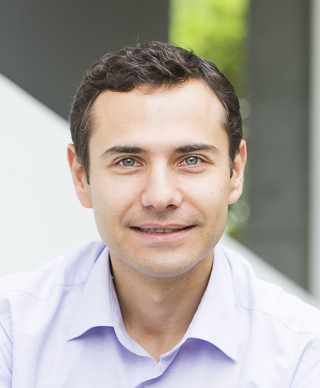
Professor Valentyn Panchenko is a leading academic in Economics at the UNSW Business School, specializing in advanced econometric methodologies and financial modeling. Holding a PhD from the University of Amsterdam and an MPhil from the Tinbergen Institute, his research bridges theoretical econometrics with real-world financial applications, emphasizing big data analysis, network structures, and dependence modeling in economic systems. His expertise spans financial econometrics, time series analysis, non-parametric statistics, and agent-based economic simulations. He focuses on Granger causality, model evaluation, structural economic modeling, and bounded rationality with heterogeneous agents. His work has secured significant grants including ARC Discovery Projects and DECRA fellowships, enabling cutting-edge research on market dynamics and economic interactions. Professor Panchenko's publications appear in top-tier journals like the Journal of Econometric Theory, AEJ: Micro, Journal of Economic Dynamics & Control, and Journal of Banking & Finance. His methodological contributions include novel approaches to copula-based forecasting, nonlinear causality testing, and evolutionary learning models in strategic economic environments. While specific student advising details aren't provided, his research leadership demonstrates sustained impact across econometric theory, financial markets, and experimental economics.
Andrew Perfors is a Professor of Psychology at the University of Melbourne, leading the Computational Cognitive Science Lab and directing the Complex Human Data Hub. His research focuses on quantitative approaches to higher-order cognition, including concepts, language, decision-making, and misinformation dynamics. He holds a PhD from MIT and degrees from Stanford University. Education: PhD in Brain & Cognitive Sciences, Massachusetts Institute of Technology (2008) MA in Linguistics, Stanford University (2000) Bachelor of Science in Symbolic Systems, Stanford University (1999) Research Interests: He investigates computational models of cognition, cultural and social evolution, and the spread of misinformation. Recent work emphasizes the cognitive mechanisms underlying inductive reasoning, sampling assumptions, and trust in information. Key Projects: Understanding Information and Trust: From the Individual to the Population (2018–2025) Bridging the Meaning Gap: Computational Approach to Semantic Variation (2023–2027) Awards: Recipient of multiple best paper awards for contributions to cognitive science and computational linguistics. Labs & Groups: Leads the Complex Human Data Hub and co-leads the Computational Cognitive Science Lab, focusing on interdisciplinary research in human behavior and data science.
Dr. Sam Ferguson is a Senior Lecturer at the School of Computer Science, University of Technology Sydney (UTS), with a multidisciplinary background in music performance, cognitive science, and psycho-acoustics. His research explores the intersection of sound, music, and human experience through creative coding, machine learning, and interactive systems. Key Research Areas: Sound and Music Computing, Human-Computer Interaction, Creative Coding, Cognitive Science, Installation Art, and Acoustics. Current Projects: ARC Linkage project on creative coding and multiplicitous media; industry collaborations on IoT-based audiovisual systems. Recent Publications: Focus on spatial audio complexity, gestural interaction with networked sound, music emotion recognition frameworks, and robotic performance through genre-based cultural platforms. Leadership Roles: Director of Teaching & Learning Engagement; former Deputy Head of School (Teaching and Learning); active in ACM Creativity and Cognition Steering Committee. Teaching: Courses like Digital Media Studio , Prototyping Physical Interaction , and Data Processing using R within UTS's interdisciplinary Software Development Studio.
Professor Ashish Sharma is a Professor of Hydrology and Water Resources in the School of Civil and Environmental Engineering at the University of New South Wales, Sydney, Australia. With a PhD in Civil Engineering from Utah State University and extensive experience in hydrological research, he has established himself as a leading expert in his field. Dr. Sharma's research focuses on hydrological uncertainty, with particular emphasis on the impact of climate change and variability on hydrological practice. His work spans multiple areas including remote sensing applications, stochastic hydrological modeling approaches, development of hydrological models, and addressing key hydrology challenges such as design flood estimation and water resources management. He has made significant contributions to understanding how climate change affects hydrological extremes and water availability. His publications reveal a strong trend toward advanced modeling techniques for climate change impact assessment, with recent work focusing on spectral transformation methods, multivariate bias correction in climate models, flood forecasting improvements, and the relationship between temperature and precipitation extremes. His research increasingly integrates remote sensing data with hydrological modeling to address challenges in data-scarce regions. Professor Sharma has held significant leadership positions including President of the International Commission of Hydrologic Sciences (IAHS) Commission on Statistical Hydrology (STAHY) since 2016, service on the Australian Research Council's College of Experts twice, and participation on the Technical Committee for the Australian Rainfall and Runoff Design Flood Estimation guidelines (ARR2016). In addition to his research leadership, Professor Sharma actively mentors students and collaborates with researchers globally, as evidenced by his extensive publication record across top hydrology and climate journals. His work bridges theoretical hydrology with practical applications for water resources management under changing climate conditions.
Associate Professor Jiakun Liu (FAustMS) is affiliated with the School of Mathematics and Statistics, University of Sydney . He holds a BSc from Zhejiang University (2006) and a PhD from the Australian National University (2010). Following a Simons Postdoctoral Fellowship at Princeton (2010-2013), he served as Lecturer, Senior Lecturer, and Associate Professor at the University of Wollongong (2013-2024), securing an ARC DECRA in 2014 and an ARC Future Fellowship in 2024. Specializes in nonlinear elliptic/parabolic PDEs with applications in geometry and optimal transportation Research focuses on Monge-Ampère/Hessian equations , regularity theory, and geometric flows Contributions to convex geometry , minimal surfaces, and stochastic PDEs . His 2024-2023 publications in Communications on Pure and Applied Mathematics , Advanced Nonlinear Studies , and Archive for Rational Mechanics demonstrate expertise in free boundary regularity , noncompact Minkowski problems , and global geometric analysis . Recognized with ARC Future Fellowship and conferences organized across Australia-China collaborations.
Xiaoping Lu is an Associate Professor at the School of Mathematics and Applied Statistics, University of Wollongong, Australia. She has served as Academic Program Director for the Bachelor of Mathematics (Advanced) program since 2008 and holds an ORCID identifier (0000-0003-1090-8437). Her research focuses on applied mathematics and financial mathematics, particularly in option pricing, stochastic volatility models, and computational finance. Research Themes: Transaction cost modeling, regime-switching financial markets, numerical methods for PDEs, utility-indifference valuation, and stochastic optimization algorithms. Awards: 2024 AustMS-WIMSIG Anne Penfold Street Award 2024 Cheryl E. Praeger Travel Award Leadership: President of the Asia Pacific Consortium of Mathematics for Industry (APCMfI) since 2024; leadership roles in ANZIAM and WIMSIG committees. Teaching: Coordinated courses like MATH142, MATH141, and MATH283; currently available for PhD supervision in topics including financial derivatives and stochastic liquidity risk. Funding: Contributed to grants like 'The AI Tutor' (2024) and industry partnerships for advanced mathematics education.
Associate Professor Sonny Pham leads research in artificial intelligence at Curtin University's School of EECMS. His work balances theoretical foundations with practical applications in computer vision, data mining, and deep learning. As head of the IAMAI research group, he collaborates with industry partners on security systems, healthcare AI, and sustainable technologies. His research explores: Computationally efficient deep learning architectures Compressed sensing for high-dimensional data Robust statistical methods for real-world problems Applications in computer vision and industrial automation Recent publications demonstrate a focus on medical imaging interpretation and efficient neural networks, with applications spanning radiology report generation, semantic segmentation for autonomous systems, and cybersecurity. His team's work consistently bridges theoretical AI advancements with industrial applications. Honors include: Multiple WANMA Awards (2021-2024) for industry-impactful research INCITE Award for social impact technology (2024) IEEE Young Author Best Paper Award (2010) Over $5M in competitive research funding including MRFF and DFAT grants He leads the IAMAI research group with 12+ graduate students and coordinates Curtin's Master of Artificial Intelligence program. Industry collaborations include Alcoa Australia, iCetana, and HyprFire.
Dr. John Shepherd is an Associate Professor in the School of Science at RMIT University, specializing in applied mathematics, numerical and computational mathematics, and their applications in engineering and environmental systems. His research focuses on analyzing nonlinear problems, particularly in bioreactor dynamics, fluid mechanics, and nuclear energy policy. He has contributed to studies on anaerobic digestion models, reactor stability, and the role of nuclear energy in climate change mitigation. Education: Doctorate in Applied Mathematics (not explicitly stated in text, inferred from title). His work bridges theoretical analysis and real-world applications, such as optimizing methane production in waste digesters and evaluating environmental policies for nuclear energy. He actively supervises research projects, including the analysis of anaerobic digester dynamics. Dr. Shepherd’s publications span interdisciplinary topics, emphasizing the intersection of mathematics, engineering, and environmental science. He engages with policy discussions on nuclear energy’s role in decarbonization, advocating for its integration into clean energy strategies. His research highlights the importance of multiscale analysis in understanding complex systems like bioreactors and fluid flows. Collaborations involve industry and international institutions, reflecting his commitment to practical solutions for sustainability challenges.
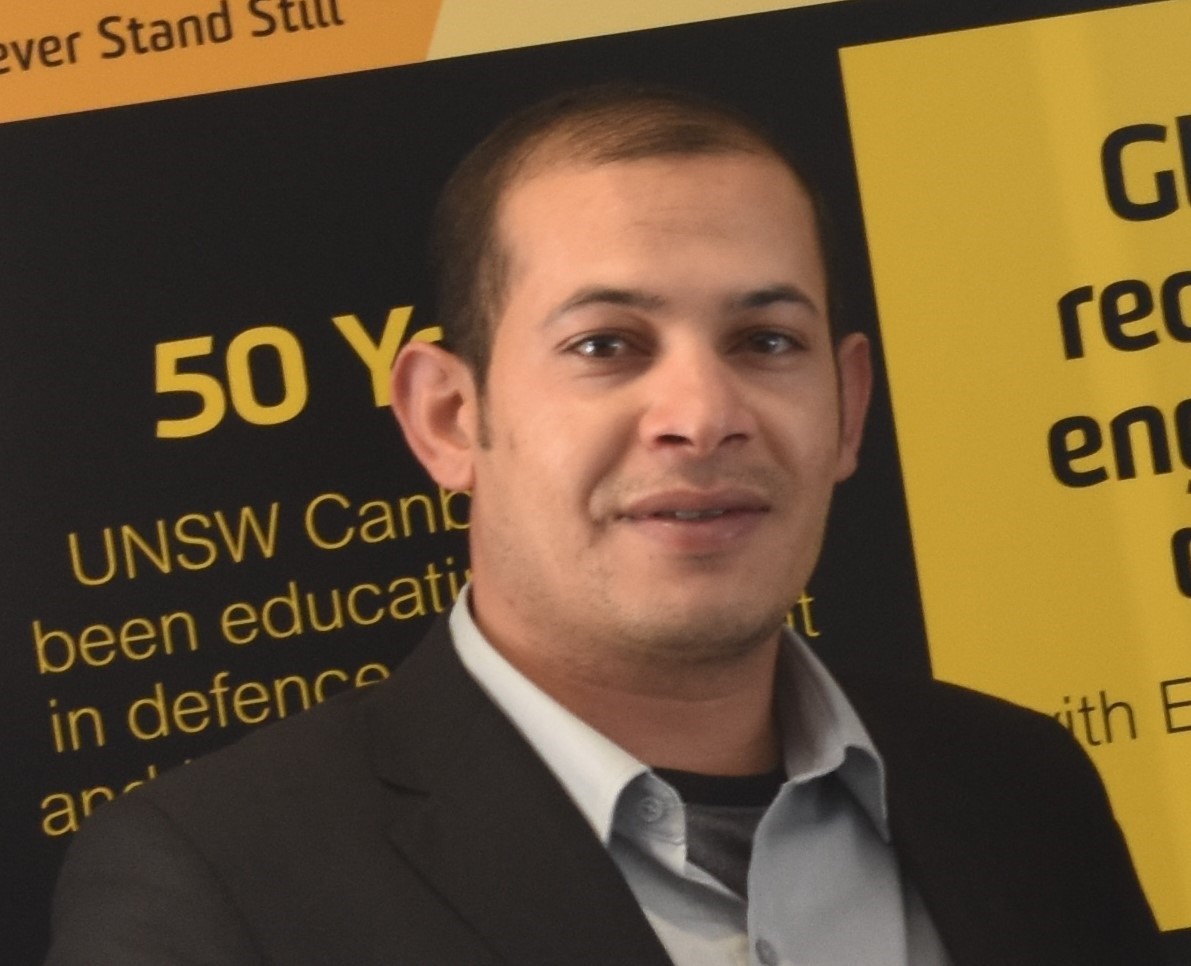
Dr. Nour Moustafa is an Associate Professor and ARC DECRA Fellow at the School of Systems & Computing (SysCom) , University of New South Wales (UNSW) Canberra , Australia. He leads the Intelligent Security Group and focuses on developing AI/ML-driven cybersecurity frameworks for smart systems. Educated at Helwan University (BSc/MSc in Information Systems) and UNSW (PhD in Cybersecurity). Research Interests include intrusion detection, threat intelligence, privacy preservation, digital forensics, and cyber resilience, with methodologies spanning statistical analysis , machine learning , and deep learning applied to IoT , Edge/Cloud , and Industrial IoT environments. His work emphasizes federated learning for privacy preservation, blockchain for secure AI, and digital twins for network self-healing. Notable contributions include the TON-IoT , Bot-IoT , and UNSW-NB15 datasets for cybersecurity evaluation. Scientific Awards : 2020 Spitfire Memorial Defence Fellowship ACM Distinguished Speaker IEEE Senior Member He has served as guest associate editor for IEEE Transactions journals and held leadership roles in conferences like IEEE TrustCom . His research bridges academia and industry, with over 75 publications in top-tier venues.
Michael Bode is a Professor in the School of Mathematical Sciences at Queensland University of Technology (QUT). His research focuses on applying mathematical and computational methods to ecological and conservation challenges, particularly in marine ecosystems and coral reef management. He holds a PhD in Applied Mathematics from the University of Queensland. Research Interests: Professor Bode specializes in larval dispersal modeling, conservation prioritization, and the application of ecosystem models to real-world management scenarios. His work integrates disciplines like applied mathematics, statistics, and ecology to address issues such as coral reef resilience, invasive species control, and climate change impacts. Grants & Projects: Securing Antarctica's Environmental Future (2020) Conserving Coral Reef Fish and Sustaining Fisheries in the Anthropocene (2019) Tackling Pests Using Game Theory (2019) New Methods for Conserving Dispersing Species on Coral Reefs (2017) Awards: 2020 Fenner Medal (Australian Academy of Science) Eureka Prize finalist (2020) Australian Research Council Future Fellowship (2017) Labs & Teams: He leads the QUT Applied Mathematical Ecology Group (QUTAMEG), which develops quantitative tools for ecological and conservation problems. His work is published in journals like Conservation Biology , Nature Sustainability , and PLoS Biology .
Dr. Huadong Mo is a Senior Lecturer at the School of Systems and Computing, University of New South Wales (UNSW) Canberra, Australia. He holds a B.E. degree in automation from the University of Science and Technology of China (2012) and a Ph.D. in systems engineering and engineering management from the City University of Hong Kong (2016). Prior to his current position, he was a research associate at ETH Zurich's Reliability and Risk Engineering Lab (2016-2019) and a Lecturer at UNSW Canberra (2019-2021). Dr. Mo's educational background includes a strong foundation in systems engineering with international experience across China, Switzerland, and Australia. His career trajectory demonstrates a progression from academic research to faculty positions with increasing responsibilities in teaching and research leadership. His research focuses on enhancing the resilience, performance, and security of complex systems using learning-based algorithms, primarily in power and energy systems, cyber-physical systems, and manufacturing systems. He applies data analytics to understand system evolution under uncertainties, with particular emphasis on prognostics and health management, sustainable transportation, robust operation of power systems under extreme events, and reinforcement learning-based asset management. His work bridges theoretical advances with practical applications in critical infrastructure. Analysis of Dr. Mo's recent publications reveals a strong focus on energy systems, particularly in the integration of machine learning with power grid management, battery storage systems, and resilience against cyber threats. His research shows a clear trajectory toward increasingly complex system integration, with growing emphasis on multi-vector energy communities, cross-domain prediction, and uncertainty-aware energy management. The interdisciplinary nature of his work spans electrical engineering, computer science, and operations research. 2024 IEEE SMC Early Career Award 2023 Visiting Research Fellowship (Jean d'Alembert Pour Fellowship) Gold Medal in 2024 China International College Student Innovation Competition (as supervisor) Arc PGC Supervisor Award (2021) IEEE SMC Outstanding Chapter Award (2021) Alumni Achievement Award from City University of Hong Kong (2019) Dr. Mo actively supervises numerous HDR students working on cutting-edge research topics including battery health monitoring, quantum control, reinforcement learning for power systems, and explainable AI for energy management. He leads multiple significant research grants totaling over 3 million AUD, including projects funded by ARC, Energy Innovation Fund, and international collaborations with institutions like ETH Zurich, Cambridge, and Tsinghua University. His research group maintains strong international connections, facilitating student exchanges and collaborative research. As Postgraduate Course Coordinator of Systems Engineering and Chair of IEEE SMC ACT Chapter, Dr. Mo plays a significant role in academic leadership and professional community building. His research team collaborates with industry partners on practical implementations of their theoretical work, particularly in the energy sector.
Professor Matthew Simpson is a leading figure in applied mathematics at the School of Mathematical Sciences, Faculty of Science, Queensland University of Technology (QUT). He holds the position of Professor of Applied Mathematics and is an Australian Research Council (ARC) Future Fellow, reflecting his sustained research excellence. His work bridges mathematical theory and biological applications, particularly in cell migration, tissue invasion, and multiscale modeling. BE (Environmental) Honours 1, University of Newcastle (1995–1998) PhD (with Distinction), Environmental Engineering, University of Western Australia (2000–2003) Research Fellow, Department of Mathematics and Statistics, University of Melbourne (2003–2006) ARC Postdoctoral Fellow, University of Melbourne (2006–2009) Lecturer (2010–2011) and Senior Lecturer (2011–2013), QUT Associate Professor (2013–2014), QUT Professor and ARC Future Fellow (2014–present), QUT Matthew Simpson’s research focuses on mathematical and computational modeling of biological systems , particularly collective cell motion, diffusion processes, and reaction-diffusion dynamics. His interests span multiscale modeling , random walk processes , cell biology , and numerical and computational mathematics . He develops and analyzes models to understand phenomena such as wound healing, cancer progression, and tissue engineering. His recent publications (2023–2025) demonstrate a strong trend toward integrating data-driven modeling , likelihood-based inference , and equation learning with traditional mechanistic models. These works emphasize parameter identifiability , uncertainty quantification , and prediction robustness in biological contexts. Themes include sharp-fronted wave propagation, mechanical cell interactions, tumor spheroid formation, and generalized diffusivity in food drying, showcasing the breadth and depth of his modeling expertise. Among his key accolades are: J.H. Michell Medal (2012) – Awarded by ANZIAM for distinguished research by an early-career applied mathematician in Australia and New Zealand. ARC Future Fellowship (2013–2017) – For the project 'New data-driven mathematical models of collective cell motion' (FT130100148). Professor Simpson has also played significant editorial and leadership roles, including: Executive Associate Editor, Journal of Engineering Mathematics Academic Editor, PLoS ONE Editorial Board Member, ANZIAM Journal Co-chair of the 2015 ANZIAM meeting He has supervised PhD students on topics such as moving boundary problems, first-passage times, stochastic simulations, and curvature-dependent growth in biological systems. His research projects have been funded by competitive Australian grants (ARC DP and FT schemes), including studies on 3D cell migration, ghrelin’s role in cell invasion, and epithelial-to-mesenchymal transition in cancer and wound healing. He is actively involved in developing computational tools for biological modeling and promoting best practices in scientific publishing.
Professor Alicia Rambaldi is Director of Research at the School of Economics, Faculty of Business, Economics and Law at the University of Queensland. She is also an Affiliate of the Centre for Efficiency and Productivity Analysis. Her academic career spans decades of research in econometric methodologies with applications to real-world economic problems. Professor Rambaldi's research interests focus on applied econometrics, time series econometrics, state-space models, and spatial time series models. She has made significant contributions to economic measurement, particularly in developing methodologies for computation of price indices for land and property, estimation with linked administrative data, and smoothing methodologies combining spatial and temporal information. Her work bridges theoretical econometrics with practical applications in housing markets, climate adaptation, and international economic comparisons. Her recent publications demonstrate a consistent focus on housing economics, with numerous papers on hedonic pricing models, property valuation, and the impact of environmental factors on real estate markets. She has also maintained a strong research program in international comparisons, purchasing power parity, and productivity analysis, often collaborating with leading researchers in these fields. Professor Rambaldi is actively involved in research supervision, currently advising on topics including language barriers faced by immigrants, distributive politics, and copula models. Her completed supervision includes significant work on purchasing power parities, development indexes, trade studies, and spatial analysis of tourism employment. Her current research projects include spatial time series models with applications to housing and land prices, transport demand modeling, and international comparisons. She has secured substantial funding from diverse sources including the Australian Research Council, Natural Hazards Research Australia, and government departments, demonstrating the applied relevance of her work. Professor Rambaldi leads an active research group within the Centre for Efficiency and Productivity Analysis, focusing on developing and applying advanced econometric techniques to address pressing economic measurement challenges. Her work often involves interdisciplinary collaboration with researchers in environmental science, urban planning, and transportation studies.
David Lo is the OUB Chair Professor of Computer Science at Singapore Management University's School of Computing and Information Systems, where he directs the Information Systems and Technology Cluster and the Center for Research on Intelligent Software Engineering. An ACM Fellow, IEEE Fellow, and ASE Fellow, his research focuses on AI for Software Engineering (AI4SE), leveraging machine learning, data mining, and NLP to enhance software analytics and automation. Research Highlights: AI4SE, code LLMs, human-AI synergy in software engineering, software reliability, and empirical studies of practitioner pain points Awards: IEEE TCSE Distinguished Service Award, university-wide Teaching Excellence Award, Outstanding Graduate Supervisor Award, 2 Test-of-Time Awards, and 11 ACM SIGSOFT/IEEE TCSE Distinguished Paper Awards Leadership: General Chair of ASE'16 and MSR'22, PC Co-Chair for ASE'20, FSE'24, and ICSE'25, ACM SIGSOFT Executive Committee member His work has received over 20 awards, 37,000 citations, and an H-index of 100. As an educator, he has mentored trainees who became faculty and R&D experts globally.
Professor Yue Rong is a Full Professor at Curtin University's Department of Electrical and Computer Engineering, within the School of Electrical Engineering, Computing and Mathematical Sciences. He holds editorial roles at IEEE Transactions on Signal Processing and IEEE Wireless Communications Letters. His research focuses on signal processing for communications, underwater acoustic systems, wireless networks, and healthcare IoT. Rong has authored over 140 journal and conference papers and received multiple awards, including the 2010 Young Researcher of the Year Award. Education: B.E. (Electrical Engineering), Shanghai Jiao Tong University (1999) M.Sc. (Electrical Engineering), University of Duisburg-Essen (2002) Ph.D. (Electrical Engineering), Darmstadt University of Technology (2005) Research Interests: Rong's work spans cooperative MIMO communications, underwater acoustic systems, OFDM modulation, radar-based healthcare monitoring, and secure wireless protocols. His innovations include adaptive modulation schemes for underwater environments and radar-based vital signs detection. Recent trends in his publications emphasize AI-driven signal processing for healthcare IoT and underwater optical communication systems. Awards: Best Paper Awards (WCSP 2011, APCOMM 2010) Chinese Government Award (2004) DAAD/ABB Fellowship (2001-2002) Grants & Labs: His research is supported by grants focusing on UAV-enabled data collection and underwater network optimization. He leads projects in the Distributed Data Fusion and Emerging Technologies (DDFE) lab, advancing radar-cardiography and wearable health monitoring systems.