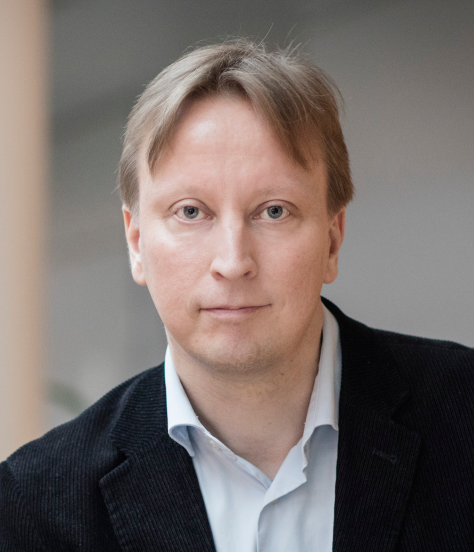
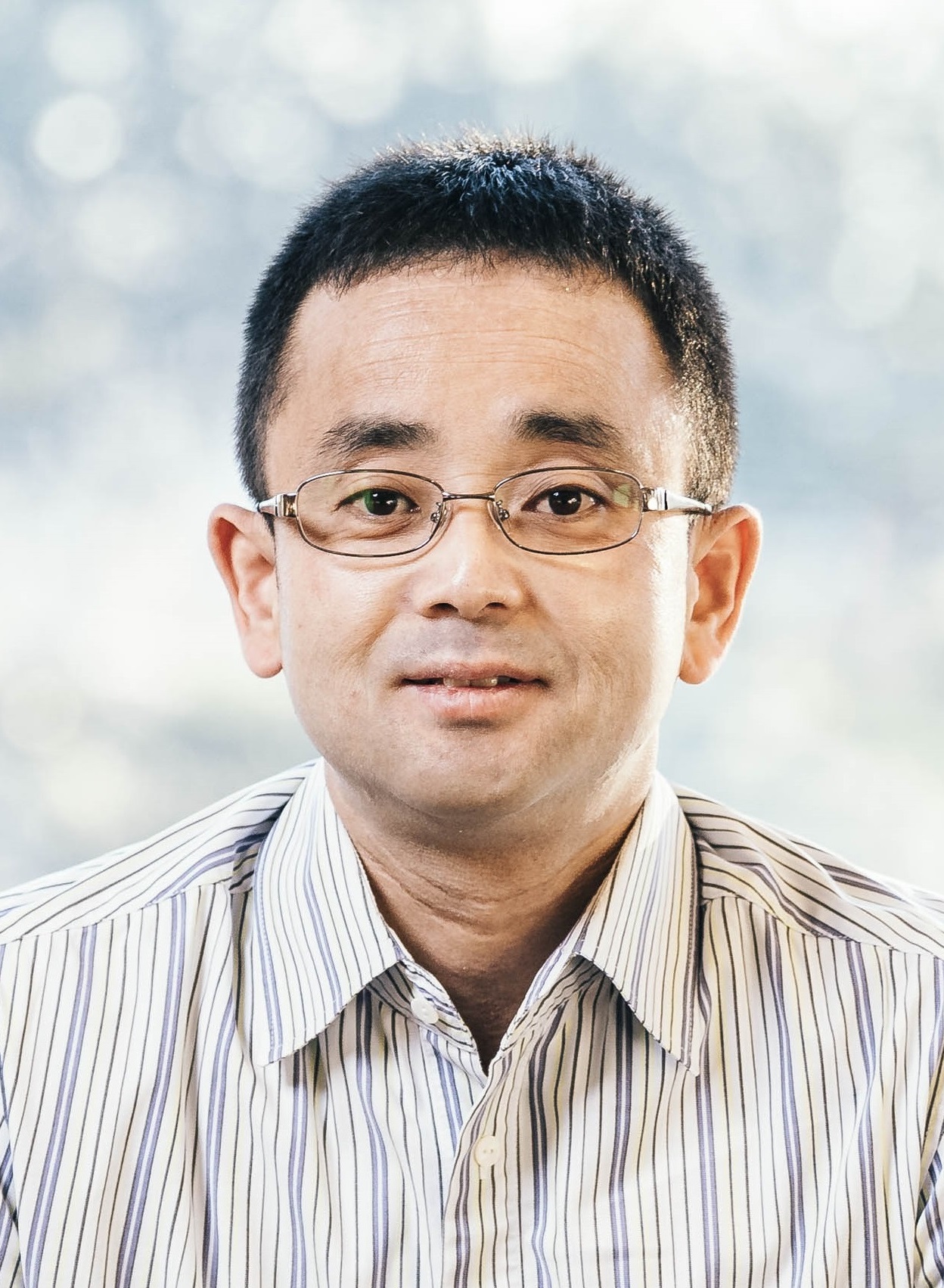
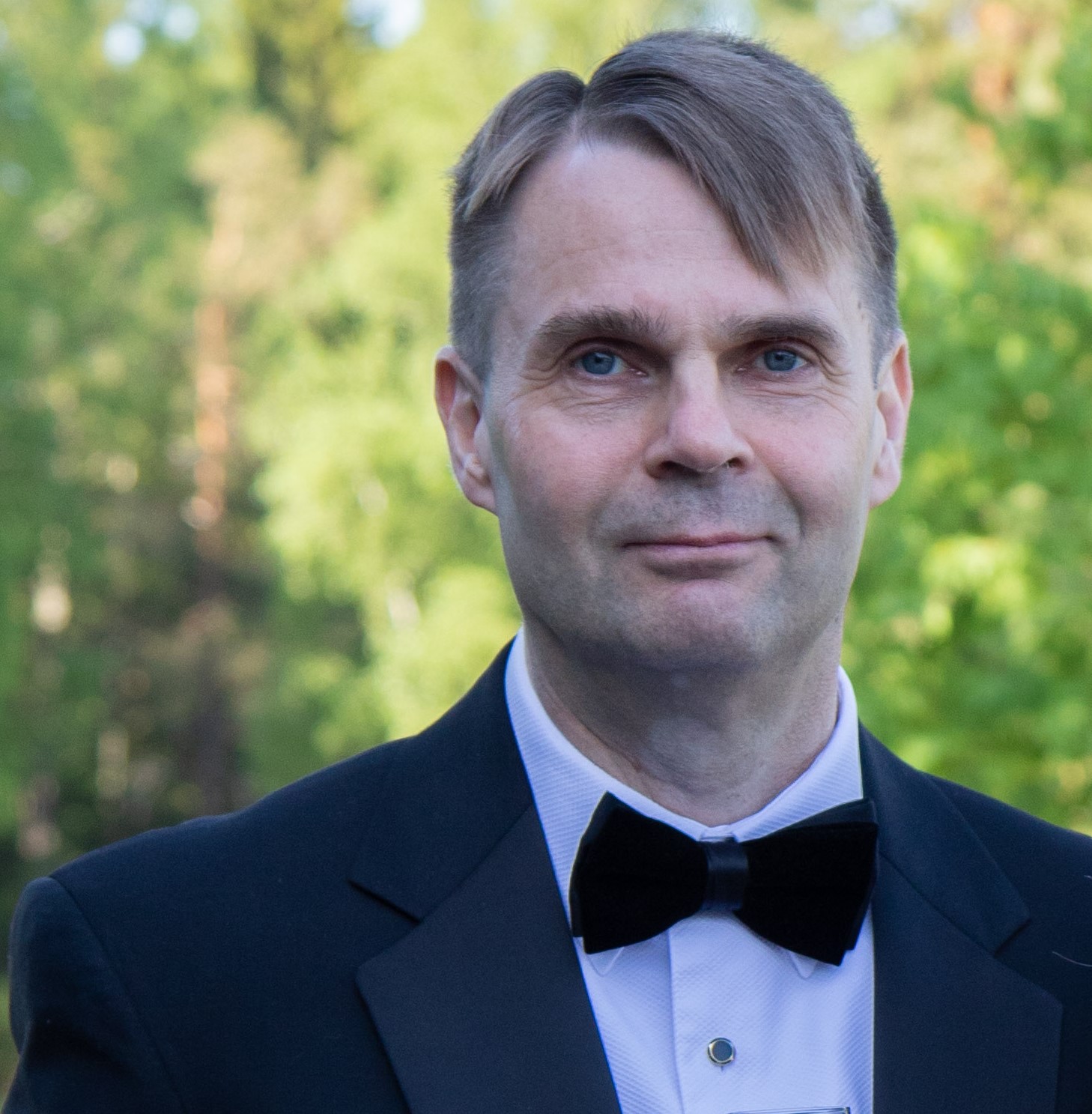
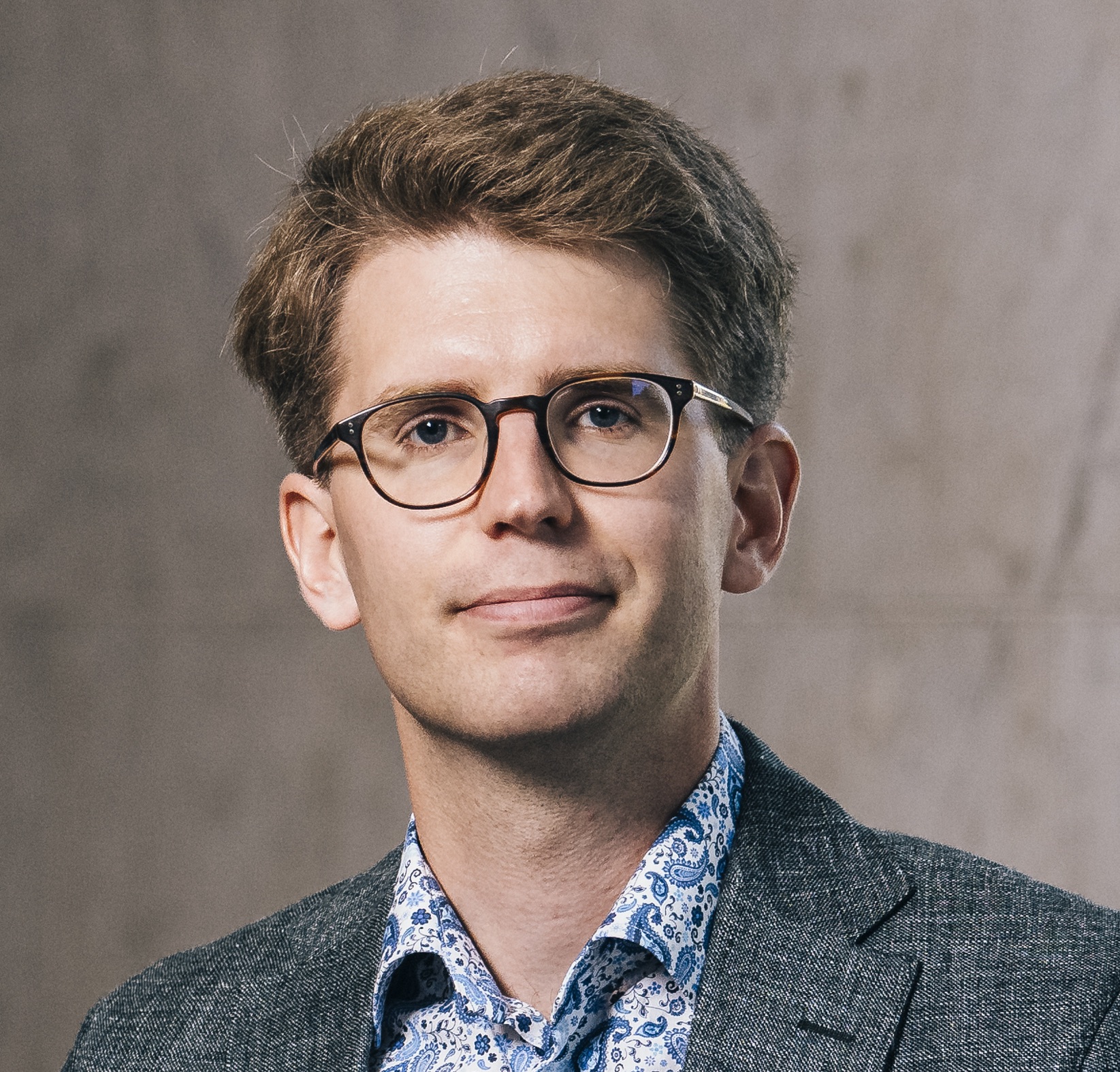
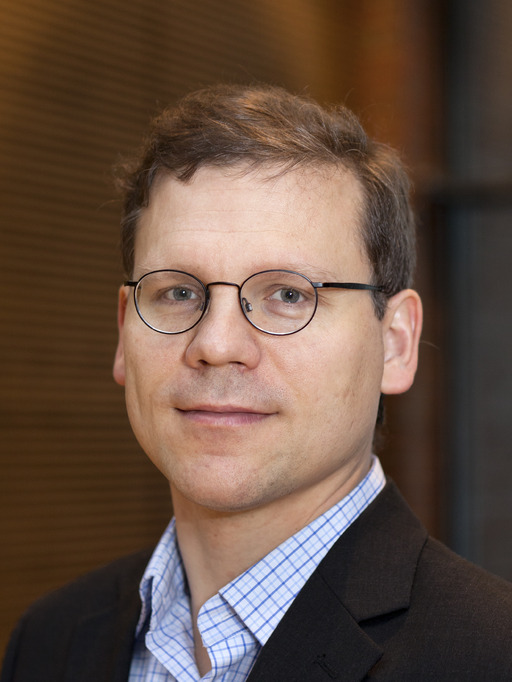
Professor Simo Särkkä holds a position in Sensor Informatics and Medical Technology at the Department of Electrical Engineering and Automation (EEA), Aalto University. His research focuses on multi-sensor data processing, Bayesian filtering, machine learning, and their applications in medical technology, brain imaging, and inverse problems. He leads research groups including the Helsinki Institute for Information Technology (HIIT) and Sensor Informatics and Medical Technology. His work bridges theoretical advancements in probabilistic methods with practical implementations in healthcare and engineering. Key research interests include Gaussian processes, stochastic differential equations, quantum machine learning, and signal processing. He has contributed to advancements in algorithms for nonlinear state-space models, parallel computing techniques, and medical imaging technologies such as scatter correction in CT scans. His methodologies are applied across domains like autonomous systems, robotics, and bioengineering. Notable publications span topics like quantum-assisted Gaussian regression, physics-informed machine learning for industrial processes, and parallel-in-time numerical methods. His work emphasizes computational efficiency and robustness in high-dimensional and real-time systems.
Esa Ollila serves as Associate Professor in the Department of Signal Processing and Acoustics at Aalto University, Finland, and holds an adjunct professorship in Statistics at the University of Oulu. His academic appointments include Academy of Finland Research Fellow (2010-2015) and prior senior research/lecturing roles at both institutions. His educational background features: M.Sc. in Mathematics, University of Oulu (1998) Ph.D. in Statistics (with honors), University of Jyväskylä (2002) D.Sc.(Tech) in Signal Processing (with honors), Aalto University (2010) Professor Ollila's research centers on statistical signal processing and robust statistical methodologies , with significant contributions to array processing, high-dimensional data analysis, and covariance matrix estimation. His work bridges theoretical statistics with practical applications in radar systems, wireless communications, and big data analytics, emphasizing robustness against outliers and computational efficiency in modern data-intensive environments. Current focus areas include compressed sensing, sparse approximation, and blind source separation techniques. Analysis of his 15 most recent publications (2024-2025) reveals three dominant trends: (1) robust covariance learning for massive random access systems, (2) integrated sensing and communications (ISAC) for 6G networks using advanced beamforming, and (3) geometric approaches to elliptical distributions in statistical inference. His work increasingly incorporates deep learning (GANs, graph neural networks) while maintaining strong foundations in classical signal processing theory. Key recognitions include: Academy of Finland Postdoctoral Fellowship (2004-2007) Academy of Finland Research Fellowship (2010-2015) His research has been supported through prestigious Academy of Finland grants totaling over a decade of continuous funding. Professor Ollila currently leads an active research group at Aalto University, supervising doctoral candidates and collaborating internationally with institutions including Princeton University (where he served as Visiting Post-doctoral Research Associate during 2010-2011). He maintains strong ties with the University of Oulu through his adjunct professorship and has contributed to EURASIP's Special Area Team on Theoretical and Methodological Trends in Signal Processing. The Esa Ollila Research Group focuses on cutting-edge challenges in statistical signal processing, with current projects spanning robust DOA estimation under non-Gaussian noise, covariance matrix learning for massive MIMO systems, and machine learning-enhanced radar-communication integration. The group actively develops open-source tools like the fitHeavyTail R package for heavy-tailed distribution modeling and maintains collaborations with industry partners in wireless communications.
Katsuyuki Haneda serves as Associate Professor in Aalto University's Department of Electronics and Nanoengineering within the School of Electrical Engineering. Holding a Doctor of Engineering from Tokyo Institute of Technology (2007), his research pioneers high-frequency radio systems including millimeter-wave and Sub-THz communications, with critical applications in medical devices, post-disaster scenarios, and Internet-of-Things networks. Education: Doctor of Engineering, Tokyo Institute of Technology, 2007 Research Focus: Dr. Haneda's work spans Physical layer wireless communications , Antennas and propagation , and RF instrumentation , with groundbreaking contributions to wireless medical applications (notably capsule endoscopy) and in-band full-duplex radio technologies . His group develops advanced channel models for 6G while addressing real-world challenges in post-disaster communications through experimental validation. Publication Trends: Recent 2025 works reveal concentrated advancements in Sub-THz/D-Band communications, featuring innovative antenna designs for 28 GHz systems, channel modeling techniques for 3GPP-like standards, and medical wireless solutions. Publications demonstrate strong experimental emphasis with field measurements across urban, indoor, and medical environments. Scientific Recognition: ISMICT 2019 Best Paper Award (medical wireless) Dual 2013 Best Paper Awards (IEEE VTC Spring & EuCAP) IEICE Best Survey Paper (2015) IEEE AP-S Young Engineer Award (2007) Tokyo Tech Honorary Student Award (2002) Leadership & Collaboration: As Associate Editor for IEEE Transactions on Antennas and Propagation (2012-2016) and Wireless Communications (2013-present), Dr. Haneda shapes field standards. He co-chairs the radio channel working group in COST Action IRACON (CA15104), driving European 5G+/6G research collaboration while supervising graduate researchers in experimental high-frequency communications. Research Infrastructure: The Katsuyuki Haneda Group maintains specialized laboratories for millimeter-wave/Sub-THz channel sounding, antenna characterization, and medical wireless prototyping, supporting hardware-in-the-loop validation for next-generation communication systems.
Sergiy Vorobyov is a Professor at the Department of Signal Processing and Acoustics , Aalto University , Finland. He has held academic and research positions at multiple institutions, including the University of Alberta (Canada), Kharkiv National University of Radio Electronics (Ukraine), RIKEN (Japan), McMaster University (Canada), Duisburg-Essen University and Darmstadt University of Technology (Germany), and Heriot-Watt University (UK). His expertise spans optimization, signal processing, and multi-antenna systems. Dr. Vorobyov holds a Doctoral degree in Natural Sciences from the National Technical University Kharkiv Polytechnical Institute, awarded on January 15, 2002. His research interests focus on optimization and multi-linear algebra applied to signal processing challenges, including statistical and array signal processing, sparse signal processing, estimation and detection theory, and sampling theory. He explores multi-antenna, large-scale, cooperative, and cognitive systems, contributing to advancements in wireless communications and radar engineering. His work aligns with UN Sustainable Development Goals, emphasizing education and innovation. In recent years (2025), his publications emphasize cutting-edge advancements in wireless communications and signal processing. Topics include millimeter-wave MIMO channel estimation, optimization algorithms with momentum-based techniques, vehicular network communications, and robust covariance matrix estimation in challenging noise environments. These contributions highlight his expertise in developing efficient and adaptive methods for modern communication systems. He has received prestigious awards, including: 2004 IEEE Signal Processing Society Best Paper Award 2007 Alberta Ingenuity New Faculty Award 2011 Carl Zeiss Award for teaching and innovative methods 2012 NSERC Discovery Accelerator Award 1st Price Best Paper Award (2015) 1st Price Best Student Paper Award at CAMSAP 2015 As a researcher, Vorobyov has supervised seven theses and led multiple funded projects, such as: AI Based RAN (2023–2025): Scalable AI solutions for 5G/6G networks. MASSIVE AND SPARSE ANTENNA ARRAY PROCESSING FOR MILLIMETERWAVE COMMUNICATIONS (2019–2021): Advanced antenna design and processing techniques. M-CUBE SPA (2017–2021): EU-funded sparse antenna array research. Transmit beamspace for active compressive sensing and communication with multiple waveforms (2016–2020): Radar and MIMO system optimization. He leads the Sergiy Vorobyov Group , focusing on real-time signal processing algorithms and their applications in next-generation wireless systems. His research addresses practical challenges such as efficient channel estimation, robust detection in massive access scenarios, and improving network performance in urban environments.
Visa Koivunen is a Distinguished Professor of Signal Processing at Aalto University (since 1999), with positions as Academy Professor (2010) and Aalto Distinguished Professor (2020). He holds an honorary D.Sc. (Tech.) from the University of Oulu and has held visiting roles at Princeton University, the University of Pennsylvania, and EPFL. His research focuses on statistical signal processing, wireless communications, radar systems, and integrated sensing and communications (ISAC). He has published over 490 papers, including award-winning works, and advised 31 doctoral theses. Key roles include leadership in conferences (e.g., Asilomar 2018 General Chair) and technical committees (IEEE SPS). Recognitions include the EURASIP Technical Achievement Award (2015), IEEE Signal Processing Society Best Paper Awards (2007, 2017), and EURASIP Fellow status (2020). He co-chairs NATO panels on cognitive radars and ISAC. His research interests span signal processing fundamentals and applications in radar, communications, and machine learning. Recent work emphasizes ISAC, reinforcement learning for resource allocation, and causal inference in federated systems. He has pioneered waveform design techniques using GANs and Bayesian methods for spatial signal analysis. Educations: D.Sc. (Tech.) with honors from the University of Oulu (1994), Primus Doctor Award (1989-1994). Awards: IEEE Fellow, EURASIP Fellow, Member of Academia Europaea. Service: Associate Editor for IEEE Transactions, Chair of IEEE SPAWC and Asilomar conferences. His work bridges theory and practice, addressing challenges in radar-communication coexistence, energy-efficient edge computing, and secure distributed inference. He has delivered over 50 invited talks globally and actively contributes to NATO initiatives on cognitive radar systems.
Tuomas Virtanen is a Professor at Tampere University's Signal Processing Research Centre within the Faculty of Information Technology and Communication Sciences. His primary affiliation is the Computing Sciences department, where he leads the Audio Research Group . His work focuses on computational analysis of audio signals, machine listening, and acoustic scene understanding. Research Interests: Audio signal processing, content analysis of audio, sound source separation, acoustic scene classification, speech processing (including noise-robust ASR and speaker recognition), and machine learning techniques such as deep neural networks and statistical modeling. His group develops methods for sound event detection, localization, and tracking in complex acoustic environments. Key Contributions: Leading the DCASE (Detection and Classification of Acoustic Scenes and Events) challenges, developing open-source datasets like TUT Acoustic Scenes and STARSS, and advancing techniques in audio captioning, privacy-preserving audio processing, and multimodal learning. Notable Projects: Creation of the Audio Research Group , development of the Clotho audio captioning dataset, and pioneering work in zero-shot audio classification using semantic embeddings. His research bridges signal processing fundamentals with modern machine learning paradigms.
Nils Daniel Meyer-Kahlen is a Postdoctoral Researcher at Aalto University's Department of Information and Communications Engineering in Espoo, Finland. Affiliated with the Virtual Acoustics research group and Aalto Acoustics Lab, his work bridges theoretical audio engineering with practical virtual reality applications through cutting-edge spatial audio research. His research focuses on room acoustics modeling, binaural rendering, and perceptual evaluation in virtual environments. Key interests include blind estimation of acoustic parameters, machine learning applications for audio synthesis, and the development of transfer-plausible audio for augmented reality. He investigates how humans perceive spatial audio cues and develops methods to improve authenticity in mixed reality through psychoacoustic validation. Recent publications reveal strong trends in deep learning for room impulse response generation, novel reverberation techniques like Dark Velvet Noise, and perceptual evaluation frameworks. His work consistently addresses virtual reality audio challenges including motion-to-sound latency, room transition rendering, and the impact of early reflections on spatial perception. As part of Aalto's Acoustics Lab team, Dr. Meyer-Kahlen contributes to Finland's leading spatial audio research hub known for chamber music hall studies, sauna acoustics exploration, and open dataset creation like the multi-room transition energy decay collection. The lab maintains strong industry collaborations while advancing fundamental audio science.
Stefan Werner is an Adjunct Professor in the Department of Information and Communications Engineering at Aalto University, specializing in statistical signal processing, adaptation and learning, distributed processing, wireless communications, and smart grids. He is an active member of the Risto Wichman Research Group. Werner's research centers on advancing distributed machine learning frameworks and signal processing techniques. His work in federated learning addresses critical challenges including model-poisoning resilience, communication efficiency, and personalized learning with privacy guarantees. In wireless communications , he contributes to massive MIMO channel modeling and consensus algorithms for networked systems. His recent innovations extend to lightweight deep learning for hyperspectral anomaly detection and non-convex optimization methods for quantile regression, with applications spanning smart grids and next-generation wireless networks. Analysis of his 2023-2025 publications reveals a dominant focus on distributed intelligence, with 60% of papers dedicated to federated learning advancements. Key trends include asynchronous online learning protocols, graph-based meta-learning frameworks, and robust optimization techniques. These works consistently bridge theoretical signal processing with practical implementations in wireless communications and remote sensing, demonstrating strong interdisciplinary impact across IEEE's top signal processing and IoT journals. Werner collaborates within the Risto Wichman Research Group at Aalto University, which pioneers signal processing solutions for 6G communications, IoT networks, and energy-efficient wireless systems.
Filip Elvander is an Assistant Professor in the Department of Information and Communications Engineering at Aalto University, Finland. Previously, he served as a postdoctoral research fellow at KU Leuven (2020-2022), supported by the Research Foundation - Flanders (FWO). PhD in Mathematical Statistics (2020) and MSc in Industrial Engineering and Management (2015) from Lund University Assistant Professor at Aalto University since 2022 Leader of the Structured and Stochastic Modeling Group (SSMG) His research focuses on statistical signal processing, particularly inverse problems and optimal transport theory. Key application areas include acoustic localization, spectral estimation, audio processing, and spectroscopy. Current research directions involve: Optimal transport for geometric signal space modeling Spatio-temporal signal modeling in remote sensing and audio Misspecified modeling impacts and mitigation Optimal sampling schemes for efficient data collection Recent publications demonstrate trends in optimal transport applications for multi-pitch estimation, room acoustics, sensor networks, and audio restoration. His group includes 5 PhD students working on these topics. Awards include FWO postdoctoral fellowship (2021-2022). Collaborations span Lund University, KU Leuven, and Aalto University research teams.
Professor Sergiy A. Vorobyov serves as a faculty member in the Department of Information and Communications Engineering at Aalto University's School of Electrical Engineering, Finland. His active research and teaching profile includes delivering tutorials at major conferences like EUSIPCO'2025 and supervising doctoral candidates through 2025. His research spans critical signal processing domains with emphasis on: Optimization and Linear Algebra Methods in Signal Processing, Communications, and Machine Learning Statistical and Array Signal Processing Sparse Signal Processing techniques Estimation and Detection Theory frameworks Sampling Theory advancements Large-Scale, Cooperative and Cognitive Systems design Recent work demonstrates strong integration of machine learning with array processing, exemplified by his top 3% ICASSP 2023 paper on tensor decomposition for 2D direction-of-arrival estimation. Major recognitions include: IEEE Fellow elevation (2018) for contributions to robust signal processing optimization NSERC Discovery Accelerator Award (2012) Carl Zeiss Award (2011) Alberta Ingenuity New Faculty Award (2007) IEEE Signal Processing Society Best Paper Award (2004) He has successfully mentored over 10 graduate students to completion, including recent PhD recipients working on massive MIMO systems and big data optimization. His research group maintains active projects in optimization frameworks for communications and machine learning applications. The Vorobyov research group operates within Aalto's KIDE facility, focusing on next-generation signal processing solutions for radar, communications, and large-scale data systems.
Alessandro Foi is a Professor of Signal Processing at Tampere University, Finland, and Director of the Tampere University Imaging Research Platform. He also serves as CTO of Noiseless Imaging, a company specializing in noise-removal and imaging enhancement technologies. His academic roles include Editor-in-Chief of the IEEE Transactions on Image Processing (2021–2023) and editorial roles with other major journals. He is an IEEE Fellow for contributions to image restoration and noise modeling. Research Interests: Mathematical and statistical methods for signal processing, functional/harmonic analysis, computational modeling of the human visual system. Key focuses include adaptive algorithms for image restoration/enhancement, noise modeling for imaging devices, and optimal statistical transformations for data analysis. Recent publications emphasize advancements in denoising techniques for biomedical, geophysical, and engineering applications. His work combines traditional signal processing with modern machine learning approaches like neural networks to address challenges in medical imaging, radar systems, and 3D point cloud processing. Professional Activities: Member of IEEE TAB/PSPB Products & Services Committee Member of IEEE SPS Technical Directions Board Labs/Teams: Leads the Tampere University Imaging Research Platform and directs technical strategy at Noiseless Imaging.
Robin Rajamäki is a Visiting Professor in the Department of Information and Communications Engineering at Aalto University, Finland. He is affiliated with the Visa Koivunen Group and holds an ORCID ID (0000-0002-5028-6022). His academic credentials include a Doctor of Technology (Tekn. toht.) in Electrical Engineering (2021), a Master's in Engineering and Technology (2016), and a Bachelor's in Telecommunications Engineering (2014), all from Aalto University. Research interests focus on Sparse Arrays , Beamforming , ISAC (Integrated Sensing and Communications) , and Array Configuration models. His work explores optimal array geometries, waveform design, and identifiability guarantees in active sensing systems, with applications to MIMO radar, millimeter-wave communications, and future 6G networks. Key methodologies include statistical signal processing, machine learning, and computational optimization. Recent publications highlight advancements in generative deep synthesis , array geometry optimization , and sensor array applications in ISAC. His research spans 2015–2025, including 5 projects (e.g., FUN-ISAC, INSTINCT) and collaborations with institutions like the University of California, San Diego (2019–2020), Technion (2017–2018), and University of Pennsylvania (2016). Scientific Awards: Best Student Paper Award (3rd place, 2019) Projects include fundamental limits in ISAC, joint sensing-communications systems for immersive connectivity, and sparse antenna array processing for 6G and millimeter-wave applications. His work has been cited in Scopus and supported by the Academy of Finland and EU Horizon grants.