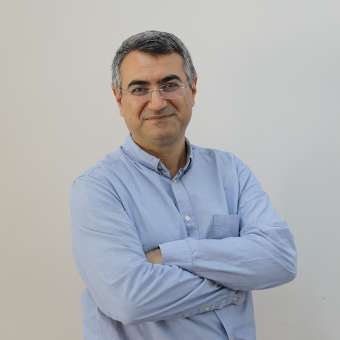
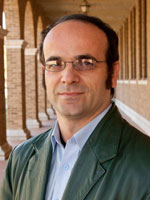
Dr. İsmail Arı is an Assistant Professor in the Computer Science department at Özyeğin University . He holds a PhD from the University of California, Santa Cruz (2004), MS from University of Maryland (2000), and BS in Electrical & Electronics Engineering from Boğaziçi University (1998).
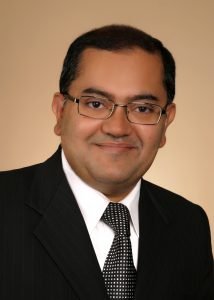
Dr Mahir Arzoky is a Lecturer in the Department of Computer Science at Brunel University London's College of Engineering, Design and Physical Sciences. He holds a PhD from Brunel University London (2015) and has extensive research experience in artificial intelligence and software engineering. His research focuses on: Artificial Intelligence and Intelligent Data Analysis Search Based Software Engineering (SBSE) Clustering algorithms and heuristic search methods Software refactoring and quality assessment Data mining applications in healthcare and education Analysis of his 15 most recent publications (2018-2022) reveals strong interdisciplinary work bridging computer science with healthcare (diabetes patient modeling, medical imaging) and education (chatbot design, algorithm visualization). His technical focus centers on clustering optimization, refactoring impact analysis, and explainable AI, with frequent use of empirical validation methods. Key collaborations include researchers like Stephen Swift, Steve Counsell, and Giuseppe Destefanis. Dr Arzoky has secured significant research funding through EPSRC grants including: AQUATIC project (EP/M024083/1): Assessing Test Suite Quality in Industrial Code FIAR-NET (EP/N011627/1): Fault Analyses in Industry and Academic Research Network His professional network includes active collaborations across computer science, healthcare informatics, and educational technology domains, with recent work extending into transformer models for healthcare SQL conversion and graph partitioning for software modularization.
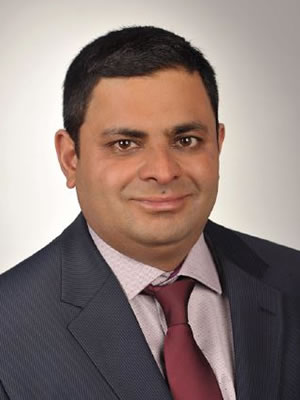
Mohit Kumar is an außerplanmäßiger Professor of Computational Intelligence in Automation at the Institute of Automation Technology, University of Rostock. He concurrently serves as a Key Researcher in Data Science at the Software Competence Center Hagenberg, Austria, and as a Visiting Professor at the Georg-August-Universität Göttingen. His research centers on Trustworthy Artificial Intelligence frameworks, specifically developing Explainable AI, Privacy-Preserving AI, and Transferrable AI methodologies. He pioneers fuzzy logic applications in machine intelligence and creates AI-driven analytical systems for complex data, signals, and image processing. This work is rigorously grounded in probability theory, statistical modeling, estimation theory, and robust adaptive filtering techniques. At the Software Competence Center Hagenberg, he leads digitalization solution development through theoretically sound approaches and extensive real-world experimentation to solve critical industrial and societal challenges.
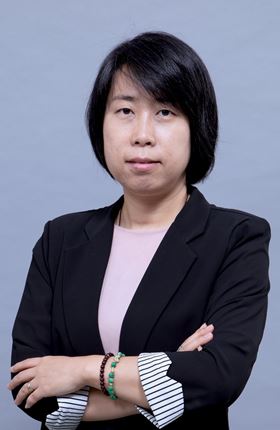
Prof. Yan Tina Luximon is a Full Professor and Associate Dean (Research) at the School of Design, The Hong Kong Polytechnic University. She chairs the School Research Committee, leads the Asian Ergonomics Design Lab, and serves as Deputy Discipline Leader for BA (Product Design). Her work bridges ergonomics, AI design tools, and 3D human modeling in cross-cultural contexts. Education: PhD in Ergonomics from The Hong Kong University of Science and Technology Research interests span Ergonomics in product design 3D digital human modeling for AI applications Anthropometry and cultural design differences Statistical modeling for head/face product development Human-computer interaction and AI visualization Recent publications focus on AI-enhanced 3D head modeling, ergonomic healthtech products, and cross-cultural design psychology, with applications in robotics, mobile technology, and medical devices. Scientific awards include: Gold Medal with jury congratulations at Geneva Inventions 2024 Silver Award at IDEA 2023 for adaptive eyewear design Best Innovation Award at ACED Japan 2017 She supervises postgraduate research and leads projects funded by the General Research Fund (RGC GRF) and Laboratory for AI in Design, including AI Powered Ergonomic Product Design (2025) and 4D Head Movement Prediction (2024).
Filippo Ubertini is Professor of Civil and Environmental Engineering at the University of Perugia, Italy, where he coordinates the International Doctoral Programme in Civil & Environmental Engineering and represents the University inside the FABRE national bridge-research consortium. He leads the Structural Health Monitoring Laboratory ( SHM-Lab ) and is the primary contact for assignments linked to smart-infrastructure research. Education: While explicit degrees are not listed in the supplied text, his role as programme coordinator and full professor implies completion of a PhD and habilitation in Civil Engineering. Research focus: Ubertini’s work sits at the intersection of smart materials and data-driven infrastructure management . He develops self-sensing cementitious composites doped with carbon micro-fibers or graphene nano-platelets that can measure strain, cracking and moisture in real time, turning whole bridges and buildings into distributed sensors. Complementary research threads include low-cost acquisition electronics, UAV & InSAR remote sensing, Bayesian & adversarial machine-learning algorithms for damage detection, digital twins and life-cycle cost analysis of bridge networks. Publication trends (2024-2025): Roughly 30 peer-reviewed items per year concentrate on (i) AI-enhanced operational modal analysis and transfer-learning damage classification across bridge populations, (ii) experimental characterisation of 3D-printed and cast self-sensing concrete, (iii) full-scale validation on curved box-girder, masonry and railway bridges, and (iv) integration of satellite radar data with numerical collapse simulations to predict residual service life of landslide-affected viaducts. Scientific awards & recognition: No specific prizes or fellowships are mentioned in the provided text. Doctoral supervision & grants: The text does not enumerate individual students or funded projects; however, his coordination of an international PhD programme and numerous experimental campaigns imply sizeable supervisory and funding responsibilities. Laboratory & team: Ubertini heads the SHM-Lab at UniPg, maintaining facilities for material mixing, 3D concrete printing, electrical impedance tomography, UAV photogrammetry, and large-scale structural testing, while collaborating with the European FABRE consortium and multiple EU projects.
Samarjit Chakraborty is the William R. Kenan, Jr. Distinguished Professor in the Department of Computer Science at the University of North Carolina at Chapel Hill. He previously held the Chair of Real-Time Computer Systems at the Technical University of Munich (2008–2019) and was an assistant professor at the National University of Singapore (2003–2008). His research spans real-time embedded systems, cyber-physical systems (CPS), and automotive security. Research Interests include distributed embedded systems, hardware/software co-design, low-power systems, energy storage, electromobility, and sensor network-based information processing. His work addresses challenges in scheduling algorithms for autonomous vehicles, timing predictability in automotive networks, and safety-critical controller implementations. Recent Publications highlight advancements in Timing analysis for automotive networks Energy modeling of Bluetooth Low Energy Autonomous vehicle perception computing Security in automotive systems Flexible manufacturing with process dynamics Scientific Awards include the ETH Medal, European DAAD Outstanding Doctoral Dissertation Award, multiple best paper awards at conferences (ISLPED, ICCD, RTCSA, etc.), the 2023 Humboldt Professorship, and IEEE Fellowship. Advising active PhD students: Clara Hobbs, Shengjie Xu, Sharmin Aktar, and postdoc Enrico Fraccaroli. His research is supported by NSF grants and industry partnerships with General Motors, Intel, Google, BMW, Audi, Siemens, and Bosch.
Joseph Lewis is a Research Associate at the McDonald Institute for Archaeological Research within the Department of Archaeology at the University of Cambridge. He completed his PhD in Archaeology at Cambridge (2020-2024) following an MSc in Geographical Information Science with Distinction from the University of Leicester and a BSc in Applied Geology from the University of Plymouth. Dr. Lewis specializes in Computational Archaeology, with research interests spanning Geographic Data Science, Spatial Modeling, Spatial Uncertainty, and Bayesian Data Analysis. His work focuses on developing quantitative methods for analyzing archaeological landscapes through spatial statistics and computational approaches to understanding ancient movement and connectivity across Britain, Europe, and the Mediterranean. His publication record demonstrates expertise in Roman road networks, least cost path analysis, and uncertainty quantification in archaeological modeling. Lewis has developed innovative methodological approaches that combine spatial statistics with archaeological theory to better understand past human movement patterns and landscape use, with particular focus on Roman Britain and Mediterranean connectivity. Scientific Awards: Open-Oxford-Cambridge AHRC DTP - Judy and Nigel Weiss Studentships at Robinson College Match-funded Studentship Vice-Chancellor's & King's College Scholarship (now Honorary) CASA Prize for best paper on Spatial Analysis - GISRUK 2018 2nd Prize GISCRG Dissertation Prize 2017 Royal Institution of Chartered Surveyors Prize 2017 - Best Dissertation 2016 Lewis is the author and creator of the R package 'leastcostpath,' which provides tools for calculating Least Cost Paths and networks while incorporating barriers and uncertainty through probabilistic modeling. His technical proficiency spans R, Python, QGIS, ArcGIS, and SQL, enabling sophisticated spatial analyses of archaeological data across multiple periods and geographical regions.
Dr. Akbar Siami Namin is a Professor in the Department of Computer Science at Texas Tech University's Whitacre College of Engineering . He leads the AdVanced Empirical Software Testing & Analysis (AVESTA) research group and contributes to cybersecurity, software engineering, and program analysis. Ph.D., Computer Science, University of Western Ontario (2008) M.S., Lakehead University/University of Western Ontario (2004) Research Interests : Dr. Namin specializes in Natural Language Processing , Software and Cyber Security , Machine Learning , Time Series Analysis , Modeling Human Factors , and Program Analysis . His work bridges security testing , mutation analysis , and empirical software engineering . Publications : His research spans sonification of security threats , keystroke dynamics , statistical fault localization , and mutation testing , with recent works published at CHI , ICMLA , and CyberWorlds (best paper award 2015). Scientific Awards : Best Paper Award at CyberWorlds 2015; 'Most Influential Professor' recognition by Computer Science undergraduates (2012). Students & Grants : Supervised numerous Ph.D. and Master's students, including Alaa Darabseh and Xiaozhen Xue. Secured over $1M in NSF grants for projects like CyberCorps Capacity Building , Security Sonification , and Cybersecurity Education for Community Colleges .
Prof. Dr. Kumru Didem Atalay is a distinguished academic at Başkent University, specializing in Industrial Engineering . With a PhD in Statistics from Ankara University (2007), she has made significant contributions to Operations Research , Fuzzy Logic , and Decision Support Systems . Her work bridges statistical analysis with real-world applications in healthcare logistics, pandemic response, and manufacturing optimization. Education: PhD (2007), MS (2000), BS (1998) in Statistics from Ankara University Current Role: Professor in Industrial Engineering at Başkent University Her research focuses on stochastic processes , fuzzy modeling , and healthcare operations , particularly in pandemic-era service quality and microchannel manufacturing. She has developed innovative methods for project scheduling , risk analysis , and multi-criteria decision-making . Recent publications examine Covid-19's impact on education quality and fuzzy linear programming for project scheduling . She applies intuitionistic fuzzy models to optimize manufacturing systems and hesitant fuzzy regression for pandemic death count estimation. Scientific recognition includes a Runner-up Prize at the 15th ICMSEM (2021) and a Bronze Medal at ISIF21 (1970). She supervises advanced research on topics like multi-trip home healthcare routing and fuzzy quality function deployment .
David A. Egolf is an Associate Professor in the Department of Physics at Georgetown University, specializing in computational physics with a focus on systems maintained far-from-equilibrium. His research spans fluid dynamics, granular materials, biophysics, and statistical mechanics, employing nonlinear dynamics and large-scale computation to understand complex phenomena. His educational background includes undergraduate and doctoral studies at Duke University, where he earned his PhD in Physics with a thesis on Characterizations of Extensively Chaotic States and Transitions . Prior to Georgetown, he held postdoctoral positions at Cornell University's Cornell Theory Center and Los Alamos National Laboratory's Center for Nonlinear Studies. Egolf's research interests center on spatiotemporal chaos and nonequilibrium systems. He investigates how localized events determine the evolution of complex systems, with applications ranging from fluid convection to fibrillating heart tissue. His work reveals that seemingly chaotic systems often contain predictable elements around specific critical events, providing pathways to develop a statistical mechanics for nonequilibrium phenomena. His publication record shows consistent contributions to understanding dynamical systems, with recent work focusing on granular jamming transitions, biopolymer networks, and QCD calculations. The research demonstrates recurring themes of identifying fundamental building blocks within chaotic systems and establishing connections between nonequilibrium behavior and equilibrium statistical mechanics. Alfred P. Sloan Research Fellow Software of the Year Award (1984) for AtariLab Science Series Egolf has successfully mentored numerous undergraduate researchers at Georgetown, supervising over a dozen senior theses with several students receiving departmental awards and honors. His research has been supported by major funding agencies including the National Science Foundation, Research Corporation, NASA, and the Alfred P. Sloan Foundation. He maintains an active collaboration with experimental physicist Jeffrey Urbach, combining theoretical and experimental approaches to study driven granular systems and biophysics. His laboratory work focuses on computational modeling of nonequilibrium systems, utilizing large computer clusters to simulate complex phenomena across multiple scales. Current projects include studying granular systems driven by both shaking and shearing to introduce multiple time-scales, and investigating biopolymer networks relevant to cellular mechanisms.
Dr. Alfonso José López Rivero is a Professor at the School of Computer Science , Pontifical University of Salamanca , specializing in Statistics and Operations Research . He earned his PhD from the Universidad Pontificia de Salamanca in 2004 with a thesis on Software Quality in Information Selection and Classification , supervised by Dr. Luis Joyanes Aguilar. Education: PhD in Computer Science (2004), Universidad Pontificia de Salamanca. His research spans Digital Transformation , Machine Learning , and Sustainable Mobility , with a focus on applications in healthcare, battery recycling, and strategic management. Recent work includes IoT systems for voice-based disease detection and AI-driven sustainability in SMEs. Key trends in his publications include Electric Vehicle (EV) Optimization , IoT in Healthcare , and Ethical AI . He leads the Gestión tecnológica y ética del conocimiento research group, emphasizing technological ethics and data-driven decision-making.
Yoseph Barash is an Associate Professor at the University of Pennsylvania, jointly appointed in the Perelman School of Medicine's Department of Genetics and the School of Engineering and Applied Science's Department of Computer and Information Science. He leads the BioCiphers Lab, integrating machine learning with experimental biology to decode RNA biogenesis and splicing regulation in human disease. Education: B.Sc. in Physics and Computer Science, Hebrew University Ph.D. in Machine Learning, Hebrew University (2006) His research spans Machine Learning , Computational Biology , and Bioinformatics , focusing on predictive models for RNA splicing and its role in diseases like cancer and neurological disorders. He pioneered the splicing code (Barash et al., Nature 2010) and extended it to genetic variations (Xiong et al., Science 2015). Recent publications emphasize RNA splicing variations in cancer, tool development (e.g., MAJIQ V3, MAJIQ-CLIN), and machine learning for drug discovery (e.g., trametinib sensitivity in AML). His work bridges computational innovation with wet-lab validation, enabling novel high-throughput assays. Scientific Awards: Lap-Chee Tsui Publication Award (2010) NSERC EWR Steacie Fellowship Canadian Institute for Advanced Research Fellowship He advises companies in RNA therapeutics and has licensed splicing quantification tools to Pfizer, GSK, and Biogen. His lab collaborates extensively, training students and postdocs in interdisciplinary approaches to RNA biology.
Lei Zhang is an Assistant Professor in the Department of Sociology at the University of Colorado - Colorado Springs, part of the College of Letters, Arts & Sciences. He specializes in quantitative methodology and social network analysis, with expertise in statistical modeling, causal analysis, and data mining. Position: Assistant Professor, Department of Sociology Institution: University of Colorado - Colorado Springs School: College of Letters, Arts & Sciences Contact: (719) 255-4125 | lzhang4@uccs.edu | ACAD 428 Dr. Zhang's research interests span multiple areas including social network analysis, personal and organizational social capital, social inequality and mobility, labor market dynamics in emerging economies, entrepreneurship, mental health, and Chinese and East Asian societies. He is proficient in multiple statistical software packages including Stata, SPSS, SAS, R, Mplus, LISREL, EQS, and UCINET. His recent research focuses on two main areas: the causal effects of guanxi-based corporate social capital on business performance in China, and intergenerational social mobility in the United States. Dr. Zhang's educational background includes a Ph.D. in Sociology from the University of Minnesota (2016), an M.Phil. in Social Science from Hong Kong University of Science & Technology (2007), and both M.A. and dual B.A./B.S. degrees from Peking University in China (2005 and 2002 respectively). His scholarly publications demonstrate expertise across sociology, Chinese studies, social network analysis, and sports sociology. His work spans topics from Chinese social capital and guanxi networks to Olympic sports performance analysis and mental health during the pandemic. Dr. Zhang teaches both graduate and undergraduate courses in statistics and research methods, and shares his methodological expertise through online teaching resources including YouTube videos on SPSS and Stata for social statistics.
Aws Albarghouthi is affiliated with the University of Wisconsin-Madison, USA. He is an active researcher with significant contributions to program synthesis, formal verification, and machine learning. Key roles: Author, Session Chair, Committee Member in conferences like PLDI, POPL, VMCAI, SPLASH, and ICFP. Research spans quantum computing, differential privacy, and static analysis. Research Trends include: Quantum Circuit Compilation and Optimization Probabilistic Verification of Fairness and Privacy Synthesis of Datalog and MapReduce Programs Neural-Augmented Static Analysis Bias Detection in Data Security Robustness in Machine Learning
Sarah Kaufman serves as Director of the NYU Rudin Center for Transportation and Assistant Clinical Professor of Public Service at New York University's Wagner Graduate School of Public Service. Her work bridges academic research and practical policy solutions for urban transportation systems, with emphasis on equity, technology, and resilience. Her research spans transportation policy, urban planning, emergency management, and climate change adaptation. Key focus areas include mobility equity (notably the "pink tax" on transportation), micromobility systems, autonomous vehicle governance, and disaster response protocols. She investigates how technology and policy can create more inclusive and resilient urban mobility networks, with particular attention to gender disparities and climate vulnerabilities. Analysis of her 15 most recent publications reveals consistent themes in transportation equity, emerging technologies, and crisis management. Her work demonstrates methodological diversity—from agent-based modeling (MATSim-NYC) to policy analysis of scooter sharing—and maintains strong practical relevance through partnerships with transportation agencies. Notable trends include the evolution of micro-mobility regulation, gender-based mobility disparities, and transportation's critical role in pandemic and extreme weather response. As Director of the Rudin Center, she leads a multidisciplinary research team that produces policy-influential reports on congestion pricing, transit innovation, and sustainable mobility. The center serves as a hub for collaboration between government agencies, industry stakeholders, and community organizations, translating academic research into actionable transportation solutions for New York City and beyond.