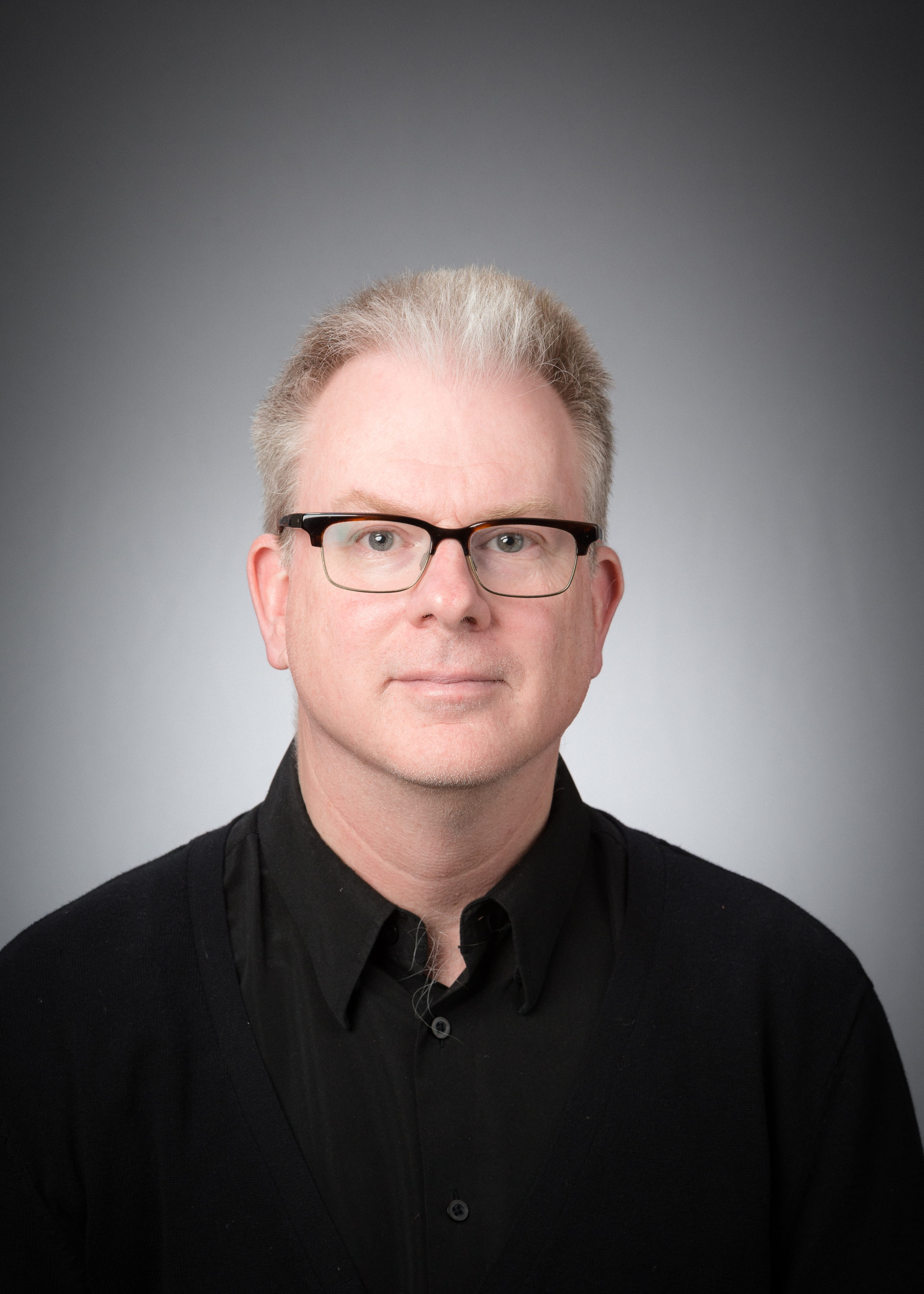
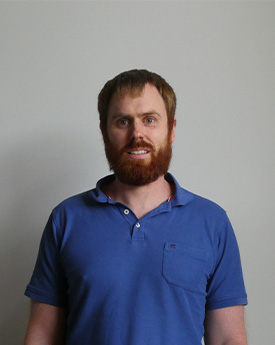
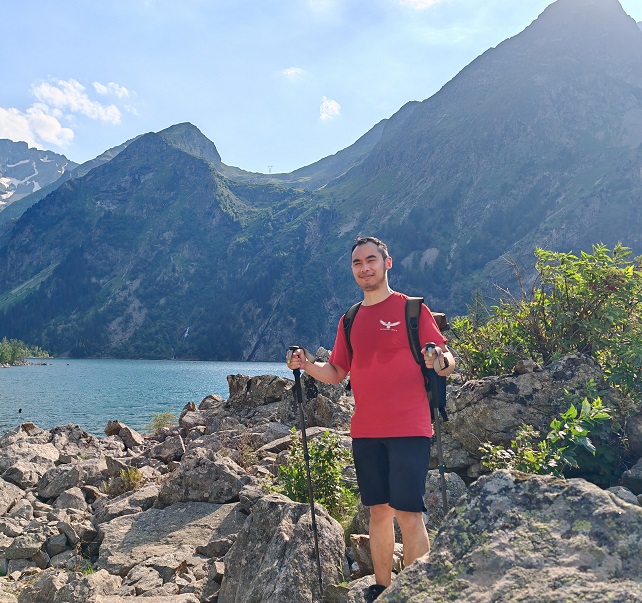
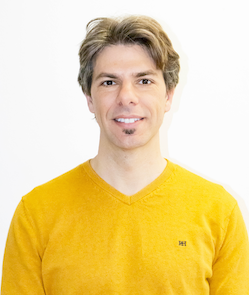
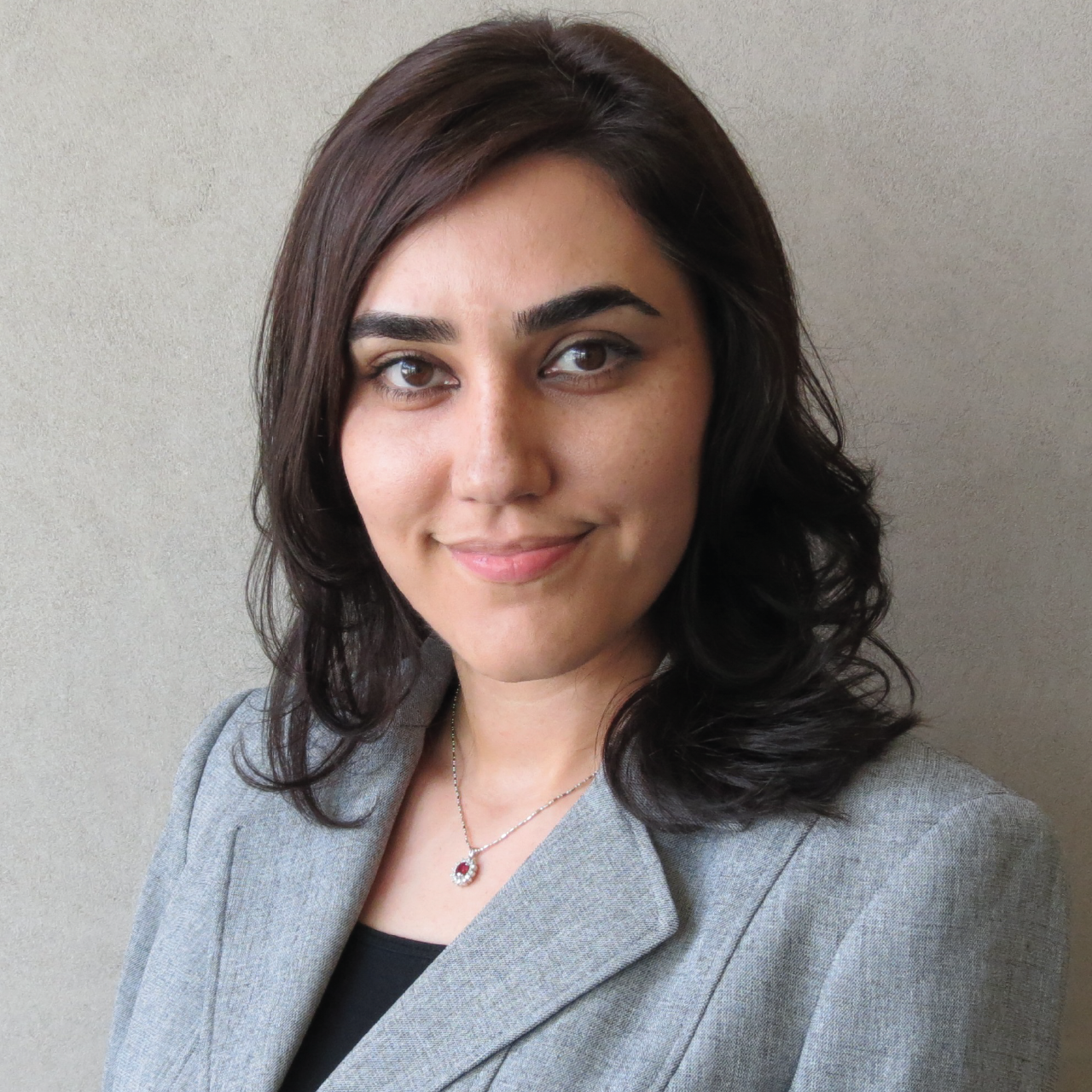
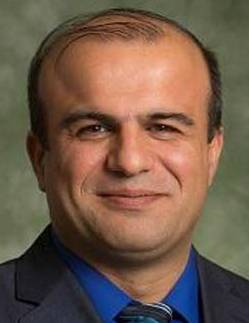
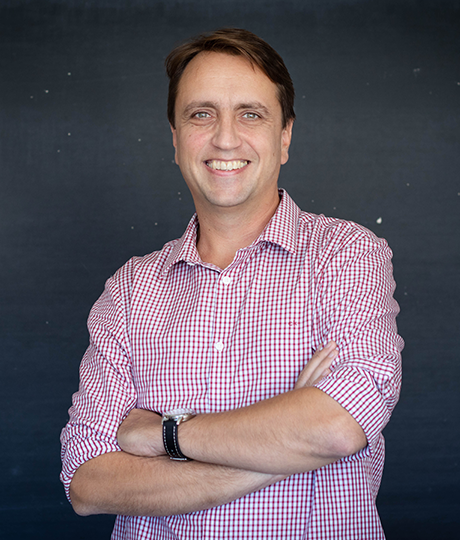
Douglas G Down is a Professor in the Department of Computing and Software at McMaster University . He leads the Resource Allocation and Stochastic Systems Lab (RASSL) and serves as co-PI of the Computing Infrastructure Research Centre (CIRC) . Education: Ph.D., University of Illinois at Urbana-Champaign His research focuses on stochastic modelling , scheduling , and performance evaluation of computer systems, with recent work on intelligent control of data centers , thermal-aware workload management , and data-driven resource allocation for healthcare systems. Publications span queueing theory , energy-aware scheduling , and machine learning applications in logistics. Recent scholarly trends include deep learning for pandemics (2023-2025), stochastic optimization of cooling systems (2024), and hybrid models combining queueing theory with AI (2023). He has pioneered frameworks like MGST for scheduling in heterogeneous grids and contributed to cache locality improvements in Hadoop systems. Scientific Awards: Nominated for Best Paper at MASCOTS 2013
Ayşenur Akyüz Birtürk serves as a Lecturer in the Department of Computer Engineering at Middle East Technical University (METU), Ankara, where she has taught since February 1994. Her academic career spans foundational programming courses to advanced graduate seminars in AI and Computational Linguistics, reflecting 30+ years of institutional commitment. She earned all her degrees from METU, culminating in a 1998 Ph.D. focused on Turkish language computational analysis. Her educational journey includes: B.S. in Computer Engineering (1985) M.S. in Computer Engineering (1988) with thesis on “A Model for Representing Concepts: Conceptual Dependency Theory” Ph.D. in Computer Engineering (1998) with thesis on “A Computational Analysis of Turkish using the Government-Binding Approach” Dr. Birtürk’s research centers on Artificial Intelligence and Natural Language Processing , with pioneering work in Turkish language parsing evolving into modern Recommender Systems . She integrates semantic relations and multi-domain data to build hybrid engines for movies, books, and music, emphasizing user modeling through knowledge representation and data mining techniques. Analysis of her 2010-2015 publications reveals two dominant threads: adaptive recommender systems (80% of output) using semantic similarity and dynamic clustering, and renewable energy analytics (20%) applying machine learning to wind/hydrological data. This pivot from NLP to energy forecasting demonstrates methodological versatility while maintaining core AI expertise. Her scientific recognition includes: TUBITAK scholarships throughout education (1977-1988) Multiple national contest awards in high school (1979-1980) Leadership in TUBITAK-funded energy and healthcare projects Dr. Birtürk has supervised 17 Master’s theses in NLP and recommender systems while securing competitive grants including METU-ISTEC #17435 (2006-2008; 504,000 YTL) and HASAT (2010-2013; 601,637 YTL). Her industry consultancy spans medical form design (FormAnalitik), question-answering systems, and retail intelligence platforms, translating academic research into real-world tools.
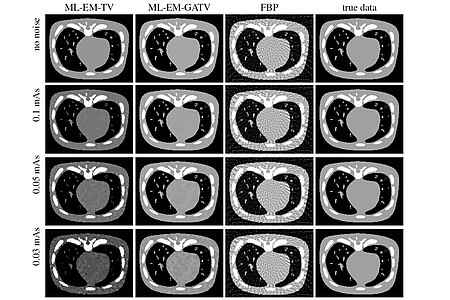
Jürgen Hesser is a Professor at the Mannheim Medical Faculty , Heidelberg University, specializing in Experimental Radiotherapy and Medical Imaging . His research focuses on solving inverse problems in imaging, particularly for CT reconstruction , brachytherapy planning , and low-dose imaging . Current affiliations: Clinic for Radiotherapy and Radiooncology, Mannheim University Hospital Collaborative ties: Interdisciplinary Center for Scientific Computing (IWR) and Center for Bioinformatics (ZITI) at Heidelberg University Research interests center on anisotropic total variation techniques for medical and industrial applications, including MR-guided interventions and real-time radiation therapy . His work has led to a 1000x speed improvement in brachytherapy planning algorithms. Recent publications highlight expertise in image reconstruction (CT/X-ray), noise optimization , machine learning for cancer classification, and big data management solutions. His methods are applied to both clinical and industrial imaging challenges. Additional contributions include scientific data infrastructure development and variance stabilization techniques for medical sensors. The research group maintains strong interdisciplinary links with Physics, Mathematics, and Computer Science faculties.
Dr. Carolina Euan is a Lecturer in Statistics at the School of Mathematical Sciences, Lancaster University, with affiliations to the Data Science Institute and STOR-i Centre for Doctoral Training. Her research focuses on time series analysis, spatio-temporal modeling, and their applications in environmental data science and brain data analysis. School of Mathematical Sciences Data Science Institute STOR-i Centre for Doctoral Training Biostatistics Research Group Centre of Excellence in Environmental Data Science Her work spans multiple disciplines: Environmental Data Science: Marine heatwaves, solar irradiance modeling, particle number size distribution Brain Data Analysis: Neural connectivity, brain signal clustering, coherence-based inference Statistical Methodology: Spatio-temporal extremes, spectral estimation, functional data analysis Recent publications demonstrate expertise in: 2025: Neural connectivity modeling, functional data analysis, particle distribution 2024: Virtual collaboration frameworks, precipitation regime modeling, spectral estimation 2023: Brain signal clustering, source apportionment, directional wave spectra Supervision includes: Kajal Dodhia: STOR-i (extreme sea temperatures) Jordan Hood: Bayesian modeling (COVID prevalence) Carla Pinkney: STOR-i
Dr. Florian Pein is a Lecturer in Statistics at the School of Mathematical Sciences, Lancaster University . His research focuses on changepoint regression, anomaly detection, and applied projects linked to artificial intelligence, machine learning, and time series analysis. Current Position : Lecturer in Statistics Institution : Lancaster University School : School of Mathematical Sciences Florian's research addresses foundational challenges in statistical modeling of heterogeneous data, multiscale inference, and computational electrophysiology. His work bridges theoretical statistics with practical applications, particularly in analyzing ion channel recordings and developing open-source software tools like the stepR package. He has published extensively on changepoint detection, non-parametric methods, and noise modeling in time series. Notable trends in his publications include: Integration of changepoint regression with machine learning frameworks Development of robust cross-validation techniques for time series Advancements in multiscale and multiresolution analysis Applications in biophysics, including ion channel recordings and antibiotic resistance studies Focus on high-dimensional and non-parametric statistical methods Creation of computational tools for statistical inference Florian supervises PhD students in changepoint-related research and applies statistical methods to interdisciplinary challenges in data science and biophysics.
Dootika Vats is an Associate Professor in the Department of Mathematics & Statistics at Indian Institute of Technology Kanpur (IIT Kanpur). She earned her PhD in Statistics from the University of Minnesota, Twin-Cities, and her research focuses on advancing Monte Carlo and Bayesian computational methods, especially Markov chain Monte Carlo diagnostics. Education: PhD, Statistics, University of Minnesota, Twin-Cities, Feb 2017 MS, Statistics, University of Minnesota, Twin-Cities, Nov 2016 MS, Statistics, Rutgers University, New Brunswick, May 2012 BA (honors), Mathematics, University of Delhi, Lady Shri Ram College, May 2010 Research Interests: Her work lies at the intersection of computational statistics and Bayesian inference, with core emphases on: Markov chain Monte Carlo (MCMC) methodology Monte Carlo variance estimation and output analysis Bayesian computation and diagnostics Geometric ergodicity and convergence rates of MCMC algorithms Recent Publications Trend: Across her recent articles and preprints, Dr. Vats has consistently tackled open problems in MCMC output analysis, introducing new diagnostics, optimal batch-size selection, and visualization tools that directly impact practical Bayesian computation. Her contributions bridge theoretical rigor—such as proving strong consistency of spectral variance estimators—with immediately applicable software and graphical methods. Awards & Honors: Director’s Award, University of Minnesota School of Statistics, 2016 Graduate Research Partnership Program Fellowship, Summer 2016 Louise T. Dosdall Fellowship for Women in STEM, 2016–2017 School of Statistics Alumni Fellowship, 2015–2016 Martin–Buehler Fellowship in Statistics, Fall 2015 Bernard W. Lindgren Graduate Student Teaching Award, Spring 2014 Lynn Lin Fellowship in Statistics, Summer 2014 Teaching & Mentoring: At IIT Kanpur she continues to teach and mentor within the statistics curriculum. Earlier, at the University of Minnesota, she served as Instructor for STAT 3011 and as a teaching assistant across multiple undergraduate and graduate courses; at Rutgers University she was a part-time lecturer in calculus and pre-calculus. Labs & Collaboration: While no specific lab is named, her research is computational and collaborative; she has worked with James M. Flegal, Galin L. Jones, and other leading MCMC methodologists, and her Google Summer of Code participation demonstrates engagement with the open-source statistics community.
Tâm Le Minh is a postdoctoral researcher in statistics at Inria Grenoble Rhône-Alpes, focusing on model-based statistical methods and nonparametric models with latent variables. His work bridges statistical theory with applications in life sciences, particularly ecological network analysis. PhD in Applied Mathematics (2023), Université Paris-Saclay Master in Applied Mathematics (2020), Institut Polytechnique de Paris Background in aeronautics and software engineering His research spans U-statistics, row-column exchangeable matrices, and Bayesian nonparametric approaches, with applications to ecological networks and high-throughput sequencing data. Recent publications emphasize bipartite network analysis and variational annealing for optimization. He has presented at major conferences including the International Conference on Bayesian Nonparametrics, Bernoulli-IMS World Congress, and ISBA World Meeting. His work appears in journals like ESAIM: Probability and Statistics and the Electronic Journal of Statistics.
Archer Yang is an Associate Professor in the Department of Mathematics and Statistics at McGill University, with additional affiliations as an Associate Academic Member of Mila - Quebec AI Institute, Associate Member of the School of Computer Science, and Member of the Quantitative Life Science Program. His academic journey began with a PhD from the University of Minnesota under the supervision of Hui Zou, establishing his foundation in statistical methodology and machine learning. Dr. Yang's research spans three interconnected themes: statistical machine learning, applications in drug discovery, and computational genomics and healthcare. In statistical machine learning, he focuses on developing dimensionality reduction, probabilistic models, and causality-inspired methods to address complex high-dimensional data challenges. His work in drug discovery involves creating machine learning models to accelerate drug candidate identification and enhance understanding of drug efficacy and safety. In computational genomics and healthcare, he develops techniques to analyze genomic data, identify biomarkers, and explore the genetic basis of diseases, with the goal of improving precision medicine and predicting patient outcomes. His overarching objective is to bridge advanced data-driven methodologies with impactful applications in pharmacology, genomics, and healthcare. His recent publications reveal a strong trend toward applying machine learning to healthcare challenges, particularly in congenital heart disease analysis, mortality prediction, and drug discovery. His work demonstrates expertise in developing interpretable models that can handle complex, high-dimensional biomedical data while maintaining statistical rigor. The integration of causal inference methods with machine learning appears to be a growing focus in his research trajectory. ICML Spotlight Paper (top 2.6%, 313/12,107) Dr. Yang actively supervises a large research group including multiple postdoctoral fellows, PhD students, and Master's students. His lab has developed several notable software tools, including ml-mr for machine learning in Mendelian randomization. His supervision extends across statistics, computer science, and biomedical applications, reflecting the interdisciplinary nature of his work. He appears to maintain strong collaborative relationships with researchers in healthcare and genomics fields. His laboratory, the Archer Yang Lab, maintains active GitHub repositories focused on machine learning applications in healthcare and drug discovery, with particular emphasis on interpretable models and statistical methodology development. The lab appears to work at the intersection of theoretical statistics and practical biomedical applications, with projects spanning from algorithm development to clinical implementation.
Rafael Sebastian is a Full Professor at Universitat de Valencia and General Director for Science and Research of the Generalitat Valenciana. He leads the Computational Multiscale Simulation Lab (CoMMLab) and collaborates with institutions like Oxford University and Yale University. Department of Computer Science, Universitat de Valencia CoMMLab Founder Spanish Network of Excellence in Cardiac Modeling His research focuses on multi-scale computational models and artificial intelligence for patient-specific cardiac simulations , aiming to improve arrhythmia risk stratification and therapy planning . Key topics include cardiac conduction system modeling , scar-related ventricular tachycardia , and machine learning pipelines for clinical applications. Recent publications emphasize automata-based simulations for atrial arrhythmias, machine learning in arrhythmia localization, and 3D geometric characterization of aortic diseases. Trends show integration of computational modeling with clinical data and medical imaging . Scientific Awards: Best Poster Award, Functional Imaging and Modeling of the Heart (2021) Cum Laude Award, SPIE Medical Imaging (2009) Student Presentation Award (2011) He has supervised 7 PhD/Master students and led grants exceeding €1 million, including projects like iSARC-GENETICS and iCardioTwins , focusing on digital twin technology and cardiac disease stratification .
Prof. Dr. Ben Jeurissen is an Associate Research Professor at the Department of Physics, University of Antwerp , Belgium, specializing in Medical Image Computing , Quantitative MRI , and Diffusion MRI . He received an ERC Consolidator Grant (2023) and FWO Senior Postdoctoral Fellowship (2018–2021) , with a focus on data-driven approaches to study brain microstructure. Education : MSc in Computer Science (2004), Biomedical Imaging (2006), PhD in Science (2012) from University of Antwerp. Research : His work bridges Neuroscience , Medical Imaging , and Computational Methods , particularly in Diffusion MRI and Quantitative MRI for applications in Alzheimer’s disease , spaceflight effects on the brain, and knee imaging . Awards : ERC Consolidator Grant (2023) Australian Museum Eureka Prize Finalist (2024) Multiple Magna/Summa Cum Laude Merit Awards at ISMRM conferences Prize Robert Oppenheimer (2015) Publications span NeuroImage , Human Brain Mapping , Journal of Alzheimer's Disease , and Investigative Radiology , with key contributions to super-resolution MRI , fiber tracking , and brain microstructure analysis . He serves as a contributor to MRtrix and advisor for PhD theses in Computational Anatomy and Medical Imaging .
Niyousha Hosseinichimeh is an Associate Professor in the Grado Department of Industrial and Systems Engineering at Virginia Tech's College of Engineering. Her research focuses on improving health and healthcare systems through system dynamics modeling and simulation. She holds a Ph.D. in Public Policy from SUNY Albany (2012) and a B.S. in Mechanical Engineering from Sharif University of Technology (2001). Her work addresses complex issues like adolescent drinking/driving behaviors, major depressive disorder, and infant mortality. Methodologically, she advances calibration techniques for dynamic models and group model-building approaches. Her research has been funded by NIH, NSF, and the Ohio Department of Health. Notable contributions include modeling the hypothalamus-pituitary-adrenal axis and developing tools for rapid parameter estimation in system dynamics. She advises students such as Alba Rojas-Cordova (winner of multiple awards) and Arash Baghaei Lakeh. Her grants include projects on depression dynamics and emergency department utilization. Her work intersects systems engineering, public health, and computational methods, emphasizing practical policy and clinical applications.
Mohammad T. Khasawneh is a SUNY Distinguished Professor and Director of the School of Systems Science and Industrial Engineering at Binghamton University. He leads the Watson Institute for Systems Excellence (WISE) and the Healthcare Systems Engineering Center. His roles include Director of the Manhattan Graduate Program in Health Systems. Education: BS and MS in Mechanical Engineering from Jordan University of Science and Technology (1998, 2000), PhD in Industrial Engineering from Clemson University (2003). Research focuses on healthcare systems engineering, operations management, and data science. His work optimizes healthcare systems for improved patient outcomes and cost efficiency. Key areas include predictive analytics, hospital resource utilization, and clinical performance improvement. He has generated over $15M in external funding and led projects with U.S. hospital systems. Notable achievements include developing the Executive Master of Science in Health Systems and an MS in Healthcare Systems Engineering. His research has produced 60+ journal articles and 120+ conference papers. Awards include SUNY Chancellor’s Awards for Teaching (2011) and Scholarship (2021), University Awards for Graduate Director (2015) and International Education (2016). He is an IISE Fellow and holds honorary visiting professorships at Hebei University of Technology (China) and Vellore Institute of Technology (India). Grants and funding: $2.5-3M annually via WISE, $39M in software/equipment grants. Lab/Initiatives: Healthcare Systems Engineering Center, WISE, and multiple hospital partnerships.
Andrei L. Badescu is a Professor of Actuarial Science and Director of the Master of Financial Insurance in the Department of Statistical Sciences at the University of Toronto. His academic leadership spans editorial roles at Insurance: Mathematics and Economics and program direction for graduate actuarial programs. His educational foundation includes: BSc in Mathematics and Economics from Bucharest University of Economic Studies (1998) MSc in Mathematics and Economics from Bucharest University of Economic Studies (2000) PhD in Actuarial Science from Western University (2004) He completed postdoctoral training at the University of Waterloo (2006) before joining the University of Toronto faculty in 2006. Research interests evolved from foundational work in Risk and Ruin Theory using Matrix Analytic Methods to contemporary applications in Stochastic Claim Reserving, Dependence Modelling, and Predictive Analytics. Current emphases include Telematics risk assessment and Insurance Data Science, leveraging advanced statistical techniques for real-world insurance challenges. Recent publications (2021-2025) reveal a strategic shift toward data-driven insurance solutions. Key trends include micro-level claim reserving via inverse probability weighting, telematics-based driving risk modeling using unsupervised learning, and mixture-of-experts frameworks for portfolio ratemaking. These works bridge traditional actuarial science with machine learning, particularly in handling censored data and operational risk. Professor Badescu mentors five doctoral students (Spark Tseung, Sebastian Calcetero, Ian Weng, Sophia Chan, Hassan Abdelrahman) and two master's students (Kaihua Sun, Yifeng Ge). His administrative leadership includes directing the Master of Financial Insurance program and previously overseeing the Data Science concentration in the Master of Applied Computing. His research group develops practical tools like the LRMoE.jl software package for actuarial loss modeling, while future work targets telematics integration and insurance-specific artificial intelligence applications.
Professor Serge Guillas is a faculty member at the University College London (UCL) Department of Statistical Science. His research focuses on functional data analysis, uncertainty quantification, environmental statistics, and emulation of complex computer models. He leads the NERC consortium on Uncertainty Quantification of Natural Hazards and has held roles such as Work Package Leader for quantifying uncertainties in natural hazard models. His work integrates statistical methods with geophysical and climate modeling, emphasizing tsunami risk analysis, climate dynamics, and ozone exposure studies. Education: PhD in Statistics from Paris 6 University (2001), followed by roles at the University of Chicago, Georgia Institute of Technology, and UCL. Current roles include teaching STAT1006 and STAT7001 courses. Research interests span functional regression, spatial data analysis, and probabilistic hazard modeling. Recent work explores machine learning-driven climate models, ozone exposure health impacts, and real-time data assimilation software (ParticleDA.jl). He collaborates globally, including with institutions in Georgia, Italy, and Indonesia, to advance tsunami modeling and disaster risk reduction. Key awards include ESRC-DFID-NERC funding, MAPS Faculty Postgraduate Research Prize (for student Ah Yeon Park), and leadership roles in SIAM’s Uncertainty Quantification group. Active in mentoring PhD students and securing interdisciplinary grants. Labs/Teams: Involved with the UCL Institute for Risk & Disaster Reduction and leads statistical emulation efforts in climate and geophysical modeling. Collaborates on fusion reactor design (ExCALIBUR project) and global temperature uncertainty quantification (GETQUOCS initiative).
Malcolm Sambridge is a Professor of Seismology and Mathematical Geophysics at the Research School of Earth Sciences (RSES), Australian National University (ANU). He holds roles including former Head of Seismology and Mathematical Geophysics (2006–2016) and has been a Fellow and Research Fellow at ANU since 1992. His research focuses on inverse problems, computational geophysics, seismic wave propagation, and statistical inference applied to Earth Sciences. He has led projects such as the Australian Passive Seismic Server and the Australian Seismometers in Schools Network (AuSIS). Education includes a B.Sc. in Physics (1983, Loughborough University), a Certificate in Advanced Mathematics (1984, University of Cambridge), and a Ph.D. in Geophysics (1988, ANU). His career includes visiting roles at Caltech and the Carnegie Institution of Washington. Research interests emphasize developing algorithms for geophysical inference, including the Neighbourhood Algorithm for nonlinear inversion. Key contributions include studies on Earth's inner core structure, seismic tomography, and Bayesian methods. He advises students across physics, mathematics, and Earth Sciences, focusing on computational and theoretical geophysics. Publications span over 150 articles, with recent work on optimal transport for inversion, trans-dimensional Bayesian tomography, and seismic imaging techniques. His software tools, like pyprop8 and TerraWulf, support geophysical modeling and high-performance computing.