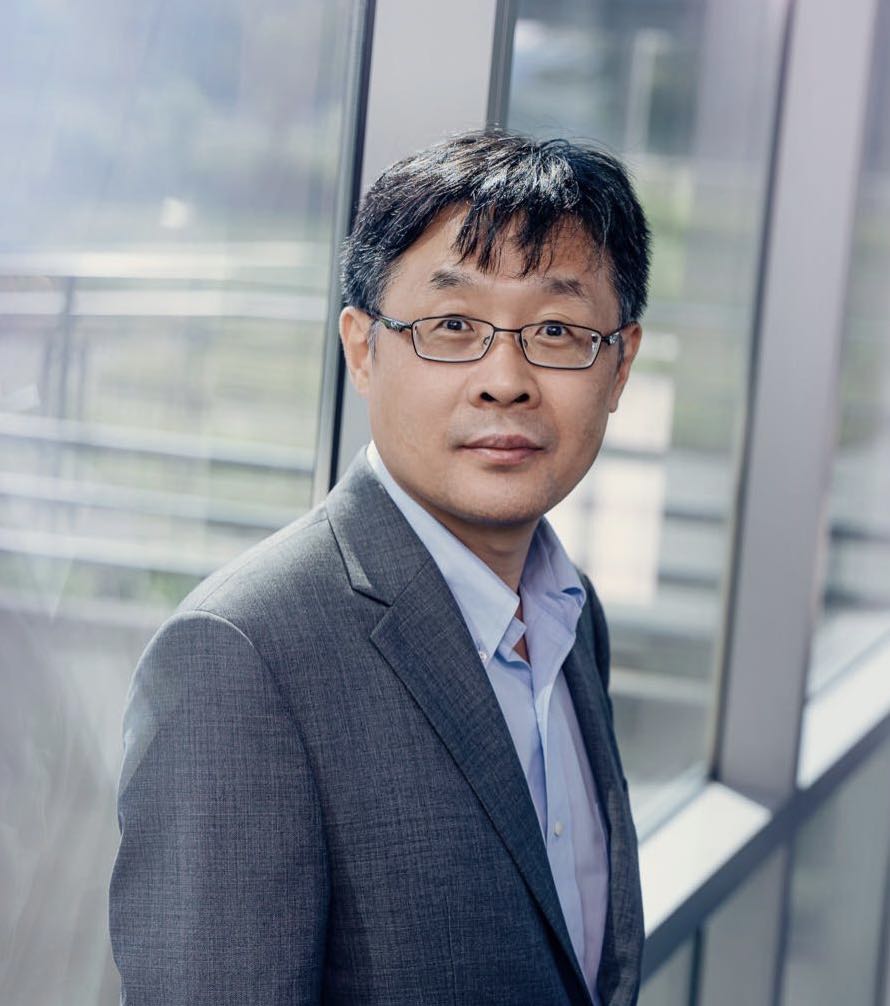
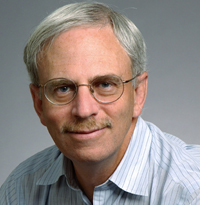
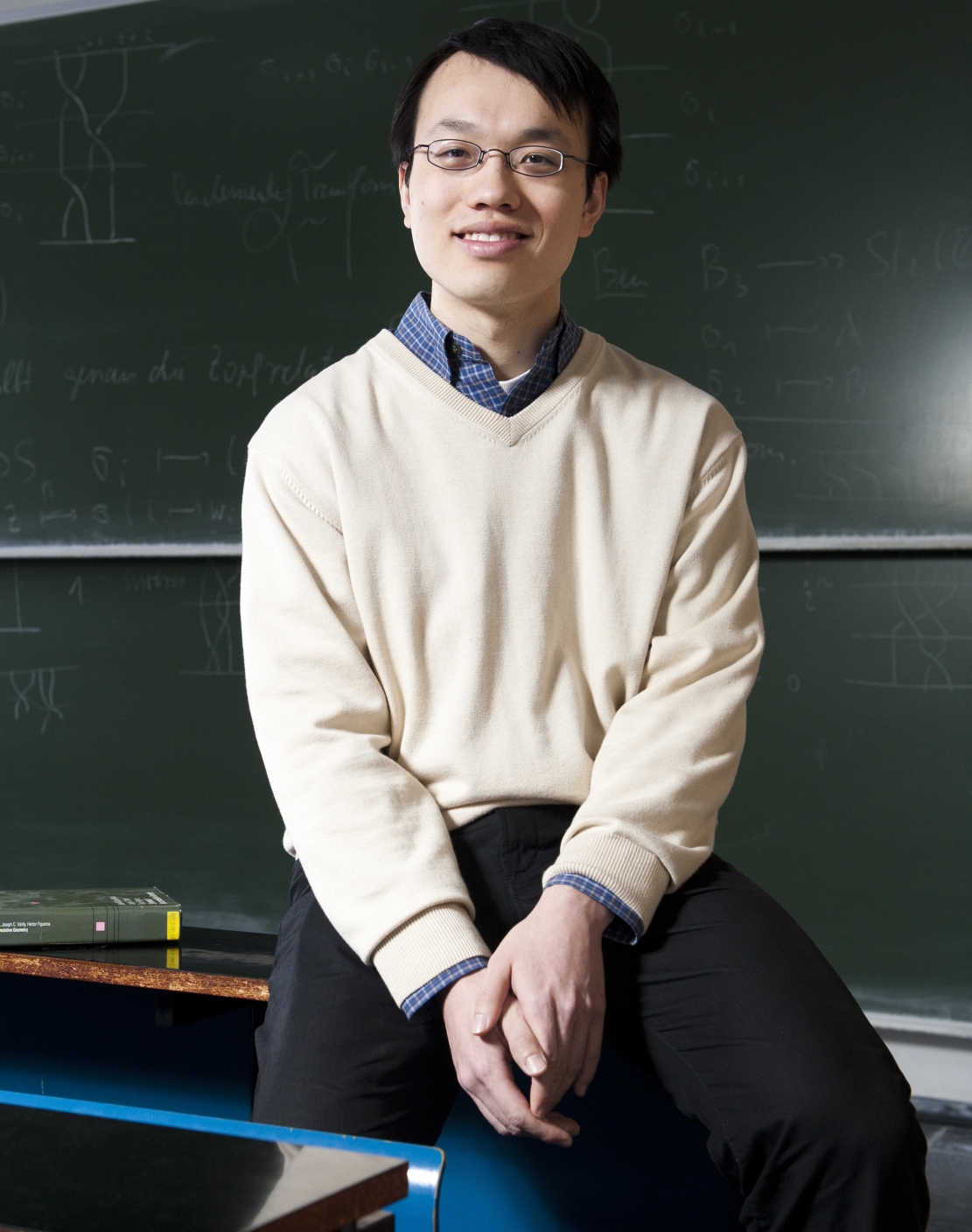
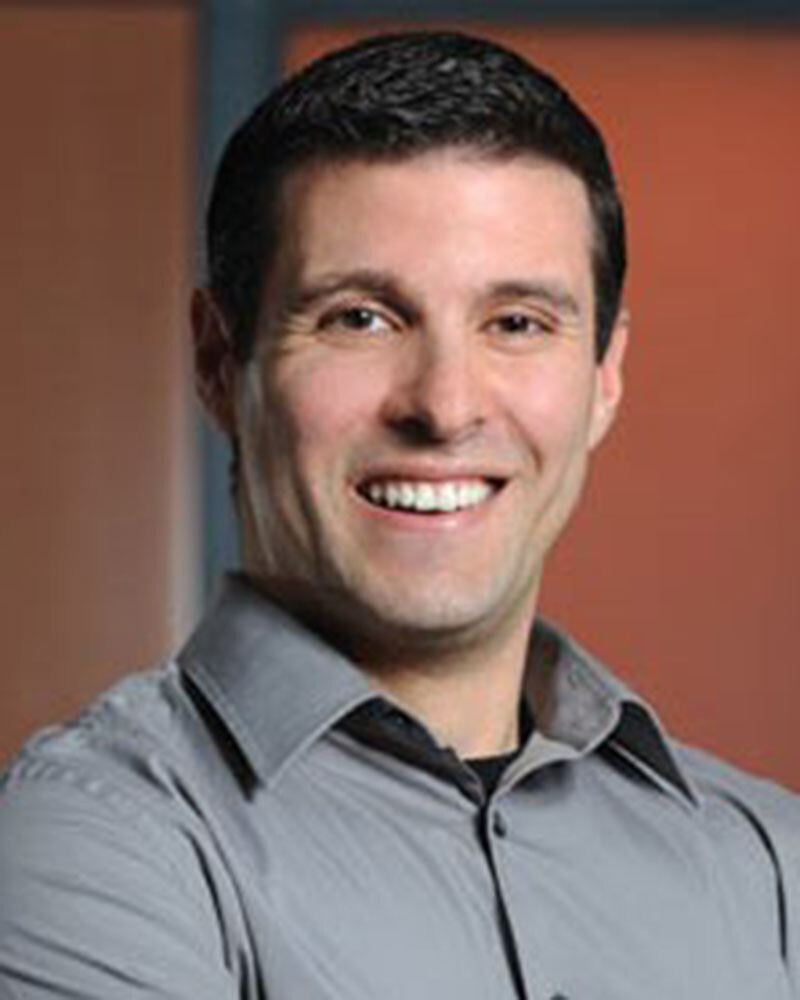
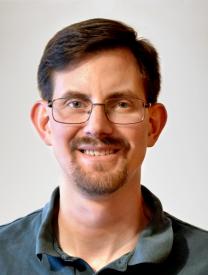
Harrison Huibin Zhou is the Henry Ford II Professor of Statistics and Data Science at Yale University. He has held leadership roles, including Department Chair of Statistics and Data Science (2018–present) and former Chair of Statistics (2012–2017). His academic career at Yale spans over two decades, with promotions from Assistant Professor (2004–2009) to Associate (2009–2010) and full Professor (2010–present). Research Interests: Dr. Zhou specializes in high-dimensional statistical theory, including nonparametric estimation, minimax theory, and applications in network analysis, machine learning, and functional data analysis. His work bridges theoretical foundations with computational methods, addressing challenges in modern statistical decision-making. Publications: His recent work focuses on spectral clustering, quantum state tomography, and optimal estimation in high-dimensional models. Notable contributions include theoretical guarantees for algorithms like the EM method in Gaussian mixtures and advancements in community detection in networks. Teaching: He teaches advanced courses such as Functional Data Analysis, Nonparametric Estimation, and Decision Theory, reflecting his expertise in statistical methodology and theory. Professional Service: Organized workshops on topics like Empirical Processes (2015) and High-Dimensional Data (2012), underscoring his role in fostering academic collaboration.
Dr. Qian Liu is an Assistant Professor in the Department of Applied Computer Science at the University of Winnipeg . She holds a PhD in Individual Interdisciplinary Studies, integrating Computer Science, Statistics, and Medical Genetics. Her research focuses on advanced data science techniques for healthcare and material science, including multi-modal data integration and interpretable AI. Education : 2023: Postdoc, Western University, Canada 2023: PhD, University of Manitoba, Canada 2019: MSc, University of Manitoba, Canada Research Interests : Machine learning, deep learning, bioinformatics, computational biology, medical imaging, and their applications in healthcare and material informatics. Her lab develops tools for genomic integration, radiogenomics, and AI-driven biomarker discovery. Recent Contributions : Her work spans AI in nanomaterial classification, breast cancer biomarker discovery, and emotion recognition. Articles highlight innovations in graph neural networks, diffusion models, and interpretable deep learning. Awards : 2024 University of Manitoba Distinguished Dissertation Award 2019 Best Oral Paper at IEEE Bioinformatics Conference Grants : NSERC 2024 Discovery Grant (Principal Investigator) CIHR 2023 Project Grant (Co-Applicant) Labs/Teams : Active in interdisciplinary collaborations across computer science, statistics, and biomedical domains. Lab members include postdocs, PhD/MS students, and undergraduate researchers.
Barbara Shinn-Cunningham is the Glen de Vries Dean of the Mellon College of Science at Carnegie Mellon University (CMU) and holds professorships in Psychology, Biomedical Engineering, and Electrical and Computer Engineering. She is also the founding director of CMU's Neuroscience Institute. Her research focuses on auditory neuroscience, particularly auditory attention, binaural hearing, and multisensory integration, with applications to hearing disorders and assistive technologies. Shinn-Cunningham earned her B.S. from Brown University and her M.S. and Ph.D. from MIT in Electrical and Computer Engineering. Education: B.S., Electrical Engineering, Brown University (1986) M.S., Electrical & Computer Engineering, MIT (1988) Ph.D., Electrical & Computer Engineering, MIT (1994) Research Interests: She investigates how the brain processes sound in complex environments, including spatial hearing, auditory attention deficits in aging and clinical populations, and the neural mechanisms underlying cochlear synaptopathy. Her work integrates behavioral studies, neuroimaging (EEG, fMRI), and computational modeling to bridge basic science and translational research. Awards & Recognition: Fellow, Acoustical Society of America (2009) Alfred P. Sloan Research Fellow (2000) National Security Science and Engineering Faculty Fellow (2008) Helmholtz-Rayleigh Interdisciplinary Silver Medal (2019) Advising & Grants: She mentors a diverse team of graduate students and postdocs, focusing on training the next generation of auditory neuroscientists. Her grants include funding from NSF, NIH, and the Department of Defense. She leads the LiMN Lab, which explores neural mechanisms of sensory processing and attention. Labs & Teams: Director of the Lab in Multisensory Neuroscience (LiMN) at CMU, part of the Carnegie Mellon Neuroscience Institute. Collaborates with engineers, clinicians, and marine biologists to advance auditory technology and neuroimaging techniques.
John Guttag is the Dugald C. Jackson Professor in Electrical Engineering and Computer Science at MIT. His work focuses on AI-driven healthcare solutions, biomedical systems, and advanced computer vision applications. He leads research in medical image analysis, machine learning reliability, and healthcare equity. Guttag's contributions include innovative frameworks like MultiMorph and Scale-Space Hypernetworks, addressing challenges in medical imaging and clinical decision-making. Affiliations: MIT Electrical Engineering & Computer Science Department (EECS) Research emphasizes AI for healthcare, particularly in segmentation, predictive analytics, and ethical algorithm design. Notable projects include real-time fraud detection systems and studies on racial disparities in clinical risk scores. His work bridges computer science with clinical practice through tools like Voxelmorph for medical image registration and ScribblePrompt for interactive biomedical segmentation. Recent publications highlight advancements in uncertainty-aware AI, contrastive learning, and scalable medical data processing. Guttag’s methodologies prioritize practical clinical applications, aiming to improve diagnostics and healthcare workflows. His lab develops open-source tools and frameworks that enhance accessibility to advanced medical imaging technologies.
Clayton Scott is a Professor of Electrical Engineering and Computer Science (EECS) at the University of Michigan, with a courtesy appointment in Statistics. He holds a joint appointment in the College of Engineering and is affiliated with MIDAS, AI Lab, and the Center for Computational Medicine and Bioimaging (CCMB). His research focuses on statistical machine learning theory and algorithms, with applications in medical imaging, nuclear engineering, climate science, and clinical diagnostics. He actively collaborates with researchers in psychiatry, nuclear engineering, and radiology. Education: PhD in Electrical Engineering (Rice University, 2004), MS (Rice, 2000), AB in Mathematics (Harvard, 1998). He teaches courses in machine learning (EECS 545), signal processing, and statistical methods. His work emphasizes developing scalable algorithms with theoretical guarantees, particularly in domains like functional neuroimaging, nuclear particle classification, and sepsis prediction. He advises ~1 PhD student annually and has mentored over 20 students. His grants include NSF, NIH, and DOE funding, focusing on topics like domain adaptation, label noise, and medical image registration. His lab develops open-source tools for robust kernel methods, mixture proportion estimation, and partial mixture modeling.
Professor Elias Aboutanios is a distinguished academic at the University of New South Wales (UNSW), serving as Professor in the School of Electrical Engineering and Telecommunications. With a career spanning over two decades in academia and research, he has established himself as a leading expert in signal processing, radar systems, satellite technology, and NMR spectroscopy. Professor Aboutanios earned his BE in Electrical Engineering from UNSW in 1997 and completed his PhD from UTS in 2002, with research focused on frequency estimation for communications with low earth orbit satellites. Following his doctoral studies, he conducted postdoctoral research at the Institute for Digital Communications at the University of Edinburgh from 2003 to 2007, specializing in space-time adaptive processing for radar target detection. He joined UNSW as a senior lecturer in 2007, was promoted to associate professor in 2019, and achieved the rank of Professor in 2022. His research interests span a broad spectrum of signal processing domains including signal and image processing, parameter estimation, array signal processing, statistical signal processing, positioning and localization, radar and sonar signal processing, NMR signal processing, and space systems. Professor Aboutanios has developed significant expertise in nuclear magnetic resonance spectroscopy, global navigation satellite systems, radar target detection, biologically inspired signal processing, power systems and smart grids, and theoretical signal processing. His work bridges theoretical foundations with practical applications across multiple engineering disciplines. Professor Aboutanios's recent publications demonstrate a strong focus on integrated sensing and communication systems, radar technology, satellite applications, and advanced signal processing techniques. His research shows a clear trajectory toward dual-function radar-communication systems, massive MIMO architectures, CubeSat technology for air traffic monitoring, and innovative approaches to NMR spectroscopy. His work consistently addresses challenging problems in signal parameter estimation, adaptive processing, and system design across multiple application domains. Professor Aboutanios has made significant contributions to engineering education, having developed new courses in electrical engineering design and established the master's program in satellite systems engineering. His educational innovations focus on teaching signal processing through frequent and diverse design experiences, enhancing student learning outcomes in technical subjects. He has led significant space projects including UNSW's involvement in the European QB50 project and the UNSW-EC0 satellite mission, which successfully launched in 2017. As a member of the Space Industry Association of Australia's Legislation Working Group, he has contributed to shaping space policy through multiple submissions to the Australian Government's review of the Space Activities Act.
Professor Bruno A. Olshausen is affiliated with the Helen Wills Neuroscience Institute and the School of Optometry at the University of California, Berkeley. He also serves as the Director of the Redwood Center for Theoretical Neuroscience , focusing on computational models of sensory coding and visual perception. Ph.D. in Computation and Neural Systems (Caltech, 1994) M.S. and B.S. in Electrical Engineering (Stanford, 1987 and 1986) His research investigates how the brain processes sensory information by developing probabilistic models of natural images and neural circuits. Key contributions include sparse coding models that replicate receptive field properties of the primary visual cortex (V1), and work on extending these models to learn invariances and hierarchical structures. He has also collaborated with electrical engineers to design low-power analog memory systems inspired by brain computation, and developed software tools like SPARSENET and SPARSEPYR for neural signal processing. His work spans computational neuroscience, theoretical modeling, and interdisciplinary applications in vision science. As an educator, he has co-instructed courses such as Vision Science 206D (Neuroanatomy of the visual system) and Vision Science 212B (Visual neurophysiology), and independently taught Vision Science 265: Neural Computation at Berkeley and Psychology 290 at UC Davis. He co-edited the book Probabilistic Models of the Brain: Perception and Neural Function (MIT Press, 2002) and organized workshops at institutions like the Gordon Research Conference and Nature Neuroscience .
Dr. Wei Dai is a Senior Lecturer (Associate Professor) in the Department of Electrical and Electronic Engineering at Imperial College London, part of the Faculty of Engineering. He holds affiliations with the EPSRC Centre for Maths of Precision Healthcare and the Communications and Signal Processing group. His research focuses on sparse signal processing, machine learning applications in signal processing, linear and bilinear inverse problems, wireless communications, and random matrix theory. Notably, he contributed to the first compressive sensing DNA microarray prototype and has a highly cited 2009 paper on compressive sensing reconstruction. Dr. Dai's educational background includes a Ph.D. in Electrical and Computer Engineering from the University of Colorado at Boulder (2007) and postdoctoral research at the University of Illinois at Urbana-Champaign (2007-2010). His work bridges theoretical signal processing with practical applications in sensing, communication systems, and biomedical signal analysis. He leads research initiatives in gridless DOA estimation, robust beamforming, and cortico-muscular coupling analysis using advanced optimization techniques. His research outputs span topics like spectral compressed sensing, Bayesian methods for integrated sensing-communication systems, and dictionary learning for causal discovery. Ongoing work emphasizes low-rank matrix recovery, distributed compressed sensing, and mathematical frameworks for super-resolution localization. Dr. Dai collaborates across disciplines, leveraging signal processing innovations for healthcare technology and next-generation wireless systems.
Professor Xin Li is the Chair of Mathematical Analysis at the School of Mathematics & Statistics, University of Glasgow. His research focuses on interdisciplinary areas at the intersection of mathematical analysis, wireless communication systems, and blockchain technology. He holds a faculty position with expertise in reconfigurable intelligent surfaces (RIS), signal processing, and network optimization. Recent publications highlight his work on RIS-aided information-sensing integrated systems (ISAC), blockchain-based consensus networks in cellular environments, and adaptive beamforming techniques for multipath communication. His research emphasizes practical applications of theoretical mathematical models in telecommunications and distributed systems. Prof. Li's work demonstrates trends in integrating mathematical analysis with emerging technologies like millimeter-wave systems and Byzantine fault tolerance mechanisms. His contributions bridge pure mathematical rigor with real-world communication challenges, addressing both theoretical and applied aspects of modern wireless networks. He currently oversees academic activities within the School of Mathematics & Statistics and maintains an active research program supported by interdisciplinary collaborations. His contact information includes Xin.Li@glasgow.ac.uk and ORCID 0000-0002-2243-3742.
Professor Kenneth A Lindsay is an Honorary Senior Research Fellow at the University of Glasgow's School of Mathematics & Statistics. His work bridges mathematical biology, biophysics, and financial econometrics, with a focus on stochastic processes and computational modeling. Key contributions include advancements in compartmental modeling of neurons, Fokker-Planck equation solutions for stochastic differential equations, and applications in energy market forecasting. He has authored/co-authored over 25 peer-reviewed articles and edited the influential 2005 book Modeling in the Neurosciences . Collaborations with researchers like David Brillinger, Adrian Hurn, and Jonathan Rosenberg highlight interdisciplinary expertise. His research addresses topics ranging from dendritic branching patterns to econometric optimization techniques. Publications span journals such as Biological Cybernetics , Journal of Financial Econometrics , and European Journal of Heart Failure . Notable work includes modeling electricity price spikes and analyzing magnetic field effects on nerve excitability. Lindsay's edited volumes and book chapters further underscore his role in advancing neuroscience and quantitative finance methodologies. His academic contributions reflect a commitment to mathematical rigor applied to real-world systems, with applications in biomedical engineering, energy economics, and computational neuroscience.
Caglar Oskay is the Cornelius Vanderbilt Professor of Engineering and Chair of the Department of Civil and Environmental Engineering at Vanderbilt University. He is also a Professor of Mechanical Engineering. His research focuses on multiscale computational modeling of material and structural systems under extreme conditions, with expertise in composite materials, failure mechanisms, and computational mechanics. Dr. Oskay earned his Ph.D. in Civil Engineering from Rensselaer Polytechnic Institute (2003) and has held academic roles there before joining Vanderbilt in 2006. He was honored as an ASME Fellow in 2017 and as a Chancellor Faculty Fellow in 2016. Key research areas include multiscale failure modeling, life prediction of heterogeneous materials, and computational methods for composites and multiphysics systems. His work integrates advanced simulation techniques with experimental validation, addressing challenges in infrastructure resilience, additive manufacturing defects, and quantum computing applications in engineering. Education: Ph.D., Civil Engineering, Rensselaer Polytechnic Institute (2003) M.S., Civil Engineering, Rensselaer Polytechnic Institute M.S., Applied Mathematics, Rensselaer Polytechnic Institute B.S., Civil Engineering, Middle East Technical University Recent research highlights include stochastic modeling of geotechnical infrastructure failures, quantum-enhanced finite element methods, and predictive analytics for additive manufacturing defects. He leads interdisciplinary efforts on backward erosion piping in flood protection systems and has secured grants for multiscale modeling of titanium alloys and composites. Awards: ASME Fellow (2017) Chancellor Faculty Fellow (2016) Advising and grants: Dr. Oskay’s grants include NSF-funded studies on backward erosion piping and quantum computing applications. His research group collaborates with industry partners on materials for aerospace and energy sectors, emphasizing computational tools for failure prediction and material design. His work bridges computational mechanics with practical engineering challenges, advancing methods for infrastructure resilience, advanced materials, and sustainable design through multiscale modeling innovations.
Mattias Villani is Professor of Statistics at Stockholm University, specializing in Bayesian statistics and machine learning. He obtained his PhD in Statistics from Stockholm University in 2000 and has held positions at Sveriges Riksbank and Linköping University. Villani develops computationally efficient Bayesian methods for inference, prediction and decision-making with flexible probabilistic models. Research Interests: His work spans Bayesian computation (MCMC, HMC, variational inference), machine learning (Gaussian processes, mixture models), and applications in neuroimaging, transportation, and econometrics. Research focuses on scalable Bayesian methods for large datasets and complex models. Publication Focus: Recent articles concentrate on Bayesian neuroimaging analysis, transportation network modeling, and efficient MCMC algorithms. Methodological innovations in subsampling techniques for large-scale Bayesian computation represent a significant research trend. Student Advising: Supervises PhD students in statistical methodology development and applications. Current research groups focus on spatiotemporal modeling, locally stationary processes, and neuroimaging statistics.
James E. Aguirre is an Associate Professor in the Department of Physics and Astronomy at the University of Pennsylvania. His research focuses on understanding galaxy formation, cosmology, and large-scale structure through advanced instrumentation and observational techniques. He leads projects such as HERA (Hydrogen Epoch of Reionization Array) and TIM (Terahertz Intensity Mapper), dedicated to studying the early universe and distant star-forming galaxies. Aguirre’s work involves cutting-edge millimeter-wave and radio instrumentation design, including Z-Spec, PAPER, and MUSTANG. He has contributed to significant discoveries, such as detecting massive water reservoirs around quasars and determining distances to gravitationally lensed galaxies. Supported by NSF grants, his research bridges observational astronomy with cosmological theory. Education: Ph.D. in Astrophysics (thesis work on TopHat balloon-borne telescope). Teaching: ASTR011 Introduction to Astrophysics I. Current Projects: HERA, TIM, Simons Observatory, and PAPER. Grants: NSF Grant No. 0807990 and others. His research group collaborates on instrumentation like the Bolocam Galactic Plane Survey and explores techniques for mitigating calibration errors and improving signal analysis in radio interferometry. Aguirre’s efforts advance both observational methods and our understanding of cosmic evolution from the epoch of reionization to present-day galaxy formation.
Arno Siebes is Professor of Algorithmic Data Analysis in the Department of Information and Computing Sciences at Utrecht University's Faculty of Science. His research focuses on data mining methodologies, particularly pattern mining and Minimum Description Length (MDL) principles. Key research areas include: Developing efficient algorithms for pattern discovery Applying MDL to data characterization Creating interpretable models for complex datasets Addressing challenges in data science education Recent publications demonstrate applications in diverse domains including mobility analysis, genomic screening, and pandemic response. His work combines theoretical foundations with practical implementations for knowledge discovery.
Nicolò Cesa-Bianchi is a Professor of Computer Science at the University of Milan, Department of Computer Science (Dipartimento di Informatica), and affiliated with the DEIB Department at Politecnico di Milano. His research focuses on foundational aspects of machine learning, particularly online learning, multi-armed bandits, reinforcement learning, and graph analytics. He is an ELLIS Fellow and a corresponding member of the Accademia Nazionale dei Lincei. Research interests include the design and analysis of algorithms for prediction, clustering, and online decision-making, with applications to digital markets, social networks, and bioinformatics. Notable contributions span cooperative online learning, multitask learning, and bandit algorithms. He co-authored the influential book Prediction, Learning, and Games (2006). Professional roles include Board member of ELLIS, co-director of the Milan ELLIS unit, and involvement in EU initiatives like ELSA (Secure & Safe AI) and ELIAS (AI for Sustainability). He teaches graduate courses on statistical methods, machine learning, and reinforcement learning, with a focus on theoretical foundations. Key awards: ELLIS Fellowship (2020), Corresponding Member of the Accademia Nazionale dei Lincei (Italian National Academy of Sciences). His work bridges theory and practice, addressing challenges in adaptive systems, market design, and algorithmic fairness. Current projects explore distributed learning, regret minimization in adversarial environments, and interpretable models.