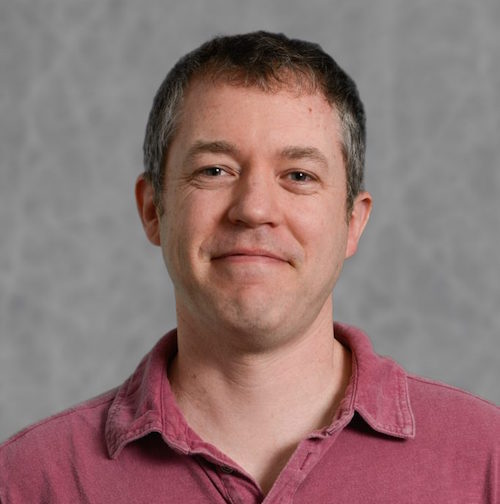
Bharath Sriperumbudur is a Professor in the Department of Statistics (with a courtesy appointment in the Department of Mathematics) at the Pennsylvania State University. His research focuses on non-parametric statistics, machine learning, optimal transport, statistical learning theory, regularization and inverse problems, functional and topological data analysis, and reproducing kernel Hilbert spaces. His work is supported by grants such as NSF-DMS-CAREER-1945396 and NSF-DMS-2413425. PhD in Statistics, University of California, San Diego (2010) His research interests span foundational aspects of statistical learning, kernel methods, optimal transport theory, and their applications. Recent work includes advancements in Gromov-Wasserstein geometry, Stein variational methods, and robust topological data analysis. Key contributions include publications on kernel-based quadrature rules, regularization theory, and functional data analysis. His research bridges theoretical statistics, machine learning, and applied mathematics.
Seth Sullivant is a Distinguished Professor in the Department of Mathematics at North Carolina State University (NC State), within the College of Sciences. His research focuses on algebraic statistics, computational and combinatorial algebra, and mathematical phylogenetics. He holds a Ph.D. in Mathematics from the University of California, Berkeley (2005). His expertise spans interdisciplinary areas, including algebraic approaches to statistical problems, combinatorial methods in phylogenetics, and the development of algebraic tools for graphical models. He is affiliated with research groups in Algebra and Combinatorics, Mathematical Biology, and Symbolic Computation at NC State. Recent research trends in his publications emphasize the application of algebraic geometry and combinatorics to statistical models, phylogenetic network analysis, and identifiability problems in systems biology. His work bridges abstract mathematical concepts with practical statistical methodologies, addressing challenges in data analysis and model interpretation. No specific scientific awards are listed in the provided texts. His advising and grant activities are not detailed here, though his extensive publication record suggests active research collaborations. He is part of research teams focused on advancing algebraic methods in statistics and computational biology.
Cristian Román-Palacios is an Assistant Professor in the Department of Ecology and Evolutionary Biology at the University of Arizona, where he also serves as Coordinator and Advisor for the Master of Science in Data Science (MSDS) and Master of Science in Information Systems (MSIS) programs. He is a core faculty member in Artificial Intelligence and Machine Learning, Data Management, Analysis and Visualization, and Environmental, Health and Biological Sciences. Education: PhD in Ecology and Evolutionary Biology, University of Arizona (2020) BS in Biology, Universidad del Valle, Colombia (2015) His research lies at the intersection of phylogenetics, biodiversity modeling, and machine learning, focusing on large-scale biodiversity patterns, the impacts of climate change on species survival, and the development of statistical tools for paleoclimatic reconstructions. He employs computational and data-intensive methods to explore evolutionary and ecological questions across diverse taxa. His recent publications (2024–2025) demonstrate a strong trend toward interdisciplinary research, combining computational biology, geochemistry, climate science, and open-source software development. Key themes include biodiversity informatics (e.g., Animal Culture Database), paleoclimatic modeling (e.g., clumped isotope thermometry), reproducibility in science, and tools for collaborative research (e.g., LabOps, SSARP). His work increasingly integrates data science with biological and environmental applications. Scientific Contributions: Published over 25 peer-reviewed papers, many as first author Research featured in Science News, Popular Science, CNN, USA Today Developed open-source tools: phruta , treedata.table , SSARP , LabOps Cristian advises graduate students through the infosci-msadvise@arizona.edu email and Calendly appointments. He was previously a staff researcher at UCLA’s Tripati Lab. He leads initiatives such as the Southwest Center on Resilience for Climate Change and Health and promotes inclusive, collaborative science through online toolkits and leadership ecosystems aimed at addressing climate and social inequities. His lab, the Román-Palacios Lab, and involvement with the Data Diversity Lab reflect his commitment to open, reproducible, and equitable research practices in data-intensive biology.
Associate Professor Bryce Frederick John Kelly is an academic at the University of New South Wales (UNSW), affiliated with the School of Biological, Earth and Environmental Sciences. His research focuses on greenhouse gas emissions, hydrogeology, and groundwater management, with a specialization in methane and carbon dioxide isotopic analysis. He leads the Greenhouse Gas Measurement Laboratory, which analyzes gas isotopes to trace emissions from coal seam gas (CSG), agriculture, and urban environments. Education: BSc (Hons) in Environmental Geology (UNSW, 1989); PhD in Environmental Geophysics (UNSW, 1995). Research Interests: Measuring methane emissions from CSG, coal mining, and agriculture Soil carbon sequestration and groundwater sustainability Isotope geochemistry for source attribution of greenhouse gases Satellite and airborne greenhouse gas monitoring Impact of CSG development on aquifers and ecosystems Key Projects: Leading the United Nations Environment Programme Methane Science Studies team, quantifying emissions in the Surat Basin. Co-supervising 60+ students. Collaborating with ANSTO on soil carbon and groundwater modeling. Awards: 2016 Cotton Seed Distributor Researcher of the Year finalist, 2011 Eureka Prize finalist for water research, and multiple industry awards for hydrogeological innovation. Labs/Teams: Connected Water Initiative, Centre for Ecosystem Science, Earth and Sustainability Science Research Centre (ESSRC). Active in policy outreach through The Conversation and Australian Geographic.
Professor Jo Leonardi-Bee is a faculty member at the University of Nottingham within the School of Medicine . As Professor of Evidence Synthesis and Co-Director of the Nottingham Centre for Evidence-Based Healthcare (JBI Centre of Excellence), her work focuses on quantitative evidence synthesis, Cochrane reviews, and clinical guideline development. Education: BSc in Mathematics & Chemistry, Nottingham Trent University MSc in Medical Statistics, University of Leicester PhD and PGCHE, University of Nottingham Her research spans tobacco control (smoking cessation, legislation impact, maternal exposure) and dermatology (skin cancer, corticosteroid safety). She specializes in meta-analysis techniques, systematic reviews, and health policy evaluation, with over 50 peer-reviewed publications. Recent publications highlight trends in respiratory health (alcohol/smoking effects), pregnancy outcomes (smoking cessation interventions), and allergy prevention (infant dietary guidelines). She serves as Statistical Editor for the British Journal of Dermatology and former Cochrane Skin Group editor. Teaching includes postgraduate modules in systematic reviews and developing reusable learning objects for evidence-based practice. Current funded projects include maternal tobacco control initiatives, familial hypercholesterolemia management, and infant feeding guidelines with the Health Technology Assessment (HTA) program.
Jennifer Chayes is Dean of the College of Computing, Data Science, and Society and a Professor at the University of California, Berkeley, with appointments in Electrical Engineering and Computer Sciences, Mathematics, Statistics, and Information. She co-founded Microsoft Research New England, New York City, and Montreal, leading interdisciplinary research for 23 years before joining Berkeley in 2020. Previously, she was a Professor of Mathematics at UCLA, where she received the Distinguished Teaching Award. Education PhD in Mathematical Physics (1983), Princeton University BA in Biology and Physics (1979), Wesleyan University Her research spans network science , machine learning , and theoretical computer science , focusing on phase transitions in networks, graphons for large-scale network modeling, and applications in cancer immunotherapy , ethical AI , and climate change . Her work on graph limits and exchangeable graphs has foundational implications for network analysis. Recent publications highlight trends in sparse graph theory , privacy-preserving algorithms , and fairness in AI . Awards include the Anita Borg Institute Women of Vision Leadership Award (2012), SIAM John von Neumann Lecture Prize (2015), and ACM Distinguished Service Award (2020). She is a member of the National Academy of Sciences and a Fellow of multiple academic societies. Chayes actively promotes Diversity in STEM and serves on advisory boards for institutions like MIT’s Schwarzman College of Computing, the Howard Hughes Medical Institute, and the National Science Foundation’s Institute for AI and Fundamental Interactions.
Dr. Bradley Elphinstone is a Senior Lecturer in the School of Health Sciences at Swinburne University of Technology, where he conducts research and teaching in clinical and health psychology, with a focus on mindfulness, nonattachment, self-compassion, and gender-affirming mental health. He is actively involved in PhD supervision and has led research on public trust in genomic data, emotional well-being, and digital mental health interventions. His research interests include: Clinical and Health Psychology Social and Personality Psychology Mindfulness-Based Interventions Nonattachment and Self-Compassion Gender Euphoria and Transgender Mental Health Public Trust in Health Data Systems His recent publications (2020–2025) reflect a strong trend in psychometric scale development (e.g., Gender Euphoria Scale, Equanimity Scale), emotional regulation, and public health psychology, particularly during the pandemic. His work bridges clinical psychology with public engagement and policy, especially in genomic governance and mental well-being. Scientific contributions include: Development and validation of psychological scales Studies on trust and compliance during public health crises Exploration of non-dualistic approaches to mental health (e.g., A Course in Miracles) Telehealth and dignity therapy for older adults Dr. Elphinstone supervises multiple PhD students on topics ranging from financial well-being to gender identity and digital interventions. He has secured external funding, including a grant from the Department of Health and Aged Care on genomic data trust. He is also involved in collaborative research networks and public engagement through platforms like The Conversation. He is affiliated with research teams focused on: Mindfulness and psychological development Trans and gender diverse mental health Digital and telehealth interventions Public attitudes toward biobanks and genomics
Jonathan Leake is an Assistant Professor in the Department of Combinatorics and Optimization at the University of Waterloo. His research lies at the intersection of combinatorics, optimization, and theoretical computer science, with a focus on log-concave and Lorentzian polynomials and their applications in discrete and continuous settings. Assistant Professor, University of Waterloo (2022–present) Dirichlet Postdoctoral Fellow, TU Berlin (2020–2022) Postdoctoral Fellow, Institut Mittag-Leffler, Stockholm (Spring 2020) Postdoctoral Fellow, KTH, Stockholm (Fall 2019) James H. Simons Fellow, Simons Institute, UC Berkeley (Spring 2019) His research explores the deep connections between algebraic structures and combinatorial phenomena, particularly through polynomial capacity and Lorentzian polynomials. He applies these tools to problems in optimization, sampling, and representation theory. His work often involves developing new algebraic and analytic techniques to tackle longstanding conjectures and algorithmic challenges. The recent publications highlight a consistent focus on Lorentzian polynomials, capacity bounds, and their applications in combinatorics, optimization, and theoretical computer science. Key themes include matroid theory, log-concavity, sampling algorithms, volume approximation, and connections to Lie theory and representation theory. The research spans both theoretical developments and algorithmic applications, often in collaboration with leading researchers in the field. Dirichlet Postdoctoral Fellowship, TU Berlin Postdoc Fellowship in Algebraic and Enumerative Combinatorics, Institut Mittag-Leffler James H. Simons Fellowship, Simons Institute, UC Berkeley Jonathan Leake has advised or collaborated with several researchers, though formal advisees are not listed in the provided text. His work has been supported by prestigious fellowships and collaborations with institutions such as the Simons Institute and TU Berlin. He has taught courses including CO 250: Introduction to Optimization, MATH 239: Introduction to Combinatorics, and CO 739: Lorentzian Polynomials at the University of Waterloo and TU Berlin. While specific lab or research group names are not mentioned, Leake's collaborative work with researchers like Petter Brändén, Nisheeth Vishnoi, and Leonid Gurvits suggests active participation in research teams focused on algebraic combinatorics, optimization, and theoretical computer science. His publicly shared code for sampling from HCIZ densities and verifying positivity in Lie-theoretic contexts indicates an active computational research component.
Hua He is a Professor in the Department of Biostatistics and Data Science at Tulane University's School of Public Health and Tropical Medicine, specializing in advanced statistical methodologies for public health research. Her work bridges theoretical biostatistics with practical applications in infectious disease diagnostics and causal inference frameworks. Her academic credentials include: PhD in Statistics, University of Rochester MA in Statistics, University of Rochester BS in Mathematics, Southwest Normal University, China Dr. He's research focuses on mixture population modeling, causal inference, longitudinal data analysis, and ROC analysis, with significant applications in tuberculosis diagnostics and molecular epidemiology. She develops novel statistical approaches for social media data analysis, drinking outcome modeling, and zero-modified datasets, emphasizing methodological rigor in public health contexts. Her textbook Applied Categorical and Count Data Analysis and edited volume Statistical Causal Inferences and Their Applications in Public Health Research establish her as a leading methodological authority. Recent publications (2023-2025) demonstrate a concentrated focus on CRISPR-based diagnostic technologies and next-generation sequencing for tuberculosis detection, with strong emphasis on point-of-care applications, diagnostic accuracy validation, and low-resource setting adaptations. These works integrate biostatistical innovation with molecular diagnostics to address critical gaps in infectious disease control. Her scientific recognition includes: Teaching Excellent Award (2020) Dr. He directs the Methodology/Biostatistics Unit at Tulane University Translational Science Institute (TUTSI) and serves as Principal Investigator for an NIH R01 grant Moving beyond description: statistical and causal inference for social media data , alongside multiple pilot studies and foundation-funded projects. She has contributed biostatistical expertise to dozens of NIH-funded investigations, particularly in tuberculosis and infectious disease research. As Co-director of TUTSI's Clinical Research Core and Statistical Deputy Editor for the American Journal of Public Health , she leads institutional research infrastructure while advancing methodological standards in public health science.
Dr. Akbar Siami Namin is a Professor in the Department of Computer Science at Texas Tech University's Whitacre College of Engineering . He leads the AdVanced Empirical Software Testing & Analysis (AVESTA) research group and contributes to cybersecurity, software engineering, and program analysis. Ph.D., Computer Science, University of Western Ontario (2008) M.S., Lakehead University/University of Western Ontario (2004) Research Interests : Dr. Namin specializes in Natural Language Processing , Software and Cyber Security , Machine Learning , Time Series Analysis , Modeling Human Factors , and Program Analysis . His work bridges security testing , mutation analysis , and empirical software engineering . Publications : His research spans sonification of security threats , keystroke dynamics , statistical fault localization , and mutation testing , with recent works published at CHI , ICMLA , and CyberWorlds (best paper award 2015). Scientific Awards : Best Paper Award at CyberWorlds 2015; 'Most Influential Professor' recognition by Computer Science undergraduates (2012). Students & Grants : Supervised numerous Ph.D. and Master's students, including Alaa Darabseh and Xiaozhen Xue. Secured over $1M in NSF grants for projects like CyberCorps Capacity Building , Security Sonification , and Cybersecurity Education for Community Colleges .
Rianne de Heide is an Assistant Professor in the Statistics group (STAT) within the Department of Applied Mathematics at the University of Twente's Faculty of Electrical Engineering, Mathematics and Computer Science. She maintains collaborative arrangements with LUXs Data Science in Leiden, CWI, and VU Mathematics in Amsterdam as a guest researcher while working partly remotely during her family's relocation. Her academic journey includes a previous position as Assistant Professor at Vrije Universiteit Amsterdam. PhD Dissertation: 'Bayesian Learning: Challenges, Limitations and Pragmatics' (2020) MSc Thesis: 'The Safe-Bayesian Lasso' (2016) De Heide's research spans multiple interconnected domains within statistics and machine learning, with particular emphasis on developing mathematically rigorous frameworks that remain accessible to diverse audiences. Her work bridges theoretical foundations with practical applications, focusing on hypothesis testing with e-values, Bayesian learning methodologies, and best-arm identification problems in multi-armed bandit settings. She demonstrates exceptional interdisciplinary range, connecting statistical theory with philosophical inquiry and even theological discussions as evidenced by her publications on biblical authorship verification and mathematical beauty. Analysis of her publication trajectory reveals a clear evolution toward developing anytime-valid statistical methods, particularly through e-values and e-processes for multiple testing scenarios. Her recent work shows increasing focus on foundational questions in statistical inference while maintaining strong connections to practical machine learning applications. The 2024 'Safe Testing' paper in the Journal of the Royal Statistical Society represents a significant contribution that generated a formal discussion meeting. VENI project 'E-values for Multiple Testing' NWO M2 grant of €742,708 with Jelle Goeman (funding 2 PhD students and a scientific programmer) 2025 Bernoulli Society New Researcher Award De Heide actively supervises research through her VENI project and the NWO M2 grant, while also contributing to broader academic service through the 'Kindness and Excellence in Academia' initiative she co-founded. This initiative addresses critical cultural issues in academic environments through opinion pieces, resources, and community building around compassionate academic practices. She has organized specialized events like the E-Day meet-up for e-value researchers at CWI in Amsterdam, demonstrating leadership in her niche research community. Her research activities are centered around the Statistics group at the University of Twente, with significant external collaborations through the E-mailing list for e-value researchers and partnerships with institutions including CWI, VU Amsterdam, and Leiden's LUXs Data Science. The interdisciplinary nature of her work creates connections across mathematics, computer science, philosophy, and even religious studies.
PD Dr. habil. Thomas Wöhling serves as a Senior Research Scientist and Team Leader for Stochastic Modelling of Hydrosystems at the Chair of Hydrology, Dresden University of Technology's Faculty of Environmental Sciences. His research spans integrated environmental systems modeling with particular expertise in surface water-groundwater interactions, braided river systems, and vadose zone processes. Previously, he held research positions at Water and Earth System Sciences Competence Cluster in Tübingen (2010-2015) and Lincoln Environmental Research in New Zealand (2006-2010). Dr. Wöhling completed his Dipl.-Hydrol. (1999) and PhD in Hydrology (2005) at Dresden University of Technology, followed by habilitation in Stochastic Hydrology (2021). His educational background includes extensive research at the Institute of Hydrology and Meteorology at TU Dresden (1999-2005) where he developed foundational expertise in hydrological modeling. Wöhling's research focuses on integrated modeling of coupled environmental systems , particularly flow and contaminant transport in surface water-groundwater systems, nutrient and energy fluxes in soil-plant-atmosphere systems, and distributed hydrological modeling. His work emphasizes stochastic modeling and uncertainty analysis , with significant contributions to inverse modeling, model calibration, multiobjective optimization, and Bayesian model averaging techniques. He has pioneered methods for evaluating monitoring network worth and data utility for environmental models. His publication record demonstrates consistent contributions to hydrological science, with recent work (2023-2025) focusing on machine learning applications in hydrology, advanced statistical inversion techniques, and complex karst system modeling. Key trends include integration of physics-based and data-driven approaches, improved uncertainty quantification methods, and applications to climate change impacts on water resources. His work bridges theoretical advances with practical applications in New Zealand's braided rivers and European hydrological systems. STAHY Best Paper Award (2018) ASCE Journal of Irrigation and Drainage Engineering Best Reviewer Awards (2008, 2010, 2011, 2015, 2018) ASCE Journal of Irrigation and Drainage Engineering Best Paper Awards (2008, 2009) Dr. Wöhling leads the Stochastic Modelling of Hydrosystems team and has secured funding for numerous projects including Klimakonform, ISOSIM, VAMOS II, and the International Research Training Group 'Integrated Hydrosystem Modelling.' His work combines novel monitoring techniques with modeling and optimal sensor placement to improve prediction reliability for river-groundwater exchange fluxes. He collaborates extensively with international partners, particularly in New Zealand through the Lincoln Agritech's Braided Rivers program. His laboratory work focuses on combining traditional hydrological measurements with advanced computational techniques, including deep learning applications for soil surface hydrology and time-windowed Bayesian analysis for predictive modeling. The team maintains strong connections with field sites in Germany's Saxon region and New Zealand's Canterbury Plains, facilitating integrated theoretical and empirical research approaches.
Hugo Georges Victor Lavenant serves as Assistant Professor in the Department of Decision Sciences at Bocconi University, Milan, where he has held a faculty position since 2020. Previously, he completed a postdoctoral fellowship at the University of British Columbia (2019-2020) under the Pacific Institute of Mathematical Sciences and earned his PhD in Mathematics from Université Paris-Sud (2016-2019) under Filippo Santambrogio's supervision. His academic foundation includes: PhD in Mathematics, Université Paris-Sud (2016-2019) Studies at École Normale Supérieure (2012-2016) covering mathematics, physics, history, and philosophy of science Classes préparatoires in mathematics and physics (2010-2012) Lavenant's research centers on optimal transport theory and its applications across mathematical disciplines. He investigates geometric structures in Wasserstein spaces, develops numerical methods for dynamical optimal transport, and bridges theoretical advances with Bayesian statistics. His work demonstrates particular innovation in trajectory inference for biological data and dependence measures for random measures, connecting pure mathematics with computational statistics. Recent publications reveal accelerating interdisciplinary impact, with 2024-2025 works extending optimal transport to machine learning (kernel methods, variational inference) and data science (opinion dynamics, single-cell analysis). This trajectory shows increasing methodological sophistication in handling measure-valued mappings and non-smooth geometries while maintaining computational tractability. Award recognition includes: Pacific Institute of Mathematical Sciences Postdoctoral Fellowship Lavenant actively mentors early-career researchers through formal advising relationships and collaborative projects. He currently supervises two PhD candidates (George Kanchaveli and Francesco Mascari, co-advised with Marta Catalano) and has guided Master's students including Mathis Hardion and Niccolò Bargellini. His teaching portfolio spans advanced analysis, optimization, and real analysis courses at Bocconi, reflecting his commitment to mathematical rigor in education. He operates within Bocconi's Decision Sciences ecosystem while maintaining international collaborations with researchers at UBC, Université Paris-Sud, and statistical groups worldwide. Current projects focus on entropy-based transport methods and geometric approaches to nonparametric statistics, positioning his work at the intersection of theoretical mathematics and data-driven applications.
Dr. Kevin Mwenda is an Associate Professor of Population Studies (Research) at Brown University's Population Studies and Training Center (PSTC) and serves as Director of the Spatial Structures in the Social Sciences (S4). He maintains faculty affiliate positions at the Data Science Institute (DSI), Institute at Brown for Environment and Society (IBES), and the Sociology Department, demonstrating his interdisciplinary approach bridging geography, demography, and public health through spatial analysis methodologies. Dr. Mwenda's educational background includes: PhD in Geography (Geographic Information Science & Cartography), University of California, Santa Barbara (2018) MA in Geography, University of California, Santa Barbara (2014) BA, Dartmouth College (2010) His research program investigates spatial disparities in health outcomes among vulnerable populations globally, with particular attention to environmental, climatic, and socioeconomic determinants. Dr. Mwenda develops innovative mixed methods for exploring, analyzing, and visualizing spatial data patterns to better understand human-environment dynamics at various scales. His methodological expertise in GIS and spatial statistics enables sophisticated analysis of complex health-environment relationships across diverse geographic contexts. Dr. Mwenda's publication trajectory reveals a consistent focus on applying spatial methodologies to pressing global health challenges, with significant contributions in environmental health impacts across Africa, healthcare accessibility in conflict zones like Syria, pandemic mobility patterns, and frameworks for monitoring land degradation. His work demonstrates methodological rigor while addressing real-world problems affecting vulnerable populations in diverse settings including Africa, China, and the United States. His scholarly contributions have been recognized with several prestigious honors: Dean's Award for Excellence in Teaching (2023, Brown University) OVPR Research Seed Award (2023, Brown University) Excellence in Teaching Award (2017, Department of Geography, UCSB) Appointment as Associate Editor of Populations Journal (2025) As Director of S4, Dr. Mwenda leads a thriving research initiative that advances spatial methodologies across social science disciplines at Brown. His teaching portfolio includes undergraduate and graduate courses in GIS and spatial analysis within the Sociology Department, for which he received Brown's highest teaching honor in 2023. Dr. Mwenda maintains extensive collaborative networks spanning Epidemiology, Health Services, Environmental Science, and Data Science departments, reflecting the interdisciplinary nature of his work and institutional impact.
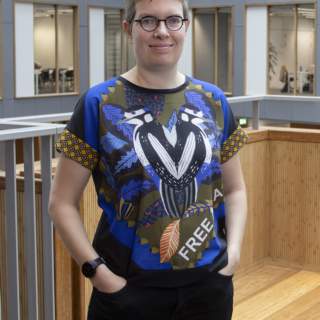
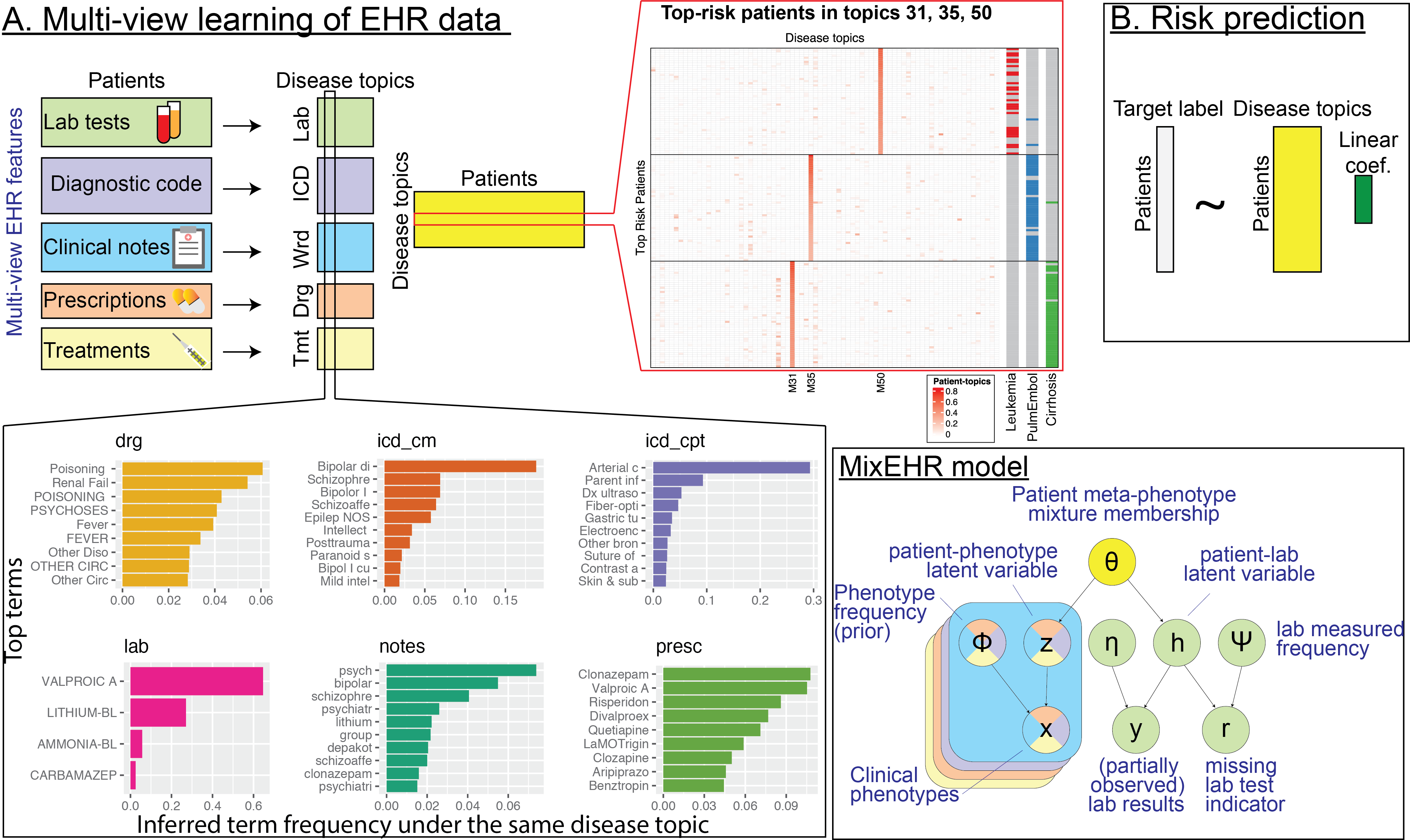
Yuè Li is a Professor in the Department of Computer Science at McGill University, where he leads the Li Lab focused on machine learning applications in genomics and healthcare. His research develops computational methods for analyzing electronic health records (EHR), single-cell multi-omics data, and population genetics. Dr. Li teaches core courses including Applied Machine Learning (COMP 551), Machine Learning in Genomics and Healthcare (COMP 565), and Computer Programming for Life Sciences (COMP 204). His research interests span: AI methods for computational biology and translational healthcare Multi-modal EHR integration and clinical topic modeling Time-series health forecasting and trajectory analysis Single-cell transcriptomics and epigenomics Polygenic risk modeling and causal variant inference Regulatory genomics and functional annotation integration Publications demonstrate strong focus on transformer architectures for healthcare forecasting, Bayesian methods for genomic inference, and neural topic models for clinical phenotyping. Recent work emphasizes foundation models for single-cell data and federated learning for EHR analysis. Scientific Awards: KDD HealthDay2022 Best Paper Award for seed-guided topic modeling Dr. Li mentors graduate students and postdoctoral researchers working on machine learning applications in biomedical domains. Current lab members include Master's students Bo-Hong Wang, Claris Gu, Neda Esfehani, and Ruilin Wang, along with postdoctoral researcher Dr. Jun Bai. The Li Lab operates within McGill's School of Computer Science, developing computational frameworks to integrate heterogeneous biomedical data for improved disease understanding and clinical decision support.