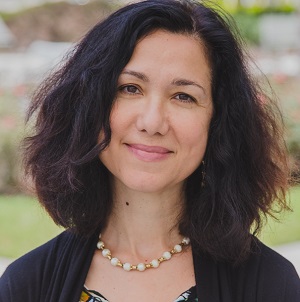
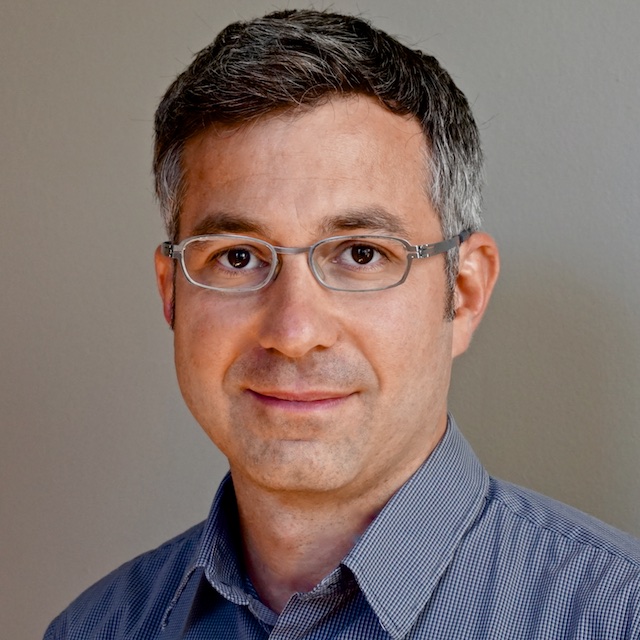
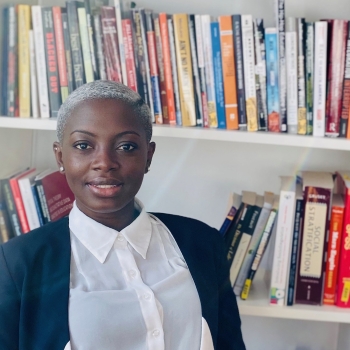
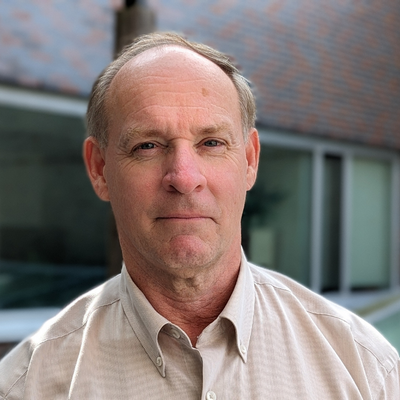
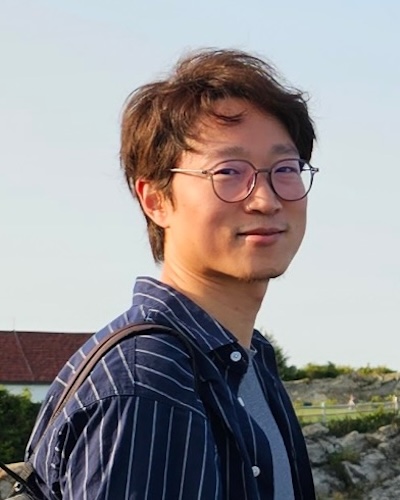
Adam M. Enders is an Associate Professor in the Department of Political Science at the University of Louisville. He also teaches advanced courses on measurement and scaling at the ICPSR Summer Program. His research examines the intersection of political psychology and societal dynamics, focusing on conspiracy theories, core values, partisanship, and polarization. Enders holds a Ph.D. (2016) and M.A. (2013) in Political Science from Michigan State University, and a B.A. (2011) in Political Science and Public Policy from Albion College. His work investigates how conspiratorial thinking influences public opinion, the role of racial prejudice in political behavior, and how subjective perceptions contribute to polarization. Publications appear in top journals like the American Journal of Political Science and Journal of Politics . He has also contributed to The Atlantic and Politico Magazine , analyzing modern conspiracism and its political ramifications. Teaching focuses include political psychology, public opinion dynamics, and quantitative research methods. His methodological expertise in scaling and measurement underpins much of his empirical work, emphasizing rigorous design to explore complex belief systems.
Golfo Alexopoulos is a Professor and Director of the USF Institute for Russian, European and Eurasian Studies at the University of South Florida's School of Interdisciplinary Global Studies. She holds a Ph.D. from the University of Chicago and an M.A. from Yale University. Her research focuses on Soviet and Russian authoritarianism, Stalinist systems, political violence, and human rights, with a particular emphasis on disinformation and medical exploitation in the Stalinist Gulag. A key work is Illness and Inhumanity in Stalin’s Gulag (2017), examining prisoner dehumanization through archival health records. Teaching spans contemporary Russian politics, comparative authoritarianism, and the Soviet Union. She integrates multimedia and personal experiences, including slides from her time in the USSR during Gorbachev, Yeltsin, and Putin eras. Her advising has supported students entering academia, diplomacy, and international law. Her research also explores Stalin’s disenfranchisement policies and Soviet citizenship through petitions discovered in Siberian archives. Current work links 20th-century Soviet authoritarianism to modern Russian disinformation strategies. She directs the USF Institute for Russian, European and Eurasian Studies, fostering interdisciplinary scholarship on global political systems.
Meredith A. Martin is a Professor of English at Princeton University and serves as the Faculty Director of the Center for Digital Humanities (CDH), established under her leadership in 2014. She specializes in anglophone poetry, historical prosody, and the intersection of digital humanities with literary studies. Her work bridges traditional literary analysis with computational methodologies, as seen in projects like the Princeton Prosody Archive (1570–1923) and her forthcoming book Poetry’s Data (2025), which explores critical data studies in humanities contexts. Her research interests extend to Victorian literature, modernism, and interdisciplinary approaches to poetry. She holds leadership roles in multiple initiatives, including co-editing the Journal of Cultural Analytics and serving on committees for the Princeton AI Lab and Language and Intelligence Center. Martin is also affiliated with the Center for Statistics and Machine Learning and the Program in Media and Modernity. Recognized for her mentorship, she has received the Princeton University Graduate Mentoring Award (2021) and the Clio Award (2023). She advises graduate students on digital humanities, critical data studies, and comparative poetics, while overseeing collaborative projects like the Nineteenth-Century Data Collective and the Historical Poetics Reading Group. Her publications include The Rise and Fall of Meter (2012), which won multiple awards, and recent contributions to PMLA , Victorian Studies , and Paideuma . She actively promotes interdisciplinary dialogue through teaching courses on digital culture, poetry, and literature’s relationship with other disciplines.
Gerome Miklau is a Professor of Computer Science at the University of Massachusetts Amherst, affiliated with the Manning College of Information and Computer Sciences (CICS). He leads the DREAM Lab and focuses on privacy, security, and equitable data management, particularly in differential privacy and fair data analysis. His work includes designing algorithms for private data synthesis, privacy-preserving SQL engines, and auditing systems like AuditGuard. He co-founded Tumult Labs to commercialize privacy technology and advised the U.S. Census Bureau on privacy for the 2020 decennial census. Education: Ph.D. in Computer Science from the University of Washington (2005), B.S. in Mathematics and Rhetoric from UC Berkeley (1995). Research Interests: Differential privacy, secure data management, fairness in algorithms, privacy-preserving data synthesis, and forensic database analysis. His lab develops tools like Ektelo and PrivateSQL, addressing challenges in privacy-accurate tradeoffs and scalable private data processing. Awards: 2006 ACM SIGMOD Dissertation Award, 2007 NSF CAREER Award, 2013 ICDT Best Paper Award, and two ACM PODS Test-of-Time Awards (2020 and 2012). Grants & Service: Co-chair of OpenDP Advisory Board, steering committee member for TPDP workshops, and organizer of the 'Data, Responsibly' Dagstuhl workshop. His service includes program committees for SIGMOD, ICML, and FAT*. He teaches courses on databases, privacy, and programming. Labs/Teams: DREAM Lab (Data systems Research for Exploration, Analytics, and Modeling) and collaborations with the Center for Data Science and Cybersecurity Institute at UMass Amherst.
Hariharan Subramonyam is an Assistant Professor (Research) at Stanford University's Graduate School of Education and Computer Science (by courtesy) . He serves as the Ram and Vijay Shriram Faculty Fellow at the Institute for Human-Centered AI (HAI) and is a core faculty member of Stanford HCI . His research bridges Human-Computer Interaction (HCI) and the Learning Sciences , focusing on augmenting human learning through AI via cognitively informed design practices, co-design with learners/educators, and transformative AI-enabled learning experiences. His work emphasizes ethical AI, responsible design, and human values in technology. He earned a PhD in Information from the University of Michigan under Eytan Adar. Current projects include Script&Shift (layered interfaces for LLM writing), AltCanvas (accessible image editing for BVI users), and CogGen (AI tutoring systems). His teaching includes EDUC 432: Designing Explorable Explanations and CS 448B: Data Visualization . Key Research Areas Cognitively Informed AI Systems Human-AI Collaborative Writing Accessible Generative AI Tools Ethical AI Frameworks Interactive Learning Environments Awards & Grants Best Paper Award (CHI 2025) Honorable Mention Award (CHI 2025) HAI Hoffman Yee Grant (2024) Cover Story in Interactions Magazine (2024) Collaborative Networks Co-organizing CHI 2025 Tools for Thought Workshop Contributor to UIST 2024 Dynamic Abstractions Workshop Advising PhD students across Stanford, Georgia Tech, and Duke Collaborations with institutions including University of Michigan, National University of Singapore, and Technical University Munich
Dr. Sol Gamsu is an Assistant Professor in the Department of Sociology at Durham University and Director of the MSc Sociology Programme. His work bridges sociology, geography, and history, focusing on spatial and temporal dimensions of educational inequality. PhD in Geography, King’s College London (2017) Masters and undergraduate degrees in interdisciplinary studies (sociology, history, geography, French/German) His research spans elite education, spatial inequality, and educational policy, using mixed methods, GIS, and critical theory. Recent publications examine class/racial disparities in UK schooling, neoliberal university reforms, and colonial legacies in elite institutions. 2021: Editorial Board, British Journal of Sociology of Education 2020: SAGE Prize for Sociological Research Online 2000: Invited speaker at international conferences He supervises PhD students in educational inequality and collaborates with organizations like the University and Colleges Union. His policy work critiques meritocracy, private school integration, and marketization of universities.
Mercy Agyepong is an Assistant Professor in the Sociology of Education program at New York University’s Steinhardt School of Culture, Education, and Human Development. Her research focuses on the racialization of Black students in U.S. schools, particularly sub-Saharan African youth, integrating critical social theory, postcolonial studies, and anti-Blackness frameworks. She holds a Ph.D. from the University of Wisconsin-Madison and advanced degrees from NYU, UPenn, and SUNY-Geneseo. Her work has been funded by AERA’s Division G and recognized with prestigious awards including the 2021 NYU Steinhardt Racial Justice Award and the 2022 NYU Dr. Martin Luther King, Jr. Faculty Award. Key research interests include urban education equity, immigrant student experiences, and dismantling systemic anti-Black structures in schooling. Agyepong’s publications span edited volumes and peer-reviewed articles, addressing topics like speculative fiction in antiracist pedagogy, postcolonial analyses of education policies, and the intersection of African diaspora identity with U.S. schooling systems. Her scholarship bridges theoretical rigor with grassroots advocacy for marginalized student populations.
Lena Wahlberg is an Associate Professor at the Department of Law, Lund University, and a Senior Lecturer within the Faculty of Law. As Deputy Head of Department and a core member of the Law, Evidence and Cognition (LEVIC) research group, she bridges legal theory with medical and scientific disciplines. Active in interdisciplinary projects (2015-2020 VBE program, 2022-2025 ethics review system project) Supervises doctoral students in international law and medical law Teaches evidence assessment, medical law, and legal theory Her research examines: Ontological differences between legal and scientific reasoning Epistemic gaps in medical evidence for legal decisions Ad hominem arguments in expert witness evaluations Science-policy interfaces in healthcare regulation UN Sustainable Development Goals (Substance Classification, Law, Philosophy) Interdisciplinary collaboration between law, medicine, and social sciences Recent work focuses on EU health data frameworks, abortion law reforms, and reimagining ethics review systems. Her publications span 92 outputs across legal philosophy, medical law, and regulatory theory. Collaborations include: Harvard Medical School Carnegie-Mellon University Swedish National Board for Medical and Social Evaluation (SBU) Faculty of Medicine, Lund University Funding sources: Swedish Research Council Riksbanken Jubileumsfond Söderberg Foundations Crafoord Foundation Key activities: Mock trial participant (2025), public debates, and EU healthcare policy presentations.
François Héran is a Professor at Collège de France, holding the Migrations and Societies Chair. With a background in philosophy, demography, and anthropology, he has conducted fieldwork in Spain, Bolivia, and the Netherlands, and worked at INED and INSEE. He co-founded the Institut Convergences Migrations in 2017. Institution: Collège de France Chair: Migrations and Societies Key Collaborators: Özge Biner (Research Engineer), Audrey Lenoël (Post-Doctoral Fellow), Laura Odasso (Researcher) His research spans the multifaceted dynamics of international migration, including demographic trends, integration challenges, policy frameworks, colonization legacies, and religion. He emphasizes empirical data, historical context, and ethical considerations. Recent lecture series (2024-2025) focus on religion and migration, following annual themes like colonization, law, and rhetoric. His work critiques data fluidity in migration studies while advocating for rigorous analytical frameworks. Scientific Awards Zellidja Scholarships for international study trips Héran leads seminars and lectures with multidisciplinary experts, fostering dialogue between academic and institutional stakeholders. He has shaped French migration statistics and policy discourse through surveys on family structures, language transmission, and discrimination.
Andres D. Uribe is an Assistant Professor of Political Science at the University of Wisconsin-Madison, where he also holds the 2024-25 Anna Julia Cooper Postdoctoral Fellowship. His research investigates the complex interactions between democracy, violence, and state formation in the Americas, with a particular focus on how armed non-state actors influence electoral politics and governance. Dr. Uribe earned his PhD in Political Science from the University of Chicago in 2023. Prior to joining UW-Madison, he was a Postdoctoral Fellow at Stanford University's Center on Democracy, Development, and the Rule of Law (CDDRL) during 2023-24. His scholarly work spans several critical areas in political science: democratic resilience against violent interventions, rebel governance in civil war contexts, and strategies of democratic backsliding . Through multi-method research combining large-N statistical analysis with in-depth case studies, Uribe examines how criminal organizations, rebels, and paramilitaries establish governance structures, influence elections, and interact with state institutions. His book project, War on the Ballot Box: How Violent Actors Corrupt and Disrupt Democracy , analyzes electoral interventions by armed groups across Latin America. Uribe's recent publications (2020-2025) reveal a consistent focus on non-state governance and democratic vulnerability. His work on criminal governance in Latin America demonstrates its surprising correlation with state presence, while studies of Colombian civil war dynamics show how rebels opportunistically exploit temporary state weaknesses. Research on Mexican democracy documents how presidential rhetoric can degrade public confidence in institutions—a key mechanism for democratic erosion. Collectively, these contributions illuminate the multifaceted challenges to democratic governance in conflict-affected societies. Dr. Uribe has received significant recognition for his work: Anna Julia Cooper Postdoctoral Fellow, University of Wisconsin-Madison (2024-25) Postdoctoral Fellow, Center on Democracy, Development, and the Rule of Law (CDDRL), Stanford University (2023-24) While specific details about his advising activities and research grants are not provided in the available materials, his collaborative publications with scholars across multiple institutions suggest active engagement in interdisciplinary research networks. His work frequently involves partnerships with experts in criminology, conflict studies, and comparative politics. Though no dedicated research laboratory is mentioned, Uribe's projects often employ innovative methodologies including text-as-data analysis, survey experiments, and spatial analysis of conflict data, indicating sophisticated research infrastructure support at his host institutions.
Anita Heber is a full Professor and Director of Studies for the Advanced Level in Criminology at Stockholm University's Department of Criminology. She leads the Victimological Research Group, established in 2021. Her work focuses on victimology, organized crime, trafficking, and crime policy, with over two decades of teaching and research experience. Research Interests : Victimology, policing and desistance, masculinities and victimhood, migration-crime linkages, media representation of crime, and policy analysis. Current projects include Policing Gang Desistance (qualitative study of police-led programs) and Men as Victims (courtroom masculinity and victim credibility). Recent Contributions : 2024 articles in British Journal of Criminology and International Review of Victimology analyze victim credibility and sex trafficking narratives. Earlier work includes studies on drug networks and Swedish crime policy bills. Teaching : Supervises two PhD students and teaches victimology, criminological theory, and media-crime intersections. Courses include Victimology (7.5 ECTS) and Media and Crime (advanced level). Visiting Positions : Held fellowships at Monash University (2015), Oxford University (2009), and Keele University (2003).
Felix Römer is a historian at the Humboldt-Universität zu Berlin , currently holding a Heisenberg Fellowship from the Deutsche Forschungsgemeinschaft (DFG). He has been affiliated with the Philosophische Fakultät since 2019, previously serving as a wissenschaftlicher Mitarbeiter (research assistant) and Lehrstuhlvertreter (chair representative) for Social and Economic History. His research focuses on post-1945 Western European history and German history before 1945 , particularly economic inequality knowledge in Britain and West Germany, cultural and violence history of the Nazi state, and military history of WWII and the Wehrmacht. Römer holds a Habilitation (2021) from Humboldt-Universität, where he was also recognized for his work on Economic Inequality and Social Justice . He received his PhD in 2007 from Christian Albrechts-Universität Kiel and studied Modern and Ancient German History, Modern European Literature, and Ancient History at universities in Kiel and Lyon (1999-2003). His Carl Erdmann Prize (2023) from the Verband der Historiker und Historikerinnen Deutschlands Heisenberg Fellowship (2022) from DFG highlight his contributions to historical scholarship. His recent publications, such as Inequality Knowledge (2023) and Social Justice after the 20th Century (2025), explore statistical epistemology of economic inequality post-war welfare state transformations political legitimization of neoliberal policies historical roots of poverty and wealth narratives His work The Politics of Measurement (2019) and Knowledge Regimes of Economic Inequality (2021) demonstrates expertise in data politics and comparative historical analysis. As a Research Fellow , he leads the Fritz Thyssen Stiftung-funded project Wie die Deutschen die oberen 1% entdeckten , examining the social construction of economic inequality statistics in post-war West Germany.
Dane Rowlands is a Professor of International Affairs at the Norman Paterson School of International Affairs, Carleton University, where he has taught since 1994. His research spans IMF programs , sovereign debt , development assistance , conflict economics , and international migration . He teaches courses on international finance and conflict economics . International Monetary Fund World Bank and Multilateral Financial Institutions Development Assistance Conflict and Development Migration Policy His scholarly output includes empirical analyses of IMF program effectiveness, studies on disaster philanthropy, and methodological innovations in conflict mediation. Recent work explores remote sensing applications for infrastructure resilience and human rights interdependencies.
Xiaoke Jia serves as Senior Lecturer in Chinese Language and coordinator of the Chinese language program within Bowdoin College's Asian Studies Program. Holding an M.A. in Linguistics and Applied Linguistics from Beijing Normal University and a B.A. from Henan University, he brings extensive expertise in Chinese language pedagogy developed through teaching roles at Princeton University, Bowdoin College, and international programs. Education: M.A. in Linguistics and Applied Linguistics, Beijing Normal University B.A., Henan University Dr. Jia's research centers on language pedagogy, second language acquisition, and Chinese lexicology, with current focus on innovative program development strategies. He pioneers approaches integrating cultural experiences through project-based learning, incorporates Chinese literature into advanced courses, and cultivates international study partnerships. His work emphasizes authentic cultural exposure and leverages Chinese culinary traditions to deepen linguistic understanding. Analysis of his 13 conference presentations (2014-2023) reveals consistent specialization in advanced Chinese language instruction, particularly literary integration, writing skill development, and cultural contextualization. His research demonstrates evolving methodology from quantitative textbook analysis to creative literary applications, addressing challenges in teaching higher-level Chinese through avant-garde literature, rhetorical devices, and genre-based writing. Dr. Jia's teaching career spans Princeton University (2010-2013), Bowdoin College (2008-2010 and current), Princeton in Beijing program (multiple summers including 2020-2021), and Beijing-based institutions. He actively contributes to professional communities through the New England Chinese Language Teachers Association and ACTFL conferences, while connecting language learning with cultural immersion through Chinese culinary practices.
Andrew Engelhardt is an Assistant Professor of Political Science at Stony Brook University, with a PhD from Vanderbilt University and a B.A. from The College of William & Mary. He previously held positions at the University of North Carolina, Greensboro and Brown University’s Taubman Center. His research focuses on how political psychology shapes responses to racial inequality in liberal democracies, emphasizing the development of racial attitudes and their impact on political decisions. Research interests include group-centric thinking in American politics, racial socialization priorities, and linking theoretical constructs to empirical measures. Methodologically, he employs diverse approaches across populations. His work has been published in top journals like American Political Science Review and American Journal of Political Science, and covered by major media outlets. Key awards include the 2022 ISPP Roberta Sigel Award for early-career scholars. Engelhardt has contributed to projects like the UNC System’s Free Expression and Constructive Dialogue initiative. His teaching spans courses on American elections, race relations, and statistical methods in political science.