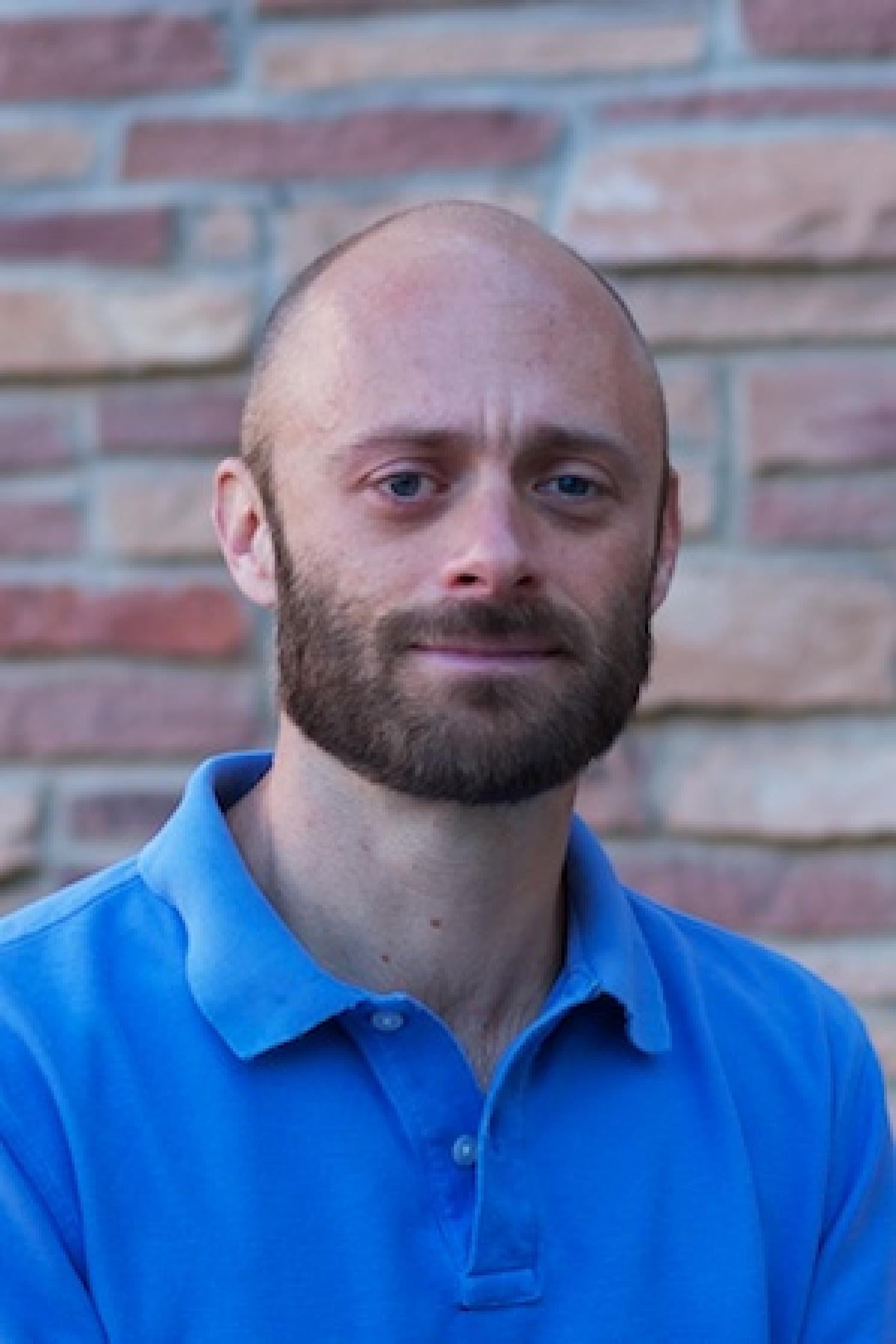
Zhi Zhao is a Researcher at the University of Oslo's Faculty of Medicine, affiliated with the department of Statistical learning in molecular medicine. His work focuses on statistical and computational methods applied to molecular medicine, including omics data analysis, pharmacogenomics, and cancer genomics. Research Interests Statistical learning for multi-omics data integration Bayesian variable selection in drug sensitivity studies Biomarker discovery for immune-related diseases Survival analysis modeling in clinical applications Key Contributions Developed R packages like BayesSUR for multivariate Bayesian regression and EnrichIntersect for set enrichment analysis. His recent work includes studies on immune checkpoint inhibitor toxicity biomarkers and pan-cancer drug response prediction. Awards No scientific awards explicitly mentioned in the provided text. Labs/Teams Core member of the Statistical learning in molecular medicine research group.
Ayse Bilgin is a Professor in the School of Mathematical and Physical Sciences at Macquarie University, Australia. She serves as Vice President of the International Statistical Institute (ISI) (2025–2029) and held leadership roles in the International Association for Statistical Education (IASE), including President (2021–2023) and Past President (2023–2025). Her research focuses on statistical applications in health sciences and innovative pedagogical methods in statistics education. Educational Background: Ayse holds a BEng, MBA, MMaths, PhD, PostGradDip HE (L&T), and MHE (L&M). She is among the first 100 women in Australia to achieve the title of Professor. Research Interests: Her work spans statistical education, including learning approaches, work-integrated learning, and the ethical use of infographics. She also investigates health-related statistical analyses, such as breast cancer metastasis and biomarker studies. Recent Publications: Her 2024–2025 articles address ethical statistical practices, citizen engagement with open government data, and innovative teaching methods like flipped classrooms. She emphasizes ethical awareness in data visualization and workforce readiness through project work. Awards: Recipient of multiple teaching awards, including the Australian Learning and Teaching Council Citation and finalist for the Eureka Prize. Recognized for excellence in research impacting healthy populations. Grants & Projects: Active in projects like 'Protein Biosignatures for Colorectal Cancer' and 'Academic Integrity Policies for Online Assessment'. Supervised 11 HDR students and 23 Master’s projects, with ongoing co-supervision of 2 PhD candidates. Labs/Teams: Affiliated with the Frontier AI Research Centre and collaborates internationally on statistics education and health research.
Karel A. Kroeze is a Researcher at the Behavioural Data Science Institute (BDSI) at the University of Twente, specializing in Instructional Technology. With an h-index of 52, he has established himself as a significant contributor in the fields of adaptive learning systems, educational data mining, and psychometrics. His work bridges computer science, statistics, and educational theory to develop innovative assessment and feedback mechanisms. His educational background includes a Master's degree in Methodology and Statistics for the Behavioural, Biomedical and Social Sciences from Utrecht University (2015) and a Bachelor's degree in European Studies from the University of Twente (2013). This interdisciplinary foundation supports his current research in complex data analysis for educational applications. Kroeze's research focuses on developing adaptive systems for learning environments, particularly in inquiry-based education. His work on automated hypothesis assessment, concept mapping, and computerized adaptive testing demonstrates his commitment to improving educational outcomes through data-driven approaches. He explores how adaptive scaffolds, learner models, and automated feedback can enhance the quality of student inquiry and hypothesis formation in science education. His publication record shows consistent output from 2014 through 2024, with recent work expanding into health economic modeling validation and electoral system analysis. This demonstrates both depth in his core educational technology domain and breadth across applied statistical methods. As evidenced by his numerous datasets on GitHub related to adaptive hypothesis grammars across multiple domains (Electrical Circuits, Supply and Demand, Buoyancy, Photosynthesis, and Heat transfer), Kroeze develops practical tools that parse and assess student hypotheses in various scientific contexts. His research contributes to several UN Sustainable Development Goals, particularly in the area of quality education.
Pieter-Tjerk de Boer is an Associate Professor at the University of Twente , affiliated with the Electrical Engineering, Mathematics and Computer Science (EEMCS) faculty. He holds dual roles in the Design and Analysis of Communication Systems (Computer Science) and the Digital Society Institute . His research focuses on rare-event simulation, communication systems, and mathematical performance analysis. He earned his PhD in 2000 from the University of Twente with a thesis on queueing models for telecommunication systems. Key research areas include stochastic performance analysis (e.g., importance sampling techniques for queueing networks), computer networking (DNS analysis, IPv6 security), and radio technology (MIMO receivers, harmonic rejection mixers). His work bridges theory and application, addressing challenges in reliability, security, and efficiency of digital systems. Notable contributions include advancements in statistical model checking, automated rare-event simulation for stochastic Petri nets, and open-source intelligence analysis using radio receivers. His findings are published in journals like Simulation , IEEE Transactions , and Performance Evaluation , with over 98 research outputs since 1996. Collaborations span academia and industry, including work on cybersecurity, network management, and hardware-software co-design. Media engagements include discussions on radio receiver usage patterns during the Ukraine war and IPv6-related network vulnerabilities.
Dr. Natalie Harvey is a Senior Research Scientist at the Department of Meteorology, University of Reading. She specializes in atmospheric transport processes, volcanic ash dispersion modeling, and uncertainty quantification in natural hazard forecasts. Her work focuses on improving volcanic ash forecasting through advanced model techniques and satellite data integration. She is affiliated with projects like R4Ash, IMPALA, and RACER, addressing volcanic hazards and climate-related risks. Her research interests include boundary layer dynamics, remote sensing applications, and decision-making under uncertainty. She has contributed to over 30 peer-reviewed articles, analyzing volcanic eruptions such as Raikoke 2019 and Grímsvötn 2011. Her methods enhance forecast accuracy by integrating ensemble meteorology and source inversion techniques. Notably, she explores how AI models compare to traditional physics-based approaches in weather prediction, highlighted in a 2024 study on Storm Ciarán. Dr. Harvey holds a PhD from the University of Reading (Boundary-layer type classification and pollutant mixing) and has developed classification algorithms for atmospheric layers using Doppler lidar. She collaborates with institutions like the Met Office and has received international recognition for her work in volcanic ash transport and dispersion modeling.
Professor Rein Houben is a Professor of Infectious Disease Epidemiology at the London School of Hygiene & Tropical Medicine (LSHTM), where he is affiliated with the Department of Infectious Disease Epidemiology and Dynamics within the Faculty of Epidemiology and Population Health. He co-leads the LSHTM TB modelling group and has been instrumental in developing and implementing the TIME model to support countries in their TB policy decision-making. Professor Houben's research focuses on redefining our understanding of tuberculosis beyond the traditional binary view of 'latent' versus 'active' TB to recognize a complex spectrum of disease states. His work combines empirical data with mathematical modeling to address key scientific and policy questions related to TB. He has made significant contributions to understanding subclinical TB, transmission dynamics, and the structural determinants of TB including nutrition, climate health, and poverty. His research examines the full TB spectrum from Mtb infection through various stages of disease, including non-infectious and subclinical forms that may be infectious but not traditionally detected. His recent publications reveal a strong focus on the intersection of TB with climate change, nutritional status, and social determinants, while also developing sophisticated modeling tools to inform policy decisions. Professor Houben's work consistently addresses the practical implementation challenges of TB control programs and seeks to bridge the gap between theoretical models and real-world application. Professor Houben currently co-supervises 5 PhD students exploring questions around TB natural history, subclinical TB, post-TB sequelae, and community-wide screening for TB. His research has been funded by major organizations including the National Institutes of Health (US), National Institute for Health and Care Research (UK), Wellcome Trust, European Research Council, Bill and Melinda Gates Foundation, and the World Health Organisation. He is actively involved in teaching at LSHTM, serving as a module co-organizer for EP202: Statistical Methods in Epidemiology and running the Virtual Ethics Committee exercise for the Online MSc Epidemiology course. He has supervised more than 20 MSc projects throughout his career and continues to mentor the next generation of TB researchers.
Davorka Gulisija is an Assistant Professor in the Department of Biology at the University of New Mexico. She holds a Ph.D. in Integrative Biology from the University of Wisconsin (2013). Her research focuses on evolutionary theory of rapid molecular adaptation, complex trait genomics, population genetics of microorganisms, and the integration of mathematical modeling with machine learning approaches. Her work addresses fundamental questions in evolutionary biology, including how organisms adapt to rapid environmental changes and how social structures influence pathogen evolution. Dr. Gulisija's research interests span comparative biology, computational genomics, and theoretical biology. She explores topics such as phenotypic plasticity in patchy habitats, genomic responses during environmental transitions, and the interplay between recombination and gene clustering in periodic environments. Her lab is located in CAST 119, and she maintains an active research program involving statistical genetics and systems biology approaches. Her recent work (2020–2025) has emphasized evolutionary rescue mechanisms in changing environments, the evolutionary costs of social stratification in pathogens, and computational methods for uncovering genetic signatures of adaptation. While no specific grants or awards are noted here, her publications reflect sustained contributions to evolutionary genomics and theoretical population biology.
Lisa Miracchi Titus is a tenured Associate Professor of Philosophy at the University of Denver, with prior appointments at the University of Pennsylvania. Her research focuses on the nature of intelligence across biological and artificial systems, integrating epistemology, ethics, cognitive science, and AI. Her work examines foundational questions about agency, knowledge, and rationality, with applications to AI ethics, feminist philosophy, and social justice. Current projects include ethical frameworks for autonomous weapons, societal impacts of feminized AI interfaces, and complexity in cognitive systems. Recent publications critique statistical approaches in large language models (2023), develop virtue-based epistemic frameworks (2023), and advocate interdisciplinary research on gendered AI impacts (2022). Her monograph 'Wholly Intelligent' (under development) proposes integrated approaches to ethical AI research. Awards: National Endowment for the Humanities Fellowship supporting her monograph research. Advising & Service: Actively mentors underrepresented scholars, designed PhD wellness programs, and promotes LGBTQ+ visibility in academia. Collaborates with robotics labs (GRASP at UPenn) and contributes to AI policy discussions.
Michaela Bačíková is an Assistant Professor at the Faculty of Electrical Engineering and Informatics (FEI) of the Technical University of Košice (TUKE). Her research focuses on Human-Computer Interaction (HCI), domain usability, and domain analysis, with an emphasis on graphical user interfaces (GUIs), domain-specific languages (DSLs), and gesture-driven interaction. She leads the development of the DEAL tool, a domain analysis framework for extracting domain models from software systems. Her teaching includes courses on component-based programming, web technologies, and user interface design. Research Projects: DEAL (Domain Extraction ALgorithm) : A tool for analyzing GUIs to generate DSLs, ontologies, and usability metrics. EU Project: 'Evolving Architectural Knowledge in the Edge-to-Cloud Continuum' (participant). Educational initiatives: Integrating gesture-driven IDEs and social networks for mentoring in programming courses. Research Interests : Automated domain usability evaluation using DEAL. DSL-driven GUI generation and feature modeling. Innovations in teaching software development and user experience design. Grants & Labs : Recipient of FEI TUKE Grant no. FEI-2015-16 for domain usability metrics research. Active in the FEI lab developing DEAL and related tools.
Eric A. Suess is a Professor in the Department of Statistics and Biostatistics at California State University East Bay, with a joint appointment in the College of Engineering. He served as Department Chair until Spring 2015, after which he focused on developing and teaching courses related to Data Science, Machine Learning, and AI. His educational background isn't explicitly stated in the provided text, but he holds a Ph.D. and has extensive experience in academia. Professor Suess's research interests span a wide range of statistical and computational fields. His primary areas include Bayesian Statistics, Time Series Analysis, Applied Probability, Stochastic Processes, and Simulation. Since 2015, he has expanded his focus to include Data Visualization, Statistical/Machine Learning, Natural Language Processing, and Deep Learning. As of Fall 2023, he has been experimenting with Large Language Models for applied NLP problems, and since Spring 2024, he has been working with open-source small language models (SMLs) from ollama. His work demonstrates a consistent progression from traditional statistical methods to cutting-edge computational approaches. His scholarly publications show a strong emphasis on computational statistics, Bayesian methods, and practical applications across various domains including meteorology, environmental science, and public health. His most recent work focuses on precipitation forecasting accuracy, analysis of coronavirus events using hierarchical Bayesian models, and air quality monitoring systems. JSM 2018 Vancouver, Data Competition Winner for "Accuracy of Precipitation Forecasts" JSM 2018 Vancouver, First Prize for poster presentation "Classroom Demonstration: Deep Learning for Classification and Prediction" JSM 2011 Miami, Third Prize for "Effect of Oil Spill on Birds: A Graphical Assay of the Deepwater Horizon Oil Spills Impact on Birds" Professor Suess has been advising Engineering Management MS students on Capstone Projects related to Data Science applications since Fall 2016. These projects cover topics including Time Series Forecasts, Natural Language Processing, Process Control, and other data science applications in engineering management. He has also co-authored the book "Introduction to Probability Simulation and Gibbs Sampling with R" published by Springer-Verlag in 2010, which has become a valuable resource for students and practitioners. His department offers several degree programs including MS in Statistics (with options in Applied Statistics, Data Science, Mathematical Statistics, and Actuarial Science), MS in Biostatistics, and BS in Statistics (with a concentration in Data Science). He has been instrumental in developing the Data Science curriculum at CSUEB.
Emanuele Taufer is a Full Professor of Statistics at the Department of Economics and Management of the University of Trento. His academic career includes roles as Vice Director of the Department of Computer Science and Business Studies and Faculty Delegate for International Relations. He holds a Ph.D. in Statistics from Cardiff University, an M.Sc. in Mathematical Statistics from George Washington University, and a Laurea in Economics from the University of Trento. His research focuses on statistical inference, stochastic processes, goodness-of-fit tests, and applications in ESG analysis. Notable contributions include work on exponentiality testing, graphical models, and financial dependence modeling. He has been recognized for his 2002 paper on mean residual life characterization at the SIS2002 conference. Recent research trends emphasize methodological advancements in ESG performance measurement, sparse network estimation for heavy-tailed data, and generalized precision matrices for financial risk modeling. His work spans theoretical statistics, applied econometrics, and interdisciplinary topics like environmental governance. Education: Ph.D. in Statistics, Cardiff University (UK) M.Sc. in Mathematical Statistics, George Washington University (USA) Laurea in Economics, University of Trento (Italy) Professional Roles: Full Professor of Statistics at University of Trento (2003–present) Associate Professor (2003–2003), Assistant Professor (1996–2002) Awards: 2002 SIS2002 Recognition for innovative statistical testing methodology Key Research Themes: Stochastic processes and estimation ESG methodology and financial reporting High-dimensional data analysis Goodness-of-fit tests and tail index estimation
Jon Rees is an Associate Professor in Applied Research Methodology at the University of Sunderland's School of Psychology , with additional roles as a Research Fellow spanning Psychology, the Helen McArdle Nursing and Care Research Institute (HMNCRI) , and Sunderland City Council . He serves as a strategic lead for adult health research within HMNCRI and a faculty research coordinator for postgraduate students. Education: BSc in Infection and Immunity from Imperial College (1992), followed by a career transition from medical microbiology to psychology via a postgraduate conversion course at Sunderland. Research Focus: Health innovation, statistical analysis of medical data, cognitive psychology (episodic memory), male mental health, and addressing health disparities through ambulance-based interventions and pharmacist-led clinics. Teaching: Leads modules in Psychology of Addiction, Advanced Quantitative Methods, and Mental Health at both undergraduate and postgraduate levels. Coordinates interprofessional learning (IPL) initiatives. Collaborations: Works with Health Innovation NENC, NHS professionals (pharmacists, physiotherapists, NEAS), and the Faculty of Education and Society to enhance health outcomes via data-driven approaches. Key Publications (2025-2020): Explores Post-COVID Syndrome, AI in primary care, lipid therapy optimization, and autism-related victimization studies. Email: jon.rees@sunderland.ac.uk
Dr. Apurva Narayan is an Affiliate Professor in Computer Science and Data Science, and an Associate Member in Mechanical Engineering at the University of British Columbia's Irving K. Barber Faculty of Science. His research focuses on artificial intelligence, machine learning (particularly explainable AI and quantum ML), data mining, cybersecurity of cyber-physical systems, and decision-making under uncertainty. He holds a PhD from the University of Waterloo (Systems Design Engineering) and a Bachelor's in Electrical Engineering from Dayalbagh Educational Institute. Education: PhD in Systems Design Engineering, University of Waterloo (2015) Bachelor of Engineering in Electrical Engineering, Dayalbagh Educational Institute (2008) Research Interests: Explainable AI/ML and quantum machine learning Data analytics and mining Safety/security of cyber-physical systems Graph-theoretic analysis of complex systems Decision-making under uncertainty Reverse engineering complex software systems Awards: Systems Society of India Young Scientist Award (under 40) MITACS Accelerate Award (2013) Dr. T.E. Unny Memorial Award (2011) Multiple teaching nominations at University of Waterloo Advising & Grants: Supervises graduate students in AI/ML and cybersecurity. Secured grants including MITACS Accelerate and Waterloo scholarships. Active in patent filings related to timed regular expressions. Labs/Teams: Engaged in collaborations within the UBC Department of Computer Science and cross-disciplinary projects with Mechanical Engineering on system reliability and quantum computing applications.
Debbie J. Dupuis is a Professor at the Department of Decision Sciences at HEC Montréal. Her research focuses on Extreme Value Theory , Robust Statistics , and Statistical Modeling , with applications in Environmental Data Analysis , Climate Change , and Financial Engineering . M.Sc. (Mathematics and Statistics) - Queen’s University Ph.D. (Mathematics and Statistics) - University of New Brunswick She supervises M.Sc. and Ph.D. students in Financial Engineering and Business Analytics , with projects related to Climate Derivatives , Extreme Value Modeling , and Environmental Risk . Her recent work includes modeling Mesoscale Convective Systems , analyzing Urban Heat Island Persistence , and studying Causal Mechanisms in Hydrological Extremes . Key publications span robust statistical methods, environmental extremes, and financial risk. She is a Fellow of the American Statistical Association and a member of GERAD (Group for Research in Decision Analysis). Awards include editorial roles at Journal of the American Statistical Association and contributions to methodological advancements like Robust VIF Regression .
Matt Jones is a Professor in the Department of Cognitive Psychology and Neuroscience at the University of Colorado, affiliated with the Institute of Cognitive Science. He holds a PhD from the University of Michigan (2003). His research focuses on human learning mechanisms, computational modeling of cognitive processes, and applications in clinical and occupational settings. Key interests include reinforcement learning, perceptual knowledge, and the development of algorithms inspired by human cognition. His work spans interdisciplinary domains such as neurocognitive interventions for irritability, safety in construction via VR/AR technologies, and robust machine learning systems. Notable areas of exploration include Bayesian methods for online learning, neuroplasticity in behavioral therapy, and the dynamics of pain perception. Recent publications highlight contributions to algorithmic robustness, human-AI interaction, and computational psychiatry. His lab investigates how temporal structure influences learning and applies these insights to improve training protocols and clinical outcomes. No scientific awards are explicitly listed, though his work includes collaborations on grants related to cognitive modeling and safety engineering. Matt leads the Jones Laboratory, focusing on bridging theoretical models with practical applications in education, healthcare, and occupational safety. His research integrates behavioral experiments with advanced computational techniques, emphasizing translational impact across disciplines.






.jpg)