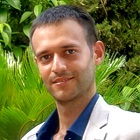
Professor Jinyan Li is an Adjunct Professor at the University of Technology Sydney's Data Science Institute, where he leads the Bioinformatics Program. His research develops computational methods for genomic analysis, protein interaction prediction, and biomedical data mining. Educational background: PhD in Computer Science (University of Melbourne) M.Eng in Computer Engineering (Hebei University of Technology) B.Sc in Applied Mathematics (National University of Defense Technology) Research spans: Genomic error correction algorithms Protein binding prediction Single-cell multi-omics analysis CRISPR design optimization Machine learning in bioinformatics With 140+ journal publications and 100+ conference papers, his work appears in leading venues including Bioinformatics, Nucleic Acids Research, and IEEE TKDE.
Joshua I Glaser is an Assistant Professor at Northwestern University, holding dual appointments in the Department of Neurology (Feinberg School of Medicine) and the McCormick School of Engineering. His research focuses on computational neuroscience, particularly the neural control of movement and interpretable machine learning. Glaser earned a BS in Physics and Math from the University of Illinois Urbana-Champaign (2011), a PhD in Neuroscience from Northwestern University (2018), and completed postdoctoral training at the University of Pennsylvania and Columbia University. Research Interests: Glaser’s lab develops interpretable machine learning tools to understand neural computations underlying movement and behavior. Key areas include neural population interactions, flexible behavior control, and disease-related neural dynamics. Projects include interpretable dimensionality reduction, decoding models linking neural activity to behavior, and multi-population neural interaction analysis. Lab & Collaborations: The Glaser Lab collaborates with experimental neuroscientists and statisticians. Current projects involve developing novel methods for analyzing neural data while maintaining interpretability. They host a team of PhD, master’s, and undergraduate students. Grants & Awards: While no specific awards are listed, his work reflects sustained funding in computational neuroscience and engineering. Code & Resources: Lab-developed tools include Neural_Decoding (machine learning for neural decoding), SSM (state-space models), and Sparse Component Analysis (interpretable latent factor analysis). These are publicly available on GitHub.
Miriam (Mimi) Brinberg is an Assistant Professor at The Ohio State University, focusing on interpersonal interactions in both face-to-face and digital contexts. Her research emphasizes understanding conversational dynamics, relational processes, and methodological innovations for studying human behavior. She applies techniques like intensive longitudinal data, ecological momentary assessments, and unobtrusive digital monitoring (e.g., screen capture analysis) to reveal how interaction patterns shape individual and relational outcomes. Brinberg’s work intersects with fields such as communication studies, psychology, and digital media. She co-founded the LHAMA initiative to disseminate longitudinal methods for analyzing interpersonal interactions. Key areas of exploration include screen use behaviors (e.g., 'screenertia'), digital dating abuse perceptions, and the impact of educational media on parent-child communication. Her recent publications (2021–2025) highlight methodological advancements (e.g., state space grids, sequence analysis) and applied topics like emotional well-being apps, relational turbulence in marriages, and campaign-induced communication. She advocates for rigorous, ecologically valid approaches to studying daily interactions, often leveraging smartphone data and screenome frameworks. Brinberg’s research bridges theoretical and applied domains, aiming to decode the 'black box' of everyday conversations and their societal implications. She collaborates on projects like the Human Screenome Project to analyze digital life experiences and their impacts on human behavior.
Raquel Dias is an Assistant Professor in the Department of Microbiology & Cell Science at the University of Florida. Her research focuses on integrating computational biology, genomics, and machine learning to address challenges in agriculture, microbial ecology, and human health. Key areas include genomic sequence analysis, protein structure-function relationships, and the application of AI in clinical diagnostics. Education details are not explicitly provided in the text, but her publications suggest advanced training in computational biology, bioinformatics, and microbiology. Her work spans diverse topics such as soil microbiome dynamics in agricultural systems, genetic risk prediction for hearing disorders, and developing novel machine learning models for genotype imputation. Research interests emphasize interdisciplinary approaches, including: Machine learning applications in genomics and proteomics Microbial community analysis in environmental and clinical contexts Development of predictive models for disease progression and genetic associations Her recent publications highlight trends in AI-driven genomic analyses, polygenic risk scoring, and the functional characterization of uncharacterized proteins. Notable projects include the STICI and InteracTor tools for genomic and protein analysis. No scientific awards or grants are explicitly listed in the provided text. She maintains an active lab focused on computational biology and microbial genomics, collaborating with institutions in Brazil and the U.S. on projects related to crop improvement, soil health, and human health informatics.
Prof. Timo Gerkmann is a Professor at the University of Hamburg's Department of Informatics, leading the Signal Processing Research Group. His research focuses on statistical signal processing and machine learning for speech and audio applications, including communication devices, hearing aids, audiovisual media, and human-machine interfaces. He previously held roles at Technicolor Research & Innovation, KTH Royal Institute of Technology, and Siemens Corporate Research. His work emphasizes generative models, diffusion-based approaches, and acoustic signal enhancement. He currently serves as Senior Area Editor of the IEEE/ACM Transactions on Audio, Speech, and Language Processing. Research Interests: Statistical Signal Processing for Speech and Audio Machine Learning Applications in Acoustic Environments Diffusion Models for Audio Restoration Audio-Visual Speech Enhancement Human-Machine Interaction Systems Acoustic Scene Analysis Publications Highlight Trends: Recent works focus on diffusion models for speech enhancement, generative approaches to dereverberation, and audiovisual multimodal analysis. He has pioneered frameworks like ReverbFX datasets and FlowDec codecs, emphasizing perceptual quality and unsupervised domain adaptation. Advising & Grants: While no specific students or grants are listed, his research group actively publishes in top venues, indicating sustained academic contributions. His work bridges theoretical signal processing with applied systems engineering. Labs/Teams: Leads the Signal Processing (SP) Research Group at UHH, specializing in cutting-edge audio technologies and human-centric signal processing solutions.
Dr. Nicole Hufnagel is affiliated with the Chair of Financial and Actuarial Mathematics at Heinrich Heine University Düsseldorf. Her research focuses on Machine Learning applications in finance, stochastic processes (including self-similar and interacting particle systems), and statistical inference for stochastic processes. She holds a PhD in Mathematics from TU Dortmund (2022), where she also conducted teaching activities during her studies. At Heinrich Heine University, she has taught courses including Game Theory, Financial Mathematics, Markov Chains, and Probability Theory. Her recent publications address topics like collision dynamics in stochastic systems, Bessel processes, and statistical methodologies for financial modeling. Teaching Roles: Heinrich Heine University: Seminar in Game Theory (2024), Tutorials in Financial Mathematics I/II, Markov Chains, and Probability Theory. Technical University of Dortmund (past roles): Tutorials in Analysis, Stochastic Processes, and Financial Mathematics-related courses. Research Contributions: Her work bridges theoretical stochastic analysis with practical applications in finance. Key areas include the statistical analysis of Bessel and Dunkl processes, ergodic diffusions, and log-gas collision dynamics. She co-authored papers in journals such as AIP Advances and Statistical Inference for Stochastic Processes .
Hudson Smith is an Assistant Professor in the Department of Mathematical and Statistical Sciences at Clemson University, College of Science. His research focuses on integrating domain knowledge with machine learning to address data-constrained problems in healthcare, forensics, and physics. He holds a PhD in theoretical atomic physics from Ohio State University, combining first-principles approaches with data-driven methods. Key areas of research include medical imaging analysis (e.g., ultrasound quality assessment), forensic decomposition modeling (geoFOR database collaboration), and AI detection of coordinated disinformation campaigns. His work bridges theoretical physics (quantum systems, cold atoms) with applied machine learning in healthcare and social media analysis. Publications highlight contributions to AI in trauma care, forensic science, and social media disinformation detection. Active collaborations span forensic science, biomedical informatics, and quantum physics. GitHub repositories showcase contributions to visualization tools (e.g., Schrödinger equation solvers, Voronoi-based image stylization).
Martin Drews is a Professor at the Department of Technology, Management and Economics at the Technical University of Denmark (DTU). His research focuses on climate economics, risk management, and energy policy with an emphasis on adaptation to climate change. He is actively involved in projects addressing compound climate extremes, flood risk assessment, and decision-making frameworks under uncertainty. Key research areas include reinforcement learning applications in climate adaptation, coastal flood modeling, and interdisciplinary approaches to disaster resilience. He co-leads initiatives like the Horizon-RIA ACCRUE project and supervises multiple PhD students investigating climate policy, multi-hazard risk assessment, and compound event dynamics. Recent studies emphasize the intersection of machine learning with climate adaptation, statistical methods for extreme event analysis, and the water-energy nexus. His work contributes to UN Sustainable Development Goals related to climate action, resilient infrastructure, and sustainable cities. Dr. Drews collaborates internationally on projects such as compound event modeling in Denmark and Baltic Sea region studies. He has authored over 99 publications, with recent work highlighted in journals like Natural Hazards and Earth System Sciences and Bulletin of the American Meteorological Society .
Dr. Mizanur Khondoker is an Associate Professor in Medical Statistics at Norwich Medical School, University of East Anglia, with affiliations in Population Health and Norwich Epidemiology Centre. His research program focuses on developing advanced statistical methodologies for healthcare applications including dementia risk prediction, electronic health records analysis, and clinical trial design. He holds a PhD in Statistics from the University of Edinburgh, an MSc in Biostatistics from University of Dhaka, and postgraduate teaching qualifications from King's College London. As a Fellow of the Higher Education Academy, he maintains active roles in academic leadership including editorial positions for Statistical Methods in Medical Research. Khondoker's methodological research spans machine learning applications in genomics, longitudinal data modeling for cognitive decline trajectories, and dynamic prediction models. His clinical collaborations address pressing issues in mental health, neuroepidemiology, and post-pandemic health outcomes. Recent interdisciplinary work examines social prescribing interventions for dementia care and inflammation-related comorbidities. His publication record demonstrates consistent focus on psychiatric epidemiology and medical statistics, with emerging interests in the neurological sequelae of viral infections and health disparities. Methodological innovations appear in analysis of complex biobank datasets and causal inference techniques for observational studies. As principal investigator on multiple NIHR-funded projects, he leads research on anxiety assessment in stroke patients, motor neuron disease caregiver support, and inflammation-related comorbidities. His team maintains active industry partnerships to translate methodological advances into clinical practice.
Dr. Cheng-Han Yu is an Assistant Professor and Applied Statistics Director in the Department of Mathematical and Statistical Sciences at Marquette University. His research focuses on Bayesian Computation, Spatiotemporal Modeling, and Neuroimaging , with applications in medical imaging and statistical analysis of complex-valued data. He teaches Statistical Methods and has published in top journals like Biometrics and the Journal of the American Statistical Association . Research Highlights: Develops Bayesian methods for analyzing neuroimaging data (fMRI, ERP) Specializes in spatiotemporal modeling and kernel-based approaches Focuses on hierarchical models and variable selection techniques His work bridges statistical theory and practical applications in neuroscience, with recent contributions to fMRI analysis methodologies. Contact: cheng-han.yu@marquette.edu or visit his personal website .
Titus von der Malsburg is a tenure-track Junior Professor of Psycholinguistics and Cognitive Modeling at the Institute of Linguistics, University of Stuttgart . His research focuses on incremental sentence comprehension, implicit gender biases, scanpath analysis, and computational modeling of language processing. He employs experimental methods like eye-tracking, ERP, and Bayesian statistics to investigate how humans integrate linguistic and cognitive cues during reading. Education : PhD in Cognitive Science (University of Potsdam), with postdoctoral positions at UC San Diego, University of Oxford, and University of Potsdam. His work spans psycholinguistics, cognitive science, and natural language processing, with a strong emphasis on reproducibility and open-source software development. He has contributed to debates on agreement attraction, semantic parsing, and the role of conversational principles in cognitive biases. His lab uses advanced eye-tracking equipment and promotes technical rigor in research practices. Recent publications highlight his contributions to understanding memory decay in syntactic dependencies, semantic attraction effects, and scanpath regularity as a predictor of reading comprehension. The lab actively seeks collaborators aligned with its focus on technical quality and open science. Notably, he clarifies his name’s correct formatting to avoid common misattributions.
Aniket Bhattacharya is a Professor in the Department of Physics at the University of Central Florida (UCF), specializing in theoretical and computational studies of soft condensed matter physics and biophysics. His work spans DNA translocation through nanopores, intrinsically disordered proteins, and confined biopolymers, with applications in biomedical materials. PhD in Theoretical Condensed Matter Physics (University of Maryland, 1992) BS – Physics Honors (Presidency College, Kolkata) MS in Physics (University College of Science, Kolkata) Research interests: Scaling theory and simulations of soft matter systems Polymer physics in crowded environments Biologically inspired physics, particularly DNA transport through nanopores Physics of intrinsically disordered proteins linked to disease Development of soft materials for biomedical applications Recent publications focus on machine learning strategies for protein characterization, nanopore DNA barcoding, and polymer dynamics in confined spaces. His work has been supported by grants from the NSF, NASA, and NIH. He holds multiple patents related to nanopore-based DNA analysis and mutation prediction in disordered proteins. United States Patent 12,049,663B2 (2024) Non-Provisional Patent Application 19/232,158 (2025) His lab collaborates on interdisciplinary projects involving computational modeling, nonequilibrium transport phenomena, and biomedical applications.
Kevin Rose is an Associate Professor in the Department of Biological Sciences at Rensselaer Polytechnic Institute (RPI) and holds the Frederic R. Kolleck ’52 Career Development Chair in Freshwater Ecology. He serves as Acting Director of The Darrin Freshwater Institute and Director of The Jefferson Project, leading interdisciplinary research on freshwater ecosystems. His work bridges biology, ecology, biogeochemistry, and computational modeling to understand global environmental change. Ph.D. in Ecology, Evolution, and Environmental Biology (Miami University, 2011) B.A. in International Relations (Lehigh University, 2005) B.S. in Materials Science and Engineering (Lehigh University, 2004) Dr. Rose’s research focuses on how climate change, land use, and anthropogenic stressors alter freshwater ecosystems. His lab, The Global Water Lab, investigates macrosystem dynamics, including aquatic deoxygenation, lake browning, and UV radiation effects. He employs advanced environmental sensors and modeling to forecast ecosystem shifts. Recent publications highlight aquatic deoxygenation as a planetary boundary threat, climate-driven water clarity changes, and interdisciplinary collaborations. His work spans global lake biogeochemistry, harmful algal blooms, and climate-ozone interactions via the UNEP Environmental Effects Assessment Panel. Scientific contributions include: NSF CAREER grant for freshwater CO2 and oxygen research Leadership in UNEP assessments on ozone and plastic pollution Development of LakeEnsemblR for ensemble lake modeling He teaches courses like Global Environmental Change , Biostatistics , and Advanced Topics in Ecology , emphasizing data analysis and ecological literature critique. His lab fosters collaboration, inclusivity, and interdisciplinary training in freshwater science.
Gianvito Pio is an Associate Professor at the Department of Computer Science, University of Bari Aldo Moro, Italy. His research spans data mining, bioinformatics, social network analysis, multi-relational data mining, and big data analytics. He holds a PhD in Computer Science from the University of Bari (2015) and has taught courses such as Big Data Management and Analysis and Security in Blockchain Technology . As an expert in heterogeneous network analysis, he develops methods for anomaly detection in cryptocurrency trends, microbiome data interpretation, and legal judgment clustering. He leads the local research unit of the PRIN 2022 project COCOWEARS and contributes to journals like the Machine Learning Journal and Expert Systems with Applications as an associate editor. His recent work includes multi-view learning for risk identification in dynamic networks, spatially-aware models for energy forecasting, and biclustering algorithms for biological data. Collaborations with researchers such as Michelangelo Ceci and Antonio Pellicani highlight his interdisciplinary approach. Gianvito Pio also organizes academic events like the Discovery Science conference and contributes to open-source software tools including HOCCLUS2 and GENERE .
Dr. Muhammad Faisal is an Associate Professor at the Centre for Digital Innovations in Health & Social Care, University of Bradford. He holds a PhD in Biostatistics from the University of Vienna and has over 15 years of applied health research experience. His work focuses on developing equitable clinical prediction tools and leveraging big health data for improved healthcare outcomes. Key contributions include leading the CARSS (Computer Aided Risk Scoring System) project, highlighted in the Goldacre review, and co-founding the NHS-R community to advance R-based analytics in healthcare. Education: MSc in Statistics (Bahauddin Zakaryia University, 2006), PhD in Biostatistics (University of Vienna, 2012). Professional Affiliations: Royal Statistical Society (RSS), International Society for Clinical Biostatistics (ISCB). Awards: Wolfson Centre for Applied Health Research Fellow, Fellow of Advance HE. Research Interests: Clinical prediction modeling, machine learning applications in healthcare, big data analytics, and translational research for population health. He leads the £5.8M Yorkshire & Humber Patient Safety Research Collaboration and evaluates interventions for cancer screening in South Asian Muslim women (funded £440,699). Teaching: Courses include Health Data Science, Health Informatics, and Clinical Prediction Modelling. Grants: Reviewed NIHR and UKRI grants, served on UKRI Peer Review College and NIHR HS&DR committees. Notable Publications: Over 100 peer-reviewed articles, with one achieving top 5% Altmetric attention (17 news stories). Labs/Teams: CARSS Research Group, NHS-R community. Future Work: Expanding equitable prediction tools and digital health innovation.