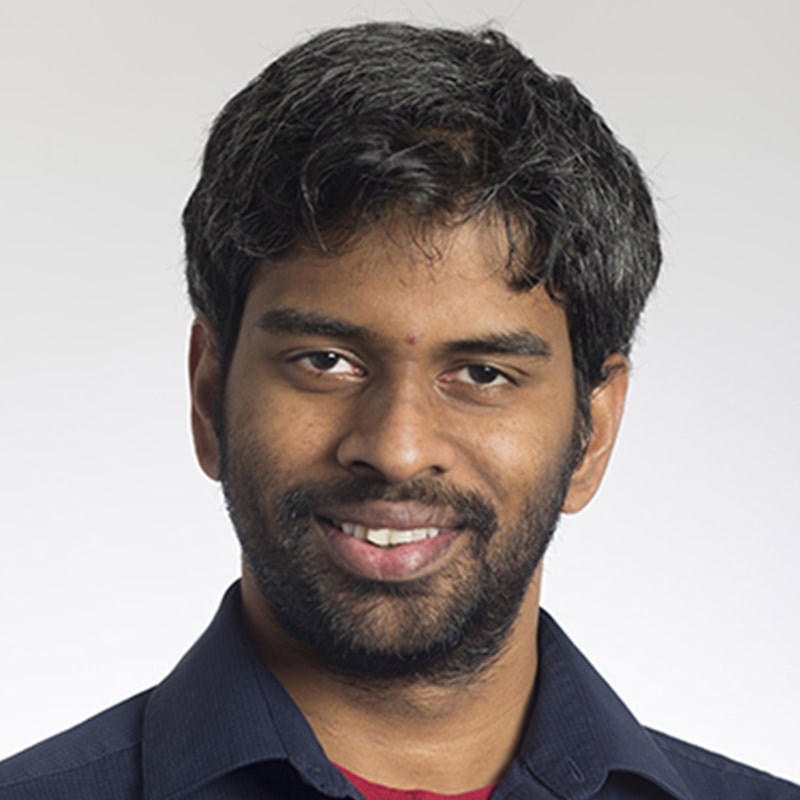
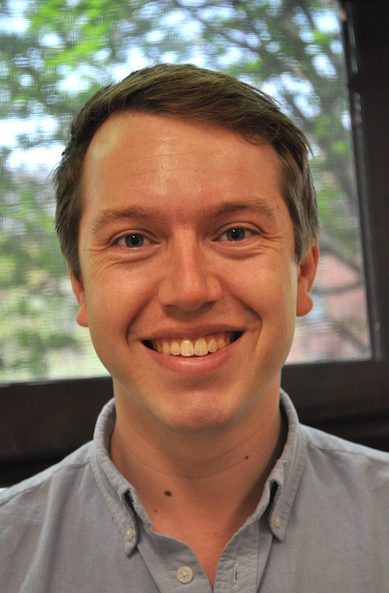
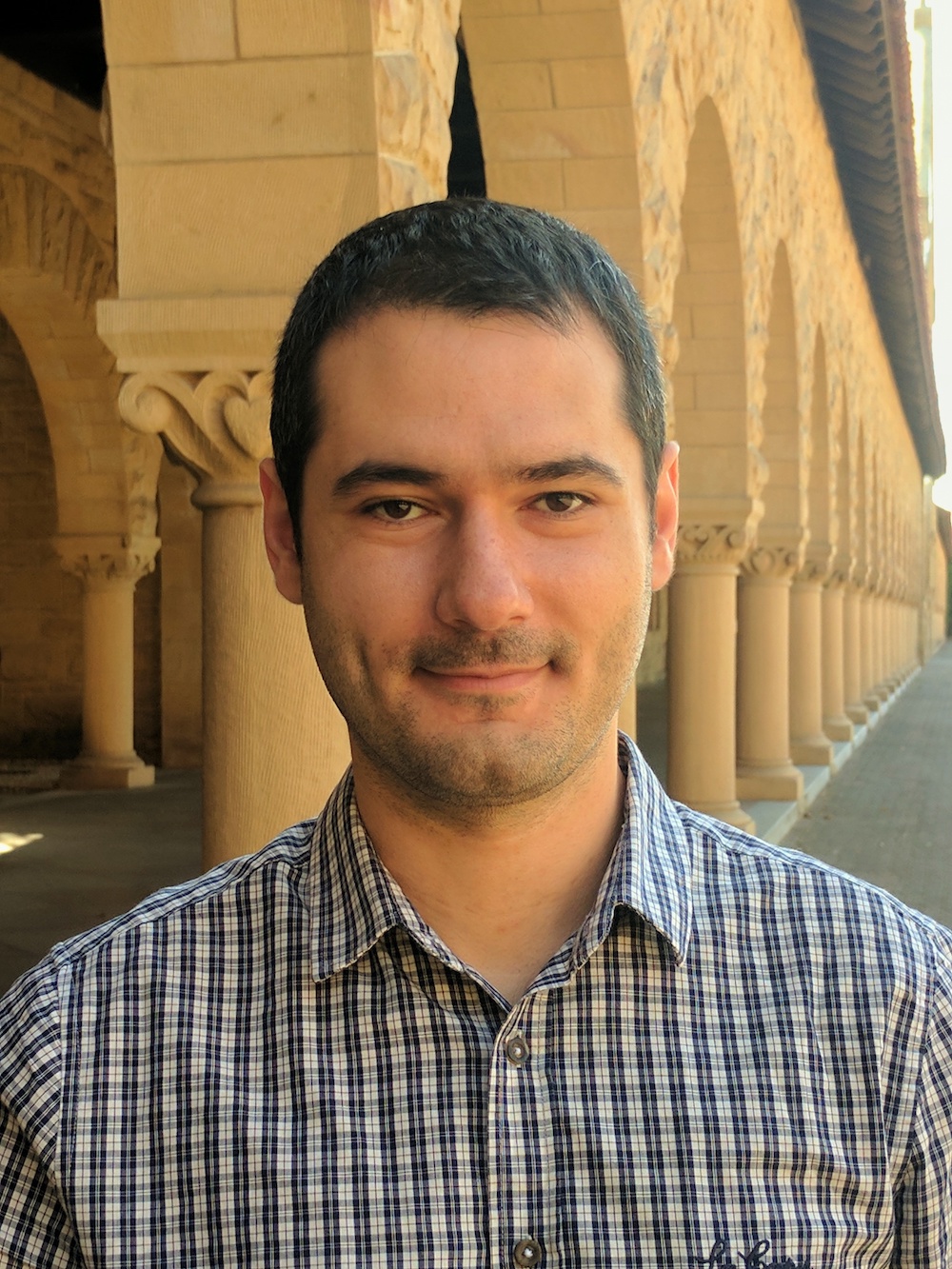
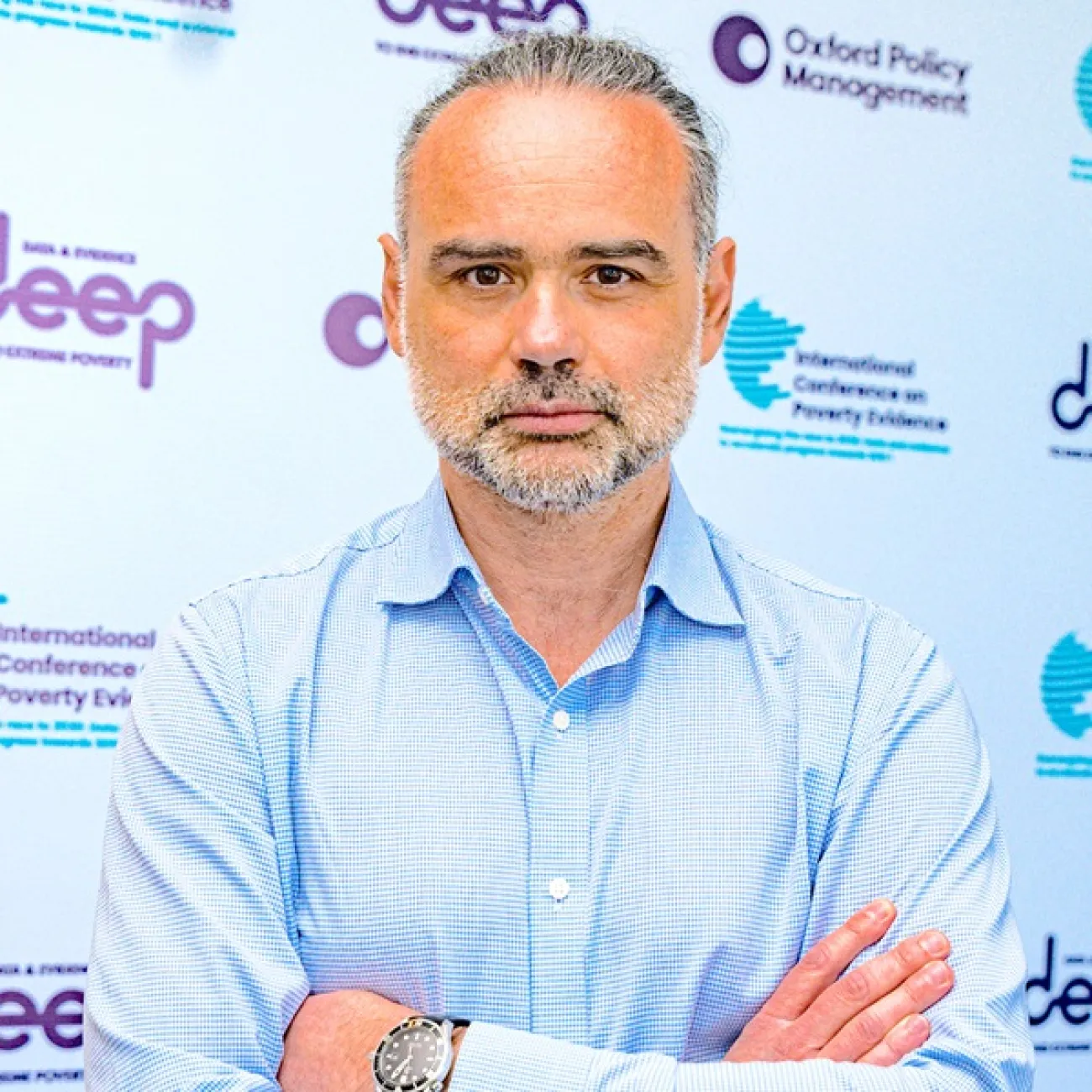
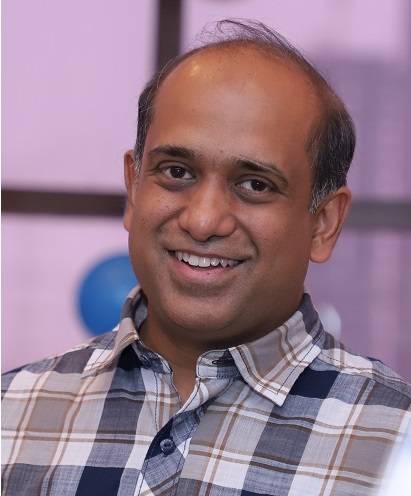
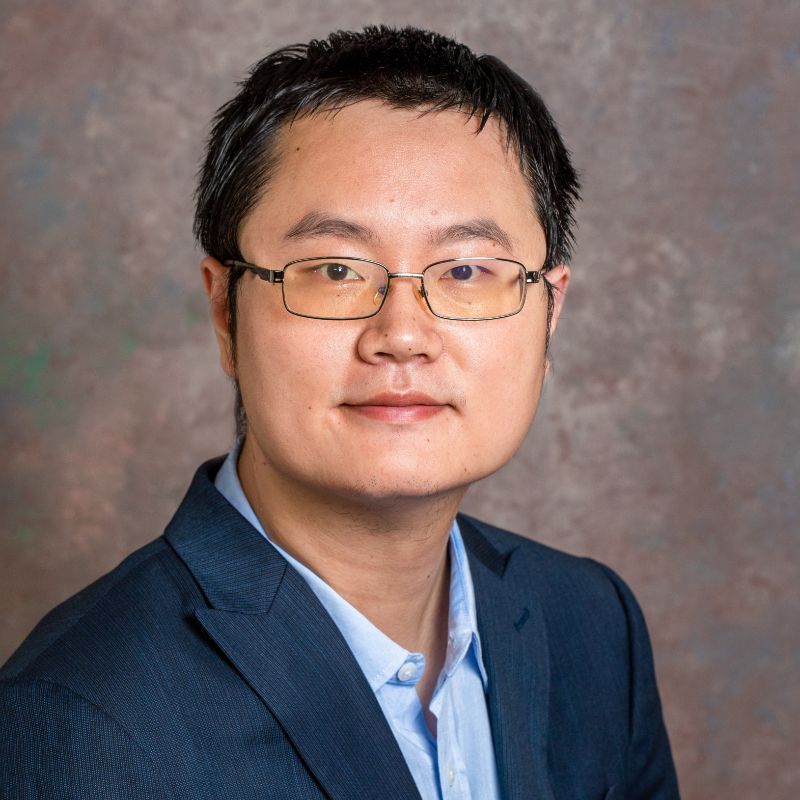
Dr Henry Moss is a Researcher at the Department of Applied Mathematics and Theoretical Physics within the School of Physical Sciences at the University of Cambridge. His work focuses on machine learning applications in climate modeling, Bayesian optimization, and Gaussian processes, bridging computational mathematics with environmental science and chemistry. His research interests include: Bayesian optimization for environmental and chemical systems Reinforcement learning in climate modeling Gaussian processes for molecular property prediction High-throughput machine learning in scientific domains Interpretable AI for coastal flooding prediction Hybrid ML-physics modeling Dr Moss's publications highlight his contributions to federated learning for climate models, sparse Gaussian process techniques, and multi-objective optimization frameworks. These works span applications in weather prediction, chemical engineering, and oceanography. Email: hwm26@cam.ac.uk
Werner Ploberger is Professor of Economics and Thomas H. Eliot Distinguished Professor in Arts & Sciences at Washington University in St. Louis. His research focuses on econometric methodology, statistical analysis, and time-series econometrics. He previously held positions at Vienna University of Technology, University of St. Andrews, and University of Rochester. His influential publications develop statistical tests for structural breaks in economic models, including CUSUM test modifications and stability assessments for regression models. Committee service includes PhD Admissions and PhD committees at Washington University.
Mikhail (Misha) Belkin is a Professor at the Halicioglu Data Science Institute (HDSI) at the University of California San Diego , with an affiliated appointment in the Department of Computer Science and Engineering . He is also an Amazon Scholar , reflecting his impactful industry collaboration. Since January 2024, he has served as the Editor-in-Chief of the SIAM Journal on Mathematics of Data Science (SIMODS) . Research Interests: Belkin's research centers on the theoretical foundations of machine learning, particularly the mathematical understanding of modern deep learning. His work investigates interpolation , over-parameterization , and feature learning in neural networks. He is renowned for introducing the double descent risk curve, which reconciles classical bias-variance trade-offs with the success of overfitted models. His recent work identifies the Average Gradient Outer Product (AGOP) as a fundamental mechanism of feature learning, applicable across architectures like CNNs and transformers. Scientific Contributions and Trends: His recent publications, appearing in Science , PNAS , and NeurIPS , demonstrate a strong trend toward unifying theories of generalization and optimization in over-parameterized systems. He explores how interpolating models can be statistically optimal, how gradient descent converges in non-convex landscapes via the PL* condition, and how kernel methods can be enhanced to perform feature learning. ACM Fellow (2023) Editor-in-Chief, SIAM Journal on Mathematics of Data Science (2024–present) Advising and Grants: Belkin actively mentors students and collaborators such as Adityanarayanan Radhakrishnan , Daniel Beaglehole , and Chaoyue Liu , who are frequent co-authors. He is a Principal Investigator (PI) in the Collaboration on the Theoretical Foundations of Deep Learning , funded by the NSF and Simons Foundation. He is also an external collaborator with the Eric and Wendy Schmidt Center at the Broad Institute and part of the NSF-funded TILOS AI Institute . Laboratories and Teams: While not explicitly named, his research group at UCSD is deeply involved in theoretical machine learning, focusing on the intersection of statistics, optimization, and deep learning. His work often involves large-scale collaborations and is closely tied to initiatives like SIMODS and TILOS.
Siva Balakrishnan is an Associate Professor at Carnegie Mellon University with a joint appointment in the Department of Statistics and Data Science and the Machine Learning Department . He holds an affiliation with the Dietrich College of Humanities and Social Sciences. Previously, he was a postdoctoral researcher at UC Berkeley's Department of Statistics, advised by Martin Wainwright and Bin Yu, and earned his Ph.D. in Computer Science from CMU's Language Technologies Institute under Jaime Carbonell. His research focuses on statistical machine learning, causal inference, and high-dimensional statistics, with notable contributions to domain adaptation, optimal transport, and robust statistics. Education: Ph.D. in Computer Science, Carnegie Mellon University (Language Technologies Institute) Postdoctoral Researcher, University of California, Berkeley (Department of Statistics) Research Interests: His work bridges theoretical foundations and algorithmic development, emphasizing robust statistical methods and their applications in causal inference, public policy, and machine learning. Key areas include nonparametric methods, optimization, and high-dimensional data analysis. He has pioneered techniques in domain adaptation, such as the RLSbench framework for relaxed label shift scenarios. Awards & Grants: Amazon Research Award (2021) Google Research Scholar Award (2021) NVIDIA Pioneer Award (2018) IMS Lawrence D. Brown Student Award (2020, 2022) National Science Foundation Grants (CCF-1763734, DMS-1713003, etc.) Professional Activities: He serves as an Associate Editor for JASA and on the editorial boards of Foundations and Trends in Statistics . His work has been featured in top venues like NeurIPS, ICML, and the Annals of Statistics. He currently holds a sabbatical at UC Berkeley's Department of Statistics (Spring 2025). Labs & Collaborations: He actively participates in the Statistics and Machine Learning Reading Group and the Causal Inference Working Group , fostering interdisciplinary research in CMU's vibrant academic community.
David Duvenaud is an Associate Professor at the University of Toronto , holding a Canada Research Chair in Generative Models and a Schwartz Reisman Chair in Technology and Society . He is cross-appointed to the Department of Computer Science and Department of Statistical Sciences . A Sloan Research Fellow and founding member of the Vector Institute , his work bridges deep probabilistic models , AI safety , and scientific computing . PhD in Machine Learning (University of Cambridge, 2014) Postdoc in Hyperparameter Optimization (Harvard University, 2016) Co-founded Invenia (energy forecasting company) His research spans foundational Neural Ordinary Differential Equations (NeurIPS 2018 Best Paper) and Automatic Chemical Design (ACS Central Science 2018) to recent work on AGI governance (2025) and AI safety (2024). Key contributions include stochastic variational inference , implicit differentiation frameworks , and antisymmetrization layers for quantum Monte Carlo. Recent publications (2024-2025) focus on systemic existential risks from AI , many-shot jailbreaking attacks , and epistemic uncertainty quantification . His group trains energy-based models with scalable MCMC samplers and develops invertible neural architectures (e.g., Residual Flows NeurIPS 2019). He also explores human-AI alignment through LLM Processes (NeurIPS 2024) and Sycophancy in Language Models (ICLR 2024). Canada Research Chair (2025) NSERC Grant (2025) Sloan Research Fellow (2021) Schwartz Reisman Chair (2021) Best Paper Award (NeurIPS 2018) Distinguished Paper Award (ICFP 2021) His students include James Requeima , Jesse Bettencourt , and Raymond Douglas . He teaches courses on Statistical Methods for Machine Learning and Differentiable Inference . Current work (2025) investigates systemic human disempowerment through incremental AI capabilities and sabotage risk mitigation via hyperparameter-aware evaluations.
Murat Erdogdu is an Assistant Professor at the University of Toronto, jointly appointed in the Department of Computer Science and Department of Statistical Sciences . He is also a faculty member at the Vector Institute and holds the CIFAR Chair in Artificial Intelligence . PhD in Statistics, Stanford University (advised by Mohsen Bayati and Andrea Montanari) MSc in Computer Science, Stanford University BSc in Electrical Engineering and Mathematics, Bogazici University His research focuses on machine learning theory , high-dimensional statistics , and optimization . He has contributed to understanding gradient-based algorithms, sampling methods, and feature learning in structured data. Recent publications address problems in: Heavy-tailed sampling Mean-field Langevin dynamics Robust feature learning Minimax regression Stochastic optimization under infinite noise Scientific Awards: CIFAR Chair in Artificial Intelligence ICLR 2023 Spotlight NeurIPS 2019 & 2021 Spotlights He teaches graduate courses like STA 414/2104 (Statistical Methods for Machine Learning II) and STA 4273 (Modern Learning Theory) , emphasizing probabilistic modeling and theoretical analysis.
Professor Scott Sisson is Director of the UNSW Data Science Hub (uDASH) and Professor of Statistics and Data Science at the University of New South Wales, School of Mathematics and Statistics. His research focuses on computational statistics, particularly solving 'intractable' statistical problems through Bayesian methods, big data techniques, simulation algorithms, and extreme value theory with environmental applications. Education includes a PhD in Statistics from Bristol University (2002), MSc in Environmental Statistics from Lancaster University (1997), and BSc in Mathematics and Statistics from Lancaster University (1996). Research interests span: Bayesian statistics and uncertainty quantification Big data analytics and scalable algorithms Machine learning integration with statistical methods Extreme value modeling for climate/environment Computational techniques for intractable problems Recent publications (2022-2025) demonstrate strong emphasis on Bayesian computation, spatiotemporal modeling, and interdisciplinary applications in materials science, oncology, quantum computing, transportation policy, and ecology. Methodological innovations include likelihood-free inference, modular Bayesian analyses, and symbolic data modeling. Awards and honors: 2020 Service Award (Statistical Society of Australia) 2017 ARC Future Fellowship 2015 G. N. Alexander Medal (Engineers Australia) 2011 Moran Medal (Australian Academy of Science) 2010 J.G. Russell Award (Australian Academy of Science) 2010 Queen Elizabeth II Research Fellowship As Director of uDASH, he leads data science initiatives across UNSW. He maintains sustained ARC funding and supervises students in computational statistics, Bayesian methods, extreme value theory, and machine learning. Professional service includes editorial roles for Statistics and Computing and past presidency of Statistical Society of Australia.
Andrew M. Stuart is a Professor at the California Institute of Technology's Division of Engineering and Applied Science. His research bridges computational mathematics, machine learning, and physical modeling, focusing on inverse problems, partial differential equations, and multiscale systems. He has pioneered methodologies integrating Gaussian processes, Kalman inversion, and neural operators for scientific computing. His recent publications highlight innovations in competitive protein dimerization networks, nonlinear Bayesian inference, and operator learning. Articles span applications in materials science, geophysics, and biochemical signal processing, emphasizing data-driven discovery of differential equations and scalable algorithms for high-dimensional problems. Stuart's work addresses challenges in structural error modeling, uncertainty quantification, and graph-based learning, with implications for climate modeling and dynamical systems. Despite extensive contributions, the scraped data does not specify students, awards, or contact details.
Dr. Shan Lu is a Lecturer in Finance at the Department of Accounting and Finance, Kent Business School, University of Kent, since August 2021. He previously held positions at the University of Aberdeen and the University of Bradford and earned his PhD from the University of Aberdeen. Research interests: Financial derivatives, option pricing, and quantitative finance. His work focuses on volatility modeling, risk-neutral density estimation, and computational finance, with publications in journals such as the European Journal of Finance, Journal of Futures Markets, and Economics Letters. Teaching: Covers financial markets, derivatives, econometrics, and quantitative methods at undergraduate and postgraduate levels. Scientific awards: Fellow (FHEA) of Higher Education Academy Advising: Offers PhD supervision in topics aligned with his research interests, including financial derivatives and quantitative finance. He emphasizes collaboration on research ideas directly related to his expertise. Publications: Recent work explores volatility dynamics in VIX/VXX options, risk-neutral density extraction, and implied volatility forecasting, leveraging computational methods and empirical finance techniques.
Anna Gottard is an Associate Professor of Statistics at the University of Florence, where she leads the Department of Statistics, Computer Science, and Applications. She directs the Florence Center for Data Science (FDS) and participates in the Technical Scientific Committee of the Tuscan Center for Big Data, Data Science, and AI (CBDAI). Her research focuses on multivariate statistical models, particularly graphical models, and extends to statistical machine learning, fair models, and directional data analysis. She is an Associate Editor for the Journal of the Royal Statistical Society Series A (JRSSA) and Statistical Methods & Applications (SMA). Her recent work includes Bayesian approaches for mixed graphical models, uncertainty-aware classification trees, and methodological advancements in latent uncertainty models. Her contributions span theoretical developments and applied research in interdisciplinary areas like biostatistics and sustainability. Her research interests emphasize bridging statistical theory with practical applications, including fairness in machine learning, interpretable models, and tree-based methodologies. She has actively contributed to open-source software, notably the Mix3Trees R package for mixed-effect tree models. Her work addresses challenges in variable selection, graphical model inference, and ethical AI practices. Current projects explore Bayesian frameworks for complex data structures and methodological improvements in graphical model interpretability. Anna has advised on interdisciplinary collaborations, such as studies on GDPR compliance in biobanking and epidemiological modeling of the SARS-CoV-2 pandemic in Tuscany. She collaborates with institutions like the CBDAI to advance data science applications in regional policy and healthcare. Her research trajectory reflects a commitment to both foundational statistical theory and real-world problem-solving across diverse domains.
Joan Bruna is a Full Professor of Computer Science, Data Science, and affiliated Mathematics at New York University's Courant Institute and Center for Data Science. He leads the CILVR group and co-founded the MaD group. His research focuses on mathematical foundations of machine learning, deep learning, signal processing, and their applications in computational science, climate modeling, and geophysics. He holds a Ph.D. in Applied Mathematics from École Polytechnique and has held roles at UC Berkeley, the Institute for Advanced Study, and the Flatiron Institute. Education: Ph.D. (2013) and M.Sc. (2005) in Applied Mathematics, École Polytechnique and ENS Cachan; dual B.Sc./M.Sc. in Telecommunications and Mathematics from UPC Barcelona (2002–2004). Awards include the NSF CAREER Award (2019) and Alfred P. Sloan Fellowship (2018). Research interests span theoretical aspects of deep learning, optimization, and statistical methods, with applications to climate science and inverse problems. He has advised numerous PhD students and postdocs, contributing to seminal work on scattering networks, geometric deep learning, and neural ODEs. Professional service includes editorial roles at TMLR, JMLR, and TPAMI, plus program chairs for major conferences. His work bridges mathematics and machine learning, emphasizing rigorous analysis and real-world impact.
Professor Nikos Tzavidis is a Professor of Statistical Methodology at the University of Southampton . He has held academic positions at institutions including University College London and the University of Manchester, and currently leads research initiatives integrating statistical methodology with geospatial and survey data. His work focuses on Small Area Estimation, official statistics, and poverty mapping, with applications across global development and public policy. Research interests: Small Area Estimation and Official Statistics Outlier Robust Inference Quantile and M-quantile Models Geospatial Data Analysis Poverty Mapping Machine Learning Applications in Statistics Recent research trends emphasize machine learning integration, geospatial data utilization, and advanced quantile modeling for poverty and demographic studies. His publications span journals like the Journal of Official Statistics and the Journal of the Royal Statistical Society . Scientific awards: ISI Fellow (2013) American Statistical Association (2004) Vice Chancellor's Teaching Award (2013) Johann von Spix Professor (2023) He supervises PhD students in social statistics, demography, and geography, and serves on editorial boards for journals including the Journal of Official Statistics . Externally, he has held leadership roles in the International Statistical Institute and contributed to United Nations and World Bank projects.
Amit Kumar is the Jaswinder and Tarwinder Chadha Chair Professor in the Department of Computer Science and Engineering at IIT Delhi. His research focuses on combinatorial optimization, online algorithms, and algorithmic fairness. He has taught courses such as Approximation Algorithms (COL 754), Design and Analysis of Algorithms (COL 351), and Numerical Analysis (COL 726). His work spans theoretical computer science with applications to clustering, scheduling, and fairness in evaluation processes. Research Interests Kumar's research emphasizes developing efficient algorithms for online and dynamic settings, particularly in constrained optimization and biased evaluation systems. He explores theoretical foundations of clustering, load balancing, and resource allocation, with recent contributions to fair food delivery systems and coreset constructions. Publications His recent work includes advancements in online convex paging (STOC 2025), consensus clustering (SODA 2025), and fairness-aware algorithms (AAAI 2024). Over 70 papers across top venues like STOC, SODA, and ICML reflect his expertise in algorithm design and analysis. Awards Best Paper Award at ISAAC 2023 for 'Clustering What Matters in Constrained Settings' Teaching & Mentorship Kumar instructs graduate and undergraduate courses in algorithms, data structures, and numerical methods. He advises students through these courses and collaborates with researchers on NSF-funded projects related to approximation algorithms and streaming systems.
Peng Zhao is a tenure-track Assistant Professor in the Department of Applied Economics & Statistics at the University of Delaware, with affiliations to UD's Data Science Institute. His academic career includes a postdoctoral research position at Texas A&M University's Department of Statistics (August 2020–June 2023), following his Ph.D. training at Florida State University. Education Ph.D. in Statistics, Florida State University, 2020 B.S. in Statistics, Beijing Institute of Technology, 2015 Dr. Zhao's research focuses on cutting-edge statistical methodologies, including: High-dimensional statistical modeling and inference Network-based statistical analysis Multivariate data processing techniques Scalable Bayesian computational methods Nonparametric Bayesian approaches Dependency-aware statistical learning frameworks Optimization algorithms for complex models Regularization mechanisms in statistical learning He teaches graduate-level courses in regression analysis (STAT611) and mathematical statistics (STAT602) at the University of Delaware. Office location: Room 214, Townsend Hall, 531 S. College Avenue, Newark, DE 19716.
Professor Nagi Gebraeel serves as the Georgia Power Early Career Professor in the H. Milton Stewart School of Industrial and Systems Engineering at Georgia Institute of Technology, where his research integrates predictive analytics, machine learning, and optimization for industrial IoT applications. His work focuses on real-time equipment diagnostics, prognostics, and operational decision-making in critical infrastructure systems. Education: Ph.D. in Industrial Engineering (2003), Purdue University M.S. in Industrial Engineering (1998), Purdue University Research Focus: Dr. Gebraeel develops statistical learning algorithms for IoT-enabled maintenance, repair, and operations (MRO), with emphasis on federated learning frameworks for distributed fault diagnosis and cybersecurity protection against Industrial Control System (ICS) attacks. His research spans manufacturing, power generation, and deep space habitats through NASA's HOME Space Technology Research Institute, where he pioneers self-aware habitat systems. Recent work addresses data heterogeneity in high-consequence industrial environments using causal-informed analytics. Publication Trends: His 2024-2025 publications demonstrate a strong trajectory toward distributionally robust optimization for maintenance logistics, federated learning architectures for distributed fault diagnosis, and prognostics for complex systems like offshore wind farms and industrial robots. Key themes include handling imbalanced data in fault diagnosis, state-space representations for interdependent systems, and cybersecurity integration in manufacturing networks. Awards and Recognition: NSF CAREER Award (2007) SAE Aircraft Electrical Power System Recognition Award (2008) SAE Materials Modeling and Testing Recognition Award (2006) IEEE-AUTOTESTCON Certificate (2006) Fellow of the Institute of Industrial and Systems Engineers Advising and Funding: Dr. Gebraeel mentors doctoral students including Michael Ibrahim (2025 IISE Best Student Paper winner), Heraldo Rozas (now Assistant Professor at University of Chile), Ayush Mohanty, and Nazal Mohamed. He secured a $500,000 NSF grant in August 2025 for AI-driven cybersecurity in distributed manufacturing networks and leads NASA-funded research on deep space habitat systems. His work bridges academic research with industry applications through Georgia Tech's Strategic Energy Institute collaborations. Research Infrastructure: He directs the Analytics and Prognostics Systems laboratory at Georgia Tech's Manufacturing Institute and leads the Predictive Analytics and Intelligent Systems (PAIS) research group. Previously, he served as associate director of Georgia Tech's Strategic Energy Institute (2014-2019), fostering data science applications in energy systems.