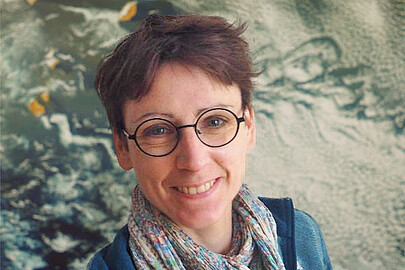
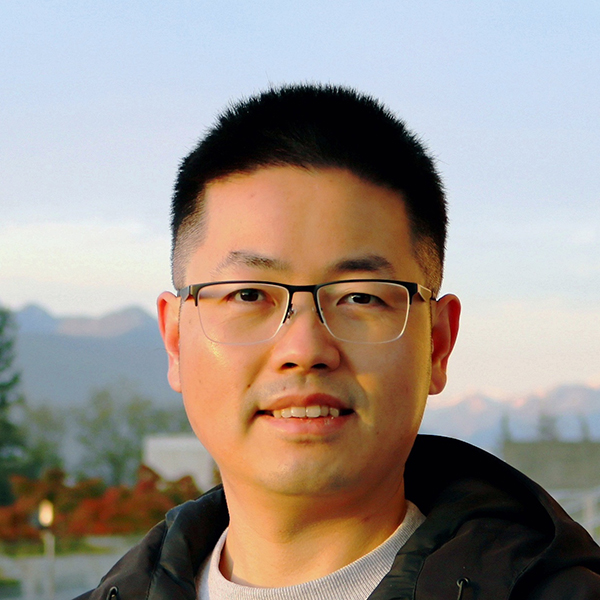
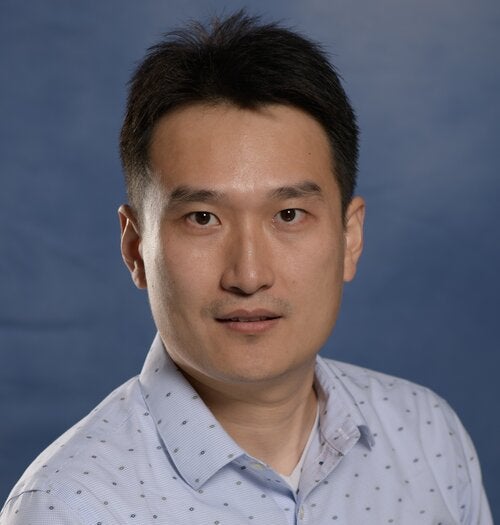
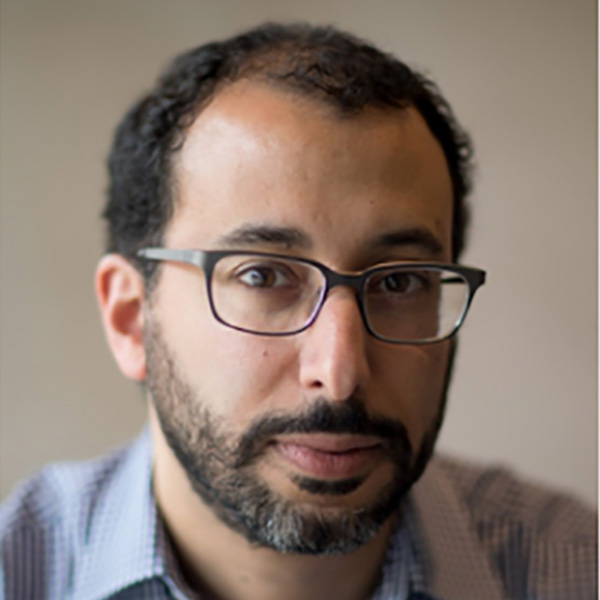
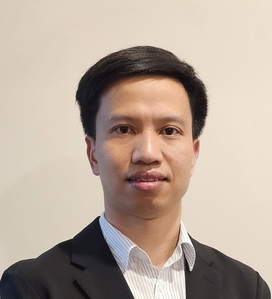
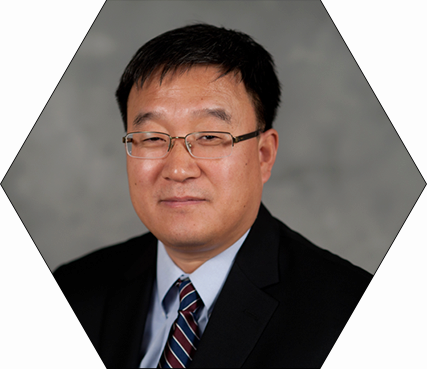
Associate Professor Jiakun Liu (FAustMS) is affiliated with the School of Mathematics and Statistics, University of Sydney . He holds a BSc from Zhejiang University (2006) and a PhD from the Australian National University (2010). Following a Simons Postdoctoral Fellowship at Princeton (2010-2013), he served as Lecturer, Senior Lecturer, and Associate Professor at the University of Wollongong (2013-2024), securing an ARC DECRA in 2014 and an ARC Future Fellowship in 2024. Specializes in nonlinear elliptic/parabolic PDEs with applications in geometry and optimal transportation Research focuses on Monge-Ampère/Hessian equations , regularity theory, and geometric flows Contributions to convex geometry , minimal surfaces, and stochastic PDEs . His 2024-2023 publications in Communications on Pure and Applied Mathematics , Advanced Nonlinear Studies , and Archive for Rational Mechanics demonstrate expertise in free boundary regularity , noncompact Minkowski problems , and global geometric analysis . Recognized with ARC Future Fellowship and conferences organized across Australia-China collaborations.
Xiaoping Lu is an Associate Professor at the School of Mathematics and Applied Statistics, University of Wollongong, Australia. She has served as Academic Program Director for the Bachelor of Mathematics (Advanced) program since 2008 and holds an ORCID identifier (0000-0003-1090-8437). Her research focuses on applied mathematics and financial mathematics, particularly in option pricing, stochastic volatility models, and computational finance. Research Themes: Transaction cost modeling, regime-switching financial markets, numerical methods for PDEs, utility-indifference valuation, and stochastic optimization algorithms. Awards: 2024 AustMS-WIMSIG Anne Penfold Street Award 2024 Cheryl E. Praeger Travel Award Leadership: President of the Asia Pacific Consortium of Mathematics for Industry (APCMfI) since 2024; leadership roles in ANZIAM and WIMSIG committees. Teaching: Coordinated courses like MATH142, MATH141, and MATH283; currently available for PhD supervision in topics including financial derivatives and stochastic liquidity risk. Funding: Contributed to grants like 'The AI Tutor' (2024) and industry partnerships for advanced mathematics education.
Dr. Gaël Kermarrec is a researcher at the Boundary Layer Meteorology Group , part of the Institute of Meteorology and Climatology within the Faculty of Mathematics and Physics at Leibniz University Hannover . His work focuses on atmospheric turbulence, GNSS applications, and remote sensing for environmental monitoring. Boundary layer meteorology Turbulence theory GNSS signal processing Terrestrial laser scanning Climate change impacts Geodetic time series analysis His research integrates advanced mathematical models like LR B-splines and Matérn covariance with large eddy simulations to study: Atmospheric turbulence effects on optical/GNSS signals Hydrospheric mass loading Deformation analysis of terrain/port infrastructure Climatic sea-level changes Machine learning for remote sensing The 15 most recent articles (2025-2023) demonstrate his focus on: GNSS-based turbulence detection AI-enhanced climate mapping Advanced surface approximation techniques Multi-sensor data fusion Stochastic modeling of geodetic observations Environmental impacts on optical measurements He has developed tools like the Klimascanner QGIS plugin for urban climate resilience and contributes to: Understanding atmospheric scale lengths Improving TLS/GNSS deformation monitoring Analyzing hydrospheric changes Wavefront modeling Ionospheric corrections
Lingyang Chu is an Assistant Professor at McMaster University's Department of Computing and Software, previously serving as a postdoc fellow at Simon Fraser University under Jian Pei. He earned his Ph.D. in Computer Science from the University of Chinese Academy of Sciences. Research interests span data mining , machine learning , and statistics , with focus on trustworthy AI (privacy, interpretability, security, robustness, fairness), federated learning , and graph-based machine learning . His work includes scalable data mining on large graphs and deploying systems like personalized federated learning on Huawei Cloud's Harmony OS devices. Publications emphasize adversarial attacks, medical AI, graph robustness, and federated learning frameworks. His advising record includes 28 mentees across Ph.D., M.Sc., and internship levels. Scientific achievements include Best paper candidate at ICME'13 Best demo award at ICMR'13 Academic service roles include: Program Committee: NeurIPS, SIGKDD, CVPR, ICML, and 12+ other top-tier conferences Journal Reviewer: IEEE TKDE, ACM Transactions on KDD, and 8+ journals Editorial Board: ACM Transactions on KDD (Associate Editor) Grant Reviewer: Hong Kong RGC Labs/teams: Maintained open-source ALID algorithm (VLDB'15) for dominant cluster detection, demonstrating technical leadership in scalable graph mining
Satish C. Boregowda is a Senior Lecturer at the School of Mechanical Engineering, Purdue University in West Lafayette, Indiana. His work focuses on thermodynamics-based analysis of human physiological systems, energy systems engineering, and renewable energy integration. He is affiliated with Purdue's Mechanical Engineering department and maintains an office in POTR 322A. Education & Professional Background : While specific educational details are not provided, his long-term research contributions since 1992 indicate advanced expertise in thermodynamics, biomedical engineering, and energy systems. His career spans over three decades with continuous publication activity. Research Interests : Dr. Boregowda’s core research combines thermodynamics with human physiology, developing metrics like the Objective Stress Index (OSI) to quantify stress responses. His work also addresses energy security through renewable integration, entropy analysis in biological systems, and thermal comfort modeling. He applies constructal theory, fractional calculus, and finite element methods to model human thermal regulation and environmental interactions. Publications Trends : His articles (1992–2025) show sustained focus on: 1) Thermodynamic modeling of human stress and thermal comfort, 2) Renewable energy grid integration strategies, and 3) Advanced computational methods for physiological systems. Recent works emphasize decarbonization pathways and energy policy implications. Grants & Advising : No specific grants or advisees are listed in the provided data. His research likely involves collaborations with aerospace and environmental engineering groups given his work on thermal systems in microgravity and HVAC applications. Labs & Teams : While no specific lab affiliations are mentioned, his research aligns with Purdue’s mechanical engineering initiatives in renewable energy, biomedical engineering, and thermal systems design.
Ruoqing Zhu is an Associate Professor in the Department of Statistics at the University of Illinois at Urbana-Champaign, with a primary appointment in the College of Liberal Arts & Sciences. He also serves as an inaugural member of the Carle Illinois College of Medicine, a Faculty Fellow at the National Center for Supercomputing Applications, and an affiliated researcher with the Carl R. Woese Institute for Genomic Biology and the Center for Genomic Diagnostics. His roles include PhD Program Director and Advisory Board member of Prenosis Inc. Dr. Zhu holds a Ph.D. in Biostatistics from the University of North Carolina at Chapel Hill (2013), an MA in Statistics from Bowling Green State University (2008), and dual B.S. degrees in Mathematics and Financial Engineering from Nanjing University (2006, 2005). His postdoctoral training was at Yale University’s Department of Biostatistics (2013–2015). His research focuses on developing statistical methods for decision-making in personalized medicine and reinforcement learning, addressing challenges such as model interpretability, high-dimensional data, and distributional shifts. Key areas include uncertainty quantification, causal inference, and applications in bioinformatics, nutrition, and infectious diseases. He co-teaches courses at Carle Illinois, including Data Science Project and Foundations: Molecules to Populations , and contributes to interdisciplinary initiatives like the Personalized Nutrition Initiative. His recent work emphasizes trustworthy AI in healthcare, including sepsis prediction tools, metabolomic analysis, and biomarker discovery. He is actively involved in translational research, bridging computational methods with clinical and public health applications.
Youssef M. Marzouk is the Breene M. Kerr (1951) Professor of Aeronautics and Astronautics at MIT and co-director of the MIT Center for Computational Science and Engineering (CCSE). He is affiliated with the MIT Schwarzman College of Computing, the Statistics and Data Science Center, and the Aerospace Computational Design Laboratory. His research focuses on computational science and engineering, with an emphasis on uncertainty quantification, Bayesian modeling, data assimilation, and machine learning applied to physical systems. He holds a Ph.D. in Mechanical Engineering from MIT (2004), preceded by S.M. (1999) and S.B. (1997) degrees in Aeronautics and Astronautics from the same institution. Marzouk’s work bridges computational mathematics, statistical inference, and fluid dynamics, addressing challenges in energy systems and environmental modeling. He has received numerous awards, including the 2018 AIAA Associate Fellowship and the 2012 MIT Class of 1942 Career Development Chair. His teaching spans computational mathematics, fluid dynamics, and uncertainty quantification. Key collaborations involve the MIT CCSE and external institutions, with funding from DOE and NSF. He advises students on topics like stochastic modeling and inverse problems, and his research lab explores advanced computational methods for high-dimensional systems.
Associate Professor Sonny Pham leads research in artificial intelligence at Curtin University's School of EECMS. His work balances theoretical foundations with practical applications in computer vision, data mining, and deep learning. As head of the IAMAI research group, he collaborates with industry partners on security systems, healthcare AI, and sustainable technologies. His research explores: Computationally efficient deep learning architectures Compressed sensing for high-dimensional data Robust statistical methods for real-world problems Applications in computer vision and industrial automation Recent publications demonstrate a focus on medical imaging interpretation and efficient neural networks, with applications spanning radiology report generation, semantic segmentation for autonomous systems, and cybersecurity. His team's work consistently bridges theoretical AI advancements with industrial applications. Honors include: Multiple WANMA Awards (2021-2024) for industry-impactful research INCITE Award for social impact technology (2024) IEEE Young Author Best Paper Award (2010) Over $5M in competitive research funding including MRFF and DFAT grants He leads the IAMAI research group with 12+ graduate students and coordinates Curtin's Master of Artificial Intelligence program. Industry collaborations include Alcoa Australia, iCetana, and HyprFire.
Huazhen Fang is an Associate Professor in the Department of Mechanical Engineering at the University of Kansas School of Engineering, where he joined in 2014. He leads the Information & Smart Systems Laboratory (ISSL) and holds a courtesy appointment in the Department of Electrical Engineering & Computer Science. His research focuses on enabling intelligence for complex systems through information-driven approaches. Dr. Fang received his Ph.D. in Mechanical Engineering from the University of California, San Diego in 2014, following an M.Sc. from the University of Saskatchewan and a B.Sc. in Computer Science & Technology from Northwestern Polytechnic University in China. He was a Visiting Faculty Fellow at Mitsubishi Electric Research Laboratories in 2022. His research interests span Systems and Control, Advanced Battery Management, Energy Storage Systems, and Robotics, with particular focus on system modeling, estimation, control design, machine learning and numerical optimization. Dr. Fang's work has significant applications in energy management, cooperative robotics, and environmental observing systems. His research has been supported by the National Science Foundation, Department of Energy, Army Research Laboratory, and Mitsubishi Electric Research Laboratories. His extensive publication record shows a clear trend toward increasingly sophisticated integration of physics-based modeling with machine learning approaches, particularly in battery management systems and autonomous vehicle control. Recent work demonstrates a growing emphasis on Bayesian inference methods, distributed control architectures, and safety-critical applications of intelligent control systems. Faculty Early Career Award from National Science Foundation (2019) University Scholarly Achievement Award (2024) Miller Professional Development Award (2022) Miller Faculty Scholar Award (2018, 2019, 2023) Wesley G. Cramer Outstanding Mechanical Engineering Faculty Award (2016) Big XII Faculty Fellowship (2015) IEEE Transactions on Transportation Electrification Prize Paper Award (2024) Dr. Fang has successfully mentored numerous graduate students through the Information & Smart Systems Laboratory, with many receiving awards for their research. His research has attracted significant funding from prestigious organizations including the National Science Foundation, Department of Energy, Army Research Laboratory, and Mitsubishi Electric Research Laboratories. He currently serves as an Associate Editor for multiple prestigious journals including Information Sciences, IEEE Transactions on Industrial Electronics, and IEEE Control Systems Letters. The Information & Smart Systems Laboratory (ISSL) under Dr. Fang's leadership has established itself as a center for cutting-edge research in information-driven smart systems. The lab focuses on pushing the frontiers of information extraction, analysis and exploitation for dynamic systems to deal with system complexity and enable system intelligence. The lab actively collaborates with industry partners and local communities, emphasizing research that serves societal needs.
Cody Hyndman is a Full Professor and Acting Department Chair at the Department of Mathematics and Statistics, Concordia University, with a focus on Mathematical Finance, Machine Learning, and Stochastic Analysis. He has held significant administrative roles including Department Chair (2017–2023) and Acting Graduate Programs Director (2025–2025). Education: PhD, University of Waterloo (2005) MSc, University of Alberta BCom, University of Alberta His research spans Mathematical Finance , Stochastic Differential Equations , and Machine Learning , with notable contributions to arbitrage-free modeling, neural networks, and computational methods. Recent publications emphasize geometric deep learning and regularization techniques in finance. Scientific Awards: 2023: Concordia Academic Leadership Award Hyndman supervises graduate students in Mathematics and Statistics and co-founded the NSERC CREATE Program on Machine Learning in Quantitative Finance and Business Analytics (FIN-ML) , fostering industrial internships and interdisciplinary training.
Mustafa Bilgic is a Professor and Chair of the Computer Science Department at Illinois Institute of Technology, where he also directs the Master of Artificial Intelligence program and the Machine Learning Laboratory. His research focuses on machine learning, active learning, explainable AI, and probabilistic graphical models, with applications in healthcare, social media analysis, and biomedical engineering. He has received funding from NSF, NIH, and Samsung, among others. Education: PhD in Computer Science, University of Maryland at College Park (2010) M.S. in Computer Science, University of Maryland at College Park (2006) B.S. in Computer Science, University of Texas at Austin (2004, with High Honors and Special Honors) Research Highlights: Dr. Bilgic's work emphasizes AI ethics, algorithm transparency, and interactive machine learning systems. Notable projects include analyzing political news engagement dynamics and developing frameworks for eliminating explanation noise in AI models. His lab explores tools like OrganoID for tracking organoid growth and IDGI for improving model interpretability. Awards: NSF CAREER Award (2014) ACM SIGKDD Best Student Paper Award (2008) Illinois Tech College of Computing Teaching Excellence Award (2021) Teaching and Leadership: Bilgic teaches advanced courses in AI, machine learning, and data mining. He leads initiatives to bridge AI theory and practical applications, emphasizing interdisciplinary collaboration. His administrative roles include overseeing the AI master’s program and fostering innovation in computing education.
Jack Snoeyink is a Professor at the University of North Carolina at Chapel Hill, holding joint appointments in the Department of Computer Science (College of Arts & Sciences) and the School of Data Science and Society. His research focuses on computational geometry, with applications in molecular biology, geographic information systems (GIS), and geometric modeling. His work in computational geometry explores algorithmic design and analysis for problems in solid modeling, computer graphics, and robotics. Key application areas include terrain modeling in GIS, molecular structure validation in biochemistry, and computational topology. He has contributed to output-sensitive algorithms for convex hulls and Voronoi diagrams, and geometric search problems. Articles highlight his expertise in computational geometry, with trends spanning 1999-2000. Topics include contour tree algorithms (SODA'00), watershed extraction (ASPRS'99), and skeleton generation (Crust.pdf). His work bridges theoretical advancements with practical implementations in GIS and structural biology. Jack Snoeyink has collaborated with researchers like Marc van Kreveld, Christopher Gold, and Bettina Speckmann on projects related to Delaunay triangulation, regression depth computation, and geometric assembly problems. He previously served as a program director at the National Science Foundation's CISE division (2015-2018) and co-founded the TRIPODS program for data science foundations.
Emily Cooper is an Associate Professor of Optometry & Vision Science at the Herbert Wertheim School of Optometry & Vision Science, University of California, Berkeley. She serves as the Chair of the Vision Science PhD Program and is a co-Director of the Center for Innovation in Vision & Optics. Additionally, she is a member of the Helen Wills Neuroscience Institute and a Visiting Faculty Researcher at Google. Dr. Cooper's research focuses on 3D vision, perceptual graphics, AR/VR, computational neuroscience, visual encoding, and display system design. Her work investigates how the visual system processes information to create our perception of the 3D world, with applications in computer graphics, virtual reality, and assistive technologies for people with low vision. Analysis of Dr. Cooper's recent publications (2023-2025) reveals a strong focus on the intersection of vision science and emerging technologies, particularly in augmented reality and assistive vision systems. Her work spans fundamental research on visual perception mechanisms to applied research developing practical technologies for low vision rehabilitation. A significant portion of her recent work addresses visual discomfort in XR displays, perceptual guidelines for AR/VR systems, and innovative approaches to assistive vision technologies that enhance mobility and independence for visually impaired individuals. Dr. Cooper leads an active research laboratory at UC Berkeley's 391 Minor Hall, where she mentors students and collaborators in vision science research. Her lab investigates both basic questions about how vision works and translational questions about improving visual technologies. She has developed perceptual guidelines for optimizing field of view in stereoscopic augmented reality displays and created assistive technologies such as an augmented reality sign-reading assistant for users with reduced vision. Dr. Cooper is also involved in professional activities including co-organizing the Computational Neuroscience: Vision summer course at Cold Spring Harbor Laboratory and working with Community Resources For Science to promote science education.
Subhabrata Sen is an Assistant Professor of Statistics at Harvard University, located in Science Center 713, Cambridge. His research focuses on Applied Probability, Statistics of Networks, Signal Detection, and Machine Learning. He holds a PhD from Stanford University (2017), advised by Amir Dembo and Andrea Montanari, and prior degrees from the Indian Statistical Institute, Kolkata. His work bridges statistical theory, high-dimensional data analysis, and applications in networks and physics-inspired methods. Key contributions include foundational studies on spin glasses, community detection, and causal inference in complex systems. His research often employs mean-field techniques and explores universality principles in estimation problems. Selected awards and recognition are not explicitly mentioned in the provided text. His advising and grants include postdoctoral mentoring at Microsoft Research and MIT (2017-19). He collaborates on projects involving spectral methods, random matrix theory, and multi-layer network analysis. Labs/teams: Active in Harvard's Statistics Department research groups focused on statistical theory and network science. Maintains an academic website with preprints and resources.
Jianjun (Jan) Shi is the Carolyn J. Stewart Chair and Professor at the H. Milton Stewart School of Industrial and Systems Engineering (ISyE) and holds a joint appointment with the George W. Woodruff School of Mechanical Engineering at Georgia Institute of Technology. He previously served as the G. Lawton and Louise G. Johnson Chair Professor of Engineering at the University of Michigan. His research focuses on system informatics and control for manufacturing and service systems, with notable contributions to quality improvement, cyber-physical systems, and data-driven methodologies. B.S. & M.S. in Electrical Engineering, Beijing Institute of Technology (1984–1987) Ph.D. in Mechanical Engineering, University of Michigan (1992) Dr. Shi’s research interests include process modeling, control systems, and quality engineering. He pioneered methodologies for in-process quality improvement and developed advanced frameworks for high-dimensional data analysis in manufacturing. His work integrates statistical methods, machine learning, and system informatics to enhance operational efficiency and product quality. He has published over 150 peer-reviewed papers and secured $19 million+ in research grants from NSF, DOE, and industry partners. His lab, the System Informatics and Control Group, collaborates with automotive, aerospace, and pharmaceutical sectors. Shi leads initiatives such as the Quality Science Center at the Chinese Academy of Sciences and serves on editorial boards of journals like IIE Transactions and ASME Transactions . Recipient of the IIE Albert G. Holzman Distinguished Educator Award (2011) Fellow of INFORMS, ASME, and IIE Academician of the International Academy for Quality Shi advises 26 Ph.D. graduates, many of whom hold faculty positions or leadership roles in industry. His research group’s innovations have been implemented in global manufacturing systems, yielding significant economic impacts. Current work includes 4D printing, cyber-physical system resilience, and federated learning for industrial data.