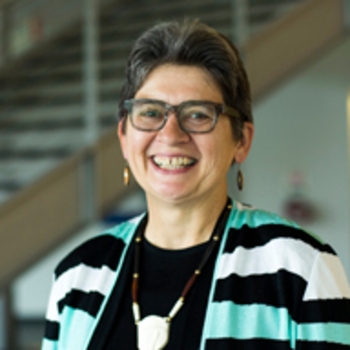
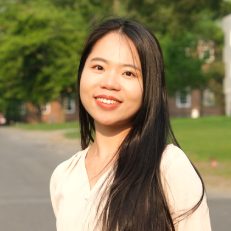
Anne Catherine Gieshoff is a Researcher at the ZHAW School of Applied Linguistics, affiliated with the Institute of Multilingual Communication. Her work focuses on cognitive aspects of interpreting, technology integration in language professions, and multilingual healthcare communication. She holds a Ph.D. from Johannes Gutenberg University Mainz (2018) and has extensive professional experience in translation and cross-border project management. Education includes a Ph.D. in Interpreting Studies (2018), M.A. in Conference Interpreting (2013-2018), and studies in multilingual communication at institutions across Europe. Her research explores cognitive load in interpreting, augmented reality applications, and ELF (English as a Lingua Franca) dynamics in professional settings. Recent publications address topics like augmented reality usability for interpreters, cognitive load measurement frameworks, and machine translation in healthcare. She leads projects such as 'Use of machine translation apps in clinical contexts' and 'Assessment of multimodal interpreting technologies'. Key Projects: DigiLinguo (language barriers in public institutions), AR interpreter usability studies, and ELF density analysis Teaching: Courses on descriptive statistics, multilingualism in professional contexts, and communication science in virtual spaces Labs/Teams: Member of TREC (Translation, Research, Empiricism and Cognition) and IATIS (International Association for Translation and Intercultural Studies)
Dr. Samantha Winter is a Reader in Rehabilitation Biomechanics at Loughborough University's College of Engineering, Design and Physical Sciences, affiliated with the National Centre for Sport and Exercise Medicine (NCSEM). Her work bridges clinical rehabilitation, sports performance, and evolutionary biomechanics, with a focus on dysfunctional breathing and neuromuscular fatigue. Education: First Class BSc in Sport and Exercise Sciences (University of Birmingham), MSc Kinesiology, Master's in Applied Statistics, PhD Kinesiology (Penn State University), Post-graduate Certificate in Teaching in Higher Education, BSc Mathematics (Open University) Her research explores the application of opto-electronic plethysmography (OEP) for diagnosing breathing disorders, complexity analysis in neuromuscular fatigue, and evolutionary ergonomics of hominin hand evolution. She leads externally funded projects on real-time OEP feedback systems and fatigue mechanisms. Recent publications highlight trends in Breathing Analysis , Neuromuscular Fatigue , and Evolutionary Ergonomics , utilizing advanced methodologies like time-series modeling, EMG, and motion capture. Key collaborations include studies on chronic ankle instability and prehistoric tool use efficiency. Scientific Recognition: Senior Fellow of the Higher Education Academy (SFHEA), 2019 She has influenced curriculum design and student support systems nationwide, with grants focused on breathing retraining and sports injury prevention. Her work intersects the Lifestyle for Health and Wellbeing and Sport Performance research groups.
Stanislaw Radziszowski is a Professor in the Department of Computer Science at Rochester Institute of Technology's Golisano College of Computing and Information Sciences. He has been at RIT since 1984, after working at the National Autonomous University of Mexico from 1980-1984. His academic career includes multiple visiting positions at the Australian National University in the 1990s and ongoing collaborations with institutions in Poland. Radziszowski earned his Ph.D. in Mathematics and Computer Science from the University of Warsaw in 1980, advised by Antoni Kreczmar and Andrzej Salwicki. His educational background includes BS and MS degrees from the same institution. Dr. Radziszowski's primary research focuses on combinatorial computing, with special emphasis on Ramsey theory and computational design theory. His "Small Ramsey Numbers" survey has become a standard reference in the field. More recently, he has expanded into applied cryptography, particularly post-quantum cryptography, leading to collaborations with the Computer Engineering Department. His work often combines theoretical insights with practical computational approaches to solve classical problems in combinatorics and graph theory. His recent publications demonstrate a growing focus on cryptographic applications, including post-quantum cryptography education, analysis of the MK-3 Authenticated Encryption Algorithm, and homomorphic encryption implementations. These works reflect his ability to bridge theoretical mathematics with practical security applications, particularly in hardware implementations and side-channel resistance. Dr. Radziszowski has made significant contributions to Ramsey theory, most notably computing R(4,5)=25 with Brendan McKay and improving bounds for R(5,5) and R(4,6). His survey "Small Ramsey Numbers" is a regularly updated reference in the field. He has also contributed to computational design theory, proving nonexistence of certain block designs. As an educator, Radziszowski teaches theory-oriented courses including Introduction to Cryptography, Foundations of Cryptography, and Quantum-Resistant Cryptography. He has developed specialized courses on combinatorial computing and has supervised numerous MS theses and projects. His recent work on post-quantum cryptography has led to educational initiatives in this emerging field. Dr. Radziszowski maintains active research collaborations, particularly with Xiaodong Xu on Ramsey and Folkman problems, and with Marcin Lukowiak on cryptographic implementations. His work often bridges the gap between theoretical mathematics and practical computing applications.
Petros Dellaportas holds dual appointments as a Professor of Statistical Science at University College London (UCL) and a Professor of Statistics at the Athens University of Economics and Business (AUEB). His research focuses on Bayesian statistics, machine learning, financial econometrics, and dynamic pricing. He leads projects on topics such as Poisson processes for cybersecurity, reservoir computing for macroeconomic forecasting, and probabilistic fault detection in wind parks. His recent publications emphasize advancements in Bayesian methods, variational autoencoders, and spatio-temporal point processes. Dellaportas has supervised over 20 PhD students, contributing to areas like stochastic volatility models and inverse reinforcement learning. He co-founded Thales and Friends, an organization bridging mathematics and cultural activities, and organizes the Greek Stochastics workshop series on topics ranging from causal learning to computational statistics. Key projects include anomaly detection in VAT networks and scalable Gaussian process models. His work often integrates statistical theory with applications in finance, sports analytics, and environmental science. Dellaportas maintains active collaborations with institutions globally, advancing interdisciplinary research and methodological innovations in statistical science.
Olaf A. Cirpka is a Full Professor of Hydrogeology at the University of Tübingen, Germany, within the Faculty of Science's Department of Geosciences. He holds a Diploma in Geoecology (University of Karlsruhe, 1992) and a Doctor of Engineering in Civil Engineering (University of Stuttgart, 1997). His career includes postdoctoral research at Stanford University (1998–2000), adjunct roles there until 2009, and leadership roles such as Head of the Emmy-Noether Junior Research Group (2000–2004) and Subsurface Hydrology Workgroup at Eawag (2004–2008). He is a Fellow of the American Geophysical Union (2015) and served as Spokesperson for the Research Training Group 1829 (2012–2021). Research Interests: His work focuses on subsurface hydrology, reactive transport modeling, biogeochemical processes in aquifers, and climate impacts on groundwater systems. He integrates numerical modeling, field experiments, and geophysical methods to address challenges in contaminant fate, hyporheic zone dynamics, and sustainable groundwater management. Articles Trends: Recent publications emphasize innovative methods for quantifying subsurface processes (e.g., VTraFlux, electrical conductivity tracers), climate-driven groundwater changes, and microbial-driven biogeochemical reactions. His work bridges experimental hydrology with computational tools to advance understanding of complex environmental systems. Awards & Grants: AGU Fellowship (2015) highlights his scientific contributions. He has led numerous research initiatives, including the Advect As project on arsenic dynamics and the Research Training Group on integrated hydrosystem modeling. Grants and collaborations span interdisciplinary environmental research. Labs & Teams: Directs the Hydrogeology group at Tübingen and collaborates with international institutions like Stanford, ETH Zürich, and Eawag. His research integrates field campaigns, lab experiments, and numerical simulations to address real-world hydrogeological challenges.
Ben Marlin is a Professor in the Manning College of Information and Computer Sciences at the University of Massachusetts Amherst, directing the Robust and Efficient Machine Learning (REML) Lab. He holds affiliations with the Center for Data Science, Center for Intelligent Information Retrieval, and others. His research focuses on robust and efficient machine learning models, particularly for time series data and clinical/mHealth applications. He has received NSF CAREER and Yahoo! Faculty awards, and previously held postdoctoral fellowships with the Killam Trusts and Pacific Institute for the Mathematical Sciences. Marlin earned his PhD in computer science from the University of Toronto (2008), MS from the same university (2004), and BS in mathematics and computer science from McGill University (2002). His work bridges probabilistic modeling, deep learning, and real-world applications in health, IoT, and embedded systems. Research interests include hierarchical graphical models, Bayesian methods, and scalable algorithms for irregularly sampled data. Recent projects emphasize robustness to missing data and computational efficiency. His lab collaborates on grants like the MD2k Center and mDOT, addressing challenges in wearable sensors and adaptive interventions. Awards: NSF CAREER (2014), Yahoo! Faculty (2013), Best Paper (ACM Recommender Systems 2009). Grants/Labs: REML Lab, MD2k, MassAITC, IoBT Collaborative Research Alliance. Education: PhD (Toronto), MS (Toronto), BS (McGill). Publications span time series imputation, sensor fusion, and Bayesian deep learning. Ongoing work explores edge-cloud optimization and AI-driven clinical trial digitization.
Stella Kapodistria is an Associate Professor at Eindhoven University of Technology's Department of Mathematics and Computer Science, specializing in Stochastic Operations Research. She holds roles as EAISI High Tech Systems Associate Professor and editorial board member of journals like MCAP and PEIS. Her research focuses on data-driven decision-making, stochastic systems optimization, and maintenance policies, with applications in renewable energy, critical infrastructure, and cryptocurrency networks. She has secured grants including NWA-ORC, NWO Big Data, and TKI WoZ, and collaborates with industry partners in the Brainport region. Education: BSc (2003), MSc (2006, Hons.), and PhD (2009, summa cum laude) in Mathematics from the University of Athens. Postdoc at TU/e, followed by roles at Groningen University and TU/e's Stochastic Operations Research group. Teaching includes courses on Optimal Decision Making, Stochastic Performance Modeling, and Financial Mathematics. Research interests emphasize real-time learning, system resilience, and scalable algorithms for complex networks. Recent work addresses maintenance logistics, blockchain confirmation times, and wind energy prediction. She has published over 40 peer-reviewed articles and contributed to the 4TU Resilience Engineering Center. Awards include editorial leadership roles and grant funding. Advised 32 academic works and oversees industrial projects bridging theory and practice. Her labs and collaborations focus on adaptive systems, predictive analytics, and sustainable engineering solutions.
Prof. Ferdinanda Ponci is a Professor at RWTH Aachen University, leading the Department of Monitoring and Distributed Control for Energy Systems. Her work focuses on smart grid technologies, renewable energy integration, and control systems for modern power networks. She actively contributes to advancing grid resilience, EV charging infrastructure, and cybersecurity in energy systems. Key research interests include hybrid AC-DC grids, distributed energy resources coordination, and application of AI in grid management. She has pioneered frameworks like datafev for EV charging management and SMU platforms for synchronized measurements. Her interdisciplinary approach also addresses diversity in engineering and societal impacts of energy systems. Prof. Ponci’s laboratory activities involve hardware-in-the-loop testing, blockchain-based grid solutions, and development of educational toolboxes for emerging technologies. She collaborates on projects such as submarine transmission systems and grid interoperability testing, contributing to both academic and industrial advancements in power systems engineering.
Maarten Ambaum is Professor of Atmospheric Physics and Dynamics at the University of Reading's Department of Meteorology. His research focuses on fundamental atmospheric processes including energy transfer mechanisms, cloud electrification phenomena, and storm track variability using theoretical modeling and experimental approaches. Research interests span thermodynamics of climate systems, electrical properties of cloud droplets, geophysical fluid dynamics, and applications of Bayesian statistics to atmospheric science. Current projects investigate convective energy cycles, electrical aspects of rainfall generation, and storm track transitions. Publications demonstrate expertise in atmospheric electricity, cloud microphysics, and climate system modeling. Recent work examines fog electrification, aircraft-based charge emission systems, and storm track responses to climate oscillations. Develops novel instrumentation for atmospheric measurements including corona current monitoring systems. Authored textbook 'Thermal Physics of the Atmosphere' with second edition published in 2020.
Dr. Alexander J. Baker is a Senior Research Scientist at the National Centre for Atmospheric Science (NCAS) and the University of Reading's Department of Meteorology. His research focuses on high-resolution climate modeling, particularly examining tropical cyclones, North Atlantic climate variability, and paleoclimate reconstruction through stable water isotopes. Senior Research Scientist, NCAS High-Resolution Climate Modelling group member Project Manager, Huracan project Co-organizer, NCAS Climate Modelling Summer School Dr. Baker's research interests span: Tropical and post-tropical cyclones Global km-scale climate model evaluation Air-sea interactions in cyclones Atmospheric circulation patterns North Atlantic climate extremes Paleoclimatology using speleothems He supervises: Lewis Grant (PhD 2025-2028): High-resolution sub-seasonal tropical cyclone predictions Elliott Sainsbury (PhD 2019-2022): Post-tropical cyclones in European extreme weather His publication record (2014-2025) reveals: Leading research in tropical cyclone modeling Expertise in global storm-resolving climate models Major contributions to understanding Atlantic Multidecadal Variability Current focus on model resolution impacts on climate simulations Interdisciplinary work combining meteorology and paleoclimatology Industry collaboration through Insurance Special Interest Group Scientific contributions: Advancing High-Resolution Climate Modelling group's research Website administrator for HRCM research group Co-organizer of influential climate seminars
Alfred Hero is the John H. Holland Distinguished University Professor of Electrical Engineering and Computer Science and the R. Jamison and Betty Williams Professor of Engineering at the University of Michigan. He is currently on leave from the University of Michigan as a Program Director in the CISE Directorate at the National Science Foundation. His primary appointment is in the Department of Electrical Engineering and Computer Science (EECS) with secondary appointments in the Department of Biomedical Engineering and the Department of Statistics. He is affiliated with multiple research centers including the UM Center for Computational Medicine and Bioinformatics (CCMB), the UM Graduate Program in Applied and Interdisciplinary Mathematics (AIM), the UM Applied Physics Program, and the Michigan Institute for Data Science (MIDAS). Hero's research focuses on data science, developing theory and algorithms for multimodality data collection, fusion, analysis and visualization using statistical machine learning and distributed optimization. His work has applications in wearable technologies for personalized health and predictive medicine, spatio-temporal networks in biology, climate, and social discourse, anomaly detection, and data analysis for international security. His research group has produced numerous PhD students who have gone on to prominent academic and industry positions. His recent publications show a strong focus on high-dimensional statistical methods, machine learning theory, network analysis, and applications in biomedical domains. The research trends indicate increasing emphasis on multimodal data fusion, robust learning algorithms, and applications to complex systems in biology and security domains. His work bridges theoretical foundations with practical implementations across diverse application areas. Fellow of the Institute of Electrical and Electronics Engineers (IEEE) Fellow of the Society for Industrial and Applied Mathematics (SIAM) Fourier Award in Signal Processing from the IEEE Hero has advised numerous PhD, MS, and undergraduate students who have gone on to successful careers in academia and industry. His research has been supported by various grants, though specific grant details are not provided in the source material. His lab collaborates extensively across disciplines with researchers in statistics, biomedical engineering, and computational medicine. The Hero Research Group maintains active collaborations with institutions worldwide and participates in major conferences in machine learning, signal processing, and data science.
Kimberlee Kearfott, Sc.D., is a Professor in the Department of Nuclear Engineering and Radiological Sciences at the University of Michigan. Her primary affiliation is with the College of Engineering, and she holds an additional role as Affiliate Faculty in Biomedical Engineering (BME). Her research focuses on radiation protection, nuclear medicine, medical physics, and biomedical imaging. Key areas include radon gas dynamics, dosimetry techniques, environmental radiation monitoring, and the development of radiation-aware technologies like drones and weather stations. Her work spans theoretical and applied domains, including algorithm development for anomaly detection in radon time series data, advanced imaging systems, and radiation source mapping. She has contributed to the design of cost-effective radiation measurement instruments and systems for real-time environmental monitoring. Notable projects include the creation of an Intelligent Radiation Awareness Drone and a Low-cost Radiation Weather Station. Dr. Kearfott’s expertise also extends to radiation safety protocols, quality control in dosimetry calibration, and the application of machine learning to thermoluminescent dosimeter analysis. Her research has addressed critical issues such as earthquake prediction through radon gas analysis and sterilization techniques for SARS-CoV-2-contaminated equipment. Her laboratory focuses on interdisciplinary projects at the intersection of nuclear engineering, biomedical sciences, and environmental science. Collaborations involve both academic and industrial partners, emphasizing practical solutions for radiation-related challenges in healthcare, environmental safety, and homeland security.
Zhiying Li is an Assistant Professor at the O'Neill School of Public and Environmental Affairs at Indiana University Bloomington, where she joined as a tenure-track faculty member in 2023. She leads the Hydroclimatology Group, focusing on fundamental and applied questions regarding how climate variability and human intervention are altering the water cycle, with particular emphasis on hydroclimatic extremes and water availability. Dr. Li earned her Ph.D. in Geography from The Ohio State University in 2021, an M.S. in Physical Geography from the University of Chinese Academy of Sciences in Beijing (2017), and a B.S. in Agriculture in Soil and Water Conservation from Northwest A&F University in China (2014). Her research spans multiple critical areas in hydroclimatology, including drought monitoring systems, hydrological modeling, streamflow prediction, and extreme precipitation analysis. She employs diverse methodologies such as process-based hydrologic models, Earth System Models, spatiotemporal statistical modeling, machine learning, and remote sensing to address complex water-climate challenges. Her work has significant implications for risk management, climate adaptation, and sustainable development under changing climatic conditions. Analysis of her recent publications reveals a strong focus on drought monitoring systems, particularly examining how static drought thresholds perform in nonstationary climate conditions. Her research demonstrates growing interest in machine learning applications for hydroclimatic prediction and understanding spatial heterogeneity in water balance controls across the United States. Her work bridges fundamental hydroclimatology with practical applications for water resource management. American Association of Geographers (AAG) 'Elevate the Discipline' Climate Change & Society Cohort (2023) The Story Exchange 'Our Women in Science Incentive Prize' (2022) Presidential Fellowship, The Ohio State University (2020-21) AAG Climate Specialty Group Paper of the Year Award for 2024 AGU Advances paper Sustainability Research Development Grant by IU Integrated Program in the Environment First Place Climate Specialty Group's Student Paper Competition for the 2025 AAG Annual Meeting Dr. Li actively mentors graduate students including Ph.D. candidates Guoqing Gong and Tian Yang, and serves as Principal Investigator for multiple research projects. She secured significant funding through USGS 104G National Competitive Grant (as PI with co-PIs Ficklin and Lesk) to study hydrologic intensification and water availability, and a USGS 104B Annual Base Grant to investigate drought-flood abrupt alternation in Indiana. Her Hydroclimatology Group fosters an inclusive research environment that advances knowledge at the intersection of water, climate, and people. The Hydroclimatology Group at IU Bloomington employs a multidisciplinary approach, utilizing process-based hydrologic models, statistical modeling, machine learning algorithms, and remote sensing techniques to address complex water-climate challenges. Current research focuses on hydroclimatic extremes such as drought and flooding, water availability under climate change, and developing improved drought monitoring systems that account for nonstationary climate conditions.
José Picheral is a Professor at CentraleSupélec, affiliated with the Laboratory of Signals and Systems (L2S). He holds a PhD (2003) and HDR (2017) in high-resolution signal processing methods and inverse problems. His research focuses on array processing, source localization, acoustic imaging, and vibration analysis, with applications in aeroacoustics, automotive systems, and industrial monitoring. He has supervised multiple PhD students and contributed to projects like Valeo’s smartphone-based car key replacement system. Education: Engineering Degree: Supélec (1999) and Politecnico di Milano (1999, Erasmus-TIME) PhD: Paris Sud University (2003) Habilitation (HDR): Université Paris Sud (2017) Research Interests: High-resolution methods for distributed sources, sparse signal processing, acoustic imaging, asynchronous measurements, and sensor array design. Current projects include spatial source covariance estimation, EEG spectrum analysis, and automotive applications using smartphone localization. Key Contributions: Over 50 publications in top journals/conferences (e.g., IEEE Transactions, ICASSP). Notable work on MUSIC algorithm robustness, DAMAS optimization, and sparse approaches for tip-timing signals. Advising & Collaboration: Supervised 7 PhD students. Collaborations with SAFRAN, Valeo, and academic teams in Bayesian inference and inverse problems. Active in L2S’s Inverse Problems Group and SYCOMORE team. Labs/Teams: Member of L2S’s Signal Processing and Statistics group, leading research in systems and control, telecommunications, and energy systems.
Lionel Soulhac is a Professor at INSA Lyon and serves as the Deputy Director of the Laboratoire de Mécanique des Fluides et d’Acoustique (LMFA) . He leads the AIR team (Atmospheric and Industrial Research) and is affiliated with the École Centrale de Lyon . His academic focus lies in the Department of Fluid Mechanics, Acoustics, and Energy (MFAE). Dr. Soulhac’s research emphasizes urban atmospheric dispersion , turbulent flows in complex environments , and numerical modeling of pollutant transport . He has contributed to developing operational models like SIRANE and BUILD , which address air quality and emergency response scenarios in urban and industrial settings. Teaching responsibilities include courses on fluid mechanics, environmental engineering, and pollution dynamics at École Centrale de Lyon and the University of Lyon. Research highlights include studies on concentration fluctuations , vegetation effects in urban canopies , and inverse modeling for source characterization . His work integrates experimental wind tunnel studies and computational fluid dynamics (CFD) to assess dispersion patterns and urban microclimates. Recent projects, such as the DIPLOS initiative, focus on pollutant dispersion in street networks and risk assessment methodologies. His contributions bridge academic research with practical applications in environmental safety and urban planning.