Claire Bowern is Professor of Linguistics at Yale University specializing in historical linguistics, language documentation, and Australian Indigenous languages. Her research employs computational phylogenetics to study language evolution and supports language revitalization through digital archives and fieldwork methodologies. Recent publications address: Phylogenetic signal in lexical evolution across language families Digital infrastructure for endangered language documentation (FLEx software analysis) Decolonizing linguistics pedagogy and research practices Her work consistently integrates linguistic, anthropological, and computational approaches to analyze language diversity and change. She contributes to global databases including Grambank and D-PLACE, examining links between linguistic, cultural, and environmental patterns.
Gabriel Birzu is an Assistant Professor in the Department of Physics at the University of Florida. He develops quantitative models of microbial ecology and evolution using statistical physics approaches. His research investigates fine-scale diversity in microbial communities, examining how spatial processes shape evolutionary trajectories. Recent work analyzes hybridization barriers in cyanobacteria and genealogical patterns during range expansions. Birzu's interdisciplinary approach combines theory, computation, and data analysis to understand microbial diversification mechanisms and community responses to environmental perturbations.
Itsik Pe'er is a Full Professor and Vice-Chair in the Department of Computer Science at Columbia University's Fu Foundation School of Engineering & Applied Science, and holds a joint appointment as Professor of Systems Biology at the Vagelos College of Physicians and Surgeons. His research focuses on computational methods in human genetics, including genetic variation analysis, disease association studies, and algorithm development for genomic data. He leads the Itsik Pe'er Lab of Computational Genomics, which develops tools like Xplorigin, Germline, and SEACells to address challenges in genomics and medical research. His work spans machine learning applications in healthcare, microbiome analysis, and cancer genomics. Notable contributions include studies on hypertensive disorders in pregnancy, bias correction in predictive models, and the development of non-Euclidean learning libraries like Manify. Pe'er has advised students including Vladimir Vacic, Anat Kreimer, and Arthi Ramachandran, and collaborates on grants addressing genetic epidemiology and computational biology. His lab's location is in the Computer Science Building at Columbia's Morningside Campus.
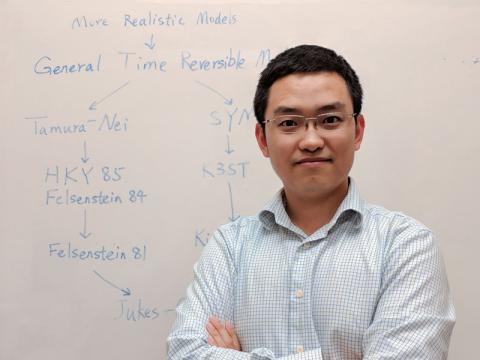
Xiang Ji is an Assistant Professor in the Department of Mathematics at Tulane University, affiliated with the School of Science & Engineering. His research focuses on statistical phylogenetics, computational biology, and bioinformatics, particularly in viral evolution and genomic epidemiology. He collaborates with Dr. Wu-Min Deng on cancer biology research from a bioinformatics perspective. Education: Ph.D., 2017: Bioinformatics and Statistics (Co-Major), North Carolina State University M.S., 2013: Material Science and Engineering, North Carolina State University B.S., 2011: Economics (Double Major) and Physics, Peking University Research Interests: Dr. Ji develops statistical models and computational tools for phylogenetic analysis, including scalable algorithms for large-scale genomic data. His work spans viral evolution, zoonotic disease surveillance, and parallel computing libraries for Bayesian inference. He emphasizes practical implementations such as Torchtree and TreeFlow . Articles Trends: Recent publications emphasize viral evolution dynamics (e.g., SARS-CoV-2, avian influenza), genomic surveillance strategies, and computational methods for phylogenetic inference. His work often bridges statistical theory with real-world applications in public health and epidemiology. Advising & Grants: While specific grant details are not listed, his active research program indicates involvement in funding initiatives related to computational biology and viral evolution. He teaches advanced courses in data analysis, linear models, and probability theory. Labs & Teams: Collaborates with Tulane’s Cancer Biology group and maintains partnerships with institutions globally, focusing on genomic epidemiology and phylogenetic software development.
Jose Israel Rodriguez is an Associate Professor in the Department of Mathematics at the University of Wisconsin-Madison. His research bridges applied algebraic geometry and algebraic statistics, focusing on nonlinear algebra, maximum likelihood estimation, monodromy, and polynomial systems in engineering and science applications. Primary Affiliation: Department of Mathematics , UW-Madison Additional Affiliations: Department of Electrical & Computer Engineering , Institute for Foundations of Data Science Research Interests : Applied algebraic geometry for nonlinear eigenvalue problems and kinematics Algebraic statistics in nearest point problems and likelihood geometry Numerical methods for monodromy, Galois groups, and polynomial optimization Teaching and Mentorship : Co-organized the Collaborative Undergraduate Research Laboratory (CURL) for Spring 2020 Advises PhD students Julia Lindberg and Zinan Wang , with Bernd Sturmfels as his own PhD advisor Developed software tools like Multiregeneration and Decomposable Sparse Polynomial Systems Academic Contributions : Authored over 20 peer-reviewed publications in journals like SIAM Journal on Applied Algebra and Geometry, Foundations of Computational Mathematics, and Journal of Symbolic Computation Organized international conferences including Monodromy and Galois Groups in Enumerative Geometry and SIAM AG19 Active member of the SIAM community and developer of the Matroids Day seminar
Meng Li is the Noah Harding Associate Professor of Statistics at Rice University's School of Engineering. He specializes in Bayesian analysis, machine learning, and statistical theory. His research bridges methodological development and applications in biomedical sciences, materials informatics, and neuroimaging. Li holds a Ph.D. from North Carolina State University and a B.S. from Sun Yat-sen University. He has been recognized with awards including the 2020 Rice Engineering Excellence Award and the Ralph E. Powe Junior Faculty Enhancement Award. Li's research focuses on probabilistic modeling of complex data such as images, functional data, and networks. His funded projects include AI frameworks for pancreatic cancer biomarkers and Bayesian spatiotemporal modeling of marine ecosystems. He collaborates with institutions like Houston Methodist and Baylor College of Medicine on medical applications. His teaching includes advanced courses like Bayesian Statistics and Advanced Bayesian Inference. He advises over 30 students, many of whom have pursued academic and industry roles. Li serves as an associate editor for Bayesian Analysis and the new ACM Transactions on Probabilistic Machine Learning.
Max Lau is an Assistant Professor in the Department of Biostatistics and Bioinformatics and the Department of Epidemiology at Emory University. His research focuses on integrating machine learning and computational methods with epidemiological and genomic data to study infectious disease dynamics. He teaches courses such as BIOS 790R (Advanced Seminar in Biostatistics) and DATA 534 (Applied Machine Learning). Dr. Lau's work emphasizes scalable Bayesian inference, graph neural networks, and stochastic modeling to address challenges in disease transmission, outbreak control, and pathogen evolution. His recent research includes developing tools like ScITree and Epilearn, and he has contributed to understanding measles dynamics, tuberculosis treatment, and livestock disease management. His academic contributions span over 30 publications since 2010, with a particular focus on phylodynamics, epidemic modeling, and vaccine strategy evaluation. His interdisciplinary approach bridges computational methods with public health applications, aiming to enhance disease prediction and intervention efficacy.
Steven N. Evans is a Distinguished Professor at the University of California, Berkeley , affiliated with the Department of Statistics and the Center for Computational Biology . With over three decades of service since 1987, his work bridges probability theory , stochastic processes , and their applications in mathematical biology , computational genetics , and phylogenetics . His research spans: Probability on Algebraic Structures , including random matrices and local fields. Measure-Valued Processes and coalescent models in population genetics. Phylogenetic Inference in historical linguistics and ecology. Stochastic Models for gene expression, fitness landscapes, and mutation-selection balance. Markov Processes and their applications in phylodynamics. Recent publications highlight his contributions to phylogenetic networks , Frechet mean sets , and Levy process analysis , with keywords spanning Probability , Computational Biology , and Population Genetics . He has mentored 10 PhD students, including Boyan Xu (2024) and Nicholas Bhattacharya (2022). His email is evans@stat.berkeley.edu .
John Wakeley is a Professor of Organismic and Evolutionary Biology at Harvard University's Faculty of Arts and Sciences. He leads the Wakeley Lab, focusing on theoretical population genetics, mathematical models of genetic variation, and evolutionary processes. His research integrates analytical and computational methods to study contemporary and historical factors shaping genetic diversity. As of 2023, he is not accepting new graduate students for the academic year 2023-2024. Wakeley's work emphasizes coalescent theory, population structure, and evolutionary game theory. Notable contributions include developing statistical tools for analyzing ancient DNA and advancing models of ancestry reconstruction. Recent projects explore topics such as recurrent mutation in rare variants and the implications of big family effects on coalescence patterns. His lab members include researchers like Louis Fan, Jack Edwards, and Erin Ciccone, collaborating on diverse projects in theoretical and applied population genetics. Key scientific outputs include studies on iterated survival games and genomic analyses of butterfly radiation.
Maria Chikina is an Assistant Professor at the University of Pittsburgh School of Medicine's Department of Computational and Systems Biology. She holds a PhD in Molecular Biology from Princeton University. Her research focuses on developing computational methods to analyze large-scale genomic datasets, bridging statistical rigor with biological insights to overcome experimental biases. Key research areas include latent variable modeling (e.g., PLIER, CellCODE), interpretable neural networks for sequence-to-function modeling, evolutionary rate analysis (RERconverge), and applications in tumor immunology, exercise genomics, and infectious disease (e.g., SARS-CoV-2). Her lab has developed tools like InstaPrism, NIFA, and L0 segmentation for data-driven biological discovery. Her work spans collaborations with institutions like UPMC (on tumor microenvironment) and the Molecular Transducers of Physical Activity Consortium (MoTraPAC). Notable projects include analyzing convergent evolution in marine mammals and subterranean species, and developing epigenetic biomarkers for disease states through the ECHO program. Lab members include PhD students (Rezwan Hosseini, Tugrul Balci) and postdocs (Tina Subic, Anish Sevekari). Past students Wynn Meyer now leads a group at Lehigh University. Her group emphasizes open-source tools (GitHub repository ChikinaLab) and interdisciplinary approaches to systems biology challenges.
Akihiko Nishimura is an Assistant Professor in the Department of Biostatistics at the Johns Hopkins Bloomberg School of Public Health. He holds a PhD from Duke University (2017) and MS and BS degrees from Stanford University (2011 and 2010). His research focuses on Bayesian methods, statistical computing, and public health data science, with applications in precision medicine and observational health data analytics. PhD, Duke University, 2017 MS, Stanford University, 2011 BS, Stanford University, 2010 Nishimura's research centers on developing advanced statistical and computational methodologies for real-world health data. His work emphasizes Bayesian inference, large-scale computing, and software development for reproducible research. He is particularly interested in using observational health data to improve clinical decision-making and advance precision medicine. He co-leads the Bayesian Learning and Spatio-Temporal modeling group (BLAST Group) and the inHealth/OHDSI Lab , collaborating with clinicians and data scientists across institutions. His recent publications reflect a strong trend in methodological innovation in Monte Carlo methods (e.g., Hamiltonian and Zigzag samplers), scalable Bayesian inference, and applications in pharmacovigilance, diabetes management, and infectious disease modeling. The articles span disciplines including biostatistics, computational statistics, public health, and bioinformatics, demonstrating a consistent focus on high-impact, computationally intensive problems in health data science. Nishimura actively contributes to the scientific community through methodological development and open science. He develops statistical software and shares teaching materials on GitHub, emphasizing reproducibility and performant computing. His involvement in the OHDSI community enables large-scale, multi-institutional studies that would not be feasible with single-source data. His work has been recognized through publications in top-tier journals such as the Journal of the American Statistical Association , Biometrika , and JAMA Ophthalmology , and has been picked up by numerous news outlets and social media platforms, indicating broad scientific and public impact. Nishimura teaches courses on performant statistical computing and advanced Monte Carlo methods, training the next generation of data scientists in efficient algorithm and software design. He mentors students and collaborators in statistical methodology and software development, fostering a culture of rigorous, reproducible, and impactful research.
Daniel Klein is a Professor in the Computer Science Division at the University of California at Berkeley , affiliated with the Berkeley Artificial Intelligence Research Lab (BAIR) and the Berkeley Natural Language Processing Group . His research focuses on statistical natural language processing, including unsupervised learning, syntactic parsing, information extraction, and machine translation, with applications in historical linguistics and AI.
Steven Neil Evans is a Professor in the Departments of Statistics and Mathematics at the University of California, Berkeley, with a joint appointment since 1999. His research spans stochastic processes, probability on algebraic structures, and applications in population biology, phylogenetics, and computational biology. BSc (Hons I & University Medal) in Statistics, University of Sydney (1983) PhD in Mathematics, University of Cambridge (1987) Research Interests: Evans works on random matrices, Lévy processes, measure-valued stochastic processes, coalescent models in biology and chemistry, phylogenetics (including invariants), biodemography, mutation-selection balance, and stochastic models in population genetics. His recent work connects probability theory with computational biology, focusing on metagenomics and transcriptional regulation. He also explores computational algebra in modeling biological systems. Articles Trends: His publications reveal a trajectory from foundational work in stochastic processes and Lévy processes to interdisciplinary applications in phylogenetics, population genetics, and computational biology. Key subfields include mutation-selection models, random tree structures, stochastic differential equations, and algebraic probability. Recent work addresses phylogenetic networks and Frechet mean sets in metric spaces. Scientific Awards: Rollo Davidson Prize (1990) Presidential Young Investigator Award (1991) Alfred P. Sloan Foundation Fellowship (1993) G. de B. Robinson Prize (1997) Miller Research Professor (2002) Fellow, American Mathematical Society (2012) Member, National Academy of Sciences (2016) Advising and Grants: Evans has advised over 30 PhD/Master's students since 1993. He has received continuous NSF grants (1988-2019), NIH funding (2016-2018), and international fellowships. His academic service includes editorial roles at major journals and organizing conferences in probability and mathematical biology.
Ben Raphael is a Professor in the Department of Computer Science at Princeton University, with affiliations at the Lewis-Sigler Institute for Integrative Genomics, Omenn-Darling Bioengineering Institute, and Center for Statistics and Machine Learning. He is also an Affiliate Faculty member at the Rutgers Cancer Institute of New Jersey, Irving Institute for Cancer Dynamics at Columbia University, and New York Genome Center. His research focuses on computational methods for analyzing large-scale biological data, emphasizing cancer evolution, network/pathway analysis, and structural variation in genomes. Research Trends: His recent work spans cancer lineage trees, spatial transcriptomics, optimal transport for developmental models, and network analysis of mutations. Articles highlight applications in prostate cancer, pancreatic cancer, and single-cell genomics. Scientific Awards: 2024 ACM Fellow 2023 RECOMB Test of Time Award 2022 RECOMB Test of Time Runner-Up 2021 ISCB Innovator Award 2021 RECOMB Best Paper Runner-Up 2020 ISCB Fellow 2020 AACR Team Science Award 2011 NSF CAREER Award 2013 RECOMB Best Paper 2010-2012 Sloan Research Fellowship Advising: He has mentored numerous Ph.D. students and postdoctoral fellows, many of whom have transitioned to academic and industry roles. Current advisees include Uthsav Chitra, Gillian Chu, and Alexander Strzalkowski. Labs & Teams: Raphael leads the Raphael Lab at Princeton, developing tools like HotNet2, CHISEL, and HATCHet for cancer genomics and network analysis.
Christopher Manon is an Associate Professor in the Department of Mathematics at the University of Kentucky, within the College of Arts & Sciences. His research focuses on algebraic geometry, tropical geometry, and their connections to combinatorics, representation theory, and phylogenetics. He explores topics such as toric varieties, vector bundles, Bruhat-Tits buildings, and geometric compactifications. Manon's work frequently intersects with combinatorial structures like matroids, polytopes, and phylogenetic networks. His studies on toric vector bundles and tropical geometry have advanced understanding of degenerations and moduli spaces. He has contributed to the theory of Fano varieties and Gorenstein polytopes, linking algebraic geometry with lattice theory and mirror symmetry. His recent research trends emphasize geometric families of degenerations via polytope mutations, invariants in phylogenetic models, and equivariant cohomology in arithmetic contexts. Collaborative projects include work on frame theory and conformal blocks in representation theory. Manon's research has been supported through collaborative grants, including projects on combinatorial buildings and tropical geometry. His work bridges pure mathematics disciplines such as algebraic geometry, combinatorics, and representation theory, often with applications to geometric modeling and theoretical biology.