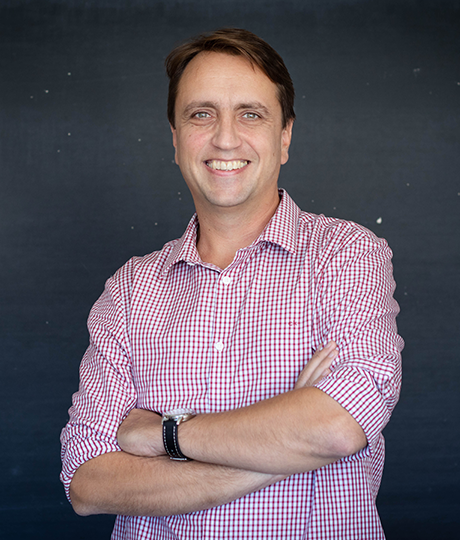
David Landriault is a Professor in the Department of Statistics and Actuarial Science at the University of Waterloo, Canada, and a Canada Research Chair in Risk Theory. His research focuses on Actuarial Science, Quantitative Risk Management, Applied Probability, and Stochastic Processes, particularly in ruin theory, drawdown analysis, and stochastic control for insurance and finance applications. Education: PhD in Mathematics (2005), MSc in Mathematics (2003), BSc in Actuarial Science (2002) from Laval University. Affiliations: University of Waterloo (postdoctoral fellowship, 2006); Canada Research Chair in Risk Theory. Research Interests Risk and Ruin Theory Stochastic Control in Insurance and Finance Drawdown and Occupation Time Analysis Regime-Switching Models Reinsurance Design and Optimization Time-Dependent Risk Models Scientific Awards Fellow of the Canadian Institute of Actuaries (F.C.I.A.), 2009 Fellow of the Society of Actuaries (F.S.A.), 2006
Louis G. Doray is a Full Professor of Actuarial and Financial Mathematics at the Department of Mathematics and Statistics, University of Montreal. His research focuses on statistical modeling in insurance, particularly in claim frequency, claim severity, survival analysis at advanced ages using logistic mortality models, and incurred but unreported accidents. Research Areas: Statistical modeling for insurance claims Survival analysis and logistic mortality models Actuarial applications of characteristic functions and fractional moments Risk management in financial mathematics Supervision: He has supervised graduate students including R. Momeya, I. Groparu-Cojaocaru, and Z. Ben Salah.
Cody Hyndman is a Full Professor and Acting Department Chair at the Department of Mathematics and Statistics, Concordia University, with a focus on Mathematical Finance, Machine Learning, and Stochastic Analysis. He has held significant administrative roles including Department Chair (2017–2023) and Acting Graduate Programs Director (2025–2025). Education: PhD, University of Waterloo (2005) MSc, University of Alberta BCom, University of Alberta His research spans Mathematical Finance , Stochastic Differential Equations , and Machine Learning , with notable contributions to arbitrage-free modeling, neural networks, and computational methods. Recent publications emphasize geometric deep learning and regularization techniques in finance. Scientific Awards: 2023: Concordia Academic Leadership Award Hyndman supervises graduate students in Mathematics and Statistics and co-founded the NSERC CREATE Program on Machine Learning in Quantitative Finance and Business Analytics (FIN-ML) , fostering industrial internships and interdisciplinary training.
Natalia Nolde is a Professor in the Department of Statistics at the University of British Columbia, Faculty of Science. Her research focuses on multivariate extreme value theory , probabilistic modeling , and applications in quantitative risk management across finance, insurance, hydrology, and geosciences. Her work explores non-classical approaches to multivariate extremes, particularly through limit set geometry and asymptotic dependence structures , offering novel insights into tail dependence and risk assessment. Recent publications highlight her expertise in copula-based risk modeling , financial stress testing , and geohazard prediction . Current students include: Daniel Hadley Jonathan O.K. Agyeman
David Saunders is an Associate Professor in the Department of Statistics and Actuarial Science at the University of Waterloo, affiliated with the David R. Cheriton School of Computer Science. His research focuses on quantitative risk management, mathematical finance, and stochastic optimization with applications to credit risk, portfolio optimization, and derivatives pricing. Professor Saunders has held academic positions at the University of Pittsburgh and Cyprus International Institute of Management, and has consulted for institutions like RiskMetrics, TD Bank, and Central Bank of Cyprus. Education: PhD studies at the University of Toronto with industry collaboration at Algorithmics Inc., followed by roles at Cyprus International Institute of Management and University of Cyprus's HERMES Center. His work bridges theoretical stochastic analysis and practical financial risk management challenges. Research interests prominently feature credit risk management, optimal stopping problems, and analytical techniques in finance. Recent work addresses inverse default boundary problems, wrong-way risk in derivatives, and efficient algorithms for portfolio optimization under complex return distributions. Collaborations with financial institutions drive applied research in capital allocation, operational risk modeling, and regulatory compliance. Advising and grants include directing the Professional Science Master's in Mathematical Finance at Pitt, supervising student-industry projects on credit risk and CDO pricing, and securing funding for computational finance initiatives. Active in RiskLab Cyprus and HERMES European Center, his research extends to equity risk management and market risk frameworks.
Albert Yoon is a Professor and holds the Michael J. Trebilcock Chair in Law and Economics at the University of Toronto Faculty of Law. He previously served as Associate Dean (Research & Curriculum) from 2018–2020 and has held academic positions at Northwestern University. His research focuses on labor markets in legal professions, legal ethics, and applications of AI to law. He co-founded Blue J, an AI startup aiding tax and legal professionals. Education: BA from Yale, JD and PhD (Political Science) from Stanford. Professional experience includes clerkship at the U.S. Court of Appeals for the Sixth Circuit. Fellowships include the Pierre Elliott Trudeau Fellowship (2022), Princeton University, and Robert Wood Johnson Foundation. Research interests span legal economics, judicial behavior, and technology's impact on law. Notable awards include the Ronald H. Coase Prize and American Law Institute membership. His work bridges empirical legal studies and computational methods, addressing topics like Supreme Court clerkships, AI-driven legal predictions, and tax law analytics. Publications include over 47 scholarly articles in top journals like Chicago Law Review , Stanford Law Review , and Journal of Law & Economics . Recent work examines AI in legal practice, gender disparities in M&A legal teams, and judicial decision-making dynamics.
Erin C. Strumpf is affiliated with the Department of Economics at McGill University in Montréal, Canada. She is also associated with the Centre Interuniversitaire de Recherche en Analyse des Organisations (CIRANO) and the Centre Interuniversitaire de Recherche en Économie Quantitative (CIREQ) , both in Montréal. Her research primarily focuses on health economics, public policy, and the intersection of labor markets with health care systems. Key Research Areas: Health economics, public policy, primary care systems, Medicaid impacts on labor supply, maternal and infant health, econometric methods (particularly difference-in-differences and quasi-experimental designs). Notable Trends in Publications: Recent work examines breast cancer data reliability (2024), patient enrollment policies (2025), and the economic impacts of health policies on labor markets (2017, 2010). Earlier studies (2016–2018) analyze maternal leave, chronic disease in aging populations, and health disparities linked to socioeconomic factors. Labs/Teams: Collaborates with interdisciplinary teams at CIRANO and CIREQ, focusing on policy evaluation and health systems analysis. Her work often involves quasi-experimental methods and longitudinal data from OECD countries, Canada, and the U.S.
Kenneth Zhou is an Associate Professor in the Department of Statistics and Actuarial Science at the University of Waterloo. His academic profile indicates expertise in statistical methods and actuarial modeling, though specific research details are not provided in the source materials. Based on departmental affiliation, his work likely involves developing statistical models for risk assessment, insurance mathematics, or data analysis techniques. Zhou maintains an office in the Mathematics 3 building (M3 3131) and can be contacted via university email.
Manuel Morales is an Associate Professor in the Department of Mathematics and Statistics at the University of Montreal since 2005. He holds a Ph.D. in Mathematics (2003) from Concordia University, an M.Sc. in Statistics (2000) from Concordia, and a B.Sc. in Mathematics (1996) from the National Autonomous University of Mexico. His research focuses on Financial and Actuarial Mathematics, particularly in Ruin Theory, Lévy processes, and High-Frequency Finance. He leads applied projects integrating Machine Learning in Banking and ESG Investment, and has pioneered AI governance frameworks at the National Bank of Canada as their Chief AI Scientist. Education: Ph.D. Mathematics, Concordia University, 2003 M.Sc. Statistics, Concordia University, 2000 B.Sc. Mathematics, National Autonomous University of Mexico, 1996 Research Interests: His work spans theoretical and applied directions, including non-Gaussian option pricing, regime-switching models, Limit Order Book dynamics simulation, and AI applications in finance. He emphasizes responsible investment and ESG factors through alternative data analysis. Advising & Partnerships: Supervises Master’s/Ph.D. students in Insurance and Financial Mathematics. Leads the FinML Network (since 2018) and collaborates with industry partners like the National Bank of Canada on AI-driven financial projects. His grants and contracts enable applied research in high-frequency market surveillance and model governance. Labs & Teams: Directs the FinML Network and oversees the National Bank’s AI initiatives, focusing on AI governance and algorithmic trading strategies.
Florian Hoffmann is an Associate Professor and BIE Director at the Vancouver School of Economics within the Faculty of Arts at the University of British Columbia. He received his Ph.D. from the University of Toronto in 2010 and has established himself as a leading researcher in labor economics. His professional affiliations include membership in the Human Capital and Economic Opportunity Working Group within the Becker-Friedman Institute at the University of Chicago since 2012, Research Fellow at the Halle Institute for Economic Research, Director of the IAB Research Data Center, and Board Member of the Canadian Labour Economics Forum (CLEF). Ph.D., University of Toronto, 2010 Hoffmann's research focuses on the determinants of life-cycle earnings and career dynamics, dynamic discrete choice models of human capital formation, estimation of equilibrium search models, and the importance of student-instructor interactions for academic achievement. His work bridges theoretical econometrics with empirical applications in labor markets. His research has identified significant effects of demographic matching between instructors and students, showing that the performance gap between white and underrepresented minority students falls by roughly half when taught by an underrepresented minority instructor. Hoffmann's publications appear in top economics journals including the American Economic Review, Journal of Economic Perspectives, The Review of Economics and Statistics, and Journal of Human Resources. His recent work has examined growing income inequality across advanced economies, complex-task biased technological change effects on labor markets, and Burdett-Mortensen models of on-the-job search. Growing Income Inequality in the United States and Other Advanced Economies (2020) Complex-Task Biased Technological Change and the Labor Market (2017) Burdett-Mortensen Model of On-the-Job Search with Two Sectors (2016) As an educator, Hoffmann teaches several courses at UBC including ECON 326 (Methods of Empirical Research), ECON 360 (3rd Year Labour Economics), and ECON 460 (4th Year Labour Economics). He has also been invited to teach labor economics courses at the Bavarian Graduate Program in Economics and the University of Halle-Wittenberg. His research methodology combines sophisticated econometric techniques with large administrative datasets to address fundamental questions about labor market dynamics.
Liqun Diao is an Associate Professor (Tenured) in the Department of Statistics and Actuarial Science at the University of Waterloo. He holds affiliations with the Health Data Science Lab and the Waterloo Artificial Intelligence Institute. His research focuses on developing statistical methods and machine learning algorithms for applications in medicine, public health, and insurance. Education: B.Econ. in Statistics, Renmin University of China (2007) M.Math. in Statistics (Biostatistics), University of Waterloo (2009) Ph.D. in Statistics (Biostatistics), University of Waterloo (2013) Research Interests: Recursive partitioning and tree-based methods for survival and health data Causal inference and missing data methodologies Bayesian nonparametric models and copula dependence structures Mortality forecasting and actuarial science applications Awards: 2013 Pierre Robillard Award (best doctoral thesis in Canadian statistics) 2024 Outstanding Performance and Teaching Awards at UW Professional Activities: Led research groups in health data science and AI Recipient of multiple grants from NSERC and industry partners Advises graduate students in statistics and actuarial science Labs/Teams: Active contributor to the Health Data Science Lab and Waterloo AI Institute, focusing on applying statistical innovations to real-world health and insurance challenges.
Philippe Gachon is a Professor in the Department of Geography at the University of Quebec at Montreal (UQAM), Director of the ESCER Research Centre, and leader of the Quebec InterSectoral Flooding Network (RIISQ). He specializes in hydro-climatology and climate risk assessment, with extensive experience at Environment Canada and as a Strategic Research Chair holder on Hydrometeorological Risks Related to Climate Change. His research examines climate change impacts on extreme weather events including floods, droughts, and heat waves. Recent work focuses on improving risk identification and adaptation strategies through intersectoral approaches. Key research themes include: Regional climate modeling and validation Hydro-meteorological hazard intensification Systemic risk assessment Community-scale resilience building Climate services development His recent publications demonstrate advanced statistical approaches for modeling non-stationary flood regimes, evaluating wildfire risks under climate change, and quantifying vector-borne disease transmission. Collaborative projects with 16 universities address physical climate risks and socioeconomic vulnerabilities across Quebec.
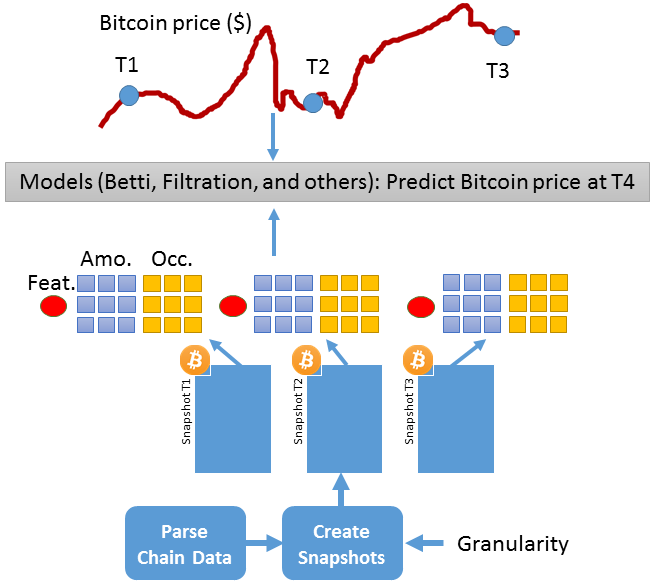
Cuneyt Gurcan Akcora is an Associate Professor of Computer Science at the University of Central Florida (UCF) and an Adjunct Professor in Computer Science and Statistics at the University of Manitoba, Canada. He holds a Ph.D. from Università degli Studi dell’Insubria (Italy) and an M.S. from SUNY Buffalo (USA) as a Fulbright Scholar. His research focuses on data science applied to complex networks and graph mining, particularly in blockchain and online social networks. He has collaborated with institutions like Yahoo! Research Barcelona, Qatar Computing Research Institute, and Huawei. Education: PhD in Computer Science, 2014 – Università degli Studi dell’Insubria, Italy MEng in Computer Science, 2010 – SUNY Buffalo, USA BSc in Electrical & Electronics Engineering, 2008 – Karadeniz Technical University, Turkey Research Interests: Explainable AI and Graph Machine Learning Topological Data Analysis (TDA) for Blockchain Networks Large-Scale Graph Analysis and Anomaly Detection Nonparametric Statistical Methods Key Contributions: His work includes developing chainlet theory for Bitcoin price prediction, scalable TDA algorithms for blockchain forensics, and interdisciplinary grants exploring blockchain applications in insurance. Notable projects include the Chartalist Dataset for blockchain network analysis and ChainNet , a topological graph learning framework. Awards & Grants: NSERC Discovery Grant (2020) UCF Interdisciplinary Grant for Blockchain in Insurance (2020) Fulbright Scholarship (M.S., SUNY Buffalo) Labs & Teams: Active in UCF’s FData Lab and leads blockchain data analytics initiatives. His work bridges academia and industry through collaborations with Huawei, QCRI, and others.
Archer Yang is an Associate Professor in the Department of Mathematics and Statistics at McGill University, with additional affiliations as an Associate Academic Member of Mila - Quebec AI Institute, Associate Member of the School of Computer Science, and Member of the Quantitative Life Science Program. His academic journey began with a PhD from the University of Minnesota under the supervision of Hui Zou, establishing his foundation in statistical methodology and machine learning. Dr. Yang's research spans three interconnected themes: statistical machine learning, applications in drug discovery, and computational genomics and healthcare. In statistical machine learning, he focuses on developing dimensionality reduction, probabilistic models, and causality-inspired methods to address complex high-dimensional data challenges. His work in drug discovery involves creating machine learning models to accelerate drug candidate identification and enhance understanding of drug efficacy and safety. In computational genomics and healthcare, he develops techniques to analyze genomic data, identify biomarkers, and explore the genetic basis of diseases, with the goal of improving precision medicine and predicting patient outcomes. His overarching objective is to bridge advanced data-driven methodologies with impactful applications in pharmacology, genomics, and healthcare. His recent publications reveal a strong trend toward applying machine learning to healthcare challenges, particularly in congenital heart disease analysis, mortality prediction, and drug discovery. His work demonstrates expertise in developing interpretable models that can handle complex, high-dimensional biomedical data while maintaining statistical rigor. The integration of causal inference methods with machine learning appears to be a growing focus in his research trajectory. ICML Spotlight Paper (top 2.6%, 313/12,107) Dr. Yang actively supervises a large research group including multiple postdoctoral fellows, PhD students, and Master's students. His lab has developed several notable software tools, including ml-mr for machine learning in Mendelian randomization. His supervision extends across statistics, computer science, and biomedical applications, reflecting the interdisciplinary nature of his work. He appears to maintain strong collaborative relationships with researchers in healthcare and genomics fields. His laboratory, the Archer Yang Lab, maintains active GitHub repositories focused on machine learning applications in healthcare and drug discovery, with particular emphasis on interpretable models and statistical methodology development. The lab appears to work at the intersection of theoretical statistics and practical biomedical applications, with projects spanning from algorithm development to clinical implementation.
Andrei L. Badescu is a Professor of Actuarial Science and Director of the Master of Financial Insurance in the Department of Statistical Sciences at the University of Toronto. His academic leadership spans editorial roles at Insurance: Mathematics and Economics and program direction for graduate actuarial programs. His educational foundation includes: BSc in Mathematics and Economics from Bucharest University of Economic Studies (1998) MSc in Mathematics and Economics from Bucharest University of Economic Studies (2000) PhD in Actuarial Science from Western University (2004) He completed postdoctoral training at the University of Waterloo (2006) before joining the University of Toronto faculty in 2006. Research interests evolved from foundational work in Risk and Ruin Theory using Matrix Analytic Methods to contemporary applications in Stochastic Claim Reserving, Dependence Modelling, and Predictive Analytics. Current emphases include Telematics risk assessment and Insurance Data Science, leveraging advanced statistical techniques for real-world insurance challenges. Recent publications (2021-2025) reveal a strategic shift toward data-driven insurance solutions. Key trends include micro-level claim reserving via inverse probability weighting, telematics-based driving risk modeling using unsupervised learning, and mixture-of-experts frameworks for portfolio ratemaking. These works bridge traditional actuarial science with machine learning, particularly in handling censored data and operational risk. Professor Badescu mentors five doctoral students (Spark Tseung, Sebastian Calcetero, Ian Weng, Sophia Chan, Hassan Abdelrahman) and two master's students (Kaihua Sun, Yifeng Ge). His administrative leadership includes directing the Master of Financial Insurance program and previously overseeing the Data Science concentration in the Master of Applied Computing. His research group develops practical tools like the LRMoE.jl software package for actuarial loss modeling, while future work targets telematics integration and insurance-specific artificial intelligence applications.