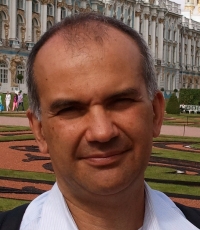
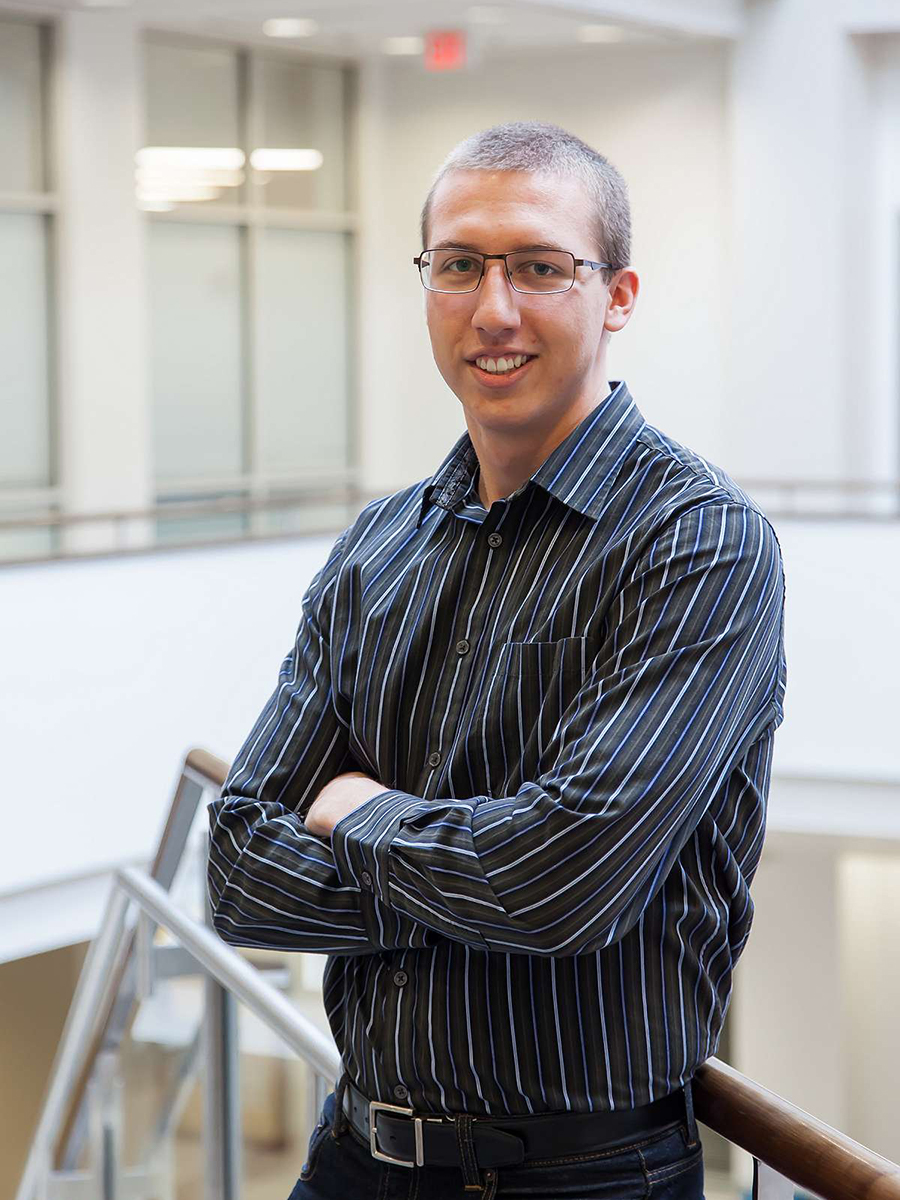
Manuel Mucientes Molina is a Full Professor at the Research Center on Intelligent Technologies (CiTIUS) within the University of Santiago de Compostela . His research focuses on Artificial Intelligence , particularly in Computer Vision and Machine Learning , with applications in object detection, process mining, and healthcare diagnostics. Research Areas : Machine learning, Computer vision, Process mining, Deep learning, AI for healthcare. Projects : Protonterap-IA (2025), AZOR (2024), RAI4P (2021), eXplica-IA (2018), DronePlan (2014), SoftLearn (2012). Publications highlight advancements in few-shot object detection, small object tracking, and AI-driven conformance checking. Notable collaborations include work on X-ray vision systems and medical mask detection in operating rooms. Awards : Best Student Paper Nomination (2015), Runner-up best industry-oriented paper award (2008). Teaching includes courses on Statistical Learning, Deep Learning, and Automata Theory at the M.Sc. and B.Sc. levels.
Juan Carlos Vidal Aguiar serves as an Associate Professor in the Department of Electronics and Computer Science at the University of Santiago de Compostela, Spain. With extensive experience in academic research and teaching, he has established himself as a prominent figure in process mining and business intelligence applications. His work bridges theoretical computer science with practical implementations across healthcare and educational domains. Dr. Vidal Aguiar earned his Bachelor Engineering degree in Computer Science from the University of La Coruña in 2000, followed by several years working as a senior IT consultant. He completed his PhD at the University of Santiago de Compostela in 2010, where he has remained as faculty since. His academic journey reflects a trajectory from foundational computer science toward specialized applications in process analytics. His research interests focus on knowledge discovery, semantic annotation, semantic modeling of workflows and services, and the application of artificial intelligence for business intelligence . Recent work demonstrates significant evolution toward healthcare applications, particularly in cardiac rehabilitation and glucose monitoring, while maintaining strong foundations in process mining techniques. His publications reveal a clear progression from theoretical workflow modeling to practical AI-driven business process solutions with real-world impact. Analysis of his publication trends shows increasing specialization in predictive process monitoring with deep learning approaches, particularly evident in his 2023-2025 work. His research spans both theoretical contributions in kernel methods and biclustering algorithms, and practical implementations like the VERONA Python library for benchmarking. The interdisciplinary nature of his work is particularly notable in healthcare applications where process mining techniques are adapted for medical contexts. Dr. Vidal Aguiar leads multiple significant research initiatives including Predictive monitoring and causality for cardiac rehabilitation, Responsible AI for Process Mining 2.0, GAMification techniques for entrepreneurial teacher development, and Soft computing for gamification analytics in cardiac rehabilitation . These projects demonstrate his ability to secure research funding across diverse domains while maintaining a cohesive research vision centered on process analytics. His research ecosystem includes collaborations with numerous colleagues including Manuel Lama, Pedro Gamallo-Fernandez, and Marcos Matabuena across various projects. The SoftLearn platform represents one of his notable contributions to educational technology, applying soft computing techniques to process mining in e-learning contexts. His work consistently bridges academic research with practical implementations that address real organizational challenges.
Zachary Lipton is an Assistant Professor at Carnegie Mellon University (CMU) jointly appointed in the Tepper School of Business and the Machine Learning Department. He holds courtesy affiliations with the Heinz School of Public Policy and Societal Computing. His research bridges core ML methods, healthcare applications, natural language processing, and critical analysis of AI's societal impacts. Tepper School of Business Machine Learning Department Heinz School of Public Policy (courtesy) Societal Computing (courtesy) Dr. Lipton leads the Approximately Correct Machine Intelligence (ACMI) Lab, focusing on robust ML systems, causal representation learning, and ethical AI development for clinical medicine. He co-founded Abridge, a healthcare AI company, and authored the interactive textbook Dive into Deep Learning . His work emphasizes clear scientific communication through expository efforts like literature reviews and the Approximately Correct blog. Recent publications highlight ACMI Lab's contributions to synthetic data quality, causal fairness analysis, diffusion model hallucinations, and medical LLM adaptation. Key research themes include distribution shift, human-AI alignment, and empirical evaluation of AI's societal impacts. Contact: zlipton@cmu.edu
Enrico Tronci is a Full Professor in the Department of Computer Science at Università degli Studi di Roma La Sapienza , Italy. His research focuses on model checking, formal verification, and synthesis of cyber-physical systems, with applications to mission-critical and safety-critical domains such as space systems, smart grids, and healthcare. He leads the Model Checking Lab (MCLab) and has coordinated numerous national and international research projects funded by organizations including the European Community (EC), European Space Agency (ESA), and Italian Ministry of University and Research (MUR). Research Highlights : Automatic control software synthesis from closed-loop specifications Model checking algorithms for hybrid and stochastic systems Technology transfer in sectors like energy, transportation, and aerospace Teaching : Undergraduate: Software Engineering (Fall 2024) Graduate: Automatic Verification of Intelligent Systems (Fall 2024), Verification and Validation of Intelligent Systems (Spring 2025) Scientific Awards : Recipient of the IBM-Italia 1987 prize for best thesis in Artificial Intelligence Publications Trends : 2024: Scaling up model checking for cyber-physical systems via HPC 2023: Hormonal impact on behavior and fault-tolerant sensor deployments 2021-2022: In silico clinical trials, smart grid management, and scenario enumeration 2020: AI-guided diabetes patient modeling and forensic psychiatry applications Software Tools : QKS (Quantized Kontrol Synthesizer) NashMV (MAD systems verification) CMurphi (Hybrid systems model checker) FHP-Murphi (Probabilistic verification) BSP (Boolean symbolic programming)
Ashutosh Trivedi is an Associate Professor of Computer Science at the University of Colorado Boulder, currently on leave from his position as Assistant Professor in the Department of Computer Science and Engineering at the Indian Institute of Technology Bombay. He is affiliated with multiple research initiatives including the Centre for Formal Design and Verification of Software (CFDVS) at IIT Bombay, Free and Open Source Software for Education (FOSSEE), and the Indo-French project on Algorithmic Verification of Real-Time Systems (AVeRTS). At CU Boulder, he leads the Programming Languages and Verification (CUPLV) research group focusing on trustworthy AI systems. Trivedi's research centers on bridging formal methods with artificial intelligence to create more trustworthy systems. His work spans formal verification of cyber-physical systems, reinforcement learning with formal guarantees, and developing techniques for ensuring software fairness and accountability. He specializes in using formal languages, automata, and logic to transform vague natural-language instructions into precise specifications for AI systems. His recent projects include developing reinforcement learning algorithms for cardiac pacemaker design based on formal safety requirements, using SAT solvers to ground large language model outputs in logical reasoning, and encoding state representations in reinforcement learning using formal languages. His publication trends reveal a strong focus on neurosymbolic approaches that combine neural networks with symbolic reasoning, particularly for safety-critical applications. Recent work demonstrates increasing integration of formal methods with reinforcement learning, with applications spanning medical devices, tax preparation software, and puzzle-solving AI. His research shows a clear trajectory toward making AI systems more explainable, accountable, and verifiable through principled mathematical frameworks. Distinguished Paper Award at CAV for Regular Reinforcement Learning (2024) NeuS 2025 Disruptive Idea Award for Stochastic Neural Simulation Relations for Transferring Control under Uncertainty ACM Senior Member recognition (2024) Royal Society Wolfson Visiting Fellowship (2024) Trivedi has successfully advised multiple PhD students to completion, including Shadi Tasdighi Kalat (2025), Mateo Perez (2025), John Komp (2024), Vishnu Murali (2024), and Taylor Dohmen (2024). His teaching portfolio includes foundational courses in automata theory, digital logic design, and cyber-physical systems at both IIT Bombay and CU Boulder. He has served on program committees for major conferences including FSTTCS, HSCC, and FORMATS, and organized workshops such as ICLA 2015 and ALC 2015. As leader of the CUPLV research group, Trivedi directs projects focused on formal verification of AI systems, reinforcement learning with safety guarantees, and software fairness. His group collaborates with medical researchers on cardiac device verification and with legal scholars on tax software accountability, reflecting his commitment to applying formal methods to real-world problems with significant societal impact.
Dr. Daniel Stjepanovic is a Senior Research Fellow at the National Centre for Youth Substance Use Research (NCYSUR) within the Faculty of Health, Medicine and Behavioural Sciences at The University of Queensland. His work focuses on substance use patterns shaped by public policy, including cannabis vaping, psychedelic microdosing, and social cognition in addiction. He combines expertise in cognitive neuroscience with experimental psychology to advance understanding of substance-related behaviors. Expertise: Cannabis policy analysis, meta-science, digital media impact on youth Collaborations: Duke Institute for Brain Sciences, Durham Veterans Affairs Medical Center Research Trends (2024–2025): Examines cannabis policy impacts via epidemiological methods Investigates psychedelics for self-treatment and their public health implications Develops causal inference frameworks in addiction research using DAGs and target trial emulation Conducts systematic reviews on tobacco cessation, drug checking services, and gaming disorders Supervision & Funding: Available for PhD supervision. Current NHMRC-funded projects include AI-powered anti-vaping campaigns and nicotine monitoring systems integrating global data.
Dr. Andrew Butterfield is a Professor in the School of Computer Science and Statistics at Trinity College Dublin. He serves as Head of the Foundations and Methods Group and is actively involved with Lero: the Irish Software Research Centre. His academic work spans formal methods, functional programming, and theoretical computer science with applications in safety-critical systems. Butterfield's research primarily focuses on the Unifying Theories of Programming (UTP) paradigm, with specializations in shared-variable concurrency, formal verification of medical device software, and spacecraft operating systems. His work explores composition and local denotational semantics for concurrency, UTP theories for rely/guarantee reasoning, and implementations of proof assistance tools written in Haskell. Current projects include RTEMS-SMP (formal verification of multicore real-time scheduling funded by ESA) and FMHIDA (formal techniques for medical device software development funded by SFI through Lero). His recent publications reveal a strong emphasis on applying formal methods to real-world problems, with particular attention to concurrency models, medical systems verification, and tool development for UTP. The research shows consistent progression from theoretical foundations toward practical applications in safety-critical domains. Butterfield has developed several Haskell-based tools including the Theorem Proving Assistant for UTP, UTP Calculator, and Equational Reasoning Support. He has served on numerous program committees including TASE 2019, IWFM, FMICS, and FM, and is on the Editorial Board of Formal Aspects of Computing. He teaches courses including CS3016: Introduction to Functional Programming and CS2016/3D4 Concurrency and Operating Systems. Previously, he has taught Formal Methods, Functional Programming, Concurrency Theory, and various other computer science subjects. He also serves as School Disability Liaison Officer and Course Director for Creative and Cultural Entrepreneurship. Butterfield leads the Foundations & Methods Group at Trinity and has been involved in significant research projects including Formalising Interfaces between Software and Hardware (FISH) funded by SFI, Unifying Synchronous Systems, and ESA-funded activities on OS kernel formal verification. His work with the Irish School of VDM has produced LaTeX macros and Haskell implementations for formal method applications.
Eduard Baranov is a Visiting Lecturer and Research Assistant at the Université catholique de Louvain, affiliated with the Louvain Polytechnic School (EPL) through the Computer Engineering Center (INGI) under the Institute of Information and Communication Technologies, Electronics and Applied Mathematics (ICTEAM). His work bridges academic research with industrial applications. Research Interests : Software engineering, formal methods, cybersecurity, autonomous systems, and model checking. His focus spans scalable coverage estimation, secure healthcare systems, and statistical validation of privacy protocols. Publications : Recent work includes t-wise coverage algorithms for software testing, formal verification of multi-agent autonomous systems, and privacy-preserving frameworks aligned with GDPR standards. His research often integrates symbolic execution and statistical model checking. Collaborations : Collaborates with researchers like Axel Legay, Kuldeep S. Meel, and Thomas Given-Wilson, contributing to journals such as IEEE Transactions on Software Engineering and ACM Transactions on Software Engineering and Methodology. Contact : Email: eduard.baranov@uclouvain.be | Office: INGI - Réaumur, L5.02.01, Place Sainte Barbe 2, 1348 Louvain-la-Neuve.
Dr. Emilie Joly-Burra is a Research and Teaching Fellow at the LIVES Centre, University of Geneva, Switzerland. She holds a Doctorate in Psychology (2019) and a Master in Clinical and Cognitive Psychology (2013) from the same institution. Her career includes roles as a Doctoral Candidate (2015–2017) with the Swiss National Science Foundation (SNSF) and as a Junior Psychologist (2013–2015) at the VIVA Association in Lancy, Switzerland. University of Geneva, Switzerland LIVES Centre (National Centre of Competence in Research on Vulnerable Populations) Her research focuses on cognitive aging , particularly prospective memory (remembering delayed intentions), and its relationship with executive functions, personality traits (e.g., neuroticism), and stress in older adults. She investigates how time-monitoring strategies and clock-checking behavior affect memory performance, and applies advanced statistical methods like joint longitudinal-survival models . Her work also explores neurostimulation interventions for enhancing prospective memory and attentional control in aging populations. Recent publications include studies on ADHD and VR-based memory assessments , executive function quality of life correlations , and facet-specific cognitive training efficacy . She collaborates frequently with researchers like Matthias Kliegel and Sascha Zuber on multidisciplinary projects bridging psychology, neuroscience, and computational modeling.
Dr. Indika Kahanda is an Assistant Professor in the School of Computing at the University of North Florida , where he leads the BioMedInfo Lab focusing on bioinformatics and biomedical informatics. Previously, he held the same position at the Gianforte School of Computing (Montana State University) from 2018 to 2023. Education: PhD in Computer Science (2016), Colorado State University MS in Electrical and Computer Engineering (2010), Purdue University BS in Computer Engineering (2007), University of Peradeniya, Sri Lanka His research applies machine learning and natural language processing to large-scale biomedical data, with key focuses on computational methods for functional genomics and automated text mining tools for biomedical literature. Current projects include Pangenomics , student misconception detection , and inconsistency detection in medical literature . Recent publications highlight his work in LLM evaluation for healthcare applications, protein function prediction , and medical transcription error analysis . He contributes to biomedical datasets like miRNAFinder and MLHCBugs, with technical expertise in deep learning, ensemble methods, and metamorphic testing.
Rolf Drechsler is a Full Professor and Head of the Group of Computer Architecture at the University of Bremen's Institute of Computer Science since 2001, and Director of the Cyber-Physical Systems Group at DFKI Bremen since 2011. He holds an adjunct professorship at the Indian Statistical Institute and has been affiliated with Duke University. Education: Diploma (1992) and Dr. phil. nat. (1995) in Computer Science from Goethe University Frankfurt Academic Leadership: Dean of Mathematics and Computer Science Faculty (2018-2025), Vice Rector for Research (2008-2013) His research focuses on formal verification , RISC-V architectures , and quantum/in-memory computing . Recent work explores LLM integration in hardware testing and polynomial-based verification techniques. Publications from 2024-2025 span IEEE Transactions , DATE , and DAC , emphasizing automated verification , quantum circuit mapping , and LLM-driven testbench generation . Scientific Awards IEEE/ACM Best Paper Awards (2013, 2018) Berninghausen-Preis for Innovative Teaching (2018) IEEE Fellow (2015) Founder Award for Solvertec (2013) He has served on program committees for DAC, ICCAD, DATE, and founded graduate schools in Embedded Systems and System Design under Germany's Excellence Initiative.
Yoichi ARAI is an Associate Professor at the School of Social Sciences, Waseda University, specializing in econometrics and applied economic analysis. He holds a Ph.D. in Economics from the University of California, San Diego, and has established himself as a leading researcher in regression discontinuity designs, cointegration analysis, and program evaluation methodologies. Dr. ARAI's educational background includes a doctoral degree from UC San Diego, one of the world's leading institutions for econometric theory. His academic journey has positioned him at the intersection of theoretical econometrics and practical policy evaluation. Dr. ARAI's research focuses on econometrics and applied econometrics , with particular expertise in regression discontinuity designs, bandwidth selection methods, cointegration testing, and program evaluation. His work bridges theoretical developments with practical applications in labor economics, education economics, and monetary policy. His research has significantly advanced methodological approaches for causal inference in non-experimental settings, particularly through innovations in regression discontinuity frameworks and treatment effect estimation. His contributions have been instrumental in developing more robust statistical tests for identifying assumptions in fuzzy regression discontinuity designs and optimizing bandwidth selection procedures for both sharp and fuzzy regression discontinuity estimators. Analysis of Dr. ARAI's publication record reveals a strong trajectory of methodological innovation in econometrics, particularly in regression discontinuity designs and cointegration analysis. His recent work (2020-2025) focuses on high-dimensional extensions of regression discontinuity methods, optimal bandwidth selection, and testing identifying assumptions. Earlier work (2000-2015) established foundational contributions to cointegration testing with structural breaks and time series analysis. His research demonstrates consistent contributions to both theoretical econometrics and applied policy evaluation, with particular relevance to Japanese economic issues including educational upgrading of youth and labor market dynamics. Dr. ARAI has received recognition through substantial research funding, including multiple Grants-in-Aid for Scientific Research from the Japan Society for the Promotion of Science (JSPS). His projects include "Development and Application of Policy Evaluation Methods Based on Dynamic Structural Models" (2024-2029), "Econometrics for Policy Evaluation and its Application" (2015-2019), and "Econometric Analysis of Program Evaluation and Its Application to Unemployment Insurance Policy" (2011-2015). As an educator, Dr. ARAI teaches advanced econometrics courses at both graduate and undergraduate levels, including "Research on Econometrics for Policy Evaluation," "Basic Data Analysis (Regression Analysis)," and "Applied Econometrics." His teaching emphasizes the practical application of econometric methods to real-world policy questions. He has supervised numerous research projects and contributes significantly to the academic community through committee memberships with the Japan Statistical Society, Japanese Economic Association, American Economic Association, and Econometric Society.
Professor Sven Schewe is affiliated with the University of Liverpool, focusing on finite games of infinite duration and automata over infinite structures. He emphasizes collaborative research and teaching, though admits to challenges in maintaining web pages. EPSRC grant (2017-2021) for Parity Games EPSRC grant (2015-2019) for Energy Efficient Control DST (UK) grant (2018-2020) for AI Test Metrics EU grant (2017-2019) for Parametrised Verification Leverhulme Trust grant (2011-2012) for Probabilistic Systems EPSRC grant (2010-2013) for Markov Decision Processes His research spans formal verification, game theory, probabilistic systems, and secure computation. Key publications include work on parity games, adversarial training, and multi-party querying. He serves as a reviewer for major conferences and journals, including ACM Transactions on Computational Logic and IEEE Symposiums. Scientific awards include the Dr. Eduard Martin Preis (2009) and the GI Dissertation Award (2009). He supervises theses on topics like semantic testing for neural networks, symbolic discrete control, and power grid frameworks. As PhD Admission Tutor for Computer Science, he contributes to academic governance. His recent articles highlight collaborations in AI security, chemical space exploration, and automata theory.
Petr Hájek is a Professor at the University of Pardubice in the Institute of System Engineering and Informatics, Czech Republic. With 236 publications, 71,463 reads, and 5,595 citations, he has established himself as a prominent researcher in computational intelligence and machine learning applications. His research interests span multiple domains of computational intelligence, with particular focus on: Machine learning applications in financial forecasting and risk management Neural networks and fuzzy logic systems for time series prediction Sentiment analysis for financial markets and social media Fraud detection and fake news identification systems Cryptocurrency price forecasting and market analysis ESG analytics and sustainable finance applications Analysis of his recent publications (2023-2025) reveals an expanding research scope that increasingly integrates sustainability considerations with financial technology. His work demonstrates sophisticated methodological approaches, frequently employing hybrid neural network architectures, ensemble learning techniques, and advanced text mining methods. Professor Hájek's research shows strong international collaboration patterns with scholars across Europe, Asia, and North America. His scholarly contributions have focused on developing practical AI solutions for complex financial problems, with particular attention to handling class imbalance issues in financial datasets and creating interpretable models for financial decision-making. Professor Hájek maintains an active research program with consistent publication output across top venues in computational intelligence and financial technology. His work bridges theoretical advances in machine learning with practical applications in finance, demonstrating both academic rigor and real-world relevance.
Peter Fisher is an Assistant Professor of Organizational Behavior and Human Resource Management at Ryerson University's Ted Rogers School of Management. His research specializes in bias reduction in hiring, workplace diversity, and evidence-based recruitment practices. He also serves as webmaster for the Canadian Society for Industrial Organizational Psychology. Research Focus Fisher investigates personnel selection methodologies, cross-cultural personality differences, and HR decision-making. Key areas include: Gender and cultural bias mitigation in employment references Personality assessment validity (e.g., forced-choice testing) Technology's role in modern recruitment Publications His 9 most recent articles (2017–2021) emphasize industrial-organizational psychology, with recurring themes of psychometrics, cross-national comparisons, and HR analytics. Work frequently appears in journals like Personality and Individual Differences and the International Journal of Selection and Assessment . Awards & Grants SSHRC Insight Development Grant (2020–2021): $50,574 for tech startup hiring research Lazaridis Seed Grant (2019–2020): $10,000 2017 Best Master’s Thesis Award (HR Research Institute) 2017 Best Student Poster, Second Prize (Canadian Society for I/O Psychology) Teaching & Service He teaches MHR 623: Recruitment and Selection and contributes to academic societies, enhancing industry-academia collaboration in HR practices.