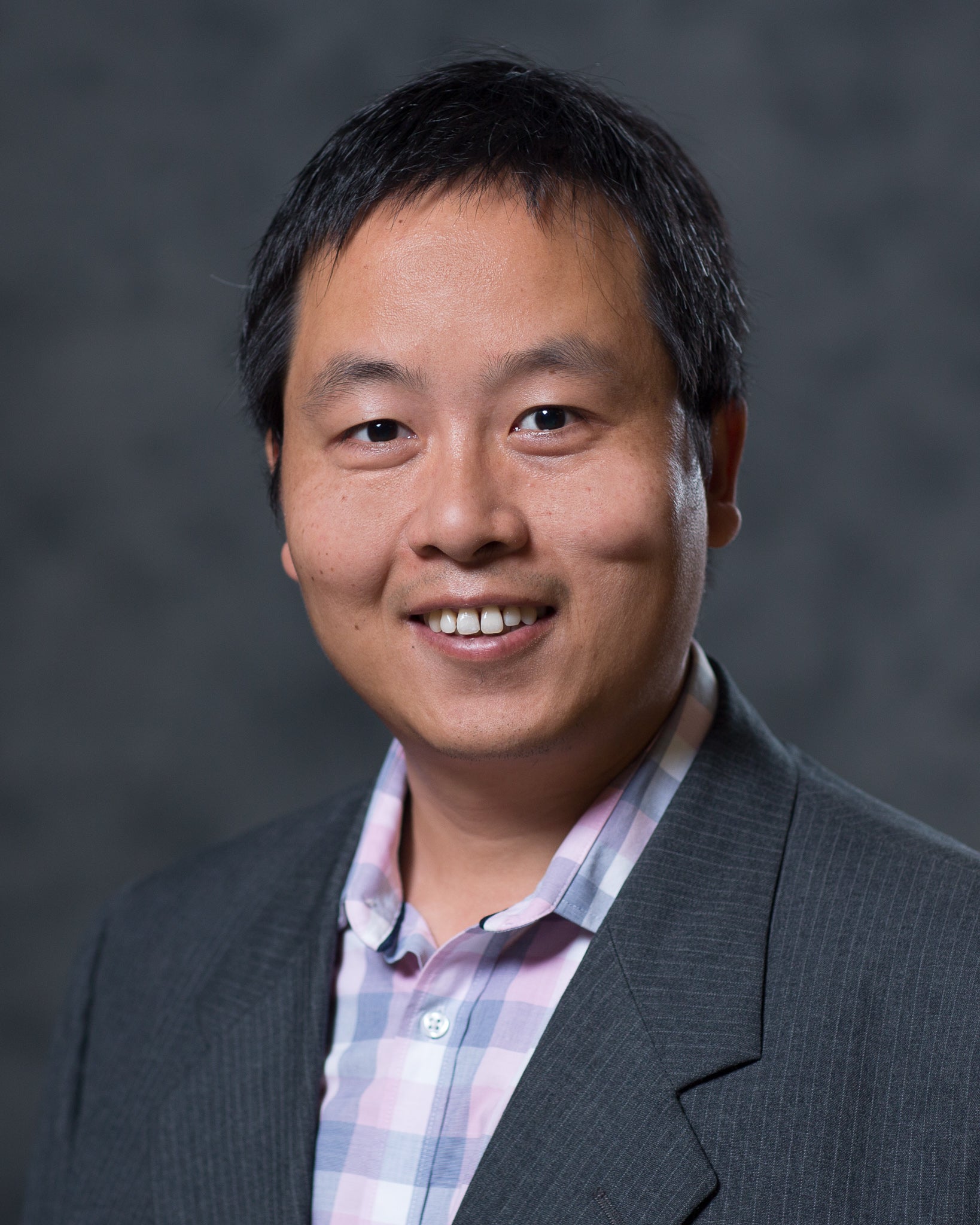
Jianxi Gao is an Associate Professor in the Department of Computer Science at Rensselaer Polytechnic Institute (RPI). His research focuses on network science, particularly network resilience, robustness, and control, integrating network theory, control theory, statistical physics, and operations research. He also explores the intersection of network science and AI, including applications of AI to network analysis and vice versa. His work aims to understand, predict, and control the resilience of complex systems against cascading failures. Key research areas include network resilience in transportation systems, quantum networks, and biological systems, with applications to pandemic response and infrastructure optimization. Gao's contributions span theoretical frameworks and computational tools, such as the NuRsE MATLAB package for network resilience analysis. His GitHub repositories (e.g., NuRsE and NON) showcase his open-source contributions to network science and computational methods. His recent publications address topics like AI-driven network analysis, quantum network percolation, and pandemic-induced healthcare system stress. He actively collaborates on interdisciplinary projects, emphasizing real-world applications of network science principles.
Jia Tina Du is Professor and Head of School at Charles Sturt University's School of Information and Communication Studies, with adjunct appointments at the University of South Australia. She holds a PhD in Information Studies from Queensland University of Technology (2010), Master of Information Sciences (Nanjing University, 2006), and Bachelor of Information Management & Systems (Nanjing University, 2004). Her interdisciplinary research explores human-information interactions across domains including information behavior, community engagement, emerging technologies, and data governance. Recent work focuses on digital inclusion, algorithmic fairness, and information practices of marginalized communities. Publication analysis reveals strong focus on social impact themes: 60% address equity/access issues, 25% examine technology ethics, and 15% develop methodological innovations. Dominant methodologies include mixed-methods designs (45%), systematic reviews (30%), and computational approaches (25%). Australian Research Council DECRA Fellowship ASIS&T Distinguished Member (2023) National Field Leader in Library & Information Science (2020) 6 Best Paper Awards Winnovation Award Leads the Information and Innovation Lab supervising 22 PhD completions and 8 current candidates. Research has attracted AUD$1.9M+ in competitive funding. Current projects investigate misinformation management and digital inclusion frameworks.
Amanda N. Laubmeier is an Assistant Professor in the Department of Mathematics & Statistics at Texas Tech University. Her research integrates mathematical modeling with ecological systems, focusing on predator-prey dynamics, pest suppression, and biodiversity mechanisms. She holds a Ph.D. in Applied Mathematics from North Carolina State University (advised by H. T. Banks) and a B.S. in Mathematics from the University of Arizona. Her postdoctoral work at the University of Nebraska-Lincoln (under Richard Rebarber and Brigitte Tenhumberg) further developed her expertise in ecological modeling. Her research interests emphasize theoretical exploration and data-driven validation of ecological processes, particularly in agricultural and climate-sensitive contexts. Key areas include predator community dynamics, temperature effects on ecosystems, and the compatibility of biological control with pesticides. She actively engages in scientific outreach to promote inclusivity in academia and supports underserved communities in STEM. Her recent publications explore topics such as trap crop efficacy, predator-prey models under climate change, and parameter estimation in ecological systems. These studies highlight interdisciplinary approaches combining mathematical theory with empirical validation. She also contributes to educational initiatives like the Science Meets Popular Culture Speaker Series, bridging academic research with public engagement. Laubmeier advises students through her research group, which focuses on ecological modeling projects. While no named advisees are listed, her group’s work is detailed on her website. Her grants and funding history are not explicitly mentioned, but her CV (dated Jan. 2025) likely provides further details. She advocates for inclusive academic practices and integrates outreach into her professional activities.
Cary Wu is an Associate Professor and York Research Chair in Political Sociology of Health at the Department of Sociology, York University. His research focuses on trust, political sociology of health, race and ethnicity, and inequality. He holds appointments in the Faculty of Graduate Studies and contributes to interdisciplinary initiatives like the Dahdaleh Institute for Global Health Research. Wu’s work bridges sociology, political science, and public health, addressing topics such as pandemic governance, social trust dynamics, and health disparities. He has secured grants from major agencies including the Social Sciences and Humanities Research Council (SSHRC) and the Canadian Institutes of Health Research (CIHR), focusing on projects like 'Trust and the Political Sociology of Health' and 'Geopolitics of Anti-Asian Racism.' Education: Ph.D., University of British Columbia Research Interests: Political Sociology of Health, Trust, Inequality, Race and Ethnic Relations, Global Health, and Research Methods. Wu’s publications appear in top journals such as JAMA Network Open , Social Science & Medicine , and BMJ Global Health . His work often emphasizes public engagement, with contributions to media outlets like the Washington Post and Financial Times . He supervises graduate students in Sociology, Political Science, and Health Studies programs at York University. His teaching includes courses on social statistics, research methods, and advanced data analysis. He advises students such as Adri Ananya, Joanne Ong, and Chung-Ho Wang. Active in editorial roles, Wu serves on the International Editorial Board of Ethnic and Racial Studies and the COVID-19 Social Impacts Network Expert Advisory Committee . His research on anti-Asian racism and pandemic responses has gained international attention, reflecting his commitment to addressing societal challenges through rigorous scholarship.
Joseph A. Schwartz is an Associate Professor at Florida State University's College of Criminology & Criminal Justice, where he also co-directs the Biosocial Criminology Research & Policy Institute. He holds a Ph.D. (2014) and dual master's degrees in Criminal Justice from Florida State University and California State University, San Bernardino. His research focuses on biosocial mechanisms underlying criminal behavior, trauma, and health outcomes. He has secured over $4.5 million in grants, including NIH-funded studies on correctional officer stress and brain injury impacts. Education: Ph.D. 2014, Florida State University: Criminology and Criminal Justice M.A. 2009, California State University, San Bernardino: Criminal Justice B.A. 2007, California State University, San Bernardino: Criminal Justice His research spans biosocial criminology, trauma's effects on criminal persistence, and correctional officer mental health. Key findings include links between traumatic brain injury and recidivism, and stress responses in correctional environments. He has published over 100 peer-reviewed articles in top journals like Justice Quarterly and Journal of Quantitative Criminology . Dr. Schwartz’s work bridges biological and social factors, such as genetic influences on delinquency and the role of self-control. His grants include NIH studies on stress interventions for correctional staff and neurobiological impacts of prison conditions. He has received awards like the 2023 Outstanding Contribution Award from the American Society of Criminology. He teaches courses on criminological theory, biosocial mechanisms, and statistical analysis. His mentorship includes over 20 graduate students and postdoctoral researchers. He serves on editorial boards for Criminology and Journal of Criminal Justice , and chairs the American Society of Criminology’s Biopsychosocial Division.
Dr. Ali Nazemi is an Associate Professor in the Department of Building, Civil, and Environmental Engineering at Concordia University, where he joined in 2015 as a Strategic Hire in Water Resources. He holds adjunct appointments at the University of Saskatchewan's School of Environment and Sustainability and is an Associate Member of the Global Institute for Water Security. His foundational education includes a PhD from the University of Birmingham (UK), an MSc from Ferdowsi University of Mashhad (Iran), and a BSc from KNT University of Technology (Iran). Dr. Nazemi's research advances methodologies for water security challenges under climate change, focusing on: Hydrological modeling and algorithm development Climate change vulnerability assessments Coupled human-water systems Hydroclimatic data diagnostics His recent publications predominantly explore climate model integration, uncertainty quantification in water systems, and hybrid modeling approaches, with consistent themes of climate adaptation and risk management across Canadian and international contexts. He has been recognized with several awards, including: Dorothy Hodgkin Postgraduate Award (UK government, 2005–2009) Best Presentation Award at IEEE World Congress on Computational Intelligence (2006) Post Graduate Teaching Award (University of Birmingham, 2004–2007) Dr. Nazemi actively supervises graduate students through his Water Security and Climate Change (WSCC) lab, with projects on climate downscaling, vulnerability assessment tools, and coupled human-water systems. He leads research collaborations with the Saskatchewan Water Security Agency, NSERC's Changing Cold Region Network, and the Global Water and Energy Cycle Experiment.
Douglas Nychka is a Professor in the Department of Applied Mathematics and Statistics at Colorado School of Mines since 2018. He holds an emeritus position at the National Center for Atmospheric Research (NCAR), where he previously directed the Institute for Mathematics Applied to Geosciences (IMAGe) from 2004 to 2017. Nychka earned his PhD in Statistics from the University of Wisconsin-Madison and a BA in Mathematics (with Physics emphasis) from Duke University. His research focuses on spatial statistics, nonparametric regression, and computational methods for large datasets, particularly applied to environmental and geophysical problems. He has developed influential R packages like fields and LatticeKrig , which are widely used for spatial data analysis. Nychka received prestigious awards including the Jerry Sacks Award for Multidisciplinary Research (2004) and recognition as a Fellow of both the American Statistical Association and the Institute of Mathematical Statistics. His work bridges statistical theory, computational innovation, and real-world applications in climate science and renewable energy. His academic career includes 14 years as a faculty member at North Carolina State University and roles at the National Institute of Statistical Sciences. Nychka's research emphasizes spatial statistics for climate data, statistical downscaling, and uncertainty quantification, with contributions to solar radiation modeling and extreme event analysis. He actively engages in interdisciplinary projects, collaborating with experts in climatology, environmental science, and data science. Professional service includes roles on committees for the National Research Council and leadership in statistical societies. His teaching focuses on modernizing curricula to integrate data science with applied statistics. Nychka’s work is characterized by a commitment to open-source software and reproducible research, exemplified by his R package contributions.
Paul Cohen is a Professor of Computer Science at the University of Pittsburgh's School of Computing and Information (SCI), where he also directs the Modeling and Managing Complicated Systems Institute (MOMACS). Previously, he served as the founding Dean of SCI from 2017 to 2020. Before joining Pitt, he was a Program Manager at DARPA (2013–2017), leading initiatives like Big Mechanism and Communicating with Computers. Earlier roles include founding director of the University of Arizona’s School of Information: Science, Technology and Arts (SISTA), and professor at the University of Southern California’s Information Sciences Institute and the University of Massachusetts. Education: PhD in Computer Science and Psychology (Stanford University), MS in Psychology (UCLA), BS in Psychology (UC San Diego). Research Interests: Focuses on artificial intelligence, machine learning, natural language processing, and modeling complex systems like cell signaling pathways and socio-environmental interactions. His work emphasizes explainable AI, human-computer communication, and interdisciplinary problem-solving. Key Contributions: Authored Empirical Methods for Artificial Intelligence and over 200 peer-reviewed articles. His research spans robotics, education technology (e.g., the AnimalWatch tutoring system), and collaborative analysis tools like COLAB. He has won a Telly Award for his video on systemic challenges and a Best Paper award for spatial language learning frameworks. Awards & Recognition: Elected Fellow of the AAAI, recipient of the Telly Award, and winner of the Best Paper Award at the IEEE Conference on Development and Learning. Leadership & Outreach: Advocates for polymathy in education to address global challenges. His work includes developing curricula for complex systems thinking and promoting diversity in STEM through initiatives like AnimalWatch.
Ajay Pillarisetti is an Assistant Professor at the University of California, Berkeley's School of Public Health, Department of Environmental Health Sciences. His research focuses on the interplay between household energy use, air pollution exposure, health outcomes, and climate change in low- and middle-income countries. A graduate of UC Berkeley (PhD) and Emory University (MPH, BS), he has led global projects in India, Mongolia, Nepal, Guatemala, Peru, and Rwanda. PhD – Environmental Health Sciences, UC Berkeley MPH – Global Environmental Health, Emory University BS – Biology, Emory College His work employs low-cost air quality sensors, longitudinal surveys, and randomized controlled trials like the HAPIN study to assess health impacts of clean fuel interventions. Key subfields include exposure assessment, implementation science, pollution's metabolic effects, and policy-driven energy transitions. He collaborates with teams across four continents and has published extensively on household air pollution's multi-scale health burdens. Recent articles (2023–2025) highlight trends in quantifying PM2.5's health effects, optimizing sensor networks, and evaluating LPG interventions for maternal/child health. His studies span Guatemala's RESPIRE cohort, Rwanda's HAPIN trial, and India's community monitoring systems, addressing gaps in exposure-response modeling, biomarker analysis, and policy advocacy.
Associate Professor Antonio Peyrache is a Deputy Head of School at the School of Economics, University of Queensland, within the Faculty of Business, Economics and Law. His research focuses on applied economics, econometrics, and productivity/efficiency analysis with particular emphasis on production systems, public sector efficiency, and systemic risk modeling. He leads the Centre for Efficiency and Productivity Analysis (CEPA), driving advancements in efficiency measurement methodologies. Key research interests include judicial system efficiency, banking systemic risk, and multilevel production networks. Recent work explores homothetic production technologies and optimal organizational structures for public institutions. Featured projects include analyzing productivity in Australian horticulture and European judicial systems. His expertise spans both theoretical contributions (e.g., decomposition frameworks) and applied policy analysis (e.g., healthcare delivery efficiency). Publications span journals like European Journal of Operational Research and Omega, with a focus on operational research techniques and their policy applications. He has directed projects funded by the Asian Productivity Organization and collaborated on EU-KLEMS growth accounting initiatives. Professional roles include editorial contributions and leadership in academic productivity analysis.
Naratip Santitissadeekorn is a Senior Lecturer in Data Assimilation at the School of Mathematics and Physics, University of Surrey, where he is affiliated with the Mathematics at the Interface Group. His work bridges mathematics, data science, and real-world applications in urban planning, crime analysis, and geophysical fluid dynamics. Dr. Santitissadeekorn received his PhD from Clarkson University in 2008, with a dissertation titled "Transport Analysis and Motion Estimation of Dynamical Systems of Time-Series data." His doctoral research was supervised by Professor Erik Bollt. Following his PhD, he completed two significant postdoctoral positions: from 2008-2011 at the University of New South Wales, Sydney, Australia, working with Professor Gary Froyland on numerical techniques for finite-time Lagrangian coherent set identification, with applications to delimiting the polar vortex and Agulhas rings; and from 2011-2014 at the University of North Carolina-Chapel Hill, working with Professor Chris Jones on data assimilation projects. Dr. Santitissadeekorn's research focuses on inverse problems and data assimilation in geophysical fluid dynamics, the applications of Lagrangian Coherent Structures (LCS), and computational ergodic theory. His work combines theoretical mathematics with practical applications, particularly in urban growth modeling and crime analysis. He has developed innovative methods for identifying coherent structures in fluid flows, estimating transition probabilities from spatiotemporal data, and creating data-driven frameworks for urban expansion scenarios. His research demonstrates how mathematical techniques can be applied to solve real-world problems in environmental science, urban planning, and public safety. An analysis of Dr. Santitissadeekorn's recent publications (2020-2023) reveals a strong focus on urban expansion modeling and network analysis. His work on urban growth has evolved from basic cellular automata models to sophisticated frameworks that manage uncertainty through parameter clustering and growth mode identification. His research on Hawkes processes has advanced ensemble-based filtering techniques for analyzing count data in large networks. These publications demonstrate a consistent pattern of applying mathematical rigor to complex spatiotemporal phenomena, with increasing emphasis on data-driven approaches and practical applications. Dr. Santitissadeekorn has made significant contributions to data assimilation methods, particularly through the development of the extended Poisson-Kalman filter (ExPKF) for urban crime modeling. His teaching includes courses in Algebra and Bayesian Statistics, reflecting his expertise in both theoretical and applied mathematics. While specific awards are not mentioned in the available information, his extensive publication record in high-impact journals demonstrates recognition within his field. Dr. Santitissadeekorn's research has practical implications for urban planning and law enforcement. His work on urban expansion models helps planners understand different growth trajectories, while his crime modeling research contributes to improved police patrolling strategies. His interdisciplinary approach, combining mathematics, computer science, and domain-specific knowledge, positions him at the forefront of applying data science to societal challenges.
Prof. Dr. Sjoerd Beugelsdijk is a Professor of International Business at the Faculty of Economics and Business, University of Groningen. He also serves as Research Director and holds a visiting professorship at KU Leuven. His expertise spans globalization, cultural differences, and national identity, with a focus on their economic implications. He earned his PhD from Tilburg University in 2003, focusing on cultural diversity and regional development. Research Interests: Beugelsdijk’s work explores cultural diversity’s impact on economic globalization, firm internationalization, and national identity. He has published over 70 refereed articles in top journals like the Journal of International Business Studies and Journal of Economic Geography. His recent projects include a government advisory report on Dutch national identity (SCP 2019) and the JIBS Silver Medal (2019) for contributions to international business research. Education: PhD (Tilburg University, 2003), MSc (Tilburg University, 1999) Grants: Over €1 million in funding from NWO (Rubicon, Veni, Vidi) and others Editorial Roles: Editor of Journal of International Business Studies (2016–present) Advising: Supervised 11 PhD students and served on numerous doctoral committees Key Achievements: Awarded the JIBS Silver Medal (2019), top teacher awards (2016–2018), and recognition for best papers in Academy of Management and Academy of International Business conferences. His research bridges economic geography, management, and sociology, addressing global value chains, cultural distance, and institutional hazards. Labs/Teams: Leads the Global Economics & Management research group at Groningen, collaborating internationally with scholars from Copenhagen Business School, Bocconi University, and others.
Anastasia Ivanova, PhD, is a Professor in the Department of Biostatistics at the University of North Carolina's Gillings School of Global Public Health. She specializes in clinical trial design, with over 20 years of experience in adaptive designs, dose-finding methods, and enrichment strategies. Her leadership roles include Principal Investigator of the NHLBI-funded PrecISE Network Data Center and co-PI of the BACPAC DAC. She holds a PhD in Statistics from the University of Maryland (1998) and a PhD in Mathematics from St. Petersburg State University (1998). Research focuses on innovative trial methodologies including adaptive trials for severe asthma, back pain consortia, and CAR-T cell therapies. Key publications span statistical methods in Biometrics , Statistics in Medicine , and Statistical Methods in Medical Research . Awards include the American Statistical Association Fellowship (2020) and the Stanley S. Schor Scholarship (2006-2007). Education: PhDs in Statistics (UNC, 1998) and Mathematics (St. Petersburg, 1992); MS in Mathematics (1988) Service: Associate Editor for Statistics in Medicine since 2006; North Carolina ASA leadership roles Key Projects: PrecISE Network (adaptive asthma trials), BACPAC (back pain research), CAR-T cell clinical trials Her work integrates statistical rigor with translational medicine, advancing precision interventions through multi-stage and biomarker-stratified designs.
Thomas Renault is a researcher at the Centre d'Economie de la Sorbonne (CES), affiliated with Université Paris I Panthéon-Sorbonne in Paris, France. His scholarly work focuses on financial markets, monetary policy, and the intersection of social media with finance. With multiple publications in high-impact journals like the Journal of Finance, he has established himself as an active contributor to economic research. Dr. Renault's research interests span financial economics, behavioral finance, monetary policy, market microstructure, cryptocurrency markets, and textual analysis in finance. His work often employs innovative methodologies to analyze how information flows through financial markets, particularly examining the impact of social media and central bank communications on market behavior. He has developed novel measures for analyzing ECB communications and investigating investor attention patterns at intraday frequencies. His publication record demonstrates a consistent focus on market efficiency, information dissemination, and the behavioral aspects of financial decision-making. Recent work examines nonstandard errors in financial research, the dynamics of cryptocurrency markets, and methods to combat misinformation on social media platforms. His research frequently involves large-scale data analysis of social media content and high-frequency financial data. Dr. Renault has collaborated with researchers across numerous European institutions, indicating strong international connections within the academic finance community. His work has appeared in top finance journals and working paper series from prestigious institutions including the Bank of England and the Federal Reserve.
Daniel Beat Müller serves as Professor at the Industrial Ecology Programme within the Department of Energy and Process Engineering at the Norwegian University of Science and Technology (NTNU), Trondheim. His office is located at Realfagbygget Gløshaugen (E4-120) with contact details daniel.mueller@ntnu.no and +4791897755. His research centers on analyzing human needs in relation to material/energy flows and environmental impacts, with two primary focus areas: (i) urban evolution and associated material flows for managing building/infrastructure stocks, and (ii) national/global metal cycles to identify supply constraint reduction strategies. His methodology integrates design, modeling, and decision-making through transdisciplinary stakeholder engagement. Müller teaches Material Flow Analysis and Systems Analysis of the Built Environment for Industrial Ecology and Civil Engineering Master's students. His research outputs demonstrate strong trends in circular cities, critical mineral management, and urban metabolism, with recent publications emphasizing building information modeling, electric vehicle battery systems, and phosphorus cycling. His work consistently addresses resource criticality within energy transition contexts. As (ad interim) chair of the International Society of Industrial Ecology’s MFA-ConAccount section, he contributes to methodological standardization. He previously served on the U.S. National Research Council’s Committee on Defense Stockpiles and remains active in Switzerland's National Research Programme 65 "New Urban Quality". Müller supervises numerous Master's and doctoral students, with thesis topics spanning lithium-ion battery recycling, building stock dynamics, and urban resource flows. His projects frequently involve industry collaboration for practical implementation of material stewardship strategies.