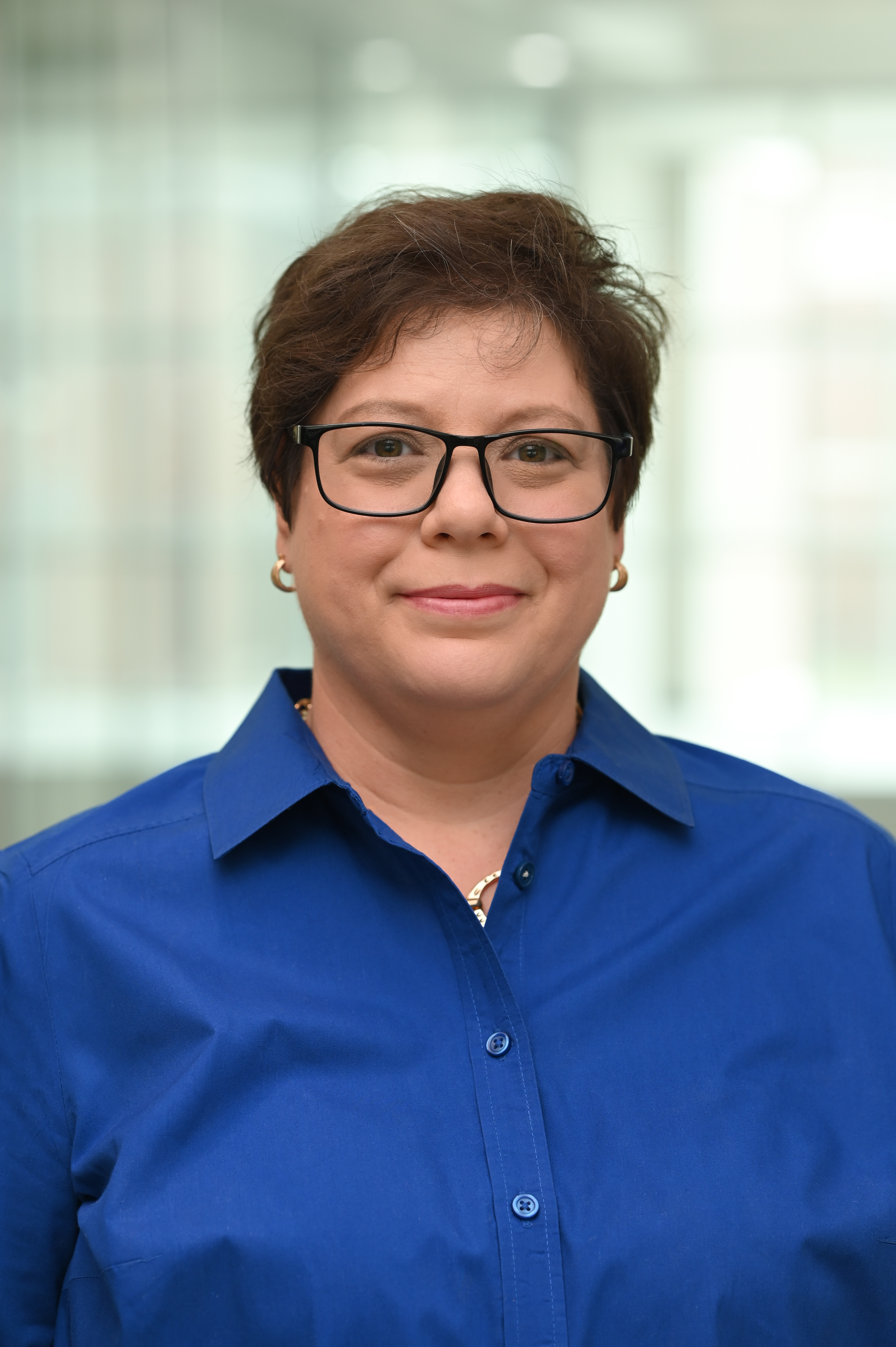
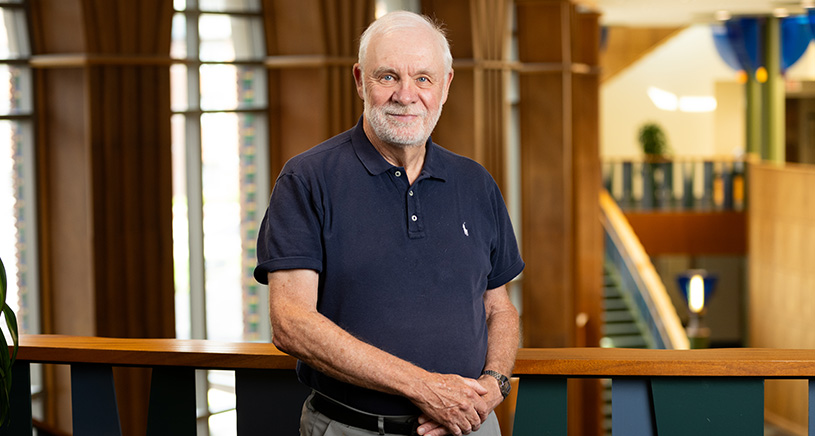
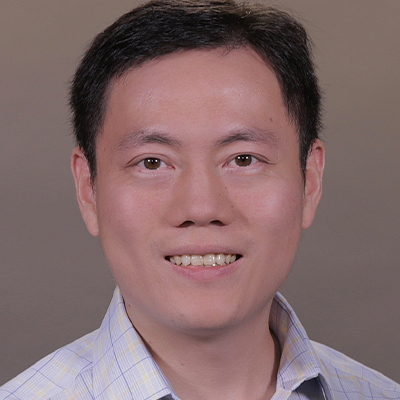
Dr. Lynn Fox is an Associate Professor in the Department of Mathematics at the University of Arkansas at Monticello's College of Mathematics and Natural Sciences. She also serves as the Assistant Dean for Mathematics. Her teaching focuses on Computational Methods, Multi-dimensional Mathematics, Linear Algebra, Statistics, and Data Science. Dr. Fox's research specializes in Optimization and Automated Machine Learning, with particular emphasis on developing methodologies to infer insights from noisy and incomplete datasets. Her work addresses challenges in algorithm efficiency and data reliability across computational domains.
Mao Xiaojie is an Associate Professor at the Department of Management Science and Engineering, Tsinghua University's School of Economics and Management . Holding a PhD in Statistics and Data Science from Cornell University (2021) and a bachelor's in Mathematical Economics and Finance from Wuhan University (2016), Mao specializes in causal inference and data-driven optimization decision-making . PhD: Cornell University (2016-2021) Bachelor: Wuhan University (2012-2016) Mao's research bridges machine learning , statistics , and operations research to address challenges in contextual optimization, algorithmic fairness, and robust causal inference. Recent work focuses on data combination , surrogate variables , and minimax methods for handling unobserved confounding and limited outcome data. Key trends in Mao's publications include: Advancing bandit algorithms for efficient contextual decision-making Developing debiased machine learning frameworks for quantile treatment effects Designing robust optimization models under noisy and incomplete covariates Scientific recognition includes: Applied Probability Society Best Student Paper Competition Finalist (2020) Multiple teaching excellence awards at Tsinghua University (2022-2024) Research grants from the National Natural Science Foundation of China Mao currently teaches Empirical Methods in Management Science (PhD), Data Analysis: Inference and Decision Making (Master), and Probability Theory and Mathematical Statistics (Undergraduate). Research collaborations span institutions like Cornell and MIT, with publications in top venues including NeurIPS , ICML , and Operations Research .
Roderick Joseph Little is the Richard D. Remington Distinguished University Professor of Biostatistics at the University of Michigan School of Public Health. He is also a Professor in the Department of Statistics and a Research Professor at the Institute for Social Research. Dr. Little previously chaired the Biostatistics Department from January 2007 to December 2009 and from 1993 to 2001. Dr. Little earned his educational credentials from prestigious institutions: PhD in Statistics, London University, 1974 MSc in Statistics and Operational Research, London University, 1972 BA in Mathematics, Cambridge University, 1971 Dr. Little's primary research interests focus on the analysis of data with missing values and complex survey designs. His work has revolutionized methods for handling missing data, moving from ad-hoc approaches like discarding incomplete cases to sophisticated model-based methods using likelihood-based inferential techniques. He is particularly known for his work on pattern-mixture models and penalized spline of propensity prediction methods. His research also extends to model-based approaches for survey analysis that are robust to misspecification. Dr. Little's inferential philosophy is model-based and Bayesian, though he carefully considers the effects of model misspecification. His applied interests span mental health, demography, environmental statistics, biology, economics, and social sciences. Dr. Little has received numerous prestigious awards and recognitions including the Wilks' Memorial Award from the American Statistical Association, being named an ISI highly cited researcher, and election to the National Academy of Medicine. He is also a Fellow of the American Statistical Association, the American Academy of Arts and Sciences, and the Royal Statistical Society. Throughout his career, Dr. Little has chaired or co-chaired 30 doctoral committees, mentoring the next generation of statisticians. He has served in significant editorial and leadership roles, including as Coordinating and Applications Editor of the Journal of the American Statistical Association (1992-1994), co-editor of the Journal of Survey Statistics and Methodology (2016-2018), and Vice President of the American Statistical Association (2010-2012). From September 2010-January 2013, he served as the inaugural Associate Director for Research and Methodology and Chief Scientist at the U.S. Census Bureau. Dr. Little is best known for his seminal book "Statistical Analysis with Missing Data" (co-authored with Donald Rubin), now in its third edition (2019). His work has had profound impacts on both theoretical statistics and practical applications across numerous scientific disciplines.
Bingkai Wang is an Assistant Professor in the Department of Biostatistics at the University of Michigan School of Public Health. His research focuses on causal inference, clinical trials, and statistical methods for complex data. PhD in Biostatistics from Johns Hopkins University (2021) BS in Mathematics from Fudan University (2016) His work spans causal inference , machine learning , and test-negative designs in infectious disease research, with methodological contributions to semiparametric efficiency theory and cluster-randomized trials . Recent articles highlight advancements in model-robust inference , stepped-wedge trial designs , and handling incomplete outcomes in clinical trials. He has received multiple awards, including the 2024 IMS New Researcher Travel Award and the Margaret Merrell Award . Contact: bingkai@umich.edu
Kai Wang is a Professor of Pathology and Laboratory Medicine, specializing in bioinformatics methods to understand the genetic basis of human diseases. His work integrates electronic health records and genomic information to advance large-scale genomic medicine. His research spans statistical genetics, clinical trials, and health informatics, with recent publications focusing on cluster-randomized trials, covariate adjustment, and brain imaging analysis. Notable work includes methodologies for robust inference in stepped-wedge designs and applications in Alzheimer's disease studies. Kai Wang's publications demonstrate expertise in bridging statistical theory with biomedical challenges, particularly in handling incomplete data and optimizing clinical trial precision. While no specific awards or students are listed, his Google Scholar profile highlights contributions to genomic medicine and causal inference.
Ying Zhang is a Professor in the Department of Mathematics and Statistics at Acadia University, maintaining an office in Huggins Science Hall, Room 151. She earned her BSc from Shandong Normal University and advanced degrees (MA, MSc, PhD) from Western University, complemented by P.Stat. certification (Certificate #78) from the Statistical Society of Canada. Her educational background includes: BSc from Shandong Normal University MA, MSc, PhD from Western University Professor Zhang's research centers on Time Series Analysis and Applied Statistics , extending to Statistical Computing, Symbolic Algebra Computing, and Statistical Consulting in Biostatistics, Survey Design, and Research Methodology. Her work demonstrates significant applications in environmental science (water resources trend analysis), health sciences (drug safety and utilization studies), and ecological modeling (wildlife population dynamics), with methodological innovations in nonparametric testing and hierarchical modeling. Analysis of her 2013-2018 publications reveals a dominant focus on developing novel time series methodologies for environmental and health contexts, particularly seasonal trend detection, medication utilization patterns, and ecological data analysis. Her work consistently bridges theoretical statistics with practical applications across disciplines. She actively contributes through the Statistical Consulting Centre and the CANSSI Maritime Statistical and Health Sciences Collaborating Centre , holding P.Stat. designation from the Statistical Society of Canada. While her collaborative publications indicate interdisciplinary engagement, specific details of grant funding and student advising are not documented in available sources.
Linxiong Li is a Professor and serves as Associate Chair and Graduate Coordinator in the Department of Mathematics at the University of New Orleans. He holds a Ph.D. from the State University of New York at Stony Brook (1993) and specializes in statistical methodologies. His research focuses on three primary domains: Survival Analysis : Developing estimators for censored and truncated data in medical and reliability contexts Reliability Theory : Modeling system resilience, renewal processes, and failure distributions Longitudinal Data Analysis : Statistical methods for time-dependent observational studies Professor Li's publications demonstrate consistent focus on nonparametric methods for incomplete data, with recent works (2009-2011) expanding into applications like cotton fiber analysis and network reliability. His foundational contributions in the 1990s-2000s established key methodologies for interval-censored data estimation. No information is available regarding research grants, student advising, or laboratory affiliations.
Daniel Pimentel-Alarcón is an Assistant Professor in the Department of Biostatistics and Medical Informatics at the University of Wisconsin–Madison. His research focuses on machine learning and mathematical optimization for biomedical applications, including matrix completion, subspace clustering, and computer vision. He earned his PhD in Electrical and Computer Engineering from the University of Wisconsin–Madison. His work addresses challenges in handling incomplete data through innovative algorithms like Deep-Union Completion and Grassmannian-based visualization techniques. Recent projects explore contrastive learning, neural network architectures, and topological data analysis. For more details, visit his lab's website at https://danielpimentel.github.io .
Claudia Solís-Lemus is an Assistant Professor in the Department of Plant Pathology at the University of Wisconsin-Madison, where she develops statistical and machine learning methods to solve complex biological problems. Her work bridges computational statistics with plant pathology and evolutionary biology, focusing on network-based approaches to genomic and microbiome data. Educational background: PhD in Statistics, University of Wisconsin–Madison Her research centers on phylogenetic network inference , microbiome analysis , and high-dimensional statistical modeling . She creates open-source tools like CMiNet and MiNAA to empower biologists with robust network analysis capabilities. Her lab tackles challenges in biodiversity research, agricultural disease prediction, and microbial ecology through innovative computational frameworks that handle massive biological datasets. Analysis of her 2024-2025 publications reveals a cohesive focus on scalable network inference methods across phylogenetics and microbiome studies. She integrates Bayesian statistics, regularization techniques (e.g., spike-and-slab LASSO), and high-performance computing to address data complexity. Her work consistently emphasizes practical software implementation (R packages, Shiny apps, Julia tools) for real-world biological applications including potato disease prediction, hornwort evolution, and freshwater ecosystem dynamics. Scientific recognition: NSF CAREER Award (2022) for "Towards Scalable and Robust Inference of Phylogenetic Networks" Dr. Solís-Lemus leads an interdisciplinary research group at the Wisconsin Institute for Discovery, securing competitive grants to advance phylogenetic network methodology. Her CAREER project combines algorithmic innovation with educational outreach to train next-generation computational biologists. Current efforts focus on improving network inference for polyploid genomes and developing consensus methods for microbiome data integration across diverse environmental conditions. The Solís-Lemus Lab operates within UW-Madison's Wisconsin Institute for Discovery ecosystem, fostering collaborations between statisticians, computer scientists, and biologists. Her team actively develops user-friendly software to lower computational barriers for life scientists studying evolutionary processes and microbial communities.
Thomas R Belin is a Professor in the Department of Biostatistics at the UCLA Fielding School of Public Health, with a secondary appointment as Professor in Psychiatry and Biobehavioral Sciences. He maintains an active research program focused on statistical methodology for incomplete data, particularly in mental health services research and public health applications. Dr. Belin's research interests center on biostatistical methods for missing data imputation, with significant contributions to methodology for mental health studies. His work spans epidemiology, substance abuse research (particularly methamphetamine), oral health statistics, and community-partnered participatory research. He has developed innovative approaches for handling incomplete longitudinal data and multi-item scales in health research. His publication record shows consistent productivity with 15+ publications annually in recent years, with research spanning public health, biostatistics, psychiatry, and dental health. His work demonstrates strong interdisciplinary collaboration across multiple departments at UCLA and with researchers nationwide. His recent publications (2023-2025) continue to focus on methodological advances in missing data, health disparities research, and applications to pressing public health issues including the COVID-19 pandemic and substance use disorders. Dr. Belin has served as Principal Investigator on significant NIH-funded research including 'Imputation for Moderate Sized Mental Health Studies' (R01MH060213) and 'Methods for Incomplete Mental Health Services Data' (R29MH057082), demonstrating sustained extramural funding for his methodological research. His work has been widely cited across multiple disciplines, with publications appearing in high-impact journals across biostatistics, public health, psychiatry, and dental research. His research has had significant policy impact, with numerous publications referenced in policy documents, clinical guidelines, and news outlets.
Professor Janaina Mourao-Miranda is a Professorial Research Associate in the Department of Computer Science at University College London's Faculty of Engineering Sciences. She is affiliated with the Centre for Medical Image Computing (CMIC) and leads the Machine Learning and Neuroimaging Lab (MLNL), accessible at http://www.mlnl.cs.ucl.ac.uk. Her research program focuses on developing and applying machine-learning models to investigate complex relationships between neuroimaging data and multidimensional descriptions of mental health disorders. Specifically, she explores whether we can learn about underlying brain mechanisms of mental disorders from these relationships, better stratify patient groups based on these relationships, and combine information from clinical assessments with different neuroimaging modalities to build better diagnostic and prognostic models of mental health disorders. Professor Mourao-Miranda's work spans multiple disciplines including Neurosciences, Artificial Intelligence, Machine Learning, Computational Neuroscience, Biological Psychology, Clinical and Health Psychology, and Pattern Recognition. Her recent publications demonstrate a strong emphasis on multivariate analysis of brain imaging data, advanced techniques for handling incomplete datasets, and developing interpretable machine learning models specifically designed for clinical applications in mental healthcare. Her key scientific contributions include: Developing novel machine learning approaches specifically tailored for neuroimaging analysis Investigating fundamental brain-behavior relationships in mental health disorders Creating innovative methods for patient stratification based on multimodal data integration Advancing statistical techniques for handling incomplete clinical datasets Pioneering interpretable AI models that bridge the gap between computational methods and clinical practice Professor Mourao-Miranda teaches a specialized module on Applied Artificial Intelligence for the MSc programs in AI for Biomedicine and Healthcare and AI for Sustainable Development at UCL, where she shares her expertise in applying artificial intelligence to solve real-world healthcare challenges and contribute to sustainable development goals.
Marius Călin serves as a Lecturer in the Department of Exact Sciences at the Faculty of Horticulture, University of Agricultural Sciences and Veterinary Medicine of Iasi, Romania. His academic profile bridges computational science with agricultural applications through expertise in Information Technology, Applied Mathematics, and E-learning systems development. His research portfolio centers on five core domains: Soft Computing in Agricultural Sciences: Pioneering fuzzy logic applications for plant breeding and greenhouse management Decision Making under Uncertainty: Developing models for agricultural scenarios with incomplete data Decision Support Systems: Creating tools for land suitability assessment and resource optimization E-learning Applications: Designing specialized platforms for agricultural education Graph Databases: Implementing knowledge representation systems for agricultural data Analysis of his publication trajectory reveals an evolution from foundational fuzzy decision models (2000-2007) toward increasingly interdisciplinary work. Recent publications (2015-2022) demonstrate strong convergence between e-learning infrastructure development and agricultural informatics, particularly through Moodle-based systems for remote education during the pandemic and computational models for soil management. His work consistently emphasizes practical implementation of grid computing and soft computing techniques in agricultural contexts. Dr. Călin has secured significant research funding through seven major contracts, including leadership as USAMV Iasi responsible for the CEEX 1801 grid computing project (2006-2008) and contributions to sustainable soil management initiatives (ECOSEUMET, CNCSIS 738). His grant portfolio demonstrates sustained focus on translating computational research into agricultural solutions. Within the university ecosystem, he serves as Moodle platform administrator and coordinates Informatics discipline activities, fostering cross-departmental collaboration. His professional affiliations include ESNA (European Society for New Methods in Agricultural Research) and ROMAI (Romanian Society of Applied and Industrial Mathematics), reflecting his commitment to interdisciplinary scientific exchange.
Emmanuel Souza is a Malawian academic serving as Senior Lecturer in Demography in the Department of Sociology and Population Studies at the University of Malawi. His educational background includes: Ph.D in Demography from University of Pennsylvania (United States) Master of Philosophy in Demography from University of Cape Town (South Africa) BSc in Computer Science and Demography from University of Malawi Dr. Souza's research spans critical demographic issues in the African context with focus on fertility patterns related to HIV, migration dynamics including immigrant incorporation and remittance flows, family demography with attention to union formation and dissolution, and innovative demographic methodologies. Between 2020-2022, he worked as a Population Data Fellow with UNV supporting UNFPA's efforts to strengthen civil registration and vital statistics systems in developing countries, specializing in data quality assessment and statistical adjustments for incomplete registration data. His scholarly work demonstrates expertise in addressing methodological challenges in demographic data collection, particularly during public health emergencies as shown in his 2024 publication examining mobile interview methodologies during the COVID-19 pandemic in Malawi. Dr. Souza's interdisciplinary background bridges computer science and demography, providing unique technical expertise for population studies in resource-constrained settings across Africa.