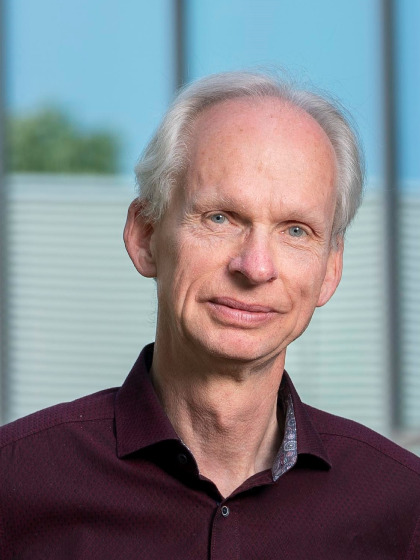
Professor Jonathan Tawn is a Distinguished Professor of Statistics at Lancaster University's School of Mathematical Sciences within the Faculty of Science and Technology. He has held this position since 1996 and served as Head of the Department of Mathematics and Statistics from 2000 to 2007. Currently, he directs the STOR-i Doctoral Training Centre, focusing on statistics and operational research in collaboration with industry. His research expertise centers on extreme value theory and its applications across disciplines such as oceanography, climatology, hydrology, and finance. Notable areas include modelling spatial extremes, environmental risk assessment, and statistical methods for extreme events. Tawn leads projects addressing climate change impacts on extreme weather, flood frequency analysis, and structural risk assessment in marine environments. Recent work includes studies on spatio-temporal extreme temperature patterns in Ireland, oceanographic data analysis for structural safety, and methodological advancements in threshold selection for extreme value analysis. He collaborates with international teams on environmental hazards and advises on statistical methodologies for extreme events. Tawn supervises PhD students in extreme value applications, including oceanographic extremes, induced seismicity risk assessment, and spatial environmental data analysis. He has contributed to over 150 peer-reviewed publications, advancing both theoretical and applied aspects of extreme value statistics.
Prof. Dr. J.P. (Paul) Elhorst is a Professor of Spatial Econometrics at the University of Groningen's Faculty of Economics and Business. His expertise spans spatial econometrics, regional economics, and panel data modeling. He holds editorial roles at journals like Spatial Economic Analysis and has organized major conferences, including the 2024 Spatial Econometric World Conference. Elhorst earned his PhD in Economics from the University of Amsterdam and has authored influential works such as Spatial Econometrics: From Cross-sectional Data to Spatial Panels . His research addresses spillover effects, spatial weight matrices, and regional unemployment dynamics. He has supervised 10 PhD theses and taught courses globally, including in Sweden, Germany, and China. Elhorst's awards include the 2023 Jean Paelinck Award and the 2007 Martin Beckmann Prize. He has advised national science foundations and served as educational coordinator for Economics programs at Groningen (2000–2020). His current roles include Editor-in-Chief of Spatial Economic Analysis (2015–2023) and fellowships with the Spatial Econometrics Association and Regional Studies Association.
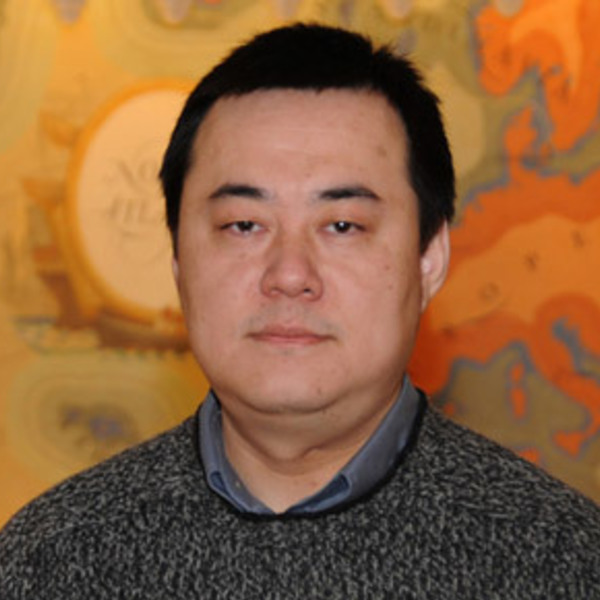
Zhiliang Xu is a Professor in the Department of Applied and Computational Mathematics and Statistics at the University of Notre Dame's College of Science. His research focuses on computational physics, mathematical and computational biology, numerical methods for PDEs, and scientific computing. He holds a Ph.D. from the State University of New York at Stony Brook (2002) and an M.S. from Beijing University of Aerospace and Astronautics, China (1997). Dr. Xu's work emphasizes computational modeling of physical and biological systems, including fluid dynamics and complex fluids. His recent studies explore high-order numerical schemes for PDEs, biomechanical interactions in blood clotting, and cell behavior modeling. His articles span computational methods for interface problems, phase-field models, and neural network-based PDE solutions. While no awards or grants are explicitly listed, his extensive publications reflect contributions to computational and applied mathematics. His research often integrates experimental data with computational tools, such as 3D imaging analysis of fibrin networks. He maintains an active role in interdisciplinary collaborations, particularly in biomedical and fluid dynamics contexts.
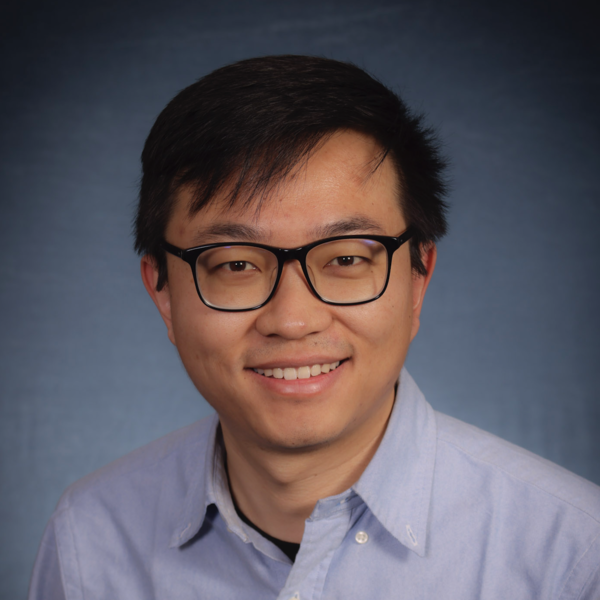
Changbo Zhu is an Assistant Professor in the Department of Applied and Computational Mathematics and Statistics at the University of Notre Dame, part of the College of Science. He is also a Fellow of the Lucy Family Institute for Data & Society. His office is located at 101H Crowley Hall, and he can be reached at czhu4@nd.edu. Dr. Zhu holds a Ph.D. from the University of Illinois at Urbana-Champaign (2020), an M.S. and B.S. from the National University of Singapore (2016 and 2014, respectively). He completed a postdoctoral fellowship at the University of California, Davis from 2020 to 2022. His research focuses on the intersection of statistics, geometry, and optimization, with key interests in optimal transport, functional and object data analysis, time series analysis, high-dimensional statistical inference, and statistical machine learning. His work addresses challenges such as longitudinal data analysis, change point detection, and distance covariance methodologies. Zhu’s recent publications emphasize advancements in optimal transport theory, including barycenter optimization and autoregressive models, as well as applications in neuroimaging and high-dimensional data analysis. He collaborates with leading researchers such as Hans-Georg Müller and Jane-Ling Wang on topics ranging from spherical autoregressive models to brain volume trajectory studies. He advises Kaheon Kim, a Ph.D. candidate focusing on statistical optimal transport. His teaching portfolio includes courses on optimization algorithms for machine learning, computational statistics with R, and statistical computing methods. Zhu is affiliated with the Lucy Family Institute for Data & Society, contributing to interdisciplinary data science initiatives.
Benjamin Jäger is an Associate Professor at the Department of Mathematics and Computer Science, University of Southern Denmark, specializing in Lattice QCD and Gauge Theory . He is affiliated with the Computational Science VIP group and DIAS (Danish Institute for Advanced Study), focusing on theoretical high energy physics and scientific computing. Education : PhD in Physics (2014) from Johannes Gutenberg University, with a thesis on Hadronic Matrix Elements in Lattice QCD. His research explores Quantum Chromodynamics at finite temperatures, particularly in charmed baryons and super Yang-Mills spectra. Recent work involves anisotropic lattice simulations and correlator analysis. His publications emphasize computational methods, baryon physics, and temperature-dependent phenomena. Key collaborations include the FASTSUM team, contributing to open-access datasets and peer-reviewed journal articles. He teaches courses like Introduction to HPC and Quantum Computing and Statistics for Data Science , integrating computational techniques into educational frameworks.
Michael McDermott, PhD, is a Professor of Biostatistics, Neurology, and the Center for Health + Technology at the University of Rochester Medical Center. He holds an academic appointment in the Department of Biostatistics and Computational Biology. His research focuses on statistical methodology including order-restricted inference, clinical trial design, diagnostic test evaluation, and meta-analysis. Dr. McDermott has collaborated extensively on neurological disorders such as Parkinson’s, Huntington’s, and multiple sclerosis, and has a joint appointment with the Department of Neurology. Educated at the University of Rochester (PhD, 1989), his work bridges statistical theory and clinical application. He has authored influential papers on hypothesis testing under order constraints and developed methods for verification bias correction in diagnostic studies. McDermott serves on editorial boards for journals like International Statistical Review and Movement Disorders , and has held leadership roles in professional societies. His research interests span statistical theory (e.g., multivariate analysis, ROC curves) and applied biostatistics (e.g., dose-response modeling, clinical trial optimization). McDermott’s methodological contributions address challenges in medical research design, including adaptive trial phases and missing data imputation techniques. He has been recognized as a Fellow of the American Statistical Association and an Elected Member of the International Statistical Institute. Collaborative efforts include leading national/international groups studying neurological diseases and serving as an advisor for the T32 Training Grant in Biostatistics. His lab focuses on advancing statistical tools for translational medical research while maintaining active involvement in neurology-related clinical studies.
Lu Ting is a Professor at the Department of Mathematics within the Courant Institute of Mathematical Sciences, New York University. Their research integrates mathematical statistics and biostatistics with applications in oncology, environmental health, and precision medicine. Key focuses include molecular pathway analysis in glioma, biomarker development for drug resistance, and statistical methods in translational research. Research interests span mathematical modeling of cancer therapies, environmental exposure impacts on human health, and optimization algorithms. Notable projects include longitudinal studies on World Trade Center (WTC) exposure effects and sphericity testing in high-dimensional covariance matrices. Publications from 2015–2024 reflect interdisciplinary work combining mathematical rigor with biomedical challenges, particularly in cancer treatment optimization and environmental health surveillance. No scientific awards or grants are explicitly documented in the provided text.
Avanti Athreya is an Associate Research Professor at the Department of Applied Mathematics and Statistics, Johns Hopkins University, within the Whiting School of Engineering. Her research focuses on probability, stochastic processes, and network inference methodologies. She holds a BS from Iowa State University (1997), an MS from the University of Washington (2000), and a PhD from the University of Maryland College Park (2009). Her work emphasizes spectral analysis of random matrices, stochastic blockmodel graphs, and dynamic network inference. Recent publications explore Gaussian mixture models for language networks, mirror distance-based clustering, and change-point detection in organoid networks. She develops algorithms for community detection, anomaly identification, and geometric approaches to network dynamics. Key research trends include advancing methodologies for analyzing time-series networks, integrating vertex covariates into spectral algorithms, and applying Euclidean geometric principles to network structures. Her contributions bridge theoretical probability frameworks with practical applications in biology and machine learning.
Orimar Sauri Arregui is an Associate Professor in the Department of Mathematical Sciences at Aalborg University's Faculty of Engineering and Science, Denmark. His research lies at the intersection of mathematical statistics, stochastic processes, and financial modeling. Research Interests: His work focuses on ambit fields , trawl processes , Lévy and infinite divisible random fields , and nonparametric estimation in continuous time. He investigates asymptotic behavior, limit theorems, and statistical inference for complex stochastic models, with applications in financial market microstructure and energy flux modeling. The analysis of his recent publications reveals a strong trend in theoretical statistics and probability, particularly in developing and analyzing models driven by non-Gaussian noise and long-range dependence. His work often involves high-frequency data and contributes to the foundations of spatiotemporal modeling. Scientific Contributions: Developed mathematical frameworks for financial market microstructure. Advanced theory for nonparametric estimation of trawl processes. Derived asymptotic error distributions for numerical schemes in stochastic delay equations. Proved local limit theorems for energy fluxes in random fields. Advising and Research Activity: He has been involved in PhD supervision and maintains an active research output, primarily through preprints on arXiv and SSRN. His collaborations span topics in financial econometrics and statistical physics. Though specific grants are not listed, his consistent publication record suggests ongoing research funding. Laboratory and Teams: While no formal lab is mentioned, his work is part of the broader research network in mathematical statistics and financial mathematics at Aalborg University, with notable collaborations in stochastic modeling and econometrics.
Dr. Matt Barnes is a Senior Lecturer in the Department of Sociology and Criminology at City, University of London, where he also serves as Director of the City Q-Step Centre, promoting quantitative methods in social science education. He holds a PhD in Social and Policy Sciences from the University of Bath, an MSc in Social Statistics from the University of Southampton, and a BSc in Mathematics with Sociology from Plymouth University. PhD in Social and Policy Sciences, University of Bath, UK MSc in Social Statistics, University of Southampton, UK BSc (Hons) Mathematics with Sociology, Plymouth University, UK His research focuses on poverty, disadvantage, and social exclusion in the UK, with a strong emphasis on the secondary analysis of large-scale social surveys such as Understanding Society, the Family Resources Survey, and the Labour Force Survey. He specializes in quantitative methodologies, longitudinal data analysis, and statistical modeling of social inequality. Dr. Barnes’s recent publications reveal a consistent focus on multidimensional poverty, child and older adult well-being, housing quality, and the dynamics of worklessness. His work often examines how socioeconomic disadvantage interacts with health, education, and housing, using complex datasets to inform social policy. A key theme across his research is the critique of policy-based evidence, particularly in programs like the Troubled Families initiative, where he highlights methodological flaws in linking disadvantage with antisocial behavior. Short- and long-term determinants of social detachment in later life The duration of bad housing and children's well-being Poverty typologies in Scotland Child poverty transitions Work-life balance and atypical employment Understanding landlords and the private rental sector Dr. Barnes has received research funding from the British Academy, Independent Age, Department for Education, and the Scottish Government. His awards and recognition stem primarily from competitive grants and policy impact rather than formal prizes. He supervises PhD students including Nhlanhla Ndebele and Merili Pullerits, focusing on quantitative analysis of social inequality. His prior professional experience includes roles as Research Director at NatCen Social Research, part-time analyst at the Cabinet Office’s Social Exclusion Task Force, and Research Officer at the University of Bath. He is an active contributor to public discourse, with media appearances, blog posts, and keynote lectures on poverty measurement and social exclusion.
Vanesa Guerrero Lozano is an Associate Professor in the Department of Statistics at Universidad Carlos III de Madrid, affiliated with the Flores de Lemus Institute and the UC3M-Santander Big Data Institute. Her work bridges mathematical optimization, statistical modeling, and data science, with applications across disciplines including biomedicine, fluid mechanics, and sustainable development. Her research focuses on developing advanced statistical methodologies using mathematical optimization. Key interests include shape-constrained regression, P-splines smoothing, sparse modeling, clustering of categorical data, and interpretable machine learning. She applies these techniques to complex datasets in turbulence modeling, biological age imputation, and pandemic forecasting. The recent publications reveal a strong trend in integrating optimization techniques with statistical learning, particularly in nonparametric and semiparametric models. There is a consistent emphasis on interpretability, robustness, and scalability, especially for high-dimensional and dynamic datasets. Applications span from fluid dynamics to public health, demonstrating interdisciplinary impact. Scientific Awards and Recognition: Ayuda adicional within the Juan de la Cierva Incorporación Program (2020), awarded by the State Research Agency (AEI) Research Leadership and Advising: She has served as principal investigator on multiple competitive research projects funded by national and regional agencies, including the State Research Agency (AEI), the Jacques Hadamard Mathematical Foundation, and the Community of Madrid. Her projects cover topics such as constrained additive models, machine learning for sustainable fishing, turbulence control, and ADHD diagnosis using data science. She has supervised at least one doctoral thesis on constrained smoothing models, indicating active mentorship in methodological statistics and optimization. Laboratories and Research Groups: She is a member of the Energy Analytics research group and conducts her work within the UC3M-Santander Big Data Institute, which supports interdisciplinary data science research. Her affiliation with the Flores de Lemus Institute further underscores her engagement with advanced statistical and computational methodologies.
Professor Bernard Wong is the Head of the School of Risk and Actuarial Studies at the University of New South Wales, Australia. As a Fellow of the Institute of Actuaries of Australia and a Fulbright Scholar, he has significantly advanced actuarial science through research and leadership. His academic credentials include a PhD from the Australian National University and a BCom (Hons) in Actuarial Studies from Macquarie University. PhD (Australian National University) BCOM (Hons) in Actuarial Studies (Macquarie University) His research focuses on AI/ML-enhanced actuarial methods and capital modeling under climate change , with applications to insurance and risk management. He co-leads the Innovations in Risk, Insurance, and Superannuation (IRIS) Knowledge Hub and serves as a chief investigator in the UNSW Institute of Climate Risk and Response. His work also drives the Business AI Lab’s actuarial innovations. Recent publications analyze data breach trends, stochastic loss reserving with neural networks, and multivariate count processes. He has secured substantial Australian Research Council grants , including projects on extreme value theory and claim dependencies. Awards include the Hachemeister Prize (2023, 2017), Taylor-Fry Silver Prize (2018), and Melville Practitioner Prize (2000). Professor Wong actively contributes to actuarial governance as a Board Member of ASTIN and former participant in the Actuaries Institute Data Analytics Practice Committee. His teaching encompasses actuarial data science and enterprise risk management courses.
Masashi Sugiyama is a Professor at the Department of Complexity Science and Engineering, Graduate School of Frontier Sciences, The University of Tokyo, where he has been serving since 2014. He concurrently serves as the Director of the RIKEN Center for Advanced Intelligence Project (AIP) since 2016, leading research groups focused on fundamental AI technologies, AI applications, and social issues of AI. His academic journey began at Tokyo Institute of Technology, where he earned his Bachelor, Master, and Doctor of Engineering degrees in Computer Science in 1997, 1999, and 2001 respectively, before becoming an Assistant Professor and later Associate Professor at the same institution. Sugiyama's research primarily focuses on statistical machine learning, with particular expertise in weakly supervised learning, learning from noisy supervision, and learning under distribution shift. His work has established important theoretical frameworks for density ratio estimation, covariate shift adaptation, and non-stationary environments. He has developed numerous practical algorithms including KLIEP (Kullback-Leibler importance estimation procedure), uLSIF (unconstrained least-squares importance fitting), and LSDD (least-squares density difference), which have become standard tools in the machine learning community. Analysis of his recent publications reveals a strong emphasis on reliable and robust machine learning techniques that can handle imperfect supervision and data distribution changes. His work spans theoretical foundations, algorithm development, and practical applications across various domains including bioinformatics, anomaly detection, and dimensionality reduction. The recurring themes in his research include direct density ratio estimation methods, importance weighting techniques, and mutual information-based approaches for various machine learning tasks. Award for Science and Technology from the Japanese Minister of Education, Culture, Sports, Science and Technology (2022) Japan Academy Medal (2017) Japan Society for the Promotion of Science Award (2017) Faculty Award from IBM (2007) Nagao Special Researcher Award from the Information Processing Society of Japan (2011) Young Scientists' Prize for the Commendation for Science and Technology by the Minister of Education, Culture, Sports, Science and Technology Japan (2014) Sugiyama has served as program co-chair for major machine learning conferences including NeurIPS 2015, AISTATS 2019, and ACML 2010 and 2020. He has received prestigious fellowships including the Alexander von Humboldt Foundation Research Fellowship (2003-2004) and the European Commission Program Erasmus Mundus Scholarship (2006). He is the (co-)author of influential machine learning monographs including Machine Learning in Non-Stationary Environments (MIT Press, 2012), Density Ratio Estimation in Machine Learning (Cambridge University Press, 2012), Statistical Reinforcement Learning (Chapman & Hall, 2015), and Machine Learning from Weak Supervision (MIT Press, 2022). At RIKEN AIP, Sugiyama leads research initiatives focused on developing robust AI systems that can operate reliably in real-world conditions with imperfect data. His laboratory maintains an active software development effort, providing open-source implementations of many of his research contributions, which has significantly influenced both academic research and practical applications of machine learning.
Marcus Weber serves as Head of the Computational Molecular Design research group within the Modeling and Simulation of Complex Processes department at the Zuse Institute Berlin (ZIB), which operates in close affiliation with Freie Universität Berlin. His interdisciplinary work spans computational mathematics, molecular modeling, drug discovery, and unexpected connections to Egyptology, demonstrating the broad applicability of mathematical approaches across diverse scientific domains. Dr. Weber's research interests focus on the mathematical foundations of molecular simulation and drug design: Developing advanced Markov state models for complex molecular systems Creating computational methods for efficient drug discovery Applying machine learning techniques to molecular dynamics Modeling pH-dependent receptor-ligand interactions Exploring metastable dynamics in biological systems Bridging mathematical approaches with Egyptological research His recent publications reveal a sophisticated integration of computational mathematics with practical pharmaceutical applications, particularly in opioid receptor research. The work demonstrates how mathematical modeling can identify pH-dependent drug candidates that maintain efficacy while reducing side effects. His research group has developed innovative algorithms like ISOKANN for learning Koopman eigenfunctions and has made significant contributions to understanding molecular transition rates and metastable dynamics. Dr. Weber leads multiple significant research projects including 'Drug Candidates as Pareto Optima in Chemical Space,' 'HPC and ML for Drug Discovery,' and interdisciplinary collaborations connecting mathematical approaches with Egyptology. His work on 'Mathematics and Egyptology' and 'Ancient Egyptian' demonstrates the unexpected breadth of mathematical applications. His research has direct implications for developing safer opioid medications and understanding molecular behavior in complex environments.
Professor Shelton Peiris is an Associate Professor at the School of Mathematics and Statistics , University of Sydney , where he has been since 1990. He holds visiting appointments at institutions worldwide, including University of Waterloo , University of Manitoba , and University of Malaya . Currently, he serves as Sub Dean (Student Affairs) in the Faculty of Science and coordinates interdisciplinary teaching with the School of IT for MIT/MDS degrees. His research focuses on time series analysis, financial econometrics, and technology integration in statistics education. Education: PhD in Statistics, Monash University , 1987 Shelton's research interests include statistical analysis of stationary and non-stationary time series, theory and applications of estimating functions, financial time series modeling, saddlepoint and Edgeworth approximations, and exploring technology's role in statistics education. He is a member of the Statistics Research Group at the University of Sydney and leads projects in financial econometrics, generalized autoregressive models, and nonlinear time series analysis. Recent publication trends highlight his work in financial econometrics, particularly volatility and duration modeling, stochastic processes, and hybrid forecasting methods combining traditional statistical techniques with machine learning advancements like GANs and neural networks. His collaborations span Australia, Canada, Malaysia, and Indonesia, with notable grants including ARC Linkage and University of Malaya Research Grants . Scientific Awards: 2012: Faculty of Science Teaching Citation 2011: Bronze Medal, University Putra Malaysia 2007: Bronze Medal, University Putra Malaysia 1983: Monash University Graduate Scholarship Elected Member, International Statistical Institute (ISI) Fellow, Royal Statistical Society (FRSS) Honorary Fellow, Institute of Applied Statistics, Sri Lanka (FIASSL) Current Research Students: Leonard Mushunje - High-Dimensional Financial Functional Time Series Data Grants: ARC Linkage Grant (2005-2007): Modelling Stock Market Liquidity ARC Bridging Grant (2012-2014): Financial Duration Modeling University of Malaya Research Grants (2011-2015): Volatility Models, GARCH MOHE Malaysia Grant (2013-2015): Robust Control Charts Professor Peiris contributes to editorial boards such as the Journal of Statistical Computation & Simulation and Sri Lankan Journal of Applied Statistics . His teaching roles include MATH1015 (Statistics for Life Science) , MATH1905 (Statistics Advanced) , and advanced honors courses in time series analysis.