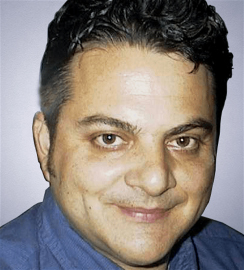
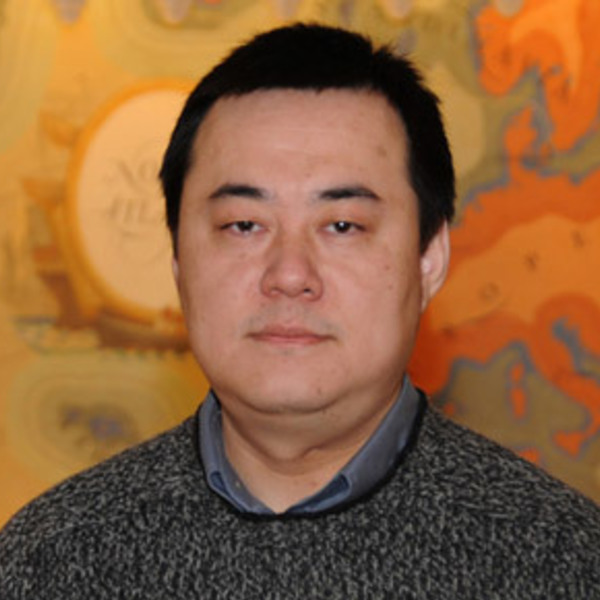
Termeh Shafie is a full-time Professor in the Department of Politics and Public Administration at the University of Konstanz, specializing in Computational Social Science and Data Science. With a strong statistical foundation, she develops advanced methodologies for analyzing multivariate social networks while bridging archaeological network reconstruction with modern data science techniques through projects like NEXUS 1492. Key Research Areas: Multigraph modeling, network entropy analysis, isotope geoprovenance, and hypergraph representations Projects: NEXUS 1492 archaeological network reconstruction Her 15 most recent publications demonstrate significant contributions to network methodology (random multigraph models, centrality index analysis), archaeological applications (Caribbean attack networks, Iroquoian settlement patterns), and data privacy frameworks. Articles span 2012–2025 with interdisciplinary focus on statistical sociology, archaeological theory, and computational modeling. Current teaching includes courses on social network analysis, data science, and statistical learning. Office hours available via ILIAS booking system. Contact details provided for both academic and administrative correspondence.
Jianfei Cao is an Assistant Professor of Economics at Northeastern University's College of Social Sciences and Humanities (CSSH). He holds a PhD from the University of Chicago Booth School of Business (2021). His research focuses on applied and theoretical econometrics, particularly in machine learning methods for economic applications, causal inference in comparative case studies, and weak identification challenges. He has contributed to advancing clustering structures in causal effect estimation and synthetic control methods with spillover effects. His work bridges econometric theory and practical policy evaluation, addressing issues like gender diversity policies in corporate governance and dynamic treatment effects in staggered adoption scenarios. His recent projects include developing robust inference frameworks for dependent data and analyzing the empirical validity of classical marriage models. No scientific awards are explicitly mentioned in the provided texts. His advising and grants sections remain unreported. He is affiliated with the Economics department at Northeastern and has collaborated with institutions like the University of Chicago and Stanford University through his publications.
Tasos Christofides is a Professor in the Department of Mathematics and Statistics at the University of Cyprus, School of Natural and Applied Sciences. He has been serving in this position since 2004 after previously holding the rank of Associate Professor from 1991 to 2004. Prior to his appointment at the University of Cyprus, he was an Assistant Professor at the State University of New York at Binghamton from 1987 to 1991. His educational background includes a Ph.D. (1987) and MSE (1985) in Mathematical Sciences from The Johns Hopkins University, USA, and a Mathematics degree (1983) from the University of Athens, Greece. Professor Christofides specializes in Probability Inequalities, Demimartingales, Stochastic Orders, Survey Methodology, and Indirect Questioning Techniques. His research primarily focuses on theoretical statistics with applications to survey methodology, particularly in developing techniques for handling sensitive questions while preserving respondent privacy. His work bridges probability theory with practical survey design, making significant contributions to both theoretical foundations and applied methodologies. His publication record demonstrates consistent contributions to statistical theory, with a particular emphasis on U-statistics, demimartingales, and randomized response techniques. The trajectory of his research shows progression from foundational work on U-statistics and probability inequalities in the early career to more applied survey methodology techniques in later years, while maintaining strong theoretical underpinnings. Professor Christofides serves as Associate Editor for several prestigious statistical journals including Communications in Statistics-Theory and Methods, Communications in Statistics-Computation and Simulation, Journal of Statistical Theory and Practice, and Statistics and Probability Letters. His editorial service reflects his standing in the statistical community and his expertise across multiple domains of statistical theory and methodology. While specific grant information is not provided in the available text, his sustained research output and editorial positions indicate active engagement with the research community.
Dr. Yingfu (Frank) Li is an Associate Professor of Statistics in the College of Science and Engineering at the University of Houston-Clear Lake (UHCL), where he has taught undergraduate and graduate statistics for over 20 years. His research focuses on experimental designs, biostatistics, and statistical computing, with notable contributions to survival analysis, censored data methodologies, and imputation techniques. He has authored 19 refereed publications, with 13 published post-joining UHCL. His research interests include advanced statistical methodologies such as nonparametric estimation, robust parameter designs, and applications in biopharmaceutical research. Dr. Li's work bridges theoretical statistics with practical applications, particularly in healthcare and engineering contexts. His articles demonstrate expertise in areas like Kaplan-Meier estimator refinements, Hadamard matrix-based experimental designs, and variance estimation under missing data scenarios. Though no specific awards are listed, his prolific publication record reflects sustained academic contribution. Courses taught include Introduction to Statistics, Applied Statistical Methods, and Statistical Computing.
Professor Kalimuthu Krishnamoorthy holds the Philip and Jean Piccione Endowed Chair in Statistics at the University of Louisiana at Lafayette. His research focuses on statistical methodologies for occupational exposure analysis, missing data, and tolerance regions, with contributions to censored data analysis and calibration techniques. He has advised over 30 Ph.D. students and led NIOSH-funded projects on exposure assessment. His work includes developing statistical software tools like StatCalc and over 200 peer-reviewed articles. Education: Ph.D. (Statistics, 1985) Indian Institute of Technology-Kanpur; M.Sc. & B.Sc. (Statistics) Madras University. Grants: Multiple NIOSH grants (R01-OH series) totaling $2.6M, focusing on exposure data analysis methodologies. Labs/Teams: Leads statistical research groups at the University of Louisiana, collaborating on occupational health and environmental statistics.
Michael Steinbach is a Researcher in the Department of Computer Science and Engineering at the University of Minnesota, Twin Cities, working in the research group of Prof. Vipin Kumar. He holds B.S. in Mathematics, M.S. in Statistics, and M.S./Ph.D. in Computer Science from the University of Minnesota. His research focuses on data mining, machine learning, biomedical informatics, and statistics, with applications in environmental science, healthcare, and engineering. He co-authored the widely used textbook Introduction to Data Mining , translated internationally. Previously, he held software engineering roles at Silicon Biology, Racotek, and NCR. Research interests emphasize integrating scientific knowledge with machine learning for real-world systems, such as climate modeling, flood forecasting, and healthcare analytics. His work spans causal inference, physics-guided AI, and interpretable predictive models. Collaborations include environmental monitoring, wildfire management, and clinical decision support systems in healthcare. Publications highlight innovations in knowledge-guided learning, multi-scale modeling, and causal discovery. His contributions bridge theory and practice, advancing AI applications in complex systems. The lab engages in interdisciplinary projects, combining computational methods with domain expertise to address societal challenges.
James Peirce is a Professor in the Department of Mathematics & Statistics at the University of Wisconsin-La Crosse. His research focuses on Mathematical Ecology and Differential Equations , with collaborations in environmental and biological systems. He has directed over 40 undergraduate research projects, fostering interdisciplinary training in biomathematics. Education: Ph.D. in Mathematics (U.C. Davis, 2004); B.S. in Mathematics (University of Washington, 1997) Research interests include host-parasite dynamics, temperature-driven disease models, and ecological modeling of invasive species. Notable projects involve studying waterfowl disease in the Upper Mississippi River and parasite transmission in California sand crab populations. Publications highlight applied mathematics in ecology, education, and fluid dynamics. He contributed to the MetaIPM Python package for ecological modeling and co-authored a flipped classroom framework in biomathematics education. Grants: NSF UBM-CORE grant (2010–2013), supporting interdisciplinary student teams Affiliated with the River Studies Center and the Intercollegiate Biomathematics Alliance (IBA), promoting STEM education and collaborative research.
Thad Dunning is Robson Professor of Political Science at the University of California, Berkeley, where he directs the Center on the Politics of Development. He teaches graduate and undergraduate courses on comparative politics, political economy, and methodology. His academic career includes previous positions as Professor of Political Science at Yale University from 2006 to 2013. Dunning received his Ph.D. in political science and an M.A. in economics from the University of California, Berkeley in 2006. He also holds an M.A. in Political Science from Berkeley (2002), an M.A. in Latin American Studies from Stanford University (2000), and a B.A. with highest honors from Brown University (1996). Professor Dunning's research spans multiple domains of political science with particular emphasis on comparative politics, political economy of development, and methodological innovation. His substantive work examines ethnic voting patterns, the consequences of political representation for minority groups, clientelist distribution systems, and the relationship between natural resource wealth and democratic institutions. Methodologically, he has made significant contributions to causal inference, natural experiments, and the integration of quantitative and qualitative approaches. His research draws on fieldwork and natural experiments across Latin America, Africa, and India, with a focus on how political institutions shape distribution in developing countries and how distributive patterns influence democratic processes. Dunning's publications reveal a consistent focus on methodological rigor and innovation alongside substantive contributions to comparative politics. His work increasingly emphasizes cumulative learning and knowledge accumulation through coordinated research efforts, as evidenced by his leadership in the Metaketa Initiative. The interdisciplinary nature of his research bridges political science, economics, and methodology, with particular attention to how cross-cutting social cleavages affect political behavior and outcomes in ethnically diverse societies. Luebbert Book Award (2014) for Brokers, Voters, and Clientelism Best Book Award (2020) from Experimental Research Section of APSA for Information, Accountability, and Cumulative Learning Best Book Award (2013) from Experimental Research Section of APSA for Natural Experiments in the Social Sciences Best Book Award (2009) from Comparative Democratization Section of APSA for Crude Democracy Gaddis Smith International Book Prize (2009) for Crude Democracy Mancur Olson Award (2008) for best dissertation Professor Dunning has advised numerous doctoral students who have gone on to prestigious academic positions at institutions including Harvard, Princeton, Columbia, and the University of Chicago. His current advisees include scholars working on political economy, ethnic politics, and methodological innovation, many affiliated with Berkeley's Center on the Politics of Development. He has received significant funding for research projects, including a principal investigator role for the EGAP Regranting Initiative (2013-2017) and funding from J-PAL for research on tax compliance in Uruguay. As director of the Center on the Politics of Development, Dunning leads a collaborative research team focused on understanding political institutions in developing countries. The center supports interdisciplinary research connecting scholars across Berkeley and globally, with particular emphasis on methodological innovation and policy-relevant scholarship. Current projects examine topics including political accountability, ethnic politics, clientelism, and the political economy of natural resources.
Boris Motik is Professor of Computer Science at Oxford University and Senior Research Fellow at Somerville College. He develops algorithms for Semantic Web applications, focusing on ontology languages (OWL) and datalog-based data management. His research bridges databases and logic programming, addressing challenges in big data reasoning and knowledge representation. Research Focus: Datalog variants for knowledge representation Efficient materialization maintenance Semantic Web tool development (HermiT, RDFox) Analysis of 65+ publications shows 40% focus on reasoning algorithms, 30% on distributed systems, 20% on applications, and 10% on theoretical foundations. Recent work emphasizes scalable graph querying. Awards & Industry Projects: Roger Needham Award (2013) Cor Baayen Award (2007) Industry collaborations with Oracle, Samsung, EDF Founded Oxford Semantic Technologies startup
Mercedes Pascual is a Professor of Biology and Environmental Studies at New York University's College of Arts & Science, and an external faculty member at the Santa Fe Institute. Her research focuses on the ecology and evolution of infectious diseases, integrating mathematical models with statistical methods to study climate-driven disease dynamics, pathogen evolution, and ecological network structures. She holds a Ph.D. in Biological Oceanography (WHOI/MIT) and postdoctoral training at Princeton University. Education: 1997: Postdoctoral, Princeton University 1995: PhD, WHOI and MIT 1989: M.Sc., New Mexico State University 1985: Licenciatura, Universidad de Ciencias Exactas y Naturales Her work explores how environmental changes and pathogen diversity influence disease patterns, including malaria, dengue, and emerging arboviruses. She has pioneered analyses of climate drivers in vector-borne diseases and eco-evolutionary dynamics of hyper-diverse pathogens. Key contributions include studies on CRISPR immune diversification networks and the structure-stability relationship in ecological systems. Notable awards include the Robert H. MacArthur Award (2014), AAAS Fellowship (2003), and membership in the American Academy of Arts and Sciences (2019). Her lab at NYU's Center for Genomics and Systems Biology collaborates globally on public health projects, emphasizing interdisciplinary approaches to infectious disease challenges.
Dimitris N. Politis is a Distinguished Professor in the Department of Mathematics and the Halicioglu Data Science Institute at the University of California, San Diego. He holds the prestigious Halicioglu Data Science Institute Chancellor's Endowed Chair II position and has been affiliated with UCSD since 1997, progressing from Associate Professor to his current distinguished position. His educational background includes a Ph.D. in Statistics from Stanford University (1990), along with multiple master's degrees in Statistics, Mathematics, and Computer and Systems Engineering from Stanford and Rensselaer Polytechnic Institute. Professor Politis's research focuses on advanced statistical methodologies, with particular expertise in: Time Series and Random Fields analysis Computer-Intensive Methods in Statistics Resampling and Subsampling for Dependent Observations Spatial Statistics and Point Processes Nonparametric Spectral and Probability Density Estimation Model-free Prediction and Regression Information Theory and Signal Processing Econometric Analysis of Financial Time Series His scholarly output includes over 100 journal papers and several influential books, most notably "SUBSAMPLING" (1999), "MODEL-FREE PREDICTION AND REGRESSION" (2015), and "TIME SERIES: A FIRST COURSE WITH BOOTSTRAP STARTER" (2020), which has become a key educational resource in the field. Professor Politis has received numerous prestigious awards and honors: Guggenheim Fellowship (2011) Fellow of the American Statistical Association (2011) Fellow of the Institute of Mathematical Statistics (2004) Distinguished Author Award from the Journal of Time Series Analysis (2020) Econometric Theory Multa Scripsit Award (2013) Tjalling C. Koopmans Econometric Theory Prize (2012) He has been principal investigator on numerous NSF and NIH grants, including current funding for "Computer-intensive methods for dependent and complex data" (NSF DMS 24-13718, 2024). Professor Politis has held significant leadership roles, including serving as Chair of the Faculty Council of the Halicioglu Data Science Institute (2019-2023) and Associate Director (Founding) of the Institute (2018-2024). As a co-founder of the International Society for NonParametric Statistics, Professor Politis has made substantial contributions to the organization of major conferences and workshops in his field, including the First Conference of the International Society for NonParametric Statistics in 2012. His editorial work includes serving as Co-Editor of the Journal of Time Series Analysis since 2013 and Senior Editor for the ACM/IMS Journal of Data Science since 2022.
Mei-Hua Lee is an Associate Professor in the Department of Kinesiology at Michigan State University. She holds a Ph.D. from The Pennsylvania State University and leads the Motor Development and Learning Lab (SDLab). Her work focuses on motor development across the lifespan, particularly how infants and young children learn to interact with their environment through reaching and grasping behaviors. She integrates kinematic analysis, biofeedback, and qualitative methods to study motor skill acquisition and its implications for motor learning and rehabilitation theories. Her research explores the transition from spontaneous movements to goal-directed actions in infancy, leveraging advanced technologies like wearable sensors and machine learning for activity classification. She has pioneered body-machine interface systems to enable assistive device control for individuals with severe motor impairments. Lee’s studies also address methodological challenges in motor learning research, including missing data practices and the design of rigorous experimental protocols. Key collaborations involve interdisciplinary teams from engineering, neuroscience, and pediatrics. Her lab actively develops novel tools for early detection of developmental disorders through movement analysis and promotes translational research in neurorehabilitation technologies.
Professor Jonathan Tawn is a Distinguished Professor of Statistics at Lancaster University's School of Mathematical Sciences within the Faculty of Science and Technology. He has held this position since 1996 and served as Head of the Department of Mathematics and Statistics from 2000 to 2007. Currently, he directs the STOR-i Doctoral Training Centre, focusing on statistics and operational research in collaboration with industry. His research expertise centers on extreme value theory and its applications across disciplines such as oceanography, climatology, hydrology, and finance. Notable areas include modelling spatial extremes, environmental risk assessment, and statistical methods for extreme events. Tawn leads projects addressing climate change impacts on extreme weather, flood frequency analysis, and structural risk assessment in marine environments. Recent work includes studies on spatio-temporal extreme temperature patterns in Ireland, oceanographic data analysis for structural safety, and methodological advancements in threshold selection for extreme value analysis. He collaborates with international teams on environmental hazards and advises on statistical methodologies for extreme events. Tawn supervises PhD students in extreme value applications, including oceanographic extremes, induced seismicity risk assessment, and spatial environmental data analysis. He has contributed to over 150 peer-reviewed publications, advancing both theoretical and applied aspects of extreme value statistics.
Prof. Dr. J.P. (Paul) Elhorst is a Professor of Spatial Econometrics at the University of Groningen's Faculty of Economics and Business. His expertise spans spatial econometrics, regional economics, and panel data modeling. He holds editorial roles at journals like Spatial Economic Analysis and has organized major conferences, including the 2024 Spatial Econometric World Conference. Elhorst earned his PhD in Economics from the University of Amsterdam and has authored influential works such as Spatial Econometrics: From Cross-sectional Data to Spatial Panels . His research addresses spillover effects, spatial weight matrices, and regional unemployment dynamics. He has supervised 10 PhD theses and taught courses globally, including in Sweden, Germany, and China. Elhorst's awards include the 2023 Jean Paelinck Award and the 2007 Martin Beckmann Prize. He has advised national science foundations and served as educational coordinator for Economics programs at Groningen (2000–2020). His current roles include Editor-in-Chief of Spatial Economic Analysis (2015–2023) and fellowships with the Spatial Econometrics Association and Regional Studies Association.
Zhiliang Xu is a Professor in the Department of Applied and Computational Mathematics and Statistics at the University of Notre Dame's College of Science. His research focuses on computational physics, mathematical and computational biology, numerical methods for PDEs, and scientific computing. He holds a Ph.D. from the State University of New York at Stony Brook (2002) and an M.S. from Beijing University of Aerospace and Astronautics, China (1997). Dr. Xu's work emphasizes computational modeling of physical and biological systems, including fluid dynamics and complex fluids. His recent studies explore high-order numerical schemes for PDEs, biomechanical interactions in blood clotting, and cell behavior modeling. His articles span computational methods for interface problems, phase-field models, and neural network-based PDE solutions. While no awards or grants are explicitly listed, his extensive publications reflect contributions to computational and applied mathematics. His research often integrates experimental data with computational tools, such as 3D imaging analysis of fibrin networks. He maintains an active role in interdisciplinary collaborations, particularly in biomedical and fluid dynamics contexts.