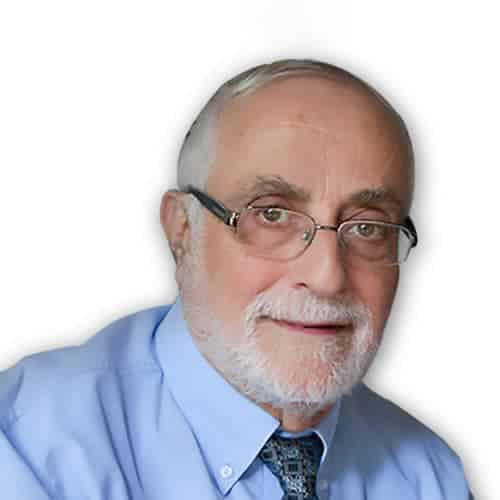
Peter D. Ditlevsen is a Professor at the Niels Bohr Institute , University of Copenhagen, specializing in Physics of Ice, Climate and Earth (PICE) . With a background in theoretical physics, he transitioned to climate dynamics and turbulence. Dr. Scient (2004), University of Copenhagen PhD (1991), Technical University of Denmark Research Interests : Focuses on Tipping Points in the Earth System , especially AMOC collapse , using stochastic dynamical systems , alpha-stable processes , and nonlinear climate modeling . His work bridges climate physics , dynamical meteorology , and time series analysis . Recent Publications : 2025 work on ice-core-based Dansgaard–Oeschger event modeling , 2024 studies on AMOC multistability and complex system predictability , and 2023 Nature Communications paper on AMOC collapse early warning (cited 4000+ times in media). Scientific Leadership : Leads CriticalEarth H2020 (2021-24) and contributed to TiPES (2019-23). Holds Carlsberg Fellowship and Ole Rømer Prize . Outreach : Produces weekly climate science podcast with David Trads, delivers 4-6 public lectures/year, and has appeared in 40+ media outlets. Teaches Electrodynamics , Thermodynamics , and Turbulence courses.
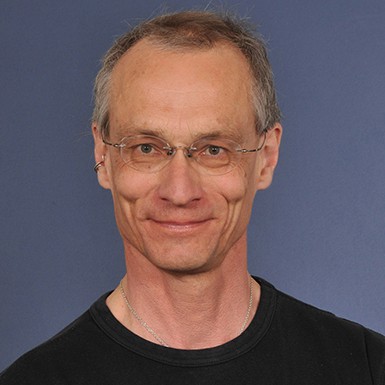
Line Katrine Harder Clemmensen is an Associate Professor at the Department of Applied Mathematics and Computer Science, Technical University of Denmark (DTU), affiliated with the DTU Microbes Initiative. She holds a Ph.D. from DTU's IMM (2006–2009) and previously served as Principal Data Scientist at the Maersk Group (2016–2017). Her research focuses on machine learning, statistical modeling, deep learning, and sparse methods, applied to environmental, biological, industrial, and financial domains. Notable projects include hydroacoustic modeling in aquaculture systems, AI-driven sea safety, and bio-based sustainability modeling. Her recent work addresses topics like parent-child interaction patterns in OCD, Alzheimer’s treatment via spectral flicker, and genomic studies on social trust. She supervises multiple PhD students, including those exploring Raman spectroscopy applications and contamination detection in drug products. Language skills include Danish, English, Spanish, French, and Portuguese.
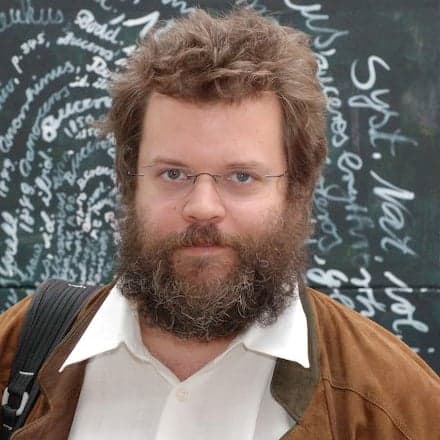
Tove Hels is an Associate Professor in the Department of the Built Environment at the Faculty of Engineering and Science, Aalborg University, Denmark. She is a key member of the Traffic Research Group, focusing on transportation safety, road user behavior, and traffic policy. Her work bridges engineering, public health, and social science to improve road safety outcomes. Research Interests: Her research spans traffic safety, cyclist-motorist interactions, speed enforcement, accident risk modeling, and the impact of vehicle technologies. She investigates both infrastructure design and behavioral factors influencing road safety, with a strong emphasis on data-driven analysis and policy evaluation. The recent publications reveal a consistent focus on improving cyclist safety through infrastructure (e.g., advanced stop boxes, roundabout design), addressing under-reporting of traffic injuries, and evaluating behavioral interventions for speeding. Her work integrates epidemiological methods, statistical modeling, and real-world policy applications. Scientific Contributions: Principal Investigator in the Danmarks Trafikulykker cohort study (2025–2029) Project participant in EASE: Intervention against speed offenders (2019–2025) Author of over 29 research outputs including journal articles, reports, and policy briefs Frequent contributor to national media and advisory bodies like Dansk Vejforening Advising and Grants: While no formal students are listed, her leadership in major funded research projects indicates a supervisory role in training junior researchers. She has secured and contributed to significant research grants related to traffic safety monitoring and intervention evaluation. Labs and Teams: She is part of the Traffic Research Group at Aalborg University, collaborating closely with researchers such as H. Lahrmann, T.K.O. Madsen, and A.V. Olesen. The group conducts field studies, data linkage projects, and policy evaluations with national impact.
Christian Pascal Hirsch is an Associate Professor for Data Science and Statistics at the Department of Mathematics, Aarhus University. His research focuses on random networks inspired by biology and health sciences, utilizing techniques from topological data analysis and stochastic geometry. He is affiliated with the Stochastics group, AU DIGIT Centre, and AU Quantum Campus. Research Interests: Topological data analysis, large deviations theory, spatial random networks, and stochastic geometry. His work includes studies on percolation theory, Gibbs measures, and applications to neural networks and geometric functionals. Publications span journals such as the Journal of Applied and Computational Topology, Journal of Statistical Physics, and Stochastic Processes and Their Applications, covering topics from network topology to Poisson approximation.
Andreas Bjerre-Nielsen is an Associate Professor at the Department of Economics and Copenhagen Center for Social Data Science (SODAS) within the Faculty of Social Sciences at the University of Copenhagen. His work bridges economics and data science to analyze education-related behavior and policies. Research Focus: School choice, digital technology in education, predictive analytics for interventions, and social network effects. Methodology: Combines econometrics with machine learning techniques to evaluate policy impacts. Research Trends: Recent publications emphasize algorithmic fairness in college admissions, socioeconomic impacts of school boundary policies, and behavioral insights from large-scale datasets. His 2025 Scientific Reports study reveals nation-scale social network dynamics. Awards and Grants: Tietgen Prize (2021) for young social science researchers 2024: Independent Research Fund Denmark grant for 'Coded Clues' project 2023: Major grant for school choice research Collaborations: Works with Danish Ministry of Children and Education through UDDanKvant unit, and collaborates with multidisciplinary researchers including Sune Lehmann and David Dreyer Lassen.
Stefan Oehmcke is an Assistant Professor at the Machine Learning Section of the Department of Computer Science , University of Copenhagen. His research focuses on applying machine learning techniques to environmental and geospatial analysis, particularly in forest ecology, tree monitoring, and climate impact studies. Research Trends: His recent publications emphasize deep learning for LiDAR data processing, multi-modal geospatial representation, and sustainable AI practices. Key Collaborations: Frequently collaborates with researchers in environmental science, remote sensing, and climate change (e.g., Martin Brandt, Christian Igel). Applications: Develops tools for forest biomass estimation, tree mortality mapping, and urban safety analysis using satellite imagery. While no specific educational background or scientific awards are mentioned in the provided texts, Oehmcke's work demonstrates technical innovation in AI explainability and environmental monitoring, with significant contributions to journals like Remote Sensing of Environment and Nature Communications .
Gregory Eady is an Associate Professor at the Department of Political Science, University of Copenhagen (Denmark), affiliated with the Faculty of Social Sciences. His research bridges political behavior, public opinion dynamics, social media's role in politics, and advanced statistical methodology. He examines how digital platforms influence political attitudes and representation, with a focus on electoral processes, foreign interference, and crisis impacts on governance. Key research foci include analyzing the ideological landscape via social media interactions, assessing post-pandemic political representation gaps, and exploring gender dynamics in political toxicity. His methodological contributions address challenges like measuring voter uncertainty and detecting misreporting in sensitive surveys. Eady's work spans cross-national studies and employs experimental designs to uncover causal mechanisms in political behavior. Notable projects include examining Russian disinformation campaigns in the 2016 U.S. election and the psychological effects of violent protests on party loyalty. His interdisciplinary approach integrates computational social science with traditional political theory, contributing to debates on democratic resilience in the digital age.
Kasper Green Larsen is a Professor in the Department of Computer Science at Aarhus University. His research focuses on theoretical computer science, machine learning, algorithms, and data structures. He has made significant contributions to boosting algorithms, PAC learning theory, and computational geometry. His work often bridges algorithm design with complexity theory, addressing challenges in optimization, memory efficiency, and lower bounds analysis. Key research areas include: Algorithmic Learning Theory (e.g., boosting, bagging, and PAC learners) Data Structure Design (e.g., invertible Bloom tables, succinct representations) Computational Complexity (e.g., lower bounds for dynamic and oblivious algorithms) Geometric Algorithms (e.g., hierarchical searching, range queries) Recent publications emphasize foundational advancements in learning theory (e.g., optimal weak-to-strong learning) and data efficiency (e.g., memory-reduced Bloom filters). His work frequently appears in top conferences like IJCAI, ICALP, and SODA, reflecting rigorous theoretical contributions with practical implications.
Teresa Anna Steiner serves as an Assistant Professor in the Department of Mathematics and Computer Science at the University of Southern Denmark, specializing in algorithmic research with emphasis on privacy-preserving computational methods and theoretical computer science. Her research centers on differential privacy mechanisms, where she investigates trade-offs between data utility and privacy guarantees through rigorous analysis of noise injection techniques like Laplace and Gaussian distributions. She extends this work to dynamic graph databases requiring real-time privacy protections and develops novel text indexing approaches for regular expression pattern matching, contributing to foundational advancements in algorithm design for sensitive data environments. Recent 2025 publications reveal a cohesive research trajectory focused on practical implementations of differential privacy across diverse data structures, with particular attention to variance optimization in noise mechanisms, edge-level privacy in evolving graphs, and efficient indexing for textual pattern recognition. These works collectively address critical challenges in balancing computational efficiency with robust privacy guarantees in modern data systems. No scientific awards were documented in the available information. Details regarding student advising or research grant funding were not specified in the provided materials.
Shlomo Havlin is a Professor in the Department of Physics at Bar-Ilan University, Israel, within the Faculty of Exact Sciences. He has held major academic leadership roles, including Dean of the Faculty of Exact Sciences (1999–2001), Chairman of the Physics Department (1984–1988), and President of the Israel Physical Society (1996–1999). He is also recognized as an External Faculty member at the Complexity Science Hub (CSH) in Vienna. His research focuses on statistical physics and its applications in complex networks , with far-reaching implications across disciplines such as climate science, biology, medicine, geophysics, and computer science. Havlin's work explores the behavior of interdependent systems, phase transitions, and systemic risk, contributing to foundational understanding in network resilience and abrupt system failures. The recent publications highlight a consistent trend in studying abrupt transitions and mixed-order phase transitions in complex systems, particularly focusing on the microscopic origins of such phenomena. These works sit at the intersection of statistical mechanics, network theory, and multidisciplinary modeling, often published in high-impact journals and preprint repositories. Scientific Awards: Landau Prize for outstanding Research (1988) Humboldt Senior Scientist Award (1992) Nicholson Medal, American Physical Society (2006) Weizmann Prize (2009) Lilienfeld Prize, American Physical Society (2010) Rothschild Prize in Physical and Chemical Sciences (2014) Order of the Star of Italy (2017) Israel Prize in Physics and Chemistry (2018) Bakhuis Roozeboom Medal Shlomo Havlin has led major research initiatives, including the Excellence National Network Center (Israel Science Foundation, 1990–2011) and the Minerva Center (1994–2011). He has been a Fellow of the American Physical Society since 1995 and the Institute of Physics (UK) since 2000. His editorial roles include membership on the boards of Physica A , New Journal of Physics , Fractals , and Co-Editor of Europhysics Letters . While specific grant details are not listed, his long-term leadership in nationally and internationally funded centers indicates sustained grant support and collaborative research mentorship. He is actively involved in the global network science community, as evidenced by participation in events like NetSci 2023 and organizing workshops such as the Statistical Mechanical Approaches of Complex Systems at CSH Vienna. His affiliation with the Complexity Science Hub underscores his engagement in interdisciplinary, large-scale scientific collaboration.
Henrik Jeldtoft Jensen is a Professor of Mathematical Physics and leads the Centre for Complexity Science at Imperial College London. His work spans multiple disciplines, focusing on the statistical mechanics of complex systems, with applications in physics, biology, neuroscience, and finance. Professor, Mathematical Physics Leader, Centre for Complexity Science Institution: Imperial College London His research interests lie at the intersection of theoretical physics and complex systems. He is best known for developing the Tangled Nature Model of evolving ecosystems, which has been extended into financial modeling through the Tangled Finance approach. His work in brain dynamics involves analyzing fMRI and EEG data using tools from statistical physics. He has made significant contributions to self-organized criticality and stochastic dynamics of complex systems, particularly in condensed matter and evolutionary contexts. The recent publications reflect a strong trend toward interdisciplinary complexity science, integrating concepts from physics, biology, economics, and neuroscience. Keywords across these works include complexity, statistical mechanics, dynamical systems, and network theory, with subfields ranging from neural avalanches to financial instability and biodiversity modeling. Henrik Jensen is the author of two influential books: Self-Organized Criticality and Stochastic Dynamics of Complex Systems (with Paolo Sibani), which have been widely cited across disciplines. He has supervised numerous PhD and postdoctoral researchers through the Centre for Complexity Science, though specific names are not listed. His research has been supported by grants from UK research councils and international collaborations, particularly in interdisciplinary complexity projects. He is affiliated with the Centre for Complexity Science, a multidisciplinary research hub at Imperial College London that brings together physicists, mathematicians, biologists, and social scientists to study complex adaptive systems.
Manfred Laubichler is President’s Professor of Theoretical Biology and History of Biology at Arizona State University (ASU), where he serves as Director of the School of Complex Adaptive Systems and the Global Biosocial Complexity Initiative. He is also an External Professor at the Santa Fe Institute (SFI) and co-director of the ASU-SFI Center for Biosocial Complex Systems. His academic affiliations include the Center for Social Dynamics and Complexity, the Center for Biology and Society, the Center for Evolution and Medicine, and the Water Institute at ASU. His educational background spans zoology, philosophy, and mathematics from the University of Vienna; biology from Yale University; and history/history of science from Princeton University. Laubichler's research centers on evolutionary novelties across scales—from genomes to knowledge systems—alongside the structure of evolutionary theory and the evolution of scientific knowledge. His work bridges theoretical biology, philosophy of science, and complex systems, with a strong emphasis on biosocial complexity and sustainability. He has contributed extensively to understanding the conceptual foundations of evolutionary developmental biology (Evo-Devo) and the historical and philosophical dimensions of biological theory. His recent publications reflect an interdisciplinary trend, integrating epidemiology, public health, and social behavior during crises such as the COVID-19 pandemic, while maintaining a core focus on theoretical biology, history of science, and complex systems. Themes include trust, scientific responsibility, epistemology of science, and modeling biosocial dynamics. Elected Fellow of the American Association for the Advancement of Science Fellow at the Wissenschaftskolleg zu Berlin Vice Chair of the Global Climate Forum Laubichler has led multiple NSF-funded research initiatives in digital humanities, history and philosophy of science, and complex adaptive systems. He has advised numerous doctoral projects and co-led training programs such as the Embryo Project. He is actively involved in interdisciplinary labs and centers, including the Information and Competition Lab, Complexity Economics Lab, and the Social Insect Research Group. His leadership extends to editorial roles in journals like Biological Theory , Journal of Experimental Zoology Part B , and the Archimedes series.
Francis Berthias is an academic staff member in the Department of Biochemistry and Molecular Biology at the University of Southern Denmark , specializing in Biomedical Mass Spectrometry and Systems Biology . His research focuses on advanced mass spectrometry techniques and structural analysis of biomolecules. Research Interests: Mass Spectrometry, Ion Mobility Spectrometry, Proteomics, Structural Biology, Biochemistry, and Analytical Chemistry. His recent publications (2022–2025) emphasize ion mobility separations , proteoform sequencing , and enzyme specificity . Collaborations span Denmark, Germany, and international institutions, with a focus on N-methylhistidine modifications , therapeutic antibodies , and peptide epimer analysis . Keywords: Biochemistry, Mass Spectrometry, Proteomics, Structural Biology, Analytical Chemistry, Molecular Biology.
Yifeng Zhang is a Professor at the Department of Environmental and Resource Engineering, Technical University of Denmark (DTU). His research focuses on advanced electrochemistry in environmental and resource engineering, including wastewater treatment, resource recovery, microbial electrochemistry, and sustainable carbon capture. He leads the Water Technology & Processes group and the DTU Microbes Initiative. Zhang holds a PhD from DTU (2012) and has secured over 60 million DKK in research funding, including the prestigious Carlsberg Foundation Distinguished Fellowship. His work contributes to UN SDGs related to clean water, affordable energy, and climate action. Education: Ph.D., Technical University of Denmark (2009–2012) M.Sc., Dalian University of Technology (2005–2009) Research Interests: Microbial electrochemistry Carbon capture and utilization Wastewater treatment and resource recovery Electrocatalysis and electrochemical sensors Environmental bioremediation Awards: James J. Morgan Early Career Award (ACS, Honorable Mention) Carlsberg Foundation Distinguished Fellowship World’s Top 2% Scientists His research has produced over 200 publications and 3 patents, with a focus on translating innovations into practical solutions. Current projects include microbial electrosynthesis for single-cell protein production, carbon capture via bioelectrochemical systems, and sustainable wastewater treatment technologies.
Professor Eigil Kaas is affiliated with the Niels Bohr Institute at the University of Copenhagen . His work spans climate dynamics , numerical weather prediction (NWP) , and atmospheric modeling . As former Section Head of Climate and Computational Geophysics , he leads research on climate-chemistry coupling and sea ice impacts. Education : MSc (1987) and PhD (1993) in Meteorology from University of Copenhagen Research Focus : Climate dynamics and physics Numerical methods in atmospheric models Machine learning for weather prediction Arctic sea ice-climate interactions Thunderstorm electricity and radiation Coupled atmosphere-ocean modeling Article Trends : Recent work combines neural networks with radiative transfer optimization Focus on storm dynamics and gamma-ray flashes Extreme precipitation modeling under climate change Pioneering tidal flow studies in Faroe Island fjords Teaching Legacy : Instructor of Atmospheric Physics and Dynamical Meteorology courses Developed zonally averaged climate model for educational use Mentored 12 PhD/MSc students with DMI/ECMWF collaborations Professional Roles : Chairman of BFI Group 28 (Geosciences & Climate) Scientific Advisory Committee member at ECMWF Project lead in EU ENSEMBLES and PEGASOS initiatives