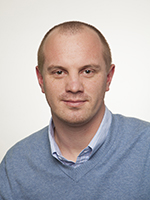
Asta Feodora Sjöberg Burhenne is an Instructor at the Department of Computer Science (DIKU), University of Copenhagen. She is affiliated with the university's Natural Language Processing (NLP) section, which focuses on methods for automated text processing, understanding, and generation using statistical models and machine learning. Research areas include: Natural Language Processing, Machine Learning, Automatic Fact-Checking, Machine Translation, Question Answering, Visually-Grounded Language Learning, and Multi-Modal Language Processing.
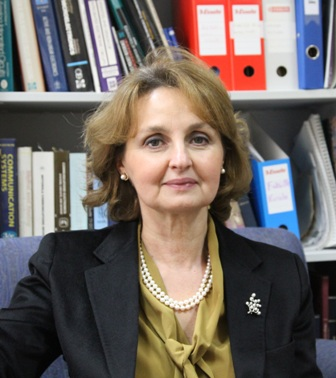
Carl Christian Ottesen is an Instructor at the Department of Computer Science, University of Copenhagen. He is affiliated with the Natural Language Processing (NLP) section, which focuses on methods for text processing, understanding, and generation using statistical models and machine learning. Research Interests Natural Language Processing (NLP) Machine Learning Computational Linguistics Multi-modal Language Processing Applications Automatic Fact-Checking Machine Translation Question Answering Visually-Grounded Language Learning
Kenneth Ward Church is a distinguished academic recognized as an ACM Fellow (2023) for pioneering contributions to empirical methods in natural language processing. His work has been instrumental in advancing computational linguistics and machine learning, enabling transformative innovations in how computing technologies understand and process human language. Research Interests : Church’s research focuses on applying empirical approaches to natural language processing, which has fundamentally reshaped the field. These methods leverage statistical models and data-driven techniques to improve machine translation, text analysis, and language understanding systems. Scientific Awards : ACM Fellow (2023) – For contributions to empirical methods in natural language processing
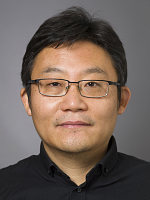
Kevin Sean O'Connell is a Researcher at the University of Oslo , affiliated with the Centre for Precision Psychiatry . His work focuses on genetic epidemiology , psychiatric genetics , and neurogenetics , particularly the genetic overlaps between psychiatric disorders and immune/metabolic traits. Research Themes : Genetic architecture of schizophrenia, bipolar disorder, and major depressive disorder; immune-genetic interactions; polygenic risk scores; neurodevelopmental and metabolic pathways. Publications (2025–2024) reveal trends in psychiatric genetics using genome-wide association studies (GWAS) , polygenic risk scores , and real-world data . Key subtopics include genetic overlap with immune markers (e.g., interleukin-6, C-reactive protein), neurodevelopmental processes , and pharmacogenomics (e.g., clozapine metabolism). He collaborates extensively with teams in neurogenetics , precision psychiatry , and psychiatric molecular genetics , contributing to translational research and neuroinflammatory mechanisms in mental illness.
Associate Professor Zhoubing Xu serves as a Chancellor Faculty Fellow in Vanderbilt University's Department of Electrical Engineering within the School of Engineering. He leads the Medical-image Analysis and Statistical Interpretation (MASI) Lab and maintains strong affiliations with the Vanderbilt Institute for Surgery and Engineering (VISE), driving interdisciplinary research at the engineering-medicine interface. His research concentrates on: Advanced medical image analysis methodologies Statistical interpretation frameworks for clinical data Machine learning applications in surgical contexts Computer vision solutions for diagnostic imaging Professor Xu's research trajectory demonstrates consistent focus on translational biomedical engineering, with particular emphasis on creating clinically viable tools through statistical learning. His work directly supports Vanderbilt's leadership in surgical innovation and medical technology development. Key recognitions include: Chancellor Faculty Fellowship (Vanderbilt University's prestigious early-career award) As an active researcher, he participates in NIH grant writing initiatives and contributes to Vanderbilt's Master of Engineering program. His lab provides specialized training in medical image computing for graduate students pursuing careers at the intersection of engineering and healthcare. The MASI Lab operates as a hub for surgical engineering research within VISE, collaborating with clinicians to develop next-generation image-guided intervention systems. Professor Xu's work exemplifies Vanderbilt's commitment to solving complex medical challenges through engineering innovation.
Jörgen Nissen is a researcher at Linköping University , specializing in educational technology and pedagogical design. He works within the Faculty of Educational Sciences and Department of Social and Welfare Studies , focusing on integrating visual analytics and knowledge visualization tools into K-12 education. Active in multiple research projects (VISE, MAW 20140120, Swedish Research Council grants) Collaborates with Dr. Linnéa Stenliden, Katarina Sperling, and Fredrik Heintz Develops didactic frameworks combining visual analytics and knowledge visualization Investigates AI implementation challenges in primary education Addressing ethical concerns in educational data collection His work examines digital competence development through computational thinking and visual literacy, with particular focus on democratic education in post-truth contexts. Current research explores how interactive data visualization tools can enhance students' analytical reasoning capabilities while maintaining critical awareness of algorithmic decision-making processes. Collaborative projects with the National Centre for Visual Analytics (NCVA) demonstrate his commitment to bridging technical capabilities with pedagogical needs. While no explicit awards are mentioned, his publications in journals like Postdigital Science and Education and European Journal of Education establish his expertise in the field.
Professor Zeynep Yasemin Kahya is a distinguished academic in the Department of Electrical and Electronics Engineering at Boğaziçi University's Faculty of Engineering. With a career spanning over three decades at Boğaziçi University, she has progressed from Assistant Professor to her current position as Professor. She has held significant administrative roles including Department Chair (2012-2021) and Deputy General Secretary (2008-2012). Dr. Kahya's research focuses on biomedical signal processing, particularly lung acoustics and respiratory sound analysis. PhD in Biomedical Electronics, Boğaziçi University (1981-87) MS in Electrical Engineering, Yale University (1980-81) BS in Electrical Engineering & Physics, Boğaziçi University (1976-80) Professor Kahya's research interests center on biomedical signal processing with specific emphasis on lung acoustics, respiratory sound analysis, and digital stethoscope design. Her work combines advanced signal processing techniques like wavelet transforms with clinical applications for pulmonary disease diagnosis. She has pioneered methods for pulmonary sound classification, crackle and wheeze detection, and respiratory sound parameterization. Her laboratory, the Lung Acoustics Laboratory (LAL), develops "smart stethoscope" diagnostic systems based on respiratory sounds. Her publications demonstrate a consistent research trajectory in respiratory sound analysis, with recent work focusing on machine learning approaches for pulmonary disease diagnosis. Professor Kahya has successfully translated her research into practical applications, including patented technologies for auscultation data acquisition systems and founding Electrosalus Biyomedikal, a company commercializing smart stethoscope technology. TÜBİTAK high school, undergraduate, and doctoral scholarships (1973-84) Fellowships from MIT, Yale, Stanford, and Caltech for undergraduate studies (1976) Fellowships from Yale and Princeton for doctoral studies (1980) Multiple research grants from Boğaziçi University Research Fund TÜBİTAK TEYDEP grants for smart stethoscope development Professor Kahya has supervised numerous PhD and Master's students, many of whom have worked on projects related to respiratory sound analysis and biomedical instrumentation. She has led multiple research projects funded by Boğaziçi University and external agencies like TÜBİTAK. Her laboratory, the Lung Acoustics Laboratory (LAL), brings together students from various disciplines to work on hardware and software projects related to "smart stethoscope" diagnostic systems.
Professor Jianhua (Jason) Xuan is a faculty member in the Bradley Department of Electrical and Computer Engineering at Virginia Polytechnic Institute and State University (Virginia Tech). He is affiliated with the Deep Learning Research Laboratory @ VT. His expertise spans bioinformatics, computational biology, and systems biology, with a focus on gene regulatory networks, cancer biology, and genomic data analysis. He holds dual Ph.D. degrees from the University of Maryland Baltimore County (1997) and Zhejiang University (1991), alongside earlier degrees from Zhejiang University. His research integrates advanced computational methods with biological systems to address challenges in cancer recurrence, signaling pathways, and transcriptional regulation. He has contributed to tools like ChIP-BIT2, BICORN, and MSIGNET for genomic data analysis. His work emphasizes Bayesian approaches, network inference, and translational applications in oncology and precision medicine. Education: Ph.D., University of Maryland Baltimore County, 1997 Ph.D., Zhejiang University, 1991 M.S., Zhejiang University, 1988 B.S., Zhejiang University, 1985 Research Interests: Computational methods for transcriptomics and genomics Systems biology of cancer recurrence and metastasis Integration of multi-omics data for disease modeling Bayesian statistical approaches in bioinformatics Gene regulatory networks and epigenetic regulation Key Contributions: Developed software tools for ChIP-seq analysis (ChIP-BIT2), transcriptome assembly (IntAPT), and disease network inference (MSIGNET) Explored ER+ breast cancer recurrence mechanisms through network topology analysis Studied epigenetic modifications and chromatin remodeling in tumor progression Awards & Service: No specific awards listed but active in academic service and software development for biological data analysis Labs/Teams: Deep Learning Research Laboratory @ VT Collaborations in computational oncology and systems biology
Ihsen Hedhli is a Researcher affiliated with the Computer Vision and Systems Laboratory, focusing on advanced image analysis techniques. His work bridges remote sensing, computer vision, and statistical modeling to address challenges in multisensor/multiresolution data interpretation and image generation. Key research areas include hierarchical Markov models for land cover classification, image-to-image translation with low-resolution conditioning, and lifelong machine learning systems. His contributions emphasize contextual classification frameworks, causal modeling approaches, and generative models for diverse image enhancement tasks. Publications span 2010–2024, demonstrating expertise in satellite image processing, super-resolution techniques, and fusion of multisource remote sensing data. Notable work includes causal hierarchical frameworks for multiresolution image analysis and domain-agnostic translation models. Active in disaster monitoring applications through remote sensing data fusion, with methodologies applied to tropical forest analysis and urban area classification. Current research trends highlight integration of low-resolution guidance in visual synthesis and adaptive learning systems.
Blake LeBaron is the Abram L. and Thelma Sachar Professor of International Economics at Brandeis International Business School, Brandeis University, and an affiliated faculty member in the Department of Economics. He holds a Ph.D. from the University of Chicago, an M.A. from the same institution, and a B.S. from Rensselaer Polytechnic Institute. His research focuses on high-technology finance, including asset market behavior, agent-based modeling, and computational economics. LeBaron’s work explores empirical and theoretical dynamics of financial markets, such as volatility persistence, exchange rate fluctuations, and the impact of heterogeneous agents on market outcomes. His research interests span computational finance, international trade and finance, and econophysics, with a particular emphasis on artificial stock markets and the role of learning in financial systems. He has received notable awards including the Sloan Fellowship (1994–1996) and the Mike Epstein Award (2014). His contributions include developing agent-based models to simulate trader behavior and analyze market microstructure. LeBaron’s recent work addresses topics like volatility forecasting, epidemic modeling in financial systems, and the implications of short-term trading rules in long-horizon contexts. His methodologies often integrate machine learning and econometric techniques to explore nonlinear dynamics in financial data. He has authored numerous influential papers and contributed to the Handbook of Computational Economics, shaping the field of agent-based modeling for policy analysis and economic theory. His affiliations include Brandeis University and prior roles at the University of Wisconsin. He is actively involved in computational finance research, with a focus on translating theoretical models into practical applications for risk management and market analysis.
Junbai Wang is a Researcher at the University of Oslo's Department of Clinical Molecular Biology. He holds a PhD in theoretical and computational physics from the University of Bergen and has conducted postdoctoral research at the Norwegian Radium Hospital and Columbia University. His expertise spans bioinformatics, computational biology, and data mining, with a focus on developing advanced algorithms to address challenges in cancer biology and genetic regulation. Key research interests include the design of computational tools for analyzing genomic data, such as chromatin architecture, regulatory mutations, and transcription factor interactions. Notable contributions include the BayesPI model for protein-DNA interactions and the IGAP pipeline for integrative genome analysis. Wang has supervised multiple PhD and master’s students in bioinformatics and computational biology. His work frequently involves collaborations with biologists and clinicians, aiming to bridge computational methods with translational research in oncology. Recent publications highlight advancements in understanding 3D chromatin dynamics in breast cancer and regulatory mutations in lymphoma. He is a member of the In Silico Study of Genome Regulation research group, emphasizing interdisciplinary approaches to decode gene regulation mechanisms. Collaborations span institutions like the Oslo University Hospital and NTNU, reflecting his commitment to collaborative, data-driven research.
Ifeoma Ozodiegwu is an Assistant Professor in the Department of Health Informatics and Data Science at Loyola University. She leads the Urban Malaria Project, a multinational initiative analyzing malaria transmission in Nigerian urban areas. Previously, she served as a Research Assistant Professor at Northwestern University’s Feinberg School of Medicine, where she developed Nigeria’s first subnational malaria intervention model. Her work focuses on data-driven approaches to public health challenges, particularly in sub-Saharan Africa. Education Doctor of Public Health (DrPH) in Epidemiology, East Tennessee State University Master of Public Health (MPH) in Health Services Administration, East Tennessee State University Research Interests Dr. Ozodiegwu’s research addresses urban malaria transmission, mathematical modeling of health interventions, and global health equity. Key areas include: Designing microstratification strategies for tailored malaria control Analyzing socioeconomic and environmental drivers of urban health disparities Improving maternal and child health outcomes through data-driven policies Key Contributions Her team’s work has informed Nigeria’s National Malaria Elimination Program, including a pilot intervention prioritization framework in Ilorin, Kwara State (2023). She has also advanced methodologies for integrating demographic surveys with health policy planning. Labs & Collaborations Principal Investigator at the Urban Malaria Project, collaborating with institutions in Nigeria, Guinea, and Rwanda. Active in translational research through Loyola’s Center for Health Innovation and Entrepreneurship and the Institute for Translational Medicine.
Janine Lupo, PhD, is a Professor in the Department of Radiology and Biomedical Imaging at the University of California, San Francisco (UCSF). She holds affiliations with the Surbeck Laboratory of Advanced Imaging and Neuroimaging Research Interest Group, as well as the UCSF/UC Berkeley Graduate Group in Bioengineering, Helen Diller Family Comprehensive Cancer Center, Institute for Computational Health Sciences, and Quantitative Biosciences Institute. Her research focuses on developing novel MRI techniques for neurological disease evaluation, with applications in brain tumor imaging and therapy monitoring. Dr. Lupo completed her BSE in Bioengineering at the University of Pennsylvania (1997–2001) and her PhD in Bioengineering at UCSF/UC Berkeley (2001–2006). She conducted postdoctoral training in High Field MRI of Brain at UCSF (2006–2010) before joining the faculty. She has served as Principal or Co-Principal Investigator on over a dozen NIH and DoD grants, including leadership roles in NIH Programmatic Project Grants and Brain Tumor SPORE initiatives. Her research interests span ultra-high field MRI, algorithm development, imaging biomarkers, and statistical modeling for brain tumors and neurological conditions. Notable projects include AI-driven response assessment in neuro-oncology (AI-RANO), MRI-based therapy monitoring, and 7T MRI advancements for Huntington’s disease and glioma evaluation. Award highlights include the Johnson & Johnson Women in STEM2D award (2017), NIH Clinical Loan Repayment Program awards (2010, 2012), and multiple UCSF RAP grants. She has authored over 75 peer-reviewed articles and contributed to clinical guidelines through collaborations with the Response Assessment in Neuro-Oncology (RANO) group. Her work bridges clinical and translational research, with grants spanning 2005–2024. Current efforts emphasize preanalytic factors in brain tumor studies, imaging biomarker validation, and ethical considerations in precision medicine imaging.
Jifu Tan is an Assistant Professor in the Department of Mechanical Engineering at Binghamton University. Previously, he served as an Assistant Professor and later Associate Professor at Northern Illinois University (NIU), and completed a postdoctoral fellowship at the University of Pennsylvania. His research focuses on fluid-structure interaction, high-performance computing, multiscale modeling, and machine learning applications in engineering and medicine. He holds a BS in Civil Engineering from Beijing Jiaotong University and MS/PhD in Mechanical Engineering from Lehigh University. Notable recognitions include the 2024 David W. Raymond Award for Teaching Technology Innovation and the 2024 NSF CAREER Award. His research interests span computational fluid dynamics, microfluidic device design for cell separation, blood flow modeling, and thrombosis simulation. He develops open-source codes for multiphysics simulations and has pioneered parallel fluid-structure interaction models for nanoparticle transport and cellular suspensions. His work integrates physics-based machine learning and data-driven models to address challenges in healthcare and engineering. Recent contributions include studies on granular flow dynamics in conveyor systems, biomimetic fish locomotion analysis, and predictive modeling of disease transmission using dynamic mode decomposition. He collaborates with Argonne National Laboratory on multiphysics research and actively mentors students in computational and experimental projects. Scientific achievements include advancements in microfluidic sorting techniques, nanoparticle delivery systems, and computational tools for in situ visualization of blood flow simulations. His lab focuses on translating multiscale simulations into practical applications for drug delivery, medical diagnostics, and sustainable engineering solutions.
Dr. Calum Cunningham is a Research Fellow in Physical Pyrogeography at the University of Tasmania's School of Natural Sciences. His work focuses on climate change impacts on fire regimes, invasive species management, and wildlife ecology. He holds a PhD from the University of Tasmania (2020) and a Fulbright Fellowship (2021-2022) for research on wolf ecology in Washington state. Cunningham collaborates globally with scientists and land managers to translate research into practical conservation strategies. Education: PhD in Biological Sciences, University of Tasmania (2015-2020) Bachelor of Science (Hons I) & Natural Resources, University of Adelaide (2010-2013) Research Interests: Climate-fire interactions, pyrogeography, invasive species control, and the ecological consequences of apex predator declines. His work integrates field research, remote sensing, and statistical modeling to address real-world challenges like wildfire management and biodiversity loss. Grants & Awards: Fulbright Fellowship (2021-2022) Holsworth Wildlife Research Endowment Grant ($18,750; 2016-2021) Supervision: Currently mentoring doctoral students on bushfire risk management and fallow deer impacts in Tasmania. His advisory work bridges academic research and applied conservation. Media & Engagement: Regular contributor to media discussions on wildfire risks and climate change. His research has been featured in over 260 news outlets and policy sources.