Cristina España i BonetView profile
Professor
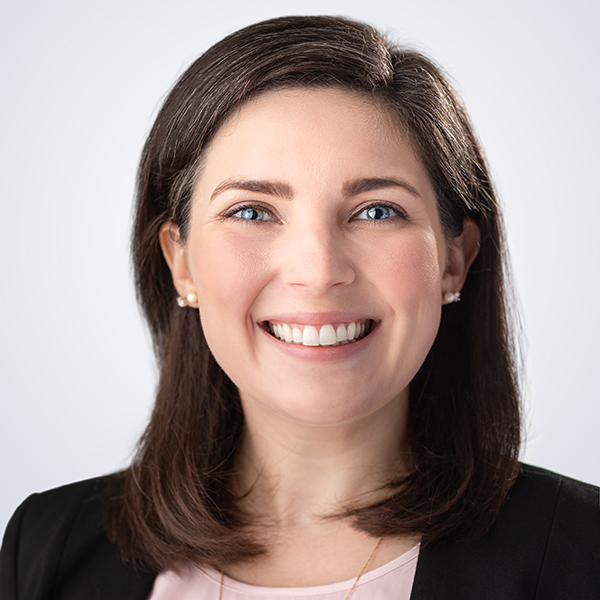
Cristina España i Bonet is a Professor in the Department of Computer Science at the Polytechnic University of Catalonia (UPC), working within the Natural Language Processing group (GPLN) of the Center for Technologies and Applications of Language and Speech (TALP). She holds a Physics degree and a PhD in Cosmology from the University of Barcelona, later transitioning to Natural Language Processing and Machine Translation. Her academic journey includes teaching at both the Faculty of Physics of the University of Barcelona and currently at the Barcelona School of Informatics of UPC. Her research spans multiple areas of computational linguistics with a strong focus on Machine Translation. She has extensive experience in statistical and hybrid translation systems, document-level translation, multilingual systems, and machine learning applications in NLP. Her work often addresses real-world challenges with diverse text genres including news, patents, Wikipedia articles, and social media content. She has made significant contributions to developing translation systems that leverage context beyond the sentence level to improve coherence and quality. Cristina has been actively involved in numerous European and national research projects including OPENMT, OPENMT2, MOLTO, and TACARDI, where she has contributed both research and project coordination. Her recent work shows a growing interest in sign language translation, low-resource language processing, and the intersection of large language models with traditional machine translation paradigms. She has supervised multiple PhD and Master's students in topics related to machine translation and multilingual systems. Member of the Natural Language Processing group (GPLN) at TALP Research Center Supervisor of doctoral and master's theses in NLP and Machine Translation Lead researcher in multiple EU-funded projects on multilingual translation Developer of resources and tools for Wikipedia-based multilingual corpora Her research has evolved from statistical machine translation to incorporate neural approaches while maintaining focus on document-level context and multilingual applications. She has made significant contributions to understanding translation artifacts, developing methods for low-resource language translation, and creating resources for sign language processing. Her work bridges theoretical advances with practical applications across diverse language pairs and domains.