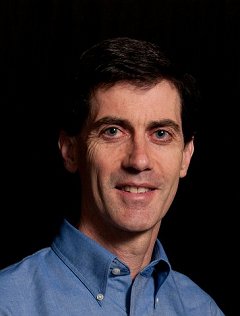
José Angel Sanchidrián Blanco is a Professor at the Department of Geological and Mining Engineering, Universidad Politécnica de Madrid. His research focuses on rock mechanics, blasting technology, and fragmentation modeling. Academic Rank: Professor University: Universidad Politécnica de Madrid Department: Geological and Mining Engineering His work addresses fragmentation-energy fan concepts, discrete fracture networks, and vibration analysis from blasting. Key trends include optimizing powder factors and delays in full-scale blasting, energy efficiency in mining-to-processing chains, and machine learning applications in underground mining. Notable contributions span rock mass structural recognition, blasthole delay cooperation functions, and frequency attenuation modeling via full-field solutions. His studies leverage Swebrec and non-parametric methods for accurate fragment size distributions.
Monica Martínez Blasco is a Professor in the Department of Economics and Finance at IQS School of Management. She serves as Principal Investigator for the Sustainable Finance and ESG project (2024) and is an active researcher in multiple ongoing projects including EDUParadigms-HE (2022-2026), CORPGOV Research Group on Corporate Governance (2022-2025), and ADAMIQS: Applied Data Analytics and Modeling IQS (2022-2025). Her research interests span Corporate Governance, Accounting Education, and ESG Finance with particular focus on Spanish financial markets. Her work examines digital democracy in corporate governance, inquiry-based learning methodologies in accounting education, and the relationship between environmental performance and firm value. She applies data analytics approaches to model complex financial phenomena and has developed innovative teaching methods centered on the questioning paradigm. Analysis of her recent publications reveals a strong trend toward integrating traditional finance concepts with modern ESG considerations and digital transformation in corporate governance. Her work bridges theoretical finance with practical applications in Spanish and international contexts, with increasing focus on sustainability metrics and their impact on executive compensation structures. Her educational research shows a consistent commitment to developing student-centered learning approaches in accounting and finance education. Professor Martínez Blasco leads the Applied Data Analytics and Modeling IQS research group, which focuses on Data Analytics (100%), Data Modeling (100%), Developmental Systems (33%), Engineering Applications (33%), and Active Learning (33%). She is also a key member of the CORPGOV research group dedicated to corporate governance studies. Her research has been supported by multiple funding sources including the State Research Agency, University and Research Grants Management Agency (AGAUR), and internal university grants. She collaborates extensively with researchers across Spain and internationally, with particular connections to Chinese corporate governance studies as evidenced by her recent work on online voting systems.
Jesús Rodrigo-Comino is an Associate Professor at the University of Trier, Department of Physical Geography. He is an expert in regional geography, soil geography, and land degradation processes. His research focuses on the impacts of human activities on hydrological connectivity and land degradation in Mediterranean landscapes. He has published extensively on these topics, with recent work focusing on viticultural landscapes and sand transport susceptibility in Eastern Iran.
Professor Fausto Pedro García Márquez is a faculty member at the University of Castilla-La Mancha leading the Ingenium Research Group. With 458 publications and active 2025 output, he specializes in Maintenance Management (16% research focus), Artificial Intelligence, IoT, and Renewable Energy systems. His research integrates AI and big data analytics for industrial applications including photovoltaic plant maintenance, hydropower condition monitoring, and sustainable textile manufacturing. International collaborations span India, Saudi Arabia, and Pakistan, with co-author networks reflecting strong cross-border research partnerships. Recent work emphasizes practical implementations of intelligent systems in energy infrastructure and business processes. Professor García Márquez's 2025 publications reveal converging trends: IoT-enabled predictive maintenance for renewable energy systems (3/5 papers), sustainable business innovation (1 paper), and AI-driven financial applications (1 paper). This demonstrates strategic focus on applying computational intelligence to sustainability challenges across multiple industrial sectors. The Ingenium Research Group provides a dynamic environment for interdisciplinary work at the AI-energy-sustainability nexus. With 4 active projects and continuous publication output, Professor García Márquez maintains strong research momentum. Prospective students would engage with real-world implementations including SCADA systems for solar plants and unmanned surface vehicle projects.
Thomas W. Reps is the J. Barkley Rosser Professor & Rajiv and Ritu Batra Chair Emeritus at the University of Wisconsin-Madison , where he has been a faculty member since 1985. He is also President of GrammaTech, Inc., and a co-founder of the company. Education: Ph.D. in Computer Science from Cornell University (1982), winner of the 1983 ACM Doctoral Dissertation Award. Reps’s research spans program analysis , abstract interpretation , model checking , and computer security . His recent work focuses on quantum computing verification , probabilistic program analysis , and symbolic methods for static analysis . His publications (over 225) include foundational contributions to program slicing (1988 paper with Horwitz and Binkley, cited >1,780 times), machine-code analysis (ETAPS Best-Paper Awards in 2004 and 2008), and programming environments (co-author of The Synthesizer Generator ). Key awards include the ACM SIGPLAN Programming Languages Achievement Award (2017) , Guggenheim and Packard Fellowships , and ACM Fellow (2005) . Students: Mentored award-winning graduates like Akash Lal (SIGPLAN Outstanding Dissertation) and Venkatesh Srinivasan (Outstanding Graduate Student Research Award).
Laura Anton Sanchez is a permanent faculty member at the Miguel Hernández University of Elche (UMH), affiliated with the Department of Statistics, Mathematics and Informatics. She holds the academic rank of Professor and serves as a Senate Member (Sector 2) and Deputy Vice Rector for Research - Evaluation of Research . Teaching roles: Coordinator/lecturer for Introduction to Statistics, Econometrics, Operations Research, and Statistical Techniques for Learning II (2023/2024–2025/2026). Key research areas: Statistics, Operations Research, Data Science, and Decision-Making Models. Administrative roles: Deputy Vice Rector for Research and Transfer, University Senate representative. Contact: Located at Campus Elche, Edificio Torrepinet, with offices in the Vice Rectorate for Research and Transfer.
Maria Dolores Guillen Garcia is an Assistant Professor at the Miguel Hernandez University of Elche, affiliated with the Department of Statistics, Mathematics and Informatics. She is also a member of the Efficiency and Productivity Analysis research group at the Center of Operations Research (CIO). Occupation: Faculty - Assistant Professor Research Focus: Statistics and Operations Research Primary Email: maria.guilleng@umh.es Institutional Affiliation: Miguel Hernandez University of Elche Research Group: Efficiency and Productivity Analysis (CIO) Her teaching responsibilities include courses in exploratory data analysis, predictive data analysis, and statistical techniques for machine learning across multiple bachelor's and master's programs in business, engineering, and computational statistics.
Javier Morales Socuellamos is an Associate Professor at the Miguel Hernández University of Elche , affiliated with the Department of Statistics, Mathematics and Informatics . As a member of the Joint Research Unit in Advanced Statistical Methods in Health Sciences (UMH-FISABIO) , he contributes to interdisciplinary research bridging statistics with health sciences. Contact: +34 96 665 8961 | j.morales@umh.es Location: Edificio Torretamarit, Avda. Universidad s/n, 03202 Elche (Alicante) His teaching focuses on statistical modeling and analysis, delivering courses such as Statistical Models , Simulations of Processes and Systems , and Statistics in Experimental and Clinical Research across multiple degree programs. He has coordinated courses in Biotechnology, Business Statistics, Computer Engineering, Data Science, Public Safety, Advanced Accounting, and Translational Neuropsychopharmacology since at least 2023. As part of the Center of Operations Research (CIO) at UMH, he engages in advanced statistical methodology development. His educational contributions extend to continuing education programs in Machine Learning and Deep Learning applications with Python.
David Simón Grábalos is an Associate Professor at the Department of Architecture, La Salle Technical School of Architecture, Universitat Ramon Llull. His work focuses on Educational Data Mining , Learning Analytics , and Self-Regulated Learning , aiming to improve academic retention and pedagogical strategies in architectural education. Research Interests: Educational Data Mining, Learning Analytics, Self-Regulated Learning, Collaborative Learning, Architectural Education, Early Dropout Detection Email: david.simon@salle.url.edu
Joanne Tan is a PhD researcher at the Max Planck Institute for Astrophysics, where she collaborates with Dr. Thorsten Naab on cosmological simulations of galaxy formation and evolution. Her work focuses on the circumgalactic medium (CGM) and intergalactic medium (IGM), using metal absorption lines to trace their properties across cosmic time. Current Research Galaxy formation and evolution CGM/IGM absorption-line studies Machine learning in astronomy Statistical inference from large datasets Joanne's recent projects involve analyzing stellar kinematics in nearby galaxies using advanced instrumentation like Gemini NIFS with adaptive optics. She also explores the temporal evolution of metal absorption lines from redshift 5 to the present. Contact: jtan@mpa-garching.mpg.de
Akash Vani is a PhD Researcher at the Max Planck Institute for Astrophysics (MPA) in Garching, Germany, affiliated with the Ludwig Maximilian University (LMU) Munich through the International Max Planck Research School (IMPRS). His research bridges observational astrophysics and computational modeling. Education: MSc in Physics (2022), Heidelberg University BSc in Physics (2019), Savitribai Phule Pune University Research Interests: Akash investigates galaxy evolution from z=0 to z=10 using semi-analytical models (L-Galaxies) and observational data (Gaia, JWST). He also explores stellar populations, white dwarfs, and quantum computing applications in astronomy. Key Projects: His work includes Debugging Galaxy Evolution Models , constructing the Fifth Catalogue of Nearby Stars (CNS5) , and Deep Learning for Galaxy Morphology Classification . He contributed to photometric calibration of the UVIT telescope and studies on quantum key distribution protocols. Scientific Awards: Summer Fellow, IISER Kolkata (2019) Publications: He has published in leading journals like Monthly Notices of the Royal Astronomical Society (MNRAS) and Astronomy & Astrophysics (A&A), focusing on galaxy scaling relations, white dwarf identification, and Milky Way modeling. His work highlights discrepancies in quenching processes in simulations and improvements in stellar census completeness. Labs & Teams: Akash collaborates with the Astronomisches Rechen-Institut (ZAH, Heidelberg), Ludwig Maximilian University, and international teams leveraging Gaia data and quantum computing resources.
Nelson Alirio Cruz Gutierrez serves as a Visiting Professor in the Department of Statistics and Operations Research within the School of Mathematics and Computer Science at the University of the Balearic Islands. He maintains an active teaching role across multiple degree programs and is affiliated with the Data Modelling and Statistical Learning (MoDAE) R+D+I research group. His research focuses span critical areas in modern quantitative analysis: Advanced statistical methodologies for medical research Operations research optimization techniques Machine learning applications in data modeling Stochastic process theory and implementation Experimental design for nutrigenomics Computational statistics for biological systems Professor Cruz Gutierrez teaches 12 distinct courses across 7 academic programs for the 2024-2026 period, including core statistics for Mathematics, Medicine, and Pharmacy degrees, specialized medical statistics, and advanced topics like Stochastic Processes. His instructional portfolio demonstrates deep integration of statistical theory with biomedical and engineering applications. As an active member of the MoDAE research group, he contributes to collaborative projects at the intersection of statistical theory and real-world data challenges, particularly in healthcare and biological sciences. His office is located in room 245 (second floor) of the Anselm Turmeda building, with contact available via university phone extension 2961.
Dr. Manuel Ángel Aguilar Torres is a Professor in the Department of Engineering at the University of Almería, Spain, where he leads the research group 'Integrated Territory Management and Spatial Information Technologies.' With an h-index of 29 (Scopus) and 26 (Web of Science), he has established himself as a leading researcher in remote sensing applications for agricultural and forest monitoring. His research primarily focuses on plastic greenhouse mapping using satellite imagery , LiDAR technology for forest inventory , and precision agriculture applications . He specializes in object-based image analysis, spectral indices development, and the integration of multi-source geospatial data for environmental monitoring, with particular emphasis on Mediterranean ecosystems. His work has resulted in 98 journal articles, 16 book chapters, and numerous conference presentations. Dr. Aguilar Torres has served as Principal Investigator for multiple research projects, including 'Mapeado de invernaderos e identificación de cultivos hortícolas protegidos mediante análisis de imagen basada en objetos y series temporales de imágenes de satélite' (RTI2018-095403-B-I00) and 'Identificación basada en objetos de cultivos hortícolas bajo invernadero a partir de estéreo imágenes del satélite Worldview-3 y series temporales de Landsat 8' (AGL2014-56017-R). His recent publications (2022-2025) demonstrate continued productivity in remote sensing methodology development, particularly in greenhouse mapping, forest inventory using UAV and LiDAR technologies, and spectral analysis. Notable scientific contributions include: Development of novel methods for plastic greenhouse detection using multi-temporal satellite imagery Benchmarking studies of spectral indices for agricultural monitoring Advanced techniques for individual tree segmentation in Mediterranean forests Integration of UAV and terrestrial LiDAR data for forest inventory As a supervisor, Dr. Aguilar Torres has guided numerous PhD students through the completion of their theses, with former students including Rafael Jiménez Lao, Abderrahim Nemmaoui, and María del Mar Saldaña Díaz. His research group maintains active collaborations with international institutions, providing students with opportunities for cross-border research experiences. The laboratory facilities support advanced geospatial analysis, with capabilities for processing satellite imagery from platforms like Sentinel-2, WorldView-3, and Deimos-2, as well as UAV and LiDAR data processing for environmental monitoring applications.
Rafael Rumí Rodríguez is a Professor in the Mathematics Department at the University of Almería, Spain, with extensive experience in probabilistic modeling and data analysis. He leads the 'Análisis de datos' research group and serves as Principal Investigator for multiple research projects, including the current 'Hacia una Inteligencia Artificial Probabilística Confiable (TOPAI-UAL)' (2023-2026). Dr. Rumí Rodríguez's research focuses on Bayesian networks and probabilistic graphical models , with applications spanning environmental science, ecology, agriculture, and education. His work includes developing methods for continuous distributions in hybrid Bayesian networks, flood risk assessment in Mediterranean regions, climate change impact modeling for Andalusian agriculture, and educational assessment analytics. He has created practical tools like the 'hcrBN' R package for hybrid Bayesian network applications. His publication record includes 43 articles , 2 books or chapters , 3 theses , and 31 conference papers , with an h-index of 16 (Scopus) and 15 (Web of Science). Many publications appear in Q1 journals, reflecting significant research impact across computer science, environmental science, and statistics. Scopus h-index: 16 Web of Science h-index: 15 Scopus i10-index: 27 Web of Science i10-index: 23 Dr. Rumí Rodríguez has secured substantial research funding throughout his career, including as Principal Investigator for the current TOPAI-UAL project (€120,100) and previous projects like the European AMIDST initiative (€323,490). His research group provides opportunities for students to engage in both theoretical advances and practical applications of probabilistic modeling, with strong connections to environmental and agricultural domains in the Mediterranean region.
Antonio Salmerón Cerdán is a Professor in the Mathematics Department at the University of Almería, where he has established himself as a leading researcher in probabilistic artificial intelligence and Bayesian networks. With over 25 years of academic experience, he leads the 'Análisis de datos' research group and serves as Principal Investigator for multiple nationally and internationally funded projects, including the current 'Hacia una Inteligencia Artificial Probabilística Confiable (TOPAI-UAL)' project (2023-2026). His research expertise spans theoretical and applied aspects of probabilistic graphical models, with particular focus on Bayesian networks, causal inference, and their applications across diverse domains. His work demonstrates a consistent trajectory from foundational theoretical contributions to practical implementations in software engineering, genomics, sports analytics, and trustworthy autonomous systems. Professor Salmerón's publication portfolio reveals a strong emphasis on methodological innovations in probabilistic reasoning, with recent work exploring divide-and-conquer approaches for causal computation, noise-robust classification methods, and the integration of observational and randomized data sources. His research shows increasing interdisciplinary reach, connecting computer science methodologies with applications in plant genomics, software maintenance, and healthcare. Journal Publications: 105 articles in high-impact venues including Ecological Informatics (Q1), International Journal of Approximate Reasoning (Q2), and ACM Transactions Research Funding: Principal Investigator for 9 major projects since 2001 totaling over €800,000 in funding Thesis Supervision: Director of 7 doctoral theses on probabilistic graphical models and their applications Metrics: h-index 22 (Web of Science), i10 index 59 His research program demonstrates a unique combination of theoretical rigor in probabilistic reasoning with practical applications across diverse scientific domains, positioning him at the forefront of reliable probabilistic AI development.