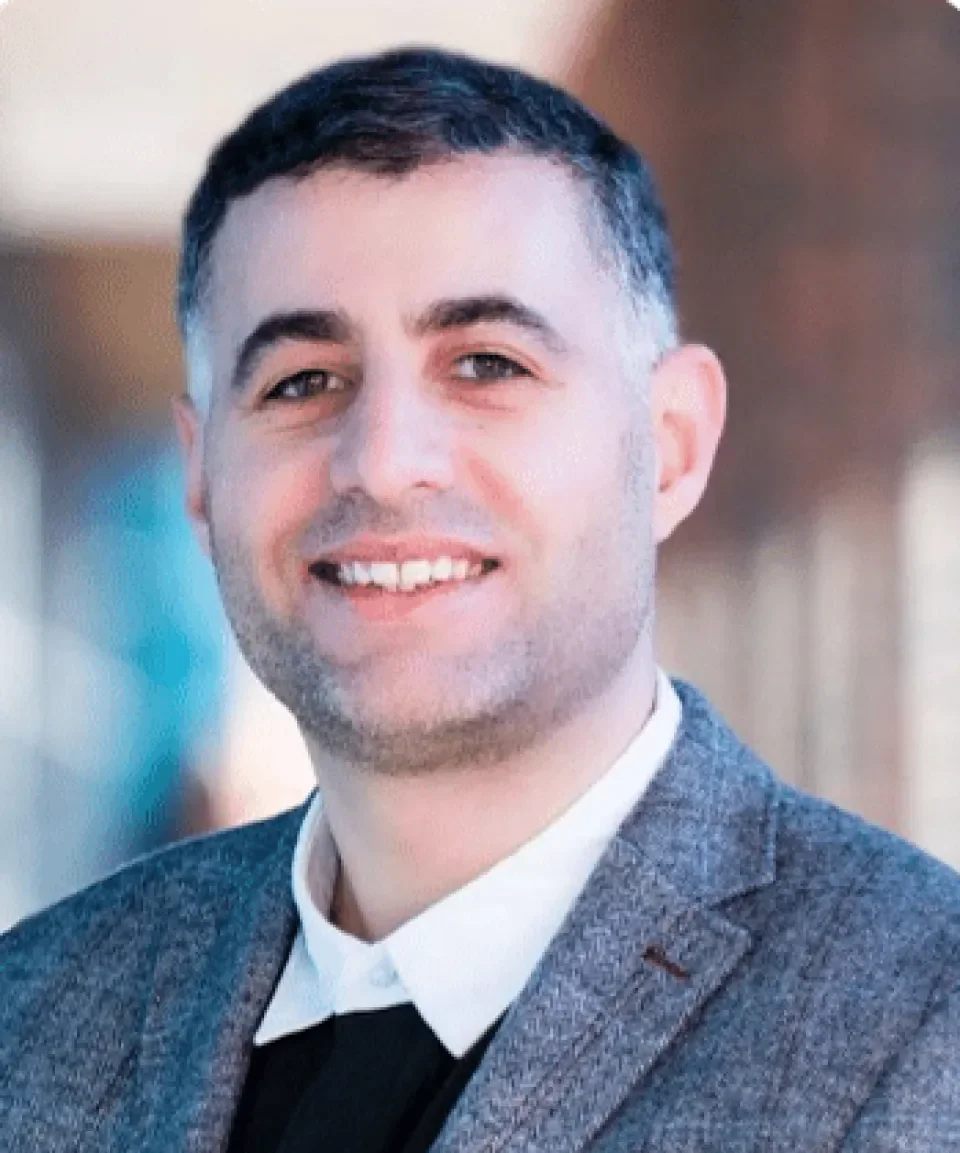
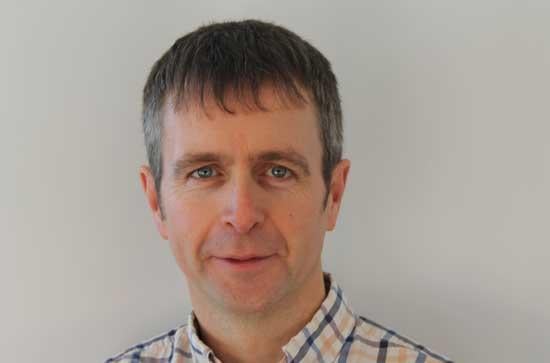
Dr. Shadi Karazi serves as Senior Learning Technologist at DCU Business School, specializing in educational technology integration and digital pedagogy. He holds PhD in Automated Control of Laser Systems and MSc in Education and Training Management (eLearning). Professional roles include: Senior Learning Technologist, DCU Business School Learning Technologist, Teaching Enhancement Unit Head of ISS Student Support Educator in Mechanical Engineering Research bridges engineering applications with educational technology, focusing on VR learning environments, language acquisition tools, and professional development frameworks. Current investigations examine AI applications like ChatGPT in pedagogical contexts. Awards include DCU President's Award for Professional Staff (2020). Research outputs include peer-reviewed publications spanning materials science and educational technology domains.
Fei Chen is a Research Fellow in the School of Mathematics at Trinity College Dublin. Their work focuses on interdisciplinary research at the intersection of mathematics, neuroscience, and biomedical engineering. Current research interests include predictive coding models in auditory perception, Bayesian inference frameworks for phantom perception, and applications of machine learning in diagnosing hearing-related disorders. Fei's recent publications explore topics such as auditory illusion modeling, chronic pain mechanisms through predictive processing lenses, and systematic reviews of autoimmune-related hearing loss. Their work combines advanced mathematical modeling with clinical data analysis to advance understanding of sensory perception disorders. Advisees/PhD students: None listed at this time. No scientific awards mentioned in available records. Research activities include collaboration with clinical teams to investigate neural networks involved in auditory processing anomalies and developing computational tools for hearing diagnostics.
Dr. Nicolae Viorel Buchete is an Associate Professor at the University College Dublin (UCD) School of Physics . He serves as Vice Principal for Graduate Studies in the College of Science and leads UCD's Computational Physics postgraduate program . Buchete holds academic degrees from Boston University (PhD) , Al. I. Cuza University , and University of Patras . Current appointments: 2022-Present (Vice Principal), 2014-Present (MSc Program Director) Previous roles: NIH Research Fellow (2003-2008), Visiting Assistant Professor at Boston University (2009-2010) His research focuses on theoretical and computational biological physics with applications in nanoscience , molecular dynamics of biomolecular systems , and multiscale modeling of complex fluids . Recent work includes conformational kinetics of oncogenic proteins , physics-based modeling of nanocarriers , and amyloid peptide dynamics in Alzheimer's disease . Scientific Contributions: Developed advanced Markov State Models and Milestoning frameworks for long-time MD simulations Identified novel salt bridge mechanisms in kinase activation and drug resistance Explored piezoelectric properties of diphenylalanine nanostructures Teaching Innovation: Advocates for research-oriented teaching at both undergraduate and MSc levels. Coordinates modules including Computational Biophysics and Thermodynamics & Statistical Physics at UCD.
Michael Mark Dowling is a Professor at DCU Business School, Dublin City University, Ireland. With an extensive research portfolio spanning finance, economics, and emerging technologies, he has published 58 documents with 2,347 citations and maintains an h-index of 20. His work bridges traditional financial systems with innovative blockchain applications, positioning him at the forefront of digital finance research. Dr. Dowling's research interests span several critical areas in contemporary finance and economics. His primary focus includes Decentralized Finance (DeFi) , Cryptocurrency markets , and Blockchain technology applications . He has made significant contributions to understanding NFT markets, Bitcoin volatility, and the intersection of financial systems with virtual worlds. His work on economic policy uncertainty and its impact on cryptocurrency markets has been particularly influential. Additionally, he explores Environmental Economics , examining the relationship between economic growth and carbon emissions in emerging economic blocs. His recent work on AI applications in finance, particularly with large language models like ChatGPT, demonstrates his ability to engage with cutting-edge technological developments. Analysis of Dr. Dowling's recent publications (2022-2024) reveals several key trends in his research. There's a clear progression from traditional financial analysis toward emerging digital asset markets, with a particular emphasis on non-fungible tokens (NFTs) and their market dynamics. His work demonstrates a sophisticated methodological approach, frequently employing advanced statistical techniques, machine learning, and big data analysis. The interdisciplinary nature of his research is evident in publications spanning finance, environmental economics, sports risk management, and virtual reality economics. His recent focus on AI applications in finance represents a timely exploration of how emerging technologies are transforming financial analysis and research methodologies. Dr. Dowling has made significant contributions to academic discourse through his extensive publication record. His research on the relationship between economic policy uncertainty and Bitcoin markets has provided valuable insights for investors and policymakers. The development of FinSentGPT represents an innovative approach to financial sentiment analysis across multiple languages. His work on NFT market dynamics has helped establish foundational understanding of these emerging digital markets. Through his bibliometric analyses, he has also contributed to mapping research landscapes in areas like advertising expenditure and stock performance, as well as Islamic economics and finance.
Professor Fergal Malone is the Chair of Obstetrics and Gynaecology at the Royal College of Surgeons in Ireland (RCSI) and a consultant in maternal-fetal medicine at the Rotunda Hospital, Dublin. He served as CEO of the Rotunda Hospital from 2016–2022, overseeing its operations as Ireland’s largest maternity hospital. His academic career includes roles at Columbia University and Tufts University, where he specialized in maternal-fetal medicine and ultrasound research. Malone has authored over 350 peer-reviewed papers and co-authored the seminal textbook Fetology: Diagnosis and Management of the Fetal Patient . Education: MD, Medicine (University College Dublin, 1991) Fellowship in Maternal-Fetal Medicine (Tufts University, 1996–1998) Research Interests: Focuses on prenatal diagnosis, fetal medicine, and ultrasound innovation. His work includes developing the Perinatal Ireland consortium and advancing fetal biometry standards. Key areas include fetal growth restriction, congenital heart disease, and outcomes of pregnancy termination laws. Grants & Awards: Recipient of the Roy M. Pitkin Award and multiple research distinctions Lead investigator in NIH-funded consortia and multicenter trials Fellowships from the Royal Colleges of Obstetricians and Physicians Teaching & Leadership: Academic head of RCSI’s largest obstetrics program, integrating advanced simulation and digital teaching tools. Supervised numerous clinical trials and training initiatives globally. Labs/Teams: Directs the Perinatal Ireland research group and collaborates internationally on fetal medicine protocols and AI-driven predictive models.
Shubhavardhan Ramadurga Narasimharaju is an Associate Professor in Additive Manufacturing at the Department of Engineering Technology, SETU Waterford, Ireland. He holds a PhD in Mechanical Engineering from the University of Huddersfield (2023) and a Master's from IIT Madras (2012), with a BEng from Malnad College of Engineering (2009). His research focuses on advanced manufacturing techniques, particularly Additive Manufacturing (AM) processes like Laser Powder Bed Fusion (LPBF), Electron Beam Melting (EBM), and Direct Energy Deposition (DED). He investigates microstructure-surface property relationships in metals, polymers, and composites, with expertise in statistical process optimization (ANOVA, Taguchi methods) and AI-driven defect classification using convolutional neural networks. Education: PhD: Mechanical Engineering (Surface Quality & AM Defects, University of Huddersfield, 2019–2023) Masters: Friction Welding of Dissimilar Metals (IIT Madras, 2010–2012) BEng: Mechanical Engineering (Malnad College of Engineering, 2004–2009) His research interests include metallurgical defects in AM, surface metrology, and AI applications in manufacturing. He has supervised over 16 students, developed Ireland's first AM-focused Masters and B.Sc. courses, and completed over 40 industry projects. Key contributions include reviews on LPBF steels and pioneering work on surface texture characterization of AM components. Awards & Grants: While no named awards are listed, his h-index of 3 and 339 citations reflect his impactful research. He manages multiple research grants and coordinates SETU's Engineering department initiatives. Labs & Teams: Active in AM research groups, collaborating internationally on projects involving advanced manufacturing, materials science, and AI-driven defect analysis.
Mehran Hossein Zadeh Bazargani is a Marie Curie Post Doctoral Fellow at the School of Mathematics and Statistics , University College Dublin. His research focuses on brain-inspired artificial neural networks, anomaly detection in medical data, and interpretable machine learning. He has contributed to the MED-I consortium and founded the educational platform MLDawn . Education: PhD in Machine Learning (University College Dublin) Research Interests: Developing artificial neural networks for perceptual learning and decision-making, anomaly detection in time-series (ECG, EEG) and medical images (fMRI, X-ray), and computational neuroscience applications under the Free Energy Principle. Teaching Activities: Founder of MLDawn (2018–Present), lecturer at Queens University Belfast (2020), teaching assistant at UCD (2017–2020), and instructor in Iran (2013–2015). Scientific Contributions: 8 publications across anomaly detection, medical image analysis, and molecular communication. Key works include the D-RBFDD network and de-identification frameworks for medical data. Emails: mehran.hosseinzadehbazargani@ucd.ie, mldawn2018@gmail.com
Dr. Alison O'Connor is an Assistant Professor at the University of Limerick , affiliated with the Department of Computer Science & Information Systems , Ageing Research Centre , and Lero – the Irish Software Research Centre . Her research bridges machine learning with mechanics of materials and healthcare data analytics , focusing on applications in structural integrity , Industry 4.0 , and medical informatics . Education : PhD in Mechanical Engineering (Imperial College London, 2015-2019), Graduate Diploma in Advanced Materials (2008-2009), and BSc in Aeronautical Engineering (2004-2008). Her research interests span explainable AI for healthcare decision-making, finite element analysis in nuclear steel integrity, and cold rolling process modeling . Recent publications highlight her work on agent-based patient pathway simulations and MRI texture analysis of traumatic brain injury. She contributes to journal peer-review and university committees as a core member. Publication trends show dual expertise: 50% in structural integrity and materials science, 50% in neuroscience and medical diagnostics . Key subfields include dopamine regulation , microdialysis techniques , and computational medicine .
Roja Parvizi Moghadam is a Researcher at the Department of Chemical Sciences, University of Limerick, affiliated with the Pharmaceutical Manufacturing Technology Centre (PMTC). Her work focuses on chemical engineering, machine learning, and sustainable manufacturing methods. Key Research Areas: Bio-inspired silica synthesis with CO₂, soft sensor development, and dynamic process modeling. Recent Publications: Contributions to journals like Chemical Engineering Science and ACS Sustainable Chemistry and Engineering on CO₂-driven silica fabrication, machine learning applications, and industrial process control. Email: Roja.Moghadam@ul.ie
Keefe Murphy is a Lecturer in Statistics within the Department of Mathematics and Statistics at Maynooth University , Faculty of Science & Engineering, and is affiliated with the Hamilton Institute . He is an active researcher in statistical machine learning, Bayesian nonparametrics, and clustering/classification of complex, high-dimensional data. Education: PhD in Statistics, University College Dublin MSc in Statistics, University College Dublin BSc in Economics & Mathematics, University of Limerick Research Interests: His work centres on developing and extending statistical methodologies for supervised and unsupervised learning , with emphasis on mixture models, latent variable models, Bayesian nonparametrics, and computational statistics . He actively contributes novel algorithms and software implementations, including the R packages IMIFA , MoEClust , and MEDseq available on CRAN. Current projects include extensions to Bayesian Additive Regression Trees (BART) , handling missing data , modelling multivariate count data , and variable selection in model-based clustering. Publication Profile: His recent publications (2021–2025) demonstrate a clear trajectory in advancing Bayesian machine learning methods, with contributions to Gaussian process BART models , sparse factor analysis , and educational data mining . Collaborative work spans learning analytics and multi-omic prostate cancer biomarker discovery , illustrating broad interdisciplinary impact. Awards & Recognition: Distinguished Dissertation Award (The Classification Society, 2020) Service & Advising: He serves as Associate Editor for Statistical Analysis and Data Mining and on departmental committees (Course Committee, PR Committee). He has successfully supervised PhD student Mateus Maia (graduated 2024) and currently teaches modules such as Advanced R Programming , Introduction to Data Science , and Nonparametric Statistics . Labs & Collaborations: He is affiliated with the Hamilton Institute , which fosters interdisciplinary research in applied mathematics and statistics, providing a collaborative environment for advancing computational and methodological statistics.
Diarmuid O'Donoghue is an Assistant Professor in the Faculty of Science & Engineering at Maynooth University, specializing in Computational Creativity and Analogical Reasoning . His research explores topological similarities between text and source code to develop cognitively inspired systems for problem-solving and bias detection. Co-PI of the Modelling implicit bias project (€21/FFP-P/10118) Senior Scientific Coordinator for the €2.6M EU-funded Dr Inventor project Key research areas include: Latent homomorphism detection in lexical data Comparative analysis of LLMs and analogical systems Formal specification generation from code/text His work has shaped undergraduate project frameworks with ethical GenAI integration . Publications span ICCC , GECCO , and journals like Artificial Intelligence Review .
David Malone is a Professor and Director of the Hamilton Institute at Maynooth University's Faculty of Science & Engineering, Department of Mathematics & Statistics. He received his BA(mod), MSc and PhD degrees in mathematics from Trinity College Dublin in 1996, 1997 and 2000 respectively. During his postgraduate studies, he became a member of the FreeBSD development team. After working at Corvil Networks, he joined the Dublin Institute of Technology as a senior researcher in 2001 before moving to Maynooth University's Hamilton Institute in 2004. His research interests span mathematical models of wireless networking, network measurement, IPv6, WiFi, PLC, password use, security, 802.11 protocols, Internet measurement, time keeping, and the evolution of the Irish secondary education system. Malone has made significant contributions to networking literature and is the co-author of O'Reilly's 'IPv6 Network Administration'. His recent publications demonstrate strong activity across multiple domains including password security, network measurement, IPv6 deployment, and authentication systems. Malone's work shows a consistent focus on practical networking problems with theoretical foundations in mathematics. His research has evolved from fundamental mathematical work to applied networking research with significant real-world impact. As an academic supervisor, Malone has guided numerous PhD and Master's students through their research, with recent graduates including Hazel Murray (PhD, 2021), Peter Keane (MSc, 2020), and Ashley Sheil (PhD, 2024). His supervision record spans topics in networking, security, and mathematical applications. Malone maintains active involvement in the Hamilton Institute, where he directs research activities focusing on mathematical and statistical approaches to complex systems. His work bridges theoretical mathematics with practical networking applications, creating a unique interdisciplinary research profile.
Michael English is an Associate Professor at the Department of Computer Science & Information Systems, University of Limerick, and an Academic Director of the ICT Learning Centre. He holds a PhD in Computer Science (2007) and MSc (1999) from the University of Limerick, and a BSc in Mathematics and Statistics from University College Cork (1996). His research focuses on software engineering (metrics, quality, clone detection, software evolution) and computer science education (undergraduate programming challenges). He lectures in software engineering, object-oriented programming, and course design. Education: BSc (Hons) Mathematics and Statistics, University College Cork (1996) MSc Computer Science, University of Limerick (1999) PhD Computer Science, University of Limerick (2007) Research Interests: His work spans software metrics for quality assessment, automated detection of code clones, and improving software maintainability. In education, he investigates barriers faced by early-stage programming students and pedagogical strategies like pair programming. Recent studies include industrial case studies on feature clones and text-mining StackOverflow to identify learning challenges. Professional Roles: Course Director for MSc in Software Engineering Member of Lero – the Research Ireland Centre for Software Design contributor to undergraduate/postgraduate curricula Research Trends: Recent articles emphasize industrial software analysis (e.g., feature clone detection in large systems) and leveraging machine learning for software engineering tasks. Educational work highlights the use of Q&A platforms to inform curriculum improvements and student support strategies. Labs/Teams: Active in Lero, Ireland’s National Software Engineering Research Centre.
Dr. Lewys Jones is an Associate Professor in the Department of Physics at Trinity College Dublin . His research focuses on advancing Scanning Transmission Electron Microscopy (STEM) techniques for atomic-scale materials characterization, particularly in low-dose imaging, detector optimization, and 3D tomography. Key Research Areas: Aberration-Corrected Microscopy, Atomic-Resolution Imaging, Nanomaterials Analysis, and Machine Learning for Image Enhancement Instrumentation Expertise: Detector Calibration, Probe Drift Compensation, Low-Voltage Imaging, and Digital Pulse Read-Out Systems His work has resulted in multiple peer-reviewed publications (2013-2024) with a focus on electron microscopy innovations and nanostructured materials . Notable scientific awards include the Royal Society & SFI University Research Fellowship (2019) and the International Federation of Societies for Microscopy 'Young Scientist Award' (2014). He has contributed to open-access resources and educational tools for STEM data analysis, including the 'Smart Align' software.
Jacqueline Walker is an Associate Professor in the Department of Electronic and Computer Engineering at the University of Limerick, Ireland. She is affiliated with the Centre for Research Training in Foundations of Data Science and the Centre for Robotics and Intelligent Systems. Education: Bachelor of Engineering (University of Western Australia, 1993) B.A. (University of Western Australia, 1988) Research Interests span telecommunications synchronization, nonlinear signal processing, and higher-order statistics with applications in biomedical, speech, and music domains. Key areas include: Satellite and network timing transfer Software Defined Radio (SDR) systems Musical sound synthesis and transcription Biomedical signal reconstruction (EMG/MEAP) Jitter analysis and metastability Recent Publications highlight trends in SDR for offshore energy networks (2023), direct-sequence spread spectrum (2021), and cross-disciplinary work in music processing (2014–2003) and biomedical signal analysis (2005–2001). Her work integrates spectral modeling, genetic algorithms, and bispectrum techniques. Labs & Teams: Active in the Centre for Research Training in Foundations of Data Science and Centre for Robotics and Intelligent Systems, focusing on data-driven and robotic applications.