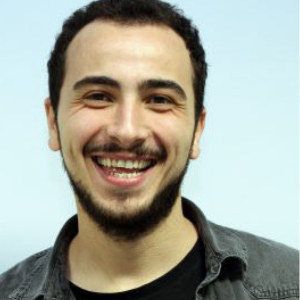
Alessandro Ragano is a Postdoctoral Researcher at the Insight Centre for Data Analytics , where he has been investigating Quality of Experience (QoE) aspects of audio archives and developing data-driven approaches for QoE estimation and audio restoration using deep learning since 2018. Education: MSc in Computer Science and Engineering from Politecnico di Milano (Italy) BSc in Computer Engineering from Università Degli Studi di Salerno (Italy) His research integrates machine learning , audio signal processing , and multimedia quality assessment to improve speech enhancement, audio restoration, and perceptual modeling. Recent trends in his publications focus on self-supervised learning , objective quality metrics , and audio dataset generation with applications in speech separation, music representation, and audio inpainting. He actively contributes to open-source tools like Binamix and AQP for audio research and quality evaluation.
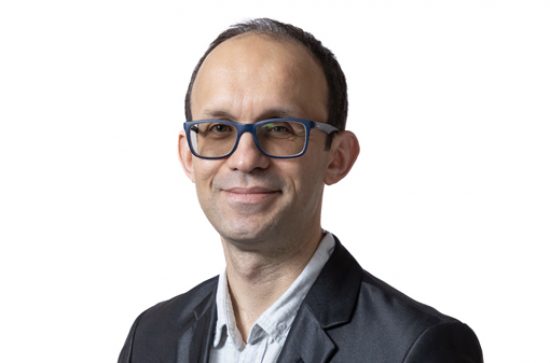
Dr. Muhammad Sajid is an Assistant Professor in Automotive Engineering (Fluid Mechanics) at the School of Mechanical and Materials Engineering, University College Dublin. He holds a B.Eng. from NUST (Pakistan), a Master's from ENSAM ParisTech (France), a PhD from University of Cergy Pontoise (France), and completed postdoctoral research at Texas A&M University Qatar and NUST. His research focuses on integrating AI/ML with mechanical engineering challenges, particularly in fluid dynamics, renewable energy systems, and smart building technologies. He coordinates courses like Computational Fluid Mechanics and Mechanics of Fluids. His work spans experimental and numerical studies in energy harvesting, HVAC optimization, and sustainable urban infrastructure. As PI of the AIMS laboratory, he leads projects on AI-driven mechanical systems. He actively participates in international conferences and has authored over 50 peer-reviewed publications. Education: Bachelor of Engineering (B.Eng.), National University of Sciences and Technology Master’s Degree, École Nationale Supérieure d’Arts et Métiers (ENSAM) Paris Tech PhD, University of Cergy Pontoise Postdoctoral Research: Texas A&M University at Qatar and NUST Research interests include cloud-based high performance computing for fluid dynamics simulations, solar/wind energy forecasting using machine learning, IoT sensor analytics for HVAC systems, and aerodynamic design optimization. His recent work emphasizes achieving net-zero energy buildings through smart environmental control systems.
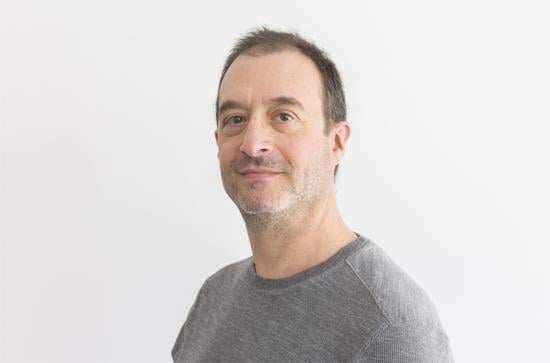
Nicolae-Viorel Buchete is an Associate Professor of Theoretical & Computational Nano-Bio Physics at University College Dublin's School of Physics within the College of Science. He currently serves as Vice Principal for Graduate Studies for the College of Science and Director of the UCD MSc in Computational Physics Programme. His academic journey includes postgraduate degrees from Boston University (USA) and institutions in the EU (Al. I. Cuza University of Iasi, Romania, and the University of Patras, Greece), with a PhD from Boston University and research fellowships at the National Institutes of Health. His educational background includes: PhD from Boston University Research Fellowships at National Institutes of Health (Bethesda, MD, USA) Postgraduate degrees from Boston University, Al. I. Cuza University of Iasi (Romania), and University of Patras (Greece) Buchete's research focuses on theoretical and computational approaches to understanding biomolecular systems. His work spans theoretical and computational biological physics, chemical physics, and nanoscience , with specific emphasis on statistical mechanics and molecular dynamics of biomolecular systems, systems biology, structural bioinformatics, and multiscale modeling of biomolecules and complex fluids. His group employs advanced computational techniques including Markov State Models, Milestoning, and replica exchange molecular dynamics to study protein conformational dynamics, amyloid formation, and molecular mechanisms relevant to diseases like cancer and Alzheimer's. His research output reveals a progression from fundamental biophysics toward increasingly translational applications. Early work focused on protein conformational dynamics, while more recent publications demonstrate expansion into nanomedicine applications, computational toxicology of nanomaterials, and physics-based modeling frameworks for drug delivery systems. A significant portion of his research involves studying conformational transitions in proteins relevant to cancer (such as K-Ras4B and Abl kinase) and neurodegenerative diseases (particularly amyloid systems), with growing emphasis on computational approaches to nanosafety and sustainability. His scientific contributions have been recognized with numerous awards: Certificate of Appreciation from the American Chemical Society Publications Division (2012) Top 20 JCP Reviewer for 2010 from the American Institute of Physics NIH Fellows Award for Research Excellence (FARE) in 2006 and 2007 ACS Chemical Computing Group Excellence Award (2003) Multiple teaching and research awards from Boston University including the Outstanding Teaching Fellow Award (1998) and Feldman Award (2001) Buchete has mentored numerous graduate students through their MSc and PhD research, with students successfully defending theses on computational physics and biomolecular modeling topics. His teaching philosophy emphasizes "research-oriented teaching," integrating research experiences into undergraduate and taught Master's level education. He has secured research funding including the UCD OBRSS Research Support Scheme (2016-2023) and has directed multiple educational programs including the UCD International Pre-Masters Programme (2013-2022) and served as School Head of Teaching and Learning (2021-2022). His research group is affiliated with the UCD Complex & Adaptive Systems Laboratory (CASL), where they develop and apply advanced computational methods to study complex biomolecular systems. The group has organized multiple CECAM workshops on biomolecular modeling and simulations, demonstrating leadership in the computational biophysics community. They collaborate extensively across disciplines, working with experimentalists to validate computational findings and address challenging problems in biophysics and nanomedicine.
Dr. Rana Kumar Jana serves as a Research Fellow at the School of Computer Science and Statistics, Trinity College Dublin, Ireland, affiliated with the CONNECT Centre. His work focuses on the intersection of artificial intelligence and optical networks, specifically addressing AI-assisted resource provisioning and performance optimization in elastic multiband optical systems to overcome the optical fiber capacity crunch. He holds a Ph.D. in Electronics and Communications Engineering from IIIT-Delhi, India. His educational background includes: Ph.D. in Electronics and Communications Engineering from IIIT-Delhi, India Dr. Jana's research centers on Optical Networks and Machine Learning , with emphasis on quality of transmission estimation, nonlinear-impairment mitigation, and resource reprovisioning in C+L band elastic optical networks. He integrates experimental validation with techno-economic analysis to develop practical solutions for network capacity expansion, leveraging domain knowledge and adaptive margin techniques. His work bridges theoretical innovation with operator perspectives in telecom infrastructure evolution. Analysis of his 15 recent publications (2020-2024) reveals a consistent trajectory toward overcoming optical capacity limitations through multi-band expansion, multi-core fibers, and AI-driven optimization. Key themes include machine learning for quality estimation, techno-economic comparisons of upgrade strategies (e.g., multifiber vs. ultra-wideband), and survivability analysis under fill margin constraints. His publications in premier venues like JOCN and ECOC demonstrate rigorous experimental validation coupled with real-world operator insights. No scientific awards were specified in the source material. Dr. Jana actively mentors undergraduate and postgraduate students in machine learning applications for optical systems and SDN-enabled network failure management. His research collaborations span industry (British Telecom) and academia (UCL, Aston University, University of East Anglia), suggesting involvement in externally funded projects, though specific grants are not detailed. As an IEEE TPC member, reviewer, and workshop organizer, he contributes significantly to the optical networking community. He operates within the CONNECT Centre at Trinity College Dublin, a leading hub for future networks research. His international engagements with British Telecom, University College London, and Tejas Networks highlight cross-sector collaborations focused on next-generation optical infrastructure, particularly in elastic network architectures and AI-assisted resource management for backbone networks.
Viet Quoc Pham is an Assistant Professor in Networks and Distributed Systems at Trinity College Dublin's School of Computer Science and Statistics and a CONNECT Associate Investigator. His research integrates convex optimization, game theory, and machine learning to advance edge computing, wireless AI, and next-generation networking for 6G, IoT, and blockchain applications. Education: PhD in Telecommunications Engineering, Inje University, Korea (2017) His work centers on three interconnected thrusts: (1) Computing innovations in edge AI, aerial computing, and edge of things; (2) Intelligence through wireless AI and federated learning; and (3) Networking advancements in 6G, IoT, intelligent surfaces, metaverse, and blockchain. This cross-disciplinary approach optimizes cloud-edge systems and wireless infrastructure using mathematical frameworks. Recent publications (2021-2024) demonstrate applied impact across security (smart speaker intrusion detection), environmental science (satellite carbon monitoring), healthcare (mental disorder detection), and e-commerce (basket recommendation systems), reflecting his methodology of adapting AI/optimization to domain-specific challenges. Scientific Awards: Korea NRF funding for outstanding young researchers (2019-2024) Best Ph.D. Dissertation Award, Inje University (2017) Top Reviewer Award, IEEE Transactions on Vehicular Technology (2020) Golden Globe Award, Vietnam Ministry of Science (2021) IEEE ATC Best Paper Award (2022) Enterprise Ireland Coordination Support Award (2023) Dr. Pham secured competitive funding including Korea NRF and Enterprise Ireland grants. As Editor for Journal of Network and Computer Applications and Scientific Reports, and Lead/Guest Editor for IEEE Internet of Things Journal, IEEE Transactions on Consumer Electronics, and Computer Communications, he shapes discourse in networking and computer systems through rigorous peer review and special issues. Through the CONNECT Centre, he collaborates with industry partners on Ireland's national research initiative for future networks, focusing on practical implementations of 6G architectures, IoT security protocols, and edge AI frameworks for real-world deployment.
Ehsan Namjoo serves as a Research Fellow in the Department of Electronics & Computer Engineering at the University of Limerick, with a primary affiliation at Lero – the Irish Software Research Centre. His multidisciplinary work bridges theoretical signal processing, machine learning applications, and hardware implementation for real-world systems. His research spans signal processing (DOA estimation under non-ideal noise conditions, EEG source imaging), machine learning (explainable AI for medical diagnostics, feature selection in cancer detection), and computer engineering (polar code decoders, visible light communication systems). Notable biomedical applications include breast cancer diagnosis and epileptic source analysis, while cybersecurity work focuses on intrusion detection in cloud environments. Recent publications (2021-2025) reveal a consistent trajectory toward developing lightweight, interpretable models for tabular medical data alongside robust signal processing frameworks for communication systems. His work increasingly integrates hardware-aware algorithms, particularly in polar coding implementations, and emphasizes practical validation through experimental demonstrations in visible light networks. As an active Lero researcher, Namjoo participates in Ireland's national software research ecosystem, contributing to interdisciplinary projects that connect theoretical innovations with healthcare, communications, and security applications through collaborative frameworks.
Professor Kenneth Brown is affiliated with the Department of Computer Science at University College Cork (UCC) , Ireland. He holds the academic rank of Professor and is a Principal Investigator at the Insight Centre for Data Analytics and the CTVR (Telecommunications Research Centre) . BSc (Hons) Mathematics, University of Glasgow, 1986 MSc Mathematical Logic and the Foundations of Computation, University of Manchester, 1987 PhD Artificial Intelligence in Engineering, University of Bristol, 1991 His research focuses on Artificial Intelligence, constraint programming, optimisation, and distributed reasoning , with applications in wireless networking, sensor networks, and dynamic resource management . He also works on smart energy systems, data analytics, and human-centric applications. His recent work includes projects under the SFI-funded Insight Centre and Horizon Europe initiatives like GLACIATION and SEISMEC. His publications span topics from wireless sensor network optimization and cognitive radio to constraint-based decision support and AI in emergency management. He has led and contributed to over 15 recent publications in top-tier journals and conferences, showing a strong trend in AI-driven solutions for networked and intelligent systems. IEEE SECON 2015 Best Demonstration 2014 TAOS Best Paper Award in Access Networks and Systems Best paper, SMARTGREENS 2013 Enterprise Ireland Lifescience and Food Commercialisation Award Best Application Paper, AI2008 Best Application Paper, AI2006 Best paper nomination, ECAI 2004 Best Paper, Intl Conf AI in Design Professor Brown has supervised numerous PhD and MSc students in areas including constraint programming, sensor networks, evacuation modeling, and smart buildings. He has secured significant research funding from SFI, Enterprise Ireland, and IRCSET. He is actively involved in research leadership, serving as Deputy Director of Insight@UCC and PI in multiple national and international projects. He is a member of research groups involved in GLACIATION (green, responsible data operations), SEISMEC (human-centric industry), and SMARTeBuses . His lab supports a team of doctoral students and research staff working on AI, networking, and data analytics for real-world applications.
Eoghan Holohan is an Associate Professor in the School of Earth Sciences at University College Dublin (UCD). His research focuses on gravity-driven deformation processes, including calderas, sinkholes, and volcanic systems, with a strong emphasis on fieldwork, remote sensing, and numerical/experimental models. He holds a BA in Natural Science (2002), a Diploma in Statistics (2004), and a PhD in Geology (2008) from Trinity College Dublin. Prior roles include Assistant Lecturer at UCD (2006–2007), postdoctoral fellowships (2007–2012), and a research scientist position at GFZ Potsdam (2012–2015). Since 2016, he has been affiliated with UCD, advancing his academic career to his current rank. Research interests span volcanic edifice evolution, karst landscape dynamics, peatland geohazards, and structural tectonics. He employs methods like satellite InSAR, drone photogrammetry, and discrete element modeling. Notable contributions include studies on the Bárdarbunga caldera collapse (Iceland), Dead Sea sinkholes, and lava dome morphology. Holohan coordinates courses in structural geology, digital geology, and remote sensing, supervising undergraduate and graduate projects. His grants include funding for karst subsidence detection, sinkhole machine learning, and Atlantic geohazard risk management. Scientific accolades include Exceptional Reviewer recognition (Geosphere 2017), AGU invited talks (2013, 2018), and the Bob Hunter Memorial Prize (2005). He actively reviews for journals like Journal of Volcanology and Geothermal Research and participates in international collaborations across multiple countries.
Dr. Stig Hellebust is a Lecturer in Physical Chemistry at the School of Chemistry, University College Cork (UCC), Ireland. Based in Room 206B of the Kane Building, he can be contacted at s.hellebust@ucc.ie or +353 214902680. His research focuses on atmospheric chemistry, environmental monitoring, and advanced data analysis techniques for understanding air quality and pollution sources across Ireland. Dr. Hellebust's research interests span several key areas of environmental chemistry and data science: Atmospheric observational data analysis, particularly high-dimensional datasets collected over extended time periods Application of multivariate statistical methods and machine learning for environmental data interpretation Source apportionment of atmospheric pollutants using receptor modeling techniques Development of algorithms for processing large environmental datasets Application of clustering and classification techniques to identify pollution sources Fourier-transform infrared spectroscopy data analysis His extensive publication record demonstrates expertise in air quality monitoring, particularly focusing on PM2.5 sources, urban pollution dynamics, and health impacts. He frequently employs advanced statistical methods including principal component analysis (PCA), positive matrix factorization (PMF), and various machine learning approaches to extract meaningful information from complex environmental datasets. His work bridges atmospheric science, public health, and data analytics, with significant contributions to understanding Ireland's air quality challenges. Dr. Hellebust has secured substantial research funding from multiple sources including the Environmental Protection Agency (EPA), Health Research Board, Science Foundation Ireland, and European Union programs. His current major projects include "Sources of PM2.5 in the Air of Irish Towns" (2024-2027, €233,796.00) and "Impact of Agricultural Emissions on Rural and Urban Air Quality" (2022-2025, €119,700.00), demonstrating his leadership in addressing critical environmental challenges. He currently supervises doctoral student Rósín Eileen Byrne and has previously supervised Eimear Heffernan who completed her PhD in 2022 on "Spatial and temporal variation of ambient carbonaceous aerosol in Ireland and strategies for effective monitoring of source contributions." His mentorship extends to interdisciplinary research connecting chemistry, environmental science, and public health. Dr. Hellebust is an active member of UCC's Atmospheric and Environmental Chemistry research group, collaborating with colleagues across Ireland and internationally on air quality monitoring and pollution source identification projects. His work has significant policy implications for urban planning, public health interventions, and environmental regulation in Ireland and beyond.
Erivelton Nepomuceno is an Associate Professor at Maynooth University's Faculty of Science & Engineering , affiliated with the Hamilton Institute and Centre for Ocean Energy Research . He holds a PhD in Electrical Engineering from UFMG (2005) and has held visiting positions at Imperial College London, Saint Petersburg Electrotechnical University, and City, University of London. Educational Background BEng, UFSJ (2001) PhD, UFMG (2005) Research Interests Computer Arithmetic Chaotic Cryptography Green Computing Ocean Energy Sustainable Circuits and Systems System Identification His recent publications focus on computational chaos, reinforcement learning applications, and sustainable energy systems. His work bridges chaos theory , cybersecurity , and renewables , with a strong emphasis on energy transition and finite-precision arithmetic challenges. Scientific recognitions include Senior Member of IEEE and Chair-Elect of IEEE Technical Committee on Nonlinear Circuits and Systems . He has served as Deputy Editor-in-Chief for multiple IEEE journals and currently holds associate editor roles. Erivelton supervises 5 active PhD students and has advised 7 PhD completions. His funded projects include studies on hybrid wind-wave energy control (€587,975.18), green computing (€3,700), and chaotic system simulation (€7,500). He leads the Hamilton Institute's research group on computational chaos and sustainable systems.
Professor Barak Pearlmutter is affiliated with Maynooth University in the Faculty of Science & Engineering . His research spans multiple domains including automatic differentiation , neural networks , machine learning , and neuroscience . He has contributed significantly to adaptive systems , brain imaging , and programming language design . Research Interests include: Adaptive systems, automatic differentiation, theoretical neurobiology, neural networks, machine learning, acoustic source separation/localization, neuroscience, brain imaging, programming language design, and computational neuroscience. Publications focus on applying algorithmic differentiation to machine learning, developing neural ODE models for biomedical signals, advancing sparse NMF techniques, and integrating functional programming with numerical methods. Collaborations span institutions like MIT, Oxford, and IEEE societies, with work in brain-computer interfaces , MEG source localization , and neuromodulation for tinnitus treatment. Technical Contributions include the DiffSharp AD library for .NET languages and foundational work on reverse-mode automatic differentiation in functional frameworks. His 2018 Journal of Machine Learning Research survey on AD remains a seminal reference in the field. Application Areas cover biomedical signal processing , optical brain-computer interfaces , cognitive modeling , and neural code optimization . His work intersects computer science, neuroscience, and mathematical computing through sparse decomposition and probabilistic modeling .
Prof. Tahar Kechadi is a Principal Investigator at the Insight Centre for Data Analytics , specializing in Machine Learning & Statistics and Optimisation & Decision Analytics . His research spans interdisciplinary domains including agriculture, healthcare, and cybersecurity. University : Insight Centre for Data Analytics Role : Principal Investigator Ranks : Professor His current research focuses on applying machine learning to smart agriculture (e.g., crop yield prediction, data engineering), blockchain technologies (e.g., energy trading, e-voting), and privacy-preserving systems in healthcare and cybersecurity. Publications highlight advancements in multi-modal analysis , deep learning architectures , and game-theoretic clustering . Recent work explores data contamination in LLMs , privacy-aware blockchain systems , and distributed reputation management . His team develops tools for agro-climate modeling , medical diagnostics , and cloud forensic readiness . Contact: tahar.kechadi@insight-centre.org
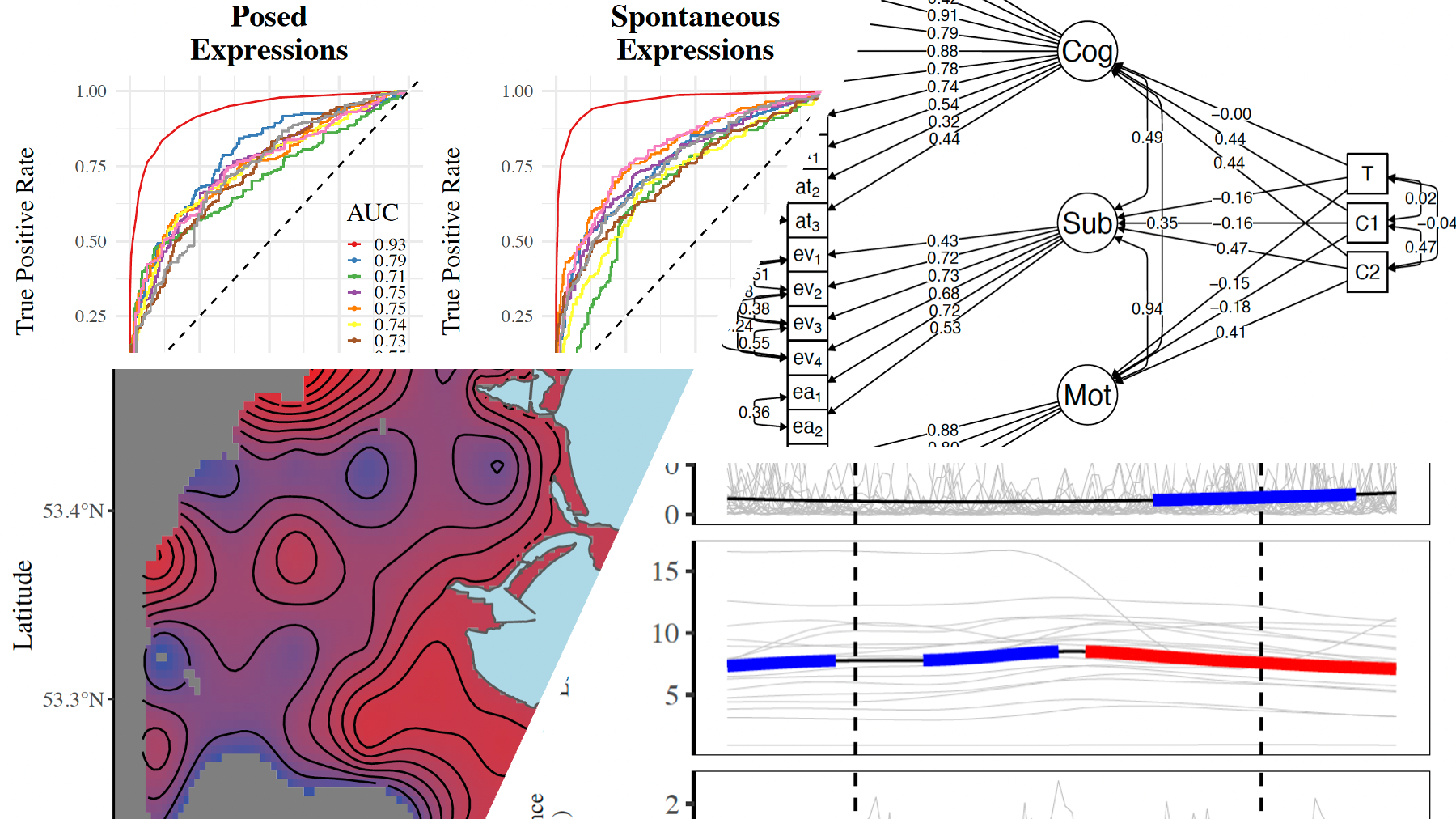
Dr. Damien Dupré is an Assistant Professor of Business Research Methods at Dublin City University's Business School. He holds a Ph.D. in Social and Experimental Psychology from Université Grenoble-Alpes, France. His research focuses on psycho-physiological responses in real-world settings, particularly through the analysis of facial expressions and wearable device data. He co-developed the DynEmo database for dynamic facial emotion analysis and collaborated with institutions like Queen’s University, Sensum Ltd, and UCD’s Insight Centre. His expertise includes multivariate time series analysis for machine learning applications in emotion recognition and human-computer interaction. Education: Ph.D. in Social and Experimental Psychology (Université Grenoble-Alpes), postdoctoral work involving physiological measurements of marathon runners. Key collaborations include projects with Sensum Ltd (emotion sensors), Queen’s University (facial expression analysis), and Ixiade (emotional UX evaluation). Research interests span emotion statistics, wearable devices, and physiological computing. Recent work emphasizes automatic facial expression recognition systems and their validation through dynamic datasets. His publications address challenges in emotion detection accuracy across commercial classifiers and the impact of facial interface designs on emotional perception. Teaching responsibilities include Data Analytics for Business, Quantitative Research Methods, and Strategic Consultancy modules. He leads the DCU R Stats Club and actively contributes to open-source tools for data science education. Current projects include the Motoklik–AI-PoC initiative as DCU PI. Professional engagement includes Mastodon activity promoting RStats pedagogy and GitHub repositories showcasing code for emotion analysis (e.g., machine_challenge repo). His work bridges psychological theory, technological innovation, and business analytics applications.
Stephen Madden is Senior Lecturer in Computational Biology at RCSI's Data Science Centre, holding a PhD from University College Dublin. His research applies bioinformatics and statistical approaches to cancer genomics and precision medicine. Key research areas include multi-omics integration in breast cancer, therapeutic target discovery, and predictive modeling of treatment response. Recent work examines extracellular vesicles in neonatal development, immunothrombosis mechanisms in hematologic malignancies, and implantable sensor technologies. Publications demonstrate expertise in proteomic profiling, preclinical model development, and computational method implementation. Teaching focuses on programming, transcriptomics, and genomics for biomedical students. He serves as Deputy Director for the MSc in Technologies and Analytics in Precision Medicine and supervises PhD projects in cancer systems biology.
Affiliations & Roles Dr. Conor Brennan is an Associate Professor in the School of Electronic Engineering at Dublin City University. His roles include academic leadership, research supervision, and teaching in propagation modeling, RF simulation, and computational methods. He is affiliated with the Stokes and FutureTech buildings and collaborates internationally, including with Wuhan University for joint Master's programs. Research Interests His work focuses on wave propagation modeling across rural, urban, and indoor environments, emphasizing computational electromagnetics, rough surface scattering, and metamaterial design. Innovations include full-wave models using integral equations and acceleration techniques like the Fast Far Field Algorithm (FAFFA) and Improved Tabulated Interaction Method (I-TIM). Urban studies involve vehicular channels and millimeter-wave systems, while indoor research explores volume integral equation methods and seamless localization (SEAMLOC). Teaching Brennan teaches advanced modules such as Propagation and Channel Modelling , , and engineering mathematics courses. His pedagogical contributions include developing technology-enhanced assessments (TeRMEd) and the UniDoodle student response system. Grants & Collaborations Research is supported by grants in wireless communication, sensor networks, and metamaterials. Collaborations span academia and industry, with notable projects in vegetation THz propagation, plant monitoring nanosensors, and curriculum design for telecommunication engineering. Labs & Teams He leads a dynamic team including graduates (e.g., Patrick Bradley, Marie Mullen) and current researchers (Vinh Pham, Ian Kavanagh). The group utilizes advanced simulation tools and experimental setups for propagation analysis, localization, and materials testing.