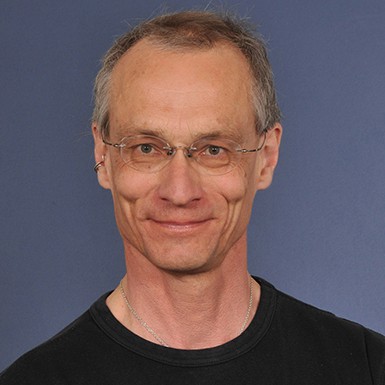
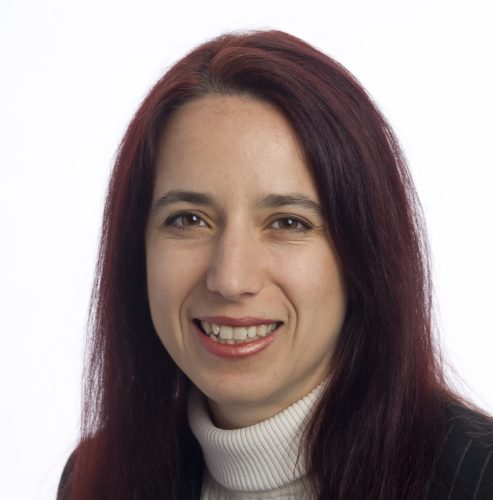
Kasper Green Larsen is a Professor in the Department of Computer Science at Aarhus University. His research focuses on theoretical computer science, machine learning, algorithms, and data structures. He has made significant contributions to boosting algorithms, PAC learning theory, and computational geometry. His work often bridges algorithm design with complexity theory, addressing challenges in optimization, memory efficiency, and lower bounds analysis. Key research areas include: Algorithmic Learning Theory (e.g., boosting, bagging, and PAC learners) Data Structure Design (e.g., invertible Bloom tables, succinct representations) Computational Complexity (e.g., lower bounds for dynamic and oblivious algorithms) Geometric Algorithms (e.g., hierarchical searching, range queries) Recent publications emphasize foundational advancements in learning theory (e.g., optimal weak-to-strong learning) and data efficiency (e.g., memory-reduced Bloom filters). His work frequently appears in top conferences like IJCAI, ICALP, and SODA, reflecting rigorous theoretical contributions with practical implications.
Henrik Jeldtoft Jensen is a Professor of Mathematical Physics and leads the Centre for Complexity Science at Imperial College London. His work spans multiple disciplines, focusing on the statistical mechanics of complex systems, with applications in physics, biology, neuroscience, and finance. Professor, Mathematical Physics Leader, Centre for Complexity Science Institution: Imperial College London His research interests lie at the intersection of theoretical physics and complex systems. He is best known for developing the Tangled Nature Model of evolving ecosystems, which has been extended into financial modeling through the Tangled Finance approach. His work in brain dynamics involves analyzing fMRI and EEG data using tools from statistical physics. He has made significant contributions to self-organized criticality and stochastic dynamics of complex systems, particularly in condensed matter and evolutionary contexts. The recent publications reflect a strong trend toward interdisciplinary complexity science, integrating concepts from physics, biology, economics, and neuroscience. Keywords across these works include complexity, statistical mechanics, dynamical systems, and network theory, with subfields ranging from neural avalanches to financial instability and biodiversity modeling. Henrik Jensen is the author of two influential books: Self-Organized Criticality and Stochastic Dynamics of Complex Systems (with Paolo Sibani), which have been widely cited across disciplines. He has supervised numerous PhD and postdoctoral researchers through the Centre for Complexity Science, though specific names are not listed. His research has been supported by grants from UK research councils and international collaborations, particularly in interdisciplinary complexity projects. He is affiliated with the Centre for Complexity Science, a multidisciplinary research hub at Imperial College London that brings together physicists, mathematicians, biologists, and social scientists to study complex adaptive systems.
Filipe Rodrigues is an Associate Professor in the Department of Technology, Management and Economics at the Technical University of Denmark (DTU), where he conducts research in intelligent transportation systems and transportation science. His work integrates machine learning, artificial intelligence, and behavioral modeling to improve urban mobility and public transport systems. His research interests lie at the intersection of machine learning , transportation science , and behavioral modeling . He specializes in discrete choice modeling , reinforcement learning , graph neural networks , and smart card data analytics . His work contributes to sustainable urban mobility, leveraging big data and AI for proactive traffic control and public transport optimization. The recent publications highlight a strong trend toward integrating AI and behavioral science in transportation. Key themes include ride-sourcing driver behavior , public transport trip validation , autonomous fleet control , and causal machine learning . These works predominantly employ deep learning , Bayesian modeling , and offline reinforcement learning techniques, often applied to real-world datasets from Denmark and beyond. Scientific Contributions: Active contributor to journals like Transportation Research Part C and Journal of Choice Modelling . Supervises multiple PhD projects on AI in transportation and causal modeling. Regular presenter at major transportation and AI conferences. Advising and Grants: Filipe Rodrigues is the main or co-supervisor of several PhD students including O. B. Lassen, F. M. F. Santos, A. Nguyen, and X. Wu. He leads and participates in funded research projects such as 'Proactive traffic control through AI and Big Data' and 'Causal Graph Neural Networks for machine learning meta-modelling', indicating sustained grant support. His collaborative network spans institutions in Europe and beyond. Labs and Teams: He is part of the Intelligent Transportation Systems research group at DTU, collaborating closely with researchers like F. C. Pereira and C. M. L. Azevedo. The team focuses on data-driven mobility solutions, combining simulation, machine learning, and behavioral insights.
Martin Skovgaard Andersen is an Associate Professor in the Department of Applied Mathematics and Computer Science at the Technical University of Denmark (DTU), where he specializes in Scientific Computing. His research integrates numerical methods, optimization, and machine learning to solve complex computational problems in engineering and data science. Education: Ph.D., University of California, Los Angeles (2006–2011) M.Sc., Aalborg Universitet (2001–2006) Postdoc, Linköping University, Sweden (2011–2012) His research interests include optimization (particularly conic and stochastic programming), numerical algorithms, signal processing, system identification, and fast solvers for integral equations. He works extensively on matrix analysis, regularization, and low-rank approximations, contributing to both theoretical and applied advancements in computational mathematics. The recent publications highlight a strong trend in developing efficient numerical algorithms for large-scale optimization and solving integral equations. His work emphasizes preconditioning, matrix truncation, and Bayesian inversion, with applications in electromagnetics, structural health monitoring, and network identification. There is a consistent focus on improving computational efficiency and scalability of solvers. Scientific Awards: No specific awards mentioned in the provided text. Andersen actively supervises PhD students and leads multiple research projects, including those on non-symmetric conic optimization, data-sparse models, and fast direct solvers. He is the Principal Investigator (PI) on projects related to physics-informed structural health assessment. His collaborative network spans Denmark and international institutions, particularly in computational mathematics and engineering. Labs and Research Teams: He is affiliated with the Scientific Computing section at DTU, which focuses on high-performance computing, numerical algorithms, and mathematical modeling. His work is embedded in a collaborative environment involving researchers in optimization, control theory, and computational electromagnetics.
Katja Hose is a Professor in the Department of Computer Science at Aalborg University's Technical Faculty of IT and Design. Her research focuses on Data, Knowledge and Web Engineering with specializations in AI for the People and Artificial Intelligence and Machine Learning. She maintains an active research profile with numerous publications and projects. Department of Computer Science Technical Faculty of IT and Design Aalborg University Research areas: Query Processing, Semantic Web, Linked Data, Knowledge Graphs Professor Hose's research interests center on knowledge representation, semantic web technologies, and AI applications. Her work spans from theoretical database systems to practical applications in healthcare, environmental assessment, and microbial data analysis. She has made significant contributions to knowledge graphs, large language models, and semantic search technologies, with particular emphasis on addressing hallucinations in AI systems and improving table search in semantic data lakes. Her recent publications demonstrate a strong trend toward integrating knowledge graphs with large language models, developing evaluation frameworks for AI hallucinations, and applying data science to diverse domains including healthcare and environmental sustainability. Her research bridges theoretical computer science with practical applications that address real-world challenges. NLP4KGC Best Paper Award (2023) ESWC 2023 Best Demo Award (2023) 2020 AMiner AI 2000 Most Influential Scholars AIME 2020 Best Paper Nomination (2020) ESWC 2019 Best Demo Award Nomination (2019) Professor Hose leads multiple significant research projects including ARISTOTLE (AI for clinical risk assessment), DarkScience (microbial data analysis), and the Poul Due Jensen Professorate in Big Data and AI. She has supervised numerous PhD students and collaborates extensively across disciplines, particularly in healthcare applications of AI and environmental assessment technologies. Her research has attracted substantial funding from sources like Villum Fonden and Danish E-infrastructure Cooperation. She is actively involved in several interdisciplinary research teams, including collaborations with microbiologists on microbial dark matter projects and with environmental scientists on digital environmental assessment systems. Her work on the ARISTOTLE project demonstrates strong connections between AI research and clinical applications, while her DarkScience project bridges computer science with microbiology.
Chenjuan Guo is an Associate Professor at the Department of Computer Science, Aalborg University, within The Technical Faculty of IT and Design. She is affiliated with the Data Engineering, Science and Systems group and the AI for the People initiative, and is part of the Daisy - Center for Data-intensive Systems. Her research focuses on machine learning, data engineering, spatio-temporal data analysis, and time series forecasting. Key projects include the Villum Foundation-funded 'Explainable AI for Complex Microbial Community Interactions and Predictions' (2021-2024) and the Astra project on time series analytics in spatial networks (2018-2021). Her research interests span representation learning, autoencoders, path representation, outlier detection, trajectory data analysis, and time series modeling. She has supervised 3 PhD students and contributed to over 60 publications, with a recent emphasis on transformer-based forecasting, neural architecture search, and continuous learning frameworks for spatio-temporal data. Her work bridges theoretical advancements with practical applications in environmental science, cloud computing, and urban mobility systems. Key achievements include developing frameworks like AutoCTS++ for automated time series forecasting and LightGTS for lightweight models. She actively collaborates internationally, contributing to conferences like ECML PKDD and CVPR. Her research is supported by grants from the Villum Foundation and other institutions.
Rasmus Waagepetersen is a Professor in the Department of Mathematical Sciences at Aalborg University, affiliated with The Faculty of Engineering and Science. His research focuses on spatial statistics, quantitative genetics, and statistical methodology for spatial point processes. He leads and participates in interdisciplinary projects such as urbanLab (spatial data analysis for urban planning) and studies on microbiome interactions in agricultural systems. Key research areas include spatial point processes, Markov chain Monte Carlo methods, and statistical inference for complex ecological and biomedical data. His work frequently involves collaborations with environmental and biological scientists, as seen in projects analyzing root microbiota assemblies in legumes and climate data for building simulations. Waagepetersen has contributed to methodological advancements in spatial statistics, including goodness-of-fit tests, likelihood-based inference for log Gaussian Cox processes, and quasi-likelihood approaches for case-control point pattern data. His research has been supported by grants from institutions like the Villum Foundation. Key Projects: urbanLab, Klimadata til fugtsimuleringer, Nod factor signaling in plant microbiota. Grants: Multiple projects funded by the Villum Foundation and Danish research councils. His recent publications address topics such as space-time point processes, microbiome data analysis, and statistical modeling in education. Waagepetersen maintains an active research group and collaborates internationally on both theoretical and applied statistical problems.
Professor Eigil Kaas is affiliated with the Niels Bohr Institute at the University of Copenhagen . His work spans climate dynamics , numerical weather prediction (NWP) , and atmospheric modeling . As former Section Head of Climate and Computational Geophysics , he leads research on climate-chemistry coupling and sea ice impacts. Education : MSc (1987) and PhD (1993) in Meteorology from University of Copenhagen Research Focus : Climate dynamics and physics Numerical methods in atmospheric models Machine learning for weather prediction Arctic sea ice-climate interactions Thunderstorm electricity and radiation Coupled atmosphere-ocean modeling Article Trends : Recent work combines neural networks with radiative transfer optimization Focus on storm dynamics and gamma-ray flashes Extreme precipitation modeling under climate change Pioneering tidal flow studies in Faroe Island fjords Teaching Legacy : Instructor of Atmospheric Physics and Dynamical Meteorology courses Developed zonally averaged climate model for educational use Mentored 12 PhD/MSc students with DMI/ECMWF collaborations Professional Roles : Chairman of BFI Group 28 (Geosciences & Climate) Scientific Advisory Committee member at ECMWF Project lead in EU ENSEMBLES and PEGASOS initiatives
Haeun Yu is a PhD Fellow at the Department of Computer Science, University of Copenhagen, affiliated with the Natural Language Processing and Pioneer AI sections. Her research focuses on language models, retrieval-augmented generation, and model interpretability within artificial intelligence and natural language processing. Key Research Themes: Context utilization in generative AI, knowledge conflicts in QA systems, parametric knowledge attribution. Collaborations: Engages in interdisciplinary projects with researchers in NLP, machine learning, and computer vision. Publications: Recent work addresses dynamic QA systems and parametric knowledge attribution in ACL and EMNLP conferences.
Izabela Ewa Nielsen is a Professor at Aalborg University's Department of Materials and Production under The Faculty of Engineering and Science. Her research focuses on artificial intelligence applications in operations research, unmanned aerial vehicles (UAVs), genetic algorithms, and mobile robotics. She holds a degree from Warsaw University of Technology (25 Oct 2025). Research Interests: Her work integrates AI with logistics optimization, health data analysis, and sustainable supply chains. Notable projects include the EU-funded 'Operational Reliability Management System (ORMS)' and 'UAWORLD', exploring UAVs in industrial settings. Projects & Collaborations: Leading ORMS (2016-2019) to enhance operational reliability through AI-driven solutions. Contributing to TAPAS (2010-2014), advancing robotics in factory automation. Co-developing ValuePole (2008-2011) for SME performance optimization. Advising & Grants: Supervised projects such as the EU classification methodology study (2022-2023) and contributed to over 6 major research initiatives. Her work frequently involves interdisciplinary teams and industry partnerships. Labs & Teams: Active in AI for Operations Research labs, collaborating with robotics and logistics experts. Her group focuses on real-world applications of autonomous systems in manufacturing and healthcare.
Line Katrine Harder Clemmensen is a Professor at the Department of Mathematical Sciences, University of Copenhagen. She specializes in statistical modeling, machine learning, and AI, with emphasis on low resource domains, explainability, and fairness in health/life science applications. She co-founded Interhuman AI as Chief Scientific Officer and maintains an active research program across multiple disciplines. Statistical Modeling Machine Learning Explainable AI Fairness in AI Health/Life Science Applications Her recent publications (2024-2025) span computational biology, neuroscience, environmental science, and emotion recognition. Notable collaborations include interdisciplinary work in pediatric OCD analysis, fungal microbiome prediction, and facial emotion recognition systems. She actively explores fairness and scalability in AI models. Dr. Clemmensen holds 60 publications with significant impact across computational biology (40+ citations), neuroscience (68+ readers), and machine learning (20+ Scopus citations). She has been referenced in news outlets, blogged, and discussed across multiple social platforms.
Irena Vodenska is Professor of Finance and Director of Finance Programs at Boston University’s Metropolitan College, Department of Administrative Sciences. She holds a PhD in statistical finance and an MA in economics from Boston University, an MBA from Vanderbilt University, and a BS in computer information systems from the University of Belgrade. She is also a Chartered Financial Analyst (CFA) charter holder. Her research is at the intersection of finance, complexity science, and artificial intelligence, focusing on systemic risk modeling, ESG investments, and financial network dynamics. She has led major interdisciplinary research projects funded by the National Science Foundation, the European Commission, and the U.S. Army Research Office. PhD, Statistical Finance – Boston University MA, Economics – Boston University MBA – Owen Graduate School of Management, Vanderbilt University BS, Computer Information Systems – University of Belgrade Dr. Vodenska’s research interests include network theory in finance, systemic risk propagation, AI-powered ESG analysis, cryptocurrency price forecasting, and financial regulation. She employs big data, machine learning, and natural language processing to analyze financial news, market dynamics, and corporate sustainability. Her work investigates how climate disinformation spreads via social networks and influences public policy and governance. The recent articles highlight a consistent focus on modeling financial and economic systems using network science and AI. Trends include systemic stress testing, sentiment analysis in financial markets, cascading failures, and the interplay between macroeconomic indicators and financial networks. Her work spans econophysics, behavioral finance, public health economics, and ethical AI in fintech. National Science Foundation (NSF) research grant (2023) NSF EAGER Award (2014–2015) European Commission FET Open Grant (2012–2014) U.S. Army Research Office (ARO) Grant (2020–2021) MEXT Post-K Computer Grant, Japan (2016–2019) Alexander Hamilton Fulbright Fellowship (1994) Owen Graduate School Fellowship (1995–1996) Dr. Vodenska teaches core finance courses such as Investment Analysis and Portfolio Management, Derivatives Securities, and Financial Regulation and Ethics. She co-developed the MET AD 678 course with Professor Tamar Frankel from BU Law, emphasizing real-world case studies and ethical decision-making. Her research grants have supported innovative work in systemic risk modeling, AI for ESG, and financial network stability. She is actively involved in mentoring, conference organization, and editorial roles in leading journals. She is a key organizer of the International School and Conference on Network Science (NetSci) and the Big Data in Economics, Science, and Technology (BEST) Conference. Her lab and research team focus on complexity in financial systems, bringing together economists, physicists, computer scientists, and data analysts to study global financial stability and sustainability.
Shuai Zhao is an Assistant Professor at the AAU Energy Department, Faculty of Engineering and Science, Aalborg University. His research focuses on applying machine learning and artificial intelligence techniques to enhance reliability and condition monitoring in power electronic systems, with specific interests in lifetime estimation, fault diagnosis, and health management of critical components like capacitors and semiconductor devices. Institution: Aalborg University School: Faculty of Engineering and Science Department: AAU Energy Email: szh@energy.aau.dk His research spans multiple domains including: Physics-informed machine learning for power converter systems Remaining useful life prediction with hybrid Bayesian deep learning Thermal transient analysis and stress emulation methods IoT-enabled monitoring schemes for semiconductor devices Neural network applications in lithium-ion battery prognostics Recent publications show a strong trend toward integrating domain-specific physics with machine learning frameworks to address real-world challenges in: Power electronics reliability under operational stress Anomaly detection in multivariate time-series data Robust fault diagnosis for railway traction systems Temperature estimation in electric vehicle motors Imbalanced data handling in diagnostic systems Capacitance degradation modeling under environmental factors Current projects demonstrate collaboration with leading institutions on: AI-assisted long-term maintenance strategies Physics-informed neural network architectures Smart agricultural monitoring systems via IoT platforms Advanced particle filter methods for life prediction
Mojtaba Zarei is a researcher at the Department of Clinical Research, Faculty of Health Sciences, University of Southern Denmark, with additional affiliations at Odense University Hospital (OUH) and Karolinska Institutet (KI). His primary research unit is the Neurology Research Unit in Odense, focusing on advanced neuroimaging techniques and their applications in neurological and sleep disorders. Dr. Zarei's research spans multiple domains within neuroscience, with particular expertise in Positron Emission Tomography (PET), Diffusion Tensor Imaging (DTI), and cognitive function assessment. His work frequently addresses Alzheimer's Disease, Parkinson's Disease, and insomnia disorders, utilizing both clinical and computational approaches. His fingerprint analysis shows strong activity in neuroscience (100% for PET), diffusion tensor imaging (66%), cognitive function (45%), and Alzheimer's Disease (40%). His recent publications reveal a clear trajectory toward integrating multimodal imaging techniques with machine learning approaches for improved diagnosis and understanding of neurological conditions. The work on OPETIA (Odense-Oxford PET Image Analysis) demonstrates his contribution to developing standardized tools for neuroimaging analysis. His research increasingly bridges computational methods with clinical neuroscience, as evidenced by his work on image stitching algorithms and machine learning applications for insomnia classification. Dr. Zarei actively collaborates with researchers across multiple institutions, with notable external collaborations visible on the international network map. His work has been mentioned by peer review sites, picked up by news outlets, and shared across social media platforms, indicating growing impact in his field. Within his research unit of Neurology in Odense, Dr. Zarei appears to be part of a multidisciplinary team working at the intersection of clinical neurology, advanced imaging, and computational analysis, contributing to both methodological development and clinical applications of neuroimaging techniques.
Helle Sørensen is a Professor at the Department of Mathematical Sciences, University of Copenhagen. Her work bridges theoretical and applied statistics with interdisciplinary applications in biological and environmental sciences. Education : BSc (1993), MSc (1997), PhD (2000) in Statistics from University of Copenhagen. Employment : Professor (2018–present), Head of Data Science Lab (2018–2021), Professor MSO and head of Laboratory for Applied Statistics (2013–2018), Associate/Assistant Professor across multiple departments (2000–2013). Research Interests focus on: Functional data analysis Statistical inference for dependent data and stochastic processes Applications in biology, agriculture, and food science Her recent publications highlight statistical methodologies applied to: Enzymatic degradation of plant material Multivariate analysis in metabolic studies Random forest efficiency in metric spaces Quantile regression for longitudinal data Child food texture preferences and insect acceptance Teaching includes courses in basic probability, statistical theory, and applied statistics for bio/life sciences students. She supervises BSc, MSc, and PhD students in Statistics with co-supervision roles in interdisciplinary fields.