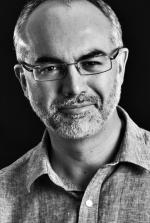
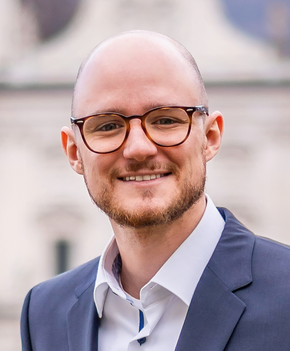
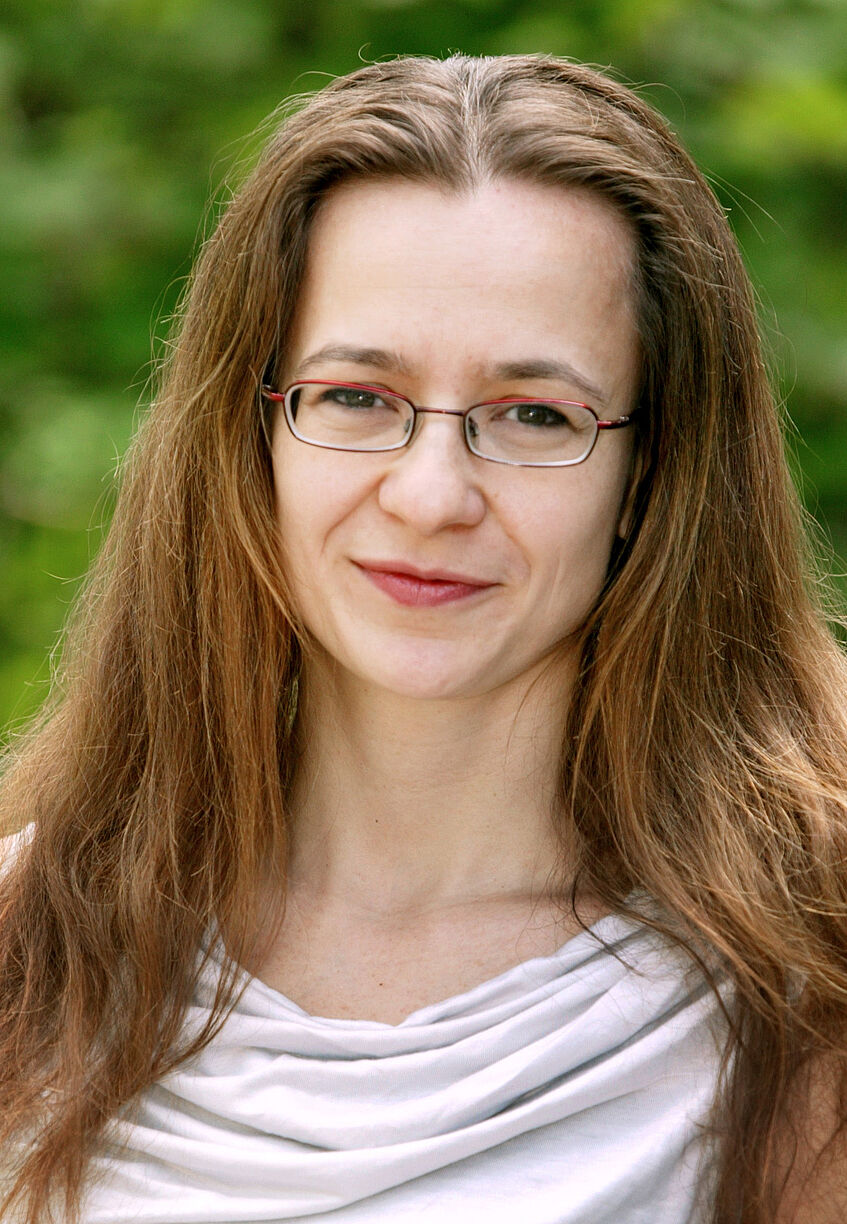
Manuela Waldner is an Associate Professor in the Department of Computer Graphics at Technische Universität Wien (TU Wien). Her research focuses on visual data exploration, human-computer interaction, and immersive analytics. She leads projects like 'Visual Analytics and Computer Vision meet Cultural Heritage' (FWF doc.funds.connect) and 'Joint Human-Machine Data Exploration' (FWF). She teaches courses including 'Computer Graphics', 'Information Visualization', and 'Visual Research Methods'. Awards include the Best Paper Award at EuroVA 2024. Her work spans medical visualization, VR navigation, and bias analysis in AI models. She advises numerous PhD and Master's students, contributing to 43+ publications.
Arcadi Navarro is a Full Professor of Genetics at Universitat Pompeu Fabra (UPF) , Spain, and an ICREA Research Professor (currently on leave). He leads the Evolutionary Genomics group within the Evolutionary Biology Unit of UPF's Department of Experimental and Health Sciences, and previously directed the department (2013-2015) and the Population Genomics Node of the Spanish National Institute for Bioinformatics (INB). Education : PhD in Biology from Universitat Autònoma de Barcelona (completed after postdoctoral work at University of Edinburgh) Research Focus : Combines genome evolution, computational genomics, and evolutionary medicine to study human genome diversity and complex trait architecture Recent Work Trends : His 2010-2017 publications span evolutionary medicine applications in GWAS analysis, ancient DNA studies, EBV genomics, and structural variation in great apes. Articles highlight interdisciplinary approaches integrating machine learning and bioinformatics with evolutionary theory. Awards : Currently serves as Secretary of State for Universities and Research of the Ministry of Business and Knowledge in Catalonia Leadership : Coordinates the Barcelona Knowledge Hub and European Genome-phenome Archive (EGA) collaboration with EBI. Mentors postdoctoral and doctoral researchers while maintaining teaching responsibilities.
Nikolaus Umlauf is an Associate Professor at the Department of Statistics, University of Innsbruck. He specializes in Bayesian distributional regression, structured additive models, and spatiotemporal analysis, with applications in public health, climate science, and real estate valuation.
Lukas Sablica, Ph.D., is a researcher affiliated with the Department of Statistics and Mathematics at WU Vienna University of Economics and Business. His work focuses on statistical methodology, computational statistics, and software development for statistical analysis. He is particularly known for contributions to probabilistic modeling, distribution sampling techniques, and the development of R packages such as circlus , mistr , and watson , which support advanced statistical analyses including circular/spherical clustering, mixture distributions, and Watson distribution modeling. Research interests include mathematical analysis of special functions, algorithmic approaches to distribution sampling, and applications of machine learning in environmental sensor data analysis. His interdisciplinary work bridges theoretical statistics with practical software solutions. Key contributions include methods for efficient sampling from complex distributions (e.g., PKBD, Watson), bounds analysis for Kummer’s functions, and machine learning models for estimating resource usage (e.g., EcoShower project). Collaborations involve experts in environmental science, computer science, and applied mathematics.
Mathew Herrnegger is a Senior Scientist at the Institute of Hydrology and Water Resources Management (HyWa) at the University of Natural Resources and Life Sciences, Vienna (BOKU). He completed his doctorate in hydrology after studying Environmental Engineering and Water Resources Management. His research focuses on hydrological modeling, integration of remote sensing data, artificial intelligence, and machine learning in water management applications, climate change impacts on water resources, and big data analytics. Primary research areas: Hydrology, Water Resources Management, Climate Change, Artificial Intelligence, Remote Sensing, Machine Learning Dr. Herrnegger leads research groups since 2013 and has published extensively on hydrology and water management, particularly in alpine and East African contexts. His work includes flood risk assessment, groundwater recharge modeling, and soil erosion studies using advanced statistical and machine learning techniques. He actively participates in international conferences and collaborates with institutions in Kenya, Uganda, and Austria. His recent article analyses span from 2023 to 2025, covering glacier melt contributions to runoff under climate change, water quality degradation mapping, and extreme flood estimation using synthetic weather data. Key subtopics include snow-hydrology coupling, transboundary river basin management, and AI applications in stream temperature prediction. Dr. Herrnegger contributes to university teaching and supervises student theses while engaging in knowledge transfer through GIS training workshops in Uganda and Kenya. He maintains active roles in international hydrological conferences and local Austrian climate change initiatives.
Michael Pfarrhofer is an Assistant Professor at WU Vienna University of Economics and Business, Department of Economics, specializing in econometrics and macroeconomics. He previously held positions at the Universities of Vienna and Salzburg and contributes to the European Commission’s Joint Research Centre (JRC) in Ispra. His research focuses on Bayesian econometrics, time series analysis, forecasting, and empirical macroeconomics, with applications to business cycles and policy evaluation. Current Role: Tenure-track Assistant Professor Primary Affiliation: WU Vienna University of Economics and Business Collaborations: JRC (European Commission) Research interests include macroeconomic forecasting using advanced Bayesian methods, nonlinear time series analysis, and the impact of climate shocks on financial markets. His work bridges econometric theory and empirical applications, often involving large datasets and machine learning techniques. Publications span topics like tail-risk prediction, international financial spillovers, and nowcasting methodologies. He teaches courses such as Econometrics II and Economic Modeling, emphasizing practical applications of econometric tools. While no specific scientific awards are listed, his contributions to leading journals (e.g., Journal of Econometrics , Journal of Applied Econometrics ) highlight his scholarly impact. Advising and grant activities are not detailed in the provided texts, though his research often involves collaborative projects with institutions like the JRC.
Dr. Georgios (George) P. Georgiou is an Assistant Professor of Linguistics at the University of Nicosia , where he serves as Associate Head of the Department of Languages and Literature and Director of the Phonetic Lab . He was awarded the Cyprus Research Award – Young Researcher 2023 in Social Sciences and Humanities and elected a Fellow of the Young Academy of Europe (2024) . B.A. in Greek Philology (University of Cyprus, 2007–2011) M.A. in Education with distinction (University of Cyprus, 2011–2013) Ph.D. in Linguistics with distinction (University of Cyprus, 2014–2018) His research integrates experimental phonetics , language acquisition , communication disorders , and machine learning . He developed the Universal Perceptual Model (UPM) for speech perception and focuses on diagnosing neurological/communication disorders via speech elements. His recent work applies AI to classify speech patterns and identify language disorders. Article trends highlight crosslinguistic vowel classification , acoustic markers in speech disorders , and machine learning for diagnostic tools , with collaborations across Europe. He has secured grants exceeding €60,000, including projects on Developmental Language Disorder and Neurological Speech Diagnosis . Scientific accolades include: Cyprus Research Award – Young Researcher 2023 Fellow, Young Academy of Europe (2024) Seal of Excellence, Marie Skłodowska-Curie Action (2021) Georgiou has received research grants as Principal Investigator, including postdoctoral fellowships at RUDN University and Cyprus University of Technology, and a €60,000 grant from the Cyprus Research and Innovation Foundation (2024–2026). He mentors through PhD Research Methodology courses and leads the Phonetic Lab , a hub for computational linguistics and disorder diagnosis.
Günther Eibl is a Senior Lecturer and Senior Researcher at the Salzburg University of Applied Sciences , affiliated with the Department Information Technologies and Digitalisation . He serves as Head of Research Group and Deputy Head of the Center for Secure Energy Informatics , combining 50% teaching and 50% research responsibilities. Education: MSc in Mathematics (Numerics Thesis) MSc in Physics (Plasma Physics Simulation Thesis) PhD in Machine Learning (Multiclass Boosting Thesis) Research Interests focus on Privacy in Smart Grids , including: Privacy Analyses – Using machine learning and statistics to extract information from load profiles. Privacy-Enhancing Technologies (PETs) – Historically focused on homomorphic encryption, masking, differential privacy, and wavelet analysis; current research emphasizes privacy-preserving price calculation and proving privacy properties of protocols. Scientific Contributions span 15+ years, with recent work (2025–2021) addressing: Privacy threat modeling for renewable energy communities Smart meter data anonymization Blockchain-based secure aggregation Game-theoretic privacy proofs Differential privacy in load forecasting Intrusion detection in power grids Skills include cryptography, data mining, and energy informatics, with a strong emphasis on visualization and applied statistics . He teaches applied mathematics , applied statistics , and data mining in bachelor and master programs.
Philipp Gersing is a researcher at the Department of Statistics and Operations Research, University of Vienna. His academic work focuses on econometrics, time series analysis, and statistical modeling with applications in macroeconomic and financial data. He teaches courses in mathematics and econometrics at both undergraduate and graduate levels. Current courses: Mathematics 1, Introductory Econometrics (MA) Advanced courses: Applied Econometrics 1 & 2, Seminar in Empirical Finance and Financial Econometrics (MA) His research specifically addresses challenges in generalized dynamic factor models, including identifiability conditions, distributed lag approaches, and the resolution of rotational indeterminacy issues. Recent work explores the canonical decomposition of factor models and the prevalence of weak factors in empirical applications. Publications demonstrate consistent contributions to factor modeling theory, with applications spanning macroeconometric analysis and financial data processing. Key themes include mixed-frequency data integration, non-stationary time series handling, and structural identification in multivariate systems.
Christoph Fuchs is a Professor at the Department of Marketing and International Business within the School of Business, Economics and Statistics at the University of Vienna. He serves as Director of Studies for Business, Economics and Statistics and Head of Department of Marketing and International Business. His research focuses on marketing, consumer behavior, digital transformation, and user-driven innovation.
Andreas Steininger is an Associate Professor in the Department of Embedded Computing Systems at TU Wien. His primary research focuses on fault-tolerant computing, asynchronous logic, and dependable systems. He leads the Embedded Computing Systems group and serves as Director of the Curriculum Commission for Computer Engineering. His work emphasizes resilient hardware architectures, radiation effects in microelectronics, and timing domain interfacing. He has contributed to numerous projects with industry partners like Intel and TTTech Auto AG, addressing challenges in trustworthy autonomous systems and robust distributed algorithms. Key research interests include asynchronous circuits, clockless processors, and error detection mechanisms. He has over 50 publications in top-tier conferences and journals, including IEEE Transactions and ASYNC. Notable contributions include methodologies for mitigating single-event transients in QDI logic and fault-tolerant clock generation schemes. He teaches advanced courses in digital design, computer engineering, and scientific research methods. His projects span radiation-hardened ASIC design, metastability analysis in FPGAs, and secure IoT architectures. He actively collaborates with automotive and aerospace industries to develop solutions for embedded systems reliability. Recent work explores fault resilience in neural networks and energy-efficient asynchronous microprocessors.
Guilherme Maia de Oliveira Wood is a University Professor and head of the Neuropsychology/Neuroimaging department at the University of Graz, where he has been employed since 2011. His research focuses on developing high-tech tools for neuropsychological rehabilitation, clinically testing their efficacy, and understanding the mechanisms influencing neural plasticity. He is actively involved in the interdisciplinary Master's program 'Computational Social Systems' offered jointly by the University of Graz and Graz University of Technology. His educational background includes: Psychology studies at the Federal University of Minas Gerais (1994-1999), Brazil Doctorate in Psychology at RWTH Aachen (2001-2005), Germany Habilitation in Psychology at the University of Salzburg (2005-2011) Wood's research interests center on combining technological innovation with cognitive science, particularly in neuropsychology and neurofeedback applications. He investigates neural plasticity as the brain's ability to organize itself as a dynamic system, with special attention to psychosocial influences on treatments and rehabilitation. His work bridges technical neuroimaging approaches with ethical considerations regarding neurotechnologies. His recent publications demonstrate a strong interdisciplinary approach spanning neuroscience, psychology, data science, and ethics. The articles reveal consistent focus on methodological rigor in neuroimaging, cognitive mechanisms in learning and rehabilitation, and critical examination of psychosocial factors influencing scientific evidence interpretation. His work increasingly addresses the emotional embedding of scientific communication and placebo effects in neurofeedback research. Wood actively supervises master's students through the 'Computational Social Systems' program and offers thesis topics on brain aging, neurofeedback mechanisms, graph theory applications in neuroscience, and the relationship between motor learning and cognitive function. He leads an FWF-funded research project investigating brain plasticity through fMRI-based neurofeedback training. He is affiliated with several research initiatives including COLIBRI (Complexity of Life), Human Factor in Digital Transformation X, and Neurofeedback Research Graz. His laboratory employs multi-sequence MRI techniques including T1-weighted recordings, diffusion-weighted imaging, resting-state fMRI, and GABA spectroscopy to investigate changes in brain structure, function, and chemistry in response to neurofeedback training.
Prof. Birgit Rudloff is a Full Professor at the Institute for Statistics and Mathematics, Vienna University of Economics and Business (WU). She holds the title of Deputy Institute Chair and leads a research group focused on optimization and financial mathematics. Her work bridges dynamic programming, set-valued risk measures, and systemic risk analysis, with applications in finance and economics. Affiliations: Vienna Graduate School on Computational Optimization (VGSCO), FWF-funded projects. Education: Habilitation (2016), Ph.D. (2006) in Financial Mathematics, M.Sc. (2002). Research Interests: Multivariate dynamic programming, set-valued Bellman principle, time consistency in optimization, systemic risk measurement, and algorithm development for vector optimization. Her group explores financial risk modeling under transaction costs and dynamic game equilibria. Publications: Over 47 peer-reviewed articles in top journals (e.g., Operations Research, Mathematical Programming ). Recent work includes set-valued systemic risk measures and Nash equilibrium approximations in convex games. Grants: FWF (€1.8M), OeNB (€170k), NSF-funded research communities. Labs/Teams: Leads a team of 3 PostDocs and 2 PhD students, fostering cross-disciplinary projects with experts in optimization, dynamic systems, and computational finance.
Dr. Anatoli Romaniouk is a Scientific Staff member at the Institute for Astro- and Particle Physics at the University of Innsbruck, Austria, with primary affiliation to CERN as indicated by his email address. He is an active contributor to the ATLAS experiment at the Large Hadron Collider. His research spans multiple areas of experimental particle physics: Experimental Particle Physics Higgs Boson Physics Top Quark Physics Search for New Physics Beyond Standard Model Heavy Ion Physics Detector Performance and Instrumentation Dr. Romaniouk's recent publications demonstrate expertise in precision measurements of Higgs boson properties, top quark physics, searches for new particles, and heavy ion collision physics. His work frequently involves advanced analysis techniques including machine learning applications for parameter estimation in particle physics. His scientific contributions are primarily through the ATLAS collaboration, with publications in leading physics journals including Journal of High Energy Physics, Physical Review Letters, and European Physical Journal C. His research contributes to fundamental understanding of particle physics and the search for phenomena beyond the Standard Model.
Enes Bajrovic is a researcher affiliated with the Faculty of Computer Science, focusing on high-performance computing (HPC), big data processing, and performance portability. His work spans task-based parallelism, runtime systems, and optimization frameworks for heterogeneous architectures. He has contributed to major European projects like PEPPHER and AutoTune, which aim to advance HPC software tools and autotuning methodologies. His research emphasizes practical applications of parallel computing in domains such as mobile networks and scientific simulations. Education: Dipl.-Ing. Dr.techn., BSc in Computer Science His research interests include developing frameworks for compute- and data-intensive applications, leveraging technologies like Kubernetes, OpenCL, and Intel Xeon Phi coprocessors. He has authored numerous peer-reviewed publications on topics such as pipeline patterns, autotuning algorithms, and hybrid execution models. His work bridges theoretical advancements in parallel computing with real-world software engineering challenges. Bajrovic has collaborated on projects funded by the European Commission’s FP7 program, contributing to deliverables like runtime systems, tuning frameworks, and benchmarking tools. His research also addresses the integration of big data processing with HPC, particularly in telecommunications and distributed computing environments.