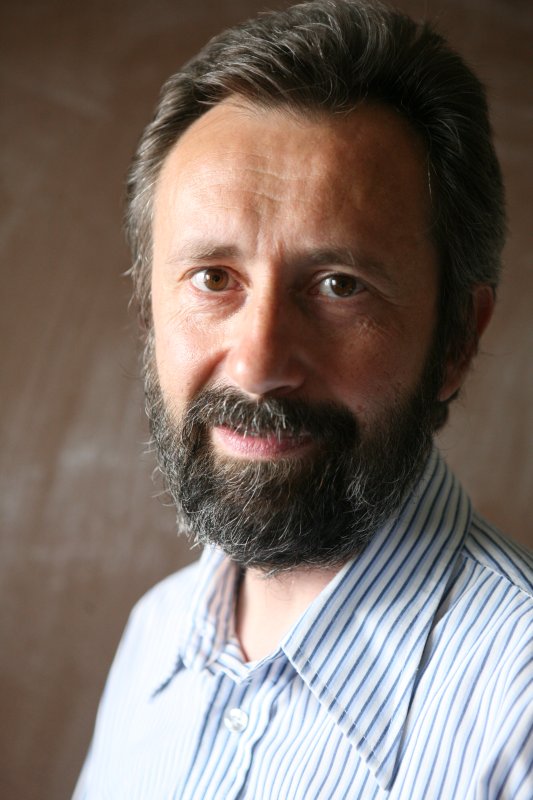
Nikolay Konstantinovich Vereshchagin is a Professor at Lomonosov Moscow State University's Faculty of Mechanics and Mathematics. He also holds affiliations with the Poncelet Lab (since 2005), Yandex School of Data Analysis (since 2007), and Higher School of Economics (since 2013). Education: Moscow State University (Faculty of Mechanics and Mathematics) Degrees: Ph.D. (1987), Doctor of Physical and Mathematical Sciences (1996), Full Professor (1997) His research focuses on computational complexity, Kolmogorov complexity, Shannon entropy, and tiling problems. His work connects algorithmic information theory with machine learning, cryptography, and theoretical computer science. Publications demonstrate expertise in algorithmic statistics, oracle complexity, and randomness foundations, with collaborations in theoretical computer science journals and conferences like CiE (Computability in Europe).
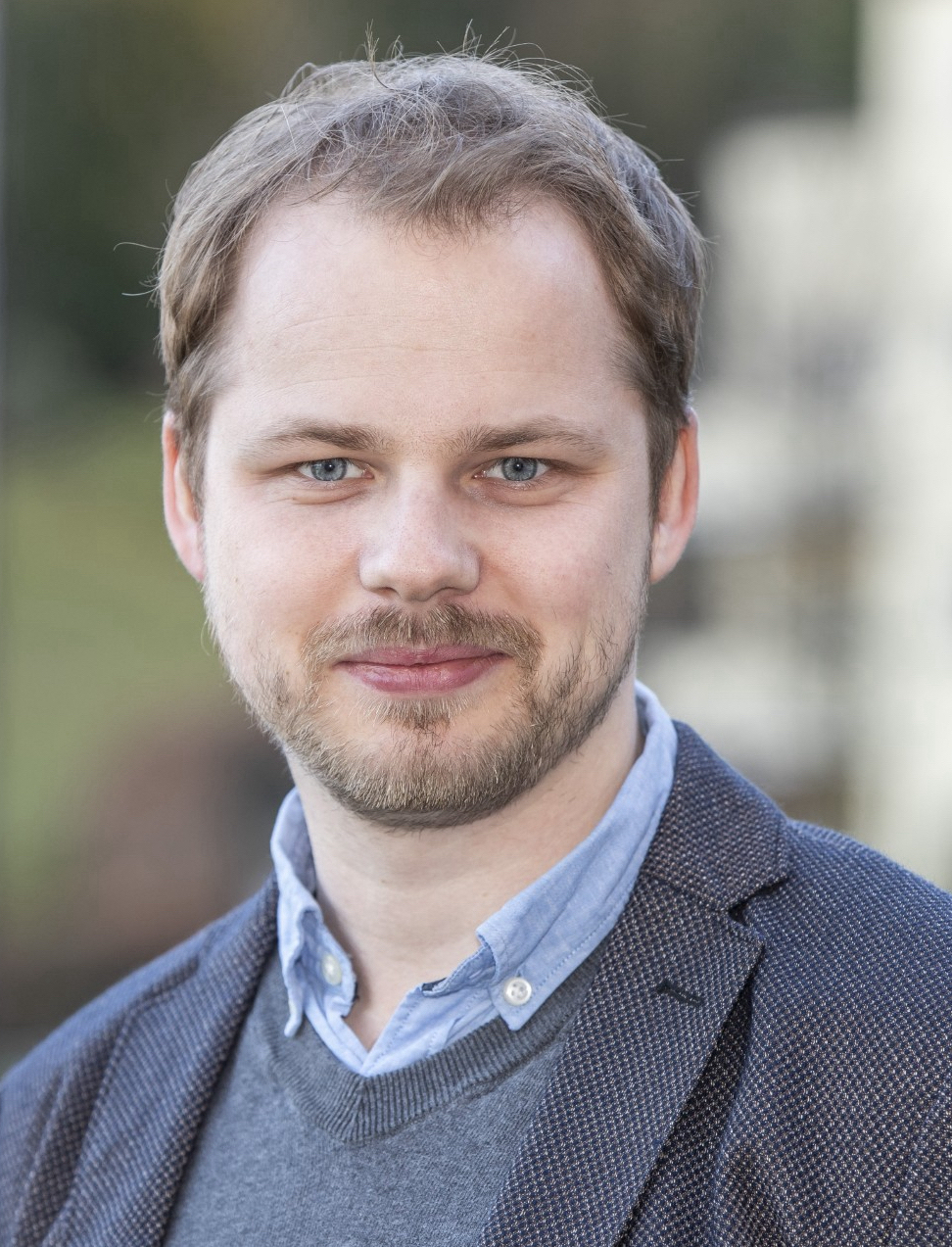
Jan Greve is a Researcher at the Institute for Statistics and Mathematics at Wirtschaftsuniversität Wien (Vienna University of Economics and Business). His research focuses on Bayesian statistical methods, including cluster analysis, mixture models, and metadata anonymization. He has contributed to both theoretical advancements and practical software tools in computational statistics. Greve's recent work includes developing novel approaches for partition structures in Bayesian nonparametrics and creating anonymization techniques for text corpora. He has authored/co-authored peer-reviewed articles and preprints, alongside software contributions like the 'fipp' package for Bayesian mixture models. He has actively participated in academic activities such as presenting on topics like 'Mixtures of finite mixtures and the telescoping sampler' at international conferences. His research bridges theoretical statistics with applied data science challenges.
Andrea M. Tonello is a Full Professor at the Institute of Networked and Embedded Systems, University of Klagenfurt, Austria, where he chairs the Embedded Communication Systems Lab. He previously held positions at the University of Udine, Italy, where he was an Associate Professor and founded the Wireless and Power Line Communication Lab (WiPLi Lab). His research spans power line communications, wireless systems, embedded communications, smart grids, and machine learning applications in signal processing. Doctor of Engineering, University of Padova (1996) Doctor of Research, Telecommunications, University of Padova (2003) His research interests focus on next-generation communication systems, including power line and wireless networks, signal processing, machine learning for communications, UAV systems, and smart grid technologies. He has made significant contributions to PLC channel modeling, full-duplex communications, and information-theoretic learning for communication systems. His work integrates theoretical innovation with practical implementation in real-world networks. The most recent publications highlight a strong trend toward integrating machine learning and information theory into communication systems, particularly in power line and wireless networks. Themes include f-divergence based classification, mutual information estimation, neural decoding (MIND), noise-robust receivers, and topology-aware machine learning for PLC quality prediction. There is also a notable focus on UAV control, full-duplex PLC, and digital pre-distortion techniques for high-speed converters. IET 2016 Premium Award Best Paper Award, ISPLC 2016 Best Student Paper Award, ISPLC 2016 Aerospace Best Paper Award, 2018 Best Paper Award, ISPLC 2021 Best PhD Dissertation Award, 2019 IEEE ComSoc Distinguished Lecturer (2018) Two Awards from IEEE ComSoc TC-PLC (2019) University of Klagenfurt Technology Scholarships (2019) Dr. Tonello has supervised numerous PhD and Master’s students, including notable advisees such as Nunzio A. Letizia, Davide Righini, and Babak Salamat. He has led over 10 institutional and multiple industrial research projects with a total funding exceeding 20 million euros. He played a key role in promoting international academic collaboration, including Erasmus agreements, joint PhD programs with INSA Rennes and Ecole Polytechnique de Grenoble, and a joint master’s program with the University of Klagenfurt. He founded and led the WiPLi Lab at the University of Udine, which received around 3 million euros in funding and involved over 60 researchers and students. He also founded WiTiKee s.r.l., a spin-off company specializing in PLC for smart grids. Currently, he chairs the Embedded Communication Systems Lab at the University of Klagenfurt, focusing on next-generation networked and embedded communication technologies.
Rizwan Bulbul is a researcher at the Institute of Geodesy , Graz University of Technology (TU Graz), Austria. His work bridges geodesy, geographic information systems (GIS), and computational modeling. Research Interests : Bulbul's research focuses on geospatial modeling, artificial intelligence integration, and sustainable urban development. Key areas include smart tourism simulations, energy transition policy analysis, and off-road robotic navigation using machine learning. His work also addresses forest fire prediction uncertainty, vertical photovoltaic potential, and cattle tracking in alpine environments. Publications : His research spans spatial optimization, 3D city modeling, and semantic routing. Recent projects involve leveraging AI for tourism simulations and energy policy evaluation, demonstrating interdisciplinary applications of geospatial technologies. Contact : Email: bulbul@tugraz.at Office: TU Graz, Steyrergasse 30/I, Room ST01122
Ursula Laa is an Assistant Professor at the Institute of Statistics , University of Natural Resources and Life Sciences, Vienna (BOKU) since 2020. Previously, she was a Postdoctoral Researcher at the Department of Econometrics & Business Statistics and School of Physics & Astronomy , Monash University (2017–2020), and earned her doctorate in particle physics at the University of Grenoble-Alpes , France (2014–2017). Her academic journey began with physics studies at the University of Vienna (2007–2014). Research Interests: She specializes in statistics, with a focus on data visualization, machine learning, computational statistics, and environmental statistics. Her work bridges high-dimensional data analysis with applications in particle physics and environmental studies, particularly in climate change and hydrology. Scientific Contributions: Ursula has actively contributed to projects involving climate change impacts on hydrological systems interactive visualization tools (lionfish, cubble, tourr) statistical modeling for environmental and particle physics data Her recent publications emphasize tour algorithms, projection pursuit, and spatiotemporal indexing, reflecting a blend of data science and domain-specific applications. Awards & Recognition: She has been a keynote speaker at DAGStat 2025 active participant in international conferences (EGU, useR!, Joint Statistical Meetings)
Prof. Matthias Harders is a Professor at the Department of Computer Science, University of Innsbruck. His work focuses on medical imaging, haptic systems, virtual reality, and data-driven simulation. He leads research in interactive visualization tools, medical device development, and machine learning applications in healthcare and environmental engineering. Research areas include haptic augmented reality for surgical training, deformable medical image registration, and synthetic data generation for retinal imaging. Notable projects include SPBView for eye movement analysis and the PoRi device for post-stroke rehabilitation. His work bridges computer science with biomedical applications, emphasizing real-world impact in healthcare technology. Publications span medical simulation, machine learning for biogas prediction, and perceptual interfaces. He collaborates on EU-funded projects involving VR/AR systems and has contributed to open-source tools for point cloud analysis and surgical planning.
Florian Huber is a Professor of Economics and Vice-Head of the Department of Economics at the University of Salzburg. His research focuses on Bayesian macroeconometrics, particularly large-scale non-linear multivariate time series modeling. He has published in top journals such as the Journal of Econometrics and the Journal of Applied Econometrics. His work integrates machine learning and nonlinear methods to analyze macroeconomic dynamics and uncertainty. Huber serves as a Scientific Consultant to the Oesterreichische Nationalbank (OeNB), European Central Bank (ECB), and European Commission. He holds roles as Associate Editor of Macroeconomic Dynamics, Senior Scientist at the International Institute for Applied Systems Analysis (IIASA), and Research Fellow of Bocconi University’s Baffi Center. His accolades include the 2024 Kurt-Zopf-Förderpreis and Fellow status in the Society for Economic Measurement. Research interests span Bayesian econometrics, state space modeling, forecasting, and financial spillovers. His recent work addresses topics like growth-at-risk, nonlinear VAR models, and real-time inflation forecasting. Huber’s contributions bridge theoretical econometrics with policy-relevant analysis, emphasizing the integration of big data and structural models.
Emmerich Kneringer is an Associate Professor at the Institute for Astro- and Particle Physics, Faculty of Mathematics, Computer Science and Physics, University of Innsbruck. He is a key member of the Experimental Particle Physics research group and actively contributes to the ATLAS collaboration at CERN. His research focuses on experimental high-energy physics, particularly Higgs boson physics, top quark physics, electroweak interactions, and searches for physics beyond the Standard Model, including supersymmetry, dark matter, and exotic particles. He also works on advanced data analysis methods such as neural simulation-based inference and machine learning applications in particle physics. Dr. Kneringer's recent publications (2023–2025) show a strong trend in precision measurements (e.g., Higgs and top properties), combination of search results, and innovative analysis techniques. His work spans detector performance, cross-section measurements, and searches for new phenomena in proton-proton and heavy-ion collisions. He is actively involved in public outreach, delivering lectures on astronomy, cosmic radiation, and particle physics to schools and the public, including events like Masterclasses and the Long Night of Research. Experimental Particle Physics Higgs and Top Quark Physics Machine Learning in Physics Beyond Standard Model Searches Heavy-Ion Physics Dr. Kneringer has no listed scientific awards in the provided text. He advises no named students in the material. His research is conducted within the ATLAS collaboration, a large international team at CERN, and he contributes to both physics analysis and detector performance studies. He also participates in educational initiatives, including public lectures and training programs.
Julia Litofcenko is a university assistant at the Institute for Nonprofit Management at the Vienna University of Economics and Business, where she conducts research on civil society, democracy, and nonprofit organizations. Her work examines how nonprofit organizations function as schools of democracy and contribute to community development through their organizational practices. She completed her academic training in economics at both the University of Vienna and the Vienna University of Economics and Business, complementing this with studies in ancient history and statistics at the University of Vienna. Prior to her current position, she worked at the Institute for Advanced Studies in sociology and as a statistician at the Institute for Empirical Social Research (IFES), building a strong foundation in both theoretical and quantitative research methods. Dr. Litofcenko's research program centers on civil society and democracy , investigating how nonprofit organizations strengthen democratic processes. Her work on civic engagement and moral values explores the motivational factors behind volunteerism and community participation, while her research on social capital analyzes networks that enable collective action. Her innovative approach to text as data demonstrates methodological sophistication, applying computational techniques to social science questions. Additional research areas include nonprofit management practices, crisis response in philanthropy, and sustainability discourse in media. Her recent publications reveal a growing focus on how nonprofit organizations function as democratic institutions, particularly during crises like the COVID-19 pandemic. Many studies employ text analysis methods to examine civil society actors in media and organizational practices. Her work demonstrates an interdisciplinary approach spanning political science, sociology, and data science, with increasing attention to crisis adaptation in the nonprofit sector. Dr. Litofcenko collaborates extensively with colleagues at her institution and internationally, as evidenced by numerous co-authored publications. Her work bridges theoretical developments in civil society studies with practical implications for nonprofit organizations seeking to maximize their democratic impact.
Florian Stertz is a researcher affiliated with the Faculty of Computer Science and the Research Group Workflow Systems and Technology. His work focuses on process mining, business process management, and real-time analytics. Expertise in concept drift detection Specialization in event stream analysis Active in healthcare and manufacturing domains Recent publications highlight advancements in time-aware and data-driven process mining, including constraint discovery and exception handling in industrial workflows. Notable trends include balancing automation with documentation in care processes. In 2022, he participated in a public science talk at Kinderuni, demonstrating engagement beyond academic circles.
Peter Filzmoser is a Professor at the Institute for Statistics and Mathematical Economics (E105) of Vienna University of Technology, leading the Computational Statistics Research Area (E105-06) and affiliated with the Network Lab. His research focuses on: Compositional Data Analysis Robust Statistics Outlier Detection Machine Learning for High-Dimensional Data with applications in geochemistry, mobility data, tribology, and sustainable development. Recent publications (2023) demonstrate significant advances in explainable outlier detection using Shapley values, robust techniques for compositional data analysis, and applications in forecasting heterogeneous time series. His work extends compositional data analysis through graph signal processing and develops novel robust methodologies for real-world problems. Professor Filzmoser has advised over 15 Master's and PhD students from 2021-2023. Key research projects he leads include: Automotive Intelligence for/at Connected Shared Mobility CSTAT: Blind Source Separation Generalized relative data and Robustness in Bayes spaces
Christian Beckmann is a Full Professor of Statistics in Imaging Neurosciences at Radboud University Medical Centre Nijmegen and a Principal Investigator at the Donders Institute for Brain, Cognition and Behaviour. His career spans institutions including the University of Twente, Imperial College London, and the University of Oxford, with a focus on interdisciplinary approaches integrating cognitive neuroimaging, imaging genetics, and pharmacology. Education: MSc and DPhil degrees at the University of Oxford (20014). His research centers on developing novel computational analysis methods for neuroimaging data, particularly Independent Component Analysis (ICA), applied to connectomics, imaging epidemiology, and big data analytics. He emphasizes creating sensitive, specific, and interpretable tools for neurobiological applications, such as the widely used FSL (FMRIB Software Library), which impacts over 650 institutions globally. Scientific Awards: Thomson Reuters/Clarivate Analytics Highly Cited Researcher (2014–2016) NWO VIDI Fellowship (2014) Wiley OHBM Young Investigator Award (2011) Membership, Young Academy, University of Twente (2011) Advising & Grants: He has trained over 20 PhD students (8 completed) and 9 postdoctoral researchers, securing grants from the Netherlands Organisation for Scientific Research and other international bodies. His work bridges technical innovation with clinical applications, advancing diagnostics and treatment strategies.
Gregor Kastner is Professor and Deputy Head of the Institute of Statistics at the University of Klagenfurt. His research focuses on Bayesian statistics, time series analysis, econometrics, and computational methods, with applications in finance, economics, and environmental modeling. He develops statistical software including packages for stochastic volatility modeling in R. Kastner's methodological work centers on Bayesian inference for high-dimensional problems, developing efficient computational algorithms for complex models. His applied research examines volatility dynamics in financial markets, macroeconomic forecasting, and spatial analysis of economic indicators. Recent projects include Bayesian nonparametric clustering for evaluating agricultural subsidies in Europe, sparse vector autoregressions for high-dimensional forecasting, and stochastic volatility models for commodity markets. He maintains active collaborations across economics, finance, and environmental science disciplines.
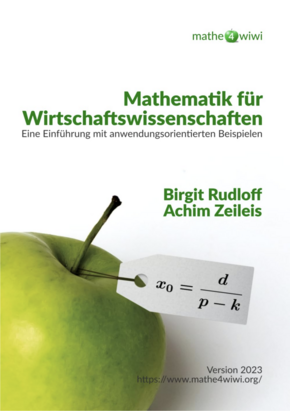
Birgit Rudloff is a Full Professor at the Institute for Statistics and Mathematics at Vienna University of Economics and Business. With a PhD in Financial Mathematics from Martin-Luther-University Halle-Wittenberg, her research focuses on multivariate risks, set-valued risk measures, optimization algorithms, and game theory applications in finance. She leads significant research projects in financial mathematics and vector optimization. Her research interests span dynamic set-valued risk measures, markets with transaction costs, systemic risk measurement, and algorithms for solving vector optimization problems. Recent work explores Nash equilibria computation and convex projections in unbounded spaces. Research outputs demonstrate strong focus on convex optimization techniques in financial mathematics, risk measurement methodologies, and game theory applications. Recent publications show growing interest in machine learning approaches for optimization problems. 2021 SIAM-FME Conference Paper Prize 2021 WU Star Journal Award Advises doctoral students and postdoctoral researchers in financial mathematics and optimization theory. Current research group includes postdocs and PhD students working on vector optimization and risk measures.
Maximilian Thiessen is a PhD student in machine learning at Technische Universität Wien , supervised by Thomas Gärtner. He is affiliated with the machine learning research unit and collaborates with the Laila lab in Milan. Research Interests : Learning with graphs Active learning frameworks Convexity theory in ML Computational learning theory Recent Research Trends include: (1) Expressive GNN architectures for outerplanar graphs (2025), (2) Generalized boosting theory through game frameworks (2024), (3) Efficient monophonic halfspace learning (2024), (4) Abstention mechanisms in contextual bandits (2024), (5) Global feature extensions in GNNs (2023), and (6) Expectation-complete graph representations (2023). Scientific Awards : 2024: DOC Fellowship from Austrian Academy of Sciences 2023: Best Poster Award at G-Research's ICML Poster Party Community Contributions : Organizer of Mining and Learning with Graphs (MLG) workshops at ECMLPKDD 2022-2024, co-organizer of Graph Learning on Wednesdays (GLOW) reading group, and session chair at ECMLPKDD'23.