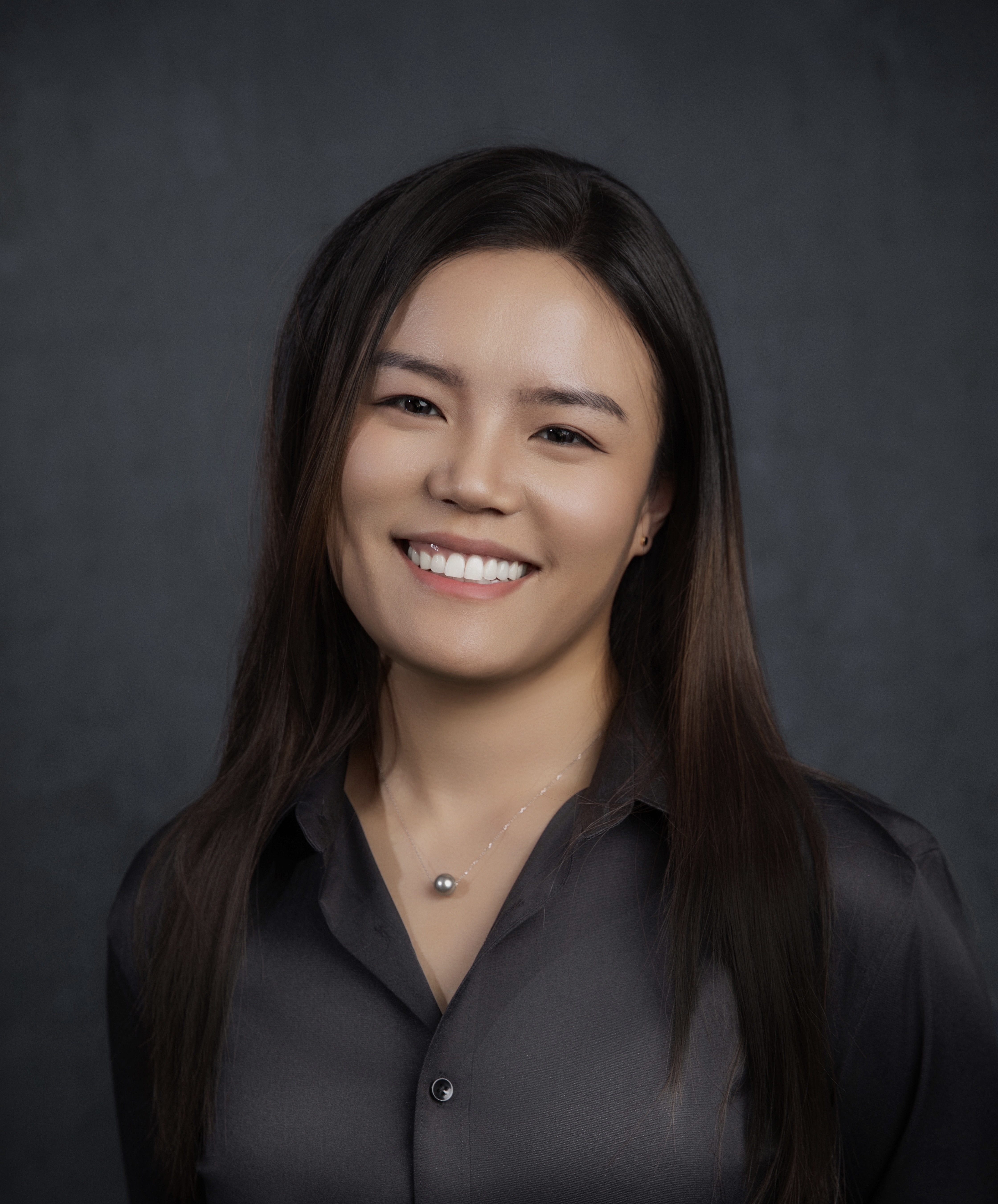
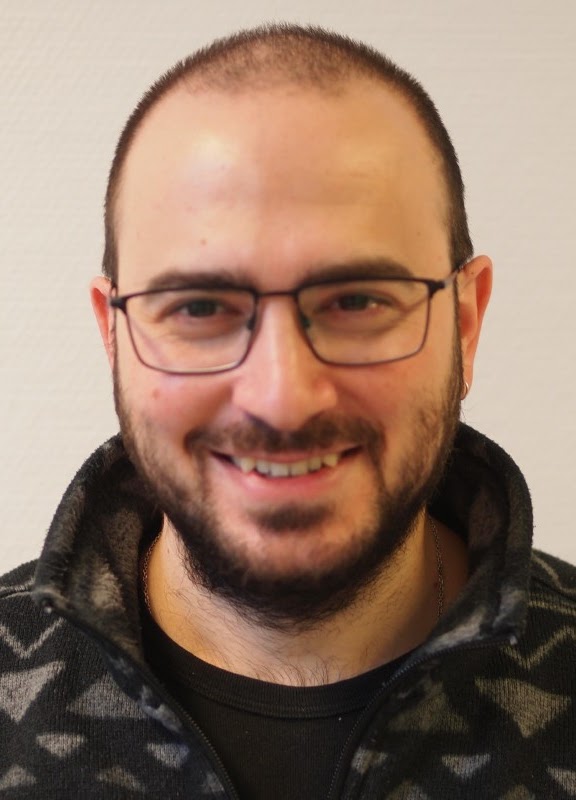
George Runger is a Professor at the School of Computing and Augmented Intelligence, Arizona State University. His work focuses on analytical methods for knowledge generation and data-driven organizational improvements, particularly in machine learning for large-scale data, real-time analysis, and applications to surveillance, decision support, and population health. Previously, he was a senior engineer and technical leader at IBM. Education: Ph.D. in Statistics, University of Minnesota (1982) Runger's research bridges machine learning, data mining, and statistical process control (SPC) to address challenges in manufacturing, healthcare, and semiconductor systems. His work includes developing artificial contrasts for signal detection, ensemble feature selection, and self-learning decision rules for adaptive SPC. His funded projects span NSF, DOD-NAVY-ONR, and Semiconductor Research Corporation grants, emphasizing supply chain analysis, dimensional metrology, and energy efficiency diagnostics. He has co-authored foundational texts like Applied Statistics and Probability for Engineers and Engineering Statistics . Scientific Awards: Inaugural Department Editor for Healthcare Informatics, INFORMS Transactions on Healthcare Systems Engineering Runger actively contributes to academia as a reviewer for journals like Management Science and IEEE Transactions on Knowledge and Data Engineering , and as a panel member for NSF and INFORMS workshops. He co-directs ASU's Quality and Reliability Engineering Laboratory and the Modeling and Analysis of Semiconductor Manufacturing team.
Lieven Vandenberghe is a Professor in the Electrical and Computer Engineering Department and Department of Mathematics at the University of California, Los Angeles (UCLA). His research focuses on convex optimization, semidefinite programming, and applications in signal processing, system identification, and control theory. Books: Co-author of Convex Optimization (2004) and Introduction to Applied Linear Algebra (2018) Courses: Teaches graduate-level courses in linear programming, convex optimization, and numerical computing (ECE236A/B/C, ECE133A/B) Software: Developer of CVXOPT, CHOMPACK, and SMCP for optimization algorithms His research group has produced significant work in sparse matrix computations, operator splitting methods, and applications to machine learning and control systems. Publications span topics like Bregman splitting, proximal gradient methods, and semidefinite programming for signal processing. His advisees include PhD students in optimization and postdoctoral researchers in applied mathematics.
Zijin Zhang is an Assistant Professor of Business Analytics at the Carroll School of Management, Boston College. She holds a Ph.D. in Technology & Operations from the University of Michigan's Ross School of Business and a B.S. in Mathematics and Statistics from Nanjing University. Her office is located in Fulton Hall 454B at Boston College. Her research centers on data-driven decision-making in operations management, organized around three pillars: Engineering value : Designing algorithms for real-time decisions under uncertainty Economic value : Optimizing data acquisition costs versus decision impact Social value : Examining ethical implications of data practices and technology regulation Applications span retail operations, AI markets, and public-sector resource allocation. Recent publications focus on algorithmic decision-making in operations management, with recurring themes of data optimization, fairness in resource allocation, and policy impact analysis. Methodologies combine optimization, game theory, and machine learning. Awards & Honors: Rackham Doctoral Intern Fellowship (2024) Michigan Ross China Research Award (2023) First Prize, National Olympiad Informatics (2013) Thomas William Leabo Fellowship (2022-2023) DSI Doctoral Research Showcase Finalist (2025) Teaching includes Operations Management (TO 313) at University of Michigan with a 4.9/5.0 evaluation score. She has received multiple research grants including Rackham Research Grant (2024) and Ross School Doctoral Grant (2022). Engages in academic service as INFORMS conference session co-chair (2024) and PhD program panels. Maintains industry connections through past internships at Oracle and CITIC Group.
Dr. Wai Kiong Oswald Chong is an Associate Professor at Arizona State University's School of Sustainable Engineering and the Built Environment, with a dual affiliation as Senior Global Futures Scientist at the Global Futures Scientists and Scholars program. He holds a PhD in Civil Engineering from the University of Texas-Austin, MSc and BSc in Building from the National University of Singapore, and focuses on integrating artificial intelligence with sustainable engineering systems. PhD (2005): Civil Engineering, University of Texas-Austin MSc (1999) & BSc (1997): National University of Singapore His research bridges lunar construction with Earth-bound sustainable systems, covering topics like: Space habitat modularization Resource circularity systems AI-enhanced building codes Climate-resilient infrastructure Advanced energy modeling Construction supply chain optimization Publications demonstrate consistent focus on: Semiconductor facility HVAC optimization Building energy consumption anomalies Life cycle assessment frameworks Construction risk management Deconstruction and material reuse AI-driven system modeling Current research projects include: Lunar MVI (Moon Village Initiative) Semiconductor fab design optimization Human-AI knowledge interfaces Thermal insulation systems for extreme environments Smart grid energy modeling
Eric P. Xing is a Professor at the Language Technologies Institute of Carnegie Mellon University , and currently serves as President of the Mohamed bin Zayed University of Artificial Intelligence . His work bridges machine learning methodology with computational biology and large-scale AI systems . Research Focus: Developing machine learning theory for high-dimensional, dynamic data Building foundation models for biology (AIDO, scLong, ProteinAligner) Designing scalable AI architectures (Pollux, LLM360, PAN) Advancing interpretable and controllable NLP systems Scientific Leadership: Founded the SAILING Lab at CMU Co-chaired ICML 2014 and ICML 2019 Recipient of the Jay Lepreau Best Paper Award (OSDI 2021) Education & Mentorship: Advises PhD students across machine learning and computational biology Alumni include faculty at ETH Zurich, University of Chicago, and UC San Diego
Professor Natalie Ciccone is a Professor in Speech Pathology at Edith Cowan University's School of Medical and Health Sciences. She joined ECU in 2009 after working in Speech Pathology programs at Curtin University since 1999. Professor Ciccone is currently involved in two NHMRC-funded projects: a multi-centre randomized control trial of very early intervention for people with aphasia after stroke and an exploration into communication disorders after stroke and traumatic brain injury in Aboriginal peoples in Western Australia. Her educational background includes a Doctor of Philosophy in Human Communication Science from Curtin University of Technology (2003) and a Bachelor of Science in Speech & Hearing Science from the same institution (1996). Professor Ciccone's research focuses on neurogenic communication disorders, particularly aphasia intervention, clinical decision making, communication difficulties after stroke in Aboriginal Australians, and the use of discourse in the analysis and treatment of aphasia. Her work bridges clinical practice with culturally responsive care, emphasizing the importance of understanding communication disorders within specific cultural contexts, particularly for Aboriginal populations. Analysis of her recent publications reveals a strong emphasis on culturally responsive rehabilitation for Aboriginal Australians with brain injuries, early intervention for aphasia after stroke, treatment fidelity in clinical trials, and innovative educational approaches in speech pathology. Her work shows a consistent trajectory toward addressing health disparities and developing culturally safe rehabilitation practices. Member of the Editorial Committee for the Journal of Clinical Practice in Speech Language Pathology Active participant in national and international speech pathology and allied health conferences Professor Ciccone has supervised numerous research students, including PhD candidates and Master's students, with projects focusing on aphasia rehabilitation, simulation-based learning, and culturally responsive care. Her research projects have secured substantial funding from organizations including the National Health and Medical Research Council, Department of Health WA, and the Perron Institute for Neurological and Translational Science. She has led projects totaling over $8 million in research funding, with current projects focusing on AI-driven virtual character simulation for aggression de-escalation training and enhancing rehabilitation services for Aboriginal Australians after brain injury. Professor Ciccone maintains active clinical connections, having worked as a speech pathologist in acute and rehabilitation hospital settings as well as community-based clinics in Perth and Darwin, primarily working with patients with communication and swallowing difficulties following stroke and head injury.
William Hobbs is the Lois and Mel Tukman Assistant Professor in the Department of Psychology at Cornell University , affiliated with the College of Human Ecology. His research intersects politics and health , focusing on social spillover effects of government actions and adaptation to life changes through computational social science methods. Teaches Data Science for Social Scientists I & II (HD/Psych 2930/2940) Co-teaches graduate course Text and Networks in Social Science Research (HD/Soc/Info 6610, Govt 6619) Research strengths include causal inference , representative sampling , and machine learning applications for small training sets. His work has been featured in The Atlantic , Science Magazine , and other major outlets. Current Data Science Lab projects analyze: Political polarization in social media Health behavior networks Government policy feedback Content moderation systems Lab hires Cornell undergraduates with R/Python experience for data management tasks through HD 4010 research credit.
Giorgia Ramponi is an Assistant Professor with Tenure Track at the Faculty of Business, Economics and Informatics at the University of Zurich. She is also an affiliated professor at the ETH AI Center and the Data Science and AI, Computer Science and Engineering department at Chalmers University of Technology. Her educational background includes a Ph.D. in Information Technology from Politecnico di Milano (completed June 2021 with honors), advised by Marcello Restelli, and a Master of Science in Computer Science with Honours Programme (110/110 cum laude) from la Sapienza (July 2017), advised by Flavio Chierichetti and Alessandro Panconesi. Dr. Ramponi's research focuses on machine learning and mathematical modeling, with particular emphasis on reinforcement learning and multiagent learning. Her work bridges theoretical foundations with practical applications, exploring how learning algorithms can make optimal decisions in complex environments. She has made significant contributions to areas including inverse reinforcement learning, multi-agent systems, constrained Markov decision processes, and human-AI interaction through preference learning. Her recent publications demonstrate a strong trend toward addressing fundamental challenges in reinforcement learning, particularly in multi-agent settings, constrained optimization, and learning from human feedback. Her work combines theoretical rigor with practical applications across robotics, economics, and decision-making systems. Hassler Research Grant for "Unified Feedback Integration Framework for Reinforcement Learning" Dr. Ramponi actively contributes to the academic community through conference participation, invited lectures (including at the Mediterranean Machine Learning Summer School), and teaching. She designed and taught the "Data Science and Machine Learning" course for the ETH-Ashesi Master program. She is also a member of the ELLIS community, which connects excellence in AI research across Europe. Her research group focuses on developing frameworks for reinforcement learning with various feedback types, including preferences, rewards, and demonstrations. The group aims to advance the theoretical understanding of learning algorithms while addressing practical challenges in real-world applications.
Summer Rupper is a Professor at the School of Environment, Society & Sustainability at the University of Utah, where she has held her position since July 2019. Her research focuses on understanding the interactions between climate, glaciers, and water resources, with particular emphasis on high mountain regions including High Mountain Asia, the Himalayas, and polar regions. She leads multiple research projects examining glacier dynamics, hydrological processes, and climate change impacts on water security for downstream populations. BS in Geology from Brigham Young University (2001) MS in Geology from University of Washington (2004) PhD in Earth and Space Sciences from University of Washington (2007) Professor Rupper's research spans physical geography, environmental geoscience, and climate change science, with specific expertise in glaciology, hydrology, and atmospheric sciences. Her work integrates field measurements, remote sensing, and numerical modeling to understand glacier dynamics, snow processes, and water resource availability in mountainous regions. She has particular expertise in High Mountain Asia, where glaciers provide critical water resources for over a billion people. Her research addresses fundamental questions about glacier response to climate change, hydrological partitioning, and the implications for water security in vulnerable regions. Her recent publications demonstrate a consistent focus on understanding glacier dynamics, hydrological processes, and climate interactions in mountainous regions. The work spans multiple methodologies including remote sensing analysis, numerical modeling, statistical approaches, and field-based measurements. Key themes include glacier melt contributions to river systems, precipitation patterns in complex terrain, snow density modeling, and the impacts of climate change on water resources in High Mountain Asia and polar regions. Her research often integrates multiple data sources and approaches to address complex questions about cryospheric processes and their societal implications. Superior Research Award (2024, CSBS, University of Utah) G.K. Gilbert Award for Excellence in Geomorphic Research (2022) Outstanding Utah Higher Education Science Teacher (2021) Top Researcher Award, Celebrate U showcase (2017) Antarctic Service Medal (2010, USAF) Professor Rupper actively mentors graduate students through thesis research courses at both the PhD and Master's levels, as well as individual projects. She has secured significant research funding from multiple federal agencies including NSF, NASA, and USAID, with current projects examining climatic controls on Antarctic ice sheets, glacier dynamics in High Mountain Asia, and historical glacier changes. Her collaborative work extends across international boundaries, working with scientists in Pakistan, Bhutan, and other regions to address shared water security challenges. She also engages in community outreach through workshops with school districts and science teacher associations to communicate climate science to broader audiences. Professor Rupper participates in multiple collaborative research teams including the NASA High Mountain Asia Team (HiMAT), where she contributes expertise in glacier dynamics and hydrology. She serves on several scientific committees including the NSF Ice Core Facility Sample Allocation Committee and the American Geophysical Union Cryosphere Section Fellows Committee. Her research often involves interdisciplinary teams combining expertise in glaciology, hydrology, remote sensing, and climate modeling to address complex questions about mountain water systems under changing climate conditions.
Wolfgang Windl is a Professor in the Department of Materials Science and Engineering at The Ohio State University with a joint appointment in Physics. He co-founded Goniotech LLC and previously worked at Motorola as a Principal Staff Scientist. He holds a doctoral degree in physics from the University of Regensburg and completed postdoctoral research at Los Alamos National Laboratory and Arizona State University. His research specializes in computational materials science, focusing on: Atomistic simulations and density-functional theory Machine learning applications in materials design Semiconductor transport and layered materials (e.g., Dirac semimetals) Atom probe tomography and characterization techniques Analysis of his 15 most recent publications (2023-2025) reveals dominant themes: advanced simulations of field evaporation, topological quantum materials (PtTe 2 , PdTe 2 ), and computational frameworks for materials characterization. His work frequently integrates spectroscopy, tomography, and Bayesian methods to study alloys, 2D materials, and additive manufacturing defects. Awards and Honors Fraunhofer-Bessel Research Award (2006) Four Lumley Research Awards Boyer Award for Teaching Excellence (2015) Faculty Diversity Excellence Award (2020) Two Mars Fontana Best Teacher Awards (2006, 2015) ASEE Best Paper & Diversity Awards (2019) He advises 11+ graduate students (7 alumni, 5 current) and leads the Windl Group research team focused on computational materials modeling. His group develops simulation tools for atomic-scale characterization and collaborates with national laboratories.
Dr. Shabnam Sadeghi Esfahlani is an Associate Professor in Robotics at the School of Engineering and the Built Environment, Anglia Ruskin University , where she serves as Deputy Leader of the BORI research group and leads the Automation & Robotics MSc program. Her interdisciplinary expertise spans mechatronics, artificial intelligence, virtual reality, and serious games , with a focus on applications for rehabilitation, medical training, and autonomous systems . As a Chartered Engineer and Senior Fellow of the Higher Education Academy , she has secured significant funding from Innovate UK, Horizon 2020, and GCRF , with grants exceeding £3 million. Education PhD in Mechanical Engineering, Anglia Ruskin University BSc (First Class) in Statistics & Mathematical Science, Shahid Beheshty University Her research integrates AI with robotics for societal impact, exemplified by the open-source SROBO ground robot and projects like Rehabgame and the Assistive Feeding Robot . She has published over 45 peer-reviewed articles and contributes to academic communities as a journal guest editor and conference organizer . Key collaborations include IET, IMechE, and the Nuffield Foundation as a mentor for young students. Scientific Awards & Recognitions: Chartered Engineer (CEng), Engineering Council UK Senior Fellow (SFHEA), Higher Education Academy Student-Voted 'Made a Difference Award' (2018) Post-Graduate Certificate in Higher Education
Matias D. Cattaneo is a Professor in the Department of Operations Research and Financial Engineering at Princeton University , with affiliated roles in the School of Public and International Affairs , Economics Department , Latin American Studies Program , Data-Driven Social Science , AI at Princeton , and Center for Statistics and Machine Learning . He serves as an Amazon Scholar and collaborates with global organizations. Education : Ph.D. in Economics (2008) and M.A. in Statistics (2005) from UC Berkeley, Master in Economics (2003) from Universidad Torcuato Di Tella, Licentiate in Economics (2000) from Universidad de Buenos Aires. Research focuses on interdisciplinary challenges in social, behavioral, and biomedical sciences, combining econometrics, statistics, data science, and causal inference. His methodological work includes regression discontinuity designs, synthetic control methods, and local polynomial estimation, with applications to decision-making under uncertainty. Scientific recognition : Elected Fellow of the American Statistical Association Elected Fellow of the Institute of Mathematical Statistics Elected Fellow of the International Association for Applied Econometrics Elected Member of the International Statistical Institute Software contributions include R packages rdhte , scpi , and lpcde , freely available on GitHub. His GitHub activity includes 344 contributions in the last year, with active repositories on regression discontinuity and synthetic control methods.
Georgios Arvanitidis is an Associate Professor at the Technical University of Denmark (DTU) in the Department of Applied Mathematics and Computer Science, specifically within the Section for Cognitive Systems (CogSys). He has established himself as a leading researcher in geometric machine learning, focusing on the application of differential geometry principles to enhance machine learning models. His work bridges theoretical mathematics with practical applications in artificial intelligence, with particular emphasis on understanding the geometric structure of data manifolds and latent spaces. Dr. Arvanitidis completed his educational journey with a Bachelor's degree from the Department of Informatics at the Aristotle University of Thessaloniki, followed by a Master's degree in Computer Science from Saarland University supported by the Max Planck Institute for Informatics. He earned his PhD at DTU's Cognitive Systems section under the supervision of Søren Hauberg, with additional research experience at Philipp Hennig's Probabilistic Numerics group. Prior to his current position as associate professor, he was a PostDoc at the Max Planck Institute for Intelligent Systems working with Bernhard Schölkopf. Dr. Arvanitidis's research primarily focuses on differential geometry in machine learning , where he explores how geometric structures can enhance representation learning and statistical modeling. His work in generative models investigates how learning the geometry of data manifolds can improve deep learning architectures. In the domain of deep learning theory , he examines why deep learning models generalize effectively on unseen data, with particular attention to the curvature properties of loss landscapes. His research in approximate Bayesian inference applies geometric principles to improve uncertainty quantification in neural networks. Through his innovative approaches, Dr. Arvanitidis has established himself as a leading researcher in geometric machine learning, contributing to both theoretical foundations and practical applications across various domains including robotics and life sciences. The publication trends of Dr. Arvanitidis reveal a consistent and evolving focus on geometric approaches to machine learning problems. His recent work (2023-2025) demonstrates increasing sophistication in applying Riemannian geometry to deep learning architectures, with particular emphasis on latent space geometry, optimization on manifolds, and geometric interpretations of neural network behavior. A notable pattern is the progression from foundational work on geometric representations to more applied research in areas like robotics and causal inference. His publications span top-tier conferences including NeurIPS, ICML, ICLR, and AISTATS, reflecting the high impact of his research. The interdisciplinary nature of his work is evident in collaborations across mathematics, computer science, and robotics domains, with recent papers addressing challenges in multimodal sampling, safety guarantees for dynamical systems, and counterfactual explanations. Dr. Arvanitidis has received several notable scientific awards and recognitions: Sapere Aude starting grant from the Independent Research Fund Denmark (DFF) GADL funding i-Rase, Pathfinder, and EIC (European Innovation Council) funding Best reviewer award for NeurIPS 2019 Best reviewer award for NeurIPS 2018 Best student paper award at Robotics: Science and Systems (R:SS) 2021 Dr. Arvanitidis actively mentors PhD students and researchers, currently supervising Alejandro Valverde, Johanna Gegenfurtner, and Albert Kjøller Jacobsen. He has previously co-supervised Alison Pouplin's PhD and worked with research assistant Georgios Pantis. His group receives substantial funding through multiple prestigious grants including the Sapere Aude starting grant from the Independent Research Fund Denmark, as well as European Innovation Council funding. He has been instrumental in creating opportunities for students interested in geometric machine learning, offering BSc and MSc thesis projects focused on generative models, deep learning theory, and optimization techniques. Dr. Arvanitidis also contributes significantly to the academic community as a reviewer for top conferences including ICLR and TMLR, and as an area chair for NeurIPS, ICML, AISTATS, and UAI. He co-organized the Machine Learning Summer School 2020 in Tübingen, further demonstrating his commitment to education and community building. Dr. Arvanitidis leads a vibrant research group focused on geometric machine learning within the Cognitive Systems section at DTU. His team includes multiple PhD students working on cutting-edge research at the intersection of differential geometry and artificial intelligence. The group has developed notable software tools, including the "geometric_ml" GitHub repository with over 70 stars, which contains implementations for applying Riemannian geometry in machine learning. His research has practical applications in robotics, where geometric approaches enable more robust motion planning, as evidenced by his work on "Reactive Motion Generation on Learned Riemannian Manifolds" which received a best student paper award. Additionally, his methodologies have found applications in life sciences, as mentioned in his 2022 AISTATS paper. The collaborative nature of his work is evident through extensive partnerships with researchers at institutions including the Max Planck Institute for Intelligent Systems, University of Cambridge, and various European universities. His recent news items indicate active engagement with the academic community through talks, conference presentations, and ongoing supervision of new PhD students joining his group.
Xin Li is a Professor in the Department of Electrical and Computer Engineering at Duke University and serves as the Associate Vice Chancellor at Duke Kunshan University. He holds a Ph.D. from Carnegie Mellon University (2005) and has held leadership roles in research consortia like the FCRP Focus Research Center and the Center for Silicon System Implementation (CSSI). His research bridges integrated circuits , machine learning , and cyber-physical systems , with applications in autonomous driving, battery lifetime prediction, and smart buildings. Education : Ph.D., Carnegie Mellon University (2005); M.S., Fudan University (2001); B.S., Fudan University (1998) His work emphasizes robust design methodologies for analog/RF circuits, data-driven predictive modeling , and Bayesian inference for high-dimensional variation spaces. Recent publications focus on generative adversarial networks for circuit design, multi-view imputation for incomplete data, and knowledge-driven autonomous systems . He has received numerous accolades, including the NSF CAREER Award (2012) , IEEE Donald O. Pederson Best Paper Awards (2013, 2016) , and IEEE Fellow (2017) . He has served as Editor for journals like IEEE Transactions on Biomedical Engineering and as Chair for conferences including ISVLSI and CAD/Graphics.
Dr. Gloria Roberts is a Research Fellow at the Black Dog Institute, affiliated with the University of New South Wales' Faculty of Medicine, School of Psychiatry. Her research focuses on identifying predictors of bipolar disorder development in high-risk populations, with particular emphasis on neural mechanisms of executive functioning and emotional processing. Location: Black Dog Institute, Hospital Road, Prince of Wales Hospital, Randwick NSW 2031 Contact: +61 2 9382 8324 | ORCID: https://orcid.org/0000-0002-1966-5120 Education Background: B.Sc in Applied Psychology (University College Cork, Ireland, 2002) M.Sc in Neuropharmacology (National University of Ireland Galway, Ireland, 2003) Diploma in Statistics (Trinity College Dublin, Ireland, 2006) PhD in Neuroscience (Trinity College Dublin, Ireland, 2008) Dr. Roberts' research program centers on the neural basis of emotional dysregulation characteristic of mood disorders, employing structural and functional Magnetic Resonance Imaging as her primary research tool. Her work integrates advanced neuroimaging analysis techniques including diffusion tensor imaging tractography, dynamic causal modeling, graph theory, and machine learning approaches. She maintains active collaborations with Queensland Institute of Medical Research (Brisbane), Neuroscience Research Australia (Sydney), and the Centre for Healthy Brain Ageing (Sydney). Analysis of Dr. Roberts' publication record (94 journal articles, 2 book chapters, 25 conference papers) reveals a consistent research trajectory focused on neurocognitive patterns in bipolar disorder. Her recent work increasingly incorporates machine learning techniques to identify predictive biomarkers, with a growing emphasis on longitudinal studies tracking high-risk populations. The interdisciplinary nature of her research bridges neuroscience, psychiatry, and computational methods to address fundamental questions about mood disorder development. Scientific Contributions: Extensive publication record across multiple formats (journal articles, book chapters, conference presentations) Development of innovative neuroimaging analysis techniques for bipolar disorder research Establishment of multi-institutional collaborations across Australia Integration of machine learning approaches with traditional neuroimaging methods Dr. Roberts actively mentors junior researchers and contributes to the broader scientific community through peer review activities and participation in research networks focused on mood disorders. Her work has significant implications for early intervention strategies and the development of novel therapeutic approaches for bipolar disorder.