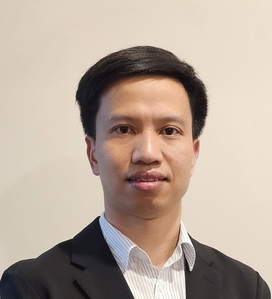
Dr. Debraj Roy is a Visiting Professor at the University of Amsterdam (UvA), affiliated with the Faculty of Science, Mathematics and Computer Science and the Informatics Institute. His research focuses on agent-based modeling, socio-economic dynamics, environmental resilience, and blockchain technology. He investigates complex systems such as urban slums, disaster recovery, and climate adaptation using computational methods like remote sensing and machine learning. His work bridges theory and practice, offering insights into policy design for sustainable development and social equity. Key research interests include slum dynamics, poverty traps, and the application of blockchain oracles for decentralized systems. He employs advanced techniques such as global sensitivity analysis and manifold learning to explore multi-scale socio-environmental challenges. His recent articles highlight trends in carbon pricing, flood risk valuation, and multi-agent systems. Earlier work concentrated on urban inequality in cities like Bangalore and Mexico City, leveraging geospatial and statistical tools. No scientific awards or grants are explicitly listed. His advising and team collaborations are unspecified in the provided text.
Associate Professor Sonny Pham leads research in artificial intelligence at Curtin University's School of EECMS. His work balances theoretical foundations with practical applications in computer vision, data mining, and deep learning. As head of the IAMAI research group, he collaborates with industry partners on security systems, healthcare AI, and sustainable technologies. His research explores: Computationally efficient deep learning architectures Compressed sensing for high-dimensional data Robust statistical methods for real-world problems Applications in computer vision and industrial automation Recent publications demonstrate a focus on medical imaging interpretation and efficient neural networks, with applications spanning radiology report generation, semantic segmentation for autonomous systems, and cybersecurity. His team's work consistently bridges theoretical AI advancements with industrial applications. Honors include: Multiple WANMA Awards (2021-2024) for industry-impactful research INCITE Award for social impact technology (2024) IEEE Young Author Best Paper Award (2010) Over $5M in competitive research funding including MRFF and DFAT grants He leads the IAMAI research group with 12+ graduate students and coordinates Curtin's Master of Artificial Intelligence program. Industry collaborations include Alcoa Australia, iCetana, and HyprFire.
Huazhen Fang is an Associate Professor in the Department of Mechanical Engineering at the University of Kansas School of Engineering, where he joined in 2014. He leads the Information & Smart Systems Laboratory (ISSL) and holds a courtesy appointment in the Department of Electrical Engineering & Computer Science. His research focuses on enabling intelligence for complex systems through information-driven approaches. Dr. Fang received his Ph.D. in Mechanical Engineering from the University of California, San Diego in 2014, following an M.Sc. from the University of Saskatchewan and a B.Sc. in Computer Science & Technology from Northwestern Polytechnic University in China. He was a Visiting Faculty Fellow at Mitsubishi Electric Research Laboratories in 2022. His research interests span Systems and Control, Advanced Battery Management, Energy Storage Systems, and Robotics, with particular focus on system modeling, estimation, control design, machine learning and numerical optimization. Dr. Fang's work has significant applications in energy management, cooperative robotics, and environmental observing systems. His research has been supported by the National Science Foundation, Department of Energy, Army Research Laboratory, and Mitsubishi Electric Research Laboratories. His extensive publication record shows a clear trend toward increasingly sophisticated integration of physics-based modeling with machine learning approaches, particularly in battery management systems and autonomous vehicle control. Recent work demonstrates a growing emphasis on Bayesian inference methods, distributed control architectures, and safety-critical applications of intelligent control systems. Faculty Early Career Award from National Science Foundation (2019) University Scholarly Achievement Award (2024) Miller Professional Development Award (2022) Miller Faculty Scholar Award (2018, 2019, 2023) Wesley G. Cramer Outstanding Mechanical Engineering Faculty Award (2016) Big XII Faculty Fellowship (2015) IEEE Transactions on Transportation Electrification Prize Paper Award (2024) Dr. Fang has successfully mentored numerous graduate students through the Information & Smart Systems Laboratory, with many receiving awards for their research. His research has attracted significant funding from prestigious organizations including the National Science Foundation, Department of Energy, Army Research Laboratory, and Mitsubishi Electric Research Laboratories. He currently serves as an Associate Editor for multiple prestigious journals including Information Sciences, IEEE Transactions on Industrial Electronics, and IEEE Control Systems Letters. The Information & Smart Systems Laboratory (ISSL) under Dr. Fang's leadership has established itself as a center for cutting-edge research in information-driven smart systems. The lab focuses on pushing the frontiers of information extraction, analysis and exploitation for dynamic systems to deal with system complexity and enable system intelligence. The lab actively collaborates with industry partners and local communities, emphasizing research that serves societal needs.
Cody Hyndman is a Full Professor and Acting Department Chair at the Department of Mathematics and Statistics, Concordia University, with a focus on Mathematical Finance, Machine Learning, and Stochastic Analysis. He has held significant administrative roles including Department Chair (2017–2023) and Acting Graduate Programs Director (2025–2025). Education: PhD, University of Waterloo (2005) MSc, University of Alberta BCom, University of Alberta His research spans Mathematical Finance , Stochastic Differential Equations , and Machine Learning , with notable contributions to arbitrage-free modeling, neural networks, and computational methods. Recent publications emphasize geometric deep learning and regularization techniques in finance. Scientific Awards: 2023: Concordia Academic Leadership Award Hyndman supervises graduate students in Mathematics and Statistics and co-founded the NSERC CREATE Program on Machine Learning in Quantitative Finance and Business Analytics (FIN-ML) , fostering industrial internships and interdisciplinary training.
Mustafa Bilgic is a Professor and Chair of the Computer Science Department at Illinois Institute of Technology, where he also directs the Master of Artificial Intelligence program and the Machine Learning Laboratory. His research focuses on machine learning, active learning, explainable AI, and probabilistic graphical models, with applications in healthcare, social media analysis, and biomedical engineering. He has received funding from NSF, NIH, and Samsung, among others. Education: PhD in Computer Science, University of Maryland at College Park (2010) M.S. in Computer Science, University of Maryland at College Park (2006) B.S. in Computer Science, University of Texas at Austin (2004, with High Honors and Special Honors) Research Highlights: Dr. Bilgic's work emphasizes AI ethics, algorithm transparency, and interactive machine learning systems. Notable projects include analyzing political news engagement dynamics and developing frameworks for eliminating explanation noise in AI models. His lab explores tools like OrganoID for tracking organoid growth and IDGI for improving model interpretability. Awards: NSF CAREER Award (2014) ACM SIGKDD Best Student Paper Award (2008) Illinois Tech College of Computing Teaching Excellence Award (2021) Teaching and Leadership: Bilgic teaches advanced courses in AI, machine learning, and data mining. He leads initiatives to bridge AI theory and practical applications, emphasizing interdisciplinary collaboration. His administrative roles include overseeing the AI master’s program and fostering innovation in computing education.
Jann Spiess is an Associate Professor of Operations, Information & Technology at Stanford University's Graduate School of Business and holds a courtesy appointment as Associate Professor of Economics in the School of Humanities and Sciences. He is also a Center Fellow at the Stanford Institute for Economic Policy Research and a Faculty Affiliate of the Golub Capital Social Impact Lab. PhD in Economics (Harvard University, 2018) AM in Economics (Harvard University, 2015) MPP in Public Policy (Harvard University, 2013) MASt in Mathematics (University of Cambridge, 2011) BSc in Mathematics (Technical University of Munich, 2010) Jann's research integrates machine learning with econometric methods to advance causal inference and data-driven decision-making . He explores high-dimensional and robust causal inference, synthetic control methods, and algorithmic fairness, while addressing challenges in human-AI collaboration and policy design. His publications span econometrics, behavioral economics, and data science, focusing on experimental design, robust statistical techniques, and applications of machine learning to public policy. Key themes include replicable inferences from big data, human-AI interaction, and ethical algorithmic design. Philip F. Maritz Faculty Scholar, 2021–22 David A. Wells Prize for best dissertation, Harvard Economics, 2018 Restud Tour, 2018 Jann's work bridges microeconometric methods , statistical decision theory , and mechanism design to enhance analytical frameworks for data-driven policy. He has contributed to robust inference in panel data and synthetic control methods, alongside studies on nudges for vaccination and financial aid renewals. As Faculty Affiliate at the Golub Capital Social Impact Lab, Jann collaborates on projects applying data science to social policy challenges, merging technical rigor with societal impact.
David A. Stephens is a Professor in the Department of Mathematics and Statistics at McGill University, Montreal. He served as Chair of the Department from 2015 to 2019 and as Vice-Dean in the Faculty of Science from 2019 to 2025. His research focuses on Bayesian inference, biostatistics, causal inference, bioinformatics, and statistical genetics. He holds prestigious fellowships: International Statistical Institute (2015), American Statistical Association (2019), and Royal Society of Canada (2024). His work addresses challenges in epidemiology, HIV transmission dynamics, and clinical trial design. Key research themes include: Bayesian hierarchical modeling for infectious diseases (e.g., SARS-CoV-2, HIV) Causal inference in dynamic treatment regimes Survival analysis and censored data methods Statistical genomics and epigenetics His publications analyze public health trends, such as HIV transmission clusters in Quebec and SARS-CoV-2 seroprevalence in Canada. Methodologically, he develops novel techniques for time-series analysis, recruitment forecasting in clinical trials, and computational statistics. Notable contributions include: Advancing phylogenetic cluster inference in HIV studies Optimizing warfarin dosing strategies via SMART trials Modeling gut microbiota impacts on growth faltering in infants His academic leadership includes roles at McGill and prior experience at Imperial College London. His work bridges statistical theory and practical healthcare applications, emphasizing interdisciplinary collaboration.
Dr. Laura B. Balzer is an Associate Professor of Biostatistics at the University of California, Berkeley. Her work focuses on causal inference, machine learning, and addressing methodological challenges in both randomized trials and observational studies, particularly in global health contexts. She leads collaborations in East Africa, focusing on HIV elimination and community health in rural regions. Her research emphasizes translating academic findings into real-world impact. Education: PhD in Biostatistics, UC Berkeley (2015) MPhil in Computational Biology, University of Cambridge (2009) BS in Applied Mathematics, University of Vermont (2008) Research Interests: Dr. Balzer’s work addresses causal inference in complex settings, including semi-parametric methods, measurement challenges, and dependence structures. Her global health projects target HIV prevention, tuberculosis transmission, and hypertension management in sub-Saharan Africa. She designs interventions like the SEARCH Dynamic Choice model, which offers flexible HIV prevention options, and evaluates community health worker programs. Publications highlight her contributions to HIV/AIDS research, including studies on PrEP uptake, viral suppression in adolescents, and tuberculosis-HIV co-infection. Methodologically, she advances causal inference frameworks to handle missing data and clustered designs. Awards: While no specific awards are listed, her work has been funded by initiatives like the SEARCH trials, reflecting its scientific and public health significance. Advising & Grants: Balzer collaborates with multidisciplinary teams in Uganda and Kenya, focusing on translational research. Her grants support interventions linking statistical innovation to healthcare delivery improvements in resource-limited settings. Labs/Teams: Her research is embedded within global health partnerships, particularly within the SEARCH trials network, which integrates biostatistics with clinical and community-based implementation.
Emily Cooper is an Associate Professor of Optometry & Vision Science at the Herbert Wertheim School of Optometry & Vision Science, University of California, Berkeley. She serves as the Chair of the Vision Science PhD Program and is a co-Director of the Center for Innovation in Vision & Optics. Additionally, she is a member of the Helen Wills Neuroscience Institute and a Visiting Faculty Researcher at Google. Dr. Cooper's research focuses on 3D vision, perceptual graphics, AR/VR, computational neuroscience, visual encoding, and display system design. Her work investigates how the visual system processes information to create our perception of the 3D world, with applications in computer graphics, virtual reality, and assistive technologies for people with low vision. Analysis of Dr. Cooper's recent publications (2023-2025) reveals a strong focus on the intersection of vision science and emerging technologies, particularly in augmented reality and assistive vision systems. Her work spans fundamental research on visual perception mechanisms to applied research developing practical technologies for low vision rehabilitation. A significant portion of her recent work addresses visual discomfort in XR displays, perceptual guidelines for AR/VR systems, and innovative approaches to assistive vision technologies that enhance mobility and independence for visually impaired individuals. Dr. Cooper leads an active research laboratory at UC Berkeley's 391 Minor Hall, where she mentors students and collaborators in vision science research. Her lab investigates both basic questions about how vision works and translational questions about improving visual technologies. She has developed perceptual guidelines for optimizing field of view in stereoscopic augmented reality displays and created assistive technologies such as an augmented reality sign-reading assistant for users with reduced vision. Dr. Cooper is also involved in professional activities including co-organizing the Computational Neuroscience: Vision summer course at Cold Spring Harbor Laboratory and working with Community Resources For Science to promote science education.
Subhabrata Sen is an Assistant Professor of Statistics at Harvard University, located in Science Center 713, Cambridge. His research focuses on Applied Probability, Statistics of Networks, Signal Detection, and Machine Learning. He holds a PhD from Stanford University (2017), advised by Amir Dembo and Andrea Montanari, and prior degrees from the Indian Statistical Institute, Kolkata. His work bridges statistical theory, high-dimensional data analysis, and applications in networks and physics-inspired methods. Key contributions include foundational studies on spin glasses, community detection, and causal inference in complex systems. His research often employs mean-field techniques and explores universality principles in estimation problems. Selected awards and recognition are not explicitly mentioned in the provided text. His advising and grants include postdoctoral mentoring at Microsoft Research and MIT (2017-19). He collaborates on projects involving spectral methods, random matrix theory, and multi-layer network analysis. Labs/teams: Active in Harvard's Statistics Department research groups focused on statistical theory and network science. Maintains an academic website with preprints and resources.
Dr. Joseph Moore is an Assistant Professor in the Department of Mechanical Engineering at Johns Hopkins University (JHU), serving as Director of the Agile and Intelligent Robotics (AIRO) Laboratory. He is affiliated with the Laboratory for Computational Sensing and Robotics (LCSR), the Institute for Assured Autonomy (IAA), and holds a Bridging Faculty appointment in the Research and Exploratory Development Department (REDD) at JHU/APL. His research focuses on computational control, machine learning, and robotics to enable agile systems operating in complex environments. Dr. Moore previously served as Robotics Group Chief Scientist at JHU/APL, leading projects on hybrid unmanned aerial-aquatic vehicles and aerobatic fixed-wing systems. He has secured funding as Principal Investigator (PI) for ONR, DARPA, and ARL programs, particularly in post-stall maneuvering control and multi-robot coordination. His work emphasizes robust control strategies for autonomous systems in constrained environments. Research interests include aerial robotics, optimization, and learning-based control. Notable contributions involve NMPC-based systems, UAV navigation, and adaptive control for uncertain environments. His recent articles highlight advancements in swarm coordination, morphing-wing UAVs, and PAC-NMPC frameworks. Dr. Moore advises students such as Mark Gonzales and Adam Polevoy. Key grants include ONR/DARPA-funded projects on post-stall flight control and Army-funded multi-robot coordination efforts. His lab (AIRO) and collaborations (LCSR, IAA) drive applied and theoretical robotics research.
Jay Pujara is a Research Associate Professor in the Department of Computer Science at the University of Southern California (USC), affiliated with the Viterbi School of Engineering and the Information Sciences Institute (ISI). He directs the Center on Knowledge Graphs and leads research in artificial intelligence, specializing in knowledge graph construction, scalable machine learning, and probabilistic models. Education : PhD in Computer Science (University of Maryland, 2016), MS and BS in Computer Science from Carnegie Mellon University (2005 and 2004), with minors in Robotics, Mathematical Sciences, and Logic & Computation. Research Interests : His work focuses on probabilistic models for dynamic data, knowledge graph construction, entity resolution, and applications in NLP and social network analysis. He emphasizes scalable algorithms and real-world impact in domains like finance, climate science, and healthcare. Awards : Includes the SWSA Ten-Year Award (2023), Best Paper Awards at IUI 2019 and ISWC 2013, and grants totaling over $9M from DARPA, NSF, and industry partners. Grants & Mentorship : Principal Investigator on projects like "Artificial Domain-Understanding and Collaborative Agency" (DARPA) and "Explainable and Robust AI Agents" (NSF). Mentored over 50 students in PhD, MS, and undergraduate programs, focusing on knowledge graphs, NLP, and machine learning. Labs & Teams : Leads ISI’s Knowledge Graph and Neurosymbolic AI teams, coordinating the Open Knowledge Network (OKN) and tools like KGTK. Active in academic service, including roles on PhD admissions committees and ISI’s Space Management Committee.
Qiongxiu Li is a Tenure-Track Assistant Professor in the Cyber Security group at Aalborg University's Copenhagen campus, part of the Technical Faculty of IT and Design. Her research focuses on cybersecurity, distributed optimization, privacy/security, and federated learning. She has authored/co-authored 38 papers in top-tier venues including IEEE Transactions on Information Forensics and Security, ICLR, and EUSIPCO. Education: PhD in Privacy and Security from Aalborg University (2018-2021). Notable achievements include winning the EUSIPCO 2020 3MT Contest and co-delivering a tutorial on privacy-preserving distributed optimization at EUSIPCO 2024. She actively reviews for conferences like NeurIPS, ICLR, and journals such as TPAMI and TIFS. Research Themes: Privacy-preserving distributed algorithms, federated learning security, differential privacy, and adversarial machine learning. Recent Trends: Focus on securing AI systems (e.g., LLM vulnerabilities, federated clustering privacy), quantization for privacy, and theoretical bounds in decentralized learning. Awards: 2020 EUSIPCO 3MT Winner (outstanding finalist in EURASIP's annual doctoral research competition). Grants/Projects: Co-PI of the AI:SECURITY project (2025-2029) addressing AI security threats like phishing and malicious actors. Labs/Teams: Leads the Cyber Security group at Aalborg's Copenhagen campus, focusing on theoretical and applied research in secure distributed systems.
Dr. Difan Zou is an Assistant Professor in the Department of Computer Science at the University of Hong Kong's School of Computing and Data Science. He holds a PhD in Computer Science from UCLA and degrees in Applied Physics and Electrical Engineering from the University of Science and Technology of China (USTC). His research focuses on machine learning theory, optimization, and learning structured data such as time-series and graph data, with an emphasis on understanding deep learning's theoretical underpinnings like optimization trajectories and generalization properties. Dr. Zou's academic background includes a B.S. from USTC's School of Gifted Young (Applied Physics) and a M.S. in Electrical Engineering from the same institution. His work bridges theoretical foundations and practical applications, addressing challenges in adversarial robustness, algorithm design for deep neural networks, and explainable machine learning systems in healthcare and finance. His research projects aim to establish rigorous frameworks for deep learning optimization, develop efficient training algorithms, and integrate conventional statistical models with machine learning for improved interpretability. He has received the Bloomberg Data Science Ph.D. Fellowship and has contributed to top-tier conferences like ICML, NeurIPS, and ICLR.
Katarzyna Chawarska is the Emily Fraser Beede Professor of Child Psychiatry at Yale School of Medicine, with primary affiliation in the Child Study Center and secondary appointments in Pediatrics and Statistics. She is a leading expert in autism spectrum disorders (ASD), directing the NIH Autism Center of Excellence, the Social and Affective Neuroscience of Autism Program, and the Yale Toddler Developmental Disabilities Clinic. Education: PhD in Psychology, Yale University (2000) Post-Doctoral Fellowship, Yale University School of Medicine (2000) MS in Psychology, Yale University MPhil in Psychology, Yale University MA, Jagiellonian University (1986) Her research focuses on identifying early diagnostic markers and novel treatment targets in ASD, particularly in infants at risk due to familial, genetic, or perinatal factors. Her work integrates clinical assessment, neuroimaging, eye-tracking, and longitudinal design to understand the neurodevelopmental trajectories of autism. Her recent publications explore disrupted functional connectivity, atypical visual attention, social anhedonia, and familial recurrence in autism. She employs advanced methodologies including fMRI, eye movement dynamics, and machine learning to identify biomarkers. Her research spans developmental neuroscience, clinical psychology, genetics, and pediatric psychiatry, with strong emphasis on early detection and intervention. Scientific Awards: No specific awards mentioned in the provided text. Dr. Chawarska is the Principal Investigator on active clinical trials, including studies on emotional development in infants at risk for ASD and regulation of visual attention and emotion in autism. She mentors research through her lab and collaborates extensively with experts such as Fred Volkmar, James McPartland, and Frederick Shic. She leads the Chawarska Lab, which is part of the Center for Brain & Mind Health and the Wu Tsai Institute at Yale.