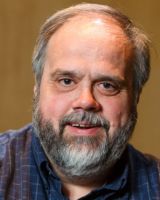
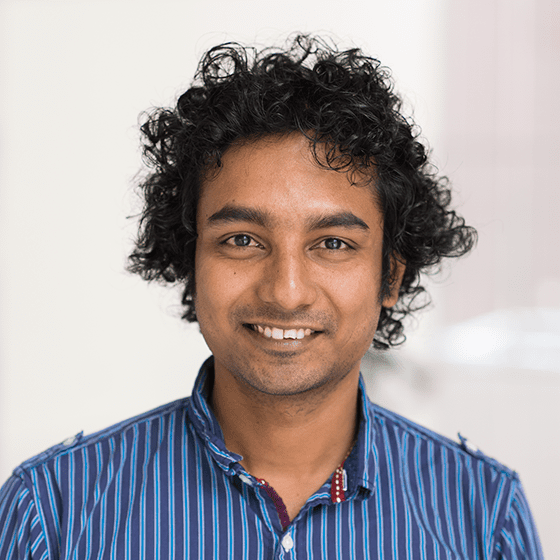
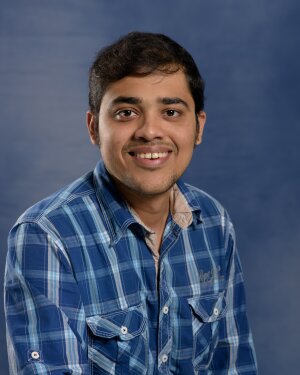
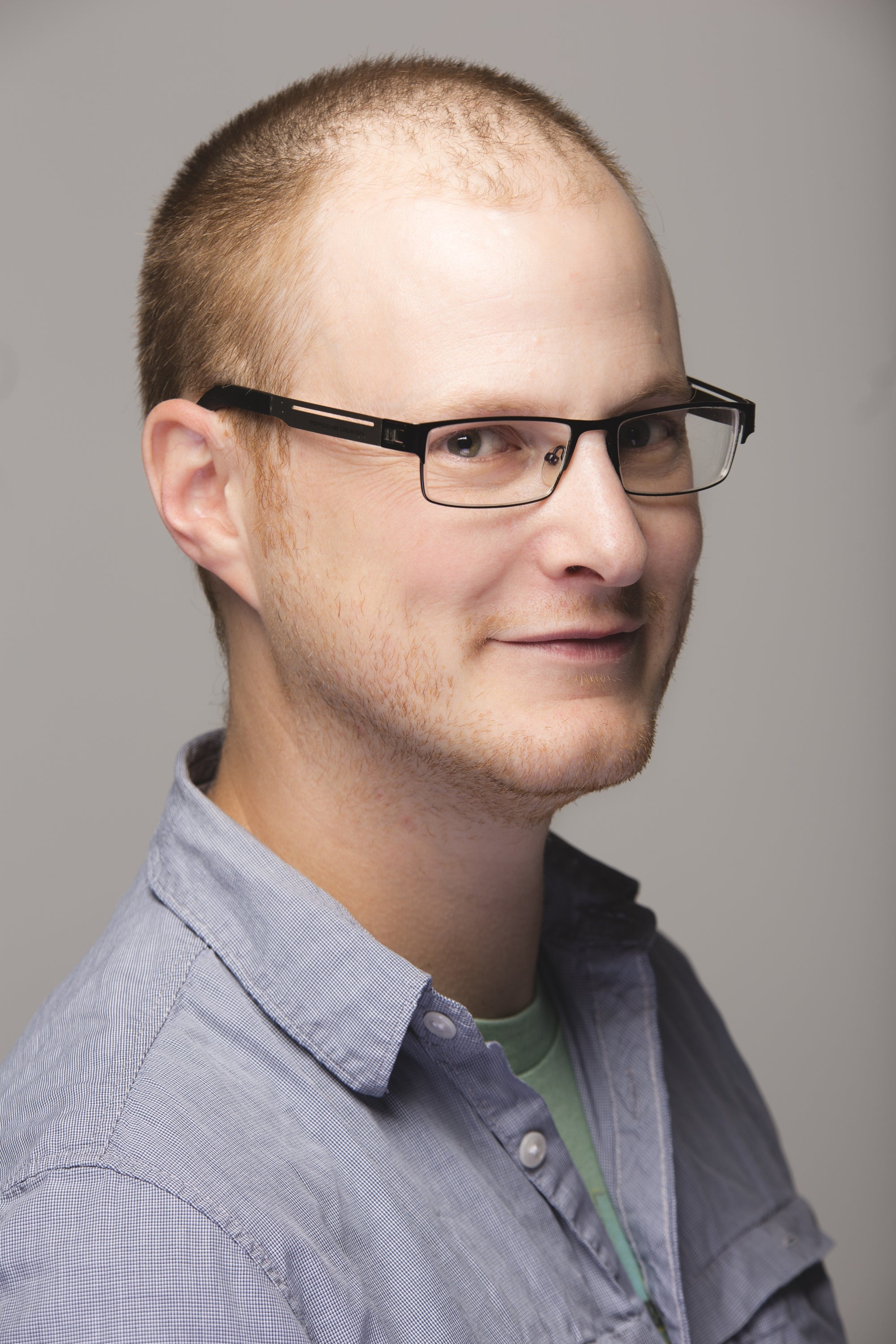
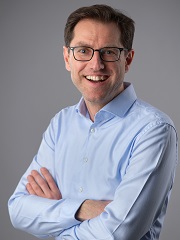
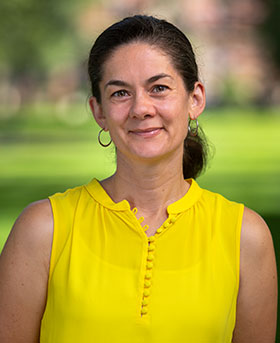
Martin Wells is the Charles A. Alexander Professor of Statistical Sciences at Cornell University, with joint appointments in Social Statistics, Clinical Epidemiology, and Industrial Labor Relations. Since joining Cornell in 1987, he has developed methodologies spanning Bayesian inference, tensor analysis, and machine learning applications in biomedicine and finance. His research integrates statistical theory with computational innovations, particularly in high-dimensional modeling and quantum-inspired algorithms. Recent work focuses on geometric approaches to tensor decomposition, misclassification correction methods, and phylodynamic models incorporating dormancy effects. Professor Wells teaches statistical methodology across disciplines including law, medicine, and biology, adapting analytical frameworks to diverse research contexts. His interdisciplinary collaborations extend to Weill Medical College and the School of Industrial and Labor Relations.
Peng Li is a Professor in the Department of Electrical and Computer Engineering at the University of California, Santa Barbara. His research focuses on integrated circuits, brain-inspired computing, electronic design automation, and hardware machine learning systems. He holds Fellow status in the Institute of Electrical and Electronics Engineers (IEEE). His work emphasizes neuromorphic engineering, spiking neural networks, and the intersection of machine learning with analog circuit design. Education includes a PhD in Electrical and Computer Engineering from Carnegie Mellon University, an MS in Systems Engineering from Xi'an Jiaotang University, and a BS in Information Science and Engineering from the same institution. His research has been recognized with prestigious awards including the ICCAD Ten-Year Retrospective Most Influential Paper Award and multiple Design Automation Conference Best Paper Awards. Key research trends in his articles include advancements in spiking neural networks (SNNs), hardware accelerators for neuromorphic computing, Bayesian optimization for analog circuit design, and robustness in machine learning systems. He explores topics like adversarial robustness, energy-efficient architectures, and data-efficient prediction techniques. His work bridges theoretical machine learning models with practical hardware implementations, particularly in 3D integration and systolic array acceleration. Notable contributions include pioneering hybrid approaches combining formal verification with machine learning for analog circuits (HFMV framework), and innovations in neuromorphic processors such as the 3D Liquid State Machine architecture. His research also addresses challenges in semiconductor manufacturing, including wafer map pattern recognition and failure detection through semi-supervised learning and contrastive methods. Awards highlight his impactful contributions to both design automation and neural computing. His grants and collaborations likely span industry partnerships in semiconductor technology and neuromorphic computing. He leads a lab focused on next-generation hardware-software co-design for intelligent systems, emphasizing energy efficiency and scalability.
Florent Krzakala is a Full Professor at École polytechnique fédérale de Lausanne (EPFL) in Switzerland, holding positions across multiple departments including the School of Basic Sciences (SB), School of Engineering (STI), and specifically within the Department of Physics (IPHYS) and Department of Electrical Engineering (IEM). He leads the Information, Learning and Physics Laboratory (IdePHICS) and maintains an office at ELD 239, Station 11, 1015 Lausanne. His research bridges statistical physics and computational disciplines, with significant contributions to understanding the theoretical foundations of machine learning and optimization problems. Dr. Krzakala received his MSc in Physics from Orsay, France in 1999, followed by a PhD in Statistical Physics from Orsay, Paris XI, France in 2002, and completed a postdoctoral position at Roma La Sapienza in 2004. This strong foundation in physics has informed his interdisciplinary approach to computational problems. His research interests span Statistical Physics, Machine Learning, Probability and Statistics, Computer Science, Information Theory, Inference on Graphs, Random Constraint Optimization, and Computational Optics. Krzakala's work focuses on applying methods from statistical physics to problems in theoretical computer science, probability, and machine learning. He investigates how concepts from disordered systems and phase transitions can illuminate computational barriers in optimization and inference tasks. His research has particular relevance for understanding the behavior of neural networks, compressed sensing, and high-dimensional statistical models. Analysis of his recent publications reveals a strong trend toward understanding the fundamental limits of learning in high-dimensional settings, with particular emphasis on phase transitions, statistical-to-computational gaps, and the theoretical properties of deep learning architectures. His work frequently bridges rigorous mathematical analysis with practical machine learning applications, demonstrating how insights from statistical physics can inform algorithm design and theoretical understanding in AI. Krzakala actively mentors the next generation of researchers, supervising numerous PhD students whose work continues to advance these interdisciplinary fields. His laboratory serves as a hub for researchers exploring the intersection of physics and computation, fostering collaborations across traditional disciplinary boundaries. He teaches advanced courses including Fundamentals of Inference and Learning, Statistical Physics, and Statistical Physics for Optimization & Learning, which examine the connections between physical principles and computational methods. His educational materials, including lecture notes on statistical physics methods in optimization and machine learning, have become valuable resources for students and researchers worldwide. As founder and scientific advisor of the startup Lighton, Krzakala has also demonstrated a commitment to translating theoretical insights into practical applications, particularly in the realm of optical computing for machine learning tasks.
Alejandro Sánchez Gracia is an Associate Professor at the Universitat de Barcelona's Faculty of Biology, affiliated with the Department of Genetics, Microbiology and Statistics. He leads the Molecular Evolutionary Genetics research group and directs the advanced course in 'Phylogenomics and Population Genomics: Inference and Applications.' Education: Llicenciat in Biology (Universitat de Barcelona, 1998), PhD in Biology (Universitat de Barcelona, 2006) Research Focus: Molecular mechanisms of chemosensory gene evolution in arthropods, development of bioinformatics tools for evolutionary and population genomics, and population genomics of adaptation in Drosophila. His work bridges computational methods with evolutionary biology, emphasizing genomic approaches to study adaptation. Key projects include analysis of chemoreceptor gene families across Panarthropoda, genomic studies of Canary Island endemic species, and development of tools like BITACORA for gene family annotation. He has contributed to major genomic resources such as DnaSP 6 and participated in initiatives like the Earth BioGenome Project. Active in collaborative networks like the European Drosophila Population Genomics Consortium and AdaptNET (Adaptive Genomics Network). Grants and Projects: 2021-2024: PID2020-113168GB-I00 (Ministry of Science, Spain) - Poligenic adaptation in Drosophila 2020-2021: Catalan blind scorpion genome project (Institut d'Estudis Catalans) Labs/Teams: Heads the Molecular Evolutionary Genetics group, collaborating on projects involving spider genomics, chemosensory evolution, and population-level adaptation studies.
Jayadev Acharya is an Associate Professor in the School of Electrical and Computer Engineering at Cornell University, with graduate field memberships in Computer Science and Operations Research and Information Engineering. His research focuses on the intersection of information theory, statistical inference, algorithms, and machine learning. He explores trade-offs between data, memory, time, and robustness in learning problems, including quantum information and machine unlearning. Education: B.Tech in Electronics and Communication Engineering from Indian Institute of Technology, Kharagpur (2007) M.S. in Electrical and Computer Engineering from University of California, San Diego (2009) Ph.D. in Electrical and Computer Engineering from University of California, San Diego (2014) Research Trends: His recent work (2020-2022) emphasizes information-constrained inference, differential privacy, quantum entropy estimation, and distributed learning. Key subfields include communication complexity, local privacy, and adaptive gradient processing. His publications span NeurIPS, ICML, COLT, and IEEE Transactions on Information Theory. Awards: Kenneth A. Goldman ’71 Excellence in Teaching Award (Cornell, 2022) MIT Energy Initiative Fellowship (2014) Shannon Graduate Fellowship (UCSD, 2012) Jack Keil Wolf Student Paper Award (ISIT, 2010) Advising and Grants: He advises Sourabh Bhadane, Saravanan Kandasamy, Yuhan Liu, Ziteng Sun, and Huanyu Zhang. Research funded by NSF-CAREER, NSF-CRII, NSF-CIF small grants, and Google Faculty Research Award.
Kelly W. Zhang is an Assistant Professor at Imperial College London's Mathematics Department (statistics section) and a faculty member in the I-X interdisciplinary AI initiative. Her research focuses on adaptive experimentation, reinforcement learning, and statistical inference with applications in healthcare and clinical trials. She holds a PhD from Harvard University and was a Postdoctoral Fellow at Columbia Business School. Notable awards include the Siebel Scholar (2023) and NSF Graduate Fellowship. Education: PhD in Computer Science from Harvard University (2023), advised by Susan Murphy and Lucas Janson; internships at Apple, Facebook AI, and eBay. Her work bridges statistical theory and practical applications in digital health interventions, with deployments in oral health and cannabis use trials. Research Interests: Reinforcement Learning Algorithms for Digital Interventions Statistical Methods in Adaptive Experimentation Clinical Trial Design and Monitoring Machine Learning Theory and Applications Awards: Siebel Scholar (2023) NSF Graduate Fellowship (PhD support) Presentations at NeurIPS 2021/2020 and Econometric Society Conference 2024 Grants and Funding: Her work has been supported through interdisciplinary initiatives at Imperial College and prior fellowships. She co-leads sessions on statistical reinforcement learning at conferences like INFORMS and JSM. Professional Activities: Co-organizer of sessions at INFORMS 2025, IMS-Bernoulli 2024, and workshops on Deployable RL. Active in academic outreach, including speaking at Amazon Berlin's StatML workshop.
Samuel Kou is the Chair of the Department of Statistics and a Professor of Biostatistics at Harvard University. He holds dual affiliations with the Harvard T.H. Chan School of Public Health and the Department of Statistics, Faculty of Arts and Sciences. With a Ph.D. in Statistics from Stanford University (2001), he has held academic positions at Harvard since 2001, advancing from Assistant Professor (2001–2005) to John L. Loeb Associate Professor (2005–2008), and ultimately Professor (2008–present). His research focuses on stochastic inference in biophysics, Bayesian modeling, nonparametric methods, and Monte Carlo techniques, with applications in single-molecule biophysics, financial modeling, and big data analytics. Notable contributions include the development of the equi-energy sampler and foundational work on stochastic networks in nanoscale biophysics. Publications span high-impact journals like the Journal of the American Statistical Association and Biometrika, with a consistent emphasis on bridging statistical theory and real-world applications in biology and finance. His work often integrates computational methods to address complex systems at the molecular and macroeconomic scales. Administratively, he oversees the Department of Statistics and collaborates across interdisciplinary initiatives. His educational background includes a B.S. in Computational Mathematics from Peking University (1997) and an M.S. in Statistics from Stanford (2000).
Brian Kulis is an Associate Professor at Boston University with appointments in the Department of Electrical and Computer Engineering, Computer Science, Systems Engineering, and the Faculty of Computing and Data Sciences. He holds the Peter J. Levine Career Development Professorship and has previously been an Amazon Scholar at Alexa AI (2019–2023) and an assistant professor at Ohio State University (2012–2015). His research focuses on machine learning, including large-scale optimization, metric learning, deep learning, Bayesian methods, and applications in audio and visual data analysis. He earned his PhD in Computer Science from the University of Texas at Austin (2008) and a BS in Computer Science and Mathematics from Cornell University. Key awards include the NSF CAREER Award (2015), CVPR Best Student Paper (2008), and ICML Best Student Paper (2007, 2005). His work spans publications in top venues like CVPR, NeurIPS, ICML, and ECCV, emphasizing scalable algorithms and domain adaptation. Current research explores metric learning, adversarial audio augmentation, and HPC anomaly detection. He advises multiple PhD students and collaborates on grants such as the NSF Traineeship for Sustainable Energy Solutions (2024). He teaches advanced courses in machine learning, deep learning, and data structures. His lab focuses on foundational and applied ML challenges, with affiliations in the Intelligent, Autonomous & Secure Systems group. Recent service includes senior area chair roles at AAAI, NeurIPS, and ICML.
Yulia Gel is a Professor in the Department of Statistics at Virginia Tech and serves as a Part-Time Program Director-Expert at the National Science Foundation (NSF). She holds a MSc (summa cum laude) and PhD in Mathematics from Saint Petersburg State University (Russia) and completed a postdoc in Statistics at the University of Washington. Her research focuses on uncertainty quantification in AI, statistical foundations of data science, spatio-temporal processes, and applications in climate science, healthcare, and blockchain analytics. She has received prestigious awards including the NSF Director’s Award (2023), ASA Distinguished Achievement Medal (2018), and TIES Abdel El-Shaarawi Award (2014). Gel has led grants on wildfire prediction, climate informatics, and blockchain data science. She serves on editorial boards of Statistica Sinica, Electronic Journal of Statistics, and Technometrics, and organizes workshops on AI for climate sustainability and fragile Earth systems. Her research group develops topological and geometric methods for graph neural networks, with applications to digital twins, environmental justice, and public health. Education: MSc (1997), PhD (2000) in Mathematics from Saint Petersburg State University; Postdoc in Statistics at University of Washington (2001–2003). Past roles include Professor at University of Texas at Dallas (2015–2024) and Associate Professor at University of Waterloo (2004–2014). Selected visiting positions include NASA Jet Propulsion Lab (2016–2017) and Isaac Newton Institute (2016–2017). She has pioneered statistical software packages like snowboot and funtimes for network inference and time-series analysis. Awards highlight her contributions to environmetrics and statistical methodologies. Current projects include NSF-funded research on AI-driven wildfire prediction and blockchain analytics for climate resilience. Her lab’s recent work emphasizes topological methods (e.g., zigzag persistence) for graph-based forecasting and adversarial robustness.
Sabyasachi Chatterjee is an Associate Professor in the Department of Statistics at the University of Illinois at Urbana-Champaign, affiliated with the College of Liberal Arts & Sciences. He joined UIUC in 2017 after serving as a Kruskal Instructor at the University of Chicago. He earned his PhD in Statistics from Yale University (2014), advised by Andrew Barron. His research focuses on nonparametric signal estimation, shape-constrained estimation (monotonicity, convexity, unimodality), statistical information theory, and resampling methods like cross-validation. He also explores statistical learning theory, online learning, and applied probability. His recent work includes advancements in quantile regression via dyadic CART, adaptive estimation of piecewise polynomials, and spatially adaptive prediction algorithms. Key contributions involve risk bounds for trend filtering and cross-validation frameworks for signal denoising. His research is supported by NSF Grant DMS-1916375 on nonparametric estimation under shape/norm constraints. Chatterjee collaborates on grants and has advised multiple students (though specific names are not listed in available texts). His lab’s work bridges theoretical statistics with practical applications in data science and signal processing.
Ryan Browne is an Assistant Professor in the Department of Statistics and Actuarial Science at the University of Waterloo. He holds a BMath (2004), MMath (2006), and PhD (2009) from the same institution. His research focuses on model-based clustering , classification , and measurement system quality assessment , with applications in multivariate analysis and statistical inference. He is particularly known for contributions to mixture models and their computational optimization. Education: BMath in Statistics, University of Waterloo (2004) MMath in Statistics, University of Waterloo (2006) PhD in Statistics, University of Waterloo (2009) Ryan’s work emphasizes flexible statistical methodologies , including advancements in skewed distributions, high-dimensional data analysis, and robust algorithms for clustering and classification. He has received the prestigious 2011 W.J. Youden Award from the American Statistical Association for his PhD research on measurement system evaluation. His research trends span computational statistics (e.g., sketching algorithms for big data) and model-based clustering innovations (e.g., mixtures of generalized hyperbolic distributions). Recent work explores parsimonious models, nested Gaussian structures, and efficient parameter estimation for complex datasets. Key Awards: 2011 W.J. Youden Award (American Statistical Association) Ryan collaborates on applied projects, including industrial ecology and sensory data analysis. He has developed R packages like mixture and MixGHD , which implement his methodological contributions.
Prof. Dr. Sören Laue is a Professor of Machine Learning at the University of Hamburg's Department of Informatics. His research focuses on optimization algorithms, machine learning frameworks, and high-performance computing. He leads the Machine Learning research group and developed the GENO optimization framework and the Matrix Calculus toolset. His work emphasizes GPU acceleration, tensor operations, and scalable solutions for classical machine learning problems. Projects: GENO solver (Python-based optimization), Matrix Calculus (derivative computation), and SQL-based tensor operations. Key Research Themes: Optimization frameworks, GPU computing, neural network scalability, and algorithm design. Selected recent publications highlight contributions to tensor calculus benchmarks, GPU-optimized machine learning pipelines, and novel optimization methods. His work bridges theoretical foundations and practical software tools for the machine learning community.
Lindsay C. Page is the Annenberg Associate Professor of Education Policy at Brown University and a faculty research fellow at the National Bureau of Economic Research (NBER). Her research focuses on applying quantitative methods to evaluate educational policies and programs, spanning from preschool through postsecondary education. She is particularly dedicated to understanding strategies that improve college transition and success for first-generation students. Dr. Page holds a PhD in quantitative policy analysis and master's degrees in statistics and education policy from Harvard University, complemented by a bachelor’s degree from Dartmouth College. Her educational background includes: Doctorate in Quantitative Policy Analysis (Harvard University) Master's in Statistics (Harvard University) Master's in Education Policy (Harvard University) Bachelor’s Degree (Dartmouth College) Research interests emphasize causal inference, large-scale experimental studies, and policy interventions targeting systemic barriers in higher education access and completion. She explores questions such as how financial aid, mentoring, and outreach programs affect enrollment and retention rates for underrepresented groups. Lindsay’s affiliation with the Annenberg Institute at Brown highlights her commitment to bridging research and practice in education. While no specific grants or advising cases are detailed in the text, her work consistently addresses policy challenges faced by first-generation college students. She is a member of the Brown University Affiliates Faculty Leadership and can be reached via Twitter .
Dr. M.Z. Naser is an Assistant Professor in the Glenn Department of Civil Engineering at Clemson University. His research focuses on causal and explainable machine learning methodologies applied to structural engineering, materials science, and fire safety. He holds a PhD from Michigan State University and an M.S. from the American University of Sharjah. Naser teaches courses such as Machine Learning for Civil Engineers and Structural Fire Engineering, emphasizing interdisciplinary innovation. His work bridges data-driven analysis with domain-specific knowledge to address challenges in resilient infrastructure design, including fire-resistant materials, structural retrofits, and AI-driven decision-making. Education: PhD, Michigan State University; M.S., American University of Sharjah Research Themes: Explainable AI, Fire Engineering, Structural Materials, Causal Inference Key Projects: Developing SPINEX framework, wildfire classification models, and cognitive infrastructure systems Recent publications analyze over 1000 fire tests to uncover spalling mechanisms, explore synthetic fire tests via GANs, and benchmark automated ML platforms. His work on causal diagrams for civil engineers and firefighter algorithms highlights contributions to both theory and practical applications. Naser also advocates for integrating AI into engineering education, emphasizing ethical and transparent model deployment.
Jose J. Muñoz is a Professor at the Universitat Politècnica de Catalunya (UPC), affiliated with the Department of Mathematics and the LACÀN research group. His work focuses on computational mechanics, mechanobiology, and inverse problems in biological systems. He holds a PhD in Aeronautics from Imperial College London (2004) and a dual degree in Mechanical Engineering from UPC and Civil Engineering from École Centrale Paris (1997). His research combines finite element methods, vertex models, and optimal control to study tissue morphogenesis, wound healing, and cancer mechanics. Current roles include leading the LACÀN research group and supervising PhD students in projects like optimal control of contractile systems and inverse mechanical analysis. Former students include Ashutosh Bijalwan and Cécilia Olivesi. He teaches Numerical Methods and Computational Mechanics at the UPC's Faculty of Mathematics and Statistics. His research interests span vertex and finite element modeling, cell rheology, and stability analysis of biological tissues. Notable contributions include models for epithelial wound healing, Drosophila embryo development, and mechanical oscillations in tissues. His work often integrates experimental data with computational frameworks to infer non-observable mechanical parameters.