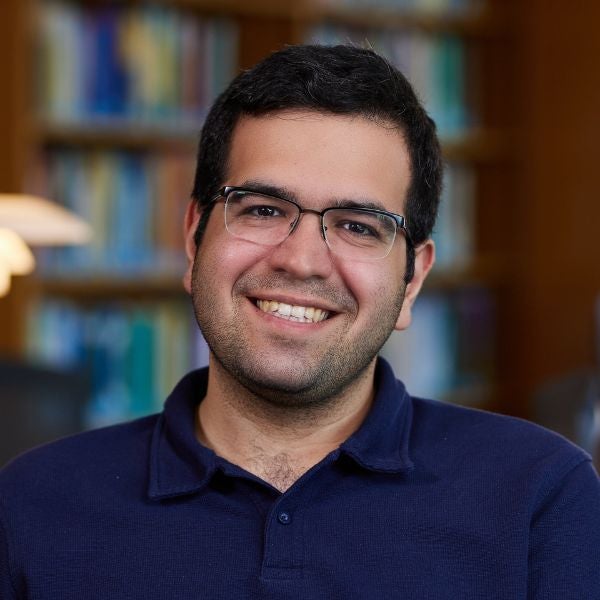
Amos Storkey is a Professor at the School of Informatics , University of Edinburgh , with a focus on machine learning, Bayesian methods, and their applications in neuroscience and astronomy. His research spans deep learning, generative models, and stochastic optimization under real-world constraints. Education: MA in Mathematics, Trinity College, Cambridge (1989) Part III (Theoretical Physics), Trinity College, Cambridge (1992) PhD in Neural Networks, Imperial College London (1995) Research Interests: Storkey’s work addresses core challenges in machine learning, including model understanding, efficiency, and transfer learning. Key topics include: Generative Models : Applications in medical imaging (brain/retinal) and music generation. Bayesian & Probabilistic Methods : In healthcare, astronomy, and diffusion processes. Optimization & Reinforcement Learning : Stochastic systems, meta-learning, and few-shot learning. Medical Applications : Structural connectivity analysis in ALS and aging studies. Article Trends: Recent publications emphasize interdisciplinary applications of machine learning, with 5/15 focused on neuroscience (fMRI, ALS, aging), 3/15 on optimization/sampling, and 2/15 on astronomical data analysis. Emerging themes include machine learning markets and generative models for hallucinations.
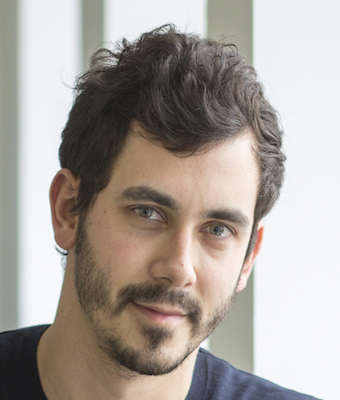
David Ginsbourger is a Professor and Head of Research Group at the Institute of Mathematical Statistics and Actuarial Science (IMSV) within the University of Bern, Switzerland. He maintains dual affiliations through his role at IMSV and as a member of the Multidisciplinary Center for Infectious Diseases (MCID), reflecting interdisciplinary engagement across statistical methodology and applied domains. His research program centers on advanced statistical methodologies with emphases on Gaussian process modeling, uncertainty quantification, and experimental design for computer experiments. Key contributions include novel kernel constructions for equivariant systems, sequential design strategies for excursion set estimation, and efficient computational frameworks for spatial distributional modeling. His work bridges theoretical statistics with practical applications in agriculture, chemoinformatics, environmental science, and risk assessment, demonstrating consistent innovation in handling complex prediction problems under uncertainty. Analysis of his 15 most recent publications (2024-2025) reveals persistent methodological development in Gaussian process theory alongside expanding application domains. Recurring themes include integration-free kernel design for structured data, rare event probability estimation, and multivariate forecast calibration. His research exhibits strong continuity in addressing computational challenges for large-scale inverse problems while increasingly incorporating domain-specific constraints from fields like molecular chemistry and agricultural science. Ginsbourger leads a dedicated research group at IMSV focused on advancing statistical frameworks for computer experiments and uncertainty quantification. The group maintains active collaborations across disciplines, particularly evident in recent work connecting statistical methodology to infectious disease modeling through MCID affiliations and agricultural optimization projects.
Alireza Fallah is an Assistant Professor of Computer Science at Rice University, joining in Fall 2025 after postdoctoral research at UC Berkeley under Michael Jordan and a Gamelin Postdoctoral Fellowship at Simons Laufer Mathematical Sciences Institute. His interdisciplinary work bridges machine learning theory, game theory, algorithmic market design, mechanism design, optimization, and privacy to address human-algorithm interaction challenges. His educational background includes dual BSc degrees in Mathematics and Electrical Engineering from Sharif University of Technology (2017), followed by MS (2019) and PhD (2023) in Electrical Engineering and Computer Science from MIT under Asu Ozdaglar and Daron Acemoglu. His doctoral research was supported by Apple Scholars, MathWorks Engineering, and Siebel Scholarships. Dr. Fallah's research focuses on designing privacy-preserving mechanisms for data markets, dynamic allocation systems, and strategic environments. Key contributions include frameworks for Bayesian coordinate differential privacy, analysis of price discrimination under privacy constraints, and fair allocation in dynamic mechanism design—addressing critical tensions between algorithmic efficiency, user privacy, and economic incentives in modern digital platforms. His 15 most recent publications (2021-2025) reveal a consistent trajectory toward integrating privacy guarantees with economic mechanisms, particularly in data markets and dynamic allocation. Over 60% of his recent work addresses privacy-preserving design, with growing emphasis on real-world applications like epidemic testing and platform architecture. Notable recognitions include: Apple Scholars in AI/ML PhD fellowship MathWorks Engineering Fellowship Siebel Scholarship Gamelin Postdoctoral Fellowship at Simons Institute ACM SIGecom Doctoral Dissertation Award Honorable Mention He currently leads the Ken Kennedy Institute-funded research cluster on "Foundations of Trustworthy AI" at Rice, focusing on privacy, fairness, security, and societal impact. His collaborative work with institutions like MIT, UC Berkeley, and Paris Dauphine demonstrates strong interdisciplinary engagement. Though student advising isn't detailed in source materials, his role as Assistant Professor indicates active graduate mentorship. Dr. Fallah co-organizes community initiatives like the EC conference tutorial on Economics of Data and participates in research programs at Simons Institute, maintaining active leadership in the trustworthy AI ecosystem through his newly established Rice research cluster.
Aurélien Bellet is a senior researcher (directeur de recherche) at Inria, France, affiliated with the PreMeDICaL Team (Precision Medicine by Data Integration and Causal Learning), an Inria/Inserm research group based in Montpellier, and an associate member of the Magnet Team (MAchine learninG in information NETworks) based in Lille. His research focuses on the theory and algorithms of machine learning, particularly designing large-scale learning algorithms that balance statistical performance with computational complexity, communication efficiency, privacy, and fairness. His key research areas include distributed/federated/decentralized learning algorithms, privacy-preserving machine learning, representation learning, distance metric learning, optimization for machine learning, graph-based methods, statistical learning theory, and fairness in machine learning, with applications to NLP, speech recognition, and health. Bellet has published extensively in top machine learning and security conferences including ICML, ICLR, CCS, AISTATS, and NeurIPS. His recent work (2024-2025) focuses on privacy amplification in decentralized learning, federated causal inference, privacy attacks in decentralized systems, and improved theoretical guarantees for decentralized optimization algorithms. He is actively involved in promoting public awareness of AI, privacy, and transparency issues, having contributed to media outlets like La Croix, Libération, and participated in events organized by CNIL (French Data Protection Authority). Bellet has developed several open-source libraries including declearn for federated learning, FLamby for healthcare federated learning benchmarks, and metric-learn for metric learning algorithms, all under permissive open-source licenses. He has taught courses on privacy-preserving machine learning at the University of Lille and Ecole Centrale de Lille, and previously taught advanced machine learning courses at Télécom Paris.
Vasilis Syrgkanis is an Assistant Professor at the Department of Management Science and Engineering , Stanford University, with courtesy appointments in Computer Science and Electrical Engineering. He leads the Stanford Causal AI Lab and is an Associated Director of the Stanford Causal Science Center . His research spans machine learning, causal inference, econometrics, online learning, reinforcement learning, game theory/mechanism design, and algorithm design . Education PhD in Computer Science, Cornell University (advised by Eva Tardos) Diploma in EECS, National Technical University of Athens Research Focus Develops methods for causal machine learning , including courses on Applied Causal Inference and Foundations of Causal ML. Works on treatment effect estimation , instrumental variable regression , and robust policy learning under unobserved heterogeneity. Explores intersections of game theory and machine learning , particularly in auction design and strategic exploration. Scientific Contributions Proposes neural causal partial identification and adaptive instrument design frameworks. Develops doubly robust learning and minimax IV regression algorithms with theoretical guarantees. Introduces incentive-aware synthetic control and structure-agnostic causal effect estimation methods. Awards & Recognition 2023 Bodossaki Distinguished Young Scientist Award in Applied Sciences 2022 Amazon Research Award in Machine Learning Algorithms and Theory Best Paper Awards at COLT 2019, EC 2015, NeurIPS 2015, and others PhD Advisees Ravi Sojitra (MS&E, co-advised with Guido Imbens) Hui Lan (ICME) Jikai Jin (ICME) Jiyuan Tan (MS&E, co-advised with Jose Blanchet) Keertana Veeramony Chidambaram (MS&E) Contact Email: vsyrgk@stanford.edu Office: Huang Engineering Center, Room 252, Stanford, CA 94305
Stijn Vansteelandt is Full Professor in the Department of Applied Mathematics, Computer Science and Statistics at Ghent University and Professor of Statistical Methodology at the London School of Hygiene and Tropical Medicine. With over 150 peer-reviewed publications and role as Co-Editor of Biometrics, he is a leading authority in causal inference methodology development for experimental and observational data. His research centers on causal inference under minimal assumptions, with specialized expertise in post-machine-learning inference, semi-parametric statistics, and missing data handling. Recent work focuses on ensuring valid confidence intervals and hypothesis tests when integrating machine learning algorithms into causal analyses, addressing critical challenges in modern biostatistics. Analysis of his 2024-2025 publications reveals dominant themes in causal machine learning applications, particularly for high-dimensional mediation analysis and time-varying confounding. Key methodological contributions include debiasing synthetic data, causal net benefit estimation with censored outcomes, and innovative approaches to treatment switch adjustment in clinical trials. No scientific awards were documented in source materials. Information regarding student advising, research grants, laboratory infrastructure, or collaborative teams was not provided in the available documentation.
Xiaosheng Mu is an Associate Professor in the Department of Economics at Princeton University. He previously held positions as an Assistant Professor of Economics at Columbia University and a post-doctoral researcher at the Cowles Foundation at Yale University. He earned his Ph.D. in Economics from Harvard University, advised by Drew Fudenberg, Eric Maskin, and Tomasz Strzalecki. His research focuses on information acquisition, mechanism design, stochastic orders, and their applications to decision making. Key contributions include work on pricing strategies under informational robustness, privacy-preserving auctions, and market dynamics on global e-commerce platforms. His work bridges theoretical economics with practical applications in algorithm design, privacy mechanisms, and behavioral analysis. Xiaosheng has published in top journals such as Econometrica, the Quarterly Journal of Economics, and the Journal of Political Economy. Notable publications include 'Monotone Additive Statistics' (Econometrica, 2024) and 'Algorithmic Design: A Fairness-Accuracy Frontier' (Journal of Political Economy, 2024). His research often employs advanced mathematical techniques from probability theory, game theory, and optimization. He has collaborated extensively with scholars such as Annie Liang, Vasilis Syrgkanis, and Luciano Pomatto. Current research projects explore information friction in digital markets and the design of privacy-preserving economic mechanisms. His work consistently addresses foundational questions in economics while maintaining relevance to modern technological challenges.
Didier Dubois is a CNRS Research Director (DR2) at the Institut de Recherche en Informatique de Toulouse (IRIT) within Université Paul Sabatier, Toulouse. He leads the ADRIA team (Argumentation, Decision, Reasoning, Uncertainty, Learning) in the 'Reasoning and Decision' thematic group. His work focuses on fuzzy sets, possibility theory, imprecise probability, decision theory, and uncertainty management in AI and operational research. Education: Ingénieur Civil de l'Aéronautique from ENSAE (1975) Docteur Ingénieur from ENSAE (1977) Docteur d'Etat from Université de Grenoble (1983) Habilitation à diriger des recherches from Université Paul Sabatier (1986) Research Interests: Explores mathematical models for uncertainty and vagueness, including numerical/qualitative possibility theory, risk analysis under partial ignorance, generalized possibilistic logic, qualitative decision theory, and applications in scheduling, information retrieval, and soft constraints. Key Contributions: Co-developed fuzzy set theory applications, edited influential volumes on uncertainty and decision-making, and pioneered formal frameworks for combining probability and possibility. Current research emphasizes bipolar knowledge representation and epistemic reasoning. Editing Roles: Co-Editor-in-Chief of Fuzzy Sets and Systems since 1999, and series editor for the Handbooks of Fuzzy Sets . Awards: Docteur Honoris Causa, Polytechnic School of Mons (1997) IFSA Fellow (1999) ISI Most Cited French Scientist (2001) IEEE Neural Network Society Pioneer Award (2002) Advising: Supervised numerous PhD students since 2005, including work on possibility theory, risk analysis, and decision fusion. Collaborates with institutions like IRSN, ONERA, and Airbus.
Yu Cheng is an Assistant Professor in the Department of Computer Science at Brown University. He holds a Ph.D. from the University of Southern California, advised by Shang-Hua Teng. Prior to his current role, he was a postdoc at Duke University, a visiting member at the Institute for Advanced Study, and an Assistant Professor at the University of Illinois at Chicago. His research focuses on machine learning, optimization, and game theory, with recent emphasis on robust algorithms for machine learning, including high-dimensional robust statistics and non-convex optimization. He teaches advanced courses such as CSCI2952Q: Robust Algorithms for Machine Learning and CSCI1520: Algorithmic Aspects of Machine Learning. His work has been recognized with the Best Paper Award at WINE 2018. Yu advises Ph.D. students like Binhao Chen and Xing Gao (co-advised with Lev Reyzin), and has mentored undergraduate researchers including Tianle Jiang and Haichen Dong. His algorithmic contributions span spectral graph theory, mechanism design, and strategic classification. Recent publications address challenges in robust matrix sensing, outlier-robust estimation, and efficient algorithms for participation-constrained planning. Affiliations: Brown University, University of Illinois at Chicago (former), Duke University (former postdoc) Research Areas: Robust machine learning, non-convex optimization, algorithmic game theory Key Projects: Robust algorithms for high-dimensional data, strategic classification systems, spectral graph sparsification
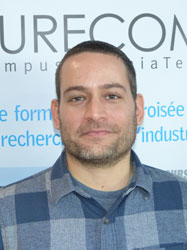
Fotios Stavrou is an Assistant Professor at the Communication Systems Department of EURECOM, a leading research institution in France. His academic journey includes a Diploma in Electrical and Computer Engineering from Aristotle University of Thessaloniki (2008), a PhD in Electrical Engineering from the University of Cyprus (2016), and postdoctoral research at Aalborg University (2016–2017) and KTH Royal Institute of Technology (2017–2021). Currently, he leads research in goal-oriented semantic communication, networked control systems, and interdisciplinary applications combining control theory, communication, optimization, and AI. His research focuses on semantic-aware communication paradigms, emphasizing the mathematical framework of information significance and utility. Key areas include rate-distortion-perception theory, digital twin-enabled optical networks, and AI-driven automation. He actively contributes to projects like the EU-funded 6G-GOALS initiative, aiming to integrate AI-native networks and semantic communication for future 6G systems. Notable achievements include a Best Poster Award at MenaML 2025 and a Best Paper Award at ACP 2023. His work spans over 40 publications, with recent focus on optimizing communication systems for semantic efficiency, digital twin applications, and resource allocation under uncertainty. He mentors PhD students and postdoctoral researchers, fostering innovation in both theoretical and applied domains. Current projects involve autonomous optical network management, leveraging digital twins and large language models, alongside foundational studies in rate-distortion-perception functions. His research bridges fundamental theory with practical implementations, addressing challenges in 5G/6G networks and networked control systems.
Thomas Courtade is an Associate Professor in the Department of Electrical Engineering and Computer Sciences at the University of California, Berkeley. He joined Berkeley in 2014 after a postdoctoral fellowship at Stanford University, supported by the NSF Center for Science of Information. His research focuses on information theory, data science, and their intersections with machine learning and privacy-preserving algorithms. Education: Ph.D. in Electrical Engineering, University of California, Los Angeles (2012) M.Sc. in Electrical Engineering, University of California, Los Angeles (2008) B.Sc. in Electrical Engineering, Michigan Technological University (2007, summa cum laude) Research Interests: Information Theory and its applications to network communication Privacy-preserving data analysis and differential privacy Statistical estimation under heterogeneous privacy constraints Optimization in distributed systems and market design Functional inequalities (Brascamp-Lieb, Poincaré-Korn) Machine learning with emphasis on model robustness and efficiency Awards and Fellowships: Electrical Engineering Award for Outstanding Teaching (2020) Hellman Fellow (2016) Advising and Grants: Supervised no listed students (student names not provided in text) Recipient of NSF CAREER Award (2018) Labs and Collaborations: Berkeley Laboratory for Information and System Sciences (BLISS) Center for Theoretical Foundations of Learning, Inference, and Mathematics (CLIMB)
Jose Apesteguia is an ICREA Research Professor at the Department of Economics and Business , Universitat Pompeu Fabra (Barcelona). His research bridges behavioral economics and decision theory , focusing on bounded rationality and stochastic choice modeling. PhD in Economics (Public University of Navarra, 2001) Postdoctoral work at University of Bonn Academic career at UPF since 2006 His work examines how individuals deviate from classical rationality through random utility models , reference dependence , and sequential decision rules . Articles in journals like Econometrica and Journal of Political Economy analyze the computational and empirical foundations of behavioral heterogeneity. Recent studies include air pollution's impact on adolescent attention and stochastic representative agent models . Collaborations span Miguel A. Ballester, Albert Costa, and Jörg Oechssler across economics, psychology, and business domains.
Angel Manuel León Valle is a Professor in the Department of Fundamentals of Economic Analysis at the Faculty of Economic and Business Sciences, University of Alicante. He has been a faculty member since 2000 and is actively involved in teaching, research, and academic administration. He has taught a wide range of courses including Mathematics, Econometrics, and Financial Management across various undergraduate and dual-degree programs. PhD in Business Administration and Management, University of Alicante (1998) Master's in Economics and Finance, CEMFI Graduate in Economics and Business Administration, University of Alicante (1991) His research focuses on financial econometrics, particularly on financial risk measurement, investment portfolio management, and valuation of financial and real derivatives. He has made significant contributions to modeling asset returns using semi-nonparametric distributions, copulas, and higher-order moments such as skewness and kurtosis. His work bridges theoretical econometric modeling with practical financial risk applications. The recent articles highlight a consistent research trajectory in financial risk modeling, with a focus on improving Value-at-Risk and Expected Shortfall estimation, analyzing energy market risks, and extending classical models like the Solow growth model to contemporary crises. His publications appear in top journals including the Journal of Banking and Finance and Journal of Empirical Finance, reflecting a strong empirical and methodological orientation. He has been awarded multiple competitive public research grants as principal investigator, funded by the Ministry of Science and Innovation and the Valencian Government. His leadership in research projects underscores his role as a key figure in quantitative finance and econometrics in Spain. Directed or co-directed 12 doctoral theses Supervised 8 master’s or final degree projects in the last five years He has coordinated several research groups and projects, including the Macroeconomics and Financial Econometrics (MacroMetrics) group. His ongoing projects extend into 2029, indicating sustained research activity and institutional support.
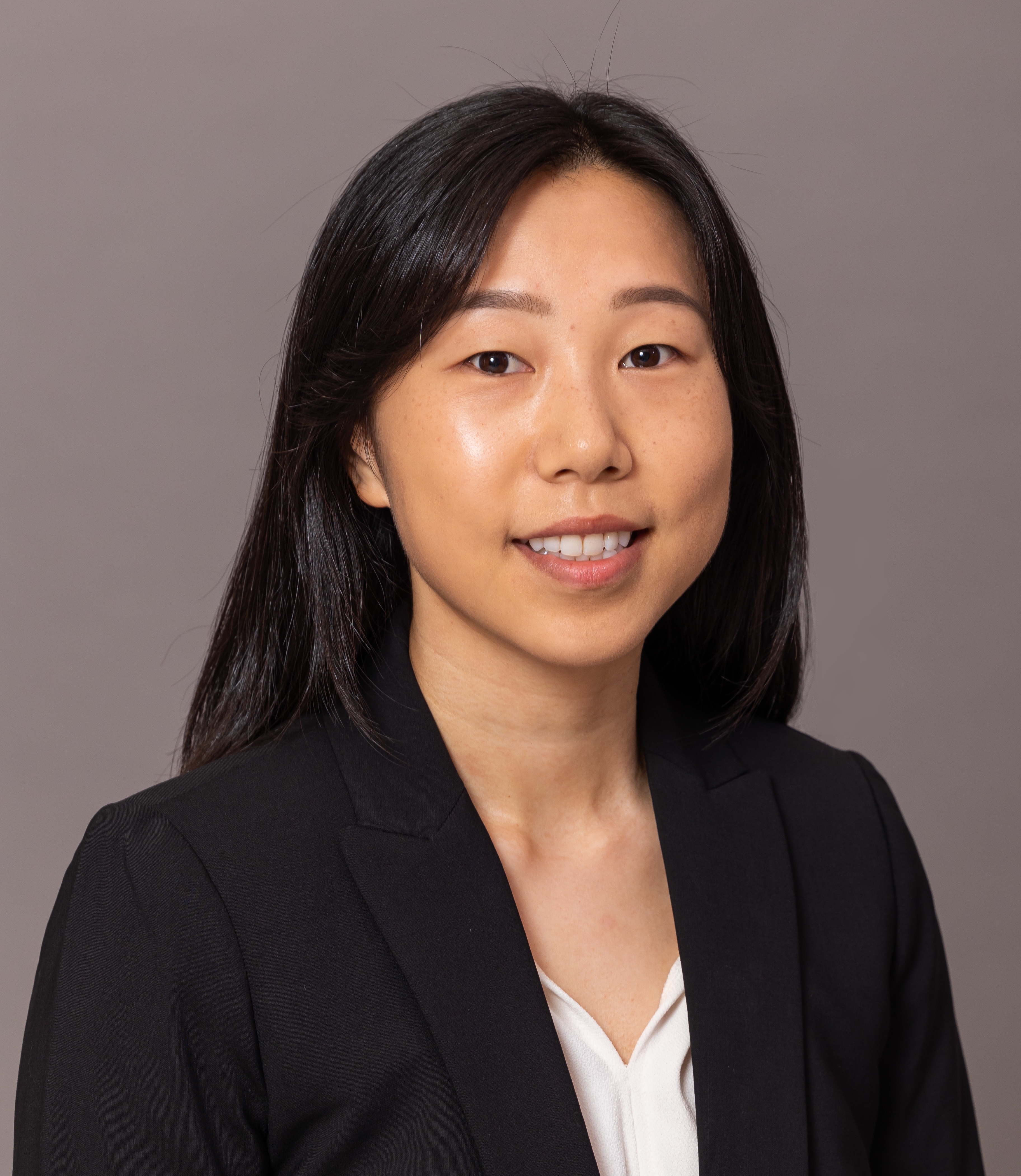
Jackie Baek is an Assistant Professor in the Department of Technology, Operations, and Statistics at the Leonard N. Stern School of Business, New York University, where she joined in January 2023. Her research bridges machine learning, operations research, and societal impact, focusing on algorithmic fairness, decision-making systems, and data-driven applications in healthcare and online platforms. Ph.D., Operations Research, Massachusetts Institute of Technology (2022) Bachelor, Mathematics, University of Waterloo Her research interests span Machine Learning, Algorithmic Fairness, Data-Driven Operations, Healthcare Analytics, Revenue Management, and Transportation Systems . She develops algorithms that improve decision-making while examining the societal consequences of algorithmic systems, particularly in hiring and health interventions. Her work combines theoretical rigor with practical applications, often involving collaborations with institutions like the Simons Institute at UC Berkeley. The recent publications reflect a strong trend in fairness-aware machine learning, bandit algorithms, and behavioral health interventions . Her work on TS-UCB improves Thompson sampling efficiency, while papers on statistical discrimination and algorithmic monoculture highlight ethical concerns in hiring algorithms. Other works apply machine learning to global health, such as COVID-19 forecasting and personalized behavioral interventions. These contributions appear in top-tier journals and conferences including Management Science , Operations Research , PNAS , and ACM FAccT . Her scientific awards include: Winner, Pierskalla Best Paper Award (2024) Second place, MSOM Student Paper Competition (2022) Finalist, George Nicholson Student Paper Competition (2021) Finalist, RMP Jeff McGill Student Paper Award (2021) Honorable Mention, MIT ORC Best Student Paper Award (2021) Oral presentation at EAAMO (2021) Jackie Baek has advised or collaborated on research with students and scholars such as Hamsa Bastani, Shihan Chen, and Vivek Farias. She has contributed to forecasting efforts through the COVID-19 Forecast Hub and presented her work at venues like BIRS. While no specific grants are mentioned, her publications suggest support from institutions like MIT, Simons Institute, and NYU Stern. She is actively involved in research groups focusing on dynamic allocation and matching, as evidenced by her BIRS talk in 2025. She maintains an active research presence with code available on GitHub and participates in interdisciplinary collaborations across computer science, operations, and social impact. Her lab or research team appears to focus on algorithmic fairness and decision systems, likely involving graduate students and postdocs in ongoing projects related to fairness, learning, and operations.
Jean-François Bégin is an Associate Professor in the Department of Statistics and Actuarial Science at the Faculty of Science, Simon Fraser University. He is a Fellow of both the Society of Actuaries and the Canadian Institute of Actuaries, underscoring his expertise and leadership in actuarial science and financial risk modeling. He obtained his academic training from leading Canadian institutions: a PhD in Administration (Financial Engineering) from HEC Montréal under the supervision of Geneviève Gauthier; an MSc in Mathematics (Applied Mathematics) from Université de Montréal supervised by Mylène Bédard and Patrice Gaillardetz; and a BSc in Mathematics (Financial Mathematics) from the same university. His thesis work centered on simulation schemes for stochastic models in finance. His research lies at the intersection of actuarial science, financial econometrics, and quantitative finance, with major themes including stochastic volatility modeling, filtering methods, option pricing, pension economics, mortality forecasting, credit risk, and climate risk. He develops advanced statistical and computational methods to model financial and insurance risks under uncertainty. His recent publications—appearing in journals such as Management Science , Journal of Econometrics , Insurance: Mathematics and Economics , and North American Actuarial Journal —reflect a strong trend toward integrating econometric modeling with practical applications in pensions, insurance, and derivatives. His work increasingly explores collective risk-sharing mechanisms in pension pools, model uncertainty in economic scenario generation, and the use of high-frequency and aggregated data in risk modeling. His scientific contributions have been recognized through fellowships in two of the most prestigious actuarial bodies: Fellow of the Society of Actuaries Fellow of the Canadian Institute of Actuaries He is an active supervisor of graduate and undergraduate students, mentoring research in areas such as financial econometrics, Bayesian estimation, pension pooling, climate risk, and option pricing. He has advised numerous Master’s and doctoral students and welcomes new applicants with strong quantitative skills. He has also contributed to funded research and industry-oriented reports, particularly through collaborations with the Society of Actuaries and the Canadian Institute of Actuaries. He teaches advanced courses in financial economics, stochastic processes, Monte Carlo simulation, and actuarial communication at SFU, and previously taught at HEC Montréal and Université de Montréal. His research group engages with interdisciplinary challenges in risk modeling and continues to develop innovative frameworks for actuarial and financial decision-making.