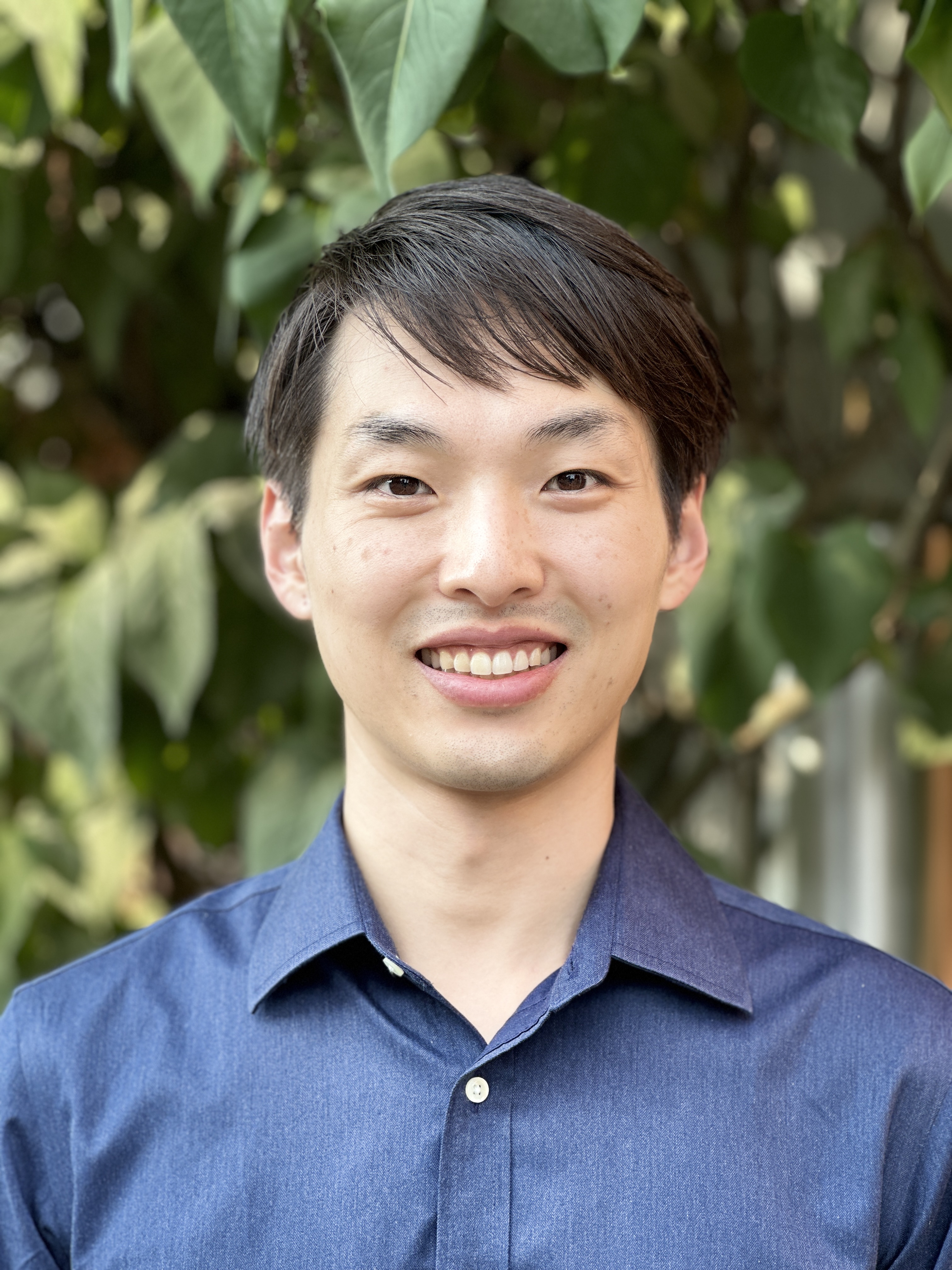
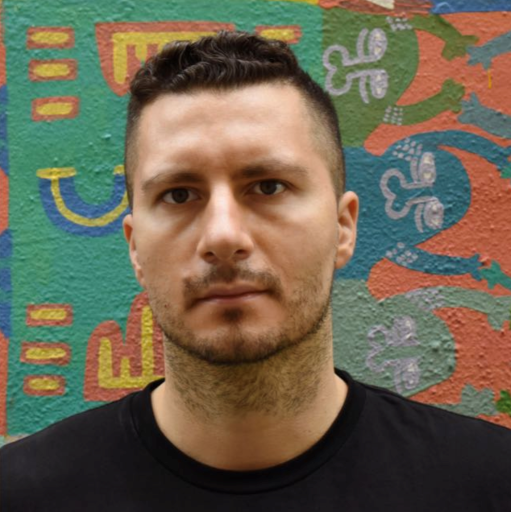
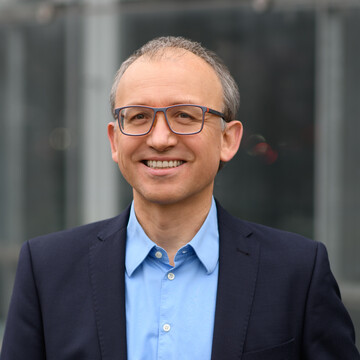
Youngtak Sohn is an Assistant Professor in the Division of Applied Mathematics at Brown University. His research bridges probability theory with statistical physics, machine learning, and theoretical computer science. Current investigations focus on high-dimensional statistical inference, random constraint satisfaction problems, and phase transitions in disordered systems. Previously, he was a postdoctoral researcher at MIT and earned his PhD in Statistics from Stanford University under Amir Dembo. Key research areas include: Phase transitions in random constraint satisfaction problems Statistical-computational gaps in high-dimensional inference Replica symmetry breaking in spin glass models Sharp thresholds in graph inference and community detection His publications demonstrate deep mathematical rigor, with recent work establishing fundamental limits in statistical estimation using low-degree polynomials and characterizing exact phase transitions in stochastic block models. The research consistently develops new mathematical frameworks for understanding computational thresholds in high-dimensional statistics and statistical physics. He mentors students through programs like MIT PRIMES, guiding projects on hypergraph coloring thresholds. His teaching portfolio includes graduate courses in probability theory and seminars on statistical learning theory.
Ryan Tibshirani is a Professor of Statistics at the University of California, Berkeley, and Principal Investigator in the Delphi group. Previously, he was faculty at Carnegie Mellon University (2011–2022). He holds a Ph.D. in Statistics (2011) and a B.S. in Mathematics (2007) from Stanford University. His research focuses on high-dimensional statistics, nonparametric methods, distribution-free inference, and machine learning, with applied work in computational epidemiology, particularly tracking and forecasting epidemics like influenza and COVID-19. He has contributed to open-source tools like the conformalInference R package for predictive inference. Education: Ph.D. in Statistics, Stanford University (2011); B.S. in Mathematics, Stanford University (2007). Professional service includes Editor-in-Chief roles for Foundations and Trends in Machine Learning and Statistics, and membership in the Institute of Mathematical Statistics Council. Research interests span theoretical and applied statistics, including convex optimization, numerical methods, and collaborative efforts in public health forecasting. His work on the Delphi group has advanced real-time epidemic monitoring via sensor fusion and probabilistic forecasting. Recent projects address challenges in estimating time-varying epidemic severity and improving predictive model calibration under distribution shifts. Key contributions include unifying conformal prediction theories, developing trend filtering methods for lattice data, and advancing understanding of cross-validation in overparameterized models. His software tools emphasize reproducibility and scalability for large-scale statistical tasks.
Friedrich Götz is an Associate Professor of Psychology in the Department of Psychology within the Faculty of Arts at the University of British Columbia. He holds a PhD (2021) and MPhil (2017) from the University of Cambridge and a BSc (2016) from the University of Konstanz. PhD, University of Cambridge (UK), 2021 MPhil, University of Cambridge (UK), 2017 BSc, University of Konstanz (Germany), 2016 Dr. Götz leads the Personality and Geographical Ambiance (PANGEA) Lab, focusing on geographical psychology and regional personality differences through interdisciplinary Big Data approaches. His research integrates social and personality psychology with behavioral science to examine real-world outcomes, including pandemic behavior, cultural shifts, and person-environment interactions. Additional interests span mobility/migration, wanderlust, courage, entrepreneurship, and experience sampling methods. He collaborates with TIME Magazine on large-scale surveys involving over 3 million participants. His publication trends reveal consistent contributions to top journals like Nature Human Behaviour and Journal of Personality and Social Psychology , with recent work emphasizing methodological rigor, geographical influences on behavior, and pandemic-related psychological responses. Key themes include spatial analysis techniques, personality-environment interactions, and the societal implications of psychological research. Rising Star Award (Association for Psychological Science), 2025 SAGE Emerging Scholar Award (Society for Personality and Social Psychology), 2025 Top 40 under 40 – Germany (CAPITAL Magazine), 2024 President’s New Researcher Award (Canadian Psychological Association), 2024 Best Dissertation Prize (German Psychological Society), 2021 Leading Scholar (Green College), 2021 Dr. Götz advises students through UBC's Psychology graduate programs and teaches undergraduate courses (PSYC 305A: Personality Psychology) and graduate courses (PSYC 528: Methods in Social Psychology and Personality; PSYC 569: Contemporary Conceptual Issues). His TIME Magazine collaboration represents a significant grant-adjacent initiative. The PANGEA Lab operates on principles of inclusivity and diversity, acknowledging its location on the unceded territory of the xʷməθkʷəy̓əm (Musqueam) people, and focuses on how humans and environments mutually shape each other.
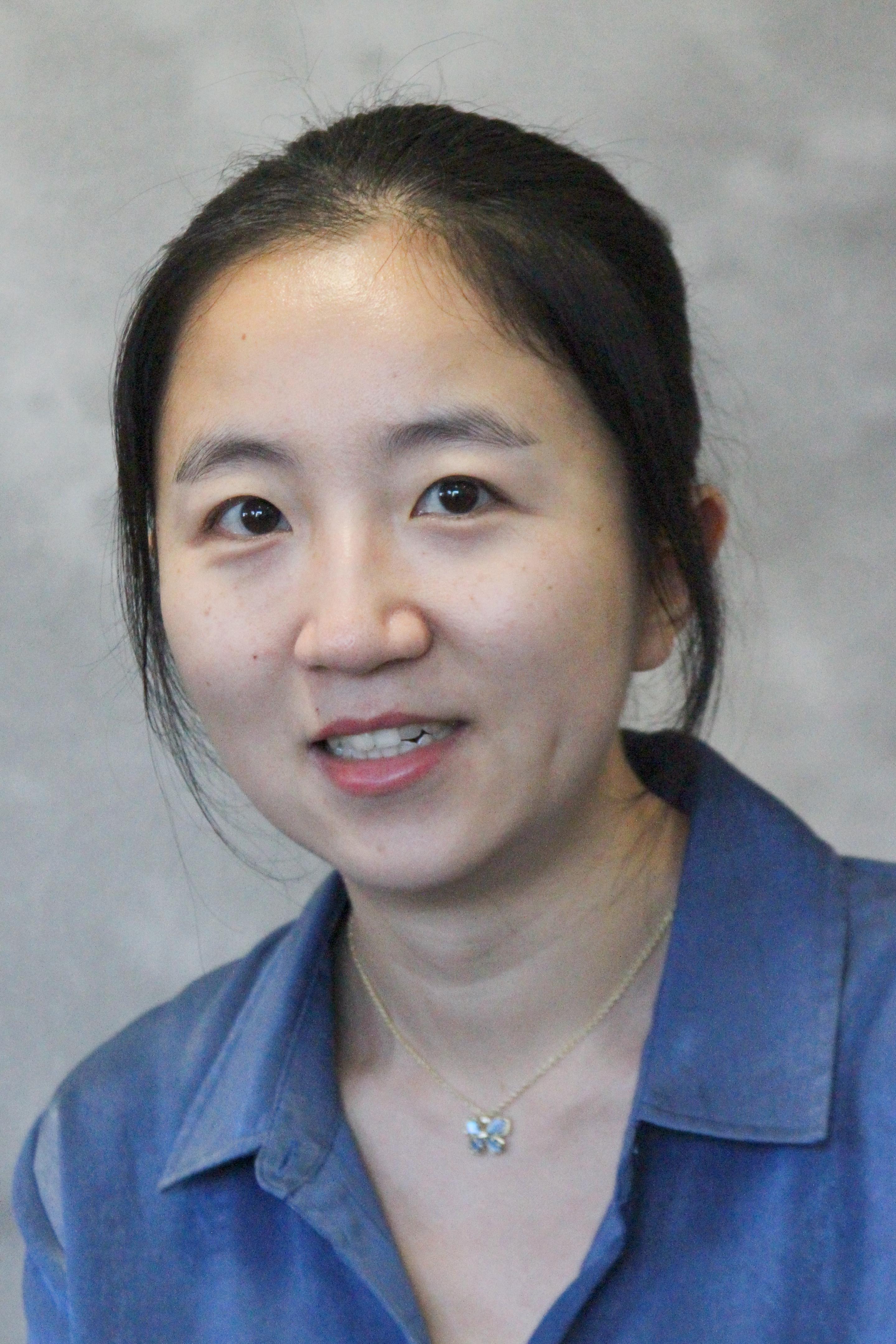
Peihan Miao is an Assistant Professor in the Department of Computer Science at Brown University, affiliated with the Theory Group. She holds a PhD from UC Berkeley (2019) under Sanjam Garg and a BS from Shanghai Jiao Tong University. Prior to Brown, she was at the University of Illinois Chicago (2020–2022) and Visa Research (2019–2020). Her research focuses on cryptography and security, particularly secure multi-party computation (MPC), with applications in genomics and privacy-preserving machine learning. She has received NSF, Meta, Google, and Amazon awards. Her work bridges theoretical foundations and practical implementations, addressing challenges in private set intersection (PSI), updatable encryption, and federated learning. Teaching includes courses on cryptography and secure computation at Brown and UIC. She mentors PhD students and postdocs, leading collaborative projects in privacy-enhancing technologies. Her lab explores MPC protocols, privacy-preserving techniques, and interdisciplinary applications in bioinformatics. Key awards include the NSF CAREER Award and Google/Amazon Research Scholarships. Grants support projects like privateQTL for genomic data analysis and secure PSI protocols. Her service includes program committees for CRYPTO, TCC, and ASIACRYPT.
Prof. Dr. Andreas Glöckner is a Senior Research Fellow (part-time) at the University of Cologne, where he leads the Glöckner Group in Social Psychology at the Social Cognition Center Cologne (SoCCCo). His research spans judgment and decision making, cooperation, open science, intuition, stereotypes and discrimination, cross-cultural studies, eye-tracking, computational modeling, neural networks, behavioral economics, and empirical legal studies. Glöckner's research interests focus on understanding how people make decisions under various conditions, particularly examining the interplay between intuitive and deliberate processes. His work employs multiple methodologies including experimental approaches, computational modeling, eye-tracking, and cross-cultural comparisons. He has made significant contributions to understanding how people process information, how they cooperate across societal boundaries, and how cognitive biases influence legal decision-making. His recent publications reveal strong trends in cross-cultural decision making, computational modeling of cognitive processes, and the application of open science principles to psychological research. Glöckner has published extensively in top journals including Proceedings of the National Academy of Sciences, Cognition, and Journal of Behavioral Decision Making, with recent work focusing on multinational cooperation studies, computational models of decision strategies, and the psychological impacts of the pandemic on research practices. Scientific Awards and Distinctions: Award for Quality Assurance in Psychology of the German Psychological Society (DGPs) for the Network of Open Science Initiatives (NOSI), 2020 Editor-in-chief of Judgment and Decision Making, since 2018 President of the European Association for Decision Making (EADM), 2017-2019 Vice chairman of the academic advisory council of the Leibniz Institute for Psychology Information (ZPID), since 2018 Glöckner has secured research grants from major funding organizations including the German Research Foundation (DFG), German-Israeli Foundation (GIF), Max Planck Society (MPG), and European Association for Decision Making (EADM). His editorial leadership includes serving as Associate/Action Editor for Judgment and Decision Making (2012-2018) and Journal of Behavioral and Experimental Economics (2013-2018), as well as guest editing special issues on methodology and strategy selection. He leads the Glöckner Group at the Social Cognition Center Cologne, which includes researchers Angela Dorrough, Marc Jekel, and others, focusing on decision-making processes using multiple methodologies including eye-tracking and computational modeling. The group has produced influential work on parallel constraint satisfaction models, cross-cultural cooperation studies, and the psychology of legal decision-making.
Tilia Ellendorff is a researcher at the University of Zurich , affiliated with the Department of Computational Linguistics under the Faculty of Arts and Social Sciences . She contributes to the Text Crunching Center (TCC) by developing solutions for text analytics, information extraction, and natural language processing . Her work bridges computational methods with biomedical and health-related domains, as evidenced by her involvement in the Digital Society Initiative (DSI) Community Health. Fields of Interest: Natural Language Processing, Biomedical Informatics, Text Mining, Information Extraction, Computational Linguistics, Machine Learning Her research focuses on creating annotated corpora, optimizing language models for clinical and biomedical texts, and advancing text mining tools for tasks like entity recognition and causal network extraction. She has contributed to collaborative initiatives such as BioCreative V and SMM4H, emphasizing hybrid approaches and multi-task learning. Contact: ellendorff@cl.uzh.ch
Ni Trieu is an Assistant Professor of Computer Science at Arizona State University, specializing in cryptography and security with a focus on secure computation and its applications. Her research has significant implications for privacy-preserving technologies in various domains including healthcare, data sharing, and machine learning. Dr. Trieu received her PhD and Master's degrees from Oregon State University under the supervision of Professor Mike Rosulek, followed by a postdoctoral position at UC Berkeley with Professor Dawn Song. During her graduate studies, she gained industry experience through research internships at Bell Labs, Visa Research, and Google. She completed her undergraduate education at St. Petersburg State Polytechnic University. Her research interests center around cryptography and security , with specific expertise in secure computation and its practical applications including private set intersection, private database queries, and privacy-preserving machine learning. Her work bridges theoretical cryptography with real-world security challenges, developing protocols that balance security guarantees with computational efficiency. Dr. Trieu has maintained an impressive publication record in top-tier security conferences including CCS, PETS, EuroS&P, and CRYPTO. Her recent work shows a clear trajectory toward more complex and practical secure computation scenarios, with increasing focus on multi-party settings, efficiency improvements, and applications to real-world problems like genomic privacy, contact tracing, and machine learning. The publications demonstrate consistent innovation in secure computation techniques while addressing practical constraints of real implementations. Dr. Trieu actively contributes to the academic community through conference service, having served on program committees for major security conferences and participated in NSF panel reviews. Her recent news indicates she's been invited to speak at prestigious venues including Simons Institute, VIASM, and NIST.
Boris Babic is an HKU100 Associate Professor of Data Science, Philosophy, and Law at the University of Hong Kong. He holds cross-appointments in these disciplines and serves as a principal investigator at the AI and Humanity Lab. Previously, he served as an Assistant Professor at the University of Toronto (Department of Statistical Sciences) and INSEAD. His education includes a JD from Harvard Law School and PhD in Philosophy from the University of Michigan, Ann Arbor. Research focuses on the ethical, legal, and policy implications of AI/ML, particularly in healthcare and generative systems, alongside foundational Bayesian statistics and epistemology. Key areas include algorithmic fairness, machine bias mitigation, and legal frameworks for AI governance. His interdisciplinary work bridges philosophy, law, and data science. Grants include leadership roles in projects such as 'The Legal and Ethical Foundations of Generative Models' (HKU) and 'Regulating the AI Lifecycle' (DOSS, ECE). He has been awarded grants from the Social Sciences and Humanities Research Council of Canada, the Connaught Labs Fund, and the Schwartz Reisman Institute. Teaches at undergraduate, graduate, and executive levels across statistics, philosophy, and decision-making. Prior to academia, practiced law at Quinn Emanuel Urquhart & Sullivan, representing clients in high-profile intellectual property disputes, including the 'doll wars' litigation between Mattel and MGA.
Manfred Jaeger is a Professor in the Department of Computer Science at Aalborg University's Faculty of Engineering and Science. With an extensive publication record spanning over three decades from 1993 to 2025, he has established himself as a leading researcher in statistical relational learning and probabilistic reasoning. His collaborative work extends across multiple institutions, with frequent co-authorship with researchers from Aalborg University including Kim G. Larsen, Thomas D. Nielsen, and others. Professor Jaeger's research primarily focuses on the intersection of artificial intelligence, machine learning, and probabilistic modeling. His work centers on developing methods for learning and reasoning with relational and graph-structured data, with particular emphasis on Graph Neural Networks, Bayesian Networks, and Statistical Relational Learning. His contributions span both theoretical foundations and practical applications, addressing challenges in representation learning, knowledge extraction, and uncertainty modeling in complex relational domains. Analysis of his recent publications (2020-2025) reveals a strong trend toward integrating neural approaches with traditional probabilistic reasoning frameworks. His work increasingly focuses on explainable AI within graph learning contexts, meta-path learning for heterogeneous networks, and bridging theoretical guarantees with practical implementations. Jaeger has made significant contributions to understanding projectivity in statistical relational models and developing algorithms for learning from coarse or incomplete data. Professor Jaeger has maintained a highly productive research trajectory, with numerous publications in top-tier AI venues including JMLR, Artificial Intelligence journal, UAI, IJCAI, and ECML/PKDD. He has developed influential frameworks for relational Bayesian networks and statistical relational learning, with applications spanning knowledge graph reasoning, network analysis, and decision-making under uncertainty.
Vali Asimit is a Professor of Actuarial Analytics at Bayes Business School, City, University of London. He holds roles including Associate Editor of the Insurance: Mathematics and Economics journal, IFoA Module Leader for CS2 (Risk Modelling and Survival Analysis), and Founding Course Director of the MSc Business Analytics and BSc Business Analytics programs. His research focuses on optimal risk sharing, robust decision-making, and statistical extremes in actuarial science. Education: PhD (2007) and MSc (2003) in Actuarial Science from the University of Western Ontario, Canada. Postdoctoral Fellow at the University of Toronto (2008). Research Interests: His work spans actuarial analytics, risk modeling, and insurance mathematics, with contributions to robust machine learning, optimization techniques, and extreme value theory. Key areas include optimal reinsurance design, risk aggregation, and systemic risk evaluation. Publications: Over 40 peer-reviewed articles in top journals like Insurance: Mathematics and Economics , European Journal of Operational Research , and Risks . Recent work emphasizes machine learning applications in insurance and robust statistical methods. Awards: 2010 Fortis Chair Award for best paper in Insurance Mathematics and Economics, and recognition from K.U.Leuven. Advising & Grants: Supervised PhD students including Junlei Hu (now at the University of Essex) and Runshi Wang. Secured Innovate UK grants for projects like the Fintuity Virtual Adviser. Engaged in academic leadership through program coordination and editorial roles. Professional Contributions: Consulted for government bodies (NHS Resolution, Government Actuary's Department) and industry (Moody’s Climate on Demand Pro system). Active in curriculum development and international academic networks.
Thomas Gschwend, Ph.D. is a Professor for Quantitative Methods in the Social Sciences at the School of Social Sciences, University of Mannheim, and serves as a project director at the Mannheimer Zentrum für Europäische Sozialforschung (MZES). His academic position places him at the intersection of political science methodology and substantive political research, where he leads the Chair of Political Science, Quantitative Methods in the Social Sciences (QMSS). Professor Gschwend's research interests span electoral behavior, public opinion, comparative politics, political psychology, and constitutional politics. His methodological expertise includes ecological inference models, item-response theory, Bayesian statistics, and experimental design. He is particularly interested in how electoral institutions shape individual decision-making processes and their consequences for voters, party strategies, and election outcomes. His current work develops micro-theories of actor behavior under institutional constraints, with a focus on expectation formation in electoral contexts. Gschwend's recent publications reveal a strong emphasis on election forecasting (particularly through the Zweitstimme.org project), coalition politics, strategic voting, judicial politics, and innovative methodological approaches including AI applications in social science research. His work consistently bridges theoretical political science with advanced quantitative methods, demonstrating how methodological innovation can address substantive political questions. As an educator, Gschwend has taught numerous graduate and undergraduate courses at the University of Mannheim since 2001, including Multivariate Analysis, Research Design, Advanced Quantitative Methods, and Crafting Social Science Research. His teaching portfolio shows consistent commitment to methodological training across multiple program levels. Professor Gschwend leads a research team that includes postdocs, doctoral students, and research assistants working on projects related to electoral systems, coalition politics, judicial behavior, and political methodology. His research has been supported by major funding bodies including the Deutsche Forschungsgemeinschaft (DFG), Social Sciences and Humanities Research Council of Canada, National Science Foundation (NSF), and Fritz Thyssen Foundation. The Chair he leads is actively involved in multiple research projects including Zweitstimme.org (election forecasting), coalition politics before elections, measuring common policy spaces, and political attention in legislative reform. The team has produced numerous publications and received recognition including the Franz-Urban-Pappi-Prize and Lorenz-von-Stein Prize for student work supervised under Gschwend's direction.
Prof. Dr. Manuel Oechslin is a Full Professor of Economics at the University of Lucerne's Faculty of Economics and Management since 2014. Previously, he held an Associate Professorship at Tilburg University. His research focuses on international economics, macroeconomics, and the role of uncertainty in economic decision-making. He leads an SNSF-funded project exploring how fundamental uncertainty drives economic fluctuations and crises. Manuel Oechslin earned his PhD in Economics from the University of Zurich. His work has been published in top journals such as the Economic Journal , Journal of International Economics , and Journal of Economic Growth . His recent articles analyze geopolitical risks' impact on foreign investment (2025), behavioral macroeconomic models (2024), and transformative innovation under uncertainty (2023). These studies emphasize linkages between cognitive biases, institutional quality, and economic outcomes. While no specific awards are listed, his research has consistently addressed pressing issues like fiscal reforms, informal economies, and environmental scarcity. His work often intersects with policy design and institutional capacity-building in weakly institutionalized states. Grants and research projects include SNSF funding for his uncertainty-focused project. He advises doctoral candidates through the University of Lucerne's Graduate Academy and collaborates with interdisciplinary teams exploring topics like statistical governance and corruption dynamics.
Elea McDonnell Feit is Associate Professor of Marketing and Associate Dean for Research at Drexel University’s LeBow College of Business. She bridges academic research and industry practice, with prior roles at Amazon Ads, General Motors R&D, The Modellers, and Wharton Customer Analytics. Her work focuses on data-driven marketing, experimentation, and Bayesian modeling. Research Interests: Elea's research centers on improving marketing decisions through rigorous analytics. She specializes in advertising incrementality, causal inference, Bayesian hierarchical models, missing data, data fusion, and conjoint analysis. Her methodological expertise enables robust measurement of advertising effectiveness and consumer choice. She develops accessible tools and frameworks for practitioners through open-source workshops and books. Publication Trends: Her recent publications (2008–2025) reflect a sustained focus on marketing science, particularly experimentation (A/B testing, test-and-roll), advertising measurement (attribution, multi-channel effectiveness), and advanced statistical modeling (Bayesian, hierarchical, data fusion). She frequently publishes in top journals such as Marketing Science , Journal of Marketing Research , and Management Science . Scientific Awards: Editorial Review Board Service Award (Marketing Science, 2022) MSI Scholar (Marketing Science Institute, 2022) Top Analytics Educator Award (Digital Analytics Association, 2021) Allen Rothwarf Award for Teaching Excellence (Drexel, 2018) Data Science Research Award (Adobe, $25,000, 2017) Best Software Demo Award (AMA ART Forum, 2017) Excellence in Research Award (LeBow, 2016) Junior Teaching Award (LeBow, 2016) 4 under 40 Award (American Marketing Association, 2013) Advising and Grants: While formal student advisees are not listed, her leadership in Wharton Customer Analytics and academic collaborations indicate mentorship roles. She has secured significant research support, including a $25,000 Data Science Research Award from Adobe. Her editorial roles in top journals and industry partnerships reflect her influence and funding potential. Labs and Teams: Elea leads initiatives in marketing analytics education and open-source tools. Her GitHub presence and development of workshops (e.g., on Stan, R, Python) suggest active engagement with data science communities. She contributes to teams advancing Bayesian modeling and experimentation in marketing through editorial and collaborative research roles.
Dr. Annika Camehl is an Associate Professor in the Department of Econometrics at the Erasmus School of Economics, Erasmus University Rotterdam. Her research lies at the intersection of econometric theory and empirical macroeconomics, with a focus on developing and applying advanced statistical methods to macroeconomic data. Institution: Erasmus University Rotterdam School: Erasmus School of Economics Department: Econometrics Academic Rank: Associate Professor Her primary research interests include Multivariate Time Series Analysis, Bayesian Inference, Quantile Regression, and Empirical Macroeconomics. These areas are central to modeling complex economic dynamics, particularly under uncertainty and structural change. The recent publications highlight a strong trend in methodological innovation within Bayesian econometrics and time series modeling, applied to pressing macroeconomic issues such as monetary policy transmission, international interest rate linkages, and the economic consequences of global pandemics. Her work combines rigorous theoretical foundations with empirical relevance. Scientific Awards: ERS IASC Young Researchers Award (2022) Dr. Camehl has been actively involved in collaborative research projects, often co-authoring with leading economists. While specific grant details are not listed, her publication in top journals and working papers from Tinbergen Institute suggest involvement in significant research initiatives. She contributes to the advancement of econometric methodology and its application in policy-relevant contexts. She is part of a vibrant research network centered at the Tinbergen Institute and Erasmus School of Economics, which fosters interdisciplinary collaboration in economics and econometrics.
Panagiotis Traganitis is an Assistant Professor in the Electrical and Computer Engineering (ECE) Department at Michigan State University (MSU), where he joined in August 2022. Previously, he was a Postdoctoral Researcher at the University of Minnesota’s Signal Processing in Networking and Communications (SPiNCOM) group under Prof. Georgios B. Giannakis. His research focuses on statistical signal processing, machine learning, crowdsourcing, weak supervision, and network science, with applications in big data analytics and distributed learning. Education: Ph.D. in Electrical Engineering, University of Minnesota (2019), Thesis: Scalable and Ensemble Learning for Big Data M.Sc. in Electrical Engineering, University of Minnesota (2015), Thesis: Large-scale Clustering using Random Sketching and Validation Diploma in Electrical & Computer Engineering, National Technical University of Athens (2013), Thesis: Reinforcement Learning Methods for Cognitive Radio Networks Research Interests: His work spans statistical learning, blind ensemble methods, weak supervision, subspace clustering, and graph-based algorithms. Current projects include blind ensemble learning, adversarial detection in crowdsourcing, and self-supervised learning. Awards & Honors: Gerondelis Foundation Graduate Scholarship (2015) Finalist, CAMSAP 2017 Student Paper Award Eurobank’s Award of Excellence in Greek Nationwide University Entrance Exams (2007) Teaching & Mentorship: He has served as a teaching assistant for courses on statistical methods and nonlinear optimization at the University of Minnesota. He is currently seeking motivated Ph.D. students to join his research group. His lab focuses on advancing robust, scalable learning algorithms with real-world applications. Labs & Collaborations: Active member of the SPiNCOM research group, collaborating on projects related to signal processing, machine learning, and network science.